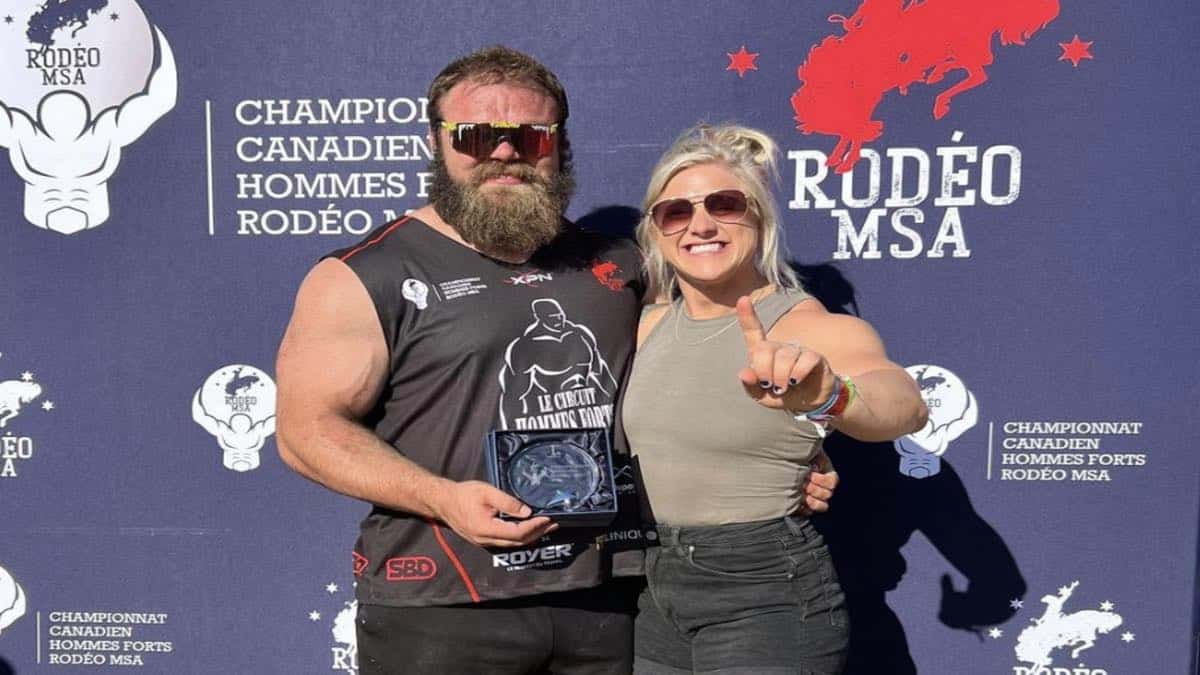
Maxime Boudreault is the champion of the 2022 Canada’s Strongest Man (CSM) contest. It’s the strongman’s first-ever CSM title. This year’s strength competition took place on August 25-27 in Sainte-Anne-de-Beaupré, Canada.
Joining Boudreault on the podium were 2021 champion Gabriel Rhéaume and Wesley Derwinsky in second and third place, respectively. Rhéaume took second place by just a one-point margin over Derwinsky. Meanwhile, after a second-place result in 2021, Derwinsky remained on the podium for a second straight year.
Here are the final standings from this year’s Canada’s Strongest Man:
Here’s a quick event-by-event breakdown of every segment from the 2022 Canada’s Strongest Man:
Event One — Squat Lift
The Squat Lift opening event tasked the athletes to perform a squat for as many reps as possible with a 311-kilogram (685.5-pound) implement. Kelly Branton placed himself ahead of the rest of the field with 11 successful reps and notched the event victory.
Kelly Branton — 11 reps
Simon Pratte — 10 reps
Wesley Derwinsky — Eight reps
Joey Lavallée — Seven reps
Maxime Boudreault — Six reps
Frédérick Rhéaume — Six reps
Keven Malenfant-Caron — Six reps
Gabriel Rhéaume — Three reps
Ben Court — Three reps
Sean Hayes — Zero reps
James Jeffers — Zero reps
Tyler Sigurdson — Zero reps
Event Two — Dumbbell Medley
The dumbbells in this medley for time had a weight range of 78 to 124 kilograms (172 to 273.5 pounds). None of the competitors successfully lifted all five dumbbells within the 90-second time limit, but strong performances from Simon Pratte and Boudreault gave them a tie for first place.
The traditional Atlas Stones came a little earlier during the 2022 CSM in a change-up from the usual strongman format, where the stones are often the final event of a contest. The five stones ranged from 141 to 191 kilograms (311 to 421 pounds). Boudreault made easy work of the stones as the only competitor to lift all five for the event win.
Maxime Boudreault — Five in 26 seconds
Gabriel Rhéaume — Four in 24 seconds
James Jeffers — Four in 25 seconds
Sean Hayes — Four in 32.24 seconds
Tyler Sigurdson — Four in 32.94 seconds
Joey Lavallée — Four in 35 seconds
Frédérick Rhéaume — Four in 35 seconds
Simon Pratte — Three in 27 seconds
Keven Malenfant-Caron — Three in 39 seconds
Wesley Derwinsky — Three in 41 seconds
Kelly Branton — One in 10 seconds
Ben Court — No successful lifts
Event Four — Max Deadlift
The Max Deadlift is another staple and self-explanatory event in strongman. Whoever could deadlift the most weight for one rep would be the victor. There was a four-way tie at the top with no definitive winner.
The Log Lift of this contest progressed to whoever could press the most weight overhead in one rep. Boudreault won another event as the only athlete to successfully press 188 kilograms (414.5 pounds).
The deadlift reappeared toward the latter portion of the 2022 CSM, this time asking the athletes to hold a 318-kilogram (701-pound) deadlift in the locked out position for as long as possible. Joey Lavallée’s final time beat Pratte by less than four-tenths of a second for the win.
In the Back Lift, the athletes had to position themselves under an implement with their back essentially parallel to the ground and the load supported above their hips. They then lift the implement from said position. Tyler Sigurdson was the winner with a staggering weight more than 43 kilograms (94.8 pounds) heavier than the next best competitor.
The eight bags in the Bag Over Bar final event ranged from 20 to 32 kilograms (44 to 70.5 pounds). The bar the athletes had to toss the bags over was 4.57 meters (15 feet), and they had 75 seconds to finish. Derwinsky edged out Boudreault for first, but both were the only to toss all eight bags successfully.
Wesley Derwinsky — Eight bags in 23 seconds
Maxime Boudreault — Eight bags in 33.79 seconds
James Jeffers — Six bags in 17.62 seconds
Frédérick Rhéaume — Five bags in 18.52 seconds
Simon Pratte —Five bags in 31.85 seconds
Kelly Branton — Five bags in 37 seconds
Joey Lavallée — Five bags in 46.22 seconds
Gabriel Rhéaume — Four bags in 21.26 seconds
Tyler Sigurdson — Four bags in 34.92 seconds
Sean Hayes — Three bags in 9.53 seconds
Ben Court — Two bags in 15.43 seconds
Keven Malenfant-Caron — One bag in eight seconds
Boudreault’s win at the 2022 CSM book-ends a solid spring and summer of results in 2022. The 31-year-old has finished in the top five at four straight contests. A first-time victory in his native Canada is likely the most satisfying for the top-tier competitor.
Perhaps you’ve heard about the three different body types, also known as the somatotypes, but did you know that it is also important to work out according to your body type?
Your body type is predominantly genetic, but that doesn’t mean you are limited to a certain level of fitness. While it might be unlikely to get that hourglass figure if you are predispositioned to have more of a straight and narrow physique type, there are ways you can train in order to make the most out of your body type and have a healthy fitness level that feels great!
Note:
Since not all body types are the same, you may not find yourself identifying with one specific body type, and that’s totally normal! Still, this post should give you some guidance on how to train and eat to reach your own individual goals.
What are the 3 body types?
The idea of body types generalizes the shape and composition of the human body, and divides the characteristics into three common categories, known as the three somatotypes. The three body types are Ectomorph, Mesomorph and Endomorph. You can get a good idea of what these body types look like and where they are prone to build more muscle and store more fat from the image below.
The History Behind The Somatotype Theory
The idea of the three body types was first introduced in the 1940s by Willian Sheldon, a University of Houston professor. After studying hundreds of people’s physiques, he found three extremes of body types – underweight, athletic, and overweight.(1)
It may seem simple, but his theory was that human physiques fell into one of three categories and that it was impossible for anyone to change or alter their somatotype since it was determined by their skeletal structure.(2)
Modern Research On The Somatotype Theory
Over the years, there have been many studies performed to test Sheldon’s theory. One study looked at kayakers, basketball players, and football players and observed the athlete’s body type patterns in relation to the sport they played and level of performance.(3)
They found that the high-achieving athletes in each sport had a common body type; high-achieving kayakers fell under the endomorphic body type, the basketball players aligned with the mesomorphic body type, and the football players fell under the ectomorphic body type.(4)
The results of this study concluded that a common somatotype was present in each of the high-achieving athletes in their chosen sport.(5)
On the contrary, there have been other studies that argue that the human physique can’t simply fall into three categories and that there must be either more body types or combinations of the ectomorph, mesomorph, and endomorph body types where someone shows two primary characteristics of two different body types.(6)
How To Work Out According To The Body Types
Not everybody is going to fit exactly into a single category of body type, but you might notice that there is one type that is more predominant. Let’s break it down a bit further and talk about each body type in more detail as well as how you should approach your fitness training and balanced diet according to your type in order to maximize results.
Ectomorph
The Ectomorph is naturally very thin, has narrow hips and shoulders, very low body fat and very thin arms and legs. The Ectomorph might say things like, “No matter how much I eat, I cannot seem to gain weight.” Contrary to popular belief, not everyone is looking to lose weight, as fitness training is also about being healthy. So here are some great tips for fitness training and a balanced diet for the Ectomorphs.
Ectomorph Workout:
Strength training for the Ectomorph:
Train with heavy weights and lots of rest in between sets (2-3 minutes) as well as in between exercises (5 minutes).
Only train 1-2 body parts per training day to avoid too much caloric expenditure.
Aim for 5-10 reps and 6-8 sets of each exercise.
Take plenty of rest in between workouts and never train a muscle group that is sore. And if you’re feeling really sore, try outfoam rolling for recovery.
Opt for well-balanced meals, making sure not to skip meals or trade for snacking.(7)
Diet of moderate proteins, lower fats, and higher carbohydrates.
Starchy carbohydrates like rice, oats, quinoa, and potatoes are a healthier choice.
A balanced diet could include oatmeal, fruits, veggies, nuts, lean meats, quinoa.
Avoid highly processed carbohydrates like chips and candy.
Mesomorph
The Mesomorph body types are able to put on muscle easily, often having strong legs, broad shoulders, and a narrower waist. Generally, they also have very low body fat and are considered to not be overweight or underweight.
Mesomorph Workout:
Strength training for the Mesomorph:
The more varied the training, the better the results.
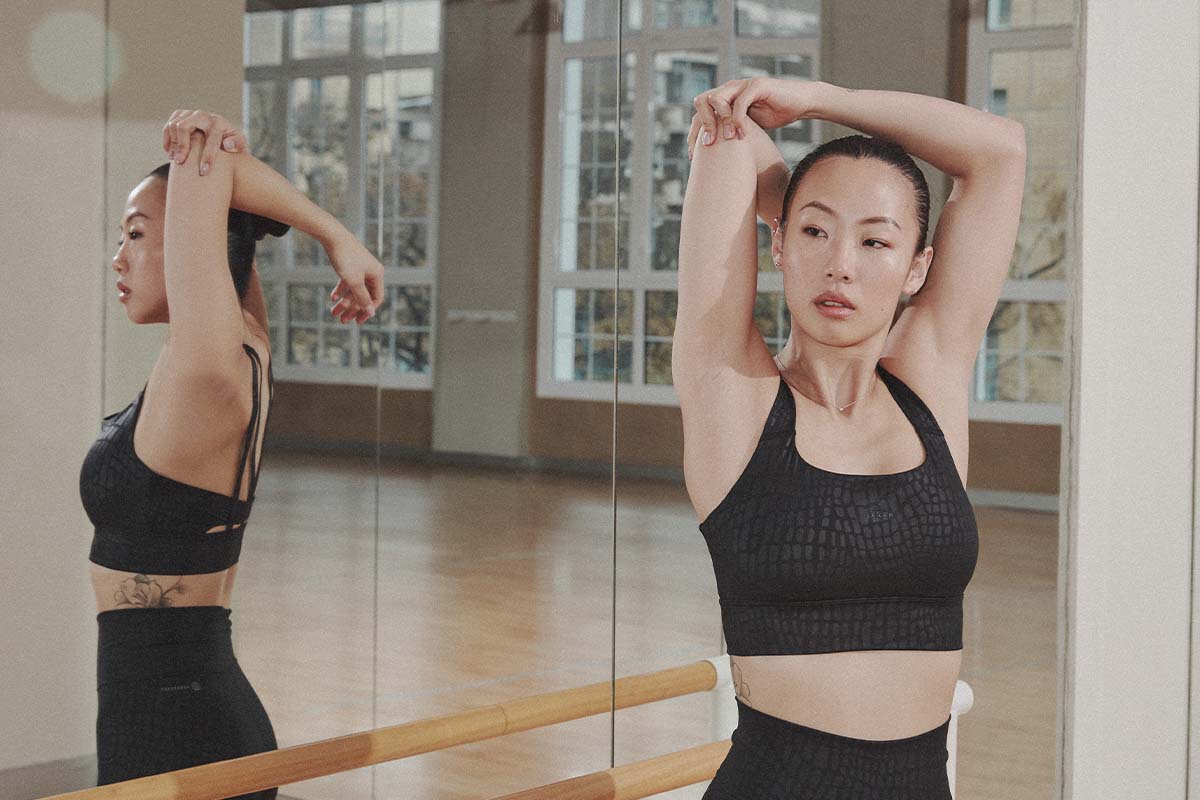
Light, moderate, and heavy weight training as well as bodyweight training with the adidas Training app.
Basic exercises (squats, lunges, deadlifts, rows, chest press, shoulder press, etc.) with heavy weights, followed by isolation exercises with moderate/light weights.
Aim for 8-12 reps for most exercises. When it comes to leg training, you can incorporate really heavy weights with around 6 reps and really light or no weights at around 25-30 reps for 3-5 sets.
Well-balanced and equal distribution of proteins, carbohydrates, and fats.
Dinner idea could be grilled chicken breast, baked sweet potato, and roasted veggies.
Endomorph
The Endomorph body type is more round and pear-shaped and tend to store more body fat throughout the entire body, especially in the legs and arms. Typically,it’s much harder for the Endomorph to put on muscle and much easier to gain weight. However, as mentioned before, health and fitness is possible for all body types despite your genetics. Reaching your goals might take more discipline and time but becoming more fit and healthy is worth the effort of making better choices.
Diet for endomorphs is higher proteins and lower carbohydrates.
Consume food like quinoa, zucchini noodles, hummus, lean meats, and veggies.
With so much information out there, it can be quite overwhelming to find the right body type workout that best suits your needs. Knowing your fitness body type is a great starting point to help lead you in the right direction.And remember, long-lasting results, regardless of your body type, take time and consistency. So keep it up and make the necessary adjustments as you continue on your fitness journey!
if(!isRussia){
//check Cookie Opt out and User consent
if(!run_getCookie(“tp-opt-out”)){
!function(f,b,e,v,n,t,s){if(f.fbq)return;n=f.fbq=function(){n.callMethod?
n.callMethod.apply(n,arguments):n.queue.push(arguments)};if(!f._fbq)f._fbq=n;
n.push=n;n.loaded=!0;n.version=’2.0′;n.queue=[];t=b.createElement(e);t.async=!0;
t.src=v;s=b.getElementsByTagName(e)[0];s.parentNode.insertBefore(t,s)}(window,
document,’script’,’https://connect.facebook.net/en_US/fbevents.js’);
fbq(‘init’, ‘1594940627485550’); // Insert your pixel ID here.
fbq(‘track’, ‘ViewContent’);
}
}
… run 10 km every day even though you’ve never been running before?
… run twice as fast in just a few days?
You might think this article will just tell you how to reach these goals.
But you’d be wrong.
These goals are unrealistic – plus, it would be extremely unhealthy for your body to try to reach these goals.
Plus, you’d kill your own motivation by striving for such unreachable goals, feel disappointed, and probably toss your running shoes in the corner.
So what can you do instead? In this article, we are answering some of the most common questions about fitness goal-setting:
How Can You Make a Change?
If you want to make a change, the best approach is to set realistic goals:
If you’re a beginner, just run twice a week or gradually improve your 10K pace.
Once you’ve reached your goal, set the next one.
This way you will stay motivated and keep breaking out of your comfort zone. And with every goal you reach, your personal motivation and satisfaction increase!
How Can You Set Goals That Are Achievable?
Do you want to change, but your expectations are too high?
When you realize your (fitness) goal is unrealistic, it’s usually too late, because you’ve lost your drive.
These 3 Tips Will Keep You Motivated on Your Fitness Journey:
1. Have short-term and long-term goals: Decide on an individual goal. Consider, for example, how many kilometers you want to run or bike per day, week, month, or year, how many hours you want to walk daily, or how many times you want to go for a hike within a specific timeframe.
Turn your goals into achievements:
Work towards a 5K run, a 4-hour bike ride, three workouts in a week, or more: The “My Goals” feature in the adidas Running app helps you achieve your goals step by step. Check it out today!
2. Figure out whether you can pursue your goal long-term: Before you start a totally new lifestyle, a training plan that continues for several months, or a serious diet, ask yourself, “Can I do this long-term?” If the answer is “no,” then you should probably look for a different solution or another goal.
3. Track your progress: Seeing results takes time. Having a way to track your progress and see small, weekly changes will keep you motivated. The right tools will help you get to where you want to go: track your workouts with the adidas Running appand adidas Training app. You can find out more below.
How Can You Set Realistic, Achievable Goals in the adidas Running App?
The adidas Running apphas a great motivational feature in place: you can set your own individual goals with “My Goals”.
Where to find “My Goals” in adidas Running:
Open the adidas Running app. Choose the tab “Progress”. Scroll to “My Goals”, and choose “Add Goal”. Here you can choose a sport type (e.g., running), a time frame (e.g., per month), and a goal type (e.g., hours/minutes). When you’ve decided on a personal goal, save it, and you’re ready to start working towards it!
With this feature, you can define whether you want to:
… run 500 km this year.
… hike or walk two hours a week.
… ride your bike four times per month.
Whatever you want to achieve in your fitness journey – it’s up to you to decide! Just remember, when you set goals, keep them realistic to stay motivated long-term.
How Can You Set Short-Term Bodyweight Training Goals in the adidas Training App?
Do you want to work on your strength, but not follow a long-term training plan? Then, the Workout Creator in the adidas Training app is for you!
Where to find the “Workout Creator” in adidas Training:
Open the adidas Training app. Choose the tab “Workouts”. Scroll to “Workout Creator”, and choose “Let’s Get Started”. Here you can select the duration, target body parts (e.g., arms), select a difficulty level (e.g., basic), and choose whether you want to use equipment for your workout or not. You can even ask for a “neighbor-friendly” customized workout without any jumping or loud movements!
Once you’ve selected everything, you can start exercising by pressing the button “Generate Workout”.
With this feature, you can:
… create a customized workout in seconds.
…complete a workout, even if you only have ten minutes to fit it in.
… target specific body parts.
The Workout Creator makes fitting in home workouts with the time you have easy, sweaty, and effective.
if(!isRussia){
//check Cookie Opt out and User consent
if(!run_getCookie(“tp-opt-out”)){
!function(f,b,e,v,n,t,s){if(f.fbq)return;n=f.fbq=function(){n.callMethod?
n.callMethod.apply(n,arguments):n.queue.push(arguments)};if(!f._fbq)f._fbq=n;
n.push=n;n.loaded=!0;n.version=’2.0′;n.queue=[];t=b.createElement(e);t.async=!0;
t.src=v;s=b.getElementsByTagName(e)[0];s.parentNode.insertBefore(t,s)}(window,
document,’script’,’https://connect.facebook.net/en_US/fbevents.js’);
fbq(‘init’, ‘1594940627485550’); // Insert your pixel ID here.
fbq(‘track’, ‘ViewContent’);
}
}
If you want the most well-developed chest possible, the bench press is not enough. Sure, big multi-joint lifts are very efficient at putting heaps of meat on your frame, but if you really want to take your muscular development to the next level, you’ll have to include some isolation (single-joint) movements to specifically target individual body parts.
Credit: BLACKDAY / Shutterstock
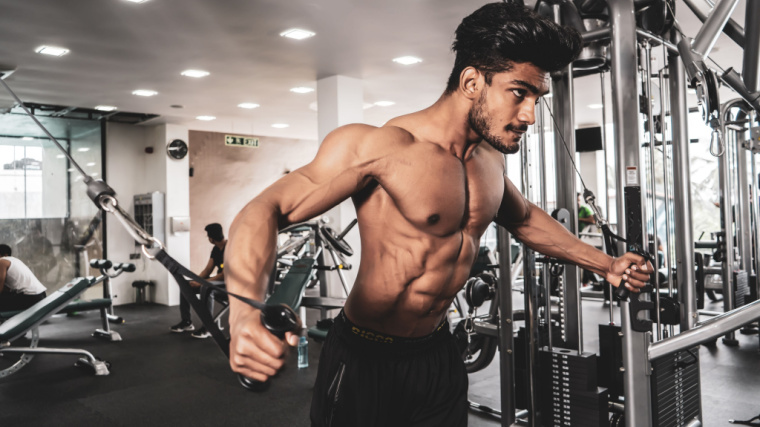
The cable crossover has been a favorite in bodybuilding circles for decades, and for good reason. This chest flye variation allows you to apply high-tension to your pecs without much involvement from other muscle groups. If you’re ready to boost your chest development, take a look at how and why you should add this time-tested exercise to your routine.
How to Do the Cable Crossover
This classic exercise is often performed incorrectly and then blamed for poor results or shoulder pain. Execution is of the utmost importance if you want the best results. Here’s what to do.
Step 1 — Start Between Two Pulleys
Credit: Ihor Bulyhin / Shutterstock
Stand in the middle of a two-pulley station with a single-handle on each side. Some stations have an adjustable pulley height, which is ideal to adapt the exercise to your body. Set each pulley around chest-height.
Grab one handle and pull it in toward your shoulder. Keep it close to your body as you grab the second handle with your free hand. Stand up tall in the middle of the station. Take a deep breath and flex your abs for stability.
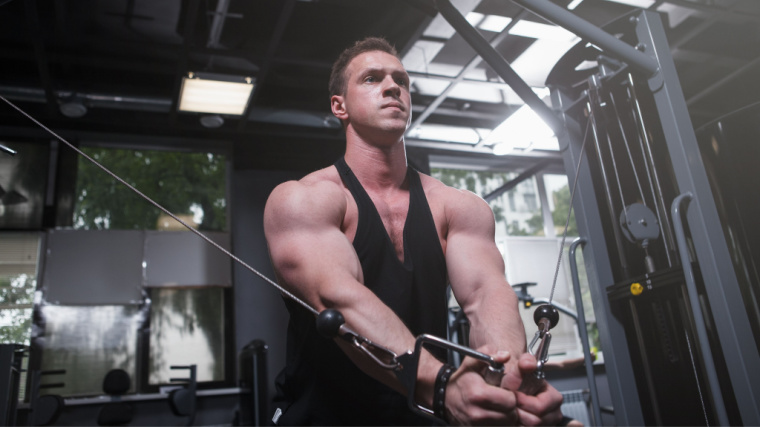
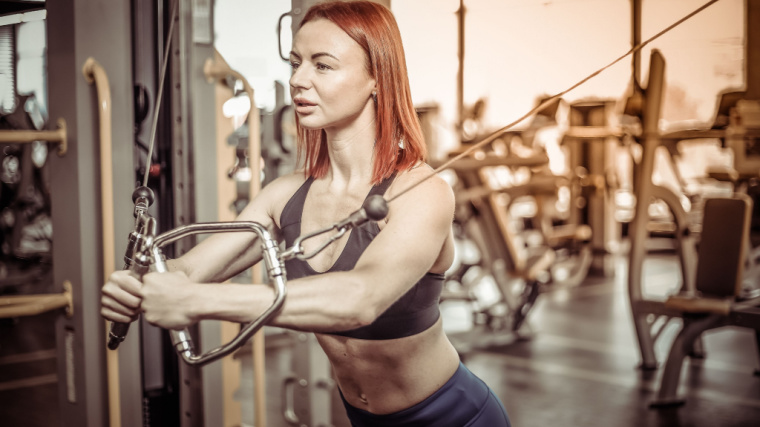
Press the handles straight ahead while rotating your palms to face each other. Stop just before your elbows are locked out. This is the starting position for each rep.
Form Tip: You may feel unbalanced or unstable, especially if you start using heavier weights. Use a staggered stance, with one leg in front of you, for a more stable base of support.
Step 2 — Stretch Your Chest
Credit: MDV Edwards / Shutterstock
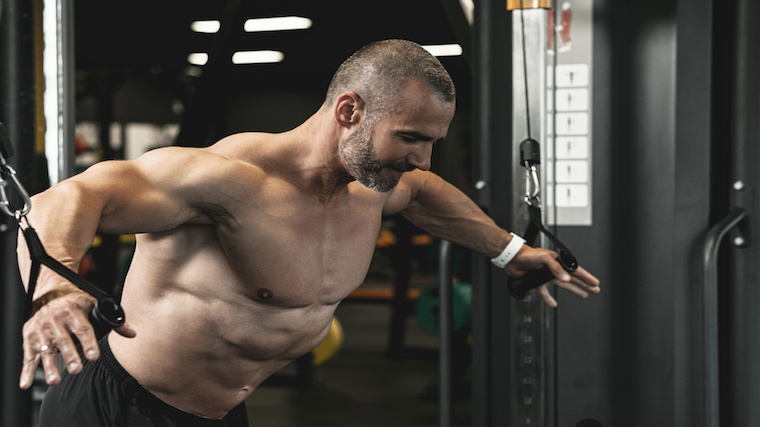
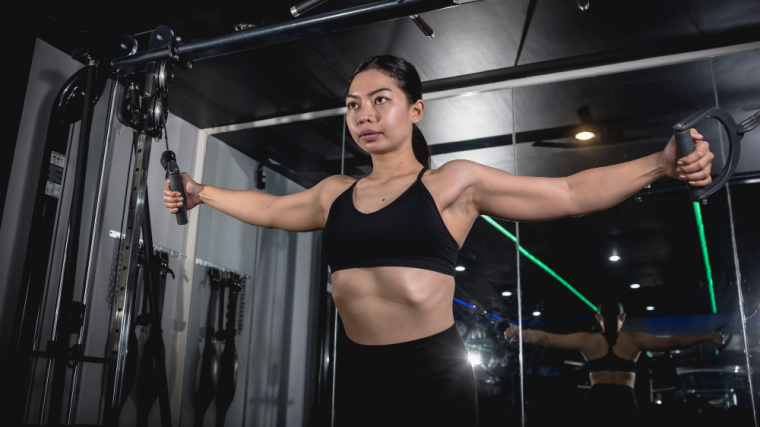
Slowly lower the weight by reaching your arms out to your sides. Keep your chest up, don’t move at the hips or waist. Maintain a slight bend at your elbows throughout the entire repetition — bending and straightening your arms during the movement turns the exercise into a press.
Focus on feeling your pecs (chest muscles) stretch throughout the range of motion. Your shoulder mobility and chest flexibility will determine the end range of motion. Ideally, aim to go until your elbows are roughly in line with your shoulders or as deep as your mobility allows without losing muscular tension.
Form Tip: Do not focus on excessively driving your elbows backwards into an extreme stretch. You’ll risk joint strain and injury, and won’t be able to generate enough force for the exercise to be efficient.
Step 3 — Bring Your Arms to Full Contraction
Credit: Vladimir Sukhachev / Shutterstock
Flex your pecs as you bring your arms to the center. Stop just before your hands touch to keep tension on the muscle.
Your arms should be pointed straight ahead at roughly chest-height. Squeeze your chest as hard as possible in the contracted position. Return to the stretched position and repeat the process for additional repetitions.
Form Tip: Only your arms should move during the exercise. Make sure not to cheat by bending forward at the waist or rolling your shoulders forward. Those adjustments might allow you to move a heavier weight, but it’s at the expense of your shoulder joint health because your shoulders are potentially vulnerable in the stretched position.
Cable Crossover Mistakes to Avoid
Like many chest exercises, the cable crossover is prone to several ego-based mistakes. These can lead to less results and a greater chance of injuries. Let’s take a look at these potential traps.
Pressing the Weight
This can happen either by letting your ego dictate the weight used or by simply losing concentration during a set. In both cases, it drifts away from the purpose of the movement.
Credit: Thanumporn Thongkongkaew / Shutterstock
It’s sometimes too easy, or too tempting, to alter the lift’s mechanics so that it turns into a press rather than a flye motion. If you bend your arms too much when the weight begins to move, you will recruit your triceps and, to a lesser extent, the shoulder muscles.
This is a blunder because the aim of the exercise is to isolate the chest as much as possible and not use assistance from other muscles to move the weight.
Avoid It: Your hands should move in a wide arc, from in-line with your shoulders to nearly meeting in the middle. You shouldn’t be driving your hands forward like a bench press or standing push-up. Start the lift with your elbows slightly bent and keep your elbow angle the same during the entire lift.
Overstretching the Shoulder Joint
The cable crossover shouldn’t turn into a weighted stretch. If you lose control, the cable’s tension can pull your hands too far back and extend your shoulders backwards, where the joints are at their most vulnerable.
Credit: MDV Edwards / Shutterstock
If you’re not mobile enough, this can put unnecessary stress on the shoulder joint. Because of the constant tension applied by the cable, going into a super-deep stretch might not be needed to properly stimulate muscle growth — it will be compensated by strong contraction.
Avoid It: Slow down the eccentric (lowering) portion and always use a manageable weight. This ensures that you’re in control and able to feel consistent muscular tension.
Losing Posture
If you use a weight that is too heavy or push well-past the point when fatigue sets in, you risk losing your posture and letting your shoulders roll forwards. This is often done instinctively so the shoulders can assist the chest.
Credit: Body Stock / Shutterstock
Unfortunately, internally rotating the shoulders in that position is quite risky. It decreases the anatomical space for the many tendons and ligaments that go through the shoulder joint, which results in possible inflammation and tendonitis in the biceps, pecs, or shoulders. It’s also a threat to the fragile rotator cuff.
Moreover, it will decrease the chest stretch, which can decrease the muscle growth stimulus because a stretched muscle under load has the potential to grow more. (1)
Avoid It: Keep your shoulder blades pulled down and back for a stable shoulder position. Stand tall with your chest up and “proud.” Maintain that posture for the duration of the exercise.
Benefits of the Cable Crossover
The cable crossover is an isolation exercise that allows you to really focus on the chest. But there’s icing on the cake because of the adjustable pulley station: you can adjust the pulley’s height and the cables provide constant tension throughout the lift, unlike other exercises such as the dumbbell flye.
Credit: ARENA Creative / Shutterstock
The cable crossover has one primary goal — muscle growth — but it is achieved through different means than a compound exercise like the bench press, and offers its own unique benefits.
Tension Through a Long Range of Motion
If you want optimal muscle-building results, you will eventually have to add variety to your training with different kinds of exercises, rep schemes, or training techniques. (2)
The cable crossover is useful because it challenges the muscle both the lengthened range — because of the deep stretch — and the peak contraction where tension is still applied at the top of the lift.
Dumbbell flye variations, for example, typically have reduced tension in the top position due to the decreased force of gravity against the weights.
Developing the Mind-Muscle Connection
Because of the constant tension applied throughout the whole range of motion, the cable crossover is a fantastic exercise to develop the mind-muscle connection. You can really isolate and focus on the chest in the shortened and lengthened range.
Having a better mind-muscle connection is shown to yield superior muscle growth. (3) Squeezing at the top and pausing on each rep will be a powerful catalyst for building muscle and building a powerful mind-muscle connection.
Versatility
One major advantage of the cable pulley station, compared to a dumbbell or machine flye, is customization. You can use a variety of hand positions or pulling angles, and adjust the weight in small increments.
This allows you to add variation to the exercise and find the perfect setting for you to really feel your chest working. You can also adjust your stance and body position inside the station to find specific cable angles that suit your individual frame.
Muscles Worked By the Cable Crossover
The cable crossover is a single-joint (isolation) exercise that can be one of the most effective ways to directly target the chest if properly done. But the body is a complex machine, and no exercise can really “isolate” a single muscle on its own. Other muscles will always be recruited to some extent.
Credit: martvisionlk / Shutterstock
In this case, while the chest is certainly emphasized, nearby muscles will also be activated when performing the cable crossover.
Pectoralis Major
Commonly known as the chest, the pecs are the biggest and strongest pressing muscles in the upper body. The pecs attach to the upper arm, along the clavicle, the sternum, and the upper ribs. During the cable crossover, this muscle is mainly recruited through arm adduction (pulling the arms toward your centerline). The pecs also work to internally rotate the upper arm.
Anterior Deltoid
The shoulder muscle consists of three separate heads — the anterior (front), the lateral (side), and the posterior (rear). During the cable crossover, the anterior head assists the chest with internal rotation and adduction of the humerus (upper arm).
Biceps Brachii
This two-headed muscle is attached to the upper arm and then goes through the shoulder to the scapula (shoulder blade). It is an important muscle in the shoulder complex and helps to stabilize the shoulder joint during the cable crossover. The biceps are recruited because they are responsible for flexing (bending) your arms.
Because your arms should maintain a bend during the exercise, the biceps are working statically during the exercise. You should not actively bend or straighten your arms during the cable crossover because it will shift focus away from your pecs.
Who Should Do the Cable Crossover
Anyone who wants to emphasize their chest development can include this exercise in their routine. This staple exercise is ideal for muscle-building purposes.
Aesthetics Aficionados
If you’re interested in building an aesthetic physique, the cable crossover is a great fit. An isolation exercise is a great way of bringing up an underdeveloped chest while helping to create a symmetrical upper body.
If you need to emphasize chest development with minimum involvement of other muscles, this will be one of your go-to movements.
How to Program the Cable Crossover
Because it’s a single-joint exercise, this exercise should not be used with relatively heavy weights in order to avoid injuries and reap the most of its benefits.
Use the cable crossover as a secondary exercise after your main pressing movement, as a finisher at the end of your chest workout, or (after a thorough warm-up to prepare your shoulder joints) as the first exercise of the session to pre-exhaust your chest for an even more intense workout.
Moderate Weight, Moderate Repetitions
Using the standard hypertrophy scheme of three to four sets of eight to 12 repetitions will be a reliable way to build your chest. Accumulating volume in this range will be beneficial for hypertrophy. (4)
Low Weight, High Repetition
Sometimes you just want to feel the burn. Doing two to three sets of 15 to 20 repetitions can be just as beneficial for hypertrophy, and the longer time under tension might even be better for developing a great mind-muscle connection and really feeling your chest. This is the perfect scheme for a scorching finisher.
Cable Crossover Variations
The cable crossover is great because the pulley station allows you to modify your training in mere seconds. Simply changing the cable’s height will result in a slightly different range of motion and different muscular targeting.
High-to-Low Cable Crossover
For this variation, adjust the cable station so that the attachment is higher than your shoulders. The higher it will be, the more you will emphasize training the lengthened (stretched) position.
Position yourself like you were to perform the standard crossover, but instead of ending the lift with your hands in front of your chest, aim to bring your hands around your belly button or belt-line.
Low-to-High Cable Crossover
Now, we’re doing the opposite by setting the pulleys at their lowest point. Stand tall and balanced with your chest up, like any other cable crossover.
Bring your arms upwards at around face-level. This motion will recruit more the clavicular portion of the pecs (upper chest), similar to incline pressing. Since the upper chest is underdeveloped in many lifters, you should likely give this variation a go, especially if your chest session did not have any incline or overhead training.
Cable Crossover Alternatives
If you don’t have a pulley station or just want to spice things up, don’t worry, we’ve got you covered. Here are the best alternatives to the cable crossover.
Dumbbell Flye
The classic chest flye is free weight alternative to the crossover. Set up a bench, grab a pair of dumbbells, and perform the movement very similar to the cable crossover, but lying down on a flat bench. Because dumbbells are relatively unwieldy compared to cables, this alternative can require more shoulder joint stability, which can be useful for building joint health and injury prevention. (5)
This classic exercise is very interesting because it offers a different curve of resistance than the cable crossover. The moment arm is great in the stretched position, but nearly nonexistent in the contracted position. This alternative will focus on the lengthened range, which can be beneficial for exercise variety, muscle growth, and mobility.
Pec-Deck
The good old machine flye has the benefit of requiring no balance at all and even less coordination. Here, you can solely focus on your chest contraction because you are seated and fully supported. Simply sit in the machine and perform the flye movement.
The guided component allows you to use one unique trick: instead of closing your hands and gripping the handle firmly, just place it in your palms with fingers open. You should be able to feel your chest contract better because the relaxed grip will negate the irradiation phenomenon — also known as Sherrington’s law, which implies that a contracted muscle will also contract the surrounding muscles. (6)
FAQs
I feel my biceps a lot during the exercise. What’s going on?
Your biceps will be tense during the exercise because your arms should be slightly bent with the muscle contracted, but if your biceps are fatiguing before your chest, that’s not normal.
The first step would be to lighten the weight and make sure you’re not actively bending your arms during the exercise. Also, try to think that your hands and forearms don’t exist. You might be activating your arms too much by squeezing the handle too hard. Solely focus on your chest contracting and drawing your elbows and upper arms close together.
My shoulders hurt when I perform this exercise. What should I do?
If it really hurts, then you should stop the exercise and probably consult a medical professional. Some degree of pain or discomfort is unfortunately bound to happen at some point during your lifting journey. It doesn’t necessarily indicate an injury, but it could.
Make sure you always use perfect form. Puff your chest out and keep your shoulder blades back to protect your rotator cuff muscles. If you start rolling your shoulders forward due to fatigue or heavy weights, then you’re opening the door to a potential problem.
Wrap-Up
The cable crossover is one of the few exercises commonly associated with bodybuilding. It’s fundamental purpose is to trigger muscle growth in the chest — and it does that job so well, it’s been a muscle-building staple for decades. If building a fuller, more muscular chest is on your to-do list, the cable crossover should end up in your bodybuilding toolbox.
References
Nunes JP, Schoenfeld BJ, Nakamura M, Ribeiro AS, Cunha PM, Cyrino ES. Does stretch training induce muscle hypertrophy in humans? A review of the literature. Clin Physiol Funct Imaging. 2020 May;40(3):148-156. doi: 10.1111/cpf.12622. Epub 2020 Feb 5. PMID: 31984621.
Krzysztofik M, Wilk M, Wojdała G, Gołaś A. Maximizing Muscle Hypertrophy: A Systematic Review of Advanced Resistance Training Techniques and Methods. Int J Environ Res Public Health. 2019 Dec 4;16(24):4897. doi: 10.3390/ijerph16244897. PMID: 31817252; PMCID: PMC6950543.
Calatayud, Joaquin & Vinstrup, Jonas & Jakobsen, Markus & Sundstrup, Emil & Brandt, Mikkel & Jay, Kenneth & Colado, Juan C. & Andersen, Lars. (2016). Importance of mind-muscle connection during progressive resistance training. European journal of applied physiology. 116. 10.1007/s00421-015-3305-7.
Schoenfeld BJ, Contreras B, Krieger J, Grgic J, Delcastillo K, Belliard R, Alto A. Resistance Training Volume Enhances Muscle Hypertrophy but Not Strength in Trained Men. Med Sci Sports Exerc. 2019 Jan;51(1):94-103. doi: 10.1249/MSS.0000000000001764. PMID: 30153194; PMCID: PMC6303131.
Jaggi A, Alexander S. Rehabilitation for Shoulder Instability – Current Approaches. Open Orthop J. 2017 Aug 31;11:957-971. doi: 10.2174/1874325001711010957. PMID: 28979601; PMCID: PMC5611703.
Gontijo, L. B., Pereira, P. D., Neves, C. D., Santos, A. P., Machado, D., & Bastos, V. H. (2012). Evaluation of strength and irradiated movement pattern resulting from trunk motions of the proprioceptive neuromuscular facilitation. Rehabilitation research and practice, 2012, 281937. https://doi.org/10.1155/2012/281937
On August 28, 2022, powerlifter Julia Mills set the All-Time UK Record for Women at 612.5 kilograms (1,350.3 pounds) in the Raw With Wraps division. Mills achieved this record at the 2022 Irish Pro Invitational, where she took home the overall win for the women. The contest took place at the Southside Barbell Gym in Limerick, Ireland.
At the time of this writing, Mills’ competitive body weight was unclear. Based on her weight from her most recent contest at the British Powerlifting Union (BPU) British Powerlifting Championships in early July, Mills may have competed in the 82.5-kilogram weight class.
Here’s a rundown of Mills’ top stats from the Irish Pro Invitational:
In the caption of Mills’ Instagram post, where she shares her performance, Mills expressed gratitude toward Shane Brodie — the organizer of the Irish Pro Invitational — workers who helped during the event, her other peers, and noted a special point about equality between the men’s and women’s athletes.
“Brilliant atmosphere huge thanks to [Shane Brodie] for running such a fabulous event,” Mills wrote. “A huge step forward for women’s strength sports that the women’s prize money equaled the male prize. Just amazing to see.”
Note: At the time of this article’s publication, it is unclear what the prize money was for the 2022 Irish Pro Invitational.
Mills at a Glance
Mills has been powerlifting competitively since her November 2018 debut during the BPU North East Qualifiers. According to Open Powerlifting, the athlete has never lost a powerlifting competition and has now won 10 straight contests.
Here’s an overview of Mills’ entire powerlifting career to date:
Julia Mills | Complete Powerlifting Career Results
2018 BPU North East Qualifiers (Wraps) — First place
2019 BPU British Championship at BodyPower (Wraps) — First place
2019 BPU NorthEast Qualifier (Wraps) — First place
2019 World Powerlifter Congress (WPC) World Championships (Wraps) — First place
2020 Global Powerlifting Committee (GPC) Great Britain Tattooed and Strong (Raw) — First place
2020 GPC European Championships (Wraps) — First place
2021 BPU British Championships (Wraps) — First place
2022 GPC-Great Britain Tattooed and Strong (Raw) — First place
2022 BPU British Powerlifting Championships (Multi) — First place
2022 Irish Pro Invitational (Raw w/wraps) — First place
Per her social media, the next item on Mills’ competitive agenda is the 2022 Official Strongman Games. She received her invitation after successfully making it through the online qualifiers. That contest will occur on November 11-13 in Daytona Beach, FL. It will be Mills’ third strongwoman appearance after participating in the 2021 UK’s Strongest Woman and the 2019 Master’s World’s Strongest Woman, according to Strongman Archives.
From an Axle Press to a Circus Dumbbell, Mills can expect a challenging set of events in Daytona Beach. However, if she can start to transfer some of her powerlifter success to strongwoman, Mills might soon become one of the more versatile and accomplished women’s strength sports athletes.
Featured image: @juliamillsstrengthcoach on Instagram
Sherine Marcelle is one of the greatest powerlifters of all time, but she won’t be competing through the rest of 2022. Instead, per a June 6 post on her Instagram, the 90-kilogram athlete is taking time away from sanctioned lifting platforms to perfect her craft. With every new eye-opening feat on her social media, it seems the athlete’s training recalibration is going swimmingly.
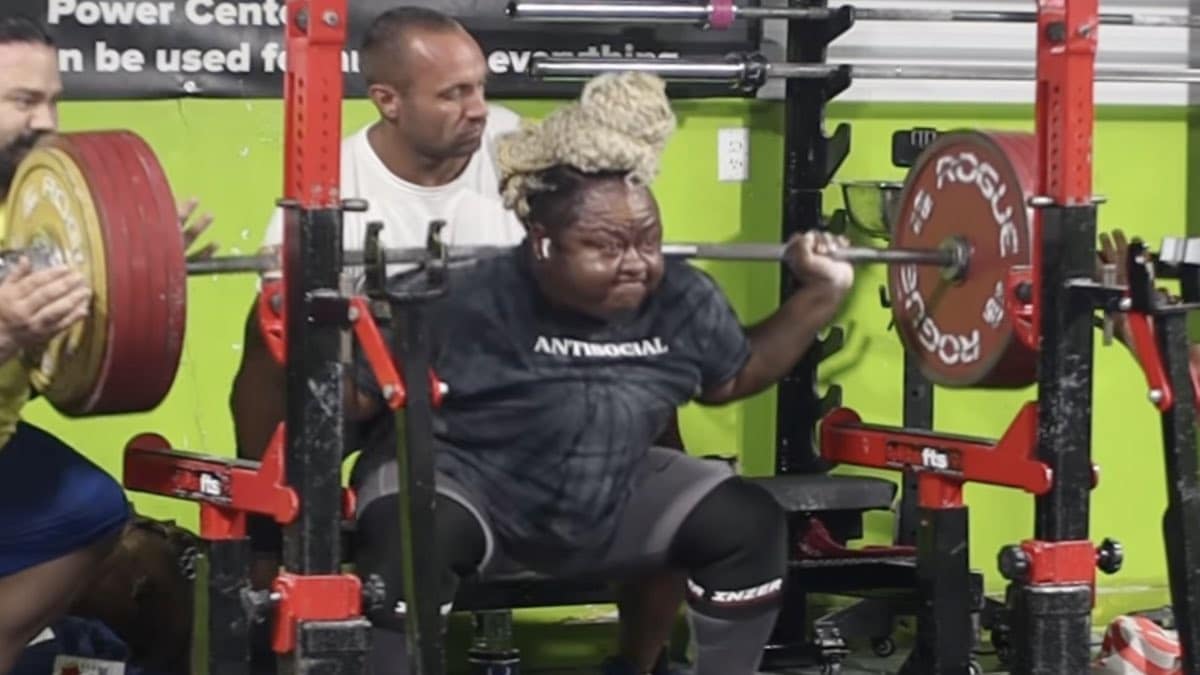
On August 28, 2022, Marcelle shared an Instagram video of herself squatting 257.6 kilograms (568 pounds) raw for two reps while wearing a lifting belt and knee sleeves. The demonstration of leg strength is a new personal record (PR) for Marcelle and unofficially exceeds Amanda Lawrence’s Raw World Record in the 90-kilogram division by four pounds, set at the 2020 USA Powerlifting (USAPL) Gainsgiving Open.
According to the caption of Marcelle’s Instagram post, she originally intended only to do one rep of the heavy squat. However, because she “wasn’t a fan of the first rep,” the athlete decided to do another where she took the squat lower to challenge herself.
Super grateful for all of my peers today for being there for me more than I was for myself. This chapter is the one; this chapter defines me as an athlete and where I’m headed.
The look of apparent determination on Marcelle’s face as she weighs whether to do another rep might say it all about this strength achievement.
Full Steam Ahead
Even while she takes a break from formal competition, Marcelle does not seem to be slowing her ambitions down. The powerlifter has been steadily pushing herself in the gym with some rapid progress of late.
In late August, in a precursor to her latest leg power achievement, Marcelle captured a (249.9-kilogram) 551-pound squat for two reps. Just a couple of days before that, Marcelle completed a 229-kilogram (505-pound) deadlift PR without wearing a lifting belt. And in early June, the athlete notched a 297 kilogram (655-pound) squat with wraps — 6.8 kilograms (15 pounds) more than Crystal Tate’s current World Record.
Here’s an overview of Marcelle’s all-time raw competition bests:
Sherine Marcelle (90KG) | All-Time Raw Competition Bests
Whenever Marcelle does return to formal competition, it’s clear she’s preparing to put her best-loaded barbell forward. If the year 2022 might be about stepping back with intent for Marcelle, then the year 2023 could resent a flourish that makes the patience pay off.
Time and time again, Heather Connor shows why she’s regarded as one of the world’s strongest powerlifters. In advance of her next competition across the pond, the elite 47-kilogram lifter recently showed off her tremendous legstrength.
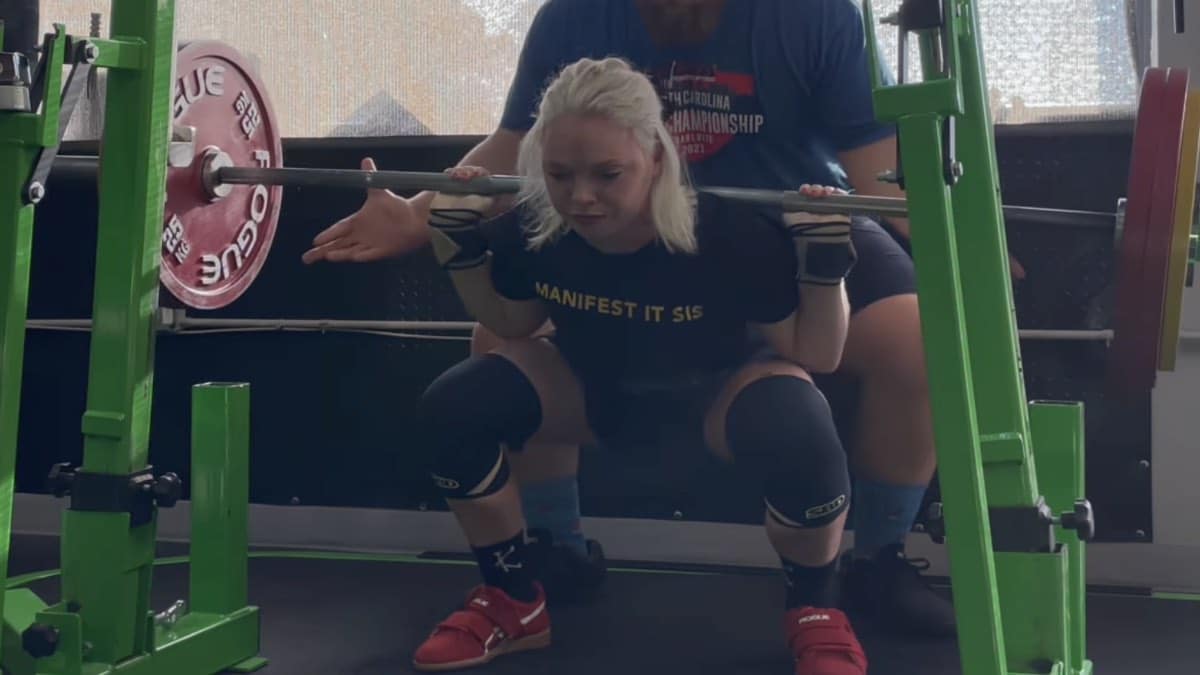
On August 29, 2022, Connor shared an Instagram clip of herself completing a 152.5-kilogram (336-pound) raw back squat during a training session. The feat is a personal record (PR) for Connor, and it also eclipses her all-time competition best by 9.4 kilograms (20.8 pounds). Connor previously notched her competition best back squat of 143 kilograms (315.2 pounds) at the 2022 USA Powerlifting (USAPL) Raw Nationals.
Connor wore a lifting belt, wrist wraps, and knee sleeves while achieving her new squat PR.
Connor’s strides with her squat are a part of her overall preparation for the upcoming 2022 Fédération Française de Force (FFForce) Girl Power in France. The competition will take place on October 15, while its precise location is still unclear at the time of this writing. The contest will mark Connor’s debut in a sanctioned French lifting setting.
The athlete has competed on an international lifting platform before. Connor is a two-time International Powerlifting Federation (IPF) World Champion in the 47-kilogram weight class (2018-2019). Her most recent appearance at the IPF Worlds earlier this summer saw the American athlete score a new deadlift IPF World Record of 185 kilograms (407.8 pounds). That staggering pull helped Connor to an eventual second-place finish behind the victor, Tiffany Chapon.
Here’s an overview of Connor’s all-time raw competition bests:
Heather Connor (47KG) | All-Time Raw Competition Bests
At the time of this article’s publication, Chapon has not made a public allusion to competing in the 2022 FFForce Girl Power against Connor. After falling short to Chapon at the 2022 IPF Worlds in South Africa, Connor seemed disappointed at her performance while giving credit to her peer.
“Not my best, certainly not my worst, but today is what I had in me,” Connor wrote in a reflective June 6 Instagram post. “The stronger lifter [Chapon] won today, and I’m perfectly okay with that.”
A win at the Girl Power contest, regardless of whether Chapon participates, would undoubtedly be a quality way for Connor to bounce back from her finish in South Africa. In the event there is a confirmation, Connor and Chapon could start making for a fascinating, back-and-forth rivalry in the 47-kilogram weight class in the coming years.
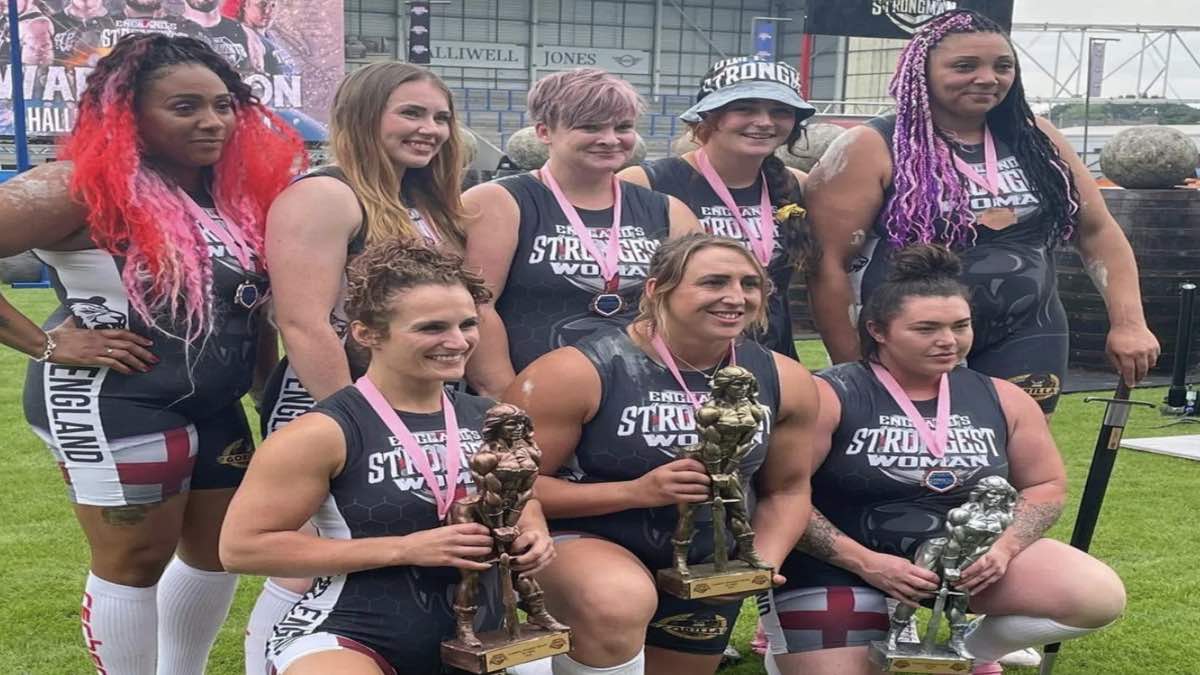
The respective winners of the 2022 England’s Strongest Man and Woman are strongman Paul Smith and strongwoman Lucy Underdown.
Smith successfully captured the victory in the strength competition by overcoming Andrew Flynn by a single point. Meanwhile, in line with recent achievements from training, Underdown won all five events in a dominant performance to notch the second win of her career. The Ultimate Strongman organizing body facilitated this year’s contest, which took place on August 28, 2022, in Warrington, England.
Here’s an overview of how the Men’s competitors fared in each event during their contest portion.
Event One — Farmer’s Walk
The first event for the Men was a Farmer’s Walk for time with implements of 150 kilograms (330.7 pounds). None of the competitors made it the entire distance. Andrew Flynn had the farthest carry of 27.82 meters, giving him the event victory.
Andrew Flynn — 27.82 meters
Paul Smith — 21.22 meters
Ellis Vine — 18.25 meters
Lewis Packham — 7.53 meters
Josh Norton — 7.48 meters
Daniel Cave — 7 meters
Joe Bromiley — 6.78 meters
Dean Evans — 2.29 meters
Joe Oliver — 1.35 meters
John Ford — Zero meters
Mason Fessey — Zero meters
Dan Hewson — Zero meters
Event Two — Block Press
During the second event, the athletes had the task of completing a Block Press with four separate implements. The fastest time would win out in a situation with a tie. After a second-place result to start, Smith took the overall lead by completing his presses nearly five seconds ahead of the next best competitor.
The third event of the contest gave the Men’s athletes the task of flipping a massive tire for 30 meters in 75 seconds. Daniel Cave was just one of two competitors to finish and beat Joe Oliver by fractions of a second for the event win.
Daniel Cave — 74.23 seconds
Joe Oliver — 74.95 seconds
Paul Smith — 18 meters
Andrew Flynn — 18 meters
Lewis Packham — 18 meters
Mason Fessey — 14 meters
Ellis Vine — 12 meters
Josh Norton — 12 meters
Dan Hewson — 12 meters
Dean Evans — Four meters
Joe Bromiley — Two meters
John Ford — Two meters
Event Four — Max Deadlift
The winner of this event was straightforward. Whoever could deadlift the most weight with one rep would get the victory. Dean Evans won by being the only athlete to pull at least 400 kilograms (881.8 pounds).
Dean Evans — 400 kilograms (881.8 pounds)
Daniel Cave — 380 kilograms (837.7 pounds)
Dan Hewson — 360 kilograms (793.6 pounds)
Paul Smith — 360 kilograms (793.6 pounds)
Andrew Flynn — 360 kilograms (793.6 pounds)
Lewis Packham — 360 kilograms (793.6 pounds)
Ellis Vine — 360 kilograms (793.6 pounds)
Mason Fessey — 340 kilograms (749.6 pounds)
John Ford — 340 kilograms (749.6 pounds)
Josh Norton — 340 kilograms (749.6 pounds)
Joe Oliver — 320 kilograms (705.5 pounds)
Joe Bromiley — 320 kilograms (705.5 pounds)
Event Five — Atlas Stones
In strongman tradition, the Atlas Stones closed the competition. At the time of this article’s publication, it is unclear how the below results were tabulated. Breaking Muscle will update with all relevant information at the soonest notice.
Here’s an overview of how the Women’s competitors fared in each event during their contest portion.
Event One — Anvil Walk
The Women’s first event was a 25-meter walk with a 50-kilogram (110.2 pounds) anvil. Underdown took charge with the event win and a walk under seven seconds.
Lucy Underdown — 6.63 seconds
Shannon Clifford — 7.5 seconds
Katie Smith — 10.41 seconds
Naomi Hadley — 10.41 seconds
Becca Worgan — 10.44 seconds
Nadine Guy — 22.71 seconds
Chloe Brennan — 42.03 seconds
Andrea Seed — 67.9 seconds
Event Two — Max Deadlift
Underdown holds the All-Time Strongwoman World Record deadlift and showed that skill during this event. In an eventual victory, Underdown’s top pull was 10 kilograms (22 pounds) more than the next best athlete.
The bags from the Bag Toss Medley ranged from 10 to 18 kilograms (22 to 39.6 pounds). The fastest finisher was the winner, which was once again Underdown (five in 19.62 seconds).
Lucy Underdown — Five in 19.62 seconds
Becca Worgan — Four in 33.72 seconds
Shannon Clifford — Four in 41.08 seconds
Chloe Brennan — Three in 12.73 seconds
Naomi Hadley — Three in 20.21 seconds
Katie Smith — Three in 33.51 seconds
Nadine Guy — Two in 20.62 seconds
Andrea Seed — One in 27.39 seconds
Event Four — Circus Dumbell Press
Note: The full results for the Women’s Circus Dumbbell Press are unclear at this time. Breaking Muscle will update this article as soon as all information is ready. At the time of this writing, all that is clear is Underdown made it four of four event wins.
Event Five — Atlas Stones
The famous Atlas Stones made an appearance as the closing event for the Women. The fifth and last stone weighed 130 kilograms (286.6 pounds). Underdown capped a perfect performance with a fifth event win by lifting all five of her stones in just over 30 seconds.
According to Strongman Archives, this competition win is the second for Smith over the last few months. The strongman from the United Kingdom won the 2022 UK’s Strongest Man in early June. As for Underdown, after starting her career with a few records but no victories, the strongwoman has now won two straight contests. In addition to her win in Warrington, Underdown also won the 2022 Britain’s Strongest Woman in mid-August.
The careers of both athletes continue to evolve at a promising pace.
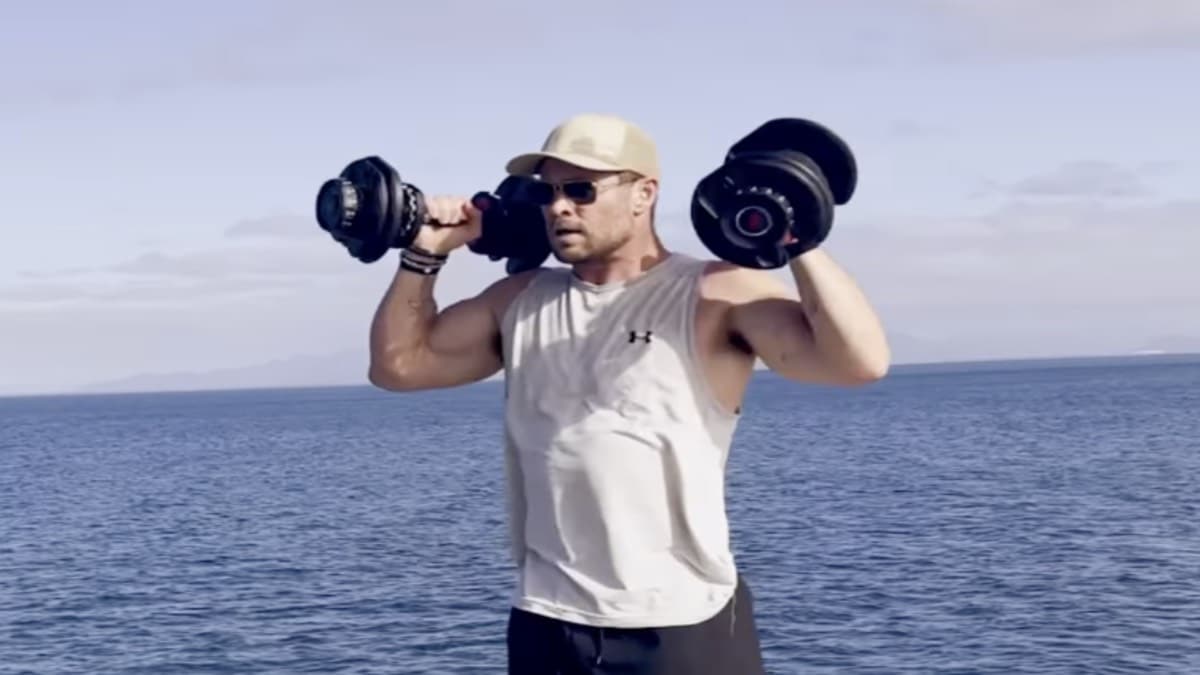
Ever since he entered the public eye as an actor, Chris Hemsworth has usually made it a point to keep up with his strength training and overall fitness. Between his film work, Hemsworth has spent some of his recent time promoting his workout application, Centr — which he started in 2019, according to an interview with Bloomberg. The latest routine from the man famous for playing Thor in the Marvel Cinematic Universe is a doozy.
On August 25, 2022, Hemsworth shared a 50-rep full-body workout featuring a combination of burpees, squats, lunges, biceps curls, and shoulder presses. The actor appeared to perform the respective exercises by a body of water, which may have again been on the deck of a Navy ship from the recent record-breaking blockbuster, Top Gun: Maverick.
Editor’s Note: This article covers a workout published by Hemsworth’s fitness application Centr. Breaking Muscle is not affiliated with or sponsored by Centr, nor is beholden to any form of public endorsement.
Here’s a complete rundown of Hemsworth’s 50-rep full-body workout:
Chris Hemsworth’s 50-Rep Full-Body Workout
Grab one pair of dumbbells and run through the sequence once, rest for 60 seconds, and complete four more times for five total rounds.
Dumbbell burpee curland press— 10 reps
Squat curl and press — 10 reps
Alternating reverse lunge and curl — 10 reps
Biceps curl — 10 reps
Standing shoulder press — 10 reps
According to the caption of Hemsworth’s post, the workout apparently becomes more manageable as one shifts from exercise to exercise. However, and this seems like an imperative aspect, he stresses not to rest until all 50 total reps are finished. That could indicate the full-body routine emphasizes both strength and conditioning.
In encouragement, Hemsworth’s Thor: Love and Thunder co-star, Chris Pratt, appeared to endorse the workout in the comment section of Hemsworth’s Instagram post.
“Thanks for the inspiration!” Pratt wrote. “Just did it. Great quick workout.”
Pratt also noted that he used “big rocks” he found on the beach instead of dumbbells before telling Hemsworth that he continues to “inspire” with his fitness work.
This full-body workout isn’t the first related to Hemsworth’s Centr application that the actor has shared recently.
For example, in early July 2022, Hemsworth walked through an intense chest routine predicated on volume in a relatively short amount of time. Then, in mid-August, the actor broke down a functional “minimal equipment” workout that may have taken place in the same naval location as his 50-rep full-body demonstration. A general perusal of Hemsworth’s Instagram will show he makes it a point to periodically post different workouts.
Based on the increasing frequency of the promotion of Centr, Hemsworth might become even more visible in the fitness space very soon. Given that the actor initially started the application as a way to promote healthy habits in the gym and the kitchen, it seems he’s starting to reach his precise and noble goal.
This fall, the strongman legend will officially return to the sport by competing in the 2022 Giants Live World’s Strongest Nation (WSN) competition. In a team-oriented, head-to-head contest, Hall will be the captain of Team UK, while eight-time WSM competitor Robert Oberst will captain Team USA. The competition will take place on November 26 in Liverpool, England.
In preparation for his return to strongman, Hall shared an August 24 video on his YouTube channel that details his daily nutrition three months before he competes in Liverpool.
Here’s Hall breaking down how he eats as he trains to excel in strongman again.
Breakfast
According to Hall, his wife usually prepares his daily meals. On the day this video was filmed, she had to work, so Hall made everything himself — with the help of his wife’s written instructions.
First on the ledger for Hall was a morning protein shake. It consisted of two scoops of whey protein, two tablespoons of peanut butter, one banana, some Skinny Food chocolate spread, milk, and ice. The strongman guessed the shake had around 700 calories and 65 grams of protein.
Afterward, before walking his dog for some morning cardio, Hall weighed himself on a scale. The scale read 160.45 kilograms (353.7 pounds) — over 40 pounds more than Hall’s weight during his boxing match with Björnsson in late March this year.
Lunch
Before he headed out for a training session, Hall pieced together his lunch. The athlete used scissors to cut up some chicken onto a skillet. Then, he chopped up some onions and tomato and mixed them with coriander, cilantro, and his own special low-sugar cooking sauce. He packed this mix into five wraps, which had roughly 1,500 calories and 120 grams of protein.
To have a smaller meal in the middle of his workout, Hall filled up two additional wraps. His calorie and protein total by the end of lunch were 2,800 calories and 305 grams of protein, respectively.
To conclude his day, Hall made two “Beast Burgers.” These burgers had two big patties of beef on respective buns, bacon, sauce, tomatoes, and cheese.
Everything went smoothly except for the fries — which Hall failed to pat dry, toss in oil, and plop in the air fryer. After he consulted his wife on the telephone, he acquiesced and plated his non-crispy potato wedges.
After finishing this final monster of a meal, Hall said his total calories for the day were 4,600, and total protein was 385 grams.
In his strongman heyday, Hall competed at over 400 pounds during contests. That is a far cry from his current weight of 353.7 pounds. Such a potential shift might mean Hall excels more on agility-related events while sacrificing strength in heavier aspects at the 2022 WSN.
Hall will take his nutrition and training to captain Team UK at the 2022 Giants Live World’s Strongest Nation on November 26 in Liverpool, England.