Skip to content

Author: books

Halloween Can Be a Scary Time for People With Dementia. Here’s How to Help

Halloween Can Be a Scary Time for People With Dementia. Here’s How to Help

[ad_1]

By Cara Murez 

HealthDay Reporter

THURSDAY, Oct. 27, 2022 (HealthDay News) — When there are suddenly creepy decorations and lots of knocks at the door from strangers, Halloween can be frightening for someone living with dementia.

It is possible to keep a loved one living with the disease calm and safe, while also including that family member in celebrating the holiday quietly, experts say.

“Like with many other traditions, there are adaptations families can make to help their relatives living with dementia have a safe and enjoyable Halloween,” said Jennifer Reeder, director of educational and social services for the Alzheimer’s Foundation of America.

“We encourage caregivers to follow a few quick and easy steps to keep the ‘Happy’ in ‘Happy Halloween’ on Oct. 31,” Reeder said in a foundation news release.

The foundation’s experts suggest adapting the celebration by reminiscing about past Halloween costumes or activities while looking at old family pictures. Watch a non-threatening program about Halloween.

Give your loved one healthy snacks, such as fruit. Too much candy can increase agitation.

For some, it may be possible to have a loved one with dementia help hand out candy to trick-or-treaters, but never leave the person alone to do so, which could be frightening, confusing and a safety risk, the foundation suggests.

Try playing calming music, engaging in a quiet activity such as reading a book together or providing soothing reassurance.

Minimize distress by avoiding potentially scary decorations, such as fake skeletons, cobwebs, witches and monsters. It’s especially important to avoid exposure to interactive decorations that talk or scream when someone passes by or that have flashing or flickering lights. These can scare and cause someone with dementia to wander away, even from their own home.

Stay safe with the lights on inside and outside the home, so burglars and vandals don’t think the house is empty, the foundation suggests. Another option for candy is to leave a bowl outside the door with a sign that says, “Please take one.”

The AFA Helpline at 866-232-8484 or via the website www.alzfdn.org offers an opportunity to speak with a licensed social worker seven days a week.

More information

The U.S. Centers for Disease Control and Prevention has more on dementia.


SOURCE: Alzheimer’s Foundation of America, news release, Oct. 24, 2022

[ad_2]

Source link

Powerlifter Yangsu Ren (83KG) Deadlifts 60 Pounds Over IPF World Record

Powerlifter Yangsu Ren (83KG) Deadlifts 60 Pounds Over IPF World Record

[ad_1]

Yangsu Ren is young compared to some of his peers, but he only started competitive powerlifting when he was 28 years old. With a new feat of strength, the athlete appears to be more than making up for any perceived past lost time.

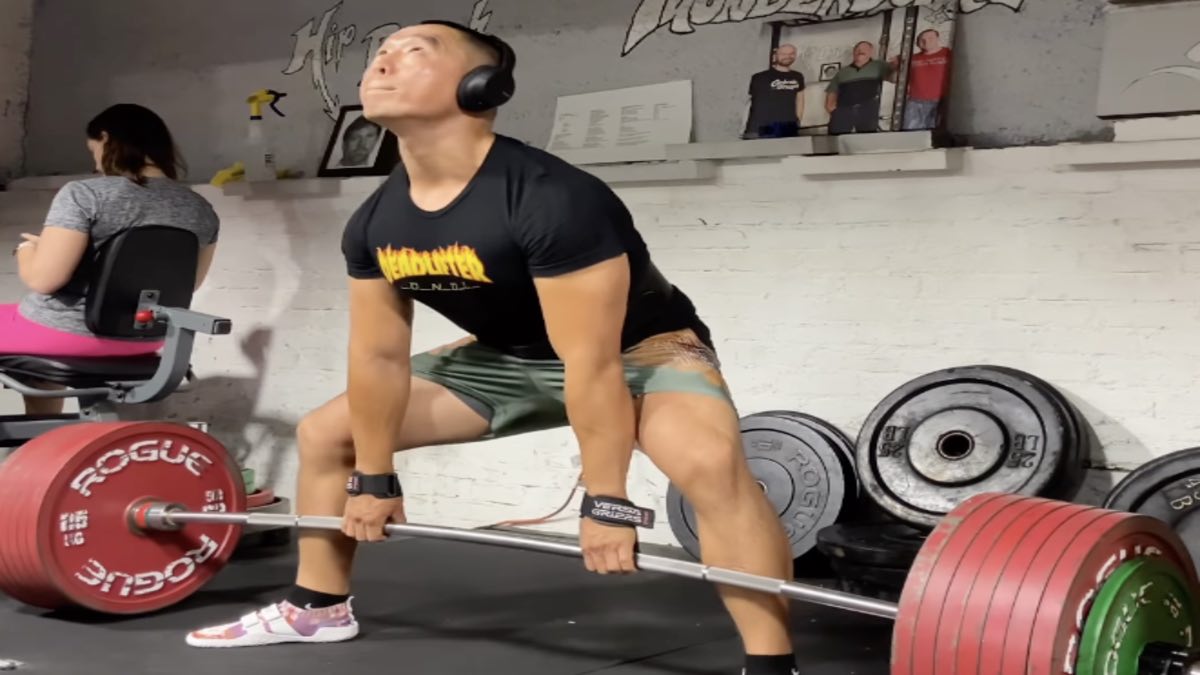
On Oct. 26, 2022, Ren shared an Instagram clip of himself capturing a 390-kilogram (860-pound) deadlift from a sumo stance, with lifting straps, during a training session. (Note: He did not disclose his body weight for the lift.)

According to Open Powerlifting, the pull is 50.1 kilograms (110.5 pounds) more than his all-time competition best from the 2017 USA Powerlifting Raw National Championships. This deadlift is also 27.5 kilograms (60.6 pounds) more than Owen Hubbard’s current International Powerlifting Federation (IPF) World Record in the 83-kilogram weight class. Ren’s previous training best was a 410.5-kilogram pull (905 pounds) from December 2020, when he weighed 196 pounds.

[Related: How to Do the Hip Thrust — Variations, Benefits, and Common Mistakes]

On an official competitive level, Ren has not formally stepped onto a sanctioned lifting platform in roughly four years since October 2018. At the time of this writing, he’s staying true to that trend and hasn’t alluded to any upcoming contests. That hasn’t stopped the athlete from crushing it in the gym, per his Instagram feed — where it’s apparent he regularly makes it a point to share clips of himself completing massive deadlifts.

Other notable recent deadlift sessions include Ren capturing a 336-kilogram (740-pound) conventional deadlift for three reps in September 2022. With that said and those caveats in mind, here’s an overview of Ren’s all-time competition bests:

Yangsu Ren | All-Time Raw Competition Bests

  • Squat — 252.4 kilograms (556.6 pounds)
  • Bench Press — 162.5 kilograms (358.2 pounds)
  • Deadlift — 340 kilograms (749.5 pounds)
  • Total — 737.5 kilograms (1,625.9 pounds)

As for Ren’s competitive history, he enjoyed some peaks and valleys but showed plenty of flashes should he ever return to the stage. Here’s a rundown of some of his notable career results:

Yangsu Ren | Complete Career Results

  • 2016 United States Powerlifting Association (USPA) Grinder Open (Raw/Open) — Second place
  • 2017 USAPL CA State Games & USA Masters Games (Raw/Open) — First place
  • 2017 USAPL Raw National Championships (Raw/Open) — Fifth place
  • 2018 USAPL California State Games (Raw/Open) — First place
  • 2018 USAPL Raw Nationals (Raw/Open) — Seventh place

[Related: How to Do the Inverted Row — Benefits, Variations, and More]

While Ren hasn’t competed as a powerlifter in a little while, he’s still kept busy with other aspects of his life. According to his LinkedIn and social media, Ren has a Ph.D. in genetics from the University of Michigan and currently works with computational biology as a professional.

It seems this prolific deadlifting athlete knows how to rigidly study and maintain his unique power at the same.

Featured image: @deadlift_panda on Instagram

Share this article!

[ad_2]

Source link

Black Americans Less Likely to Receive Lifesaving CPR: Study

Black Americans Less Likely to Receive Lifesaving CPR: Study

[ad_1]

By Amy Norton 

HealthDay Reporter

THURSDAY, Oct. 27, 2022 (HealthDay News) — When someone collapses in front of witnesses, the chances of receiving potentially lifesaving CPR may partly depend on the color of their skin, a new study suggests.

Researchers found that when Black and Hispanic Americans suffer cardiac arrest, they are up to 37% less likely than white people to receive bystander CPR in public places and at home.

The reasons for the disparity are not certain, but there are potential explanations, said senior researcher Dr. Paul Chan, of Saint Luke’s Mid America Heart Institute in Kansas City, Mo.

CPR trainings, he said, are less available in Black and Hispanic communities, and there are other barriers like cost, which may help account for the disparities in responses to at-home cardiac arrests.

But going into the study, the researchers expected that disparities would be lessened when cardiac arrests happened in public. With more people around, the chances that a bystander would be trained in CPR are greater.

Instead, the disparities were greater: Among cardiac arrests that happened at home, Black and Hispanic individuals were 26% less likely than white people to receive CPR. In public settings, that gap grew to 37%.

“That was striking. It wasn’t what we expected to see,” Chan said. “And it raises a lot of questions about why.”

Unfortunately, bias — conscious or not — could play a role, said Chan and other experts. Bystanders may be less likely to “make assumptions” about a white person who collapses, versus a Black or Hispanic person, Chan said.

Disparities were not, however, confined to cardiac arrests that struck in white neighborhoods, he noted.

Across neighborhoods of all incomes, and even in those that were majority Black or Hispanic, white cardiac arrest victims were more likely to receive bystander CPR.

Cardiac arrest occurs when the heart suddenly stops beating normally, due to a problem in its electrical system. Usually, the person collapses into unconsciousness and stops breathing normally. It is quickly fatal without emergency medical treatment.

If a bystander immediately starts CPR chest compressions, that can keep blood and oxygen flowing in the victim’s body until paramedics arrive. But in reality, only about 45% of Americans who suffer cardiac arrest outside of a hospital receive bystander CPR, according to the American Heart Association.

The new findings, published Oct. 27 in the New England Journal of Medicine, are in line with that statistic.

Chan’s team used a large U.S. registry to find more than 110,000 cases of cardiac arrest where witnesses were present. Despite that, most victims did not receive CPR, with rates particularly low for Black and Hispanic people.

When they suffered cardiac arrest at home, about 39% received CPR, versus 47% of white people. And when the arrest happened in public, just under 46% of Black and Hispanic victims received CPR, versus 60% of their white counterparts.

Such disparities were seen whether the surrounding neighborhood was mostly white, racially diverse, or majority Black or Hispanic, and whether it was high- or low-income.

“It’s sad, it’s heartbreaking,” said Dr. Katie Berlacher, a member of the American College of Cardiology Health Equity Task Force and a cardiologist at the University of Pittsburgh.

Yet she also said she was not surprised. Even though more people are available to respond to a cardiac arrest in a public setting, Berlacher said, those people can have biases, conscious or not. Those biases, she noted, can affect how quickly they approach the person who collapsed, call 911 or try to find someone who knows CPR.

Dr. Anezi Uzendu has worked with the heart association in developing a “toolkit” for reducing disparities in cardiac arrest care and survival. He is also a cardiac arrest survivor, thanks in part to the action of bystanders who administered CPR after he collapsed, at age 25, while playing basketball at his gym.

“It can happen to anybody,” said Uzendu, who is also a cardiologist with Saint Luke’s but was not involved in the study.

Uzendu beat the odds, as cardiac arrest survival is low, at around 12%, according to the heart association. And studies show that survival is even lower for Black and Hispanic people, versus whites.

CPR can double or triple the chances of survival, and it’s been thought that better access to CPR training could close the racial divide in cardiac arrest survival.

But the new findings indicate that CPR training is not the sole solution, Uzendu said.

“Some of this disparity may be due to lack of training,” he said. “Some of it may be due to structural racism. Some of it may be due to implicit or explicit biases.”

That said, all three doctors agreed that greater access to CPR training could make a big difference — particularly since an estimated 70% of cardiac arrests happen at home, where bias would presumably not be the issue.

One way to do that, Chan said, is by offering free or low-cost trainings at convenient locations such as churches or community centers in underserved neighborhoods.

Trainings should also involve people of color, Berlacher said — from instructors to the actors in the course videos.

As for cardiac arrest survival, Chan’s team found what previous studies have: Black and Hispanic people more often died. Of those who suffered cardiac arrest in public, just under 23% survived, compared with almost 32% of white people.

“CPR can make a huge difference in survival,” Chan said.

More information

The American Heart Association has more on learning CPR.


SOURCES: Paul S. Chan, MD, professor, medicine, cardiologist, University of Missouri-Kansas City School of Medicine, Saint Luke’s Mid America Heart Institute, Kansas City, Mo.; Kathryn Berlacher, MD, MS, assistant professor, medicine, medical director, Magee Women’s Heart Program, University of Pittsburgh Medical Center, and member, Health Equity Task Force, American College of Cardiology, Washington, D.C.; Anezi Uzendu, MD, interventional cardiologist, Saint Luke’s Mid America Heart Institute; New England Journal of Medicine, Oct. 27, 2022
 

[ad_2]

Source link

Eddie Hall Tries His Hand at a Mock NFL Scouting Combine

Eddie Hall Tries His Hand at a Mock NFL Scouting Combine

[ad_1]

As a former World’s Strongest Man (WSM) champion in 2017, there’s little doubt that Eddie Hall possesses the requisite strength and power needed to thrive as an American football player. The strongman legend recently decided to put some of his other skills to the test in a direct application.

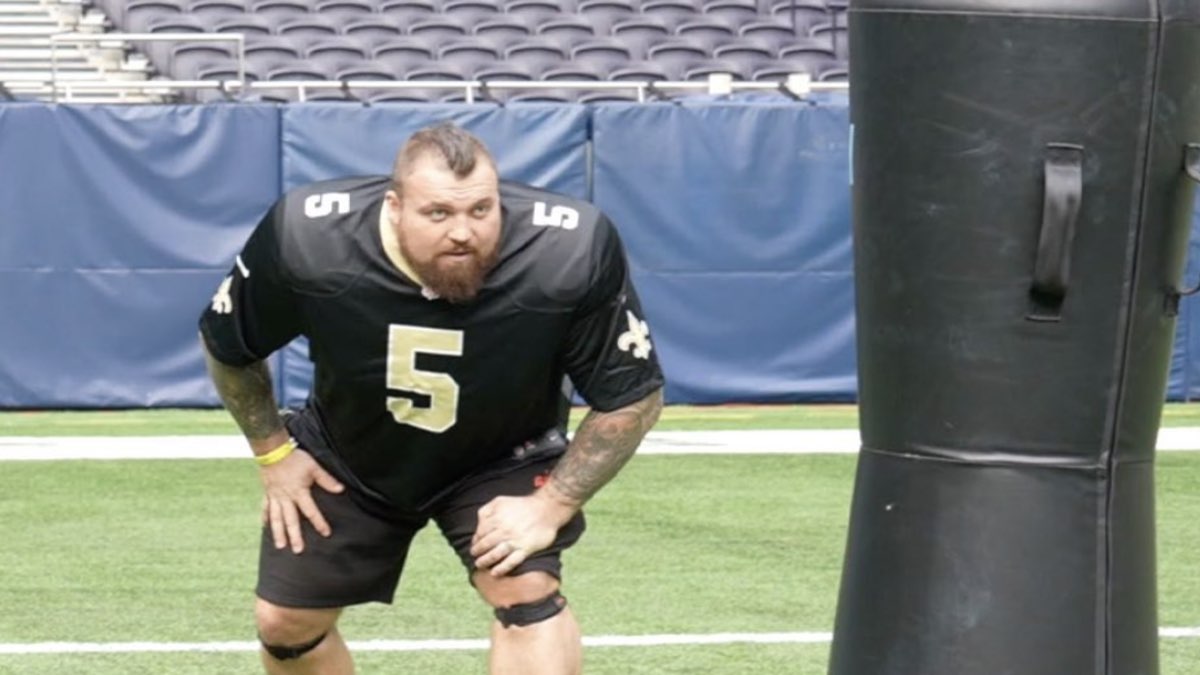
On Oct. 23, 2022, Hall posted a video to his YouTube channel where he tried several drills featured in the National Football League’s (NFL) annual Scouting Combine that test the athletic aptitude of incoming rookie players. Going a little bit out of his comfort zone seemed fun for Hall to check up on his overall athletic talents in an unfamiliar environment.

[Related: How to Eat More for Muscle and Strength Gains]

To ensure he would conduct every drill appropriately, Hall had former long-time NFL veteran Jack Crawford and rugby/former NFL player Christian Scotland-Williamson on hand to help. The combine-style workout took place at Tottenham Hotspur Stadium in London, UK. (Note: The stadium is one of the few venues in which the NFL sometimes plays regular season games, with another notable location being Wembley Stadium, also in London.)

After maintaining that he “can’t catch, can’t throw, and can’t run” but can probably “mow people down,” Hall padded himself in equipment and got to work.

The first drill saw Hall test his agility in the 20-yard shuttle to see how he changed direction. The drill has an athlete start in between a 10-yard margin. While pivoting, they run five yards to each side before a final 10-yard sprint. Hall notched a time of 5.15 seconds. For someone of his 300-plus-pound size, such a time compares well to NFL offensive linemen. For example, Houston Texans offensive guard and 2022 NFL draft selection Kenyon Green completed his official shuttle run in 5.12 seconds, per the NFL database.

[Related: How to Do the Close-Grip Bench Press for Bigger, Stronger Triceps]

Hall followed the shuttle run with the broad jump — where the athlete tests their forward-leaping ability. Hall managed to notch a distance of 6.5 feet (or 78 inches). This compared less favorably to NFL offensive linemen, as someone like the Los Angeles Chargers’ Zion Johnson broad-jumped 9.3 feet (or 112 inches) in March 2022’s edition of the actual Combine, according to Pro Football Reference. (Note: Hall completed his broad jump in shoulder pads and protective knee wear, potentially limiting his mobility. Whereas NFL athletes complete their tests in shorts and shirts.)

Hall finally tried his hand at the famed 40-yard dash to close this short mock NFL combine. A simple ask, all he had to do was run 40 yards in a straight line as fast as possible. He finished with a time of 5.73 seconds. Considering his lack of experience, that time might be solid. Though, again, mobility issues aside, that time doesn’t compare well with young professional offensive linemen, as someone like Johnson had a 40-yard dash of 5.18 seconds. In this drill, more than half a second is a significant difference.

[Related: How to Do the Weighted Pull-Up — Benefits, Variations, and More]

With this Combine mock-up in the rearview mirror, Hall is preparing for his strongman comeback. After retirement in 2017, he will return as captain of Team UK at the 2022 Giants Live World Nation on Nov. 26, 2022, at the M&S Bank Arena in Liverpool, England. Hall might have been a successful American football player in a different world.

In this reality, strongman is his calling, and it should be fascinating to see how he fares in what will likely be a highly-anticipated return.

Featured image: @eddiehallwsm on Instagram

Share this article!

[ad_2]

Source link

What Pact Pieces I’m Wearing on My Next Trip (Plus, a Sale!)

What Pact Pieces I’m Wearing on My Next Trip (Plus, a Sale!)

[ad_1]

pact discount code

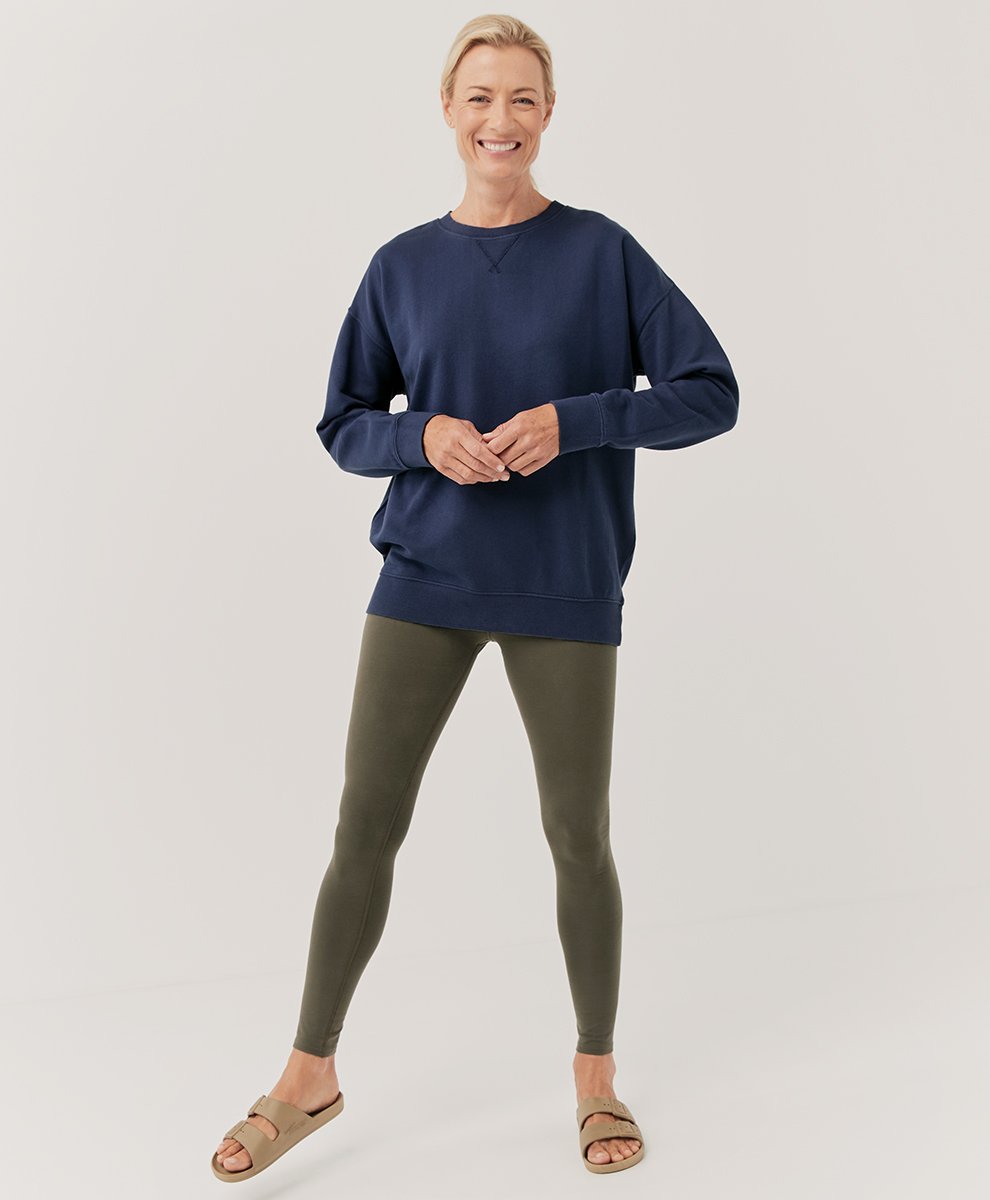
What clothes do you like to wear for everyday adventures or trips? On a flight, for long walks, or while knocking around the neighborhood, I feel my best in a soft sweater or relaxed skirt. So, lately, I’ve been really into Pact’s women collection. Here are a few favorites (plus, a huge sale)…

pact discount code

How effortlessly cute is this sweatshirt dress? Paired with white sneakers, it’s the perfect outfit to wear while curling up with a book or taking an evening stroll with friends.

pact discount code

This honeycomb sweater feels timeless. I’d wear it with airplane joggers over the holidays, while playing Pictionary with the boys or watching So I Married an Axe Murderer with the family. (It’s never not hilarious.)

pact discount code

The graceful silhouette of this midi-dress makes it perfect for dinners out or family gatherings, and I’ve always loved 3/4 sleeves. Bonus: it comes in 10 colors and has pockets!

pact discount code

And how about this polo sweater? This style has been everywhere this fall, and you could wear the timeless look for years. I’m also eyeing this fisherman turtleneck, which has just right for a hair-tuck.

pact discount code

Good news: Pact is offering Cup of Jo readers an early Black Friday sale — which they never do. Use code COJ30 for a whopping 30% off their entire women’s collection (excluding sale items). Good through October 30th. Here are a few more pieces we adore…

Thoughts? Find everything here — including the coolest jumper and my new favorite pants.

(Top photo of the downtime pant. This post is sponsored by Pact. Thank you so much for supporting the brands that support Cup of Jo.)

[ad_2]

Source link

Adults With Chronic Acid Reflux Rarely Get Recommended Test

Adults With Chronic Acid Reflux Rarely Get Recommended Test

[ad_1]

Oct. 27, 2022 — Adults who have chronic gastroesophageal reflux disease (GERD) and their primary care doctors may not know they need to be screened for a condition called Barrett’s esophagus, a precursor to cancer of the esophagus. 

People with GERD are at risk for Barrett’s and cancer of the esophagus. Yet in a survey of 472 adults with GERD, only 13% had ever been advised by their doctor to undergo screening endoscopy and even fewer actually had the imaging test. 

“These results make it clear that screening is rarely done,” says Jennifer Kolb, MD, with UCLA School of Medicine, who worked on the survey.

About 20% of people in the United States have GERD, which happens when stomach acid repeatedly flows back into the esophagus, the tube connecting the mouth and stomach. This backflow (acid reflux) can irritate the lining of the esophagus.

People with GERD may have heartburn, a burning sensation in the back of the throat, chronic cough, laryngitis, and nausea. 

About 1 in 10 adults with chronic GERD symptoms will develop Barrett’s esophagus – a condition in which the lining of the esophagus becomes damaged by acid reflux. Barrett’s esophagus is associated with a small increased risk of developing cancer of the esophagus. 

Current guidelines recommend screening for Barrett’s esophagus using endoscopy – in which a long, thin tube is inserted into the body to look for problems — for those at risk, which includes people with chronic GERD along with other risk factors such as being over 50 years old, being male or white, smokers, people with obesity, and those with family history of Barrett’s or cancer of the esophagus. 

But the current survey shows a clear lack of knowledge about risk factors and indications for Barrett’s screening among adults with GERD. 

Only about two-thirds correctly identified Barrett’s risk factors and only about 20% believed screening was necessary with GERD. 

“If you have three or more risk factors, screening should definitely be discussed and considered,” says Prasad Iyer, MD, with Mayo Clinic in Rochester, MN.

Yet this survey shows that patients with GERD “don’t have the knowledge of when they should get medical attention and possibly endoscopy,” adds Seth Gross, MD, with NYU Langone Health in New York City.

People of color with GERD appear to be most worried about developing Barrett’s but have the highest barriers to completing screening.

For some people, fear of discomfort with endoscopy is a barrier to getting the test.  

To perform an endoscopy, a doctor inserts a long, flexible tube with a camera attached down the throat and into the esophagus after giving the patient a sedative. Once the tube is inserted, the doctor can visually inspect the lining of the esophagus and remove a small sample of tissue toconfirm a diagnosis of Barrett’s. 

However, newer, less invasive screening options are increasingly available or in development.

One is the so-called Cytosponge, a small, capsule-shaped device the size of a multivitamin. A thin string is connected to a sponge inside the capsule. 

When swallowed, the capsule dissolves and the sponge expands. The string is then gently pulled to remove the sponge. As it’s removed, the sponge collects cells from the entire length of your esophagus, which are used to make a diagnosis of Barrett’s. 

[ad_2]

Source link

My Friends’ Brooklyn Apartment Has the Coolest DIYs (and the Cutest Dog)

My Friends’ Brooklyn Apartment Has the Coolest DIYs (and the Cutest Dog)

[ad_1]

I first met Grace Cady when she regularly babysat the boys for a few years. She brings a beautiful mindfulness to all she does; my kids always say, “Grace is sooooo calm.” (Here’s a photo of her at Toby’s ninth birthday party.) Grace now lives with her husband Jack and their dog Cooper, and she gave us a look around their sunlit apartment…

LIVING ROOM

Chair: Article. Blanket: Pendleton. Pillow: Raymour and Flanigan. Black rug: Chairish, similar. White rug: Amazon. Round light: Big Reuse. Candle: Yui Brooklyn. Boob Match Holder: Grace Cady. Pear bud vase: Grace Cady. Jug: Grace Cady. Planter: By Grace, similar.

On first impressions: When we first saw this apartment, it wasn’t in great shape. There was a broken light in the kitchen. There was a diaper in the toilet! But I walked into the living room and felt like this space had to be in our life. My husband was like, no way, I hate that apartment. But in the end he trusted that I had a really good feeling.

On fresh paint: At first, all the walls were weird colors — like a puke-y yellow, and a not-cute blue, and a salmon pink. So, we painted everything white. We also changed the light fixtures and sink faucets and medicine cabinet — inexpensive things that made a huge difference. More recently, Jack installed the built-in bookshelves. We used to have Ikea standing shelves, but last winter he was bored and started researching and then just did it! It changed the entire space. [Ed. note: Grace and Jack then made our bookshelves, which we love.)

Paint: Benjamin Moore. Large mirror: Horseman Antiques.

On the weird ledge: The ledge in our living room is the strangest thing — we don’t even know why it’s there! Our dog Cooper lies on it, and we display plants. Every Saturday night, we have friends over, and it turns into a stage to play a charades-game called Salad Bowl. (Everyone puts three words into a bowl, and each team goes back and forth, and it’s three different rounds; in the first round, you can say anything; the second round is charades and you act out the word; and the third round is just one word; by that time, everyone has inside jokes about the words!)

On a beloved pet: We adopted Cooper four years ago from a dog rescue called Hearts and Bones. At first we were interested in another dog, but then we met Cooper, and he was so sweet and cuddly, and we took him for a walk, and we were like, this is it, this is him.

On happy wiggles: We call him ‘the camp counselor.’ He’s always trying to get everyone to play and have fun. We think he knows he was at a kill shelter because he has a second lease on life — he’s bursting with joy the whole time. And he LOVES having his teeth brushed. Jack and I will be brushing our teeth at the same time and Cooper will come in and drool at the door until we brush his teeth, too.

Desk chair: Big Reuse. Desk, vintage, from a stoop sale. Rug under desk: Vintage, from a friend. Light above desk: Amazon. Painting by Grace.

On naming him: We took him for a walk on his first night, and we walked down Hooper Street, and I thought, ‘Cooper!’ I sometimes think, should we have been more creative? His best dog friend in the neighborhood is Ravioli, which is hilarious, but at the end of the day, he’s such a Cooper.

Credenza: Article. Sconces: Etsy. Bud vase: Grace Cady. Small mirror: Vintage. Green pillow: Etsy. White pillow: Amazon. Woven pouf: Creative Coop, similar. Vase: Grace Cady.

On movie nights: We don’t have a TV, but we have a projector. We take the painting down over the mantle and project the movie on the wall. I really want to watch Everything Everywhere All at Once.

DINING/WORK AREA

Pendant light: Flkisnuas. To Care Print: Raniban. Pottery: Grace Cady. Chairs: West Elm. Filing Cabinets: Big Reuse.

On a couch cover: We found our used couch at Housing Works in Brooklyn Heights — it was $250, and Jack and I carried it home down the streets. It’s comfy and big, but it’s dark blue, so once Cooper moved in, we were vacuuming the couch every single day. I ordered a huge piece of canvas for like $30, and I cut it to size so it would be a little draped. Then we just tucked it in. We’ve now had it for more than two years and wash it every other week. If someone spills wine on it, I just don’t care, and that’s such a nice feeling — I don’t want things to feel untouchable.

On a career change: Years ago, I went through a pretty big career shift. I was a social worker working in hospice and end-of-life care. I loved it but I craved change. So, I kept following little gut instincts and eventually made my way here. Now I do freelance graphic design work; and I make ceramics and sell my work through my website and wholesale; and I teach my own workshops and also teach at BKLYN CLAY. Income-wise and security-wise, it was a scary shift. Honestly, it’s still scary and even though people make it look not scary and totally normal, I’m terrified most of the time, and I imagine other people are, too. The internet makes things look really simple, like everyone has it together, but that’s not usually true!

On finding support: What helps is surrounding yourself with people who are delighted by you and believe in you. That goes the other way, too — if you have a friend who is trying something new or making a career change or taking a risk, let them know that you support them.

On life lessons: My social work background shows up in my creative work, like my mindfulness offerings and newsletter and workshops. I still refer to a lot of those texts and lessons. I think my experience in end-of-life care is also why I’m not as rattled anymore by smaller things. In the long run, little things don’t matter as much as we may feel they do in the moment — like getting stuck in traffic or other annoyances. Also, I try to never assume anything — you never ever know what’s going on with other people.

On meaningful work: There are so many different kinds of potters out there, and I was watching a video of an instructor and he said, ‘I don’t want you to think about my work, it doesn’t have any meaning, it’s just there to be useful.’ And it was so interesting because I feel the opposite. There are so many things I want people to feel when seeing my work in their house. Sometimes it’s fun, like my boob pottery is to bring joy; and some is more about slowing down and creating ritual in your life. I love hand building, which takes way more time but the pieces feel very textured and personal. They’re sort of pinched and you can almost see my handprints. It takes weeks to make one mug! There’s a lot of waiting with the process, which is a reminder that good things take time and you have to be patient. I also run workshops where I want people to mindfully play, which is something Brené Brown talks about. We’re so hyperconnected, always on screens and running around, and it’s nice to create spaces where we put everything down for an hour or two and touch the earth with our hands. Finally these disjointed parts of my life are coming together and meshing in this beautiful, exciting way.

KITCHEN

Table and chair: Big Reuse. Kettle: Fellow Products. Coffee grinder: Crate and Barrel. Boob mug and bud vase: Grace Cady. Sponge holder: Grace Cady. Wall calendar: Aly Miller Designs.

On cooking at home: More recently we started getting Hungryroot because we’ve been so busy trying to get my business off the ground. But fall is my cooking season. I love making stews and chili and bean bakes and lasagnas. Sometimes I’ll get recipes online but often I’ll make things up.

On neighborhood sounds: In our building’s backyard is a restaurant. Every night while I’m cooking dinner, I’ll hear the music and people chatting, and I’ll almost feel like I’m at the restaurant. Sometimes I’ll look out and spot a friend. Oh my god, I went to high school with her!

On an evening ritual: Another kind of weird thing is that the bathroom is right off the kitchen, which feels sort of odd. But it’s also sweet because at night after a long day, I’ll be cooking dinner, and Jack will be in the shower, and we’ll be chatting, and it’s such a nice way to unwind.

BATHROOM

Shower curtain: Parachute. Hamper: West Elm. Bath mat: Quiet Town. Nude Print: Raniban. Pottery: Grace Cady. Shelf: Schoolhouse.

On eloping: Jack and I had talked about getting married, and while we weren’t into the idea of a huge wedding, we wanted to do something with my family. In 2019, my parents were planning a family trip to Palm Springs and Joshua Tree. So, we decided to turn it into a wedding but not tell anyone ahead of time. My family loves games, so at the beginning of the trip, we passed out playing cards with Cooper’s face on them and it said, ‘My parents are getting married on Friday!’ My relatives read them and were so shocked. I loved it because it felt like a big deal but also incredibly natural.

On spreading the news: We were very thoughtful of how everyone else in our life might take it — we didn’t want anyone to feel left out or hurt. So, we slowly started telling people in person as we saw them, which was — and I didn’t expect this part — so special and intimate. We told our friend Taylor and he started crying, which was sweet; and we face-timed our friend Graham and he was so happy. Our friends visited from Portland and we were folding laundry before going to dinner and we were like, ‘So, we’re married!’

BEDROOM

Paint: Clare paint in Daily Greens.

On a green bedroom: Last winter, I wanted the bedroom to feel cozier, so we would feel more held. Our room was painted white, so I decided to go with green. It gets super dark and cozy at night, but in the morning, the light reflects off and it feels energizing.

On a homemade headboard: Jack and I made the headboard. We’re a good team in that I’ll design things and Jack will bring my ideas into the physical world — I make the design and he makes it happen! He cut all the slats to size and put them onto boards and then installed them on the wall. The side tables are connected, and I made the lights out of porcelain. It’s so cool seeing my work suspended in the air and the shadows around them.

On open windows: We don’t have any curtains because we’re big on natural light. When people come to stay, like my parents or brother, we’ll give them our bedroom, and we’ll sleep in the living room. They’re always like, do you have any curtains we can put up? But we’re one story up so people walking by on the street can’t see in, it’s only our neighbors across the way. Living in NYC, we are used to it and just don’t care!

Thank you so much, Grace! We love you.

P.S. More house tours, including an apartment that feels like a treehouse and a family home bursting with gorgeous rainbow colors.

(Photos by Christine Han for Cup of Jo.)

[ad_2]

Source link

Hospital for Special Surgery spins off virtual MSK platform

Hospital for Special Surgery spins off virtual MSK platform

[ad_1]

Hospital for Special Surgery, a New York-based academic medical center focused on musculoskeletal care, announced it had raised $21 million in Series A funding to launch RightMove Powered by HSS.

RightMove will offer virtual triage and physical therapy. HSS said it plans to go live at the end of the second quarter next year. 

The funding round, led by Flare Capital and HSS, will go toward building RightMove’s technology platform and hiring physical therapists nationwide.

“We believe RightMove can address an unmet need in the market by being a true value-based partner to health plans and employers through our proven care model, use of specialty trained physical therapists and unparalleled experience providing telerehabilitation,” Dr. Amy Fahrenkopf, senior vice president of HSS and president of HSS Health, said in a statement. 

Fahrenkopf will also serve as interim CEO of RightMove.

THE LARGER TREND

Some digital musculoskeletal platforms raised huge funding rounds last year as companies aim to use the platforms to manage the large number of patients suffering from MSK issues.  

In October 2021, Hinge Health, which offers digital at-home MSK care and physical therapy, announced it has raised $400 million in a Series E funding round, plus a $200 million secondary investment to acquire ownership.

Hinge said it was valued at $6.3 billion, more than double the valuation it announced in January of last year when it raked in $300 million in Series D funding

In November 2021, digital MSK care company SWORD Health announced it raised $163 million in Series D funding. The oversubscribed Series D allowed for a secondary $26 million round, bumping SWORD’s valuation to $2 billion.

[ad_2]

Source link

Bodybuilder Blessing Awodibu Takes Training Cues From 7-Time Mr. Olympia Phil Heath

Bodybuilder Blessing Awodibu Takes Training Cues From 7-Time Mr. Olympia Phil Heath

[ad_1]

After winning the 2022 New York Pro and Indy Pro shows, it might be fair to say Blessing Awodibu is one of the bigger up-and-coming names in bodybuilding. To help further cement his place at the upcoming 2022 Mr. Olympia — his debut in the sport’s flagship contest — he recently enlisted the help of a living legend.

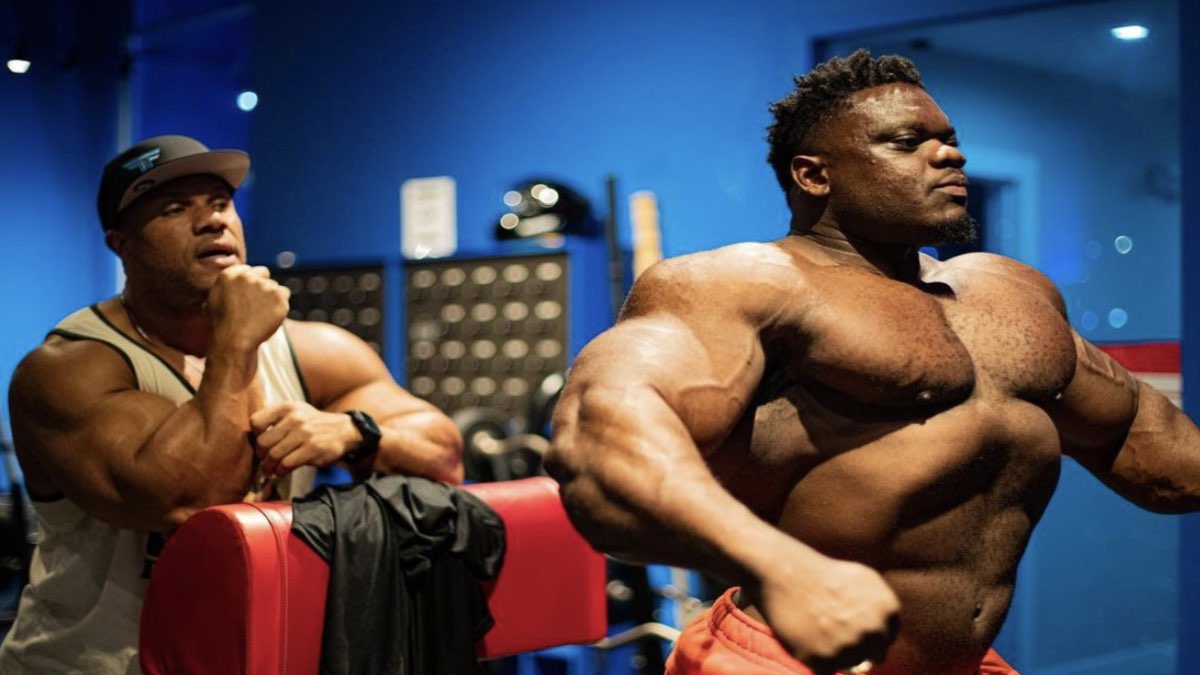
On Oct. 24, 2022, Awodibu posted a video to his YouTube channel where he trained with seven-time Mr. Olympia champion (2011-2017) Phil Heath. The two have previously worked together in the gym and, in this instance, they focused on polishing up Awodibu’s arms.

[Related: How to Eat More for Muscle and Strength Gains]

With introductions out of the way, the pair immediately jumped into the workout fray. While Awodibu tackled his biceps on the preacher curl machine, he discussed Heath’s approach to arm training during the early parts of his career. It apparently came to a point where Heath was training his arms so well he had to slow down and let the other parts of his physique fall in line.

“I would have a full arm day, but then I would do chest and tris, then back and bis,” Heath said. “By the time I turned pro, my arms were overpowering everything.”

As Awodibu transitioned to an incline biceps curl machine, Heath gave him a tip to warm-up first for a measure of established control.

“I know how to do this, but after the contraction, the machine almost pulls me down when I lower it,” Heath explained to Awodibu. “I really have to control this one.”

Eventually, Heath had Awodibu do some “Heath Curls” — the bodybuilding legend’s variation of single-arm dumbbell curls where one does several reps on one side before alternating. This differs from traditional curls, with an athlete alternating every individual rep. A mix of concentration curls, rope pushdowns for the triceps, cable overhead extensions, and single-arm cable pushdowns would follow through the rest of the routine.

Here’s an overview of the workout:

*Blessing Awodibu Arm Workout with Phil Heath, October 2022

  • Single-Arm Preacher Curl Machine
  • Single-Arm Incline Curl Machine
  • “Heath Curl”
  • Standing Concentration Curl
  • Rope Pressdown
  • Cable Overhead Extension
  • Single-Arm Cable Pushdown

*Note: Sets and reps numbers not provided.

[Related: Forced Reps — What They Are and How to Use Them]

While Heath won’t be competing alongside Awodibu at the 2022 Mr. Olympia, that doesn’t mean he won’t have an important role. The bodybuilding great will be one of the lead commentators in the announcers’ booth, offering his experienced insights on the contest.

Meanwhile, Awodibu will try to make a name for himself amongst some of the sport’s active dynamos like Mamdouh “Big Ramy” Elssbiay and Nick Walker. If he’s taking cues from someone such as Heath, chances are Awodibu might flourish. The 2022 Mr. Olympia will take place on Dec. 16-18, 2022, in Las Vegas, NV.

Featured image: @blessing_awodibu on Instagram

Share this article!

[ad_2]

Source link

Fertility startup AIVF buys lab management software company ART Compass

Fertility startup AIVF buys lab management software company ART Compass

[ad_1]

Israeli fertility startup AIVF announced Tuesday it had acquired ART Compass, a company that makes lab management software for in vitro fertilization.

AIVF’s main product is the EMA platform, which it says uses artificial intelligence to assess embryo quality during IVF treatment. The company said the deal will add to its offering and help it build momentum in the U.S. market. 

ART Compass’ founder Carol Lynn Curchoe will join AIVF as director of medical affairs. The company plans to integrate the newly acquired software into the EMA platform in the first quarter next year. 

“This first acquisition adds novel capabilities for the expansion and integration of our FertilityOS in clinics,” said AIVF CEO and cofounder Daniella Gilboa, , said in a statement. “Strategic industry partnerships like this support our mission to accelerate the digital transformation of fertility care.”

THE LARGER TREND

Founded in 2018, AIVF received a European CE mark for its EMA platform last year. It recently scooped up $25 million in Series A funding, which the company plans to use to expand adoption of its technology in the U.S. and Europe.

There are a number of health tech startups tackling fertility as more companies offer benefits for fertility care like IVF.

Another company touting AI-assisted IVF technology is Alife Health, which this week launched its platform that aims to help clinics make decisions during the IVF process and streamline workflow. The company announced a $22 million raise in March and a $9.5 million seed in May 2021. 

Kindbody has also been expanding its fertility services. Earlier this year, Kindbody purchased Vios Fertility Institute, a network of fertility clinics. It’s also added in-house genetic testing and surrogacy services through acquisitions in 2022.  

[ad_2]

Source link