Aster MIMS Hospital has partnered with Medtronic India to build a comprehensive stroke programme in Kerala.
It will form a hub-and-spoke network of identified hospitals around Calicut which will be provided with teleconsultation support and resources for mobilising stroke patients at a critical stage and in urgent need of therapy.
With Aster MIMS at the core of this network, partner hospitals can pass on scans and vital parameters of suspected stroke patients to a team of experts at Aster MIMS for further evaluation. Their condition will then be continuously assessed through telemedicine.
Meanwhile, multiple neuro-interventional surgeons will be available round the clock to perform mechanical thrombectomy.
WHY IT MATTERS
Each year, over a million patients in India experience stroke – mostly ischemic ones. Due to a lack of stroke-ready centres in the country, most patients do not get timely treatment, said Dr Jacob P. Alapatt, head of the Neurosurgery department at Aster MIMS Calicut. There are two ways to remove blood clots in the brain which lead to stroke: physically removing the clot through mechanical thrombectomy or administering clot-dissolving medicine through IV thrombolysis.
Aster MIMS and Medtronic’s partnership seeks to address the inaccessibility of care and lack of awareness of stroke and its management.
“The programme is designed to break down barriers to treatment and standardise patient care pathways to reduce the overall burden of stroke. Through our partnership with Aster MIMS, we aim to increase access to life-saving therapies for more patients in India,” Madan Krishnan, VP and managing director of Medtronic India, commented.
MARKET SNAPSHOT
Indian startup Qure.ai last year unveiled a new stroke management platform. It is powered by Qure.ai’s proprietary AI imaging solution called qER, which interprets and quantifies up to 12 abnormalities on head CT scans and helps spot stroke at an early stage. It also comes with a companion mobile app where specialists can view imaging data, edit findings, and share reports.
Also last year, Medtronic India partnered with Stasis Health, a unit of Stasis Lab, to promote the latter’s AI bedside patient monitoring system in India.
New Mexico-based telehealth and technology services company Electronic Caregiver announced the close of its latest funding round that raised $30 million plus a warrant exercise for a total of $42.5 million.
The new funds will help expand the company’s revenue and customer base, leading to a planned IPO within 24 months.
The company offers remote patient monitoring and chronic care management services, a 3D virtual caregiver named Addison, advanced medical alerts and telehealth solutions.
To date, the company said it has raised $110 million in equity and $10 million in debt financing.
Limber Health, a company that merges a digital approach with in-person musculoskeletal care, raised $11 million in Series A investment.
The round was led by Blue Venture Fund, the Blue Cross Blue Shield Association and Sandbox with participation from Glenview Capital.
The company partners with physicians and providers to offer a hybrid approach to musculoskeletal care, offering a digital toolkit for remote therapeutic monitoring.
“Limber Health is proud to announce our Series A with the world-renowned healthcare investment teams at Blue Venture Fund and Glenview Capital,” Michael Gruner, cofounder and CEO of Limber Health, said in a statement. “Both digital and in-clinic services are fundamental to maximize impact on patient outcomes and total episode costs, and we are focused on building the leading platform for delivery of hybrid MSK care. With the financing, we look forward to further enhancing our platform and growing our provider and payer partnerships.”
UK-based digital language and speech therapy platform Noala announced its receipt of $4 million in seed funding.
The round was led by LocalGlobe with participation from Cocoa Ventures, Josefin Landgard of Kry, Nicolas Brusson of BlaBlaCar, Xavier Louis of Peak and Adrien Nussenbaum of Mirakl, among others.
The company, which initially began as an app for speech and language professionals in the UK and U.S., now provides a direct-to-consumer speech and language coaching platform for children in the UK.
Noala will use the new funds to develop its platform and expand its team, and it plans to conduct clinical trials on its direct-to-consumer platform next year. It also aims to release its children’s therapy platform in the U.S. in early 2023.
Elion, a digital health technology marketplace, received $3.3 million in a seed funding round. Max Ventures, NEA, 8VC, Charge Ventures, Floating Point and AlleyCorp participated in the raise.
The funding will support the company’s continued build of its digital health marketplace, which aims to provide an overview of digital health offerings available on the market, and further its content development and go-to-market work. Alongside the funding announcement, Elion released a beta version of its product.
“NEA has been investing in healthcare companies for decades, allowing us to closely track the explosion of digital health and the increasing build versus buy decisions,” Lily Huang, principal at NEA, said in a statement. “We are thrilled to have had the privilege of partnering with Elion at the formation stage and look forward to working with Bobby and his team to help power the next generation of digital health companies.”
Upheal, a platform that helps mental health professionals with note-taking and documentation via its digital therapy tool, secured $1.05 million in pre-seed funding.
The round was led by Kaya VC with participation from Calm/Storm Ventures, Credo Ventures and angel investors.
The company also announced the launch of its early access program, which allows mental health professionals to begin using the platform. It noted the new round of funding would support the acceleration of its product development.
The Australian government has awarded grants to research projects working on wearable technology to improve health monitoring for Australians.
A project at Curtin University, which has been provided with A$1.5 million ($950,000) funding, will develop and test wearable sensors to monitor the movement of children with cerebral palsy who are unable to walk.
Another project at the University of New South Wales (A$1.9 million or $1.2 million) will try out a cuffless blood pressure device in adults with hypertension.
A Bond University project (A$1.09 million or $700,000) will combine data from wearable devices and patients’ medical records to help people with Type 2 diabetes set goals and monitor their progress on physical activity, blood sugar, and BP control.
These projects are expected to be completed within five years, according to a media release.
THE LARGER CONTEXT
Last year, the Australian government set aside A$10 million ($7 million) for the Primary Health Care Research Initiative grant under the Medical Research Future Fund. The grant is supporting research projects that are testing and implementing new applications of existing wearable electronic devices and examining ways to deliver point-of-care testing in rural and remote areas.
In other news, East Metropolitan Health in Western Australia is currently deploying wearable devices across emergency departments as part of its Health in a Virtual Environment service.
ON THE RECORD
“New health technologies and tools such as wearable health technologies and point-of-care testing have the potential to transform primary health care. By putting existing new technologies to the test, these research projects could lead to rapid improvements in health outcomes for people with chronic conditions and for First Australians and others living in remote areas,” Senator Malarndirri McCarthy, Assistant Minister for Indigenous Health, commented.
Most lifters in the gym have performed the classic flat bench press to build chest size and upper body pressing strength. When it comes to variations of this time-honored exercise, most lifters adjust the angle to target the “upper chest” using an incline press or focus on the “lower pecs” with a decline bench.
Credit: ARENA Creative / Shutterstock
However, many people overlook a highly effective adjustment right at their fingertips, literally. By moving your hand position slightly inward, you turn the chest-building flat bench press into the triceps-building close-grip bench press.
This changes the training stimulus and emphasizes the tricep muscles, increases the movement’s range of motion, and still builds serious upper body pressing power. Here’s everything you need to know about getting started with this simple movement for size and strength.
How to Do the Close-Grip Bench Press
The close-grip bench press biases the triceps muscles with specific exercise performance and a longer range of motion. As its name implies, the close-grip bench press requires your hands to be closer than during a standard bench press. This increases the range of motion and puts your elbows through more elbow flexion and extension, which emphasizes your triceps over your chest.
Step 1 — Set Up on the Bench
Credit: MDV Edwards / Shutterstock
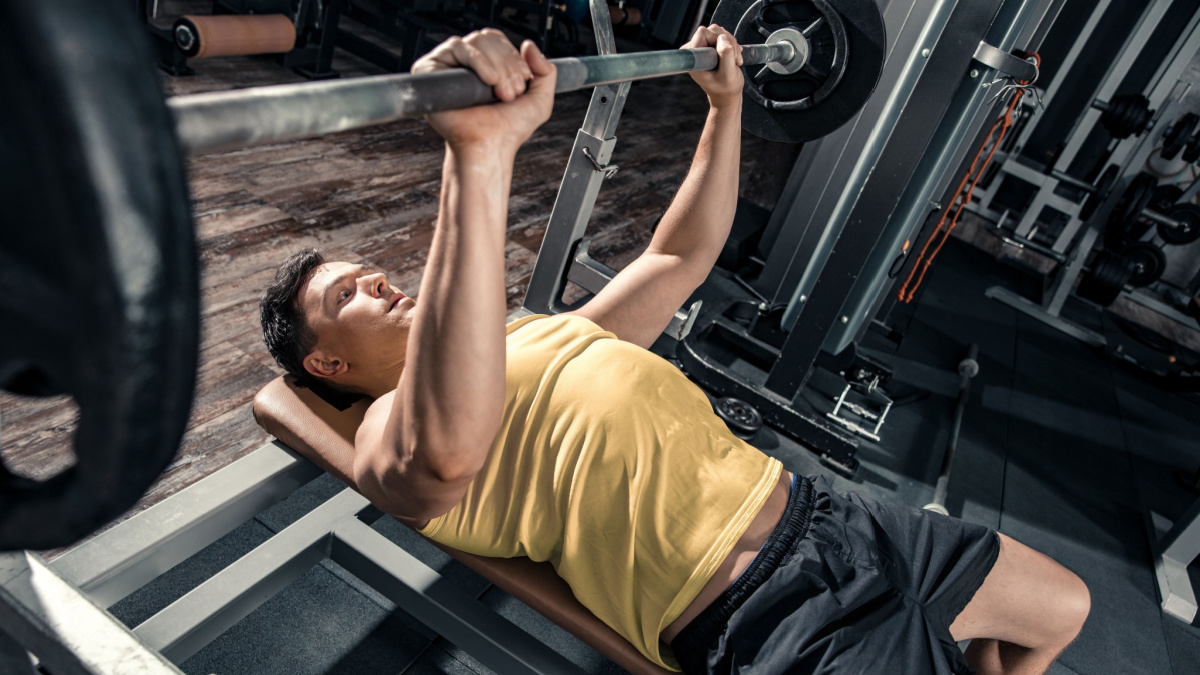
Lie down on a flat bench. Push your feet into the floor to slide yourself up the bench until your eye are under the barbell. Pull your shoulders down and back. Place your hands around the bar in a pronated (palm down) grip with your hands close to shoulder-width apart. (1)
The basic technique should almost identical to your standard flat bench press setup. The primary difference is that your hands should now be at least one fist-width (four to six inches) closer than the chest-focused exercise. This is essential for recruiting more triceps into the movement.
Form Tip: While a relatively close grip is necessary, taking an excessively close grip can be counterproductive, creating more joint strain and less muscular stress. Some old school lifters believe your thumbs should be able to touch during the close-grip bench press. This is inaccurate, impractical, and inefficient advice. Having your hands roughly in line with your shoulders will be effective for the majority of lifters.
Step 2 — Unrack the Bar
Credit: Reshetnikov_art / Shutterstock
Fill your belly and chest with a deep breath and lift the bar from the support pins. Maintain full body tension from your flat feet through your core to your shoulders.
With stiff arms, guide the bar forward until it is over your shoulders. Keep your shoulders pinched back to engage your upper back for support.
Form Tip: The bar should feel balanced when it settles into the ideal position. If you feel like you’re “fighting” an unstable weight above your body, it is either still too far above your face or too far toward your abs. Control the weight and reach a strong, stable position before lowering the weight.
Step 3 — Lower the Bar
Credit: Skydive Erick / Shutterstock
Lower the bar toward your torso, keeping your elbows stacked under your wrists. This position keeps your tricep under tension, avoids compensation from the deltoids (shoulders), and minimizes strain on your joints.
Keep your elbows close to your ribs. If they begin to flare out to the sides, tuck them back in toward your body. Bring the bar down as close to your body as your mobility allows, ideally reaching near your sternum and lower chest.
Form Tip: Don’t allow your wrists to bend back throughout the rep. Keep your knuckles facing the ceiling. This will keep your wrists in a more favorable, less stressful position. It also helps to keep your wrists stacked above your elbows, which is a more powerful pressing position than falling out of line.
Step 4 — Press to the Starting Position
Credit: Daniel Krason / Shutterstock
After reaching your maximum comfortable depth, press the bar up to its starting position. Keep your feet flat on the floor and feel total-body engagement. Maintain a neutral wrist position above your elbows.
The bar should end up balanced directly over your shoulders, in the same position it was in after being unracked.
Form Tip: Because the objective of the exercise is to challenge the triceps, actively squeeze your triceps in the locked out position before performing the next repetition.
Close-Grip Bench Press Mistakes to Avoid
There are multiple mistakes that can happen in the close-grip bench press because this free weight exercise has many variables that must be controlled by the lifter.
In contrast, certain machine exercises can lock you into pre-determined positions that do not offer as much positional choice. In other words, manipulating a barbell requires more focus and more muscular control than a similar machine movement. Here’s what to watch out for during this exercise.
Elbows Flaring Out
This is probably the most common mistake people make when doing any triceps exercise. Your elbows must track under your wrists to emphasize the lengthening of the muscle during the eccentric, or lowering phase, of the repetition.
Credit: Sarayut Sridee / Shutterstock
When your elbows flare out to the sides, your shoulders are more strongly contracted, which reduces the load on the triceps.
Avoid it: Use a slow tempo when bringing the bar down toward your chest. Take three seconds to lower the weight and focus controlling your elbow angle. Keep your elbows forward toward your feet rather than out to the side. Once you’ve practiced and feel comfortable, gradually increase the bar speed to a point in which you are able to control your elbow position throughout the entire movement.
Gripping Too Narrow or Too Wide
If your grip is too narrow, your elbows will likely flare out excessively, forcing your deltoids to contribute more to the movement. A too-narrow grip position can also contribute to internal rotation of the shoulder which, over time, may increase the risk of injury to the supraspinatus muscle of the shoulder joint.
Credit: David Herraez Calzada / Shutterstock
However, a grip that’s too wide can be just as counterproductive, by decreasing the demand on the triceps and increasing chest recruitment. A close-grip bench press without a close grip is a plain old bench press.
Avoid it: Research has shown that the optimal grip for a close-grip bench press is the the same as the distance between the acromion (outer edge) of your shoulder blades.(2) During the setup phase of the exercise, place your hands shoulder-distance apart with your wrists, elbows, and shoulders in a straight line. This will create a customized grip as everyone has a unique shoulder width, rather than telling every lifter in every gym to arbitrarily set their hands 18 inches apart, for example.
Inefficient Bar Path
It is important to remember that the bar path in the bench press is not a strictly vertical line. The bar begins over your shoulders and will travel down and slightly forward as it’s lowered, in a slight arc-like path.
Compared to the standard bench press, the close-grip bench press has an increased range of motion and will therefore have a different touch-point on the body and a different bar path than the standard bench press.
Credit: Hryshchyshen Serhii / Shutterstock
It is important to remember that the bar will touch lower on your chest in a close-grip bench than a standard bench press. If you attempt to use the same touch-point for both movements, it will lead to excessive elbow flare to compensate for the inefficient motion.
Avoid it: Aim for the bar to touch around the narrowing point of the bottom of your sternum — the xiphoid process. However, the exact spot will vary slightly from person to person based on their arm length, ribcage size, and overall body position.
How to Progress the Close-Grip Bench Press
As a basic barbell exercise, the close-grip bench press can be adapted to suit a wide range of lifters’ capabilities with progressively heavier weights. However, if individuals cannot yet manage a full range of motion with the barbell, there are a few options to help achieve the exercise.
Close-Grip Floor Press
The floor press variation reinforces the same close-grip setup and general bar path with a reduced range of motion. While one benefit of the close-grip bench press (performed on a flat bench) is a relatively long range of motion, this floor press variation eliminates the lower portion of the exercise. This reduces shoulder strain while maintaining muscular stress on the triceps.
The close-grip floor press allows you to become familiar with the grip width and hand position, and encourages proper form while staying tight and controlling the movement. Don’t allow your elbows to rest on the ground.
Paused Close-Grip Bench Press
By incorporating a deliberate, long pause at the bottom and top of each repetition, you reinforce proper mechanics throughout the movement. Pause in the bottom, stretched position of every rep for two seconds. It’s crucial that you maintain tension and do not relax with the bar resting on your chest. Your muscles should be tight and engaged for the duration.
Press normally and hold the locked out position for two seconds. Again, don’t treat the pause as an opportunity for rest. Grip the bar hard, flex your triceps, and engage your core before lowering the weight again.
Benefits of the Close-Grip Bench Press
The close-grip bench press has multiple benefits, from performance to aesthetics and even longevity in barbell training. Here’s why you should incorporate this useful movement.
Strength and Performance
For powerlifters or gym-goers looking to increase their max bench press, the close-grip bench press has specific benefits with direct carryover to your bench. If you struggle specifically at lockout, you likely need to improve your triceps strength.
The close-grip bench press primarily challenges the triceps, leading to greater pressing strength.(3) This simple exercise variation could be what is missing from your training routine to push through your sticking point and reach a new bench press PR.
Muscle-Building and Aesthetics
Filling out the sleeves of a shirt is never a bad idea. While triceps dips and pushdowns challenge the lateral head of the triceps in particular, the close-grip bench press significantly recruits the medial and lateral head, leading to more well-rounded muscular development.
This compound (multi-joint) movement also has an increased effect on muscle hypertrophy because it allows you to use relatively heavy weights, which can be useful for stimulating growth.(4)
Joint Health
If you consistently train using a limited range of motion for any muscle or exercise, you can develop strength in that range. However, this can also create a greater risk for strains and tears when those muscles are put through a greater range of motion with “fully lengthened” or “fully shortened” positions. (5)
Credit: Halfpoint / Shutterstock
The close-grip bench press does challenge a greater range of motion than the standard grip due to the positioning of the hands on the bar. The shoulder joints are worked through a longer distance. This will stress the triceps in the lengthened ranges, making them more robust and relatively less prone to injury.
Muscles Worked by the Close-Grip Bench Press
The close-grip bench press is most commonly known for challenging the triceps muscles, however there are more muscles involved than you may think.
Pectorals Major and Minor
The pectoralis major and pectoralis minor are your chest muscles and, while they are not the major contributors to the close-grip bench press, they do play an important role in the movement. During both the concentric (lifting) and eccentric (lowering) phases, both the pec major and minor are recruited to lift the weight and push your arms upward.
Anterior Deltoid
Your shoulder is comprised of three separate heads — the front (anterior), side (lateral), and rear (posterior). Each helps to raise the arm in its respective direction from your body’s midline. The anterior deltoid, specifically, contributes to raising and lowering your upper arm during the close-grip bench press.
However, be aware that if your anterior deltoid is fatiguing before other muscles groups during the exercise, your elbows are likely flaring too much. Adjusting your grip and/or bar path should ensure maximum focus on your triceps.
Triceps Brachii
Your triceps make up the majority of your upper arm, relative to your biceps. The triceps muscle consists of three heads — the lateral, medial, and long head — and together their main action is to extend the arm from a bent elbow position to full to elbow extension. The triceps contraction is emphasized in the lockout of the exercise where the triceps are more strongly recruited.
How to Program the Close-Grip Bench Press
When programming the close-grip bench press, the main consideration needs to be your goal. The most effective approach will be determined by what you want to achieve with the movement and how it fits into your overall training plan.
Strength
To prioritize strength-building, reps need to be kept in a relatively lower range while working with higher percentages of your one-repetition max (1RM). Train with two to six sets of one to five reps, using 80 to 95% of 1RM.
The amount of sets can vary based on your experience, conditioning, and abilities. More is not always better if you can’t handle it. Regardless of your total training volume, focus on using a fast bar speed and fully locking out each repetition.
Hypertrophy
Using moderate to high sets with moderate to higher reps will provide a greater hypertrophy adaptation. For muscle growth to occur, the muscle needs stimulus, volume, and fatigue.(6) Work with three to six sets eight to 20 repetitions, using of 55-65% of 1RM.
The goal is to reach muscular fatigue at the end of each set. If you’re performing more triceps-focused exercises in the same workout, use fewer sets and reps. If the close-grip bench press is your primary triceps exercise, give it the higher end of the workload.
Close-Grip Bench Press Variations
Beyond the close-grip bench press itself, there are some variations you can implement for comparable benefits of hypertrophy and improving your pressing power.
Banded Close-Grip Bench Press
To increase pressing power and/or improve your lockout ability, adding resistance bands of various tension to the close-grip bench press will challenge upper range of motion. Resistance bands offer accommodating resistance — they get more challenging as they’re stretched farther and offer relatively less resistance before they’re maximally stretched.
The biomechanics of the bench press, the lockout position requires less energy and benefits from a leverage advantage. As your elbows become more extended, the weight feels “lighter.” Bands require you to apply maximum tension as resistance increases toward the top position, forcing a stronger contraction. As the bar travels upward, band tension increases at the lockout. This forces you to consciously produce more power and drive hard to achieve lockout.
Machine Press
This is an excellent variation for hypertrophy goals. Using any machine that mimics a similar set up as the close-grip bench gives you more options for hypertrophy. The design of machines allows lifters to efficiently incorporate a variety of high-intensity techniques for increased training stimulus.
Options such as such as drop sets, partial reps, or even forced reps with a training partner allow for greater variations in your workouts. This is also a safer option than training beyond muscular fatigue with the close-grip bench press.
Close-Grip Push-Up
This triceps-focused push-up variation is a nice complement to any training program, as a primary exercise or as a muscle-exhausting finishing movement. Since your hands are closer together, like the close-grip bench press, the range of motion is greater than a standard push-up, thus making it more challenging.
If you cannot perform a full range of motion rep from your toes, you opt for modified versions such as a close-grip inclined push-up (with your hands elevated on a bench) or a kneeling close-grip push up.
Frequently Asked Questions
Why does the close-grip bench press hurt my shoulder?
There could be multiple factors at work, but most people’s shoulders hurt due to a lack of stability in the upper back. This requires a better focus on scapular retraction and depression — pulling your shoulder blades together and down.
During the exercise, make sure to squeeze your shoulder blades back toward your spine and “tuck” them down toward your back pockets. This stabilizes your entire shoulder girdle to support the load. If it’s done incorrectly, or not at all, your anterior deltoid is more strongly activated as your shoulder goes into protraction (reaching forward) and elevation (shrugging up to your ears).
A variety of upper back strengthening exercises and mobility drills can help, along with drilling proper pressing technique and cueing your upper back stabilizers before unracking the bar.
What alternative can I do if I don’t have a bench?
Any exercise that challenges your upper body pressing muscles in a supine position can be an effective alternative. If you don’t have a bench but can lie on the floor, this is a great alternative. A dumbbell or barbell floor press is a great exercise whenever a bench is unavailable. The focus on the upper half of the range of motion further emphasizes triceps recruitment.
Most commercial gyms have steps, boxes, and risers that can be used as modified bench. Ideally, you want the improvised bench to be the same height as a standard one. Place a yoga mat on top of the step or box to reduce the risk of your torso slipping off.
Get a Grip on Your Bench
The close-grip bench press can be performed either as an assistance exercise to boost your classic bench press or it can be approached as a main movement on its own to develop a stronger upper body. The added arm size is an incidental bonus. Apply this simple grip adjustment to a time-tested movement and you’ll soon welcome new levels of size and strength.
References
Lockie, Robert & Moreno, Matthew. (2017). The Close-Grip Bench Press. Strength and Conditioning Journal. 39. 1. 10.1519/SSC.0000000000000307.
Larsen, S., Gomo, O., & van den Tillaar, R. (2021). A Biomechanical Analysis of Wide, Medium, and Narrow Grip Width Effects on Kinematics, Horizontal Kinetics, and Muscle Activity on the Sticking Region in Recreationally Trained Males During 1-RM Bench Pressing. Frontiers in sports and active living, 2, 637066. https://doi.org/10.3389/fspor.2020.637066
Saeterbakken, A. H., Stien, N., Pedersen, H., Solstad, T., Cumming, K. T., & Andersen, V. (2021). The Effect of Grip Width on Muscle Strength and Electromyographic Activity in Bench Press among Novice- and Resistance-Trained Men. International journal of environmental research and public health, 18(12), 6444. https://doi.org/10.3390/ijerph18126444
Brandão, Lucas & Painelli, Vitor & Lasevicius, Thiago & Silva-Batista, Carla & Brendon, Helderson & Schoenfeld, Brad & Aihara, Andre & Cardoso, Fabiano & Peres, Bergson & Teixeira, Emerson. (2020). Varying the Order of Combinations of Single- and Multi-Joint Exercises Differentially Affects Resistance Training Adaptations. Journal of Strength and Conditioning Research. 34. 1. 10.1519/JSC.0000000000003550.
Valamatos, M. J., Tavares, F., Santos, R. M., Veloso, A. P., & Mil-Homens, P. (2018). Influence of full range of motion vs. equalized partial range of motion training on muscle architecture and mechanical properties. European journal of applied physiology, 118(9), 1969–1983. https://doi.org/10.1007/s00421-018-3932-x
Mangine, G. T., Hoffman, J. R., Gonzalez, A. M., Townsend, J. R., Wells, A. J., Jajtner, A. R., Beyer, K. S., Boone, C. H., Miramonti, A. A., Wang, R., LaMonica, M. B., Fukuda, D. H., Ratamess, N. A., & Stout, J. R. (2015). The effect of training volume and intensity on improvements in muscular strength and size in resistance-trained men. Physiological reports, 3(8), e12472. https://doi.org/10.14814/phy2.12472
Digital diagnostics company ixlayer announced it will produce CVS Health’s branded at-home sample collection kits.
Ixlayer’s kits can test for Lyme disease, Vitamin D levels, thyroid function and sexually transmitted infections. Users are also provided education and information about what the results mean.
Consumers can now purchase the CVS Health-branded tests online or pick up a test in-store at select CVS locations.
Once purchased, the tester activates their account and sends their sample in a prepaid mailer. Through ixlayer, test results are provided to consumers via an online portal.
“With nearly 70% of medical decisions dependent on lab testing, regular diagnostic testing is a cornerstone of improving health and wellness,” Pouria Sanae, CEO and cofounder of ixlayer, said in a statement. “At-home testing enables people to proactively take control of their health, on their own schedule, in the privacy of their own home and on a regular basis.”
THE LARGER TREND
The at-home testing market has grown, and investors have taken notice.
Morgan Health, JP Morgan Chase’s healthcare business unit, announced a $20 million strategic investment in LetsGetChecked, a company offering at-home testing for sexual health, diabetes, fertility hormones, cholesterol and COVID-19.
LetsGetChecked closed a $150 million Series D funding round in 2021, building on raises in 2018, 2019 and 2020.
In April, diagnostics giant Labcorp partnered with Getlabs to offer at-home sample collection for lab tests.
The service, Getlabs for Labcorp, allows users to schedule an appointment online for an at-home blood draw. A phlebotomist can collect samples of saliva, stool, urine and breath, and measure vital signs. The collection costs a convenience fee starting at $25.
Fla.-based Getlabs, which also delivers specimens for Quest Diagnostics, scored $20 million in Series A financing earlier this year.
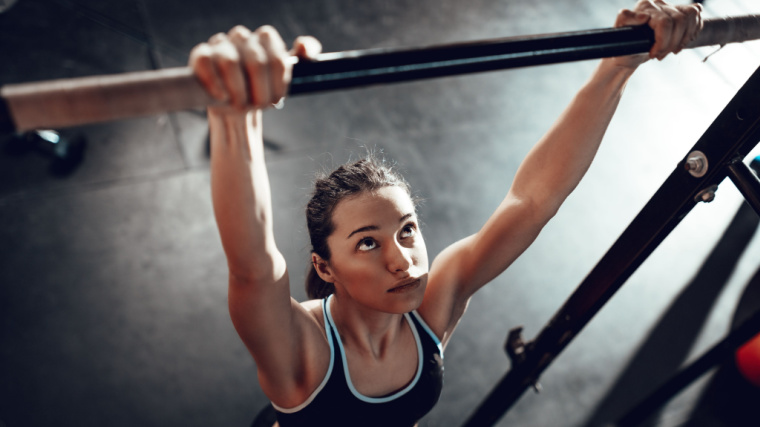
Few exercises can be as daunting as the pull-up. Having the strength necessary to perform one single repetition is a challenge for many. Yet, it is a milestone everyone should strive for. It’s frustrating to struggle performing pull-ups, but it’s even worse to leave them out of your program entirely.
Credit: tsyhun / Shutterstock
This staple exercise should be the backbone of many pulling workouts for beginners and advanced lifters alike. You don’t even need a gym. Heck, you don’t really even a pull-up bar. A sturdy tree or swingset can be enough to deliver you massive back, shoulder, and arm gains. Mastering the pull-up will be a game changer in your fitness journey.
Benefits of the Pull-Up
The pull-up is a training staple for a reason. It delivers a myriad of benefits from mastering your own body to getting stronger to adding lean muscle. Let’s cover them all.
Functional Strength
Yes, functional training has been a trend in recent years. To specifically define what makes an exercise “functional” is a bit of headache, but there is a certain beauty and practicality in being able to move your own body around, just like with the push-up, running, or jumping. Mastering bodyweight movements and building coordination is a quality every human should strive for.
Credit: Microgen / Shutterstock
What is clear is that the pull-up can improve your overall strength and is transferable to many other activities and exercises, such as climbing, gymnastics, or even wrestling. Being stronger at the pull-up is being stronger at life, with improved grip strength and stronger back, arm, and core muscles.
Building Muscle
The pull-up shows up in so many resistance training plans because of its efficient ability to build size. It is one of the best, if not the best, muscle-builders for the back.(1) It is also a tremendous exercise for upper arm and forearm size. Moreover, it spares your lower back and legs from participating in the movement, which can be great if you’re injured or want to avoid excessive training volume in these body parts.
You can focus more on your pulling muscles, which improves your mind-muscle connection and provides quality volume to the target muscles. This will give you the best chance of building a well-developed back.(2)(3)
Better Grip
Grip strength can be easily overlooked, but is actually invaluable. Most exercises, even for the lower body, use your hands. The pull-up can improve your grip because you are required to lift your entire body and connect yourself to the bar.
This will directly be transferable to other pulling exercises and deadlift variations, but strong forearms and grip will also stabilize your wrists during pressing exercises such as the bench press, and can improve overall wrist, elbow, and shoulder joint health.(4) Grip strength is also linked to longevity and general health, which is a hefty bonus.(5)
How to Do the Pull-Up
The pull-up might be a bodyweight exercise, there is still technique involved if you want to master it and reap all its benefits.
Credit: MilanMarkovic78 / Shutterstock
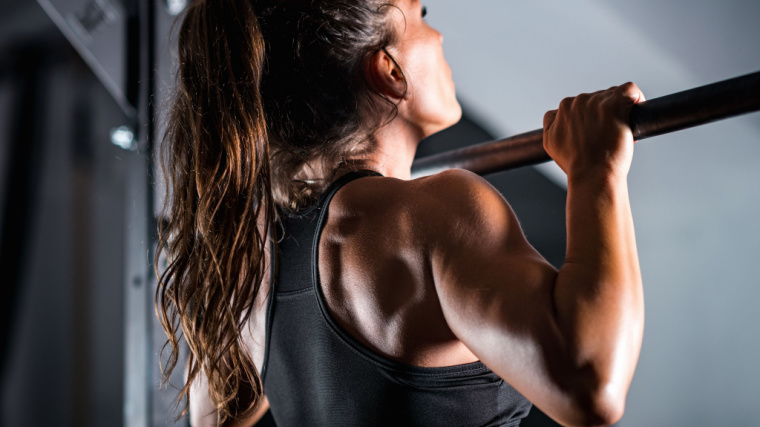
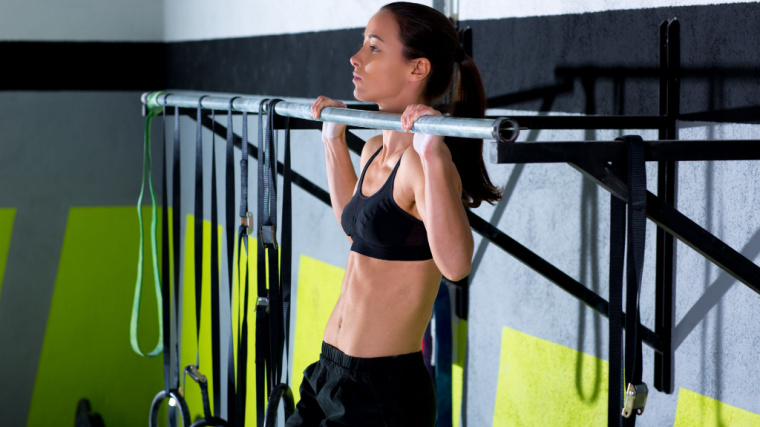
Set yourself in position by hanging from a bar with your arms completely extended using a slightly wider than shoulder-width grip and your hands pronated (palms facing away from you).
Pull your shoulder blades back, raise your chest, and engage your core to prevent yourself from swaying.
Pull yourself toward the bar by flexing your elbows and squeezing your back until your chin is over the bar. If you’re a taller lifter or have long limbs, you might need to stop sooner if your back and arms fully contract before that point.
Exhale and hold the contraction for one second while keeping your chest arched and your body tensed.
Lower slowly by extending your arms in a controlled fashion to prevent as much swaying as possible.
Once you’re at a dead-hang, you’ve completed a pull-up. Repeat for the desired amount of repetitions.
Pull-Up Variations
The task ahead is daunting, but the challenge of the pull-up is worthy and you shouldn’t be intimidated by it. If you struggle with the movement, there are some variations that will help you towards your first good rep.
Negative Pull-Up
With this variation, you’re only doing the eccentric (lowering) part of the lift. To perform it, simply stand on a box, grab the bar and jump into the top position. Then slowly lower yourself in four to five seconds.
This is an excellent variation if you struggle with pull-ups, want to build pull-up strength, or cannot perform one strict repetition. You’ll be able to do these because muscles are stronger during the eccentric part of a lift.(6) This way, you can accumulate pull-up volume and practice the lift as well as gain strength in the desired muscles, even if you can’t perform a full range of motion pull-up.
Band-Assisted Pull-Up
A resistance band will “lighten” your body weight so the exercise requires less strength. This is a better variation to get better at pull-ups than the machine assisted pull-up, because the band incorporates some components of total-body stability and coordination.
Loop a durable resistance band around the bar and let it hang down. Put your feet in it, keeping your legs straight and your body tense. Now start pulling. The feeling and overall technique is very close to the unassisted bodyweight pull-up, so it will have plenty of direct carryover.
Inverted Row
This goes by many different names — horizontal row, bodyweight row, Australian pull-up — but it’s a relatively easier version of the pull-up because now you’re pulling horizontally and you’re moving a lower percentage of your body weight. It’s a perfect variation to master before trying pull-ups, as it recruits and trains the same muscles.
Set yourself under a fixed bar and grab it using a pronated (palms down) grip. Flex your core and legs so that your body is tense and in a straight line. Now, pull your chest to the bar. The inverted row is efficient because you can easily scale it down or up.
If it’s too tough, set the bar higher which improves your leverage and decreases the body weight being pulled. If it’s not challenging enough, reduce the bar height, and eventually elevate your feet to make the lift even harder. When you feel confident enough, the pull-up will be awaiting you.
Pull-Up Form Tips
If you want to really nail down your pull-up game, pay attention to these form tips. Proper technique is essential to prevent injuries and progress faster.
Brace Your Whole Body
You might think of the pull-up as only a back and arms movement, but that’s not the case if you want maximum efficiency. Studies have shown that the abs, for instance, are heavily involved in the pull-up.(7) Why is that? Your core — composed of your abs, lower back, and some hip muscles — as well as your legs have to work extra hard to stabilize your body.
Credit: lunamarina / Shutterstock
During the pull-up, take a deep breath in and flex your abs as much as you can to prevent excessive swinging, which would otherwise alter the efficiency and mechanics of the lift. To recruit your core even more, straighten your legs and hold them together. If you still have trouble preventing swaying, take a few seconds between each rep to reset yourself and ensure picture perfect form.
Keep Your Chest Up
When the lift becomes difficult, it’s tempting to round your upper back and use the assistance of more muscles. The problem is that it internally rotates your shoulders (making them roll forward) and places the shoulder joint in a precarious position.
You have to keep your chest up and your back slightly arched if you want to avoid injuries and train the target muscles correctly. Keep in mind that it will always be better to do fewer repetitions with better form. Doing your pull correctly will ensure you use your lats as efficiently as possible.
Use a Full Range of Motion
If you’re doing half-reps, you’re not “really” doing pull-ups. Yes, pull-ups are a challenging exercise, but cutting the range of motion short is not a valid strategy to get better at them. By reducing the length of pull, you never work the hardest part of the movement and you reduce time under tension, resulting in poorer muscle gains and strength development.(8)
Sure, you really want to nail this exercise, but you’ll be better off practicing the alternatives with proper form, like negative pull-ups or band-assisted pull-ups, rather than performing half-repetitions and getting half results. Practice perfect technique, use the variations, and you’ll master the pull-up soon enough.
Programming the Pull-Up
The pull-up is a versatile exercise that can be suited to beginners and experienced lifters alike, for a variety of goals. All along your lifting journey, the pull-up is a valuable exercise no matter what your goal is. If you’re stronger, you can even add weight to your pull-ups to keep reaping the strength and size benefits of the exercise.
For Strength: Perform three to five sets of three to five reps.
For Muscle Growth: Do three to four sets of eight to 12 reps.
For Muscular Endurance and Conditioning: Perform two to three sets of 15 to 20 reps.
For Strength-Skill (Technique): Do eight to 12 sets of one to three reps using short rest periods and avoiding muscular failure.
Credit: Natalie magic / Shutterstock
Pull-ups, like many bodyweight exercises, are a skill dictated by your muscles as well as your nervous system. Remember that perfect technique should always be respected if you want to progress efficiently. Avoid reaching muscular failure while learning the lift. This will prevent excessive fatigue from negatively affecting your technique.
Don’t Pull the Plug on Pull-Ups
The pull-up is too valuable of an exercise to skip just because it’s challenging to learn. Set aside your anxiety, follow the advice laid out above, and start working towards your first pull-up. By the time you’re able to bang a few good reps, your fitness and physique will have drastically improved.
References
Hewit, Jennifer. (2018). A Comparison of Muscle Activation during the Pull-up and Three Alternative Pulling Exercises. Journal of Physical Fitness, Medicine & Treatment in Sports. 5. 10.19080/JPFMTS.2018.05.555669.
Calatayud J, Vinstrup J, Jakobsen MD, Sundstrup E, Brandt M, Jay K, Colado JC, Andersen LL. Importance of mind-muscle connection during progressive resistance training. Eur J Appl Physiol. 2016 Mar;116(3):527-33. doi: 10.1007/s00421-015-3305-7. Epub 2015 Dec 23. PMID: 26700744.
Schoenfeld BJ, Contreras B, Krieger J, Grgic J, Delcastillo K, Belliard R, Alto A. Resistance Training Volume Enhances Muscle Hypertrophy but Not Strength in Trained Men. Med Sci Sports Exerc. 2019 Jan;51(1):94-103. doi: 10.1249/MSS.0000000000001764. PMID: 30153194; PMCID: PMC6303131.
Coombes BK, Bisset L, Vicenzino B. Management of Lateral Elbow Tendinopathy: One Size Does Not Fit All. J Orthop Sports Phys Ther. 2015 Nov;45(11):938-49. doi: 10.2519/jospt.2015.5841. Epub 2015 Sep 17. PMID: 26381484.
Bohannon RW. Grip Strength: An Indispensable Biomarker For Older Adults. Clin Interv Aging. 2019;14:1681-1691 https://doi.org/10.2147/CIA.S194543
Hody S, Croisier JL, Bury T, Rogister B, Leprince P. Eccentric Muscle Contractions: Risks and Benefits. Front Physiol. 2019 May 3;10:536. doi: 10.3389/fphys.2019.00536. PMID: 31130877; PMCID: PMC6510035.
Hewit, Jennifer. (2018). A Comparison of Muscle Activation during the Pull-up and Three Alternative Pulling Exercises. Journal of Physical Fitness, Medicine & Treatment in Sports. 5. 10.19080/JPFMTS.2018.05.555669.
Burd NA, Andrews RJ, West DW, Little JP, Cochran AJ, Hector AJ, Cashaback JG, Gibala MJ, Potvin JR, Baker SK, Phillips SM. Muscle time under tension during resistance exercise stimulates differential muscle protein sub-fractional synthetic responses in men. J Physiol. 2012 Jan 15;590(2):351-62. doi: 10.1113/jphysiol.2011.221200. Epub 2011 Nov 21. PMID: 22106173; PMCID: PMC3285070.
Oct. 26, 2022 – Trapper Haskins, a 45-year-old musician with type 1 diabetes, says the price of insulin is a constant stressor in his life. The Nashville resident takes two types of insulin daily and sometimes must ration the medicine because his insurance plan caps how much of the pricey drug he can receive each month. Insulin “isn’t like a high blood pressure medication,” he says. “Some days you need more, and then you get to the end of the month and you’re afraid you’ll run out.”
Research shows that among people with type 1 and type 2 diabetes, about one in four must ration their supplies due to cost. In general, most people with diabetes need two or three vials of insulin a month. Each vial can cost hundreds of dollars, meaning patients’ costs could easily reach $1,000 a month.
“The price of insulin has tripled in the last 10 years, and it’s creating a national crisis,” says Lizheng Shi, PhD, a professor of health policy at Tulane University in New Orleans..
There are 1.5 million people with type 1 diabetes in the U.S. who can’t buy their own insulin and are entirely dependent on it to keep their blood sugar in a safe range. The vast majority of people with diabetes, some 37 million, have type 2 diabetes, which usually results in the use of blood sugar-reducing medications until insulin is introduced later on because the body no longer responds to its own.
The high cost of insulin is largely due to a lack of competition and too few makers of the current products, says Shi. One of the best hopes for more affordable insulin is to increase market competition and drive down prices with the introduction of so-called biosimilar drugs, which are highly similar versions of the original biologic medications – and typically far less expensive.
Creating Competition in the Market
In July 2021, the FDA approved the first biosimilar product that could be used interchangeably with current insulin products. Called Semglee, it’s a long-acting insulin analog and the generic form of Lantus, the world’s leading basal insulin, whose patent expired in 2016. Semglee, which is made by the drug company Mylan, is now available under some 2022 insurance plans and is approved for patients with type 1 and type 2 diabetes. But Semglee isn’t inexpensive – it’s around $133 per vial without insurance. Some versions of Lantus retail for more than $300.
The introduction of insulin biosimilars won’t bring major price cuts anytime soon, says Jing Luo, MD, an assistant professor of medicine at the University of Pittsburgh. One reason, he says, is that it takes years for drugmakers to develop the expertise and capacity to scale up production of biosimilars. Still, Luo is optimistic that we’ll get there in the next 2-3 years, and once we do, it could mean insulin would cost 10 times less.
Luo cites the work of the nonprofit Civica Rx. In March, the organization announced it would produce large-scale generic insulin in an effort to drive down cost.
The company will produce three forms of insulin to be used interchangeably with Lantus, Humalog, and Novolog. The products will be sold for no more than $30 a vial. They’ve already started building their manufacturing plant in Petersburg, VA, and will have products available for purchase by 2024, pending FDA approval.
Additionally, the state of California plans to produce its own generic insulin. The state is investing $50 million to make biosimilar insulin products and another $50 million to build a manufacturing facility.
Not Soon Enough
But for many, price cuts aren’t happening fast enough. Allison Bailey of Ames, IA, who has type 1 diabetes, says that it can feel daunting sometimes to find a way to pay, but she couldn’t survive without the life-saving medication. At times, it’s cost her up to $500 to fill her prescription. Bailey was eventually able to adjust her prescription to a less expensive insulin, but the 35-year-old graphic designer says her insurance coverage still takes up a sizable chunk of her monthly expenses.
The introduction of biosimilars has not driven down the price of insulin fast enough for patients like Bailey, says Robert A. Gabbay, MD, PhD, chief science and medical officer at the American Diabetes Association. That’s why the association is pushing legislation to bring down insulin prices. It lobbied hard to establish a $35-per-month Medicare price cap that will go into effect in 2023. Now it’s focused its efforts on expanding the caps to private insurers, a move that was voted down by Republicans in Congress as part of the Inflation Reduction Act.
“We want to see some transparency in pricing; right now, everyone just points fingers at each other and we don’t know who’s to blame,” Gabbay says.
But people with diabetes like Haskins and Bailey agree that competition from biosimilars and price caps could help bring down what they view as the exorbitant prices for medications they need. “I’m lucky I have insurance, but for those who don’t, it’s often a life-or-death situation,” says Haskins