Jonathan Cayco is one of powerlifting’s more accomplished and decorated active competitors. After falling just short of defending his International Powerlifting Federation (IPF) World title in June 2022, he’s starting to look like a strength sports athlete on a mission.
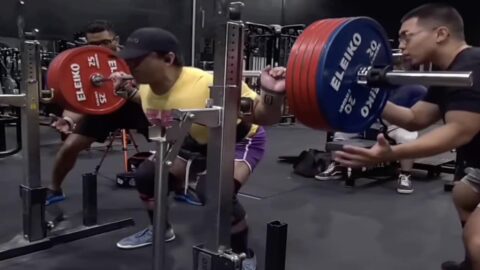
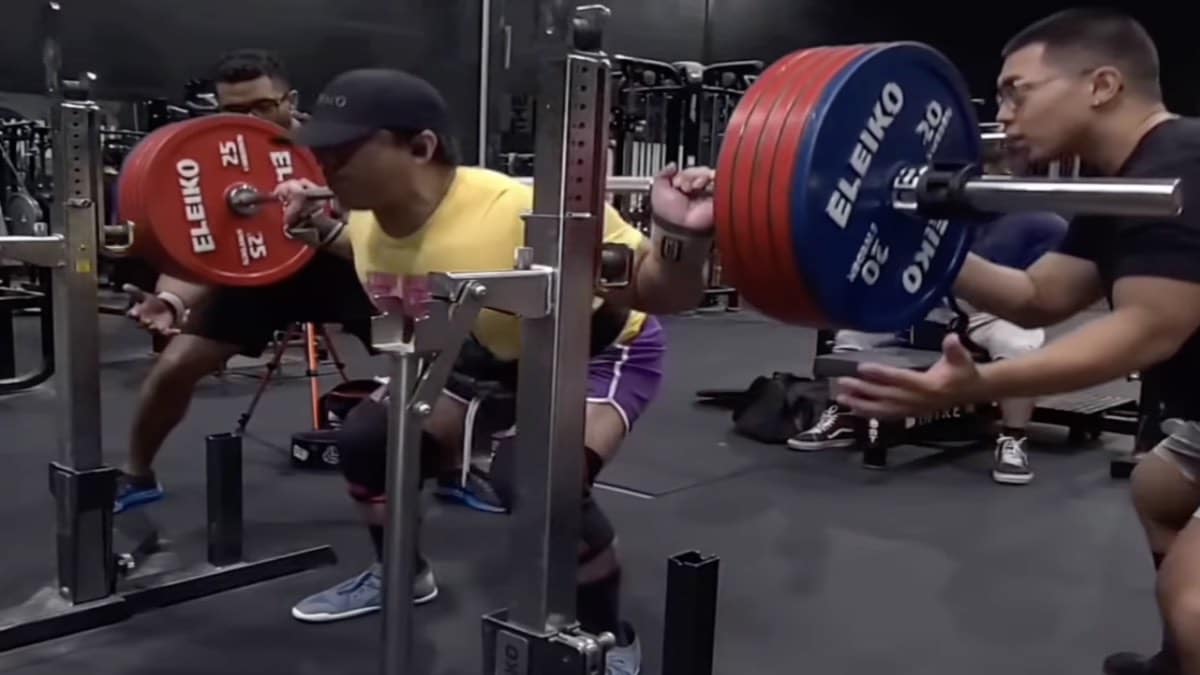
On Sept. 19, 2022, Cayco shared an Instagram video of himself completing a 260-kilogram (574-pound) raw back squat for eight reps during a training session. Per the caption of Cayco’s post, it’s a new personal record (PR) for the athlete. Cayco wore a lifting belt, wrist wraps, and knee sleeves to help him notch the milestone.
At the time of this writing, Cayco’s PR doesn’t appear to be connected to any sanctioned competition on the horizon. However, it seems to be the latest in a line of noteworthy training feats and progress that he regularly makes a point to share on social media.
While it isn’t a PR per se, the man called “Mr. Bench” in his Instagram bio did complete a high-level bench press of 205 kilograms (452 pounds) for four reps just two days before this new squat PR. It was undoubtedly a routine befitting of a competitor with the current IPF World Record in the 93-kilogram division (238.5 kilograms/525.8 pounds). Cayco set that record at the 2022 IPF Worlds in an overall third-place finish.
Just a week prior to this new leg power performance marker, Cayco matched his former 250-kilogram (551-pound) eight-rep squat PR with ease. Then, in early September 2022, the athlete finished a deadlift of 295.3 kilograms (651 pounds) for a six-rep PR.
Here’s a rundown of Cayco’s all-time raw competition bests:
Cayco’s recent training blitz might be partly motivated by his third-place results at the 2022 IPF Worlds. While he did take home the new bench press IPF World Record, Cayco didn’t successfully defend his 93KG World title. In a record-breaking appearance in Sun City, South Africa, Chance Mitchell vaulted ahead of his peer for first place instead.
Cayco reflected on what’s next in a candid Instagram post after the fact.
“It’s a weird pill to swallow for how it went down, but at the end of the day, it is my job to lift what is loaded on the bar,” Cayco wrote in a June 13 Instagram post. “I do not blame anyone but myself for my lack of performance. I am ashamed but also transparent. But we roll with the punches!”
Those “punches” might be what the 29-year-old Cayco needed to push forward through the next phase of his continued hopeful fruitful career. Judging by his early output following the defeat, it seems he’s making good on his commitment to coming back better and stronger than ever when he does compete next.
“It is kind of refreshing to lose,” Cayco wrote. ” … It really reignited something in me that may have settled as I got older alongside winning for the past four years.”
A 10K race is one of the harder races on your body. Typical times for non-professional runners range from 30 to 60 minutes and are close to your individual anaerobic threshold, or the pace at which you can run for 60 minutes without a loss in performance.
Since you will be putting a lot of stress on your body by running at the limit of your capabilities, it can be helpful to know what running pace you can sustain for 10K.
New to longer runs?
Preparing for a 10K doesn’t need to be hard or take a long time. In fact, it’s possible to prepare for it in as little as two weeks! Get all the info in our article >> How to Prepare for a 10K Run <<.
.
Running at the Limit of Your Capabilities? A Lactate Test Helps
One way of determining this limit is to do a lactate test in a lab. This not only defines your training zones but also includes a sports medical exam. Unfortunately, the values achieved on the treadmill don’t always transfer to running outdoors. Plus, the test – if performed regularly – is rather expensive.
All you need to estimate your individual anaerobic threshold is a stopwatch, a flat place to run, and some motivation.
Here’s How to Estimate Your Anaerobic Threshold:
Warm up for 10 to 15 minutes. Start slow and finish at a faster pace.
Begin jogging in 5 X 100-m strides – jog back to where you started as a break between strides.
Graduate by running 1,000 meters as fast as possible and jot down the time. This step should get your body up to speed and your legs ready to run fast.
Rest for 10 minutes but don’t stand or sit while you wait. Move around and stay loose.
Now it’s time to run 5,000 meters as fast as you can – and don’t forget to jot down the time.
Finally, jog for 10 minutes to cool down. Depending on the weather and the ground, you can also run barefoot on the grass for five minutes.
Good to know:
If you divide your 5K time by five, you will find your individual anaerobic threshold pace. And your 10K race pace, too!
Of course, you can also wear a heart rate monitor during the test to determine your working heart rate on that day. But remember that your heart rate can fluctuate significantly for the same activity based on the time of day. Therefore, it should only be used as a training tool when there is no other option for monitoring your performance (e.g., for running hills).
This test does not require much time; you can do it almost anywhere, and it provides you with all the information you need for your next race. But, generally, getting a medical checkup before you start training for a race is a good idea. That way, you can rule out any risk factors. A 10K race – as well as the test described above – is only suitable for healthy runners.
The table below (for download and printing!) shows you that your test results can tell you a lot more than just your 10K pace.
10K Run: Download the Running Pace Chart
Get HelpfulTips and Training Plans to Work on Your Running Performance
Now you know the running pace for your 10K.
But if you want to bring your performance to the next level, you should actively work on it.
The following blog posts will support you in reaching your fitness goals:
And if you want to go even further, this training plan in the adidas Training app is for you:
“Running Strong”: Did you know that strength training is a great way to take your running performance to the next level, prevent injuries, and add variety to your fitness routine? Get your >> 4-week training in the adidas Training app << today!
***
if(!isRussia){
//check Cookie Opt out and User consent
if(!run_getCookie(“tp-opt-out”)){
!function(f,b,e,v,n,t,s){if(f.fbq)return;n=f.fbq=function(){n.callMethod?
n.callMethod.apply(n,arguments):n.queue.push(arguments)};if(!f._fbq)f._fbq=n;
n.push=n;n.loaded=!0;n.version=’2.0′;n.queue=[];t=b.createElement(e);t.async=!0;
t.src=v;s=b.getElementsByTagName(e)[0];s.parentNode.insertBefore(t,s)}(window,
document,’script’,’https://connect.facebook.net/en_US/fbevents.js’);
fbq(‘init’, ‘1594940627485550’); // Insert your pixel ID here.
fbq(‘track’, ‘ViewContent’);
}
}
Push-ups might be one of the few exercises that most people on the planet have performed (or attempted to perform). Whether it’s as part of physical education in school, in a fitness test, or as a quick and simple way to get into better shape, many people are familiar with hitting the deck and pressing away.
Credit: LightField Studios / Shutterstock
The push-up is one of the most fundamental bodyweight exercises, accessible to anyone, anywhere. Its usefulness as a test of upper body strength and core stability make it a mainstay for physical fitness assessments. Unfortunately, lifters sometimes regard the exercise as being “too basic” and not challenging enough.
Here’s a refresher on why the classic push-up should be part of your training plan, whether you’re new to fitness or a lifelong lifter.
How to Do the Push-Up
The goal of a push-up is to lower yourself down towards the floor, graze the ground, and then push back up. Keep in mind the phrase “light as a feather, stiff as a board,” from the levitating game from classic kids’ sleepovers or classic ’90s teenage witch movies.
For an efficient push-up, your whole body has to work together. It’s not just “a chest exercise.” All of the muscles — from your head to your toes — are going to work to keep your body in a powerful and stable position. When all of your muscles are working together, you’ll be at your strongest and the movement will be at its most efficient.
Step 1 — Begin in a Tall Plank Position
Credit: Morit Summers
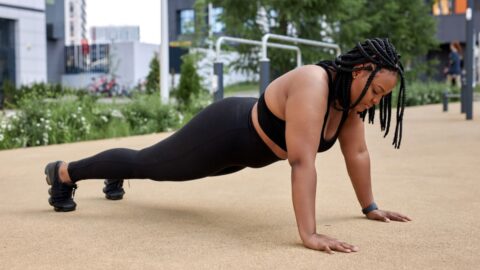
Get on the ground and support your body with your hands and the balls of your feet. Keep your arms and legs straight. Set your hands directly under your shoulders, just about shoulder-width apart. You may need to be a little wider depending on your frame and arm length.
Squeeze your glutes and tuck your hips toward your belly button. This will help keep your core from sagging. Keep your ribs and hips in alignment. It’s okay if your back ends up slightly rounded, because that’s more stable than having a sagging core.
Form Tip: For increased upper back stability and a stronger shoulder position, pull your shoulders toward your feet, away from your ears. For so many exercises, it’s important to lock your shoulders into place. Drilling this habit with the push-up is one effective way to learn a strong pressing posture.
Step 2 — Pull Yourself to the Ground
Credit: Morit Summers
Don’t just drop into the bottom position. Think about pulling yourself down toward the ground. You want to be in total control of your movement. Squeeze your shoulder blades together as you lower yourself toward the floor. Maintain a “stiff as a board” plank position from your torso through your legs.
As your body descends, aim your elbows at roughly 45-degrees between your feet and shoulders. Feel muscular tension increasing in your chest, shoulders, and triceps as you approach the bottom position. Lower yourself as far as your mobility allows, with the goal of touching the floor.
Form Tip: Don’t allow your elbows to flare out as you lower yourself because it can increase stress on your shoulder joints. You may need to adjust your hand position to allow proper elbow tracking. If your fingers are pointed towards each other, your elbows will be more likely to flair. Position your hands with your fingers pointed straight ahead or slightly outward.
Step 3 — Press to Return to the Top Position
Credit: Morit Summers
Once you graze the ground with your chest, or reach your lowest possible depth, push through your hands and feet to bring your body away from the ground. Keep your legs straight, but use the muscular tension stored head-to-toe to make your body “light as a feather.”
Apply steady force until your arms are fully locked and you’ve returned to the starting position. Pause briefly in the tall plank position and re-engage your core before beginning the next repetition.
Form Tip: You can change the tempo (rep speed) to adjust the difficulty of the exercise. Moving at a slower pace will increase the total time under tension and increase muscle recruitment, which can increase the muscle-building stimulus. (1)(2)
Push-Up Mistakes to Avoid
There are many different mistakes that can happen in a push-up because the movement involves coordinating your entire body from head to toe. However, the most common mistakes usually occur at your arms and in your core. Here’s what to watch out for.
Elbows Flaring Out
One frequent mistake is allowing your elbows to flare out during the exercise. For better results with less joint stress, be sure to keep your elbows at about 45-degrees. Don’t allow them to point sideways toward the walls.
Credit: Patricia Perez R / Shutterstock
Your elbow position can vary slightly depending on your individual arm length and leverages, but letting your elbows spread out toward your shoulders shifts more strain to your shoulder and elbow joints.
Avoid It: When you set up to begin the exercise, lock your shoulders into place by “un-shrugging” and pulling them away from your ears. When your elbows flare, it can drive your shoulders up toward your ears. By securing strong shoulders, your shoulders help to keep your elbows in position. Also be aware of maintaining this strong shoulder position as you begin pushing from the bottom of the movement.
Sagging Core
Another major mistake is your core sagging down toward the floor. Instead of falling out of core alignment, keep your rib cage and hips stacked evenly. This is the same fully engaged position you need during many standing exercises, like the overhead press.
Credit: Dmytrenko Vlad / Shutterstock
When your core sags down and breaks the stable plank position, it’s an indicator that you’re not holding tension in your core. With this unstable position, the rest of the movement will be out of alignment. It also puts unwanted pressure on your spine, which can potentially lead to injury.
Avoid it: Many people have been told too many times that their butts are “too high in the air” while doing planks, so they try to compensate and the opposite occurs — they end up sagging to the ground.
It would be more effective to have your butt “too high” while you are gaining strength with the movement, rather than have your core sag down and compromise spinal stability. Tuck your pelvis and rib cage toward your belly button, as if doing a basic crunch. Hold this strong core position as you focus on lowering your body as one unit.
Benefits of the Push-Up
Push-ups have several benefits including general muscular strength, muscular endurance, core stability, and longevity. Here’s a closer look at why you should work on this simple and effective bodyweight movement.
Upper Body Strength
Push-ups are one of the most complete upper body, bodyweight exercises you can do. Without needing any training equipment whatsoever, you can challenge your chest, shoulder, and triceps muscles, as well as your core and hips.
Credit: antoniodiaz / Shutterstock
Your legs, and even your back muscles, are also recruited as stabilizers to control your body’s movement during the exercise.
Versatility
Push-ups can build muscular size, endurance, or general strength. Each goal may involve different volumes (sets and reps) or intensity techniques, but the push-up is a quick and effective option to train for nearly any goal without any training equipment.
Relative Strength
The push-up is an efficient way to build, maintain, or monitor relative strength — being “strong for your size” or having a high degree of functional strength. Because it requires you to lift your bodyweight, the push-up can help to ensure or monitor relative strength gains as you build muscle. This may also be one reason why push-up capacity has been associated with general cardiovascular health. (3)
Muscles Worked by the Push-Up
Push-ups are most commonly known for working the pectoralis muscles (your chest), but push-ups work several other muscles throughout the body.
Pectoralis Major and Pec Minor
The pec major is the primary “chest muscle” and it is responsible for pulling the arms toward the body’s centerline. The is composed of two separate heads — the sternocostal and the clavicular — which work together during most movements.
Credit: oleksboiko / Shutterstock
The pectoralis minor is a supportive, stabilizing muscle located beneath the pec major. It plays a role in joint stability and is heavily recruited as the shoulder blades move during the exercise. The pec muscles are stretched as you descend toward the ground and they strongly contract as you push up from the floor.
Serratus
The serratus are found alongside your ribs, sometimes considered “armpit muscles” because they run near your underarm. This stabilizer muscle aids in keeping your shoulders and scapula in a strong, locked-in position as your arms press and extend during push-ups. They are significantly recruited as your approach lockout at the top of each repetition.
Triceps Brachii
Your triceps are made of three separate heads — the lateral, the long, and the medial. Because the triceps are responsible for straightening your arms at the elbow joint, they are recruited during all pressing exercises, including the push-up.
The triceps are more significantly activated if you perform a relatively close-grip push-up, as opposed to using a shoulder-width or greater hand position, which recruits more pec muscle. (4)
Anterior Deltoid
These muscles are found on the front of your shoulders. The anterior deltoids help to control arm movement in front of your body. During push-ups, the muscles lengthen as they aid in controlling your descent. They contract when you apply force to the top of the movement.
Abdominals
Your abdominals, running along the front of your torso, act as a brace and provide upper body strength and support in conjunction with your hips and lower back. The abs are recruited to maintain a stable and efficient total-body pressing position. They are not put through any significant range of motion during push-ups. They work statically, holding one position from start to finish.
Who Should Do the Push-Up
Push-ups are for everyone — from bodybuilders and strength athletes to the general population who just want to be able to lift their kids. The simplicity and versatility of the push-up make it an useful exercise for the majority of people in the gym.
Bodybuilders and Physique-Focused Lifters
While the push-up may not offer relatively heavy loads, unless you add a weighted vest or other external resistance, its convenience and practicality make it an effective choice for supersets during a chest workout — immediately performing a set of push-ups after a set of dumbbell flyes, for example.
This is a simple way to increase total training volume and intensity during a workout, which can lead to improved muscle growth.
Strength Athletes
Lifters who continuously move heavy loads with barbell or dumbbell exercises can achieve comparable strength-building benefits from push-ups performed with added resistance. (5)(6) This allows load-focused lifters to increase their strength while reducing wear and tear on their shoulders and elbows from repetitive exercises.
General Trainees
Because push-ups are a fundamental bodyweight exercise, they are an excellent way to build functional, real-world strength with quick, efficient training. (7) The ability to perform push-ups anywhere there’s room on the ground (any room of the house, for example) makes it an ideal exercise for people who find it difficult to schedule consistent gym time.
How to Program the Push-Up
The beauty of bodyweight movements is that the range of volume (sets and reps) and intensity can be very broad. The volume and intensity depends on your goals and ability. If you are more advanced, you can either do more volume or you can make the push-up more challenging. If you’re still learning the movement, focus on racking up quality repetitions instead of pushing your limits.
Unweighted, Low Repetition
When you’re first learning the push-up and establishing basic strength in the movement, you don’t need to do a ton of repetitions because your form will start to break down from fatigue. Three to four sets of four to six reps is a good place to start.
You’ll benefit from performing a few solid repetitions with perfect technique to create good movement patterns, and slowly increasing the volume.
Unweighted, High Repetition
High-repetition training can be an effective way to build muscle without putting your joints under any significant load. (8) Once you’ve mastered push-up technique, aiming to reach muscular fatigue for two to three sets of 25 or more repetitions can be a unique muscle-building stimulus for the chest, shoulders, and triceps.
In this high-rep range, your abdominals are also significantly challenged from holding the static support position for the duration of each set.
Weighted, Moderate Repetition
Advanced lifters, in particular, can benefit from adding resistance with a weighted vest, loaded backpack, or other alternative, and performing three to four sets of 10 to 15 repetitions. This is a time-tested approach, similar to traditional weight training, which challenges the muscles with significant time under tension to promote muscle growth.
Push-Up Variations
The beauty of push-ups is the incredibly long list of variations, which make push-ups suitable for just about everyone. Understanding the ability to regress, progress, or just have other options available will help you be able to learn push-ups or incorporate them into your existing program.
Incline Push-Up
Incline push-ups allow you to do a full range of motion push-up using a “decreased” body weight because you shift the leverage.
Credit: Morit Summers
While incline push-ups are a regression (easier version) of the standard push-up, it can still be progressed by gradually lowering the height you use. You can start by leaning on a wall at a very high, nearly upright, angle and slowly progress your way to the floor.
Credit: Morit Summers
At home, you can use sturdy countertops, couches, or stairs to adjust your incline over time. At the gym, using a flat bench is a simple solution. A Smith machine is also an excellent way to make the exercise incrementally more challenging as you slowly move the bar down the rack toward the floor.
Negative Push-Up
Negative push-ups are another effective favorite because, not only are they great for beginners, but they can also provide a fantastic challenge for more advanced lifters.
Credit: Morit Summers
A “negative push-up,” simply means that you only focus on performing a slow, controlled descent (eccentric, or negative, phase) without trying to press yourself up to the starting position. You can “cheat” yourself back to the top by kneeling and resetting between each rep.
Credit: Morit Summers
Advanced lifters, however, can add a regular-speed press to the top position or perform a press using the same slow tempo for an increased challenge.
Negative push-ups help to learn control of the movement, they help to work on core stability and strength. Take at least five seconds to complete the negative phase of the repetition. The longer it takes, the harder it will be, which in turn helps to build upper body strength. When using a slower slow speed, simply focus on using proper form with full core engagement and stability.
Single-Leg Push-Up
If you want to make push-ups more challenging without throwing weights on your back, just remove a limb from your base of support. By keeping one leg raised in the air throughout the exercise, you’re focusing your core to engage even more drastically to stabilize your entire body through your hips and working leg. Alternate the raised leg with each set to ensure balanced strength development.
Once you’ve mastered single-leg push-ups, keep both legs on the ground and work on single-arm push-ups — arguably one of the most advanced bodyweight exercises. If/when the time comes that single-arm push-ups aren’t tough, it’s time for single-arm/single-leg push-ups. Really. Lift your right arm and left foot off the ground, perform reps, then switch sides.
Push-Up Alternatives
Some lifters still might not be ready for push-ups. Maybe they live where there’s no ground to press from. Who knows? Let’s talk about alternative exercises that work muscles similarly to a push-up.
Dips
Dips are right at the top of the list with push-ups, as far as bodyweight chest exercises go. In comparison to push-ups, dips are typically harder because you can’t push through the floor with your legs. It’s also a slightly more “vertical” body position, making you lift a higher percentage of your bodyweight. To make dips more accessible to a broader range of the population, the exercise often needs to be modified.
Credit: Morit Summers
Bench dips, using a flat bench or sturdy chair, let you brace your legs similar to performing incline push-ups. It will help to decrease the amount of your body weight being used, but the altered body angle will emphasize your triceps more than your chest.
Credit: Morit Summers
Performing dips with resistance bands is a very effective way to reduce the percentage of body weight you lift during the movement, allowing you to progress gradually. Dips do require a higher degree of upper back mobility and shoulder joint stability, so take your time progressing the movement and always work within a controlled range of motion.
Dumbbell Chest Press
The dumbbell chest press is a free weight alternative to the push-up. This basic exercise challenges all of the same muscles — chest, shoulders, and triceps — with the straightforward progression of added weight.
Credit: Morit Summers
The exercise is adaptable and can be performed on a flat, incline, or decline bench. Dumbbells also allow the wrists to rotate freely, which can adjust hand position for altered muscle recruitment or increased comfort on the wrists and elbows.
Credit: Morit Summers
You can even do dumbbell presses while lying on the floor to limit the range of motion, reduce shoulder strain, and increase triceps recruitment.
Bench Press
The big, basic, barbell bench press might be the most popular upper body exercise around. It’s a very effective alternative to the push-up and allows the use of potentially heavy weights.
Credit: Morit Summers
This staple exercise can be adapted, like the dumbbell variation, with multiple angles and adjusted ranges of motion (like lying on the floor instead of a bench).
Credit: Morit Summers
Many people jump to the barbell bench press as one of the first exercises they perform in the gym. But if they’ve ever practices push-ups at home, they’ve prepared themselves for the bench press without even realizing it.
FAQs
Why are push-ups so hard?
Push-ups challenge the whole body and require coordination and strength from head to toe — from your upper back and neck across your torso through your legs and into the ground.
Push-ups are hard for many people because it requires lifting your body weight off of the floor using the direct strength of your chest and arms, which are often undertrained, especially in beginners. With time, practice, and inevitable strength gains, the exercise can start to feel easier, more controlled, and much more natural.
Can I do push-ups every day?
The simple answer is: Yes. The more complicated answer is: Yes, but… don’t forget to listen to your body and rest your muscles as needed. When you’re just starting to learn how to do push-ups, performing five to 10 reps a day can help to build good patterns.
You can even do very low-rep sets multiple times throughout the day to benefit from “greasing the groove,” or building strength and technique with high frequency training.
However you need to make sure that you don’t train every day with high intensity and you don’t train to muscular failure. You need to rest the muscles and allow them to recover so that you don’t overtrain.
Get Pushin’ with the Push-Up
Everyone can do push-ups, anywhere, anytime. From young lifters to competitive athletes to elderly adults, push-ups can help to keep your training plan convenient and accessible so your body stays strong. You’re never too strong, too experienced, or too new to hit the deck and gimme 20. Or 10. Or even five perfect reps.
References
Burd, N. A., Andrews, R. J., West, D. W., Little, J. P., Cochran, A. J., Hector, A. J., Cashaback, J. G., Gibala, M. J., Potvin, J. R., Baker, S. K., & Phillips, S. M. (2012). Muscle time under tension during resistance exercise stimulates differential muscle protein sub-fractional synthetic responses in men. The Journal of physiology, 590(2), 351–362. https://doi.org/10.1113/jphysiol.2011.221200
Hsu, Hsiu-Hao & Chou, You-Li & Huang, Yen-Po & Huang, Ming-Jer & Lou, Shu-Zon & Pei, Paul & Chou, Hsi. (2011). Effect of Push-up Speed on Upper Extremity Training until Fatigue. Journal of Medical and Biological Engineering. 31. 10.5405/jmbe.844.
Yang J, Christophi CA, Farioli A, et al. Association Between Push-up Exercise Capacity and Future Cardiovascular Events Among Active Adult Men. JAMA Netw Open. 2019;2(2):e188341. doi:10.1001/jamanetworkopen.2018.8341
Kim, Y. S., Kim, D. Y., & Ha, M. S. (2016). Effect of the push-up exercise at different palmar width on muscle activities. Journal of physical therapy science, 28(2), 446–449. https://doi.org/10.1589/jpts.28.446
Calatayud, J., Borreani, S., Colado, J. C., Martin, F., Tella, V., & Andersen, L. L. (2015). Bench press and push-up at comparable levels of muscle activity results in similar strength gains. Journal of strength and conditioning research, 29(1), 246–253. https://doi.org/10.1519/JSC.0000000000000589
Kotarsky, C. J., Christensen, B. K., Miller, J. S., & Hackney, K. J. (2018). Effect of Progressive Calisthenic Push-up Training on Muscle Strength and Thickness. Journal of strength and conditioning research, 32(3), 651–659. https://doi.org/10.1519/JSC.0000000000002345
Harrison, Jeffrey. (2010). Bodyweight Training: A Return To Basics. Strength & Conditioning Journal. 32. 52-55. 10.1519/SSC.0b013e3181d5575c.
Schoenfeld, B. J., Peterson, M. D., Ogborn, D., Contreras, B., & Sonmez, G. T. (2015). Effects of Low- vs. High-Load Resistance Training on Muscle Strength and Hypertrophy in Well-Trained Men. Journal of strength and conditioning research, 29(10), 2954–2963. https://doi.org/10.1519/JSC.0000000000000958
If you have the luxury of working out, you’re squandering the opportunity by walking into the gym without a plan. To avoid wasting your time with marginally effective training, you need to get organized. You need a plan.
Credit: MDV Edwards / Shutterstock
A workout split (also called a “training split” or simply a “split”) provides order to your lifting schedule over the course of a week. There are splits that train your entire body, head to toe (or traps to calves) in each session, some splits work each individual body part on its own, and then there are various combination in between.
We’ll break down the most common splits and help you to determine which is best suited for your goals.
Perfect Splits
Common Workout Splits
Put simply: A workout split is jargon for how you divvy up your week’s worth of training. Just like there are a multitude of exercises to choose from, there are plenty of different training splits to set the framework of your training week. While some splits share overlapping benefits, or hindrances, each might be the right choice depending on your specific goal, individual needs, and other deciding factors.
Body Part
As the name implies, this split is characterized by focusing on a specific body part or muscle group with each workout. Although many variations on the body part split are possible, the “bro split” is most widely known — a week typically looks like:
Focusing on one body part at a time allows for a variety of exercises. For example, one might hit bench press, incline bench, and cable crossovers on chest day; or barbell curls, hammer curls, and a variety of direct triceps training as an arm workout. Typically, each body part receives a single training session per week.
This is a popular split among bodybuilders — competitive and hobbyists — as a body part split delivers more volume to the muscle, which is a requirement for hypertrophy (or muscle growth).
Upper/Lower
This is a two-way split. All upper body lifts are performed on day one and all lower body lifts are done on day two. The upper/lower split is commonly repeated twice per week, which would allocate four days to lifting and three days of “rest” (either non-lifting activity or total rest).
Credit: Roman Chazov / Shutterstock
For high-frequency devotees, advanced trainees, and those pushing for short periods of over-reaching, the upper/lower split can be repeated three times per week with a single rest day. The upper/lower split, therefore, allows either two or three workouts per major muscle group each week.
Trainees will perform fewer exercises per muscle group per workout compared to the body part split. Instead of doing three to four chest exercises, you may perform two. However, because you’re training your entire upper body and lower body twice (or, in extreme cases, thrice) weekly, the overall volume stays about the same.
Push/Pull/Legs
This is another common option for physique-focused lifters, as well as those prioritizing strength. On day one, the lifter hits upper body pressing movements and triceps accessory exercises — bench press, overhead press, skull crushers, etc.
Day two includes upper body pulling — deadlifts, rows, pulldowns, curls, and company. All lower body training is reserved for day three, which is essentially “leg day” for training the quadriceps, hamstrings, and calves.
The push/pull/legs split may be repeated twice per week, which would allow a single day for “rest,” or it can be performed with a rest day between each workout. Major muscle groups are trained once or twice per week in the push/pull/legs split.
Chest & Back/Legs/Shoulders & Arms
Here’s a unique three-way split. One advantage it offers is the ability to integrate agonist-antagonist supersets, a time-efficient programming technique that alternates exercises which target muscle groups on directly opposite sides of the body (like chest and back). For example, you’d perform one set of bench presses followed by a set of rows.
This split is commonly performed once or twice per week. Therefore, each muscle group is directly trained once or twice per week. You should recognize, however, that shoulder and arm muscles tend to get “bonus” training volume because they are indirectly trained and unintentionally recruited during the chest and back workout.
Total Body
Whole-body routines aren’t technically “splits,” because they don’t divide training by body part or movement pattern. All major muscle groups are trained each session. Whole-body training is a relatively common way to train for serious athletes and beginners alike.
Credit: Jasminko Ibrakovic / Shutterstock
Three whole-body workouts per week is standard, but some lifters get by with two or four, depending on their recovery ability. As you might expect, training the entire body doesn’t leave much time for “fluff,” redundancy, or isolation work.
Whole-body routines tend to emphasize big multi-joint exercises with minimal accessory exercises. While some trainees hit whole-body workouts four or more times per week, the typical whole-body training frequency is three times per week with 24 hours or more recovery between sessions.
All Roads Lead to Rome
If you are consistently hitting the iron and training each muscle group hard — even just once or twice per week — you are virtually guaranteed to make gains. (1)(2) (Your diet needs to be in check, too.) Although many variables play relatively smaller roles, the major drivers of adaptations to resistance training areintensity, or the amount of weight lifted, and weekly volume (the total number of sets and reps). (3)
Broadly, your workout split is a method of determiningfrequency. Frequency can be defined as the total number of workouts per week or, in this case, the total number of sessions each muscle group is trained per week. (2)
Credit: antoniondiaz / Shutterstock
Working on adding muscle mass or boosting strength? Dozens of training studies indicate that per-muscle-group training frequency does notsignificantly affect hypertrophy and strength when intensity and volume are held constant.(2)(4)(5)(6) Meaning, if all else is equal, your split shouldn’t “theoretically” matter.
More interested in fat loss? Simply adding resistance training is likely to improve body composition. (7) This effect is robust enough to occur in the absence of dieting and across a wide range of programming variables (e.g. volume, intensity, frequency of exercise). (7) Though, dialing in your diet would only expedite and enhance your progress.
It does seem any road will get you to ancient Rome, but wouldn’t you prefer to arrive looking more like a Spartan than an Athenian? (Historical spoiler alert: Yes, you would.)
For exceptional results, simply “making gains” isn’t enough. You’re looking for the most efficient path to the best possible improvement, and you’re going to need the best possible workout split for your needs.
Linchpins of Adaptation
Many factors certainly interact to determine the effectiveness of a program. For hypertrophy — building more muscle — volume (weekly sets x reps) appears to be the most important programming variable to maximize. (3)(8)
Credit: Gorodenkoff / Shutterstock
Training intensity (weight/load or nearness to muscular failure) is the crucial driver when strength is the priority. (9) Volume earns an honorable mention, as it is a more important determinant of strength adaptations than frequency. (4)(5)(6)
For fat loss goals, volume and intensity interact to stoke the metabolism during training and burn extra calories after training via the EPOC phenomenon. (10) Training major muscle groups regularly during periods of dieting can even accelerate improvements in body composition by promoting fat loss and muscle gain. (11)
Let’s consider how specific workout splits can help you to maximize the key variables for your goal.
How to Choose the Best Split for Your Goal
If you want to use a body part split, push/pull/legs, or chest & back/legs/shoulders & arms split but can only get to the gym twice per week, you’re going to leave body parts neglected and potential gains unrealized.
The first question when identifying an ideal workout split should be, “How many strength training workouts per week am I able to realistically perform?” Don’t force a square peg into a round hole. Your training split will only be effective to the extent to which it gets done.
Credit: nkotlyar / Shutterstock
If you can only train once per week, you’re on the full-body split. End of conversation. Go train everything, enjoy your workout, rest a lot, and come back again next week. There’s simply no other effective option for these desperate times.
If you can train twice per week, whole-body routines and upper/lower splits are potential options. This is how you can make the best of a near-minimal situation.
If you can train three to four times per week, your options open up to at least one cycle of any of the common splits except the body part split. To avoid neglected areas, body part splits should be reserved for trainees who can commit at least five days per week in the gym.
Ultimately, if you can train six days per week, the world of splits is your oyster. Once you’ve explored your schedule demands, you know your potential split options. Now, it’s time to identify the linchpin programming features for your training goal — the most essential determinants of success and identify a training split that maximizes them.
Workout Splits for Hypertrophy
As previously established, weekly volume is a key determinant of muscle growth. Although training frequency does not seem to affect outcomes when volume is equal, a split program that facilitates more volume each week may be more effective for hypertrophy. (2)(3)(8)
So, how much volume per muscle group should one shoot for? And how can they best achieve this target? Expert consensus maintains a minimum of 10 sets per muscle group in the six to 20 rep range is a viable target for hypertrophy training. (12)
Although there is potential for even more significant improvement if the additional volume is achieved, no more than 10 sets per muscle group should be programmed in a given session. (12)
Credit: MDV Edwards / Shutterstock
From here, deciding your split is about simple arithmetic and a slight personal preference. A lifter can hit the base recommendation of 10 sets by training with a body part “bro” split. Note that 10 hard sets per body part won’t tickle — especially on leg day with (presumably) 10 sets for quads, 10 for hamstrings, 10 for calves.
Intermediate and advanced trainees can typically tolerate a body part split because they will get a whole week to recover before hitting the same muscle group again. The downside is that this split can quickly hinder volume progression if the 10 sets per day maximum warning is observed.
Whole-body split practitioners can get away with doing a moderate volume (e.g., three to four sets) of everything three days per week. This quickly becomes a long and arduous workout but can be accomplished more efficiently if agonist/antagonist or alternate peripheral superset techniques are employed.
Split training is popular among bodybuilders and likely for a good reason. A whole-body approach has been marginally less effective for hypertrophy than a volume-equated split routine. (13)
Hitting the gym four or six times per week on an upper/lower split can be very effective for hypertrophy. However, seeing too many “leg days” on the schedule can be demoralizing for a specific subset of the lifting population (i.e., the would-be skippers of leg day). And no split is effective if you’re skipping out on it.
The push/pull/legs or chest & back/legs/shoulders & arms splits are also highly effective for hypertrophy. Mentally, each day has a target — to “pump and annihilate” a given muscle or muscle group. These splits have the added advantage of facilitating time-saving and effective agonist/antagonist superset techniques.
Workout Splits for Strength
Compared to a volume-matched split routine, a whole-body routine at four sessions per week frequency has been shown to result in superior strength gains. (13)
Now, the differences in strength improvement between groups were small and failed to reach “statistical significance” for most measurements. But this finding is odd, considering that meta-analyses have reported “no difference” between volume-equated training when training frequency is manipulated. (4)(5)
Perhaps there are neurological or endocrine benefits to the whole-body training stimulus? We don’t know. But we do know this — strength training is largely intensity-driven.
A split that gives each workout a defined focus anecdotally allows the lifter to perform with higher intensity. So, if your intensity has been slipping toward the end of your whole-body routine, it’s time to consider a split.
Ivan Kochergin / Shutterstoc
A movement pattern-based split like push/pull/legs works great for some. For others, upper/lower provides each workout with enough focus to maximize each lift.
Workout Splits for Fat Loss
Whole body routines tend to focus on multi-joint exercises targeting large muscle groups. To train all major muscle groups in one session, whole-body workouts are to be longer in duration. These features may be beneficial to those with body composition or fat-loss goals.
Excess post-exercise oxygen consumption (EPOC) describes the increased metabolic activity, or calorie burn, that occurs following exercise. Higher intensity and longer duration resistance training or interval training tend to stimulate greater EPOC.
Although the practical benefits of EPOC have been questioned, some research has reported a greater than 10% boost in resting metabolic rate at 14-hours after whole-body strength training. This equated to an extra 168 calories burned on average, which is quite relevant when added up over several days per week. (10)
Credit: Djordje Mustur / Shutterstock
The whole-body strength training EPOC workout wasn’t a walk in the park — four sets of five exercises (squat, chest press, pulldown, shoulder press, and split squat) were performed for 30 seconds each (6-7 reps) at 80% of the lifters’ one-repetition maximum with one-minute rest between each movement. The majority of fit lifters will require 48 to 72-hours of recovery after a workout of similar intensity and volume.
Combined with a high-protein, calorie-reduced diet, whole body strength training produces superior results to dieting or lifting alone. (11) Three sessions per week were enough to elicit this effect. But don’t turn your whole-body workout into a cardio session.
The use of heavy loads (e.g. heavier than 80% 1RM), at least intermittently, is also suggested during a dieting phase. As bodybuilders in “cutting phases” know well, heavy strength training can help to protect lean mass during periods of calorie deficit.
For body composition and fat loss, the whole-body approach checks all of the boxes. Ideally, hit all major muscle groups three days per week with at least 48 hours between sessions. If you’re able to train more often than three days per week, steady-state aerobic exercise or HIIT workout may be programmed on non-lifting days.
Building Up to It
You’ve seen many recommendations for training volume and intensity in this article, but it’s prudent to gradually increase training volume and intensity instead of diving head-first into a drastically different training program.
Credit: MDV Edwards / Shutterstock
A good rule of thumb is to limit increases in weekly set volume to 20% of previous regular volume per month. (12) For example, a lifter who previously trained with eight sets of chest exercises per week might gradually increase to 10 sets over the course of the next four weeks.
For lifters who are not accustomed to high intensity training, it’s also sensible to gradually expose your body to heavy weights over time (e.g. 2 to 4% increase per week). Deloads may be programmed as needed.
Split it or Hit it
Deciding on a training split doesn’t need to be overly complicated. It comes down to knowing your training goal, determining how often you’ll consistently show up to train, and establishing the framework for your program. Once you identify the “perfect” split for your lifestyle and training goals, you’ll be well on your way to consistent gains and progress.
References
Androulakis-Korakakis, P., Fisher, J. P., & Steele, J. (2020). The minimum effective training dose required to increase 1RM strength in resistance-trained men: a systematic review and meta-analysis. Sports Medicine, 50(4), 751-765.
Schoenfeld, B. J., Grgic, J., & Krieger, J. (2019). How many times per week should a muscle be trained to maximize muscle hypertrophy? A systematic review and meta-analysis of studies examining the effects of resistance training frequency. Journal of Sports Sciences, 37(11), 1286-1295.
Schoenfeld, B. J., Ogborn, D., & Krieger, J. W. (2017). Dose-response relationship between weekly resistance training volume and increases in muscle mass: A systematic review and meta-analysis. Journal of Sports Sciences, 35(11), 1073-1082.
Ralston, G. W., Kilgore, L., Wyatt, F. B., & Baker, J. S. (2017). The effect of weekly set volume on strength gain: a meta-analysis. Sports Medicine, 47(12), 2585-2601.
Grgic, J., Schoenfeld, B. J., Davies, T. B., et al. (2018). Effect of resistance training frequency on gains in muscular strength: a systematic review and meta-analysis. Sports Medicine, 48(5), 1207-1220.
Brigatto, F. A., de Camargo, J. B. B., Machado, Y. B., et al. (2022). Does split-body resistance training routine performed two versus three days per week induce distinct strength and morphological adaptations in resistance-trained men? A randomized longitudinal study. International Journal of Strength and Conditioning, 2(1).
Wewege, M. A., Desai, I., Honey, C., et al. (2021). The effect of resistance training in healthy adults on body fat percentage, fat mass and visceral fat: a systematic review and meta-analysis. Sports Medicine, 1-14.
Schoenfeld, B. J., Contreras, B., Krieger, J., et al. (2019). Resistance training volume enhances muscle hypertrophy but not strength in trained men. Medicine and Science in Sports and Exercise, 51(1), 94.
Lasevicius, T., Ugrinowitsch, C., Schoenfeld, B. J., et al. (2018). Effects of different intensities of resistance training with equated volume load on muscle strength and hypertrophy. European Journal of Sport Science, 18(6), 772-780.
Greer, B. K., O’Brien, J., Hornbuckle, L. M., & Panton, L. B. (2021). EPOC comparison between resistance training and high-intensity interval training in aerobically fit women. International Journal of Exercise Science, 14(2), 1027.
Miller, T., Mull, S., Aragon, A. A., et al. (2018). Resistance training combined with diet decreases body fat while preserving lean mass independent of resting metabolic rate: a randomized trial. International Journal of Sport Nutrition and Exercise Metabolism, 28(1), 46-54.
Schoenfeld, B., Fisher, J., Grgic, J., et al. (2021). Resistance training recommendations to maximize muscle hypertrophy in an athletic population: Position stand of the IUSCA. International Journal of Strength and Conditioning, 1(1), 1-30.
Bartolomei, S., Nigro, F., Lanzoni, I. M., et al. (2021). A comparison between total body and split routine resistance training programs in trained men. The Journal of Strength & Conditioning Research, 35(6), 1520-1526.
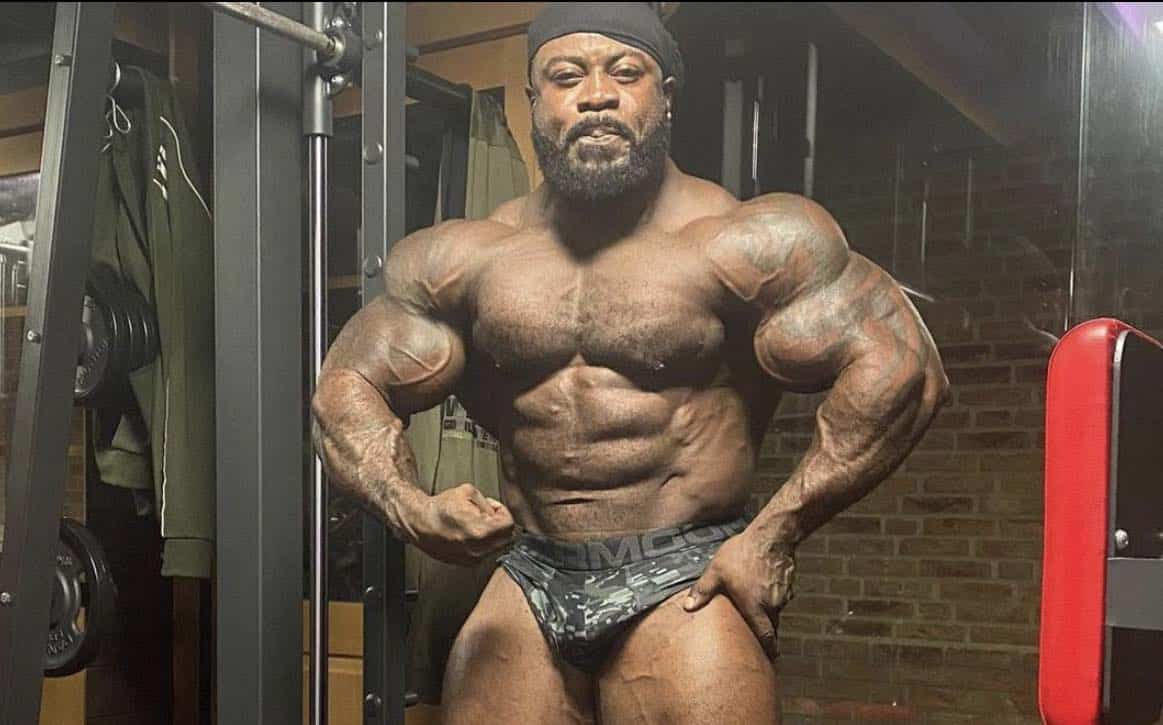
William “The Conqueror” Bonac has been a regular fixture in the competitive bodybuilding scene for over a decade. After finishing in the top five in five of the last six Mr. Olympia contests (2016-2021), the Men’s Open athlete’s latest mass-building update might say he’s finally ready to climb the Olympia summit this December.
On Sept. 18, 2022, Bonac’s nutritionist Chad Nichols shared a picture on Instagram where he said the bodybuilder weighed 120.3 kilograms (265.2 pounds) at the end of his training off-season. (Note: Nichols appeared to make a typo with the precise numbers of Bonac’s weight details.) According to Nichols’ caption, Bonac’s initial off-season body weight goal was 120 kilograms (264.5 pounds).
Bonac plans to take his newly-bulked physique to the 2022 Mr. Olympia this late fall. The contest will take place on Dec. 16-18, 2022, in Las Vegas, NV. According to NPC News Online, like some of his peers in other competitions, Bonac earned automatic qualification for this year’s Olympia by winning the 2022 International Federation of Bodybuilding and Fitness (IFBB) Pro League Boston Pro. In other notable results from this year, the Ghanaian competitor finished second at the 2022 Arnold Sports Festival to former Olympia winner (2019), Brandon Curry.
As a bodybuilder, Bonac has been on the doorstep of greatness at the Olympia for a little while now. It wasn’t always this way, which might speak to his commitment and growth as an overall professional.
In 2014, Bonac finished in 15th place at the 2014 Mr. Olympia — his debut at the competition. Just a year later, in 2015, Bonac cracked the top 10 with an eighth-place result. By 2016, Bonac had a top-five Mr. Olympia placing to his name. That figure is more or less where Bonac has hovered around since sans the arguable peak of his career when he took home second place at the 2019 Mr. Olympia. Curry won that edition of the prestigious contest.
Here’s a rundown of some of Bonac’s more noteworthy career results to date:
William Bonac | Notable Career Results
2014 Golden State Pro (Men’s Open) — First place | First career victory
2014 Mr. Olympia (Men’s Open) — First place | Competition debut
2015 Dayana Cadeau Pro (Men’s Open) — First place
2015 Mr. Olympia (Men’s Open) — Eighth place
2016 Mr. Olympia (Men’s Open) — Fifth place
2018, 2020 Arnold Sports Festival (Men’s Open) — First place
2019 Arnold Classic Australia (Men’s Open) — First place
2019 Mr. Olympia (Men’s Open) — Second place | Best Olympia result to date
2021 Mr. Olympia (Men’s Open) — Sixth place
2022 Boston Pro (Men’s Open) — First place | Earned 2022 Olympia qualification with victory
For Bonac to finally stand on top of the Olympia podium, he’ll have to overcome a cadre of elite competitors. With two-time reigning Olympia champion Mamdouh “Big Ramy” Ellsbiay leading a list of names that also features Curry, Nick Walker, Hunter Labrada, and Hadi Choopan — the Men’s Open division isn’t lacking for top-notch talent this year.
Such a field of athletes might make it tough sledding for Bonac in Las Vegas. Then again, with Bonac’s past consistency in the account, this could only be the culminating cap to a long and winding journey.
At nine years old, most kids are probably riding their bikes or playing video games with their friends in their free time. The prolific nine-year-old weightlifter Rory van Ulft (30KG) spends much of her downtime showing off incredible strength for her age by lifting heavy weights.
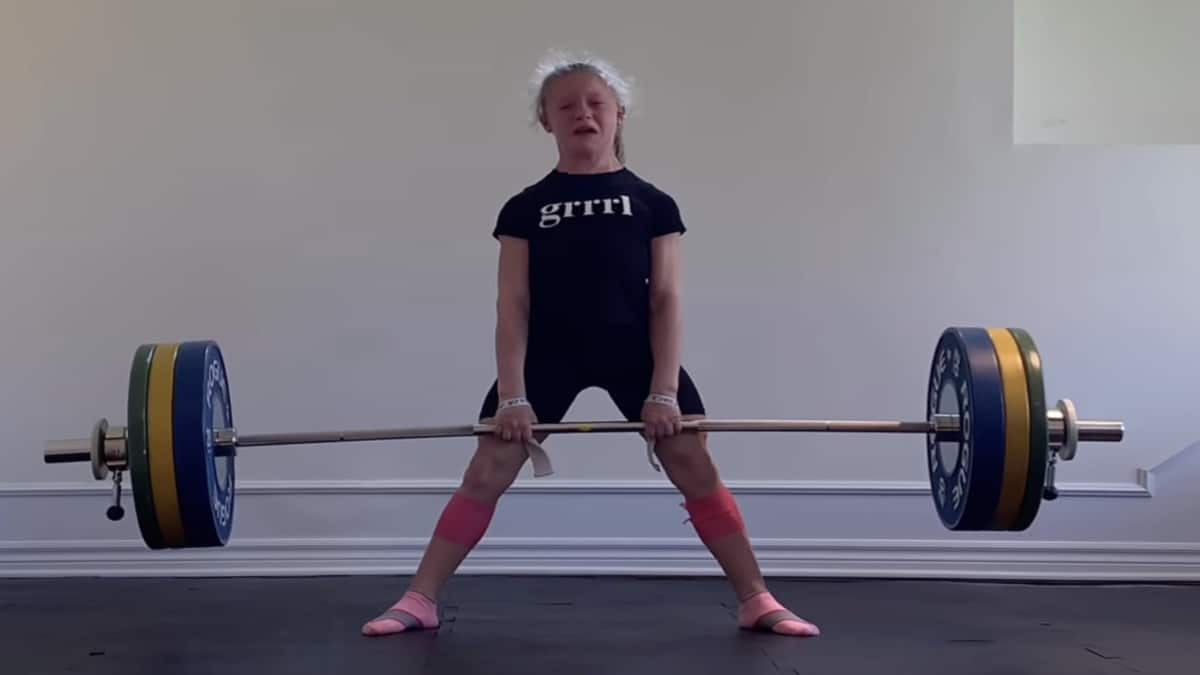
On Sept. 12, 2022, van Ulft posted an Instagram clip where the young athlete locks out a 111-kilogram (244.7-pound) raw deadlift from a sumo stance while wearing lifting straps during a training session. It is unclear whether van Ulft is wearing a lifting belt in the footage. According to the reigning three-time United States National Champion’s caption, the pull is 3.43 times her body weight of 32.3 kilograms (71.1 pounds) at the time of the filmed lift.
Notably, van Ulft’s loaded barbell does shift a bit as she initially tries to lock out her rep. Still, she manages to complete a lockout on a lift that would likely count in an official powerlifting competition.
The strongest kid ever is a girl!?
For more context, van Ulft’s deadlift is one kilogram (2.2 pounds) above the USA Powerlifting (USAPL) Youth Boys’ division record in the 67.5KG weight class — a category over twice her size. Jackson Bo Jensen holds that official mark of 110 kilograms (242.5 pounds) from the 2021 USAPL Youth Nationals.
On an international powerlifting scale, van Ulft’s achievement holds up to an impressive par, too. Her new massive deadlift from training is similarly one kilogram (2.2 pounds) higher than the second-heaviest all-time raw deadlift in the Men’s Youth division 53-kilogram weight class. Elbrus Dzhatiev owns that figure with a pull of 110 kilograms (242.5 pounds) at the 2019 Global Powerlifting Alliance (GPA) European Cup.
Based on her rapid training progress in recent years, a deadlift like this might have been inevitable for van Ulft.
In September 2021, when she was eight, the weightlifter deadlifted 80 kilograms (176.4 pounds). Earlier this year, in April 2022, the athlete scored a beltless deadlift of 90 kilograms (198.4 pounds). For someone whose social media is rife with clips of snatches and clean & jerks to prepare for her primary niche as a weightlifter, van Ulft showing versatile strength on a lift outside of that competitive sphere is plenty commendable.
At the time of this writing, van Ulft has not revealed any upcoming plans for formal competition. Though, it might not be long before she defends her title again. The athlete might parlay her training milestones into a fourth National Championship whenever she is seen on a sanctioned weightlifting platform once more.
People with high blood pressure or atherosclerosis rarely have any symptoms. They can go for a long time thinking their heart is fine. Then suddenly, they feel a sharp pain in their chest. If their doctor tells them that there’s a problem with their heart or cholesterol level, they’re likely to change their lifestyle. Unfortunately, a lifestyle change is usually not enough, and they’ll have to take medication. If only they had started paying attention to their cardiovascular health earlier…
In fact, if you make healthy changes early enough, you can improve your heart health. Start including the right foods in a heart-healthy diet now. We’ll tell you the top 12 foods that are good for your heart.
Which Foods are Good for Your Heart?
1. Fatty fish
Fatty fish (e.g., mackerel, herring, trout, or sardines) are high in omega-3 fatty acids. These vital fatty acids have immense benefits for your cardiovascular system. They can even help prevent heart disease.(1) Including these types of fish in your diet regularly can also reduce your cholesterol by increasing the “good” cholesterol (HDL).
2. Kale
Kale (and other green leafy vegetables like spinach and Swiss chard) is packed with vitamins and minerals. One of those is vitamin K, which is important for your heart health.(2) A meta-analysis including eight studies showed that the regular consumption of green leafy vegetables could reduce the risk of cardiovascular disease by almost 16%.(3)
3. Tomatoes
Tomatoes produce a secondary metabolite called lycopene. This is an antioxidant that can reduce inflammation in the body.(4) Antioxidants have a powerful effect on reducing LDL cholesterol, which is associated with an increased risk of cardiovascular disease. Lycopene-rich foods lower LDL levels and increase beneficial HDL cholesterol in the blood.
4. Avocado
Studies show that eating avocados regularly can have a positive effect on your HDL cholesterol.(5) This is due to their high monounsaturated fat content.
5. Legumes
Legumes are the real deal. These superfoods not only regulate your blood sugar and keep your digestion working smoothly, but they are also an important part of a heart-healthy diet. Lentils, beans, chickpeas, and other legumes reduce your blood pressure and cholesterol and also help decrease inflammation in your body.(6) Try to include legumes in your diet at least four times a week.
6. Berries
Strawberries, raspberries, blackberries, and blueberries are packed with vitamins, minerals, and antioxidants. These are considered some of the healthiest foods you can eat; plus, they can help prevent cardiovascular disease.(7)
7. Whole Grain Foods
Fiber is a very important component in a heart-healthy diet. Whole grain products are high in fiber and, as a result, lower your LDL cholesterol, which is a risk factor for heart disease.(8) Try to include whole grain foods in your diet on a daily basis, such as brown rice, quinoa, oats, whole grain pasta, or whole grain bread.
8. Nuts
Walnuts are an excellent source of healthy micronutrients for your heart and brain.(9) However, don’t forget about other kinds of nuts like hazelnuts, almonds, and cashews, which also have a protective effect. Eat a handful of nuts each day for a healthy heart.
9. Seeds
Like nuts, many types of seeds are great for your heart. These include flax seeds, chia seeds, pumpkin seeds, sunflower seeds, and hemp seeds. High in antioxidants, these seeds improve your circulation while also reducing blood pressure and cholesterol.(10)
10. Olive oil
Olive oil is a staple food in the Mediterranean diet. There are plenty of reasons this is considered one of the healthiest foods in the world. The antioxidants and monounsaturated fatty acids in olive oil protect your heart (look for extra virgin and cold-pressed).(11)
Important!
Olive oil should not be heated, which means don’t use it for sautéeing or frying. Drizzle it over tomatoes with mozzarella and basil or a crisp salad instead.
11. Garlic
Garlic is another important part of a heart-healthy diet. The compound allicin lowers cholesterol and blood pressure; plus it has positive results in the treatment of atherosclerosis.(12)
12. Dark chocolate
No, you’re not dreaming. Chocolate with a high cocoa content (at least 70%) can protect your heart. Studies show that dark chocolate can reduce the risk of hardening of the arteries.(13) It’s all about the amount here; try to keep your intake moderate (~ 15g), considering the high fat and sugar content.
Takeaway
One of the best things you can do for your cardiovascular health is to eat a balanced diet loaded with a wide variety of healthy foods. Keep your heart strong by staying physically active and limiting alcohol consumption, animal fats and salt, and quitting smoking.
***
if(!isRussia){
//check Cookie Opt out and User consent
if(!run_getCookie(“tp-opt-out”)){
!function(f,b,e,v,n,t,s){if(f.fbq)return;n=f.fbq=function(){n.callMethod?
n.callMethod.apply(n,arguments):n.queue.push(arguments)};if(!f._fbq)f._fbq=n;
n.push=n;n.loaded=!0;n.version=’2.0′;n.queue=[];t=b.createElement(e);t.async=!0;
t.src=v;s=b.getElementsByTagName(e)[0];s.parentNode.insertBefore(t,s)}(window,
document,’script’,’https://connect.facebook.net/en_US/fbevents.js’);
fbq(‘init’, ‘1594940627485550’); // Insert your pixel ID here.
fbq(‘track’, ‘ViewContent’);
}
}
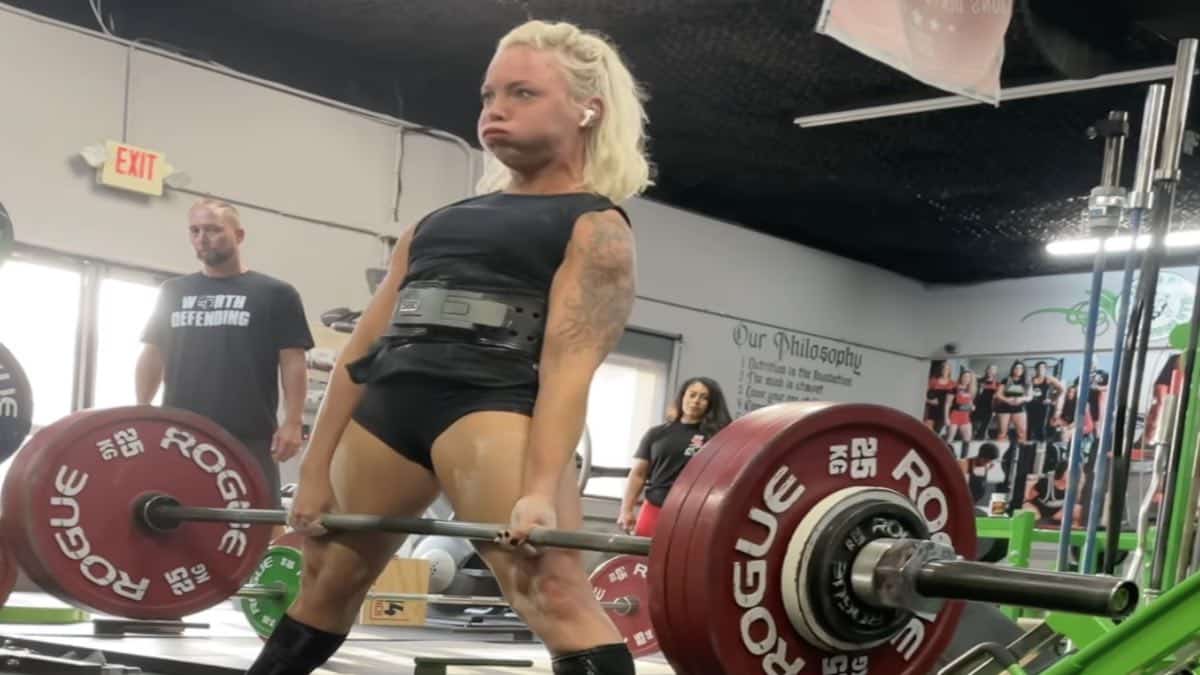
On Sept. 16, 2022, powerlifter Heather Connor shared an Instagram video of herself capturing a 190-kilogram (418.9-pound) raw deadlift for two reps during a training session. According to the caption of Connor’s post, her new pulling mark is a personal record (PR) double. Connor completed the deadlift in a sumo stance and wore just a lifting belt to help with the feat of strength.
Additionally, Connor’s training deadlift unofficially exceeds her current International Powerlifting Federation (IPF) raw deadlift World Record in the 47-kilogram weight class by five kilograms (11 pounds). Per the IPF database, Connor achieved that official mark of 185 kilograms (407.9 pounds) during a second-place performance at the 2022 IPF World Classic Powerlifting Championships in Sun City, South Africa, this past early June.
According to the caption of Connor’s post, she went to the hospital on Monday, Sept. 12, 2022, but did not share details. Connor noted that she was back in the gym, notching her latest deadlift training milestone just a few days after her hospital visit.
Connor’s latest display of deadlift prowess is part of her preparation for the upcoming 2022 Fédération Française de Force (FFForce) Girl Power in France. While the precise location of the competition in France is unclear at the time of this article’s publication, it will take place on Oct. 15, 2022. It will also serve as Connor’s debut in a sanctioned French powerlifting environment.
This example of leg power continues a recent excellent string of achievements for Connor in the gym. Roughly a week before her new double PR, in mid-September 2022, Connor scored a 185-kilogram (407.9-pound) deadlift double. Earlier in the same month, Connor successfully locked out a 200.5 kilogram (442-pound) deadlift single-rep PR, unofficially exceeding her World Record by 15.5 kilograms (34.1 pounds).
Factor in Connor taking home a back squat PR by over 20 pounds in late August 2022, and it seems the two-time IPF World Champion (2018-2019) is on the ascent in training. Here’s an overview of her all-time raw competition bests:
Heather Connor (47KG) | All-Time Raw Competition Bests
Deadlift (Raw) — 192.5 kilograms (424.4 pounds) | American Record
Total (Raw) — 410 kilograms (903.9 pounds)
Connor could see her new potential competitive rival, Tiffany Chapon, at the 2022 FFForce Girl Power. Chapon finished ahead of Connor for first place in the 47-kilogram weight class with record-breaking results at the 2022 IPF Worlds. Aside from a reference to disappointment for Connor after the IPF Worlds, neither athlete has made any public allusions to one another since the competition. Chapon has also not confirmed she would compete in France in mid-October.
If Chapon locks in her place in the 47-kilogram division with Connor at the contest, this category might have yet another battle between two elite strength sports athletes in store.
Sharing my top tips for hosting an awesome dinner party + some of my favorite cooking hacks.
Hi hi! How’s the morning going? I’m off to mass with the kids and then hitting an F45 class. I hope you have a great day, too.
For today’s post, I thought we could talk a bit about dinner party tips and cooking hacks. Please keep in mind that I’m NOT a professional (even though we have some people in my family who are professional cooks and others who cook like they’re professionals). I’m just a home cook who enjoys it and also happens to LOVE feeding people. When the Pilot and I first got married, a friend said I needed a kitchen sign that said, “Never leave hungry” because that seemed to my motto. It brings me so much joy to enjoy awesome meals with the people we love, so we love having friends and family members over whenever we can.
Over time, I’ve learned some good dinner party tips and cooking hacks, so I wanted to share with ya this morning. If you have any you can add to the list, please chime in in the comments section so we can help each other out! (* = ones that were submitted from Instagram! Thank you to those of you who chimed in)
15 Tips For Hosting A Dinner Party
Make anything you can in advance
I learned this one from my nana, who will make and freeze as many meal components as possible before a family get-together. She used to own a catering company, so she’s pretty used to making large quantities of amazing food. Anything you can make before a party, do it. This means things like dips, desserts, side dishes, anything. I usually try to pre-make anything I can, so I’m not cooking as people are arriving.
I learned this one the hard way. We invited friends over the first time we lived in Valdosta, and I hadn’t prepared a single thing. They all sat at the kitchen table as I ran around the kitchen, stressed, and sweating from the hot stove and burners. Learn from my mistake, friends.
Never try a new recipe the night of a dinner party
It can be tempting to want to try a cool new recipe you see on social media or a website, but always give it a test run before serving it to another group of people. I’ve had a handful of Pinterest fails and I’m so glad I took the time to try them out in advance. Serve options that you can cook easily and that you know are a hit.
Set the menu strategically
Check in with guests to see if there are any dietary restrictions. Plan out the menu in advance depending on the occasion and theme of the dinner party, plus how many guests you’ll have in attendance. For example, a smaller dinner party would do well with plated options, while larger parties are better for family-style dishes or a buffet setup.
Put post-its on serving dishes and set everything out the night before
I clean the kitchen the night before or the morning of the get-together and put out all of the plates, silverware, and serving dishes. I put a post-it note (“salsa,” “chips,” “guac,” etc.) in each large serving dish so I know where everything is going. Set the table in advance, too.
Empty the dishwasher before everyone comes over
This way it’s easy to add dishes into the dishwasher as they get dirty and run it at the end of the night.
Serve one signature drink or cocktail
I like to always have a special type of drink in addition to the usual La Croix, waters, beers, white and red wine, so it might be something like sangria, house margaritas, or this type of cocktail. Make a large batch and store in the fridge and also ensure you have plenty of drinks on hand for everyone.
Meat thermometer
Meat thermometers are a GAME CHANGER and helps to avoid dry, overcooked meat. It’s so much easier to poke the meat and know that it’s finished cooking.
Taste the guacamole on a chip
When you’re making guacamole, you’re going to serve it with chips, so taste test on a chip. Otherwise, you may make the guac too salty.
If you enjoy Mexican food, get thee a tortilla warmer ASAP
You will never have cold tortillas with warm glorious Mexican food again. You put the tortillas in the warmer, pop it in the microwave, and the warmer keeps them hot while you’re serving.
Set the ambiance
I like to light some candles before everyone comes over, turn on the sparkly lights outside, and get some music going. I’ll put some music on Spotify on the TV and on the bluetooth speaker outside.
*Write out a cooking schedule
This way you won’t be thinking about it all night and can enjoy the party. I like to plan a schedule for the day leading up to it, including which items will be prepared at each time, and small reminders, like “take out the trash,” “ice the drinks,” and “turn on the music.”
*Use the oven!
Bake or roast part of the meal, and this way you can put anything you’ve made in advance directly into the oven. Once it’s cooked, turn the oven down and keep it warm in the oven before serving.
*Don’t make everything yourself
I LOVE this tip and it’s such a simply way to remove some of the stress from doing allllllll the things. Find a couple of options you can outsource from a local spot, like sides, dessert, or a charcuterie board.
*Always cut out a piece of a cake
Guests won’t want to cut into something, but will eat it if it’s already cut. The same goes for cheeses on a cheese board- cut out some slices in advance.
If you can read, you can cook
These were words of wisdom from my nana, after emailing her to tell her I was struggling in the kitchen. When we first got married, I had to learn how to cook and there were so many fiascos along the way. (Once I made meatloaf that turned into sloppy joes, which we called “sloppy loaf.” Delicious.)
She said to take my time, and if you can read directions, you can cook. It gave me confidence to keep going and I eventually fell in love with cooking.
Hey hey! How are ya? Happy weekend!! What do you have going on? We have a friend’s Air Force retirement party and a soccer team outing. I’m also hoping we can catch a family hike. I hope you have an amazing weekend!
Some exciting news: I finished my Integrative Practitioner Level One Certification! Aaaand I’ve already started on Level Two 🙂 I have so much to say about the program so far, so I’ll definitely do an updated post, but if you have any questions you’d like to me to answer, please leave them in the comments section. I’ll also be restructuring my 1:1 coaching options, so if you know you’re interested, you can apply and get on my wait list here.
A little Caro update:
Caro saw the vet last Friday and has congenital heart failure and her little body was full of fluid. She started a couple of meds, including a diuretic, and they’ve made a huge difference. Unfortunately, she’s still not eating much. She was eating if I hand fed her, but now she’ll only eat every few bites or so. The vet is coming again this afternoon, so we’ll see what she has to say.
It’s time for the weekly Friday Faves party. This is where I share some of my faves from the week and around the web. I always love to hear about things you’re loving, too, so please shout out the good stuff in the comments section below!
Amazon fashion finds! I was so pumped when Amazon invited me to join their fashion program and picked out a few new fashion-y things to enjoy for the month. They have SO many awesome picks for fall (at amazing prices) and you can’t beat the Prime shipping. I find myself ordering more fashion and household items from Amazon because they’ll get here so quickly.
Here’s what I picked out this month:
This tank. I compared it to Liv’s Align tank and it’s almost identical. The fabric is super soft and it’s a fraction of the price of the lululemon one (I think I paid $70 for Liv’s and this one is $23!). I love that it has light padding and there are so many colors to choose from. Link is here.
I also ordered this shirtdress. Shirtdresses are so classic and versatile; I find myself gravitating towards them during this time of the year. They’re easy to dress up with heels and jewelry, or dress down with sandals. Here’s the one I got! I also love the black and blush colors.
The last purchase was this tank dress. I love this style of dress (there are 20 colors!) – it reminds me of the Leith and Treasure & Bond ones – and it looks cute with sandals and low-top sneakers. If it’s starting to get a little chilly where you are, you can layer it with a button-up shirt or a jean jacket. $30 and runs true to size 🙂