The AMA surveyed 1,300 doctors in 2016, 2019 and 2022 to determine their feelings about digital health and how they’re adopting these technologies in their practices.
This year 44% said there was a definite advantage in using digital health for patient care, compared with 36% in 2019 and 31% in 2016. Overall, 93% of physicians surveyed felt there was some advantage or a definite advantage to leveraging digital health tools in 2022, compared with 85% in 2016.
“The physician adoption rate of digital health tools has accelerated as physicians grow increasingly optimistic about the advantages that properly designed digital health tools can have for patient care if key requirements are met,” AMA president Dr. Jack Resneck Jr. said in a statement.
“The AMA survey illustrates the importance physicians place on validated digital health tools that improve health while streamlining the technological and administrative burdens faced each day in medicine. These technologies also must be designed and deployed in ways that advance health equity.”
The survey also found that physicians are adopting more tools: The average number in use by a physician grew to 3.8 in 2022, compared with 2.2 in 2016. The biggest change in adoption came from virtual care. The percentage using telehealth visits grew from 14% in 2016 to 28% in 2019, and then exploded to 80% in 2022.
Meanwhile, 30% of physicians said they used remote monitoring devices for efficiency, compared with 12% in 2016. And 34% said they used remote monitoring and management for improved care this year, while only 13% did in 2016.
The AMA survey found improving clinical outcomes and work efficiency were the leading factors affecting physicians’ interest in digital health tools. Reducing stress and clinician burnout also grew in importance over the past few years. In 2022, 76% said easing stress and burnout were somewhat or very important reasons to adopt digital health tools, while only 66% cited those factors in 2016.
When it comes to adopting these tools, 85% of physicians reported that coverage by malpractice insurance and EHR integration were somewhat or very important factors in 2022.
Though current use of emerging technologies is still low, physicians reported interest in adopting these tools. The survey found 18% of physicians reported using augmented intelligence for practice efficiency, but 39% said they would adopt it within a year.
Only 11% reported currently using precision medicine and digital therapeutics. However, 30% said they would add precision medicine, and 40% said they would use digital therapeutics within a year.
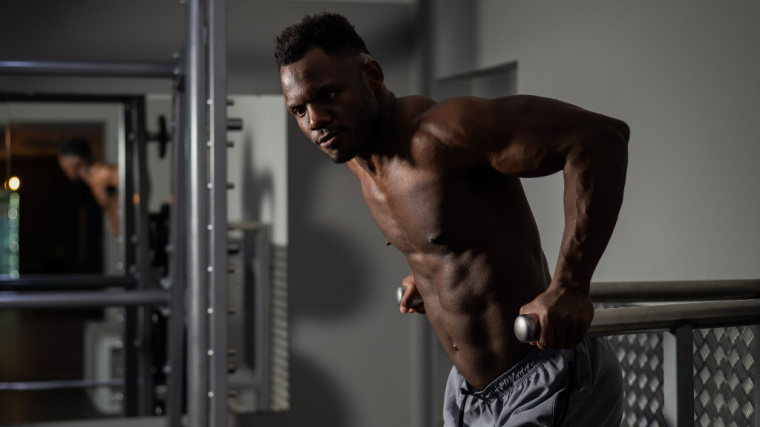
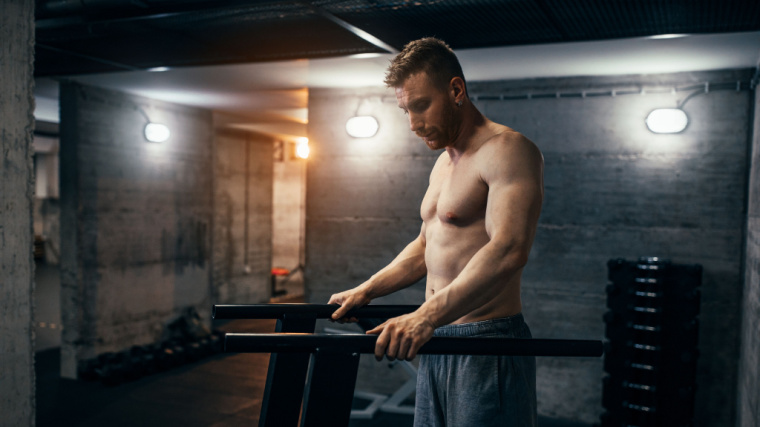
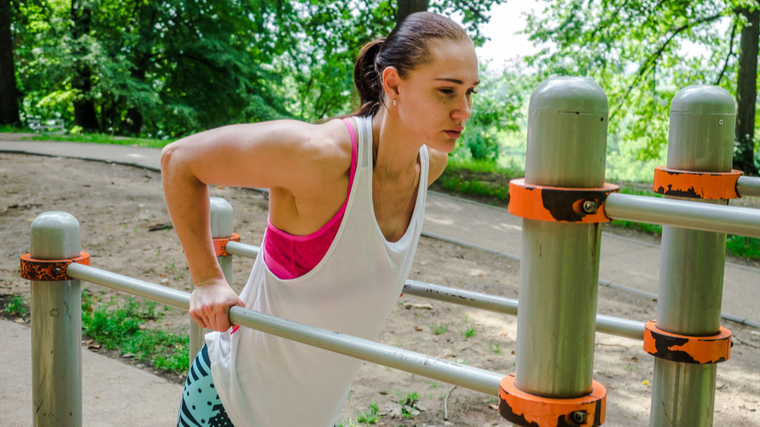
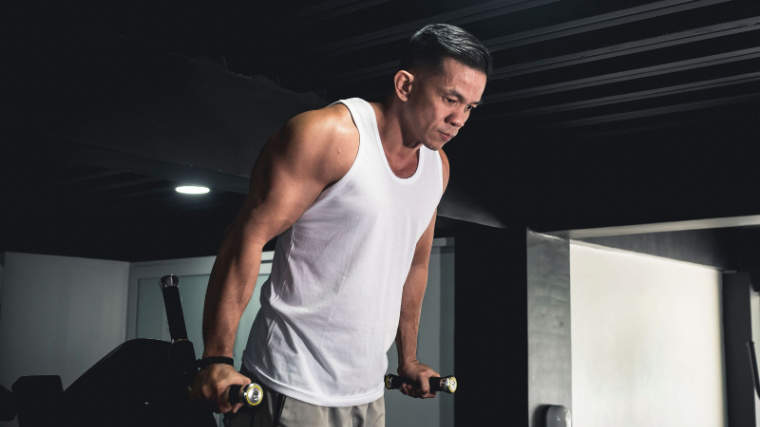
For some lifters, nothing beats the upper-body pump they get from a high-intensity chest workout. Many of these gym-goers hope to build a bigger, stronger chest by focusing on the bench press, but mastering the simple and effective bodyweight dip often goes overlooked.
Credit: Reshetnikov_art / Shuttertock
This staple movement isn’t just for gymnasts or calisthenics enthusiasts. It’s a fundamental old school exercise that’s been used by bodybuilders and strength athletes for decades.
Adding dips to your workout routine will target your pecs, triceps, and shoulders for an all-around bigger, fuller, stronger upper body. Here’s how to use only your body weight to deliver a deep burn and explosive pump for your chest.
How to Do Dips
Dips can be done on dedicated dip bars, at an assisted dip station, or a sturdy and stable pair of chairs. Whichever setup you’re using, ensure it’s at a height where you can keep your legs and feet off the ground when in the bottom (stretched) position. This will allow a full range of motion for maximum benefit.
Step 1 — Get up on the Bars
Credit: bbernard / Shutterstock
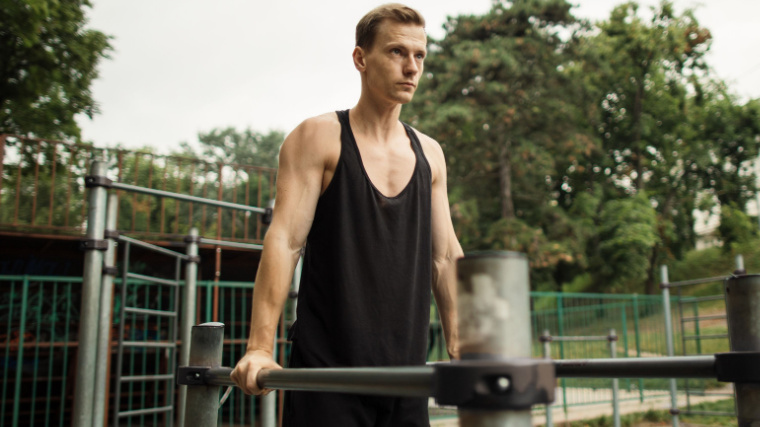
Step up to the dip station and grab the bars with palms your facing inward. Keep your arms straight — depending on the setup, you may need to sightly jump into the locked out position. Bend your legs slightly so that your arms support your entire body weight.
Keep your back straight and your head looking forward. Engage your core and glutes by squeezing them both to keep your entire body tight.
Form tip: Ideally, your hands should be roughly shoulder-width distance. Some dip bars are angled to allow different grip widths. If your hands are farther apart, shoulder-joint strain can increase and tension on your chest muscles can decrease.
Step 2 — Lower into a Stretch
Credit: Anton Romanov / Shutterstock
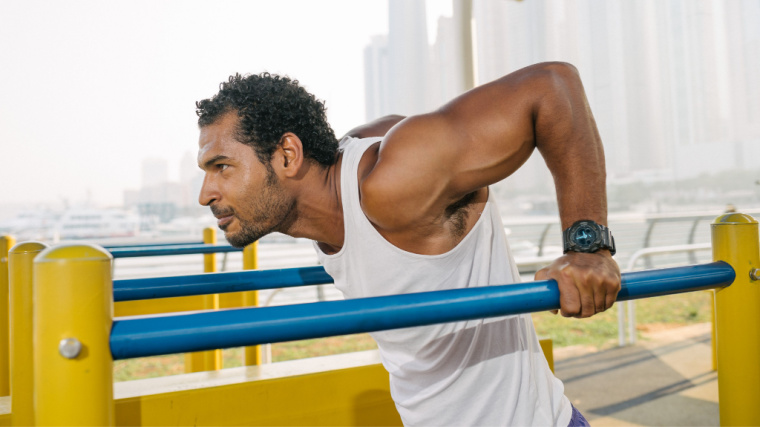
Slowly lower your body until your elbows are roughly at 90-degree angles, if your mobility allows. Maintain a forward-looking head position, but let your upper body angle slightly forward to increase recruitment of the chest muscles.
Your elbows will naturally angle slightly outwards. Avoid excessively flaring your elbows directly to the sides, which can increase strain on the shoulder joints.
Form tip: Use a slow tempo to ensure control, maximum muscle tension, and boost muscle growth. (1) Take up to three seconds to reach the bottom position.
Step 3 — Drive up to Full Contraction
Credit: MDV Edwards / Shutterstock
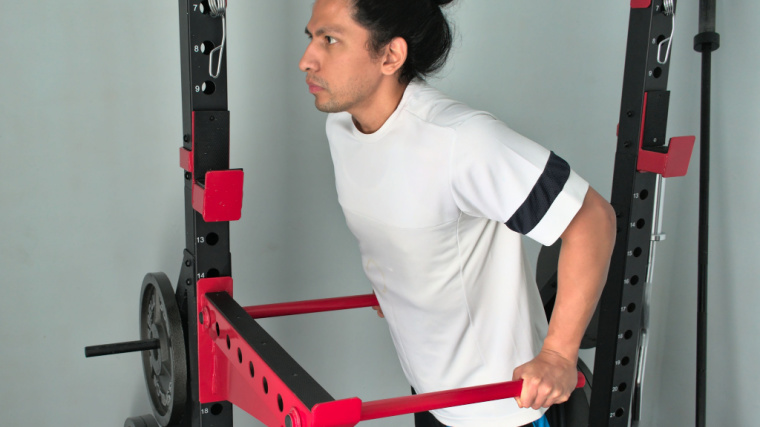
Push your body up in a controlled, fluid motion. Stop once you’re back at the starting position with nearly straight arms. Briefly pause at the top to stabilize your body and minimize any swinging.
As your body rises, focus on feeling constant tension contracting your chest muscles. Engage the mind-muscle connection by focusing your full attention on the pecs and visualize the muscle fibers working.
Form tip: Your body’s path upwards should mirror the lowering phase. Your head and shoulders should arc slightly in front of your hands on the way down, and your upper body should return to a fully stacked position with your elbows above your wrists.
Dip Mistakes to Avoid
Dips are a classic bodyweight exercise that can add strength and size to your chest, arms, and shoulders. However, poor form can lead to suboptimal results or potential injury, including wear and tear on your rotator cuff tendons. (2) Fortunately, the most common errors are relatively easy to avoid.
Locking Your Elbows
In the top position, avoid locking your elbows ramrod straight. Maintain a slight bend in your arms to keep them under constant tension and yield optimal muscle-building results. (3) Paying attention to your arm position at lockout reinforces using a relatively slow tempo while focusing on maximum muscle recruitment.
Credit: SofikoS / Shutterstock
In addition, locking your elbows puts them in a potentially hyperextended state, which may increase your risk of injury.
Avoid it: As your body approaches the top of the movement, pay attention not only to your chest muscles contracting, but your arm position. This will be difficult to do if you use sloppy, swinging repetitions, so maintain a constant, fluid motion throughout each repetition.
Dipping Too Low
The bottom, stretched position of most exercises is where the involved joints are under the greatest potential stress. Save your shoulders by paying close attention your depth when doing dips.
Credit: Art4star / Shutterstock
Going too low, beyond the point where you feel your shoulder muscles stretching, can significantly strain the joints. Remember, form is king when it comes to any exercise. Bodyweight exercises, including dips, are no different.
Avoid it: As you lower your body into the stretched position, you should feel both your chest muscles and shoulder muscles stretching. Don’t let your ego talk you into using an excessive range of motion. If you can see a mirror during the exercise, pay extra attention as your elbows approach a 90-degree bend. Stopping slightly higher is more acceptable than dropping too low.
Benefits of Dips
This basic bodyweight exercise allows you to build muscle mass and strength in your upper body, particularly your chest, shoulders, and triceps. Mastering strength training exercise with your bodyweight can also help to reduced your overall risk of injury and improve core stabilization.
Increased Muscle Mass and Strength
Doing dips stimulates your pecs, triceps, and core significantly. By stretching and creating tension on the entire chest muscle, dips are an efficient exercise for boosting muscle growth. (4) Bodyweight exercises have also been shown to be comparable to free weight exercises for building strength. (5)
Improved Joint Health
Maintaining muscular balance is essential for joint stability and overall health and performance, and bodyweight training is a highly effective solution. (6)
Credit: Nannupa / Shutterstock
If you perform many pulling exercises or participate in activities that are pulling-intensive (e.g. training on rowing machines, pull-ups, many combat sports, etc.), regularly performing dips can build strong pushing muscles to help prevent muscular imbalances. A 10% increase in strength training volume has shown to substantially minimize overall injury risk. (7)
Improved Core Stabilization
Dips aren’t solely a chest exercise. You’ll engage your core by keeping your lower body stable throughout the movement. While your core isn’t directly trained during dips, it is strongly recruited to provide total-body stability and coordinated movement as you press. Improved core stability helps to promote overall strength, health, and injury prevention. (8)
Muscles Worked by Dips
Dips are a highly effective exercise for strengthening the muscles located in and around the chest. While dips primarily target the chest itself, the triceps and shoulders are also directly trained, as well as smaller stabilizers throughout the upper body.
Pectoralis Major
The pectoralis major is a thick, fan-shaped muscle that’s the largest muscle of the front chest wall. The pecs have multiple functions controlling arm movement including flexion and adduction (bringing the arms toward the body’s centerline)(9)
Credit: Bojan Milinkov / Shutterstock
The pec major has two heads, the clavicular (upper chest) and the sternocostal (mid and lower chest). When executing dips, the clavicular head is more significantly worked as you approach the top portion of the movement. The sternocostal head is more highly activated as you lower into the stretched position. (9)
Triceps Brachii
The triceps consist of three separate but functionally similar muscle heads — the long, medial, and lateral. These are found on the back of the upper arm. The triceps are responsible for straightening the arm at the elbow joint, extending the shoulder, and moving the arm behind the torso — all of which work in sync during dips. (10)
Dips apply tension on all three heads of the triceps. Interestingly, the medial head, in particular, is more activated when the elbow is flexed beyond 90-degrees and the body reaches a relatively significant depth. (10)
Anterior Deltoid
The anterior deltoid (front shoulder muscles) is involved when raising the arm forward, in line with your body. More particularly, it’s engaged when moving your arm from behind your body to the front and/or overhead. During dips, the anterior deltoid is activated when your upper arm moves from the 90-degree bent position into the top position with your arms straight arms by your sides.
The anterior deltoids shoulder not be the primary working muscle during dips, but they are recruited significantly, which is why lifters with pre-existing shoulder problems may not be comfortable performing the exercise.
Abdominals
The abs are worked statically to control your lower body and maintain a stable total-body position. Similar to performing pull-ups, it’s not uncommon for lifters to feel some ab tension (or even post-workout soreness) in their abs after several intense sets of dips.
While your abs aren’t contracting through a significant range of motion, they are recruited to maintain control over the hips and pelvis, and prevent any leg swinging.
Who Should Do Dips
Whether you’re pushing a lawnmower or pushing a weight overhead, having adequate upper body pressing strength is essential. Dips can help to increase muscle mass, improve functional strength, and build greater upper body mobility.
Bodybuilders and Physique Athletes
Dips are a bodyweight-only alternative to the bench press or other chest pressing exercises. It allows lifters to train the chest with high tension, high intensity, and minimum equipment. Dips can help to sculpt the chest by working the pecs at a unique angle, creating an effective stimulus for growth. (11)
Strength Athletes
Any lifter focused on moving maximum weight in a pressing movement (bench press, overhead press, clean & jerk, etc.) can benefit from adding dips to their accessory training. By building the chest, shoulders, and triceps, you can improve the potential power and strength those muscle can exert. (12) The bodyweight dip also allows an intense workout with relatively less load, which can reduce cumulative stress on the joints.
How to Program Dips
Most beginners will find the dip to be challenging because you’re required to lift the majority of their own body weight, which can be too difficult due to lack of strength. Fortunately, persistence and effort will yield improvement. Experienced lifters can also benefit from the exercise as a training staple for size and strength.
Unweighted, Moderate Volume (Sets and Reps)
When chasing optimal muscle gains, training the bodyweight dip with four to six sets of 12 to 15 reps, once or twice a week can be highly effective. Approach failure on the final reps of each set to ensure appropriate intensity. This total volume provides your chest with sufficient time under tension to trigger muscle growth.
Weighted or Unweighted, Low Repetition
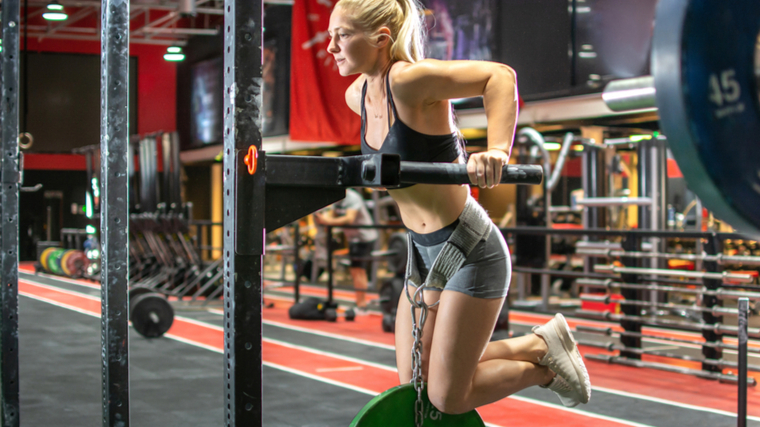
Performing low volume with low repetitions, such as four to five sets of three to six reps, is a reliable method to build strength. This low volume can be achieved by suspending weight from a belt, holding a dumbbell between your feet, or from simply being unable to perform more than six repetitions with good form.
Performing unweighted, low repetition sets frequently throughout the day is one effective method for building strength and improving technique. This is known as greasing the groove and it’s a highly effective way to master any bodyweight exercise, including dips.
Dip Variations
Dips can be used by lifters and athletes of any fitness level to apply tension to the multiple heads of the chest, triceps, and delts. Begin with more manageable versions of the dips while focusing on form, then add intensity and volume as you progress.
Ring Dip
Ring dips are a more challenging variation that requires significant muscular coordination, balance, and stability. This exercise applies tension to the pecs through a long range of motion while also challenging the smaller stabilizers in the shoulders and upper back.
Ring dips are a popular exercise in CrossFit programming, as well as general gymnastic-based programs, but the increased recruitment of the upper body stabilizers can help to improve muscular coordination and overall shoulder health when programmed appropriately.
Triceps Dip
This very subtle variation uses slight adjustments to your arm and torso positions. These will decrease emphasis on the chest and increase recruitment of the triceps, making it a popular and efficient arm-building movement.
The first significant difference from the chest-focused dip is to maintain an upright torso during the descent rather than leaning forward, to reduce recruitment of the chest muscles. Even more importantly, keep your elbows near your body and aimed towards the wall behind you. (13) Don’t allow them to flare outwards.
Dip Alternatives
If a lack of shoulder mobility or pre-existing injury prevents you from executing dips, there are plenty of alternative exercises you can do to continue adding size and strength to your chest.
Push-up
Good ol’ push-ups. This classic exercise is an excellent alternative to dips that still uses your own bodyweight to apply tension to the pecs and pressing muscles.
Some experienced lifters consider push-ups to be too easy but, like dips, push-ups can be progressed with increased volume or external load to consistently challenge the muscles. The chest and shoulder muscles aren’t put through a significant stretch during push-ups, compared to dips, making them an ideal option for lifters with pre-existing joint pain.
Bench Press
The classic bench press is an excellent substitute for dips because the potential to move heavy weights can carryover to size and strength gains. Some gym veterans would rank the bench press on par with dips as fundamental chest-building exercises.
The flat barbell bench press is obviously essential for powerlifters, as one of the competitive lifts. Its potential to build upper-body strength can also carryover to other strength athletes including strongmen and strongwomen.
FAQs
Are dips bad for the shoulders?
Using proper form and avoiding the technique mistakes explained above, dips will place more stress on the pecs, triceps, and anterior deltoid muscles instead of the associated joints. This optimal muscle recruitment can significantly reduce the risk of injury.
However, if the exercise is executed with improper form or too heavy a load, dips may lead to shoulder impingement, potentially straining the rotator cuff tendons. (14) Fundamentally, the principles which apply to all exercises apply to dips — do them properly, with programming appropriate for your fitness level, and you’ll minimize potential hazards.
How should I program dips with other presses in a chest workout?
Specific programming variables will depend on a number of factors, including your experience level, training frequency, and goals. Generally speaking, performing one to three various types of presses in a single workout can be an effective way to train your chest.
Ideally, the exercises will be diverse — such as the flat barbell bench press, dips, and incline dumbbell press. Redundant training — such performing the flat barbell bench press, flat dumbbell bench press, and close-grip barbell bench press in one session— will deliver excessive fatigue and minimal results.
Time to Take a Dip
Shoulder injuries, poor shoulder mobility, and lack of “pushing strength” can interfere with daily life and hinder performance in the gym, on the platform, and on the field. However, incorporating dips into your training program can pack on muscle, increase strength, reduce injury risk, and enhance physical performance for lifters, athletes, and weekend warriors alike.
References
Wilk, M., Zajac, A., Tufano, J.J. The Influence of Movement Tempo During Resistance Training on Muscular Strength and Hypertrophy Responses: A Review. Sports Med 51, 1629–1650 (2021). doi: 10.1007/s40279-021-01465-2
Mckenzie, Alec & Crowley-McHattan, Zachary & Meir, Rudi & Whitting, John & Volschenk, Wynand. (2021). Glenohumeral Extension and the Dip: Considerations for the Strength and Conditioning Professional. Strength and Conditioning Journal. 43. 93-100. 10.1519/SSC.0000000000000579.
Burd NA, Andrews RJ, West DW, Little JP, Cochran AJ, Hector AJ, Cashaback JG, Gibala MJ, Potvin JR, Baker SK, Phillips SM. Muscle time under tension during resistance exercise stimulates differential muscle protein sub-fractional synthetic responses in men. J Physiol. 2012 Jan 15;590(2):351-62. doi: 10.1113/jphysiol.2011.221200. Epub 2011 Nov 21. PMID: 22106173; PMCID: PMC3285070.
Krzysztofik, M., Wilk, M., Wojdała, G., & Gołaś, A. (2019). Maximizing Muscle Hypertrophy: A Systematic Review of Advanced Resistance Training Techniques and Methods. International journal of environmental research and public health, 16(24), 4897. https://doi.org/10.3390/ijerph16244897
Calatayud, J., Borreani, S., Colado, J. C., Martin, F., Tella, V., & Andersen, L. L. (2015). Bench press and push-up at comparable levels of muscle activity results in similar strength gains. Journal of strength and conditioning research, 29(1), 246–253. https://doi.org/10.1519/JSC.0000000000000589
Harrison, Jeffrey. (2010). Bodyweight Training: A Return To Basics. Strength & Conditioning Journal. 32. 52-55. 10.1519/SSC.0b013e3181d5575c.
Lauersen, J.B., Andersen, T.E., Andersen, L.B. Strength training as superior, dose-dependent and safe prevention of acute and overuse sports injuries: a systematic review, qualitative analysis and meta-analysis. Br J Sports Med. 2018 Dec;52(24):1557-1563. doi: 10.1136/bjsports-2018-099078.
Huxel Bliven, K.C., Anderson, B.E. Core stability training for injury prevention. Sports Health. 2013 Nov;5(6):514-22. doi: 10.1177/1941738113481200.
National Institutes of Health: Stat Pearls. Anatomy, Thorax, Pectoralis Major Major.
Landin, D., Thompson, M., Jackson, M. Functions of the Triceps Brachii in Humans: A Review. J Clin Med Res. 2018 Apr;10(4):290-293. doi: 10.14740/jocmr3340w.
Baz-Valle, E., Schoenfeld, B. J., Torres-Unda, J., Santos-Concejero, J., & Balsalobre-Fernández, C. (2019). The effects of exercise variation in muscle thickness, maximal strength and motivation in resistance trained men. PloS one, 14(12), e0226989. https://doi.org/10.1371/journal.pone.0226989
Reggiani, C., & Schiaffino, S. (2020). Muscle hypertrophy and muscle strength: dependent or independent variables? A provocative review. European journal of translational myology, 30(3), 9311. https://doi.org/10.4081/ejtm.2020.9311
Cinarli, Fahri & Kafkas, Muhammed & Soylu, Abdullah & Yılmaz, Nurkan. (2021). EFFECT OF ELBOW ANGLE ON TRICEPS BRACHII AND PECTORALIS MAJOR MUSCLE ACTIVITY DURING PARALLEL BAR DIP. 27. 57-69.
Escamilla, R. F., Hooks, T. R., & Wilk, K. E. (2014). Optimal management of shoulder impingement syndrome. Open access journal of sports medicine, 5, 13–24. https://doi.org/10.2147/OAJSM.S36646
The provenance of your shirt, pants, and underwear isn’t just aesthetic or ornamental. It’s serious stuff. Consider food, which isn’t that different from clothing. Textile production is an industrial process, with all the economies of scale and chemical adulteration that entails. Just as processed food bears increasingly little resemblance to whole food, clothes are not “whole textiles.” They are processed junk fabric enhanced with plastic fibers and many of the same chemicals we try to limit in our foods.
But there’s better clothing out there, just as there’s better food. There’s clothing made of sustainable fabric—fabrics that sustain life, rather than detract from it.
When I say “sustainable,” I’m not thinking about the planet as much as I’m thinking about the health of my own body and my family’s. For if something is going to be sustainable on a global level, it must first be a sustainable fabric for the individual. It has to support the life of the organism that populates the planet and is indeed part of the planet. Again, let’s refer back to food. If a diet isn’t compatible with good health in the population, how can it be good for the planet? Is there any situation where a diet heals the planet and its biological systems while leaving the individual animals who eat it sickly, diseased, weak, and infertile? Of course not.
For clothing to be made with truly sustainable fabric, it must be good for individual healthand the environment. No other definition of “sustainable” is acceptable. And so when determining the sustainability of a given fabric, we have to consider the health impacts.
The Best Sustainable Fabrics
Organic Cotton
Cotton is the most common and widely available natural fiber, but it’s also very popular with the bugs. Cotton plants produce nutritious and energy-dense fruits throughout the growing cycle, making it irresistible and leading to heavy pesticide usage. Conventional cotton is the most heavily treated crop in the world, responsible for a lion’s share of total global pesticide applications—despite covering just a fraction of the world’s cropland.
GMO cotton engineered to repel the most common cotton pests with an in-house toxin worked briefly but ultimately led to resistance to the engineered toxin, necessitating more pesticide usage and triggering a chemical arms race between farmers and pests that continues to this day. In fact, Indian cotton farmers use more pesticides now than they did before the introduction of GMO cotton.
I was unable to find any evidence of the pesticides used in cotton production residing in the finished fabric and then leaching into human skin, but skin is permeable. These things happen. Washing reduces any surface-level chemicals added to the cotton, but those bound to the fibers itself may remain. Again, there’s not a lot of research on this topic, perhaps because it’s one they’d rather not broach.
Linen
Linen is an ancient sustainable fabric with prehistoric roots—as far back as 30,000 years in present-day Georgia and 10,000 years ago in Switzerland, humans were extracting and dyeing wild linen fibers. Throughout Medieval Europe, North Africa, and Central Asia, linen was a common fabric used for undergarments, tunics, dresses, and anything that lay close to the skin.
Linen is perhaps my favorite fabric at the moment. It’s almost required to live in Miami during the hottest months. You can almost feel cooler wearing a linen shirt and shorts in the humid heat than you do wearing nothing at all. Linen isn’t just less bad than cotton or synthetics in the heat. It’s actively cooler. It breathes and wicks moisture from your body. It improves in the heat and humidity. The more you wear it and wash it, the softer it gets.
Linen is naturally anti-bacterial, making it the best and most hygienic choice even today for hospital bedding (why they call them “linens”). This quality also means linen doesn’t hold odor as much as other fabrics. It’s such a sustainable fabric that you can hang a linen shirt up to air out after wearing it and there’s a good chance it’ll be good for another day or two.
Wool
Wool is another ancient fabric. If linen is great for hot muggy weather, wool is downright designed by the hand of evolution to provide insulation against the cold. You can stay active in it because it repels bacteria, doesn’t get very smelly, breathes and wicks moisture. It’s even a little resistant to water if the natural lanolin—a fatty substance present in “raw” wool that keeps sheep from getting totally soaked—remains or is added back into the fabric.
Wool can be scratchy, but merino wool is a softer, silkier variety that feels much smoother and “cotton-like.” Merino wool is more expensive than normal wool.
Tencel
Tencel is a sustainable fabric, very similar to rayon, that uses wood pulp with a non-toxic solvent to help it become fabric. Tests show that any residuals of the solvent are eliminated in the finished product, and clothes made with tencel fabric are biodegradable.
Things to Keep in Mind When Choosing Sustainable Fabrics
Trust but verify.
Some otherwise sustainable fabrics, like wool in one notable case, can be treated with BPA and other plasticizers to increase thermal stability and overall resilience, with one study even finding that wool had more BPA than polyester blends. If you buy wool, cotton, linen, or hemp clothing, be sure to research the manufacturer and confirm that they . But for the most part, any sustainable fabric is going to be a better, safer choice than any polyester or polyester-blend.
Avoid stain-resistant and water-repellant clothing.
PFAS, the “forever chemicals” linked to fertility issues, hormonal changes, and chronic health conditions that end up in our food, water, and salt, are also used to make fabrics stain-resistant and water-repellant. They can be added to any fabric, but aren’t usually incorporated into the sustainable fabrics listed above.
Obviously, water repellant gear can really come in handy when you need it. Backpacking through the Pacific Northwest or along Kauai’s Na Pali coast? Wear the rain gear. Especially since that kind of rain outwear doesn’t ‘really touch your body as much. But don’t make it a habit to wear “water repellant” and “stain resistant” clothing on an everyday basis.
Avoid wrinkle-free fabric.
Wrinkle-free usually means “dosed with formaldehyde.”
Limit polyester.
A pair of interesting dog studies showed the harmful anti-fertility effects of wearing polyester. One study in intact male dogs had them wear either polyester or cotton underwear for a few weeks. The underwear was loose enough not to affect scrotal temperatures, and yet the polyester fabric impaired sperm quality, motility, and overall fertility. The sustainable fabric—cotton—had no effect on fertility measures.
Another study placed garments made from different fabrics on pregnant dogs. One group wore wool, one wore cotton, one wore a cotton-polyester 50/50 blend, and the final group wore 100% polyester. All dogs wore their garments for the duration of the pregnancy. The wool, cotton, and cotton/poly blend dogs all had normal pregnancies with normal hormone levels throughout, while the polyester dogs were more likely to have issues.
Finally, a pair of followup studies in human men explored the polyester issue further. One study split men up into three groups. One group wore cotton underwear, one group wore a cotton/polyester 50/50 blend, and the final group wore underwear made out of pure polyester. While the cotton underwear produced no electrostatic charge across the scrotal sac, both the blend and the polyester did, with the polyester underwear creating the strongest (and most detrimental) charge.
Another study split men into 5 groups: a control group wearing their regular clothing, a group wearing only cotton underwear, one wearing only wool, another wearing a cotton/poly blend, and a final group wearing just polyester. They established a baseline and then tracked how their sexual activity (or “potency”) changed over 12 months. The cotton and wool groups were most unchanged. The cotton/poly blend and polyester groups saw their sexual potency diminish significantly, with the pure polyester group having the worst results.
Watch the leggings and yoga pants.
A recent study found that many popular legging brands, like Lululemon and Old Navy, may also contain the forever chemicals PFAS. Not all of the samples did, mind you, but a good enough portion to be careful or even consider other brands.
Wear plain shirts.
Printed graphics on fabrics are the primary source of dermal exposure to caustic chemicals like benzothiazole. Studies of human skin show that simulated “wearing” of clothing with residual benzothiazole and other related compounds leads to dermal absorption. The risk is higher in infants wearing socks with benzothiazole, as the increased skin temperature facilitates absorption. Up to 86% of baby clothing (socks, body suits, shirts, etc) samples in one study had measurable residues.
Mind your genitals.
Ever since modern humans arrived, we’ve been covering our genitals with fabric. That means just about every hour of the day, you’ll have to wrap your genitals in some kind of fabric. You can be shirtless at the beach but you’ll still cover your genitals. You can be walking out in your boxers to get the paper but you’ll still be covering your genitals in fabric. My point and reason for writing the word “genitals” so much is that they’re a special part of the body that’s uniquely vulnerable to poor clothing choices. If you have to wear something down there, use sustainable fabric.
The human genitals are an incredible sensitive zone covered in permeable skin, making them a prime entry point for topical medicine and uniquely vulnerable to the absorption of unwanted, harmful chemicals. The problem is that a lot of underwear is absolutely riddled with anti-fertility or estrogenic chemicals.
How to Make Good Choices about Sustainable Fabrics
Make good choices when and where you can.
Don’t wear snug fitting plastic (polyester) underwear. Maybe don’t wear underwear at all.
Limit or eliminate print tees.
Limit water-resistant or stain-resistant clothing.
Limit wrinkle-free clothing.
Buy your leggings and yoga pants carefully.
Focus on quality over quantity. Be willing to spend a little more for better feeling, “healthier” more sustainable fabrics that last longer.
If you’re dressing your baby or child, spend the money on quality stuff. At the very least, minimize child clothing with prints and graphics and aim for natural fabrics.
Buy natural sustainable fabric like organic cotton, linen, and wool whenever possible and realistic.
Visit thrift stores for well-worn natural sustainable fabric clothing that’s had plenty of time to leach out most of its chemical load.
Blends are better than nothing. Remember that most of the studies discussed above found that cotton-polyester blends were less harmful (and in some cases totally harmless) than pure polyester clothing.
Sustainable Fabric Brands
What are some good brands to get you started on your sustainable fabric journey?
Everlane: Nice clothing whose site can be filtered by fabric. Here’s linen, here’s organic cotton. And so on.
Amazon: You can find some great deals on sustainable fabric clothing on Amazon. Just type in “organic cotton shirt” or “linen dress” or whatever. Make sure you vet the vendors, as Amazon listings aren’t always the most reliable.
Etsy: You can also find some great stuff on Etsy, a marketplace for small makers. Here’s “organic merino wool shirt,” for example.
Outdoor gear: This is a good guide to finding PFAS-free outdoor gear. Not all of the fabric is sustainable or natural, however.
Moving Forward
You know when you touch linen or wool. Your brain understands the difference between silk and linen, cotton and wool, synthetics and naturals on a somatosensory level, simply by touch. The differences are real, and the studies probably aren’t capturing everything that distinguishes them.
I’d love to see studies into the effects of different fabrics on heart rate variability for example. I’d bet there are real differences in people wearing linen or wool versus polyester. When I wear linen, I know the difference. You just feel better, more at ease, more at home.
Despite all the somewhat troubling research discussed today, don’t lose sleep over your clothing. You’re already eating well, sleeping well, getting sun, getting out into nature, exercising on a regular basis, and all the other good things we emphasize around here. Freaking out about some chemicals on your T-shirt is only worthwhile—and even then, arguably so—if you’ve already taken care of the low hanging fruit and want something else to occupy your time.
Don’t let perfect be the enemy of the good. I own some synthetic exercise stuff myself, and it’s hard to beat for performance. That said, I’m not wearing it all the time and I’m not wearing pure polyester gear. I’m using it for specific instances: hikes, running, paddling, Ultimate Frisbee, workouts. I’d love to train hard in linen shorts or something like that, but it just doesn’t flex like synthetic active wear.
If you find yourself avoiding workouts because you haven’t found the perfect pair of totally toxin-free shorts, you’re missing the forest for the trees.
What’s your favorite sustainable fabric to wear? Got any goods brands you’d like to share?
Take care, everyone.
About the Author
Mark Sisson is the founder of Mark’s Daily Apple, godfather to the Primal food and lifestyle movement, and the New York Times bestselling author of The Keto Reset Diet. His latest book is Keto for Life, where he discusses how he combines the keto diet with a Primal lifestyle for optimal health and longevity. Mark is the author of numerous other books as well, including The Primal Blueprint, which was credited with turbocharging the growth of the primal/paleo movement back in 2009. After spending three decades researching and educating folks on why food is the key component to achieving and maintaining optimal wellness, Mark launched Primal Kitchen, a real-food company that creates Primal/paleo, keto, and Whole30-friendly kitchen staples.
There are impressive lifts that are significant signs of progress, and there are noteworthy lifts that double as exceptional milestones. With a recent personal boundary-breaking accomplishment while training in the gym, young powerlifter Jesus Olivares can count himself amongst the special latter group.
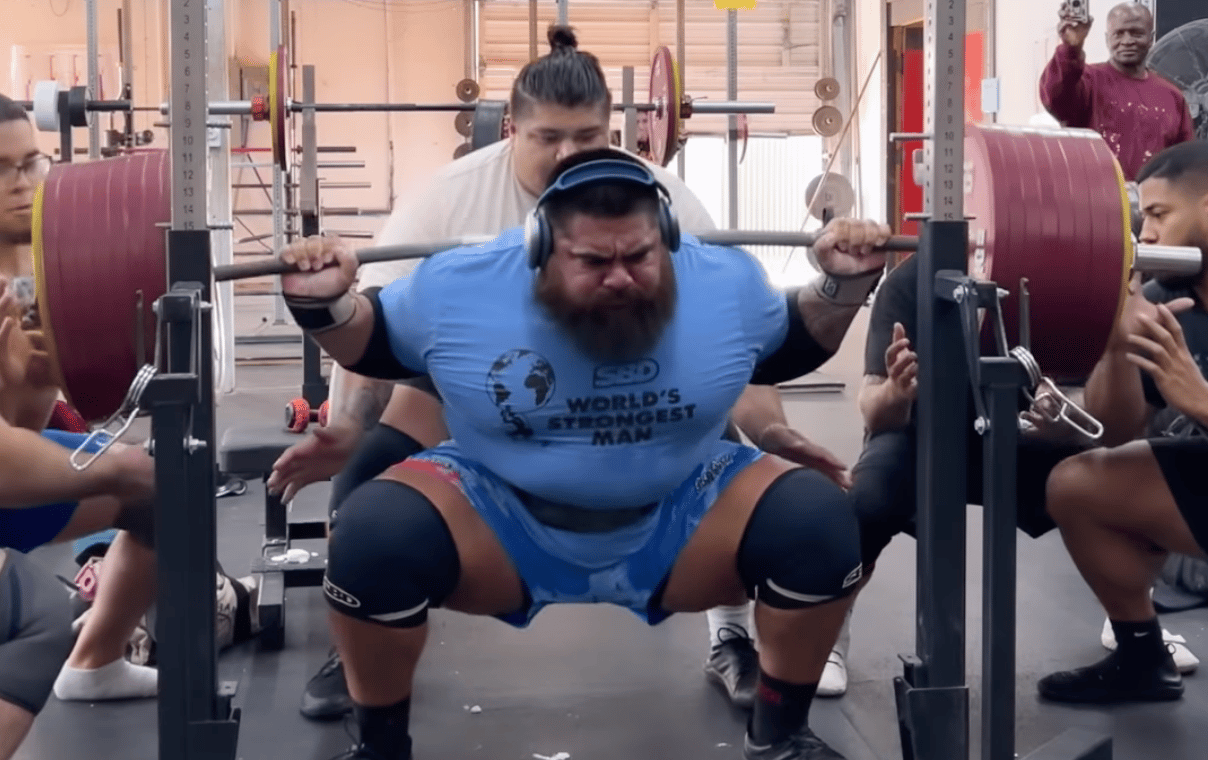
On September 13, 2022, Olivares shared an Instagram video of himself completing a 455-kilogram (1,003-pound) raw back squat during a training session. According to Olivares’ post’s caption, it’s also a personal record (PR) as he breaks the hallowed 453.6-kilogram (1,000-pound) squat barrier for the first time.
For context compared to his individual career, Olivares’ PR squat unofficially surpasses his raw all-time competition best by five kilograms (11 pounds). The reigning International Powerlifting Federation (IPF) World Champion in the +120-kilogram weight class notched a 450-kilogram (992-pound) squat at the 2022 AMP Classic Open Nationals. That mark helped Olivares to a first-place performance in the contest.
For context compared to his peers, Olivares becomes the latest athlete to join the notable 1,000-pound squat club. There’s a plethora of powerlifters and strongmen who have added the massive squat figure to their resumes. However, there was a time when a 1,000-pound squat was rarer in the strongman sphere. With a 456-kilogram (1,005-pound) squat during the 2016 USA Powerlifting (USAPL) Raw Nationals, Ray Williams became the first IPF/USAPL powerlifter ever to reach the milestone. For Olivares to get this accomplishment now might speak to how far he’s come as an elite lifter.
The 23-year-old seemingly had nothing but gratitude in the caption of his squat Instagram post.
“There is only one certainty in life,” Olivares wrote. “A strong man stands above and conquers all. God gets all the glory for this one.”
Olivares is accustomed to making waves with his strength as a powerlifter. Amidst his work at the recent 2022 AMP Nationals, the athlete captured an unofficial world record deadlift of 402.5 kilograms (887.3 pounds). The feat would’ve been a World Record for the +120-kilogram weight class if accomplished at an international competition. Williams still holds the official mark with a 398.5-kilogram (878.5-pound) pull from the 2018 IPF World Classic Powerlifting Championships.
At the same time, Olivares’ final total of 1,110 kilograms (2,447.1 pounds) from that contest would’ve been the second-heaviest raw total in IPF powerlifting history. Daniel Bell still owns the top spot with a 1,182.5-kilogram (2,607-pound) total that he achieved at the 2021 World Raw Powerlifting Federation (WRPF) Hybrid Showdown III.
At the time of this article’s publication, Olivares will not be competing in upcoming contests. At this rate, whenever he steps onto a platform, he may write another great chapter in his blossoming career.
Sept. 14, 2022 — Actors Ryan Reynolds and Rob McElhenney are taking on different roles: starring in a new campaign to raise awareness about the importance of screening for colon cancer.
Using some humor to highlight a very serious topic, the two Hollywood stars filmed their own colonoscopies. Importantly, both Reynolds and McElhenney are 45 years old, the new age at which many leading medical organizations now recommend men with average risk get a first colonoscopy.
During the filming of the Lead From Behind campaign, Reynolds found out doctors identified and removed a polyp, or precancerous lesion, that could have developed into something more serious over time. McElhenny’s doctor found three polyps and removed them as well. The findings underscore the importance of screening men at average risk for colorectal cancer, including younger men.
Gastroenterologists are applauding Reynolds and McElhenney for using their celebrity to show how colonoscopy can be both easy and lifesaving.
“I thought Ryan and Rob did a fantastic job,” says David A. Johnson, MD, a gastroenterologist in private practice in Norfolk, VA, who has worked on national colon cancer guidelines for the last 20 years.
An important take-home message is that colonoscopy “is really the best test for screening because both of them had polyps,” Johnson says. The premise of screening is to detect any potential issues before they cause cancer, he says.
Rajesh N. Keswani, MD, agrees about the importance of the campaign. “Overall, the message was incredibly effective. Everyone involved from the celebrities to the clinicians did a great job ensuring that all the important points were touched upon.”
“Beyond saying that colonoscopy is easy, they prove it by showing the patients laughing and eating after the procedure,” says Keswani, a gastroenterologist and medical director of quality and integration for the Northwestern Medicine Digestive Health Center in Chicago.
Reynolds, star of the “Deadpool” movies, and McElhenney, who created and starred in the TV show “It’s Always Sunny in Philadelphia,” let their comedic chops shine, says Jessica Bernica, MD, assistant professor of medicine – gastroenterology at Baylor College of Medicine in Houston.
“I think this video is great. Not only does it share a very meaningful message about the importance of colon cancer screening, but what isn’t amusing about watching Ryan Reynolds and Rob McElhenney wake up from anesthesia?” she says.
Bernica praised the campaign for highlighting the younger recommended age for colonoscopy, the ability of the procedure to detect and remove precancerous polyps, and that it’s a “simple and routine procedure not to be feared.”
“I’d also highlight that both Ryan and Rob had great bowel preps, a crucial component to an effective screening colonoscopy.”
The ‘Couric Effect’
Reynolds and McElhenny may have put their own twist on it, but they are not the first celebrities to use their platform to raise awareness about colon cancer.
“This really dates back to when Katie Couric did this after she lost her husband Jay Monahan,” Johnson says. The impact was so dramatic on colonoscopy screening, it’s called The Couric Effect.
There is a large amount of data showing that similar campaigns can improve colon cancer screening rates, most notably when Couric televised her colonoscopy to effectively promote colon cancer screening, Keswani said.
Will Smith also shared an “incredibly detailed documentary in his journey through colonoscopy” after he turned 50, Johnson says. In I Vlogged My Colonoscopy, Smith finds out from his doctor that they found a polyp in his cecum, a pouch that connects the small intestine to the colon. The video on YouTube has been viewed more than 4 million times.
“Then there was Chadwick Boseman. He had very early colon cancer, at age 43, and the world grappled with the unexpected loss,” Johnson says of the Black Panther star who died from the disease.
The COVID Effect
The timing of the Lead From Behind campaign is essential too, Johnson says, because the COVID-19 pandemic caused many people to delay health screenings, including colonoscopies. As a result, he says, “we’re seeing an increase in colon cancer.”
“This is a good wake-up call that we should be proactive,” he says.
Johnson pointed out that at-home colon cancer tests detect when someone already has cancer. In contrast, colonoscopy is about screening early to prevent cancer, although biopsies taken during a colonoscopy can be used for detection as well.
Sparking a Conversation
The attention that celebrities can bring to colon cancer can help start conversations. “This kind of campaign is such a great way to raise awareness and normalize an aspect of preventative health care that many people would probably shy away from talking about openly,” Bernica says.
Colorectal cancer is the third most common cancer diagnosed in the U.S. and is preventable, but by the most recently reported National Institutes of Health statistics in 2019, only about 67% of adults ages 50 to 75 had received screening, Bernica says. “Hopefully this kind of message can be the impetus to push those who haven’t yet been screened to do so.”
To Johnson, celebrities like Reynolds and McElhenney who step outside their normal day-to-day lives to highlight an essential public health message become more than celebrities. “This really changes a star to a superstar,” he says.
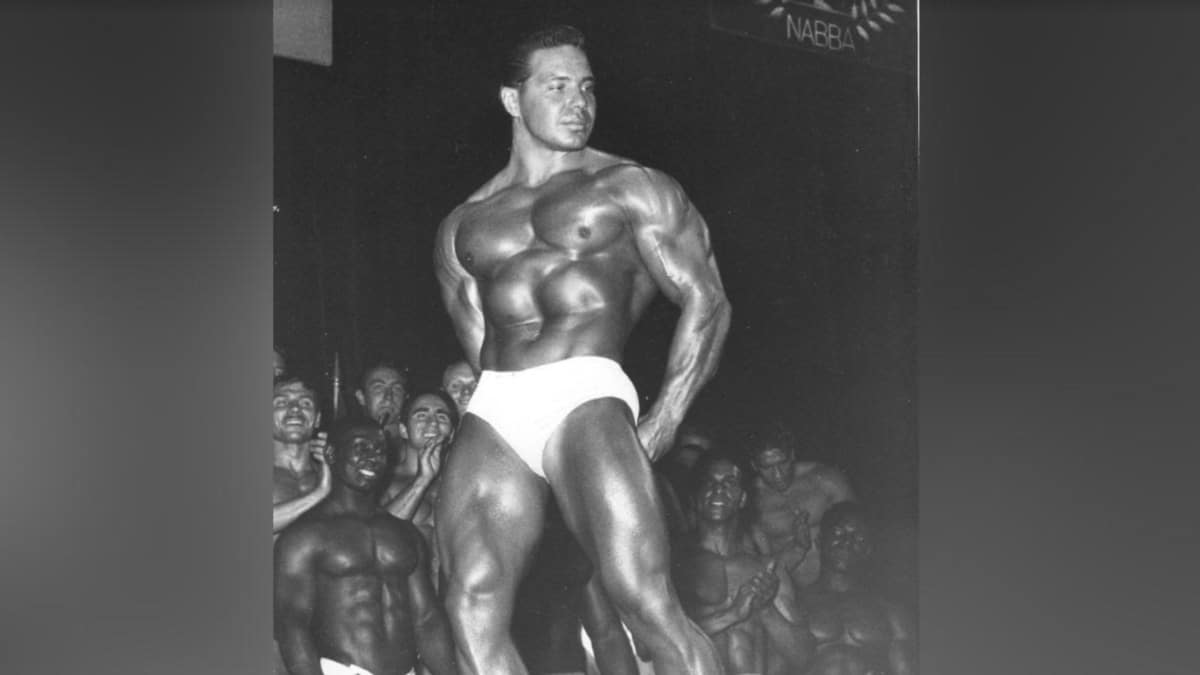
The sport of bodybuilding has lost a titan. On Sept. 14, 2022, through a post on his Facebook page, Bill Pearl’s wife, Judy, announced that the retired bodybuilder had died at the age of 91.
His wife noted that Pearl had recently overcome a serious bacterial infection, following a lawn mower accident which occurred in April. He was simultaneously battling Parkinson’s Disease, diagnosed in 2016, which his wife believes may have caused his death.
While serving with the United States Navy in the early 1950s, Pearl began strength training at Leo Stern’s Gym in San Diego. Stern would encourage Pearl to give competitive bodybuilding a try. After Pearl won the 1953 Mr. California, Mr. America, and Mr. Universe Amateur titles, the rest was history.
With a unique mass and strength, Pearl was a bodybuilding mainstay in the mid-20th century. For an intermittent part over almost two decades between 1952-1971, Pearl competed in 11 bodybuilding competitions, winning nine of them. In that time, Pearl won contests ranging from the 1952 Mr. San Diego to three acclaimed Mr. Universe Pro contests (1961, 1967, 1971).
After enjoying his fruitful career, in 1978, Pearl stepped away from bodybuilding as an active competitor at the age of 48. To this day, only Edward Kawak (1982-1985, 1993) and Eddy Ellwood (1997-2001) have ever won more Mr. Universe competitions. Pearl is tied with fellow bodybuilding legend Arnold Schwarzenegger (1968-1970) at three victories.
Following Pearl’s bodybuilding career, he was a mentor, trainer, and training partner to nine Mr. America winners and 14 Mr. Universe champions. Among the more notable might be 1982 Mr. Olympia Chris Dickerson.
Eventually, Pearl became a successful fitness author, penning notable popular picks such as Keys To The INNER Universe (1979) and Getting Stronger: Weight Training for Men and Women (1986). According to the caption of the post on Pearl’s Facebook page, Getting Stronger: Weight Training for Men and Women has sold over 850,000 copies to date.
In 2003, in conjunction with co-author Kim Scott, Pearl penned his autobiography entitled Beyond The Universe: The Bill Pearl Story. For his tremendous impact on bodybuilding. Pearl was awarded the Arnold Schwarzenegger Classic Lifetime Achievement Award in 2004.
Here’s part of what Pearl’s wife had to say about her late husband’s passing on Facebook:
“All day yesterday, he [Bill Pearl] was fretting about his Facebook page and had me post a couple of things he had prepared,” Judy Pearl wrote. “He loved to share stories of other people’s triumphs and accomplishments.”
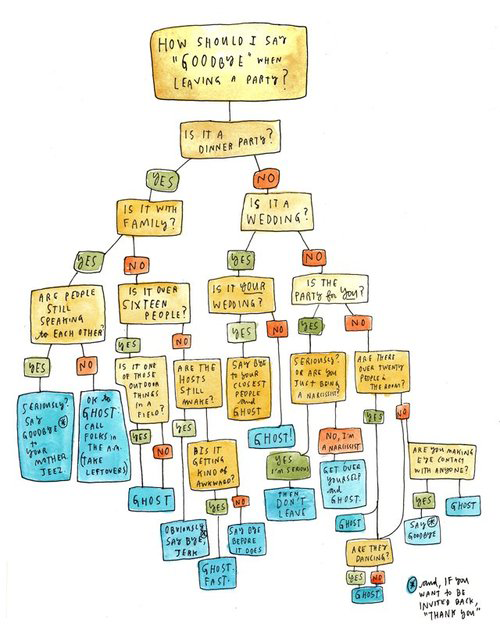
The other day, Jenny and I went to a cookbook launch party at our friend Odette’s apartment. (She’s the mastermind behind Simple Cake and the new Simple Pasta.)
We stood in her kitchen and drank Prosecco and ate pasta salad and chatted about babies and work and movies and traveling to Italy. After a couple hours, it was time for me to head home for the boys’ bedtime, so I turned to Jenny. “Okay, let’s slip out behind the kitchen island,” I said, noting Odette’s position on the other side of the room.
Jenny looked at me quizzically. “But we have to say goodbye.”
Oh, right, I thought, I forgot that not everyone ghosts after parties. Meanwhile, I’ve been happily ghosting for the past decade. It started 10 years ago, when Alex and I threw a big holiday party. Fifty friends squeezed into our teeny apartment, and everyone was having a great time until something started happening.
As I wrote back then: “For the entire second half of the party, friends kept coming up to say goodbye and wish us a happy rest-of-the-weekend. I turned to Alex, perplexed, and asked, ‘Why is everyone leaving?’ And he pointed out that dozens of people were still there; it just felt like a mass exodus because we were consumed with saying goodbye to every single person who was heading home. It felt like the party was already over, even though we were only halfway through. The next morning, Alex and I made a decision: We would never say goodbye to the hosts of parties. We would simply slip out the door.”
At Odette’s party, Jenny remained shocked after hearing my explanation — “this is the first time we’ve disagreed!” she laughed — and she headed over to give Odette a hug. Meanwhile, I sneaked out the door and sent Odette a glowing thank-you text on the walk home (plus a few party anecdotes, just for fun).
“Goodbyes are, by their very nature, at least a mild bummer,” wrote Seth Stevenson, who also encourages people to leave parties without saying goodbye. What if your friends wonder where you’ve gone? “This is key,” he says, “They probably won’t even notice that you’ve left.”
Would you do this? Do you already? Or do you think it’s rude? Are you team Joanna or Jenny? We are so curious to hear your thoughts!!! (This headline made me laugh.)
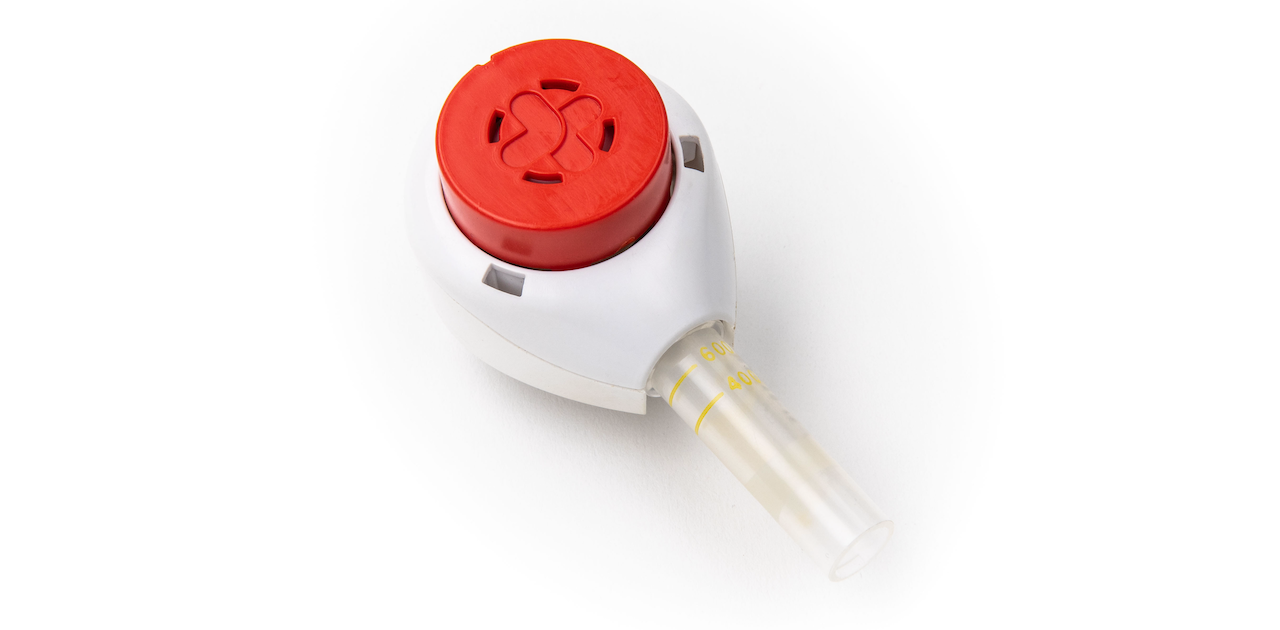
Tasso received FDA 510(k) clearance for its patch-like blood collection device, the Tasso+.
The device includes a lancet, which adheres to the arm, that connects to a test tube for collection. After users rub their arm or use a heat pack and sanitize the test site, they press a button on the front of the device to begin drawing capillary blood. Then the tube can be removed and sent to a lab for analysis.
According to Tasso, it usually takes 10 to 15 minutes to complete the test. The newly cleared Tasso+ will be available in the fourth quarter this year.
The company said the clearance will allow pharmaceutical companies to use the device for decentralized clinical trials, while healthcare systems and physicians could utilize it for patient care.
“With continued industry interest in decentralized clinical trials and diverse testing applications, demand for our high-quality, virtually painless, convenient blood collection solutions is at an all-time high,” Ben Casavant, CEO and cofounder of Tasso, said in a statement.
“This FDA Class II medical device clearance will help improve patient care by relieving traditional phlebotomy-related bottlenecks and enabling more individuals to get the tests they need at the time they are needed. We are excited to unlock a new wave of large commercial opportunities for the company and to lead the industry into the future of remote testing.”
Tasso has two other blood collection devices, which have not yet received FDA 510(k) clearance. The Tasso-M20 delivers dried blood samples, while the Tasso-SST offers blood samples prepared without anticoagulation.
Other companies aiming to bring more lab tests into the home include Everlywell, Cue Health and traditional player Labcorp, which recently partnered with Getlabs to offer at-home sample collection. Telehealth giant Teladoc has also recently expanded into home collection for its primary care program through a collaboration with Scarlet Health.
Since the COVID-19 pandemic, decentralized clinical trials have also gained traction. DCT platform Medable, which raised $304 million in Series D funding last year, announced partnerships with CVS and connected device company Withings this year.
Sept. 14, 2022 – Like many parents of teens, LaToya S. worries about her son’s sleep habits. In the early weeks of the pandemic, when her then-13-year-old had no way to connect with friends, she dropped some of her typical rules about screen time. It didn’t take long before her son’s bedtime began creeping later and later, he began playing video games with friends until the wee hours, and quality overnight sleep went out the window. Two years later, LaToya is still working to restore him to normal sleep patterns.
There’s good reason for her efforts. The link between poor sleep habits and poor health are well-established. For teens, it can mean lower grades, higher rates of mood disorders, a higher risk of substance abuse, and more.
“When he went back to school after lockdowns, we began seeing the effects of his disrupted sleep patterns,” says LaToya. “The teachers were noticing that, after the first couple of hours, he was nodding off in class. He began falling behind, especially in classes that required extra effort. We recognized that we had to make changes.”
As if school performance isn’t enough to worry about, for parents like LaToya, a new study has added another area of concern: Too little sleep in teenagers is linked to obesity and being overweight.
The Supporting Data
The study, authored by Jesus Martinez Gomez, a researcher in training at the Cardiovascular Health and Imaging Laboratory at the Spanish National Centre for Cardiovascular Research, looked at the link between sleep duration and health in more than 1,200 adolescents, divided evenly between boys and girls. Researchers began measuring sleep at age 12, and then repeated the exercise again at 14 and 16 years of age. Each time, the people in the study wore activity trackers for 7 days.
Along with sleep measurements, the researchers measured body mass index (BMI) throughout the study. They also calculated a score of things that can raise the odds of heart disease and other conditions, ranging from negative (healthier) to positive (unhealthier) values. Also, researchers measured and tracked waist size, blood pressure, and blood glucose levels.
The American Academy of Sleep Medicine recommends that teens between the ages of 13 and 18 consistently sleep between 8 and 10 hours a night for optimal health. But the Spanish study found that at 12 years of age, only 34% of those in the study achieved a full 8 hours of sleep a night. When subjects reached 14, that number dropped to 23%, and at 16, it fell to 19%. Tying in the data for overweight and obesity, at 12 years old, 21% fell into that category; at 14, the number increased to 24%; and by 16, when sleep was at its lowest levels, the number rose to 27%.
Laura Sterni, MD, director of the Johns Hopkins Pediatric Sleep Center, isn’t surprised by these findings. “We are failing to make sure our teens get adequate sleep,” she says. “There are a number of contributing factors, and the detrimental impact is great.”
When it comes to the obesity link, the lack of sleep as a cause isn’t quite there yet, but it’s likely.
“Right now, it’s correlation, not causation, but parents should still consider the link,” says Bruce Bassi, MD, medical director and founder of TelepsychHealth, an online therapy provider. “All the effects that come with sleep deprivation are exactly the opposite of what you want. Sleep deprivation turns on the toddler sides of our brains – we become crankier and look for soothing, and sometimes that’s food.”
“We’re getting more data all the time,” Sterni says of finding that sleep deprivation leads to obesity. “The risk factors for obesity appear to be dose responsive.”
Indeed: As the Spanish study highlights, the less sleep a teen gets, the more likely they are to become overweight or obese.
“We know that insufficient sleep leads to alterations in important hormone control and metabolic markers,” Sterni says. “It impacts the hormones that make us feel full by lowering them, and conversely makes our hunger rise.”
Lack of sleep also impacts how a body metabolizes glucose, leads to insulin resistance, and makes eating poor carbohydrates more appealing to the body, explains Sterni.
“Then there’s the fact that when you’re up late, you’ve got greater opportunity to eat, maybe mindlessly snacking on bad foods while in front of screens,” she says. “You’re sleepy during the day, so you’re not as inclined to exercise, either. Lifestyle factors get woven into the picture.”
Today’s teens are notoriously busy, too, which doesn’t encourage steady, regular bedtime habits. Social activities, sports, and club and school commitments can all push bedtimes later and wake-up times earlier. Add it all up, and lack of sleep can set teens up for a lifetime of health issues, many due to unhealthy weight.
How to Help Your Teen
While the data can be sobering, there are important ways parents can help their teens develop better sleep habits.
“The good news is that there’s some data showing that if you teach families and young people about the importance of sleep, they will listen and work to preserve healthy sleep habits,” says Sterni. “It’s as important as brushing your teeth, and you should always work towards getting adequate amounts.”
Bassi says that one of the most logical places to begin is encouraging earlier bedtimes.
“For most teens, the end marker of sleep is fixed because of school, so focus instead on when they get to bed,” he suggests. “Encourage better sleep hygiene and reducing stimulation before bed.”
That means setting up good screen-time habits, one big piece of the approach that Greg F. and his partner have taken. Parents of a 15-year-old and 17-year-old, they set up hard and fast rules for their devices.
“They can only use their phones in the common areas of the house, and they must power them down at 8:45 at night,” Greg explains. “In the morning, they cannot use their phones until all their chores and breakfast are finished. We believe it’s best that they get sleep on both the front and back ends before they have phones in hand.”
Exercising during the day can also improve the odds that a teen will be ready for sleep at a reasonable hour in the evening. With both kids active in sports, that’s another box that Greg’s family is checking.
“Parents can also demonstrate their own good habits,” suggests Bassi. “Positively reinforce your guidelines by shutting down your own screens in the evening.”
Greg is heeding that advice.
“We don’t have a television in our bedrooms, we go to bed early, and we open a book before bed,” he says.
Napping is another area worth visiting. As many parents of teens know, this is an age group that likes to nap when they can.
“I’m not against napping,” says Sterni. But, he says, “limit naps to 45 minutes to an hour, and try to prevent your teen from napping too close to bedtime.”
While there are plenty of areas to work on with teens and sleep habits, Sterni recommends starting with one or two, instead of taking them on all on at once.
“You’re not going to accomplish them all right away,” she says. “Just work toward the goal of 8 hours on average, however you need to take it on.”
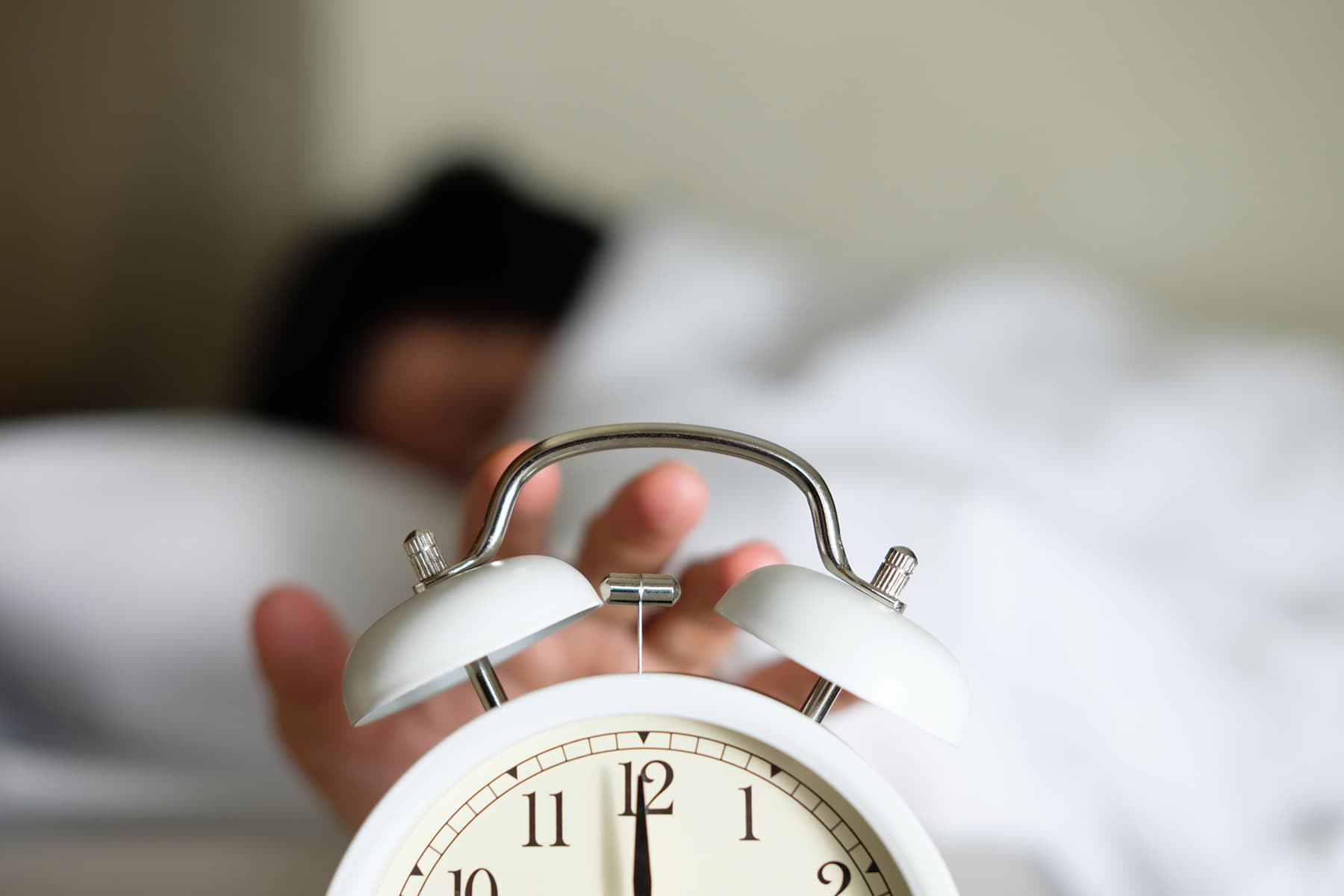
For LaToya, the work toward improving her son’s sleep habits is far from over, but she’s seeing progress. The family has set up shutdown hours on their router, established a 10 p.m. bedtime, and even given their son an old-fashioned alarm clock to replace his phone’s alarm in his room. As habits improve, they may revisit some of the rules.
“We’ve recognized that teens need incentives for positive behavior as much as younger children,” she says. “Our consistency is paying off, and we’re being patient with his progress.”
WEDNESDAY, Sept. 14, 2022 (HealthDay News) — A new study hands parents what seems like a miraculous gift: A simple, free technique that takes just 13 minutes to put wailing infants to sleep.
Researchers in Japan found that walking around while carrying infants for five minutes calmed the newborns, while another eight minutes of sitting while holding the sleeping babies quietly made the transfer to a crib a smooth one.
The team studied the calming process using a baby ECG machine and video cameras to compare changes in heart rate and behavior as 21 mothers performed some activities that are common for calming infants. These included carrying the babies, pushing them in a stroller, and holding them while sitting.
The researchers were able to record detailed data from babies who were crying, awake and calm, or sleeping. The idea was to track changes in both behavior and physiology with great precision.
The team found that “walking for five minutes promoted sleep, but only for crying infants. Surprisingly, this effect was absent when babies were already calm beforehand,” said study author Dr. Kumi Kuroda, from the RIKEN Center for Brain Science in Saitama, Japan.
Regardless, all the babies in the study had stopped crying by the end of the five-minute walk and had lowered heart rates. About half were asleep.
The study found that babies were extremely sensitive to all movements by their mothers, their heart rates changing when their mothers stopped walking or just turned. The most significant event that disturbed the sleeping infants happened just when they became separated from their mothers, pinpointing the problem of having a sleeping baby wake just as the infant is put down.
“Although we did not predict it, the key parameter for successful lay down of sleeping infants was the latency from sleep onset,” Kuroda said in a RIKEN news release.
Specifically, babies often woke up if they were put down before they got about eight minutes of sleep.
To fix the issue, Kuroda suggests mothers should carry a crying baby steadily for about five minutes with few abrupt movements, followed by about eight minutes of sitting before laying them down for sleep.
Continued
The study does not address why some babies cry excessively and cannot sleep, but it does offer a solution that can help parents.
Also, “We are developing a ‘baby-tech’ wearable device with which parents can see the physiological states of their babies on their smartphones in real time,” Kuroda said. “Like science-based fitness training, we can do science-based parenting with these advances, and hopefully help babies to sleep and reduce parental stress caused by excessive infant crying.”
The findings were published Sept. 13 in Current Biology.
More information
The American Academy of Pediatrics has more on how to calm a crying baby.
SOURCE: RIKEN Center for Brain Science, news release, Sept. 13, 2022