Chances are, you already know someone who’s an avid pickleball player. America’s fastest-growing sport—a cross between tennis, badminton, and ping-pong—can be played as either a singles or doubles game, though doubles is typically more popular. Points can only be accrued by the side that’s serving, and the winner is the first side to get to 11 points and be leading by at least two.
Invented in 1965 in Bainbridge Island, Washington, pickleball has gained popularity during the pandemic, growing 14.8% between 2020 and 2021. According to the 2022 Sports & Fitness Industry report, more than half (52%) of core players—those who play eight or more times a year—are 55 or older, and almost a third (32.7%) are 65-plus.
Jonathan Casper, an associate professor at North Carolina State University who has studied the benefits of pickleball for older adults, views it “as a public health tool in many ways, both for achieving physical activity and for getting the psychological and social benefits that are so important as we age.” Here’s why.
It’s a low-impact way to get moving
Part of pickleball’s appeal is that “while it does take coordination, and you have to be physically healthy to play,” it’s not that hard to learn, Casper says. And because the court is smaller than a tennis court, the net is lower, and you play with a plastic wiffle ball, “it doesn’t take too much out of your body,” says Arthur Kreiswirth, 80, a retired dentist in New Rochelle, N.Y., who started playing five years ago. “The running is in short sprints and the impact of smacking the ball is minimal, so it’s easier on the joints.”
But pickleball is still a great workout. In a 2016 study published in Medicine & Science in Sports & Exercise, 12 middle-aged players burned 40% more calories during a 30-minute pickleball game than during 30 minutes of walking, increasing their heart rates to within the moderate-intensity exercise zone. A small six-week study of 15 people ages 40 to 85 who played an hour of pickleball three days a week showed improvements in cholesterol, blood pressure, and cardiorespiratory fitness.
Plus, regular practice can help improve balance, which is important in preventing falls as you age. Because pickleball requires both hand-eye and foot coordination, says Casper, “your balance, your movement, and your coordination all get better as you play more.”
It’s an avenue to socialization
Research has shown that social isolation is associated with an increased risk of dementia, depression, and premature death. Yet, without work or school-aged kids, it can be hard to make friends as an older adult.
Enter pickleball, which Janet Niehaus, 68, a retired teacher in Easley, S.C., describes as “my socialization.” In the rotating group of 18 people she plays with twice a week, “we stand around and talk as much as we play.” In a recent study of 36 pickleball players over the age of 65, published in World Leisure Journal, those who maintained the social connections they’d made through the sport by continuing to play through the pandemic months of 2020 reported improved life satisfaction.
“As I grow older, I’m a big proponent of having friends of every age and different walks of life,” says McHugh, who plays daily with other devotees ranging from age 15 to 92. “It keeps you tuned in to what’s out there.”
In his research into the psychological connection between pickleball and older adults, Casper found that the competition inherent to pickleball—rare in other “senior-friendly” activities like walking or Zumba—was a major draw. When Kreiswirth started playing at 75, “I was paired with a 92-year-old, and he could stroke as well as anyone,” he says. “I thought, ‘Well, if he can do it, I can.’ It pumped me up to keep playing.”
A 2018 study of 153 people who compete in pickleball tournaments found that playing pickleball is significantly related to a low level of depression in older adults. For retirees, pickleball can help restore a sense of purpose after leaving the working world, says Casper. “People start to form an identity as they play more and more,” he explains. “The fact that they’re able to continue to get better, that they’re able to compete and to have that satisfaction of winning contributes to their quality of life in many ways.”
And when it comes to skill mastery, says McHugh, the sky’s the limit. “You can always improve at pickleball,” she says. “That’s so satisfying! How many things are going to be like that when you’re 70?”
It keeps your brain sharp
Kathy Jaray, 70, who plays six times a week in Encinitas, Calif., says it’s not just the physical exercise that has her “pretty hooked,” it’s also the mental workout. “Some people could care less about strategy and just want to hit the ball, but for me, it makes for a more interesting game,” she says.
While power and strength are helpful, “if you know the right placement, if you know where your opponents are positioned, if you have the right strategy, you can be just as good as—if not better than—those who are physically more superior and athletic than you,” Casper says.
The confidence boost Kreiswirth gets from playing pickleball is huge.
“It has helped me so much with my vision of myself,” he says. “Yes, I’m in good shape for an 80-year-old, but there is an end in sight, and I do not want to crawl to that end. Pickleball has given me a way to be active for a couple of hours, break a sweat, and feel really good about myself.”
Flags at the Washington Monument commemorate Americans who died from COVID-19. In 2021, life expectancy in the U.S. fell for the second year in a row.
Spencer Platt/Getty Images
hide caption
toggle caption
Spencer Platt/Getty Images
Flags at the Washington Monument commemorate Americans who died from COVID-19. In 2021, life expectancy in the U.S. fell for the second year in a row.
Spencer Platt/Getty Images
Life expectancy in the U.S. fell in 2021, for the second year in a row.
In 2019, someone born in the U.S. had a life expectancy of nearly 80 years. In 202o, because of the pandemic, that dropped to 77 years. In 2021 life-span dropped again — to 76.1 years. And for some Americans, life expectancy is even lower, according to a provisional analysis from the Centers for Disease Control and Prevention.
“The results of this study are very disturbing,” says Dr. Steven Woolf, a professor of population health and health equity at Virginia Commonwealth University. “This shows that U.S. life expectancy in 2021 was even lower than in 2020,” he says.
Other high-income countries have seen a rebound in life expectancy, which Woolf says makes the U.S. results, “all the more tragic.”
One of the most dramatic drops in life expectancy in 2021 was among American Indian and Alaskan Native people. Between 2020 and 2021 the life expectancy for this group fell by almost two years, from 67.1 in 2020 to 65.2 in 2021.
“That’s horrific,” Woolf says. “The losses in the Native American population have been terrible during the COVID-19 pandemic. And it reflects a lot of barriers that tribal communities face in getting access to care,” he says.
White Americans also saw a larger decrease in life expectancy in 2021 than Black and Hispanic Americans. This was the reverse of what happened in 2020 when Hispanic Americans saw a 4 year decline and Black Americans saw a 3 year drop. Life expectancy for white Americans declined by a year in 2021 to 76.4. Black Americans saw a 0.7 year decline to 70.8 years, Hispanic Americans saw a 0.2 year decline to 77.7 years. Asian Americans saw a 0.1 year decline to 83.5 years.
Woolf says the greater drop in life expectancy for white Americans could reflect attitudes in some parts of the country to vaccines and pandemic control measures. The U.S. health care system is fragmented he points out — public health is determined by the states, which means there were 50 different pandemic response plans. The states which were more relaxed about COVID restrictions and have lower vaccination rates saw higher excess deaths during the delta and omicron surges than states which had more aggressive vaccination campaigns, masking and other mitigation requirements.
Death rates from COVID-19 in counties that went heavily for Donald Trump saw higher death rates than counties that favored President Biden, according to an NPR analysis.
Injuries, heart disease, chronic liver disease and cirrhosis and suicide also contributed to the life expectancy decline. Increases in unintentional injuries in 2021 were largely driven by drug overdose deaths which increased during the pandemic.
“The COVID-19 pandemic has in effect wiped out the health gains that the U.S. has made in the 20th century,” says John Haaga, a member of Maryland’s Commission on Aging. “To have this second year of crash basically wiping out the meager gains made during the century is really pretty shocking,” he says.
The U.S. has been lagging for years in making improvements in things like heart disease — the country’s number one killer — and the life expectancy gap between the U.S. and other countries has been growing for decades, Haaga says.
“A lot of much poorer countries do much better than us in life expectancy,” he says. “It’s not genetics, it’s that we have been falling behind for 50 years.”
Perhaps you’ve heard about the three different body types, also known as the somatotypes, but did you know that it is also important to work out according to your body type?
Your body type is predominantly genetic, but that doesn’t mean you are limited to a certain level of fitness. While it might be unlikely to get that hourglass figure if you are predispositioned to have more of a straight and narrow physique type, there are ways you can train in order to make the most out of your body type and have a healthy fitness level that feels great!
Note:
Since not all body types are the same, you may not find yourself identifying with one specific body type, and that’s totally normal! Still, this post should give you some guidance on how to train and eat to reach your own individual goals.
What are the 3 body types?
The idea of body types generalizes the shape and composition of the human body, and divides the characteristics into three common categories, known as the three somatotypes. The three body types are Ectomorph, Mesomorph and Endomorph. You can get a good idea of what these body types look like and where they are prone to build more muscle and store more fat from the image below.
The History Behind The Somatotype Theory
The idea of the three body types was first introduced in the 1940s by Willian Sheldon, a University of Houston professor. After studying hundreds of people’s physiques, he found three extremes of body types – underweight, athletic, and overweight.(1)
It may seem simple, but his theory was that human physiques fell into one of three categories and that it was impossible for anyone to change or alter their somatotype since it was determined by their skeletal structure.(2)
Modern Research On The Somatotype Theory
Over the years, there have been many studies performed to test Sheldon’s theory. One study looked at kayakers, basketball players, and football players and observed the athlete’s body type patterns in relation to the sport they played and level of performance.(3)
They found that the high-achieving athletes in each sport had a common body type; high-achieving kayakers fell under the endomorphic body type, the basketball players aligned with the mesomorphic body type, and the football players fell under the ectomorphic body type.(4)
The results of this study concluded that a common somatotype was present in each of the high-achieving athletes in their chosen sport.(5)
On the contrary, there have been other studies that argue that the human physique can’t simply fall into three categories and that there must be either more body types or combinations of the ectomorph, mesomorph, and endomorph body types where someone shows two primary characteristics of two different body types.(6)
How To Work Out According To The Body Types
Not everybody is going to fit exactly into a single category of body type, but you might notice that there is one type that is more predominant. Let’s break it down a bit further and talk about each body type in more detail as well as how you should approach your fitness training and balanced diet according to your type in order to maximize results.
Ectomorph
The Ectomorph is naturally very thin, has narrow hips and shoulders, very low body fat and very thin arms and legs. The Ectomorph might say things like, “No matter how much I eat, I cannot seem to gain weight.” Contrary to popular belief, not everyone is looking to lose weight, as fitness training is also about being healthy. So here are some great tips for fitness training and a balanced diet for the Ectomorphs.
Ectomorph Workout:
Strength training for the Ectomorph:
Train with heavy weights and lots of rest in between sets (2-3 minutes) as well as in between exercises (5 minutes).
Only train 1-2 body parts per training day to avoid too much caloric expenditure.
Aim for 5-10 reps and 6-8 sets of each exercise.
Take plenty of rest in between workouts and never train a muscle group that is sore. And if you’re feeling really sore, try outfoam rolling for recovery.
Opt for well-balanced meals, making sure not to skip meals or trade for snacking.(7)
Diet of moderate proteins, lower fats, and higher carbohydrates.
Starchy carbohydrates like rice, oats, quinoa, and potatoes are a healthier choice.
A balanced diet could include oatmeal, fruits, veggies, nuts, lean meats, quinoa.
Avoid highly processed carbohydrates like chips and candy.
Mesomorph
The Mesomorph body types are able to put on muscle easily, often having strong legs, broad shoulders, and a narrower waist. Generally, they also have very low body fat and are considered to not be overweight or underweight.
Mesomorph Workout:
Strength training for the Mesomorph:
The more varied the training, the better the results.
Light, moderate, and heavy weight training as well as bodyweight training with the adidas Training app.
Basic exercises (squats, lunges, deadlifts, rows, chest press, shoulder press, etc.) with heavy weights, followed by isolation exercises with moderate/light weights.
Aim for 8-12 reps for most exercises. When it comes to leg training, you can incorporate really heavy weights with around 6 reps and really light or no weights at around 25-30 reps for 3-5 sets.
Well-balanced and equal distribution of proteins, carbohydrates, and fats.
Dinner idea could be grilled chicken breast, baked sweet potato, and roasted veggies.
Endomorph
The Endomorph body type is more round and pear-shaped and tend to store more body fat throughout the entire body, especially in the legs and arms. Typically,it’s much harder for the Endomorph to put on muscle and much easier to gain weight. However, as mentioned before, health and fitness is possible for all body types despite your genetics. Reaching your goals might take more discipline and time but becoming more fit and healthy is worth the effort of making better choices.
Diet for endomorphs is higher proteins and lower carbohydrates.
Consume food like quinoa, zucchini noodles, hummus, lean meats, and veggies.
With so much information out there, it can be quite overwhelming to find the right body type workout that best suits your needs. Knowing your fitness body type is a great starting point to help lead you in the right direction.And remember, long-lasting results, regardless of your body type, take time and consistency. So keep it up and make the necessary adjustments as you continue on your fitness journey!
if(!isRussia){
//check Cookie Opt out and User consent
if(!run_getCookie(“tp-opt-out”)){
!function(f,b,e,v,n,t,s){if(f.fbq)return;n=f.fbq=function(){n.callMethod?
n.callMethod.apply(n,arguments):n.queue.push(arguments)};if(!f._fbq)f._fbq=n;
n.push=n;n.loaded=!0;n.version=’2.0′;n.queue=[];t=b.createElement(e);t.async=!0;
t.src=v;s=b.getElementsByTagName(e)[0];s.parentNode.insertBefore(t,s)}(window,
document,’script’,’https://connect.facebook.net/en_US/fbevents.js’);
fbq(‘init’, ‘1594940627485550’); // Insert your pixel ID here.
fbq(‘track’, ‘ViewContent’);
}
}
… run 10 km every day even though you’ve never been running before?
… run twice as fast in just a few days?
You might think this article will just tell you how to reach these goals.
But you’d be wrong.
These goals are unrealistic – plus, it would be extremely unhealthy for your body to try to reach these goals.
Plus, you’d kill your own motivation by striving for such unreachable goals, feel disappointed, and probably toss your running shoes in the corner.
So what can you do instead? In this article, we are answering some of the most common questions about fitness goal-setting:
How Can You Make a Change?
If you want to make a change, the best approach is to set realistic goals:
If you’re a beginner, just run twice a week or gradually improve your 10K pace.
Once you’ve reached your goal, set the next one.
This way you will stay motivated and keep breaking out of your comfort zone. And with every goal you reach, your personal motivation and satisfaction increase!
How Can You Set Goals That Are Achievable?
Do you want to change, but your expectations are too high?
When you realize your (fitness) goal is unrealistic, it’s usually too late, because you’ve lost your drive.
These 3 Tips Will Keep You Motivated on Your Fitness Journey:
1. Have short-term and long-term goals: Decide on an individual goal. Consider, for example, how many kilometers you want to run or bike per day, week, month, or year, how many hours you want to walk daily, or how many times you want to go for a hike within a specific timeframe.
Turn your goals into achievements:
Work towards a 5K run, a 4-hour bike ride, three workouts in a week, or more: The “My Goals” feature in the adidas Running app helps you achieve your goals step by step. Check it out today!
2. Figure out whether you can pursue your goal long-term: Before you start a totally new lifestyle, a training plan that continues for several months, or a serious diet, ask yourself, “Can I do this long-term?” If the answer is “no,” then you should probably look for a different solution or another goal.
3. Track your progress: Seeing results takes time. Having a way to track your progress and see small, weekly changes will keep you motivated. The right tools will help you get to where you want to go: track your workouts with the adidas Running appand adidas Training app. You can find out more below.
How Can You Set Realistic, Achievable Goals in the adidas Running App?
The adidas Running apphas a great motivational feature in place: you can set your own individual goals with “My Goals”.
Where to find “My Goals” in adidas Running:
Open the adidas Running app. Choose the tab “Progress”. Scroll to “My Goals”, and choose “Add Goal”. Here you can choose a sport type (e.g., running), a time frame (e.g., per month), and a goal type (e.g., hours/minutes). When you’ve decided on a personal goal, save it, and you’re ready to start working towards it!
With this feature, you can define whether you want to:
… run 500 km this year.
… hike or walk two hours a week.
… ride your bike four times per month.
Whatever you want to achieve in your fitness journey – it’s up to you to decide! Just remember, when you set goals, keep them realistic to stay motivated long-term.
How Can You Set Short-Term Bodyweight Training Goals in the adidas Training App?
Do you want to work on your strength, but not follow a long-term training plan? Then, the Workout Creator in the adidas Training app is for you!
Where to find the “Workout Creator” in adidas Training:
Open the adidas Training app. Choose the tab “Workouts”. Scroll to “Workout Creator”, and choose “Let’s Get Started”. Here you can select the duration, target body parts (e.g., arms), select a difficulty level (e.g., basic), and choose whether you want to use equipment for your workout or not. You can even ask for a “neighbor-friendly” customized workout without any jumping or loud movements!
Once you’ve selected everything, you can start exercising by pressing the button “Generate Workout”.
With this feature, you can:
… create a customized workout in seconds.
…complete a workout, even if you only have ten minutes to fit it in.
… target specific body parts.
The Workout Creator makes fitting in home workouts with the time you have easy, sweaty, and effective.
if(!isRussia){
//check Cookie Opt out and User consent
if(!run_getCookie(“tp-opt-out”)){
!function(f,b,e,v,n,t,s){if(f.fbq)return;n=f.fbq=function(){n.callMethod?
n.callMethod.apply(n,arguments):n.queue.push(arguments)};if(!f._fbq)f._fbq=n;
n.push=n;n.loaded=!0;n.version=’2.0′;n.queue=[];t=b.createElement(e);t.async=!0;
t.src=v;s=b.getElementsByTagName(e)[0];s.parentNode.insertBefore(t,s)}(window,
document,’script’,’https://connect.facebook.net/en_US/fbevents.js’);
fbq(‘init’, ‘1594940627485550’); // Insert your pixel ID here.
fbq(‘track’, ‘ViewContent’);
}
}
In the years following World War II, physicians in the U.S. and Europe noticed a surprising phenomenon: rates of heart attack and stroke fell dramatically in many places. Autopsies from this period also revealed reduced rates of atherosclerosis, which is a buildup of fatty arterial plaques that causes cardiovascular disease.
At first, experts were perplexed. But as time passed, many concluded that wartime food deprivations and the forced shifts in people’s diets—namely, big reductions in the consumption of red meat and other animal products—contributed to the heart-health improvements. Later work, particularly the famous Framingham Heart Study, helped establish that blood cholesterol levels, driven in large part by a person’s diet, tended to overlap closely with cardiovascular disease.
The idea that the foods a person eats could raise or lower their risks for unhealthy cholesterol levels and disease was, at first, a radical and controversial one. While there’s ongoing debate about the relationship between red meat and poor health, the links connecting diet, cholesterol, and cardiovascular disease are beyond doubt.
Cholesterol is a waxy compound that your body uses primarily to make hormones and to firm up the walls of cells. “Our body needs some cholesterol for day-to-day functioning, but the amount our body needs is relatively small,” says Dr. Laurence Sperling, the founder and director of the Heart Disease Prevention Center at Emory University in Atlanta.
Different parts of the body, including the brain and the blood, contain cholesterol. It’s the oversupply of cholesterol in the blood, specifically, that causes problems—specifically low-density lipoprotein (LDL), which is also known as “bad cholesterol. Too much LDL in the arteries can “form a fatty streak, which is the precursor of atherosclerotic plaque,” explains Dr. Francine Welty, a cardiologist at Beth Israel Deaconess Medical Center in Boston and former chair of the American Heart Association’s lipid committee. LDL, therefore, is the primary building block of arterial plaque.
The two main diseases associated with clogged arteries—coronary artery disease and cerebrovascular disease—are both among the top three causes of death worldwide. More than 1 in 4 deaths are caused by one of these two conditions, and managing or lowering your blood cholesterol levels is a proven way to prevent these diseases. Sperling says ideal or “target” cholesterol levels vary depending on a person’s age, sex, and health status. But, optimally, you want to keep your LDL cholesterol below 70 mg/dL. While drugs can help people get there—and in some cases may be necessary—he says that non-pharmacological approaches are just as important. “Lifestyle and behavioral approaches are the foundation of cardiovascular prevention for all,” he says.
Here, experts detail the most impactful lifestyle changes to make to lower your cholesterol. A proper diet, they all agree, tops the list.
One of the biggest trends in diet and nutrition advice is a movement away from talking about specific micronutrients and optimal daily servings of this or that food group. Instead, nutrition experts now talk a lot more about broad patterns of healthy eating. This means limiting certain foods while prioritizing others, rather than trying to hit narrow targets.
“Something I tell a lot of my patients is that the Greek derivation of diet is diaeta, which means a way of life,” Sperling says. “Dieting shouldn’t be torture, or something you maintain for a month. It should be a meaningful and purposeful change you can extend throughout your life.”
In this spirit, he says one of the most important changes you can make is to pack your meals with lots of fresh fruits, vegetables, nuts, and whole grains. Many of the most effective and evidence-backed cholesterol-lowering eating plans—like the Mediterranean diet—prioritize these foods, he says.
Meanwhile, reducing your intake of animal products—especially red meat and processed dairy foods—is a move that research has repeatedly tied to cholesterol improvements. “I’ve run the lipid prevention clinic at my hospital for 31 years, and the first thing we tell people is to lower their intake of saturated fats,” Welty says. She mentions red meat, butter, and dairy as foods people should aim to cut down on—not eliminate necessarily, but reduce—if they want to improve their cholesterol. Many Americans consume saturated fats, from eggs and dairy products to red meat, with almost every meal. This sort of immoderation is a problem. “The Japanese have some of the lowest rates of cardiovascular disease in the world, and that may be because they eat much less red meat and saturated fat than we do in America,” Welty says.
It’s worth noting that saturated fat is a controversial topic in nutrition research. Some experts have argued that saturated fats get blamed for health problems that are likely caused by processed meats, refined carbohydrates (like those found in sugary or packaged foods), and the trans fats in fast foods and some packaged snacks. Others have argued that if people avoid meat and dairy but end up eating more processed or refined carbs, that’s an unhealthy trade. On the other hand, experts generally agree that trading saturated fats for some of the healthy foods mentioned above—such as fruits, vegetables, and nuts—is a highly effective way to improve your cholesterol scores and heart health. “If you decrease the saturated fat in your diet, that’s one of the best ways to lower LDL,” Welty says.
She adds that protein-rich soy-based products—from tofu to soy milks and yogurts—may also be good substitutes for meat, butter, milk, and other conventional saturated fat sources. “People in America are fixated on protein, but Americans don’t really like to eat soy products,” she says. This is unfortunate because research stretching back several decades has linked soy to improved heart health and lower blood cholesterol levels. “If you need to replace saturated fats with other proteins, soy would be a good option,” she says.
Exchanging foods with hooves for foods with feathers or flippers is another good idea. “Replacing red meat and pork with fish and chicken is something we often recommend,” Welty says. In particular, fatty fish such as salmon, mackerel, and herring are heart-healthy choices.
On the other hand, experts say fish oil—a popular health supplement—is not a helpful addition to your regimen. “Fish oil does not lower bad cholesterol,” says Dr. Leslie Cho, director of the Cleveland Clinic’s Women’s Cardiovascular Center. She says that some prescription fish oil supplements can help lower triglycerides, so doctors sometimes recommend them. But commercial fish oil supplements have been linked to an increased risk for abnormal heart rhythms and should be avoided.
Last but not least, Cho says that getting plenty of fiber in your diet—something most Americans fail to do—is extremely important. “Fiber can bind to dietary cholesterol and eliminate it from the body,” she says. “We want you to aim for 25 grams of soluble fiber per day.” This is possible if you’re eating a lot of whole vegetables, fruits, and healthy whole grains like oatmeal or flaxseed. But supplements can also help you get there. Cho says ground psyllium seed—sold under the brand name Metamucil, and also in less-expensive (but identical) generic products—is a helpful source of soluble fiber that can reduce your LDL levels.
While lowering your LDL scores should be your primary focus, improving your levels of high-density lipoprotein (HDL) cholesterol—also known as the “good” kind of cholesterol—is also important. “HDL sucks cholesterol from blood vessels like a vacuum,” Cho explains.
Exercise is one way to pump up your HDL levels. “It can raise your good cholesterol and also lower triglycerides,” another type of blood fat linked with cardiovascular problems, Sperling says.
However, when it comes to the best type of exercise for your cholesterol, the research is all over the place. One review of studies, published in 2020 in the journal Systematic Review, found that yoga has the strongest evidence in favor of its cholesterol-improving benefits. While many other types of exercise are undeniably good for your heart and vascular system—and some, like swimming and cycling, have been found to reduce cholesterol—more research is needed to determine which are the best at shifting cholesterol scores.
Some of Sperling’s research has also examined the benefits of intermittent fasting on cholesterol levels. Intermittent fasting plans come in a lot of different forms, but one type (known as time-restricted eating) has generated a lot of promising research findings. Time-restricted feeding involves a daily fast, usually anywhere from 12 to 16 hours, while the rest of the day is open for normal eating. For example, you might eat lunch, dinner, and snacks between the hours of noon and 8 p.m. But the rest of the day, you avoid all caloric foods and beverages. Time-restricted eating has been linked to significant weight loss—which often improves cholesterol scores—as well as lower LDL and total cholesterol.
There are other ways to improve your cholesterol naturally. But focusing on what and how you eat, as well as your exercise habits, is what experts say matter most.
Don’t wait to start
While the health problems associated with high cholesterol and clogged arteries often don’t show up until a person’s 50s or 60s, the underlying plaque build-up often begins decades earlier—in some cases, during a person’s 20s.
Researchers have found that taking steps to lower your cholesterol earlier in life, before that plaque buildup gains momentum, could lead to three-fold reductions in cardiovascular disease compared to delaying these healthy changes until middle age. “The results of our study suggest that an effective primary prevention strategy may be to place greater emphasis on a healthy diet and regular exercise beginning early in life,” wrote the authors of a 2012 study in the Journal of the American College of Cardiology.
Sperling agrees, and says you could think of cholesterol health as similar to an investment portfolio: the earlier you start, the greater the eventual profit. “You want to start in your 20s, not your 40s,” he says.
Even if it’s too late to start early, the most important thing is to start. Cho says that changing diet and lifestyle to lower cholesterol can, for example, help those who have heart disease and are already taking cholesterol-lowering medications to avoid stronger drugs and the side-effects they may cause, such as joint pain and muscle spasms. “If you can make changes that prevent you from having to increase your dose, that’s a good thing,” she says.
Cholesterol problems are one of the most common age-related risk factors for heart disease. While drugs can help, improving your eating and exercise habits can save your heart and vascular system from potentially life-threatening risks.
The FDA is expected to authorize a new COVID-19 booster shot this week.
FREDERIC J. BROWN/AFP via Getty Images
hide caption
toggle caption
FREDERIC J. BROWN/AFP via Getty Images
The FDA is expected to authorize a new COVID-19 booster shot this week.
FREDERIC J. BROWN/AFP via Getty Images
The U.S. Food and Drug Administration this week is expected to authorize the first updated versions of the COVID-19 boosters since the pandemic began.
The new shots are reformulated versions of the Moderna and Pfizer-BioNTech vaccines. They’re known as “bivalent” vaccines because they are designed to protect against the original strain and the highly contagious omicron variant.
Specifically, the vaccines are programmed to target the BA.4 and BA.5 omicron subvariants, which are the dominant strains infecting people and the most adept at sneaking around the immune system.
The hope is the shots will bolster peoples’ waning immunity and provide stronger protection against catching the virus, spreading it and getting sick with COVID and long COVID.
The Biden administration is planning to start making the new shots available after Labor Day to help blunt the impact of what could be yet another surge of infections this fall and winter.
“This is a really important moment in this pandemic,” Dr. Ashish Jha, the White House COVID-19 Response Coordinator told NPR. “This is the first major upgrade of the vaccines — first major change in the vaccines — in the last two and a half years.”
But the formulation of the boosters and the process for authorizing them has sparked debate among scientists.
For the first time, the FDA is judging how well the vaccines work without results from tests done directly in people. To save time, the FDA is initially evaluating the vaccines with tests in mice along with the results of tests that were done on people of an earlier version of a bivalent vaccine.
Some experts worry that mouse studies aren’t very reliable at predicting how well vaccines work in people.
“It could be problematic if the public thinks that the new bivalent boosters are a super-strong shield against infection, and hence increased their behavioral risk and exposed themselves to more virus,” says John Moore, an immunologist at Weill Cornell Medicine.
But federal officials defend the decision.
The mouse studies suggest the new vaccines may be about 20 times more protective against omicron than the original shots, and about five times more protective than the first attempt to create omicron-specific bivalent vaccines, Dr. Peter Marks, director of the Center for Biologics Evaluation and Research at the FDA, told NPR in an interview.
“That makes us feel confident that they will do what they are intended to do, which is to produce a good immune response against the BA.4/5 variant, as well as refresh our overall response given the original component of the vaccine as well,” Marks says.
Some scientists think there’s the possibility that the new shots could also give people immunity that lasts longer than the original shots, and maybe even protect against new variants that emerge. But more research is needed to confirm that.
Some experts say the data from the BA.1 boosters indicate any potential improvement could be pretty modest at best.
“We want a silver bullet. And the booster has become the silver bullet. And we’re putting all our eggs in the vaccine basket,” says Dr. Celine Gounder, a senior fellow at the Kaiser Family Foundation. “I am very skeptical as to how much of an improvement these vaccines will yield in terms of population immunity and prevention of severe disease.”
Gounder also worries that the country has given up on doing anything else to protect people, like wearing masks and improving ventilation.
But others are more optimistic about the new boosters.
“I personally am very excited about the bivalent vaccines,” says Jenna Guthmiller, an assistant professor of immunology at the University of Colorado.
“We really need an updated vaccine to provide protection against the current omicron lineage viruses as well as potentially any future omicron variants,” Guthmiller says. “I think it’s going to be good.”
After the FDA authorizes the vaccines, advisers to the Centers for Disease Control and Prevention will meet Thursday and Friday to decide whether to recommend it and who should receive it. CDC Director Rochelle Walensky will then have to sign off on that recommendation.
Some experts says only people who are at high risk because of their age or underlying health problems need to get another booster since the first shots are still protecting most people against severe disease. Others say everyone age 12 and older who hasn’t been infected or boosted recently should get a new shot.
“I would say that anyone who is longer than six months since their previous boost or previous infection should go get a boost,” says E. John Wherry, an immunologist at the University of Pennsylvania.
“Any opportunity to get more boosters into the population to increase vaccine uptake is going to be a positive thing in helping us get through this pandemic,” Wherry says.
The Biden administration has purchased more than 170 million doses of the the new boosters, which should start to become available after Labor Day.
It remains unclear how much of a demand there will be for the new boosters, given that many eligible people still haven’t gotten their first or second boosters.
If you want the most well-developed chest possible, the bench press is not enough. Sure, big multi-joint lifts are very efficient at putting heaps of meat on your frame, but if you really want to take your muscular development to the next level, you’ll have to include some isolation (single-joint) movements to specifically target individual body parts.
Credit: BLACKDAY / Shutterstock
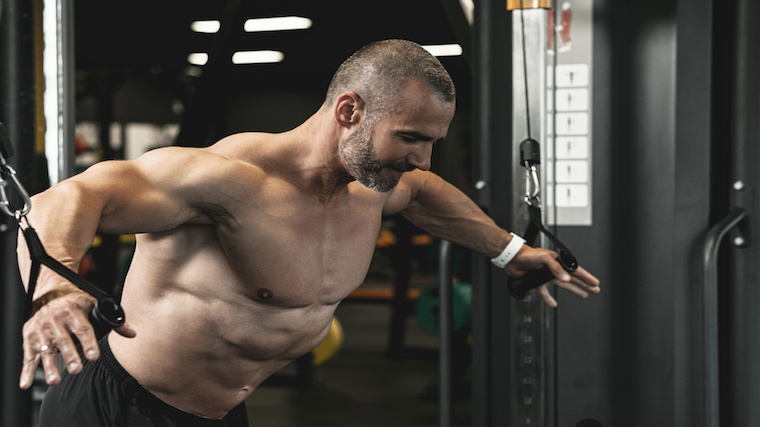
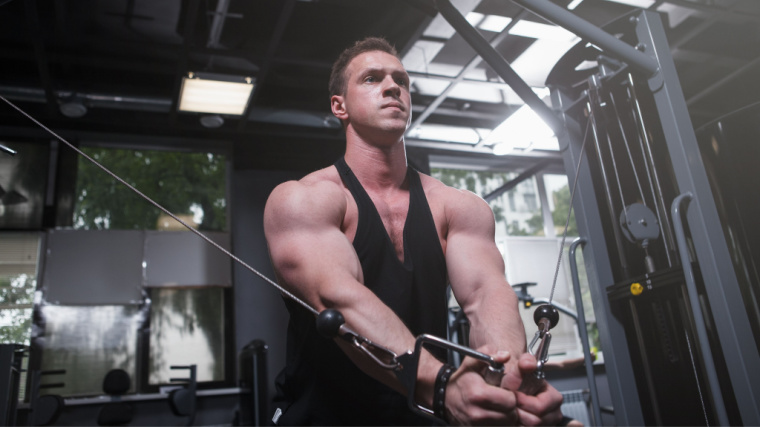
The cable crossover has been a favorite in bodybuilding circles for decades, and for good reason. This chest flye variation allows you to apply high-tension to your pecs without much involvement from other muscle groups. If you’re ready to boost your chest development, take a look at how and why you should add this time-tested exercise to your routine.
How to Do the Cable Crossover
This classic exercise is often performed incorrectly and then blamed for poor results or shoulder pain. Execution is of the utmost importance if you want the best results. Here’s what to do.
Step 1 — Start Between Two Pulleys
Credit: Ihor Bulyhin / Shutterstock
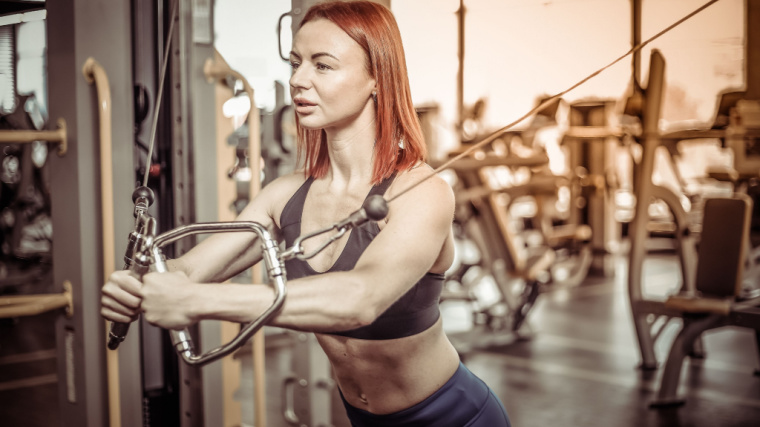
Stand in the middle of a two-pulley station with a single-handle on each side. Some stations have an adjustable pulley height, which is ideal to adapt the exercise to your body. Set each pulley around chest-height.
Grab one handle and pull it in toward your shoulder. Keep it close to your body as you grab the second handle with your free hand. Stand up tall in the middle of the station. Take a deep breath and flex your abs for stability.
Press the handles straight ahead while rotating your palms to face each other. Stop just before your elbows are locked out. This is the starting position for each rep.
Form Tip: You may feel unbalanced or unstable, especially if you start using heavier weights. Use a staggered stance, with one leg in front of you, for a more stable base of support.
Step 2 — Stretch Your Chest
Credit: MDV Edwards / Shutterstock
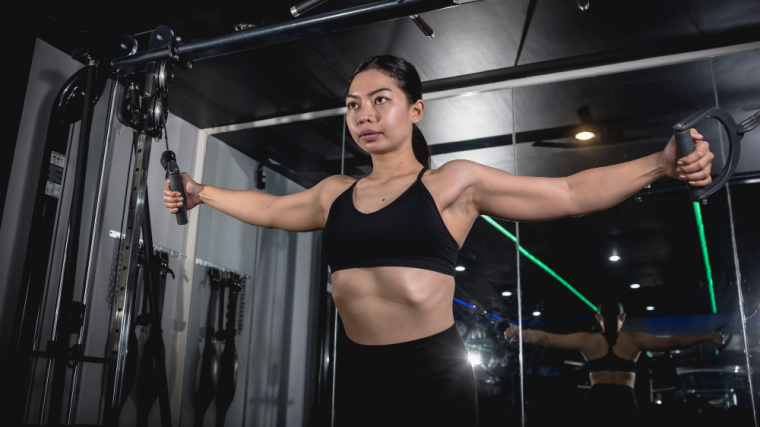
Slowly lower the weight by reaching your arms out to your sides. Keep your chest up, don’t move at the hips or waist. Maintain a slight bend at your elbows throughout the entire repetition — bending and straightening your arms during the movement turns the exercise into a press.
Focus on feeling your pecs (chest muscles) stretch throughout the range of motion. Your shoulder mobility and chest flexibility will determine the end range of motion. Ideally, aim to go until your elbows are roughly in line with your shoulders or as deep as your mobility allows without losing muscular tension.
Form Tip: Do not focus on excessively driving your elbows backwards into an extreme stretch. You’ll risk joint strain and injury, and won’t be able to generate enough force for the exercise to be efficient.
Step 3 — Bring Your Arms to Full Contraction
Credit: Vladimir Sukhachev / Shutterstock
Flex your pecs as you bring your arms to the center. Stop just before your hands touch to keep tension on the muscle.
Your arms should be pointed straight ahead at roughly chest-height. Squeeze your chest as hard as possible in the contracted position. Return to the stretched position and repeat the process for additional repetitions.
Form Tip: Only your arms should move during the exercise. Make sure not to cheat by bending forward at the waist or rolling your shoulders forward. Those adjustments might allow you to move a heavier weight, but it’s at the expense of your shoulder joint health because your shoulders are potentially vulnerable in the stretched position.
Cable Crossover Mistakes to Avoid
Like many chest exercises, the cable crossover is prone to several ego-based mistakes. These can lead to less results and a greater chance of injuries. Let’s take a look at these potential traps.
Pressing the Weight
This can happen either by letting your ego dictate the weight used or by simply losing concentration during a set. In both cases, it drifts away from the purpose of the movement.
Credit: Thanumporn Thongkongkaew / Shutterstock
It’s sometimes too easy, or too tempting, to alter the lift’s mechanics so that it turns into a press rather than a flye motion. If you bend your arms too much when the weight begins to move, you will recruit your triceps and, to a lesser extent, the shoulder muscles.
This is a blunder because the aim of the exercise is to isolate the chest as much as possible and not use assistance from other muscles to move the weight.
Avoid It: Your hands should move in a wide arc, from in-line with your shoulders to nearly meeting in the middle. You shouldn’t be driving your hands forward like a bench press or standing push-up. Start the lift with your elbows slightly bent and keep your elbow angle the same during the entire lift.
Overstretching the Shoulder Joint
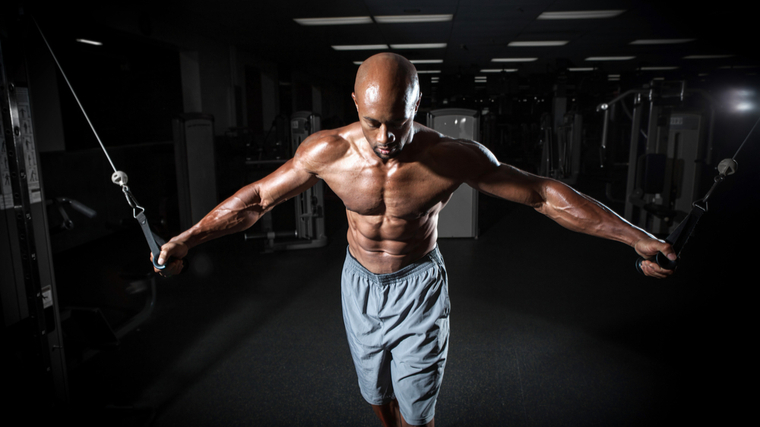
The cable crossover shouldn’t turn into a weighted stretch. If you lose control, the cable’s tension can pull your hands too far back and extend your shoulders backwards, where the joints are at their most vulnerable.
Credit: MDV Edwards / Shutterstock
If you’re not mobile enough, this can put unnecessary stress on the shoulder joint. Because of the constant tension applied by the cable, going into a super-deep stretch might not be needed to properly stimulate muscle growth — it will be compensated by strong contraction.
Avoid It: Slow down the eccentric (lowering) portion and always use a manageable weight. This ensures that you’re in control and able to feel consistent muscular tension.
Losing Posture
If you use a weight that is too heavy or push well-past the point when fatigue sets in, you risk losing your posture and letting your shoulders roll forwards. This is often done instinctively so the shoulders can assist the chest.
Credit: Body Stock / Shutterstock
Unfortunately, internally rotating the shoulders in that position is quite risky. It decreases the anatomical space for the many tendons and ligaments that go through the shoulder joint, which results in possible inflammation and tendonitis in the biceps, pecs, or shoulders. It’s also a threat to the fragile rotator cuff.
Moreover, it will decrease the chest stretch, which can decrease the muscle growth stimulus because a stretched muscle under load has the potential to grow more. (1)
Avoid It: Keep your shoulder blades pulled down and back for a stable shoulder position. Stand tall with your chest up and “proud.” Maintain that posture for the duration of the exercise.
Benefits of the Cable Crossover
The cable crossover is an isolation exercise that allows you to really focus on the chest. But there’s icing on the cake because of the adjustable pulley station: you can adjust the pulley’s height and the cables provide constant tension throughout the lift, unlike other exercises such as the dumbbell flye.
Credit: ARENA Creative / Shutterstock
The cable crossover has one primary goal — muscle growth — but it is achieved through different means than a compound exercise like the bench press, and offers its own unique benefits.
Tension Through a Long Range of Motion
If you want optimal muscle-building results, you will eventually have to add variety to your training with different kinds of exercises, rep schemes, or training techniques. (2)
The cable crossover is useful because it challenges the muscle both the lengthened range — because of the deep stretch — and the peak contraction where tension is still applied at the top of the lift.
Dumbbell flye variations, for example, typically have reduced tension in the top position due to the decreased force of gravity against the weights.
Developing the Mind-Muscle Connection
Because of the constant tension applied throughout the whole range of motion, the cable crossover is a fantastic exercise to develop the mind-muscle connection. You can really isolate and focus on the chest in the shortened and lengthened range.
Having a better mind-muscle connection is shown to yield superior muscle growth. (3) Squeezing at the top and pausing on each rep will be a powerful catalyst for building muscle and building a powerful mind-muscle connection.
Versatility
One major advantage of the cable pulley station, compared to a dumbbell or machine flye, is customization. You can use a variety of hand positions or pulling angles, and adjust the weight in small increments.
This allows you to add variation to the exercise and find the perfect setting for you to really feel your chest working. You can also adjust your stance and body position inside the station to find specific cable angles that suit your individual frame.
Muscles Worked By the Cable Crossover
The cable crossover is a single-joint (isolation) exercise that can be one of the most effective ways to directly target the chest if properly done. But the body is a complex machine, and no exercise can really “isolate” a single muscle on its own. Other muscles will always be recruited to some extent.
Credit: martvisionlk / Shutterstock
In this case, while the chest is certainly emphasized, nearby muscles will also be activated when performing the cable crossover.
Pectoralis Major
Commonly known as the chest, the pecs are the biggest and strongest pressing muscles in the upper body. The pecs attach to the upper arm, along the clavicle, the sternum, and the upper ribs. During the cable crossover, this muscle is mainly recruited through arm adduction (pulling the arms toward your centerline). The pecs also work to internally rotate the upper arm.
Anterior Deltoid
The shoulder muscle consists of three separate heads — the anterior (front), the lateral (side), and the posterior (rear). During the cable crossover, the anterior head assists the chest with internal rotation and adduction of the humerus (upper arm).
Biceps Brachii
This two-headed muscle is attached to the upper arm and then goes through the shoulder to the scapula (shoulder blade). It is an important muscle in the shoulder complex and helps to stabilize the shoulder joint during the cable crossover. The biceps are recruited because they are responsible for flexing (bending) your arms.
Because your arms should maintain a bend during the exercise, the biceps are working statically during the exercise. You should not actively bend or straighten your arms during the cable crossover because it will shift focus away from your pecs.
Who Should Do the Cable Crossover
Anyone who wants to emphasize their chest development can include this exercise in their routine. This staple exercise is ideal for muscle-building purposes.
Aesthetics Aficionados
If you’re interested in building an aesthetic physique, the cable crossover is a great fit. An isolation exercise is a great way of bringing up an underdeveloped chest while helping to create a symmetrical upper body.
If you need to emphasize chest development with minimum involvement of other muscles, this will be one of your go-to movements.
How to Program the Cable Crossover
Because it’s a single-joint exercise, this exercise should not be used with relatively heavy weights in order to avoid injuries and reap the most of its benefits.
Use the cable crossover as a secondary exercise after your main pressing movement, as a finisher at the end of your chest workout, or (after a thorough warm-up to prepare your shoulder joints) as the first exercise of the session to pre-exhaust your chest for an even more intense workout.
Moderate Weight, Moderate Repetitions
Using the standard hypertrophy scheme of three to four sets of eight to 12 repetitions will be a reliable way to build your chest. Accumulating volume in this range will be beneficial for hypertrophy. (4)
Low Weight, High Repetition
Sometimes you just want to feel the burn. Doing two to three sets of 15 to 20 repetitions can be just as beneficial for hypertrophy, and the longer time under tension might even be better for developing a great mind-muscle connection and really feeling your chest. This is the perfect scheme for a scorching finisher.
Cable Crossover Variations
The cable crossover is great because the pulley station allows you to modify your training in mere seconds. Simply changing the cable’s height will result in a slightly different range of motion and different muscular targeting.
High-to-Low Cable Crossover
For this variation, adjust the cable station so that the attachment is higher than your shoulders. The higher it will be, the more you will emphasize training the lengthened (stretched) position.
Position yourself like you were to perform the standard crossover, but instead of ending the lift with your hands in front of your chest, aim to bring your hands around your belly button or belt-line.
Low-to-High Cable Crossover
Now, we’re doing the opposite by setting the pulleys at their lowest point. Stand tall and balanced with your chest up, like any other cable crossover.
Bring your arms upwards at around face-level. This motion will recruit more the clavicular portion of the pecs (upper chest), similar to incline pressing. Since the upper chest is underdeveloped in many lifters, you should likely give this variation a go, especially if your chest session did not have any incline or overhead training.
Cable Crossover Alternatives
If you don’t have a pulley station or just want to spice things up, don’t worry, we’ve got you covered. Here are the best alternatives to the cable crossover.
Dumbbell Flye
The classic chest flye is free weight alternative to the crossover. Set up a bench, grab a pair of dumbbells, and perform the movement very similar to the cable crossover, but lying down on a flat bench. Because dumbbells are relatively unwieldy compared to cables, this alternative can require more shoulder joint stability, which can be useful for building joint health and injury prevention. (5)
This classic exercise is very interesting because it offers a different curve of resistance than the cable crossover. The moment arm is great in the stretched position, but nearly nonexistent in the contracted position. This alternative will focus on the lengthened range, which can be beneficial for exercise variety, muscle growth, and mobility.
Pec-Deck
The good old machine flye has the benefit of requiring no balance at all and even less coordination. Here, you can solely focus on your chest contraction because you are seated and fully supported. Simply sit in the machine and perform the flye movement.
The guided component allows you to use one unique trick: instead of closing your hands and gripping the handle firmly, just place it in your palms with fingers open. You should be able to feel your chest contract better because the relaxed grip will negate the irradiation phenomenon — also known as Sherrington’s law, which implies that a contracted muscle will also contract the surrounding muscles. (6)
FAQs
I feel my biceps a lot during the exercise. What’s going on?
Your biceps will be tense during the exercise because your arms should be slightly bent with the muscle contracted, but if your biceps are fatiguing before your chest, that’s not normal.
The first step would be to lighten the weight and make sure you’re not actively bending your arms during the exercise. Also, try to think that your hands and forearms don’t exist. You might be activating your arms too much by squeezing the handle too hard. Solely focus on your chest contracting and drawing your elbows and upper arms close together.
My shoulders hurt when I perform this exercise. What should I do?
If it really hurts, then you should stop the exercise and probably consult a medical professional. Some degree of pain or discomfort is unfortunately bound to happen at some point during your lifting journey. It doesn’t necessarily indicate an injury, but it could.
Make sure you always use perfect form. Puff your chest out and keep your shoulder blades back to protect your rotator cuff muscles. If you start rolling your shoulders forward due to fatigue or heavy weights, then you’re opening the door to a potential problem.
Wrap-Up
The cable crossover is one of the few exercises commonly associated with bodybuilding. It’s fundamental purpose is to trigger muscle growth in the chest — and it does that job so well, it’s been a muscle-building staple for decades. If building a fuller, more muscular chest is on your to-do list, the cable crossover should end up in your bodybuilding toolbox.
References
Nunes JP, Schoenfeld BJ, Nakamura M, Ribeiro AS, Cunha PM, Cyrino ES. Does stretch training induce muscle hypertrophy in humans? A review of the literature. Clin Physiol Funct Imaging. 2020 May;40(3):148-156. doi: 10.1111/cpf.12622. Epub 2020 Feb 5. PMID: 31984621.
Krzysztofik M, Wilk M, Wojdała G, Gołaś A. Maximizing Muscle Hypertrophy: A Systematic Review of Advanced Resistance Training Techniques and Methods. Int J Environ Res Public Health. 2019 Dec 4;16(24):4897. doi: 10.3390/ijerph16244897. PMID: 31817252; PMCID: PMC6950543.
Calatayud, Joaquin & Vinstrup, Jonas & Jakobsen, Markus & Sundstrup, Emil & Brandt, Mikkel & Jay, Kenneth & Colado, Juan C. & Andersen, Lars. (2016). Importance of mind-muscle connection during progressive resistance training. European journal of applied physiology. 116. 10.1007/s00421-015-3305-7.
Schoenfeld BJ, Contreras B, Krieger J, Grgic J, Delcastillo K, Belliard R, Alto A. Resistance Training Volume Enhances Muscle Hypertrophy but Not Strength in Trained Men. Med Sci Sports Exerc. 2019 Jan;51(1):94-103. doi: 10.1249/MSS.0000000000001764. PMID: 30153194; PMCID: PMC6303131.
Jaggi A, Alexander S. Rehabilitation for Shoulder Instability – Current Approaches. Open Orthop J. 2017 Aug 31;11:957-971. doi: 10.2174/1874325001711010957. PMID: 28979601; PMCID: PMC5611703.
Gontijo, L. B., Pereira, P. D., Neves, C. D., Santos, A. P., Machado, D., & Bastos, V. H. (2012). Evaluation of strength and irradiated movement pattern resulting from trunk motions of the proprioceptive neuromuscular facilitation. Rehabilitation research and practice, 2012, 281937. https://doi.org/10.1155/2012/281937