Connected pillbox maker MedMinder received $35 million through a credit facility with SWK Holdings Corporation and additional investment from Accelmed Partners.
The company offers a connected medication dispenser with an interactive screen that alerts polypharmacy patients, seniors and caregivers when it’s time to take medications or when a dose is missed. It also provides a service where patients are delivered pre-filled and organized prescription trays to add to their pillbox.
“We are honored to establish a relationship with SWK and expand our relationship with Accelmed. Both partners are industry leaders who will be instrumental in helping us achieve our mission,” CEO Mike Edwards said in a statement. “The demand for our services from patients and payers has never been greater. This additional investment will allow MedMinder to more deeply impact the lives of polypharmacy and senior patients nationally.”
Psych Hub, which offers mental health educational resources for practitioners and consumers, raised $16 million in a funding round co-led by HC9 and Frist Cressey Ventures.
Other participants in the raise include HealthStream, Emerson Collective and Bailey & Co.’s strategic fund.
Psych Hub plans to use the funds to launch a new product, Psych Hub Connect, that will match users with in-network mental health professionals based on expertise and cultural fit.
Power, which offers a search tool for patients to find and enroll in clinical trials, emerged from stealth Tuesday with $7 million in seed funding.
The round was led by Footwork and CRV, with participation from ARTIS Ventures, South Park Commons and AirAngels.
“Historically, clinical trials have relied on recruiting patients who are being treated at large, prestigious medical institutions and/or have active, hands-on support from a physician or patient advocate. Most other patients rely on the kindness of strangers on the internet,” cofounder Brandon Li said in a statement.
“One of our top priorities when we started Power was to create easy access to clinical trials for all patients who need to explore innovative treatments. It should not be as hard as it is today.”
Real-world data startup CuriMeta announced it had raised $6 million in a seed funding round led by BJC HealthCare and Washington University School of Medicine in St. Louis.
Additionally, CuriMeta will partner with BJC and WashU Medicine to build a platform to share real-world datasets with life science companies, selecting projects and collaborators that align with the providers’ research interests.
“We are investing significantly in augmenting and improving the usefulness of the data, not just gathering it,” Davis Walp, CuriMeta founder and CEO, said in a statement. “Our data experts will curate, harmonize and apply machine learning techniques to enhance the quality, completeness and research value of our collaborators’ data. This is a team of mission focused industry veterans who understand the pressing scientific and clinical challenges that researchers are solving for. We’re aggregating and delivering advanced, real-world health data designed to answer those questions and address those needs.”
Cultivation Capital Healthcare Innovation Fund is also an investor in the startup.
Healee, which offers customizable telehealth and appointment scheduling tools to healthcare organizations, raised $2M in a seed round led by Nina Capital.
Other participants include Calm/Storm Ventures, KAYA VC and existing investor Eleven Ventures. The startup plans to use the capital to develop its technology and expand in the U.S.
“Healee offers you an advanced, yet easy way to get started with digital health while building your brand and adapting your tool for better user engagement,” CEO and founder Hristo Kosev said in a statement.
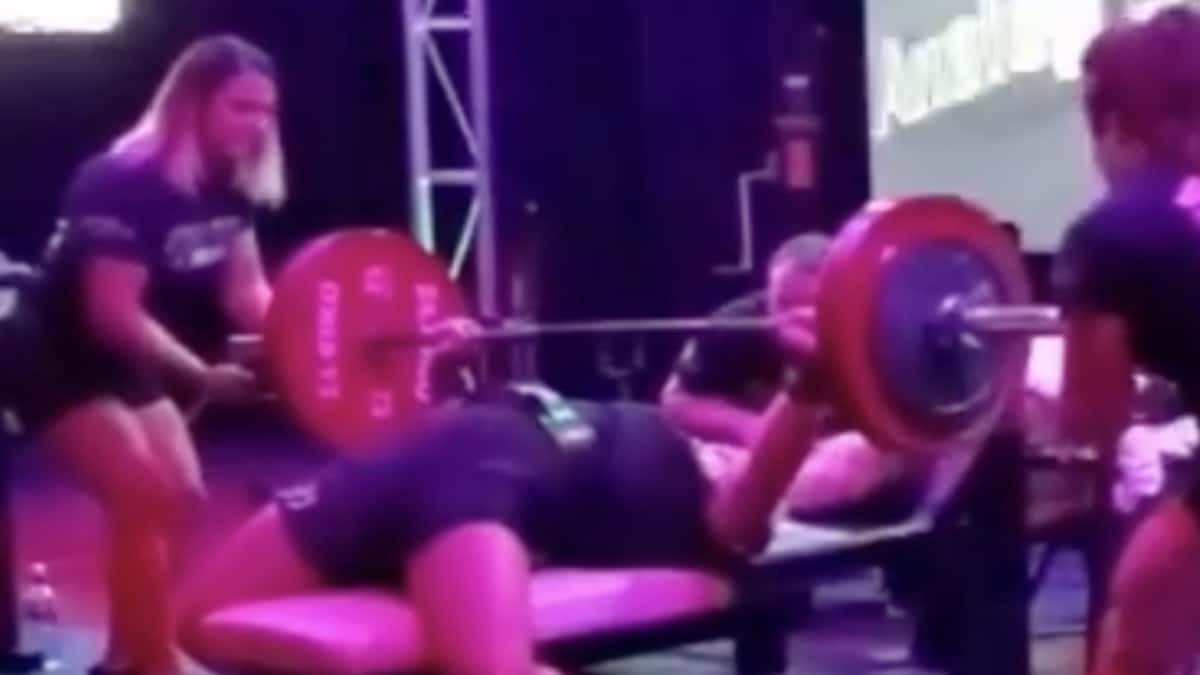
On August 28, 2022, powerlifter Julia Mills set the All-Time UK Record for Women at 612.5 kilograms (1,350.3 pounds) in the Raw With Wraps division. Mills achieved this record at the 2022 Irish Pro Invitational, where she took home the overall win for the women. The contest took place at the Southside Barbell Gym in Limerick, Ireland.
At the time of this writing, Mills’ competitive body weight was unclear. Based on her weight from her most recent contest at the British Powerlifting Union (BPU) British Powerlifting Championships in early July, Mills may have competed in the 82.5-kilogram weight class.
Here’s a rundown of Mills’ top stats from the Irish Pro Invitational:
In the caption of Mills’ Instagram post, where she shares her performance, Mills expressed gratitude toward Shane Brodie — the organizer of the Irish Pro Invitational — workers who helped during the event, her other peers, and noted a special point about equality between the men’s and women’s athletes.
“Brilliant atmosphere huge thanks to [Shane Brodie] for running such a fabulous event,” Mills wrote. “A huge step forward for women’s strength sports that the women’s prize money equaled the male prize. Just amazing to see.”
Note: At the time of this article’s publication, it is unclear what the prize money was for the 2022 Irish Pro Invitational.
Mills at a Glance
Mills has been powerlifting competitively since her November 2018 debut during the BPU North East Qualifiers. According to Open Powerlifting, the athlete has never lost a powerlifting competition and has now won 10 straight contests.
Here’s an overview of Mills’ entire powerlifting career to date:
Julia Mills | Complete Powerlifting Career Results
2018 BPU North East Qualifiers (Wraps) — First place
2019 BPU British Championship at BodyPower (Wraps) — First place
2019 BPU NorthEast Qualifier (Wraps) — First place
2019 World Powerlifter Congress (WPC) World Championships (Wraps) — First place
2020 Global Powerlifting Committee (GPC) Great Britain Tattooed and Strong (Raw) — First place
2020 GPC European Championships (Wraps) — First place
2021 BPU British Championships (Wraps) — First place
2022 GPC-Great Britain Tattooed and Strong (Raw) — First place
2022 BPU British Powerlifting Championships (Multi) — First place
2022 Irish Pro Invitational (Raw w/wraps) — First place
Per her social media, the next item on Mills’ competitive agenda is the 2022 Official Strongman Games. She received her invitation after successfully making it through the online qualifiers. That contest will occur on November 11-13 in Daytona Beach, FL. It will be Mills’ third strongwoman appearance after participating in the 2021 UK’s Strongest Woman and the 2019 Master’s World’s Strongest Woman, according to Strongman Archives.
From an Axle Press to a Circus Dumbbell, Mills can expect a challenging set of events in Daytona Beach. However, if she can start to transfer some of her powerlifter success to strongwoman, Mills might soon become one of the more versatile and accomplished women’s strength sports athletes.
Featured image: @juliamillsstrengthcoach on Instagram
If you think about it, many of our everyday movements require us to balance on one leg. When you break into a light jog to catch a bus or catch up to your colleague in the hallway, there’s a brief period in each step when you’re balancing on one leg. When you climb stairs, you push up with one leg at a time. The last time you jumped over a puddle or off a curb, you landed on one foot.
For athletes—by which I mean anyone who participates in any sport or physical endeavor, novice to elite—the need for impeccable balance is even greater. Runners obviously spend a lot of time on one foot, but so do hikers, dancers, and aerobics buffs. Sports like basketball, tennis, Ultimate Frisbee, flag football, squash, and soccer add an extra degree of difficulty by introducing lateral movements where you move in one direction, land on one foot, and then juke in another direction.
Being bipedal creatures, you’d think balance would come naturally to us. And it surely did for our ancestors who moved every day, climbing over rocks and walking on uneven terrain, running and sprinting as needed. Sometimes they stumbled and succumbed to fall-related injuries surely, but honed their balance every day doing the simple acts of living.
We modern humans aren’t tripping over ourselves all day, but we certainly don’t push ourselves in the ways our ancestors did. Chairs, cars, and paved sidewalks have made us soft. Even super fit athletes often struggle with the type of single-leg balance and stability exercises we’re presenting today.
Just like we need to lift weights to develop the strength that our ancestors would have developed naturally, we need to intentionally cultivate excellent balance. That’s what the exercises below, presented by my pal and collaborator Brad Kearns, are for.
Before attempting these exercises, you should feel comfortable balancing on one leg while standing still. Folks still working on building that solid foundation must start with beginner balance exercises first and work your way up to these more advanced movements.
That said, don’t be afraid to challenge yourself! You might be surprised at how wobbly you are the first time you attempt these exercises. Stick with it. If you’re serious about working on your balance, do the following exercises a few times a week.
Before launching into the specifics, here are some guidelines that will make these exercises safer and more effective:
Keep your core engaged throughout the exercise.
When you bend your knees (lunging, for example), keep the knees tracking over your foot. Do not allow them to cave inward or flare outward.
Land softly when you jump.
When you first start out, have a wall or pole nearby that you can grab for support, but don’t hang onto it. Use a light touch if you need it.
Do these exercises barefoot or wearing the most minimal shoes possible. Remember, balance starts in the feet.
You can do all six of the exercises below as one dedicated balance workout. Do one or two sets of each exercise as described. Or like Brad, incorporate a couple of them into your morning routine or as part of a microworkout.
Low lunge with torso touch
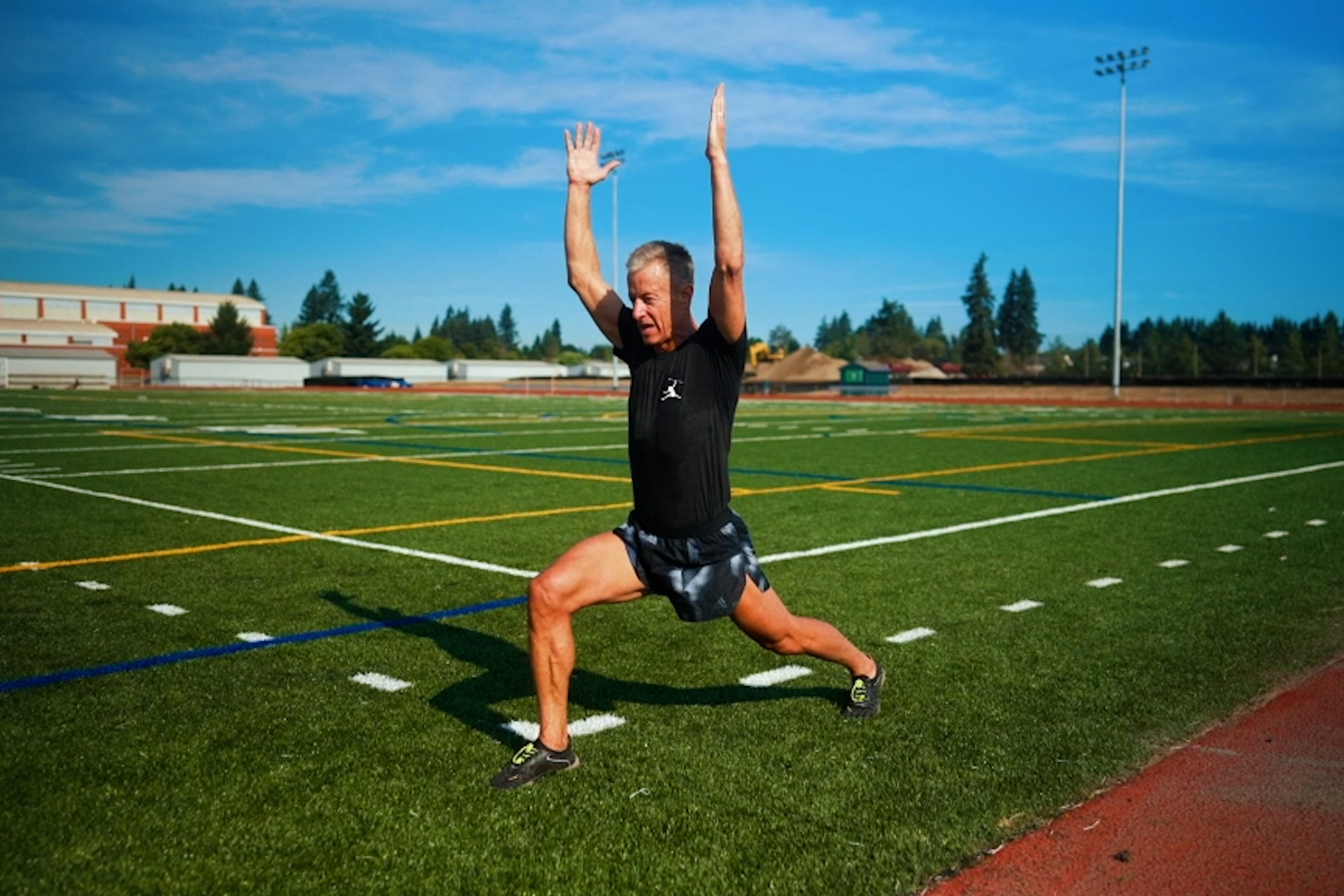
This is similar to a walking lunge with which you’re probably familiar. The difference here is that with each forward lunge, you’re going to bring your torso toward your front thigh. Focus on form over speed. Make your movements deliberate as you lunge forward with the front knee tracking over toes, hinge forward at the hips without rounding your back, and then push up powerfully to take the next step while keeping the glutes and core engaged.
Take 10 to 15 steps in one direction, then turn around and return to the starting point.
One-legged step ups
Place your left foot on a bench, step, or box. Engage your glutes and push through your left foot to stand up on the bench. Bring your right foot to meet the left. Make sure your body rises straight up in the air rather than throwing your body forward and back to harness momentum.
Do 12 to 15 on the left foot, then switch and do the same number on the right.
For a more advanced variation, drive the left knee up to hip height while raising your arms in the air with each step up.
Elevated leg soft jumping
Place one foot on a bench, step, or box behind you. You can dorsiflex the back foot so the toes anchor to the bench, or point the toes so the top of the foot rests on the bench. Hop on the standing leg, keeping a microbend in the knee. These hops should be small, with the foot barely leaving the ground. Mix up the speed from one workout to the next to play around with different stimuli.
Do 10 to 15 on the first leg, , then switch and do the same number on the second side.
Side to side jumps
Jump laterally from one foot to the other. The knee will want to cave in as you land, so pay careful attention to keeping the knee tracking over the foot.
One set is 10 to 20 jumps.
Bulgarian split squat
Place one foot on a bench, step, or box behind you. Nearly all your weight is in the standing leg. Squat down, then stand up and finish with full extension of the hips, snapping your hips forward.
This is a hard one, so 8 reps per leg will suffice. If you want to make it even more challenging, hold a weight in one or both hands or a kettlebell at chest height.
Drinking bird
Stand on your left leg, keeping the knee soft. Hinge forward at the hips and lower your torso toward the ground while your right leg raises straight behind you. Imagine your head, torso, and right leg all being connected in a straight line and moving as a single unit. Reach forward toward the ground with your right hand for balance. Contract your left glutes and hamstrings to reverse the motion and return to standing. Tap your right foot to the ground if needed, but strive to keep it elevated throughout the entire movement.
Tip: Make sure the head stays fixed on the neck so that your gaze should travel up and down with the upper body. When you’re standing, you’re looking straight ahead, and when you’re bent over, you’re looking at the ground. Aim for 15 to 20 reps per side.
For a complete demonstration of all these moves, plus more helpful tips from Brad, check out the YouTube video:
About the Author
Mark Sisson is the founder of Mark’s Daily Apple, godfather to the Primal food and lifestyle movement, and the New York Times bestselling author of The Keto Reset Diet. His latest book is Keto for Life, where he discusses how he combines the keto diet with a Primal lifestyle for optimal health and longevity. Mark is the author of numerous other books as well, including The Primal Blueprint, which was credited with turbocharging the growth of the primal/paleo movement back in 2009. After spending three decades researching and educating folks on why food is the key component to achieving and maintaining optimal wellness, Mark launched Primal Kitchen, a real-food company that creates Primal/paleo, keto, and Whole30-friendly kitchen staples.
Sherine Marcelle is one of the greatest powerlifters of all time, but she won’t be competing through the rest of 2022. Instead, per a June 6 post on her Instagram, the 90-kilogram athlete is taking time away from sanctioned lifting platforms to perfect her craft. With every new eye-opening feat on her social media, it seems the athlete’s training recalibration is going swimmingly.
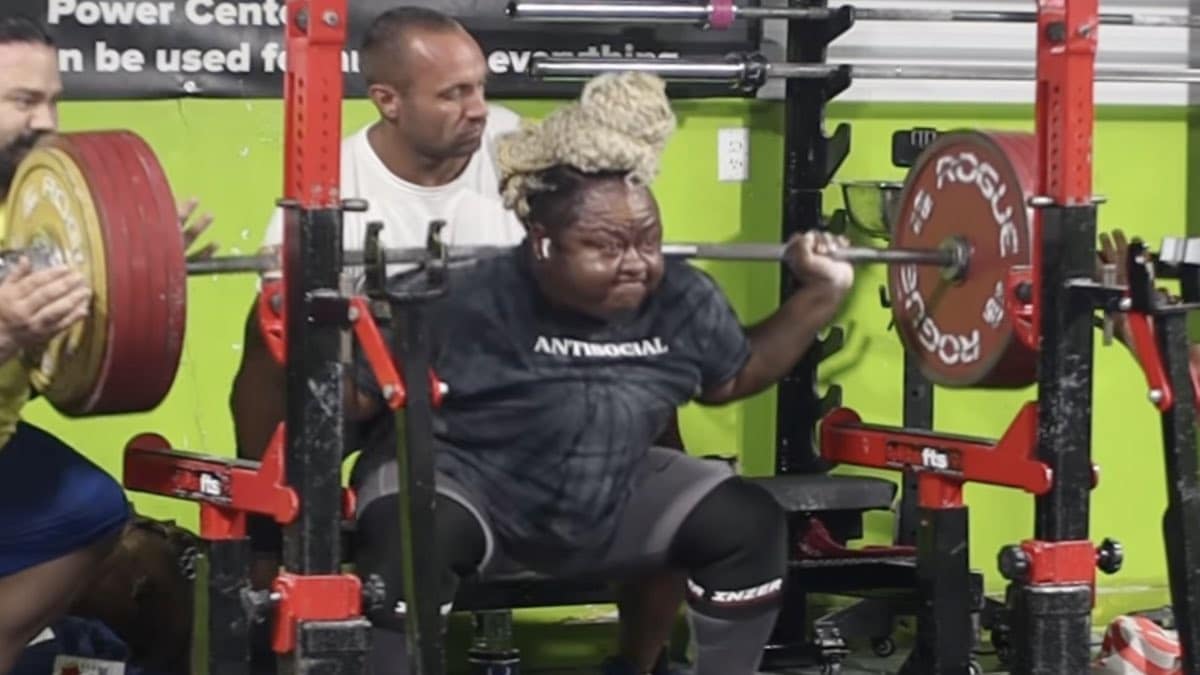
On August 28, 2022, Marcelle shared an Instagram video of herself squatting 257.6 kilograms (568 pounds) raw for two reps while wearing a lifting belt and knee sleeves. The demonstration of leg strength is a new personal record (PR) for Marcelle and unofficially exceeds Amanda Lawrence’s Raw World Record in the 90-kilogram division by four pounds, set at the 2020 USA Powerlifting (USAPL) Gainsgiving Open.
According to the caption of Marcelle’s Instagram post, she originally intended only to do one rep of the heavy squat. However, because she “wasn’t a fan of the first rep,” the athlete decided to do another where she took the squat lower to challenge herself.
Super grateful for all of my peers today for being there for me more than I was for myself. This chapter is the one; this chapter defines me as an athlete and where I’m headed.
The look of apparent determination on Marcelle’s face as she weighs whether to do another rep might say it all about this strength achievement.
Full Steam Ahead
Even while she takes a break from formal competition, Marcelle does not seem to be slowing her ambitions down. The powerlifter has been steadily pushing herself in the gym with some rapid progress of late.
In late August, in a precursor to her latest leg power achievement, Marcelle captured a (249.9-kilogram) 551-pound squat for two reps. Just a couple of days before that, Marcelle completed a 229-kilogram (505-pound) deadlift PR without wearing a lifting belt. And in early June, the athlete notched a 297 kilogram (655-pound) squat with wraps — 6.8 kilograms (15 pounds) more than Crystal Tate’s current World Record.
Here’s an overview of Marcelle’s all-time raw competition bests:
Sherine Marcelle (90KG) | All-Time Raw Competition Bests
Whenever Marcelle does return to formal competition, it’s clear she’s preparing to put her best-loaded barbell forward. If the year 2022 might be about stepping back with intent for Marcelle, then the year 2023 could resent a flourish that makes the patience pay off.
By Cara Murez HealthDay Reporter HealthDay Reporter
TUESDAY, Aug. 30, 2022 (HealthDay News) — Customers who bought a bestselling mattress sold on Amazon and at retailers nationwide are suing the manufacturer amid claims that fiberglass fibers in the product have damaged their health.
Zinus, Inc., is fielding multiple lawsuits over its “Green Tea Mattress.” Among the claims is a proposed class-action lawsuit led by a California woman who is representing several thousand people.
“It’s not hyperbole to say that this has ravaged thousands of individuals’ lives from across the United States,” James Radcliffe, a personal injury lawyer with Cueto Law, told the Los Angeles Times.
Radcliffe’s firm started a 2020 lawsuit on behalf of Amanda Chandler and Robert Durham of Illinois, who said they spent months in a hotel and paid more than $20,000 in professional mediation services after a Zinus memory foam mattress purchased at Walmart for their child contaminated their home with fiberglass in 2019.
Another woman, Vanessa Gutierrez of Los Angeles, told the Times that the mattress she bought for her 4-year-old daughter had cost her nearly $20,000 in damages and left scars from the fiberglass on the girl’s chest and calves.
One reviewer on Amazon warned that they unzipped the outer cover of the mattress and “unleashed [an] invisible fiberglass storm into our house,” CBS News reported.
A representative from Zinus told CBS News that the fiberglass is “standard in the mattress industry” and isn’t considered hazardous by the U.S. Consumer Product Safety Commission (CPSC).
“Most consumer complaints about fiberglass being released from mattresses that have been reviewed by staff involved the outer cover being removed or damaged. If the outer cover remains intact, then the exposure to fiberglass particles is expected to be minimal,” the CSPC told CBS News.
California’s Department of Public Health conducted a study published in the International Journal of Environmental Research and Public Health in February finding that fiberglass fibers had “a potential risk of consumer exposure if the zipper on the outer cover is opened.”
Fiberglass is a less costly fire-retardant material. The queen-sized Green Tea memory foam mattress sells for about $310 on Amazon. It includes instructions warning customers not to remove the outer mattress cover, to protect the fire barrier inside, Zinus told CBS News.
Amazon did not respond to CBS News’ requests for comment. Walmart did and noted that it and other retailers have been dropped from the initial lawsuit.
More information
The U.S. Consumer Product Safety Commission has more on mattresses.
Time and time again, Heather Connor shows why she’s regarded as one of the world’s strongest powerlifters. In advance of her next competition across the pond, the elite 47-kilogram lifter recently showed off her tremendous legstrength.
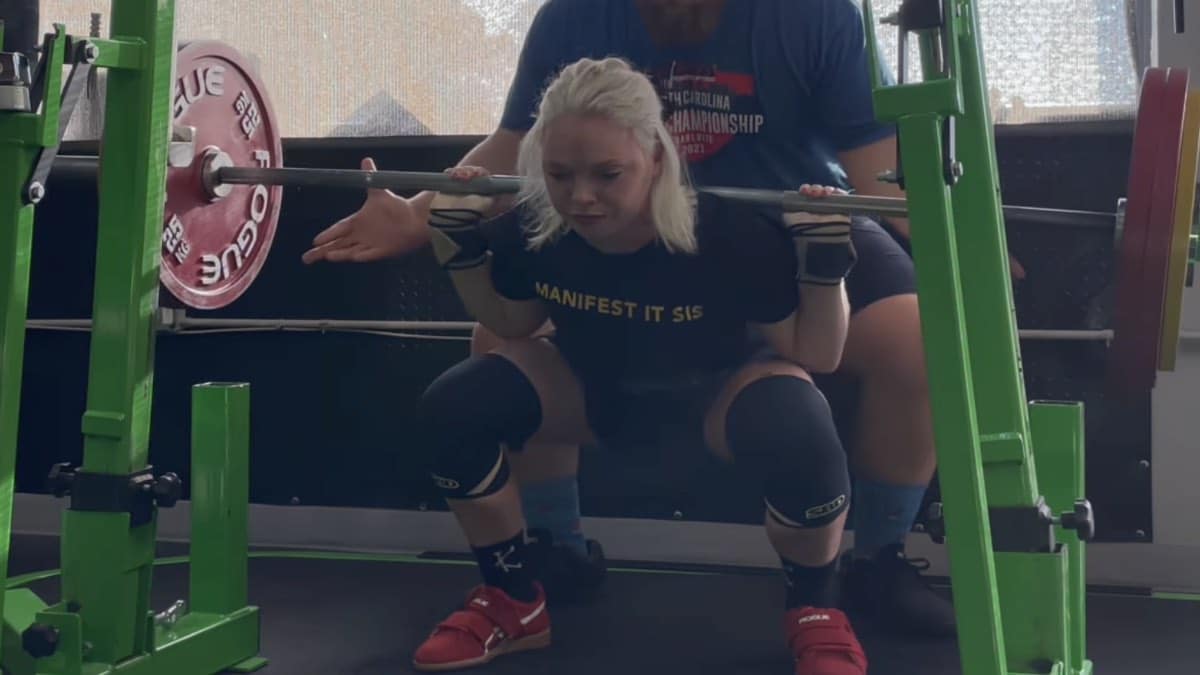
On August 29, 2022, Connor shared an Instagram clip of herself completing a 152.5-kilogram (336-pound) raw back squat during a training session. The feat is a personal record (PR) for Connor, and it also eclipses her all-time competition best by 9.4 kilograms (20.8 pounds). Connor previously notched her competition best back squat of 143 kilograms (315.2 pounds) at the 2022 USA Powerlifting (USAPL) Raw Nationals.
Connor wore a lifting belt, wrist wraps, and knee sleeves while achieving her new squat PR.
Connor’s strides with her squat are a part of her overall preparation for the upcoming 2022 Fédération Française de Force (FFForce) Girl Power in France. The competition will take place on October 15, while its precise location is still unclear at the time of this writing. The contest will mark Connor’s debut in a sanctioned French lifting setting.
The athlete has competed on an international lifting platform before. Connor is a two-time International Powerlifting Federation (IPF) World Champion in the 47-kilogram weight class (2018-2019). Her most recent appearance at the IPF Worlds earlier this summer saw the American athlete score a new deadlift IPF World Record of 185 kilograms (407.8 pounds). That staggering pull helped Connor to an eventual second-place finish behind the victor, Tiffany Chapon.
Here’s an overview of Connor’s all-time raw competition bests:
Heather Connor (47KG) | All-Time Raw Competition Bests
At the time of this article’s publication, Chapon has not made a public allusion to competing in the 2022 FFForce Girl Power against Connor. After falling short to Chapon at the 2022 IPF Worlds in South Africa, Connor seemed disappointed at her performance while giving credit to her peer.
“Not my best, certainly not my worst, but today is what I had in me,” Connor wrote in a reflective June 6 Instagram post. “The stronger lifter [Chapon] won today, and I’m perfectly okay with that.”
A win at the Girl Power contest, regardless of whether Chapon participates, would undoubtedly be a quality way for Connor to bounce back from her finish in South Africa. In the event there is a confirmation, Connor and Chapon could start making for a fascinating, back-and-forth rivalry in the 47-kilogram weight class in the coming years.
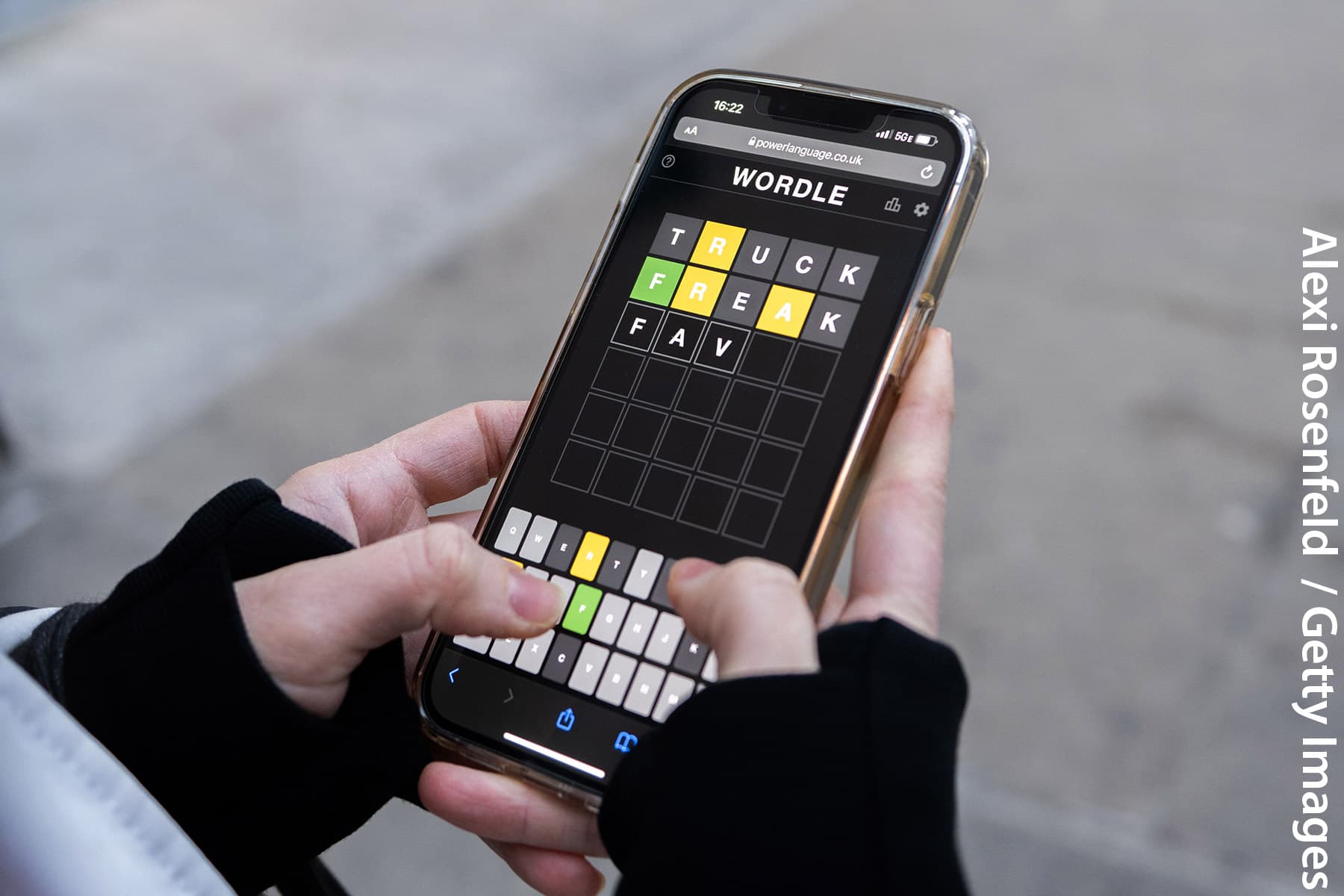
Aug. 30, 2022 – Wordle is a fun game that brings me pleasure and satisfaction every day.
Except when it’s a stupid waste of time. Like the day my streak ended, six games short of 100. I just didn’t see the point of a silly word puzzle that contributes nothing to the common good.
I mean, really. I have better things to do. But I still play it, every day.
It’s not just me. Ask Jackie Silverman, an assistant professor of marketing at the University of Delaware who studies “the judgments and consequences of repeated behaviors.”
She’s a streak expert. And that’s a hot field right now – the proof is on your phone. “Streaks are just so prevalent in people’s lives,” she says.
A streak is among the most obvious and addictive ways for a company to lure us back to its website. Apps like Snapchat and Duolingo (the language-learning company) use streak maintenance like a boss, and Wordle is no slouch.
But streaks can be helpful and healthful, too, for instance for people trying to get in shape or lose weight. “Streaks can serve as a tangible cue of progress,” says Kaitlin Woolley, PhD, a marketing professor at Cornell University who studies goal pursuit and motivation.
Naturally there are apps just for building and tracking streaks: Habitify, Streakster, Streaks, Loop, Productive, on and on. Their apparent purpose is to encourage healthy habits. “Streaks offer a sense of momentum, which is motivating,” says Woolley. “People feel they’re on a roll, and psychologically that makes it easier to continue.”
Silverman says streaks can help throughout life – in education (attendance, test scores, books read) and the workplace (arriving on time, say, or making every meeting). Factories, she notes, proudly post signs about how many days they’ve gone without an accident.
Indeed, the lure of a perfect streak is embedded deep within the human psyche. How can we leverage that to help us, without being totally derailed when a streak, inevitably, ends?
The Rush of Reward
“People find streaks inherently valuable and motivating,” says Silverman, who has the receipts. She co-authored with Alixandra Barasch, PhD, of the University of Colorado, a study titled On or Off Track: How (Broken) Streaks Affect Consumer Decisions, published in June in the Journal of Consumer Research.
What they found was that telling people – and reminding them – that they have a streak makes them far more likely to keep the streak going. Logging and tracking add fuel to this obsessive fire, she says: “Highlighting those streaks via logs and technology has a huge impact.” (Even old-school checkmarks on your wall calendar can work, she says, though feedback from others generally carries more weight.)
In their experiments – word games, number games, exercise programs – they found that people were so devoted to keeping a streak alive that they’d prefer to keep playing instead of switching to something that gave them more pleasure.
If their streak ended, they’d agree to watch an advertisement when told it would “repair” their streak.
Duolingo knows this. It will allow a customer to preserve their streak by using its virtual currency (“gems” and “lingots” earned by completing lessons) to purchase a “streak freeze” if they know they’re going to miss a day.
Snapchat has countless teens hooked on Snapstreaks, which means you’ve exchanged Snaps with someone on consecutive days. A “fire” icon appears, with a number indicating days the Snapstreak has been going.
You can feel the sadness of a young user in the “I lost my Snapstreak” page in Snapchat support: “If you lost your Snapstreak and you know you’ve sent a Snap (not Chat) back and forth within the 24 hour window, please let us know.”
The Power of Symbols
Fire, checkmarks, coins, lingots – they’re all part of the psychological play, Silverman says. “People really value symbols and feedback about what they’ve done,” she says. Sometimes the urge to acquire symbols becomes more important than whatever motivated them to start the streak in the first place, she says.
Jordan Etkin, PhD, a marketing professor at Duke University, says icons “act almost like money does, in terms of being an external reinforcer. It feels like a currency, like you’re accumulating some credit, some value.”
For me, it was the numbers on my Wordle stats page, which were all headed to 100: games played, winning percentage, current streak, max streak. It was going to look glorious. The stats and the “Guess Distribution” bar graph loomed in my mind like a judgey assessment of my language skills.
That’s way too emotional a reaction to a bunch of pixels, right? But the whole thing is emotional, including that sinking feeling when my streak ended. I was deflated, dejected, despondent.
There’s one more “de,” Silverman told me – demotivated. It was true: I had no interest in playing the next day (though I did), and the next time I lost a game, I cared a lot less. Even skipped a day, absent-mindedly, and shrugged it off.
When a streak breaks, Silverman says, “that is especially demotivating because people interpret that as a goal failure.”
I did feel like a failure, especially since I’d been pre-bragging to friends how close I was to a 100-game streak.
That’s another reason we like streaks: It’s a way of showing off. Etkin says sharing results is a form of status signaling: “You feel like you look good to others.”
Busted! (For the record, I only shared my accomplishments and failure with those close to me. My wife was amused.)
But while a broken streak feels like your progress “has been reset to zero,” it helps to remember that isn’t the case, Woolley says. “Just the tangible aspect people are tracking has been reset.” If your daily-walk streak breaks, your fitness will still carry over.
“That bummed-out aspect is what inspired our project,” says Silverman. She and her husband, a craft beer aficionado, were at a brewery with friends, including Barasch, an associate professor of marketing. Her husband noticed he hadn’t logged a beer he’d tried the previous weekend, as was his usual practice. His logging streak was broken, so he had less interest in logging that day’s beer. “That’s weird,” Silverman and Barasch told each other, and their paper was the result, years later.
How Streaks Can Help
Speaking of drinking, Silverman notes that one of the best-known and most valuable uses of streak mentality is among members of Alcoholics Anonymous and Narcotics Anonymous. They earn medallions marking sobriety milestones.
If they relapse, “it’s quite daunting for them to get back to where they were,” she says. The organizations’ supportive mentality is impressive, she points out: “They support each other and say, ‘No, you earned that chip. You accomplished that streak. You did it once and you can do it again. But just because you relapsed doesn’t mean it’s all over.’”
Silverman says that encouraging approach can help lessen the demotivation of a broken streak, “which would be really nice for marketers to try to incorporate, too.”
Don’t hold your breath. Silverman says that some friends who know of her research are more streak savvy now. “They feel manipulated.” But, she quickly adds, streaks are “mostly there to help you. I don’t think it’s a problem, and I still indulge in streaks.” COVID-19 broke her 150-week streak of working out, and sure enough, she’s been less motivated since then. “I need to get a new streak going.”
Streaks are appealing as a measure of progress, and thus powerful, says Adam Alter, PhD, a marketing professor at New York University and author of Irresistible: The Rise of Addictive Technology and the Business of Keeping Us Hooked. As a streak gets longer, “keeping it alive is more meaningful. Add these elements together, and you have a strong recipe for reinforcement and reward.”
For her part, Silverman remains hopeful that her research may “help generate new ideas about how to keep people engaged and happy.”
One thing is consistent: Streaks mean money. The New York Times bought Wordle for more than $1 million last fall from its developer, Josh Wardle. In its first-quarter 2022 earnings statement, the company said, “Wordle brought an unprecedented tens of millions of new users to the Times.” The company enjoyed its best quarter ever for new subscribers to its Games section. Digital subscription revenue was up 26%.
When Josh Wardle sold the game to the Times, he told fans, “I am working with them to make sure your wins and streaks will be preserved.”
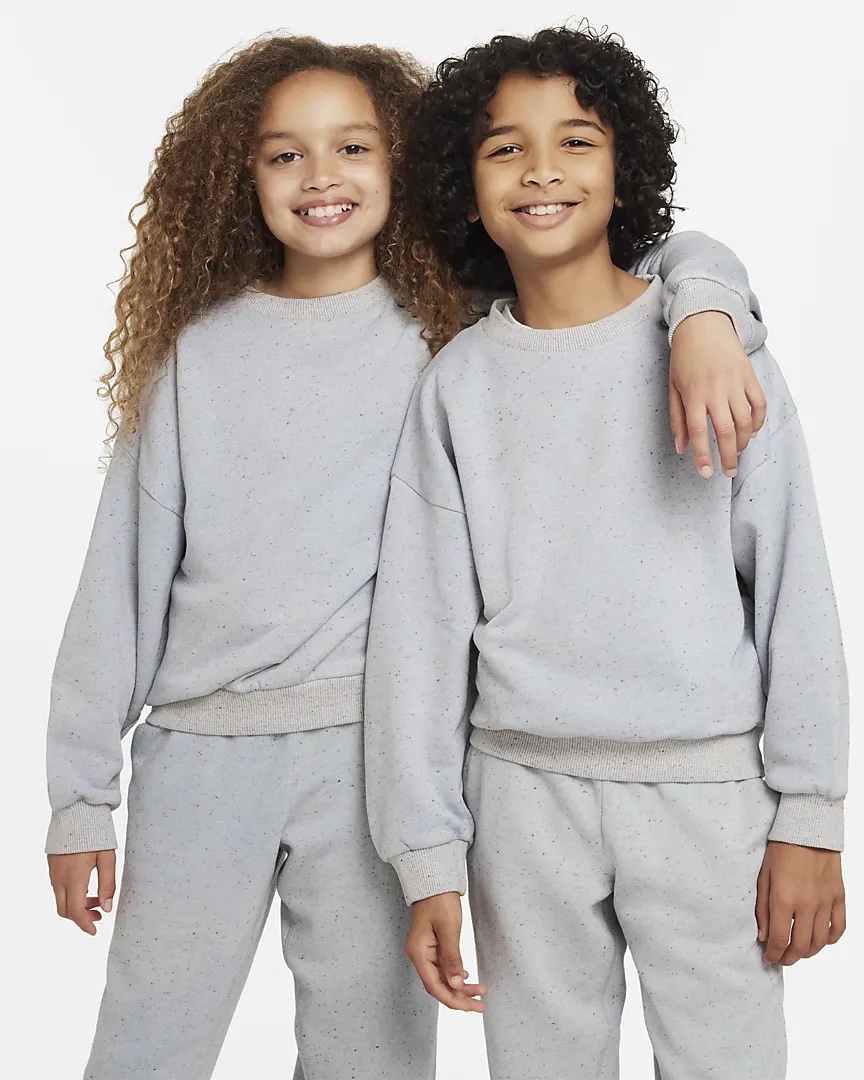
Have the kids in your life gone back to school? Anton and Toby start next week, and they’re jittery! I remember those first days of school so clearly and how everyone would plan their outfits. These days, Toby and Anton are into Nike’s back-to-school collection. Here are a few pieces we love…
First, for girls, how comfy are these matching sets? Nike’s soft clothes are perfect for running and jumping around. (Oh my gosh, I would have loooooved this cropped fit as a teenager.)
Nike also has a bunch of colorful shorts and pants. “Lots of girls at gymnastics wear these,” Anton told me, after going to gymnastics camp this summer. And this bright zip-up would be great for cooler days.
And, of course, their shoes!!! Nike’s designs are always so good.
For boys’ styles, Anton was eager to weigh in: “I like how it looks ’70s,” he said of the track suit above. “The ’70s was kind of hippies but not really, and I love ’70s music, like The Rolling Stones and The Who.”
Nike’s classic tee comes in a bunch of bright colors. And Anton was immediately drawn to the T-shirt on the right; “I love the bubble letters,” he said. “They’re sick.”
“This hoodie looks super comfortable,” said Anton, and fleece pants would be keep kids warm on chilly fall days at the park.
For shoes, Anton loved the Air Force 1s: “They’re sporty, and they can be used for playing all sports — except swimming!” And, for kids who love color, there are lots of fun styles.
Lastly, I’ll take a turn! For school drop off, how cool is this running jacket?
Aug. 30 , 2022 – Most everyone has played the “separated-at-birth” game, joking that look-alike friends and even celebrities who aren’t related might have a secret shared parentage.
But new research shows it’s no joke that, with some doppelgangers, there is in fact more to the idea than meets the eye. A team of Spanish scientists studied pairs of unrelated look-alikes and found that they not only bear a striking resemblance to each other, but also share significant parts of their DNA.
The findings, published in the journal Cell Reports, suggest those genetic similarities might extend beyond just facial appearance. DNA analysis based on the new work could one day help doctors identify a person’s hidden risks for certain diseases and even help law enforcement officials target criminals through biometric forensics, the researchers say.
But perhaps the most fascinating takeaway is the likelihood that most people on the planet have an unrelated “twin” out there somewhere, says Manel Esteller, PhD, a researcher at the Josep Carreras Leukemia Research Institute in Barcelona, who led the study.
“It’s not unreasonable to assume that you, too, might have a look-alike out there,” he says.
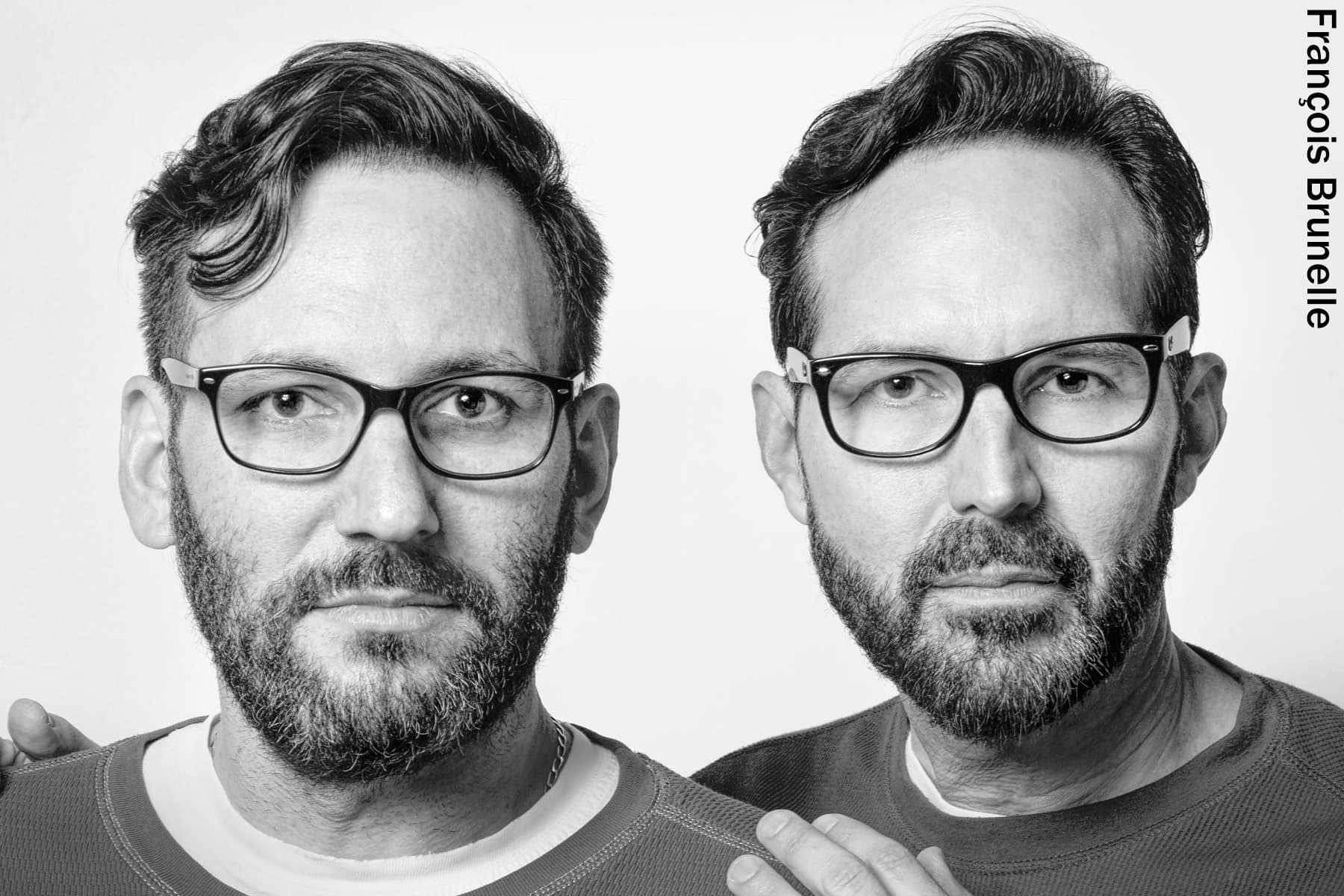
Esteller’s new study grew out of his research into the similarities and differences among identical twins. He was inspired by a photography project by French-Canadian artist François Brunelle, who has been taking pictures of unrelated look-alikes worldwide since 1999. His remarkable photographs prompted Esteller to ask: Could DNA explain these look-alike “twins”?
“In 2005 we discovered that brother twins that have the same DNA [also called monozygotic twins] presented epigenetic differences [chemical changes in DNA that regulate how genes are expressed] that explained why there were not perfectly identical,” he explains.
“In the current study, we have explored the other side if the coin: people that have the same face, but they are not family related. These individuals helped answer the longstanding question of how our aspect is determined by nature and/or nurture.”
To answer that question, Esteller’s team recruited 32 pairs of people from Brunelle’s photo sessions to take DNA tests and complete lifestyle questionnaires. The researchers also used facial recognition software to assess their facial similarities from headshots.
They found that 16 of the look-alike pairs had scores on par with those of true identical twins, who were also analyzed by the team’s facial recognition software. Of the look-alike pairs, 13 were of European ancestry, one Hispanic, one East Asian, and one Central-South Asian.
The researchers then examined the DNA of those 16 pairs of look-alikes and found they shared significantly more of their genetic material than the other 16 pairs that the software deemed less similar in appearance – a finding the researchers said was “striking.”
Esteller notes that it would seem to be “common sense” that people who look alike should share “important parts of the genome, or the DNA sequence,” but that had never been scientifically shown – until now, that is.
“We found that the genetic sites shared by the look-alike corresponded to four categories,” he says. “Genes previously reported to be associated with the shape and form of the eyes, lips, mouth, nostril, and other face parts using general population studies; genes involved in bone formation that can relate to the skull shape; genes involved in distinct skin textures; [and] genes involved in liquid retention that can give different volumes to our face.”
While the doppelgangers’ DNA was closely matched, Esteller was surprised to find that the lifestyle surveys – assessing 68 variables – revealed major differences in the 16 pairs of people. These differences were almost certainly due to the environment and other parts of their lives and upbringing (think: “nurture vs. nature”) that didn’t have anything to do with their genetic makeup.
Those differences, he explains, are another sign the similarities in the pairs’ appearances almost certainly have more to do with their shared DNA than other things.
Even so, he found some look-alikes were alike in ways that could be linked to their DNA – such as height and weight, personality traits (such as nicotine addiction), and even educational status (suggesting intelligence might be linked to genes).
“It is said that our face reflects our soul,” Esteller says. “Being less poetic, our look-alike answered a large questionnaire to grasp their physical and behavioral profiles. We observed that those look-alikes with high concordance in the facial algorithms and genetic commonalties not only shared the face, but also other features. …”
So, what explains those genetic similarities? Esteller says it’s likely that it’s chance and coincidence, spurred by population growth, and not a result of some prior, unknown ancestral or familial link. There are, he explains, only so many things that make up human facial features, so it stands to reason that some people – by luck of the draw – will resemble others.
“Because the human population is now 7.9 billion, these look-alike repetitions are increasingly likely to occur,” he says. “Analysing a larger cohort will provide more of the genetic variants shared by these special individual pairs, and could also be useful in elucidating the contribution of other layers of biological data in determining our faces.”
Beyond the weird-science appeal of the study, Esteller believes his findings could help diagnose diseases, using DNA analysis. They might even help police hunt down criminals one day in the future – giving forensic scientists, for instance, the ability to come up with sketches of suspects’ faces based only on DNA samples found at a crime scene.
“Two areas are now very exciting for further development,” he says. “First: Can we infer from the face features the presence of genetic mutations associated with a high risk of developing a disease such as diabetes or Alzheimer’s? Second: Can we now from the genome be able to reconstruct a face that would be extremely useful in forensic medicine? Both avenues of research can now be pursued.”
Hear It From the Doppelgangers
For Marissa Munzing and Christina Lee, who took part in the look-alike study, the social implications of Esteller’s research are at least as important as the scientific findings.
Munzing, who has known Lee since they met freshman year at the University of California, Los Angeles 14 years ago, did not expect to find that their DNA was such a close match.
“I was definitely surprised that [we] might have similar DNA, as close to being twins, with my friend,” she said in an email. “How crazy!! And cool! I do call her my ‘twin’ from time to time so I guess it’s really fitting now!”
But knowing we all might have a secret twin out there could help bring people together at a time when Americans and others throughout the world are so deeply divided along class, social, and political lines, she says.
Lee agrees, noting that having a friend with a closely matched genetic profile “and even a similar face” adds to a sense of connection with others we might consider strangers.
“It can be nice to feel like you aren’t alone, even if is just in your looks,” she says.
“We really are more similar and connected to each other than we think,” Munzing says.
Feel like you have to hustle your butt off to get more clients?
These days, it can seem like being “just” a great coach isn’t enough of a sell.
Not only do you need to know your stuff and be a natural “people person,” but to market yourself properly, you’re also supposed to figure out a unique coaching niche, define your brand, keep up with research, and regularly post polished, compelling content—on whatever platform is trending at the moment.
Um… what?
No wonder so many coaches feel overwhelmed and confused about the whole marketing thing.
(Not to mention icky. You don’t want to have to promise abs in eight days just to get some eyes on your business!)
Fortunately, there IS a way to market yourself effectively—using YOUR strengths, YOUR message, and on YOUR schedule.
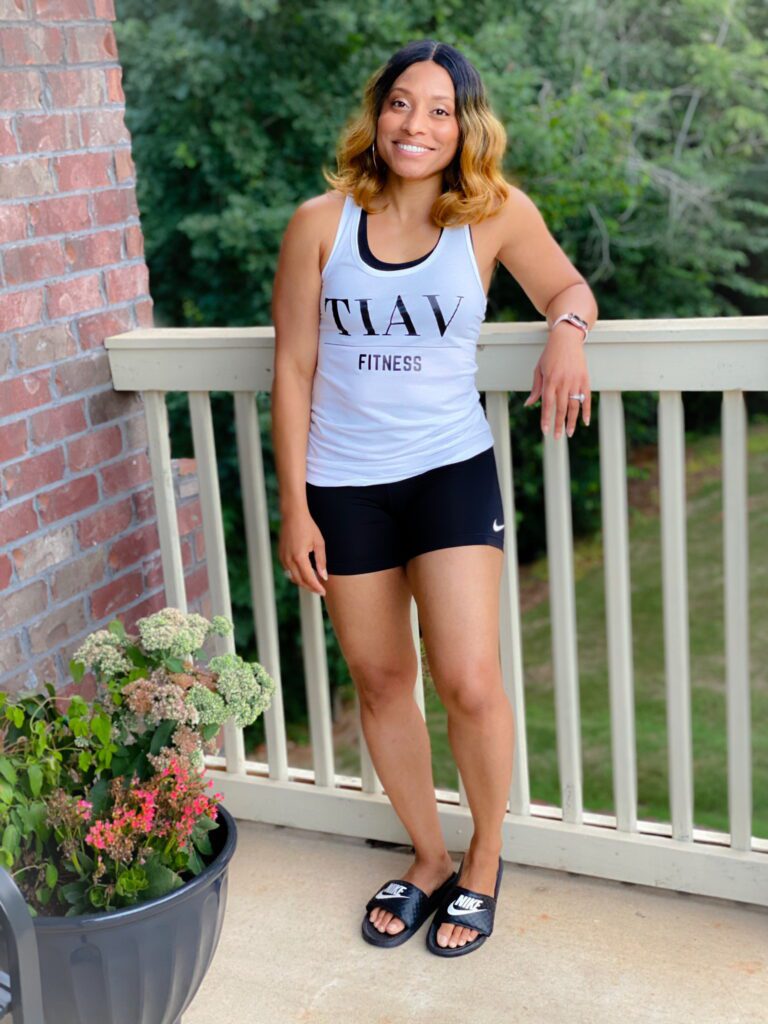
Take fitness and nutrition coach Tia Smith.
Tia’s a 38 year-old coach living in metropolitan Atlanta. By most standards, she’s extremely successful.
She’s got:
✅ A full roster of loyal clients. In fact, her biggest challenge is scaling her business so she can make room for even more people.
✅ A highly engaged community. Her email newsletter has an open rate three times higher than industry standard.
✅ A clearly defined brand, voice, and niche clientele. She knows who she is, and more importantly, how to connect authentically with her clients. (No surprises: Her clients love her.)
✅ Zero stress about marketing. She works at a pace that’s do-able for her (with three kids, the 24/7 hustle culture was a hard no). She also doesn’t compare herself to other coaches or get distracted by all the stuff people say you “should” do.
Tia doesn’t consider herself an expert at marketing.
She doesn’t coach celebrities or have a million followers on Instagram. And she definitely doesn’t pretend to be perfect.
According to Tia, “I’m just doing my best.”
And yet, her marketing “strategy” is working.
In this article, we share five (non-slimy) marketing lessons from Tia that can also work for YOUR coaching business.
If you feel overwhelmed or uneasy about marketing, this advice is for you.
Over 150,000 health & fitness professionals certified
Save up to 30% on the industry’s top nutrition education program
Get a deeper understanding of nutrition, the authority to coach it, and the ability to turn that knowledge into a thriving coaching practice.
Marketing Lesson #1: Design your product or service based on what people actually want.
Prior to launching her coaching business, Tia taught fitness classes for women.
Before and after class, the studio buzzed with conversation. The women loved to chat with Tia, sometimes even following her out to the parking lot to tell her about their lives.
“They told me about everything,” says Tia. “Not just about their workouts and nutrition, but also about their kids, pets, husbands, jobs, and most of all, how hard it was to come to class because of everything they had going on.”
Over time, Tia noticed a pattern.
“These women all struggle to make time for themselves, or to get to the gym. They have other obligations on their mind. That’s when it clicked: They’re just like me!”
In the pandemic, the studio where Tia taught closed. A painful experience, but also an opportunity:
Tia realized that her clients still relied on her. More than anything else, they needed someone to be in their corner.
As Tia says, “My clients need someone to say, ‘Girl you’ve got to make time for yourself, because if you don’t, the day will not make time for you.’”
And that’s how Tia’s coaching business was born. Her specialty? Helping women make time for themselves and live a healthier lifestyle.
Many people (and businesses) come up with an idea for a product or service, then try to convince people they should buy it.
A more effective strategy is to work the other way around: Identify a need in the marketplace, and provide a solution.
(Even if you’re an established coach, you can use this strategy to refine your offerings to better meet your clients’ needs.)
For example, since starting her coaching practice, Tia learned her clientele wanted more specific nutrition guidance than she was equipped to provide. So, she’s taking the Precision Nutrition Level 1 Nutrition Coaching Certification, and creating some new services around this demand.
(Interested in becoming a nutrition coach—or adding nutrition to your existing coaching? Here’s everything you need to know: How to become a nutrition coach)
Try it: Ask these questions during your next client consult.
To gain intel about what your clients need from you, Tia’s suggestion is simple:
Ask.
Some of her go-to questions:
What’s a typical day like for you?
What are some competing commitments you have going on in your life?
How do you feel when you wake up in the morning?
How do you want to feel when you wake up?
Try to understand how your client currently feels, how they want to feel, and what’s standing in their way.
Then, use that insight to develop services that people actually need—and want to buy.
Marketing lesson #2: Your “Don’t Do” list is just as important as your “To Do” list.
People love giving marketing advice:
“You’ve got to master the IG algorithm.”
“Actually, TikTok is where to focus.”
“Post workout videos on YouTube! People love that stuff!”
But for Tia, none of that advice felt quite right.
“I tried to do video,” she recalls. “But it was too much. I have three kids. One of them has unique needs. And I run a business. I don’t do hair and makeup every day. So recording a daily video? That just isn’t for me.”
Tia decided to get clear on what she would do—and what she wouldn’t.
So, she listed all her options on paper.
“I crossed off anything I didn’t want to do. Then I looked at what was left and picked the ones that spoke to me the most.”
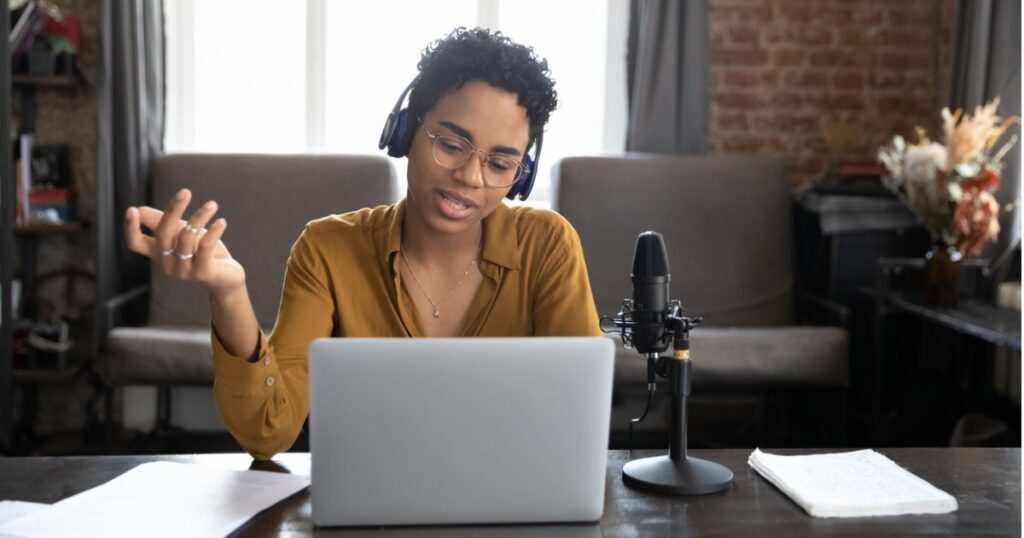
For Tia, that was an email newsletter, and a podcast.
With a background in journalism and her facility for good conversation, these formats allow her to express her personality in a way that feels natural.
Plus, by focusing on just these two marketing mediums, she’s able to stay creative—and productive.
The key takeaway
There’s lots of noise out there. You’re bound to encounter all kinds of (often conflicting, not to mention unsolicited) marketing advice.
To make progress and avoid overwhelm, choose projects you’re totally committed to—and skip the ones you aren’t.
Try it: Write your “not gonna do” list
Grab a piece of paper.
Write down all the things you could do to market yourself.
Now, review the list. Cross off anything that gives you an ick-factor, plus anything you don’t have time or interest in.
What’s left? Circle the top 1-3 things that you want to commit to—for now.
(You can revisit this list at any time, but the immediate goal is to get focused and get started.)
Marketing Lesson #3: Commit to a realistic schedule—for YOU.
Pop quiz. How often should you post on social media?
Once a week
Once a day
Several times a day
Surprise! It’s secret option D: Post at the pace works for you—whether it’s regularly, or not at all.
It’s easy to look at peers in the industry and think you’re not producing enough. But unless you’re trying to become a mega-influencer, you probably don’t need to post daily to engage or build your audience.
Tia focuses on content that works with her skills and her schedule.
Her rationale: “I figured if I took away the pressure of blogging daily or weekly, the creativity would naturally flow. I could take my love for writing and focus on making my newsletter better and better.”
Tia’s strategy worked. She has an engaged following, and the metrics to prove it: Her typical open rate is 60 percent. (For reference, the industry standard is about 20 percent.)
The key takeaway
Resist the pressure to “keep up” with whatever other people are doing.
Simple and manageable IS an option.
Says Tia, “Choose your pace. Create in a way that works for you, that won’t add to your stress.”
Try it: The weekly action list
If you want to make progress with your marketing projects, one option is to schedule the crap out of your day. Book time with yourself as you would an appointment, and don’t you dare break it.
That approach might work for some people. But what if you need more flexibility in your day?
Enter Tia’s strategy: The weekly to-do list.
At the beginning of every week, she makes a list of all the marketing tasks she wants to accomplish.
Because it’s weekly, it’s less rigid and more agile. Says Tia, “I don’t hold myself to a certain day and time; I just chip away at projects throughout the week.”
Tia also suggests approaching your list with realism, and compassion (i.e. expect that you’ll often have more to do than you were able to get done).
Also, be sure to include self-care on your list. Include things you want to do for yourself on the list, whether that’s working out, or going for tacos with friends. That ensures some degree of work-life balance, and prevents burnout.
Marketing Lesson #4: Your imperfections are an asset, not a weakness.
Remember how Tia’s clients would follow her out to the parking lot just so they could continue the feel-good convos?
They didn’t follow her because they thought she was perfect or had all the answers to life’s mysteries.
They followed her because she is warm, caring, funny, down to earth, and (in Tia’s words) a little “rough around the edges.”
In other words, she’s Tia.
As humans, we relate to other humans: imperfect and messy, just like us.
“Truly, no one has it figured out, which means I don’t have to come off like some all-knowing fitness and food guru-goddess,” says Tia.
“I can say to people, ‘Oh, I tried that recipe and girl, it burnt, it was a total fail.’ People relate to that. It also leaves me room for error, to be human.”
This might come as a relief if you’ve ever felt you’re somehow not perfect enough—or not fit enough—to be a coach.
But it can also be scary to be yourself. What if you get rejected?
That’s when Tia reminds herself:
“Some people will relate to me, some people will relate to somebody else. There’s a coach out there for everybody.”
The key takeaway
Coaches often feel that to be taken seriously or seen as professional, they have to project a nearly flawless image. This feeling of pressure can lead to mega imposter syndrome.
But many clients actually feel more comfortable working with a coach who’s relatable rather than aspirational.
Says Tia, “I’ve learned that when you present your most authentic version of yourself with just a little professional polish on it, people gravitate to you.”
Try it: Find the commonalities
If you feel a bout of imposter syndrome coming on, try this exercise Tia uses before creating a podcast or newsletter or meeting with a new client:
Imagine your typical audience member, client, or person you have in mind.
Then, list out all the things you might have in common.
“I imagine the person I’m talking to. Then I say to myself:
Girl, you’ve got a significant other in your life, so do I. You have children, so do I. You have a job, so do I. Your parents get on your nerves cause they’re getting older and they don’t know how to work anything, so do I. You hate overpriced groceries at the grocery store, so do I.
I’m not that different from you.”
This exercise absolves Tia from feeling like she has to present herself as “better than.”
“I don’t try to pretend that I’ve unlocked some magic that gives me all of this fitness and food knowledge. I like eating Chipotle and Chinese takeout too. Not hiding that allows me to engage with people in a very human way.”
Marketing Lesson #5: Take a shot; it doesn’t have to be a slam dunk.
Starting any new endeavor can be intimidating.
But at a certain point, you have to take a shot.
“When I first started the podcast, I was like, ‘What if no one listens? What if this isn’t the right move? What if it’s not well received? What if no one cares?’”
And yet (eventually), Tia took the leap. How did she do it?
“I tell myself, everything doesn’t have to be a slam dunk. Not everyone is Steph Curry, right?”
You don’t have to be the MVP to serve your audience as best you can.
Also, keep your expectations in check:
It takes time to build an audience, whether it’s an online community, a podcast audience, or a steady roster of clients.
Just like in nutrition and fitness, results likely won’t be instantaneous. But steady progress pays off.
In a world dominated by social media, we’re taught to think that success should be instant, that if we aren’t going viral we’re doing something wrong.
In reality, good things usually take time (and lots of iterating).
Allow yourself the grace to make mistakes, and keep at it.
Try it: Choose your metrics
How do you know if you’re making progress?
Track a few metrics that are important to YOU.
Here are a few things Tia looks for:
Direct feedback. “When people tell me they like the newsletter and look forward to getting it, I know it’s working. I can tell they’re engaged from what they say.”
Email open rates. “To me, that is the cherry on top of the sundae. If I know people are opening it, that’s a good sign I’m providing something of value to them.”
No matter what metrics you measure, a few tips:
Don’t worry about tracking things that don’t matter to your business. For example, Tia doesn’t sweat how many followers she has on social media, because she’s not trying to be a viral sensation. Like Tia, you might not need a giant following or a mailing list, just a dozen or two steady clients.
Focus on improvement rather than reaching specific numbers. Just like your client can’t control the number on the scale, but they can control their habits, you can’t control how many people subscribe to your content, but you can work on doing things a little bit better each day.
Be realistic. Communities and relationships take time to build. If you keep the long game in view and your expectations in check, you can build something meaningful and substantial over time.
“Once you remove the expectation that things are going to be instant” says Tia, “you open yourself up to all kinds of possibilities. That attitude not only feels better, it works better too.”
If you’re a coach, or you want to be…
You can help people build nutrition and lifestyle habits that improve their physical and mental health, bolster their immunity, help them better manage stress, and get sustainable results. We’ll show you how.