A Woman of Wonder Commits to Cancer Research

A Woman of Wonder Commits to Cancer Research

[ad_1]

Sept. 8, 2022 – When Lynda Carter talks about her late husband, Robert Altman, you can sense right away that this was a love affair for the ages.

“As I’ve often said, if you were a friend of Robert’s, you were one of the luckiest people in the world,” says Carter, the singer-songwriter and actor best known for her role as Wonder Woman in the 1970s TV series, who married Altman, an attorney, in 1984.

For Carter, Altman, and their children, Jessica and James, everything changed in 2017, when Altman was diagnosed with myelofibrosis, a rare bone marrow disorder – about one case is reported per 100,000 Americans each year – that was found during routine bloodwork.

“Robert was never sick a day in his life,” she says in an interview. “He skied and swam, and in many ways we were in the prime of our lives together. When he was initially diagnosed, we weren’t even clear what he had. The buzzword was that he had a rare blood disorder, not cancer.”

The family was told to wait and see if the disease would get worse, which it did, unfortunately, at the exact time COVID-19 hit.

This condition can progress from myelofibrosis to secondary acute myeloid leukemia (sAML), a rare blood cancer, says Michael Caligiuri, MD, a leading researcher in immunology, lymphoma, and leukemia and president of City of Hope National Medical Center, one of the largest cancer research and treatment organizations in the U.S.

“This disease is chronic and slow-changing, but when it progresses more acutely to a form of leukemia, it can advance rapidly,” he says.

At the acute phase, there’s not much that can be done for the patient.

“This becomes very much a life-and-death situation,” he says. “You want to hope for the best, but there needs to be an expectation of the worst in terms of trying to prepare the patient and the family for what may come so that they can start to psychologically and legally put the person’s life in order.”

Despite every effort, Altman died in February 2021 at the age of 73.

Now, to honor her husband, Carter is gifting her time and resources to create the Robert & Lynda Carter Altman Family Foundation Research Fund, working with the Translational Genomics Research Institute (TGen), a leading biomedical research institute, which is part of City of Hope.

The goal: To speed up critical research that will improve early detection and survival for this hard-to-treat blood cancer.

“I’m excited to be a part of this team and to know that I may play a small part in helping other families facing this same diagnosis,” Carter says. “It’s thrilling seeing the progress these scientists are making, from genomic research into a universe of trillions of codes that might actually become a drug therapy someday.”

With the creation of the foundation, there will be funding to develop better diagnostics and better treatments.

“In many instances, this research will shed light on other related disorders, too,” says Caligiuri. “Cancer is a disease of the genes, and in most cases, we’re not inheriting from our mothers or fathers, but the DNA gets switched around in one of the trillion cells in our body, the way a word is misspelled.”

What happens next is that the cell doesn’t die.

“Instead, it undergoes a nuclear reaction and grows and grows,” he says. “In this case, the first evidence of a problem was myelofibrosis. That ticking time bomb continued until it exploded into leukemia.”

Caligiuri says the goal of their research will be to develop a device that can rearrange that DNA or block the DNA changes so the disease doesn’t progress to leukemia or, if it does, so “that we can turn it into a chronic condition, not an acute one that’s life-threatening.”

For Carter, this foundation is one very heartfelt way she can honor her husband’s legacy.

“When I lost Robert, I was left with so many questions,” she says. “I wanted to understand why rare cancers are so difficult to treat and what research or treatment advances were being made to change that. Robert was never one for self-aggrandizement, but I think he would like this. I think Robert would really be touched by this.”

[ad_2]

Source link

Fitness Consumers Want Choices, Just Not Pelotons

Fitness Consumers Want Choices, Just Not Pelotons

[ad_1]

Sept. 12, 2022 — Fitness consumers are flipping demands they made 2 years ago in the darkest days of the COVID pandemic.

Then, conventional wisdom told us that gyms were dying because people would rather stay home and work out than risk exposure in a fitness facility. Now, the reverse seems true, with membership sales and attendance rising again at many in-person businesses, and those shiny workout-at-home companies struggling to provide more than expensive clothes hangers in spare bedrooms.

There’s no doubt the pandemic disrupted the fitness industry permanently. A third of brick-and-mortar fitness locations went out of business permanently. Consumers stayed home, some with online training and others with shiny new brands that became household names.

But the pandemic isn’t what it once was, and it looks like some of that disruption might result in some lasting changes, but not the way it seemed at first.

Fitness consumers are winning. They’re gaining more options, more flexibility, a return to pre-pandemic pricing, and – observers hope – greater awareness that lifestyle habits directly impact our ability to stay strong against health challenges, including strange, new diseases.

The Big One

No brand became more closely linked to the pandemic than Peloton. The high-end at-home bikes connected users to instructors and other participants around the world for group classes, competitions, and more, creating an elite and somewhat self-adoring image compared to sweating it out in a weight room.

The brand wanted to be the main disruptor of the fitness world, and it was for a time.

It spawned other high-tech home gym equipment, like Tonal and Mirror. It became so successful that it was used as an instant goal-clarifier for startups, as in, “We’re going to be the Peloton of home knitting.” It even got embroiled in the “Sex and the City” universe when Carrie Bradshaw’s husband had a fatal heart attack while using one.

But now, the trendy cult-like magic is gone.

Peloton has reported company losses for 6 straight quarters, including a $1.2 billion quarterly loss announced last month. The company has cut jobs, closed retail locations, started selling used equipment, and started hawking products on Amazon.

Some observers say the company might have had better long-term luck without the temporary sales boom the pandemic provided.

“The days of Peloton’s pandemic-era glory are a distant memory now as it hunkers down to remain afloat. Revenue is drying up, losses are widening, and shares of the connected fitness guru are down 92% from the all-time high hit in January 2021,” The Motley Fool reported.

(A Peloton spokesperson said the company was not available for an interview for this article.)

The company is not alone in struggling.

The cycling chain SoulCycle said last month it would close a quarter of its locations. Like a lot of fitness businesses, SoulCycle had to shutter its doors when the pandemic hit, and some didn’t reopen.

“It’s yet another signal that consumers’ exercise habits continue to change as the pandemic wears on,” CBS reported.

Companies making in-home workout equipment are struggling, too. NordicTrack’s parent company, iFit Health and Fitness, dropped plans for an initial public offering. Tonal, which had expanded with mini stores in some Nordstrom locations, cut a third of its staff.

Gym Attendance on the Rise

As the Peloton trend has withered, consumers have been returning to gyms and studios. They want to be among people, to have access to trainers, to use more equipment than can fit in their homes, and to be challenged in new ways being offered by new brands like Pure Barre.

For example, low-cost chain leader Planet Fitness reported sales were up 13.6% in the second quarter of 2022, with a total membership of 16.5 million.

“Our high-quality, affordable fitness experience resonates now more than ever as Americans are seeking value and feeling the rising costs of everyday items such as food and gas,” says Chief Executive Officer Chris Rondeau.

“We believe that people will continue to prioritize their health and wellness while being more cost-conscious, and we offer a welcoming environment for people of all fitness levels. During the second quarter, our join trend returned to pre-pandemic seasonality with the addition of approximately 300,000 net new members.

And Xponential Fitness, which owns 10 boutique franchise brands including Row House, Pure Barre, and CycleBar, saw a 66% increase in revenue in the second quarter of this year.

The pandemic left some new demands around cleanliness, says Josh Leve, CEO of the Fitness Business Association, an organization of gym owners and other fitness professionals.

“What members want now is not about the best workout, the most equipment, or the most classes,” Leve says. “It will be about whether or not I trust my health to you and your team.”

Hybrid Workouts Let You Have It Both Ways

And the rise of “hybrid” options, boosted greatly by the lockdown, will last, he says. This became a common gym offering when owners provided training online to their customers who weren’t allowed to come into the gym or studio during lockdown.

“Before, when these businesses were looking to generate new revenue, they had to get more people to walk in the door,” he says. “Now the opportunities are endless. People can join your studio but train remotely.”

And consumers aren’t going to let go of that option, says Chris Craytor, board chairman of IHRSA, a global trade organization serving the fitness industry.

“The hybrid type of fitness is here to stay,” he says. Consumers like having the option of being able to exercise with a gym or studio from their homes or in the brick-and-mortar location. They’ve gotten used to it, as many office workers are now reluctant to go back to spending 40 hours a week in the office.

“What we’re seeing now is more people coming back into the clubs,” he says, noting “no hesitation” from consumers about COVID. “Consumers just want to return to exercise.”

Some want a super-low price, like they find at Planet Fitness and other chains like it.

But they want something they can’t get at home: the social aspect of going to a gym or studio. That’s particularly true for older consumers, he says.

“The benefits of being in person are priceless, both from a technical perspective in the training and from the sense of community,” says Rosa Coletto, owner of Full Circle Fitness in Tustin, CA. “Our demographic of older adults generally appreciates and prefers working in person to ensure safety, efficiency, and effectiveness.”

What’s Next

Craytor says consumers are coming back after COVID wanting strength training and “coached experiences” like in-person training like Xponential’s rowing and Pilates classes.

Strength training is another phrase for weightlifting, which generally requires a lot of heavy equipment and more room to use it than many homes can offer. Some clubs are even reducing the amount of space devoted to cardio machines so they can offer more weightlifting and other options, he says.

The main idea is to get people moving on a regular basis to improve lives and public health problems like obesity and medical costs – whether at home or in the gym.

Consumer needs change, as the pandemic showed so dramatically for fitness and other industries.

New Pelotons used to be hard to find. Now selling a used one can be a challenge.

On Facebook, the Peloton Buy Sell Trade (BST) group claims more than 200,000 members.

Nurse Olivia Hilton bought a Peloton in 2020 with a discount offered to health care workers, spending $3,000 “on this bike that collected dust,” she recently told The New York Times.

She sold it on Facebook after she dropped the price from $1,500 to $1,200.

She felt guilty about selling it. But ultimately, she said she decided to “get the thing out of your house if you don’t want it anymore.”

[ad_2]

Source link

People of Color Bearing Brunt of Long COVID, Doctors Say

People of Color Bearing Brunt of Long COVID, Doctors Say

[ad_1]

Sept. 12, 2022 – From the earliest days of the COVID-19 pandemic, people of color have been hardest hit by the virus. Now, many doctors and researchers are seeing big disparities come about in who gets care for long COVID.

Long COVID can affect patients from all walks of life. But many of the same issues that have made the virus particularly devastating in communities of color are also shaping who gets diagnosed and treated for long COVID, says Alba Miranda Azola, MD, co-director of the Post-Acute COVID-19 Team at Johns Hopkins University School of Medicine in Baltimore.

Nonwhite patients are more apt to lack access to primary care, face insurance barriers to see specialists, struggle with time off work or transportation for appointments, and have financial barriers to care as co-payments for therapy pile up.

“We are getting a very skewed population of Caucasian wealthy people who are coming to our clinic because they have the ability to access care, they have good insurance, and they are looking on the internet and find us,” Azola says.

This mix of patients at Azola’s clinic is out of step with the demographics of Baltimore, where the majority of residents are Black, half of them earn less than $52,000 a year, and 1 in 5 live in poverty. And this isn’t unique to Hopkins. Many of the dozens of specialized long COVID clinics that have cropped up around the country are also seeing an unequal share of affluent white patients, experts say.

It’s also a patient mix that very likely doesn’t reflect who is most apt to have long COVID.

During the pandemic, people who identified as Black, Hispanic, or American Indian or Alaska Native were more likely to be diagnosed with COVID than people who identified as white, according to the CDC. These people of color were also at least twice as likely to be hospitalized with severe infections, and at least 70% more likely to die.

“Data repeatedly show the disproportionate impact of COVID-19 on racial and ethnic minority populations, as well as other population groups such as people living in rural or frontier areas, people experiencing homelessness, essential and frontline workers, people with disabilities, people with substance use disorders, people who are incarcerated, and non-U.S.-born persons,” John Brooks, MD, chief medical officer for COVID-19 response at the CDC, said during testimony before the U.S. House Energy and Commerce Subcommittee on Health in April 2021.

“While we do not yet have clear data on the impact of post-COVID conditions on racial and ethnic minority populations and other disadvantaged communities, we do believe that they are likely to be disproportionately impacted … and less likely to be able to access health care services,” Brooks said at the time.

The picture that’s emerging of long COVID suggests that the condition impacts about 1 in 5 adults. It’s more common among Hispanic adults than among people who identify as Black, Asian, or white. It’s also more common among those who identify as other races or multiple races, according survey data collected by the CDC.

It’s hard to say how accurate this snapshot is because researchers need to do a better job of identifying and following people with long COVID, says Monica Verduzco-Gutierrez, MD, chair of rehabilitation medicine and director of the COVID-19 Recovery Clinic at the University of Texas Health Science Center at San Antonio. A major limitation of surveys like the ones done by the CDC to monitor long COVID is that only people who realize they have the condition can get counted.

“Some people from historically marginalized groups may have less health literacy to know about impacts of long COVID,” she says.

Lack of awareness may keep people with persistent symptoms from seeking medical attention, leaving many long COVID cases undiagnosed.

When some patients do seek help, their complaints may not be acknowledged or understood. Often, cultural bias or structural racism can get in the way of diagnosis and treatment, Azola says.

“I hate to say this, but there is probably bias among providers,” she says. “For example, I am Puerto Rican, and the way we describe symptoms as Latinos may sound exaggerated or may be brushed aside or lost in translation. I think we miss a lot of patients being diagnosed or referred to specialists because the primary care provider they see maybe leans into this cultural bias of thinking this is just a Latino being dramatic.”

There’s some evidence that treatment for long COVID may differ by race even when symptoms are similar. One study of more than 400,000 patients, for example, found no racial differences in the proportion of people who have six common long COVID symptoms: shortness of breath, fatigue, weakness, pain, trouble with thinking skills, and a hard time getting around. Despite this, Black patients were significantly less likely to receive outpatient rehabilitation services to treat these symptoms.

Benjamin Abramoff, MD, who leads the long COVID collaborative for the American Academy of Physical Medicine and Rehabilitation, draws parallels between what happens with long COVID to another common health problem often undertreated among patients of color: pain. With both long COVID and chronic pain, one major barrier to care is “just getting taken seriously by providers,” he says.

“There is significant evidence that racial bias has led to less prescription of pain medications to people of color,” Abramoff says. “Just as pain can be difficult to get objective measures of, long COVID symptoms can also be difficult to objectively measure and requires trust between the provider and patient.”

Geography can be another barrier to care, says Aaron Friedberg, MD, clinical co-lead of the Post-COVID Recovery Program at the Ohio State University Wexner Medical Center. Many communities hardest hit by COVID – particularly in high-poverty urban neighborhoods – have long had limited access to care. The pandemic worsened staffing shortages at many hospitals and clinics in these communities, leaving patients even fewer options close to home.

“I often have patients driving several hours to come to our clinic, and that can create significant challenges both because of the financial burden and time required to coordinate that type of travel, but also because post-COVID symptoms can make it extremely challenging to tolerate that type of travel,” Friedberg says.

Even though the complete picture of who has long COVID – and who’s getting treated and getting good outcomes – is still emerging, it’s very clear at this point in the pandemic that access isn’t equal among everyone and that many low-income and nonwhite patients are missing out on needed treatments, Friedberg says.

“One thing that is clear is that there are many people suffering alone from these conditions,” he says.

[ad_2]

Source link

Research Reveals Cause of ‘Freezing’ Gait in Parkinson’s

Research Reveals Cause of ‘Freezing’ Gait in Parkinson’s

[ad_1]

By Dennis Thompson
HealthDay Reporter

MONDAY, Sept. 12, 2022 (HealthDay News) — Researchers think they’ve figured out why Parkinson’s disease causes a person’s limbs to become so stiff that at times they can feel frozen in place.

Using a robotic chair equipped with sensors, a research team has linked the activation of leg muscles in Parkinson’s patients with a region of the brain called the subthalamic nucleus.

This oval-shaped brain area is involved in movement regulation, and data from the chair show that it controls the start, finish and size of a person’s leg movements, according to research published Sept. 7 in Science Translational Medicine .

“Our results have helped uncover clear changes in brain activity related to leg movements,” said senior researcher Eduardo Martin Moraud, a junior principal investigator at the University of Lausanne in Switzerland.

“We could confirm that the same modulations underlie the encoding of walking states — for example, changes between standing, walking, turning, avoiding obstacles or stair climbing — and walking deficits such as freezing of gait,” Moraud said.

Parkinson’s disease is a degenerative disorder of the nervous system that primarily affects the body’s motor functions.

Parkinson’s patients have trouble regulating the size and speed of their movements, according to the Parkinson’s Foundation. They struggle to start or stop movements, link different movements to accomplish a task like standing up, or finish one movement before they begin the next.

The subthalamic nucleus is part of the basal ganglia, a network of brain structures known to control several aspects of the body’s motor system, said Dr. James Liao, a neurologist with the Cleveland Clinic who reviewed the findings.

“This study is the first to convincingly demonstrate that the basal ganglia control the vigor of leg movements,” Liao said. “The significance is that this links dysfunction of the basal ganglia to the shuffling gait deficit of Parkinson’s disease.”

To research Parkinson’s effect on walking, researchers built a robotic chair in which a person could either voluntarily extend their leg from the knee or the chair could do it for them.

Researchers recruited 18 Parkinson’s patients with severe motor fluctuations and problems with their walking gait and their balance. Each patient was implanted with electrodes that could track electrical signals from their subthalamic nucleus and also provide deep brain stimulation to that brain region.

Impulses coming from the subthalamic nucleus were tracked as patients used the chair and later as they stood and walked.

“The fact that all these walking aspects are encoded in that region of the brain makes us believe that it contributes to walking function and dysfunction, thereby making it an interesting region for therapies and/or for predicting problems before they arise,” Moraud said. “We could leverage that understanding to design real-time decoding algorithms that can predict those walking aspects in real-time, using brain signals only.”

In fact, the researchers did create several computer algorithms that distinguished the brain signals from a regular stride from those that occur in patients with an impaired gait. The team also could identify freezing episodes in patients as they performed short walking tests.

“The authors demonstrated that periods of gait freezing can be predicted from recorded neural activity,” Liao said. “Accurate predictions will allow algorithms to be developed to change [deep brain stimulation] patterns in response to periods of gait freezing, shortening or even eliminating freezing episodes completely.”

Moraud said these findings could help inform future technologies aimed at improving the mobility of Parkinson’s patients.

“There are big hopes that the next generation of deep brain stimulation therapies, which will operate in closed loop — meaning that they will deliver electrical stimulation in a smart and precise manner, based on feedback of what each patients needs — may help better alleviate gait and balance deficits,” Moraud said.

“However, closed-loop protocols are contingent on signals that can help control the delivery of stimulation in real-time. Our results open such possibilities,” he added.

Dr. Michael Okun, national medical adviser of the Parkinson’s Foundation, agreed.

“Understanding the brain networks underpinning walking in Parkinson’s disease will be important to the future development of therapeutics,” Okun said. “The key question for this research team is whether the information they have gathered is enough to drive a neuroprosthetic system to improve Parkinson’s walking ability.”

More information

The Parkinson’s Foundation has more about walking and movement difficulties associated with Parkinson’s.

SOURCES: Eduardo Martin Moraud, PhD, junior principal investigator, University of Lausanne, Switzerland; James Liao, MD, neurologist, Cleveland Clinic; Michael Okun, MD, national medical adviser, Parkinson’s Foundation, New York City; Science Translational Medicine, Sept. 7, 2022

[ad_2]

Source link

Unhealthy Gums Could Up Your Odds for Dementia

Unhealthy Gums Could Up Your Odds for Dementia

[ad_1]

By Steven Reinberg
HealthDay Reporter

MONDAY, Sept. 12, 2022 (HealthDay News) — Gum disease has far-reaching effects and may increase your odds of developing dementia, a new study suggests.

In a review of 47 previously published studies, researchers in Finland found that tooth loss, deep pockets around teeth in the gums, or bone loss in the tooth sockets was tied to a 21% higher risk of dementia and a 23% higher risk of milder cognitive decline.

Tooth loss itself — an indicator of gum, or periodontal, disease — was linked to a 23% higher risk of cognitive (mental) decline and a 13% higher risk of dementia, according to the study.

“Maintaining adequate periodontal health, including retention of healthy natural teeth, seems to be important also in the context of preventing cognitive decline and dementia,” said lead researcher Sam Asher, from the Institute of Dentistry at the University of Eastern Finland in Kuopio.

Asher noted that the study can’t prove that gum problems actually cause dementia. Still, prevention and treatment of periodontal conditions are particularly important in older adults who are at increased risk for dementia, he said.

“Our results also emphasize the importance of oral health care in people who already have some degree of cognitive decline or dementia. These individuals often develop difficulties with maintaining oral hygiene and using professional oral health services,” Asher said.

Dentists should take note, he added. “Oral health professionals need to be particularly aware of early changes in periodontal health and oral self-care that often occur at older ages due to cognitive decline,” Asher said.

About 10% to 15% of the global adult population has gum inflammation known as periodontitis, the researchers pointed out in background notes. In severe cases, it leads to tooth loss, and prior research has linked it to heart disease and diabetes.

“Future research needs to focus on providing higher-quality evidence to help both the general public and dental health care professionals with more specific oral health care strategies to prevent dementia,” Asher added.

Dr. Sam Gandy, director of the Mount Sinai Center for Cognitive Health in New York City, said, “There is growing evidence that somehow systemic inflammation and brain inflammation are linked.”

Periodontal disease, systemic viral illnesses, including herpes, COVID-19 and inflammatory bowel syndrome, among others, are capable of triggering brain inflammation, said Gandy, who was not involved in the study.

“These associations do not necessarily involve direct invasion of the brain by microbes, but we still understand relatively little about the molecular basis for how systemic inflammation aggravates brain inflammation,” he added.

Research in this field is still murky. According to a recent trial, treating gum disease in Alzheimer’s patients did not affect their condition, although it did affect markers linked to Alzheimer’s, Gandy said.

“This sort of result, taken together, raises the possibility that biomarkers may, at least under some circumstances, be misleading. There is still no acceptable substitute for the large, long, expensive, randomized clinical trials in which meaningful clinical benefit can be established,” he said.

This study can’t prove that the inflammation caused by dental disease causes dementia, agreed Dr. Jeremy Koppel, a geriatric psychiatrist and codirector of the Northwell Health Litwin-Zucker Alzheimer’s Disease Research Center in Manhasset, N.Y.

“You don’t know if they got the periodontal disease because they have Alzheimer’s or they got Alzheimer’s because of the gum disease,” said Koppel, who played no role in the research.

He noted that in this study, the risk for dementia linked with periodontal disease was very low. “The risk may be pretty much neutral when compared with known risks for the disease,” Koppel said. Those risks include smoking and unhealthy diet, according to the study.

Koppel doesn’t discount the importance of what’s happening in the mouth as it relates to Alzheimer’s disease. He said that research is being done on saliva to see what it has to tell about conditions in the brain.

“People are interested in looking at the saliva for biomarkers of the proteins in the brain that are related to Alzheimer’s,” Koppel said.

And anti-inflammatory therapies are already a treatment target for Alzheimer’s, he said.

“But whether the mouth may have other secrets hasn’t really been explored,” he added.

The report was published online Sept. 8 in the Journal of the American Geriatrics Society .

More information

For more on dementia, head to the U.S. National Institute on Aging.

SOURCES: Sam Asher, MPH, Institute of Dentistry, University of Eastern Finland, Kuopio; Jeremy Koppel, MD, geriatric psychiatrist, codirector, Northwell Health Litwin-Zucker Alzheimer’s Disease Research Center, Manhasset, N.Y.; Sam Gandy, MD, PhD, director, Mount Sinai Center for Cognitive Health, New York City; Journal of the American Geriatrics Society, Sept. 8, 2022, online

[ad_2]

Source link

System Faces Questions Amid Milestone

System Faces Questions Amid Milestone

[ad_1]

Kim Uccellini, 42, manager, policy and community relations, UNOS; 33-year kidney transplant recipient, Atlanta.

Brian Shepard, CEO, UNOS, Richmond, VA.

Deepali Kumar, MD, president, American Society of Transplantation; transplant infectious diseases physician, Ajmera Transplant Centre; professor of medicine, University of Toronto.

News release, UNOS.

National Academies of Sciences, Engineering and Medicine: “Realizing the Promises of Equity in the Organ Transplant System.”

Health Resources & Services Administration: “Organ Donation Statistics.”

Organ Procurement and Transplantation Network (OPTN): “Data.”

News release, Unites States Sente Committee on Finance.

Journal of Clinical Medicine: “Progress and Recent Advances in Solid Organ Transplantation.”

Yuri S. Genyk, MD, transplant surgeon, co-director, USC Transplant Institute, Keck School of Medicine, University of Southern California.

Timucin Taner, MD, PhD, transplant surgeon, division chair of transplant surgery, Mayo Clinic, Rochester, MN.

Kim Lute, 48, two-time liver transplant recipient; regional communications manager, Morehouse School of Medicine, Atlanta.

Journal of Medical Economics: “Mean lifetime survival estimates following solid organ transplantation in the U.S. and UK.”

[ad_2]

Source link

FAQ: New COVID Omicron Boosters

FAQ: New COVID Omicron Boosters

[ad_1]

Sept. 12, 2022 — New COVID boosters that target the fast-spreading Omicron strains of the virus are rolling out this week, with the CDC recommending these so-called bivalent mRNA shots for Americans 12 and older.

Here are answers to frequently asked questions about the shots produced by Moderna and Pfizer/BioNTech, based on information provided by the CDC and Keri Althoff, PhD, and virologist Andrew Pekosz, PhD, Johns Hopkins Bloomberg School of Public Health epidemiologists.

Q: Who is eligible for the new bivalent boosters?

A: The CDC greenlighted the upgraded Pfizer/BioNTech shots for Americans 12 and older and the Moderna booster for those 18 and over, if they have received a primary vaccine series or a booster at least 2 months before.

The boosters have been redesigned to protect against the predominant BA.4 and BA.5 strains of the virus. The Biden administration is making 160 million of the booster shots available free of charge through pharmacies, doctor’s offices, clinics, and state health departments.

Q: What about children under 12?

A: The new boosters are not approved for children under 12. Additional testing and trials need to be conducted for safety and effectiveness. But officials recommend that children 5 and above receive the primary vaccine series and be boosted with one shot. Children 6 months to under 5 years are not yet eligible for boosters.

Pfizer said it hopes to ask the FDA for authorization in 5- to 11-year-olds in October.

Q: How do the new bivalent boosters differ from previous shots?

A: The new shots use the same mRNA technology as the prior Moderna and Pfizer/BioNTech vaccines and boosters but have been upgraded to target the newer Omicron strains. The shots use mRNA created in a lab to teach our cells to produce a specific protein that triggers an immune-system response and make antibodies that help protect us from of SARS-CoV-2, the virus that causes COVID.

The recipe for the new shots incorporates the so-called “spike protein” of both the original (ancestral) strain of the virus and more highly transmissible Omicron strains (BA.4, BA.5). Once your body produces these proteins, your immune system kicks into gear to mount a response.

It’s also possible – but yet to be determined – that the new bivalent boosters will offer protection against newer but less common strains known as BA.4.6 and BA.2.75.

Q: Are there any new risks or side effects associated with these boosters?

A: Health experts don’t expect to see anything beyond what has already been noted with prior mRNA vaccines, with the vast majority of recipients experiencing only mild issues such as redness from the shot, soreness, and fatigue.

Q: Do I need one of the new shots if I’ve already had past boosters or had COVID?

Yes. Even if you’ve been infected with COVID in the past year and/or received the prior series of primary vaccines and boosters, you should get a bivalent Omicron shot.

Doing so will give you broader immunity against COVID and also help limit the emergence of other variants. The more Americans with high immunity, the better; it makes it less likely other variants will emerge that can escape the immunity provided by vaccines and COVID infections.

Q: How long should I wait, from the time of my last shot, before getting a new booster?

A: The bivalent boosters are most effective when given after a period of time has passed between your last shot and the new one. A 2-to-3-month waiting period is the minimum, but some evidence suggests extending it out to 4 to 6 months might be good timing.

To determine when you should get a new booster, check out the CDC’s Stay Up to Date with COVID-19 Vaccines Including Boosters website.

Q: What if I’ve recently had COVID?

A: There are no specific rules about a waiting period after COVID infection. But if you have been infected with the virus in the last 8 weeks, you may want to wait for 8 weeks to pass before receiving the bivalent booster to allow your immune system to get greater benefit from the shot.

Q: If I never got the original vaccines, do I need to get those shots first?

A: Yes. The bivalent vaccine has a lower dose of mRNA than the vaccines used in the primary series of vaccines, rolled out in late 2020. The bivalent vaccine is authorized for use as a booster dose and not a primary vaccine series dose.

Q: Do the Omicron-specific boosters entirely replace the other boosters?

A: Yes. The new booster shots, which target the original strain and the Omicron subvariants, are now the only available boosters for people ages 12 and older. The FDA no longer authorizes the previous booster doses for people in the approved age groups.

Q: What if I received a non-mRNA vaccine produced by Novavax or Johnson & Johnson? Should I still get an mRNA booster?

A: You can mix and match COVID vaccines, and you are eligible to get the bivalent booster 8 weeks after completing the primary COVID vaccination series – whether that was two doses of mRNA or Novavax, or one shot of J&J.

Q: How effective are the new boosters?

A: Scientists don’t have complete effectiveness data from the bivalent vaccines yet. But because the new boosters contain mRNA from the Omicron and the original strains, they are believed to offer greater protection against COVID overall.

Cellular-level data supports this, with studies showing the bivalent vaccines increase neutralizing antibodies to BA.4/BA.5 strains. Scientists regard these kinds of studies as surrogate stand-ins for clinical trials. But officials will be studying the effectiveness of the new boosters, examining to what degree they reduce hospitalizations and deaths.

Q: How long will the boosters’ protection last?

A: Research shows that vaccine effectiveness eventually wanes, which is why we have the boosters. Scientists will be monitoring to see how long the protection lasts from the bivalent boosters through studies of antibody levels as well as assessments of severe COVID illnesses over time, throughout the fall and winter.

Q: Is it OK to get a flu shot and a COVID booster at the same time?

A: Yes. In fact, it’s important to get a flu shot this year because some experts believe we could see overlapping COVID-influenza surges this fall – a phenomenon some have fancifully called a “twindemic.” Getting a flu shot and COVID booster — simultaneously, if possible – is particularly important if you’re in a high-risk group.

People who are susceptible to severe complications from COVID — such as older people, people with weakened immune systems, and those will chronic health conditions — are also especially vulnerable to severe influenza complications.

Q: Will a new booster mean I can stop wearing a mask, social distancing, avoiding crowded indoor spaces, and taking other precautions to avoid COVID?

A: No. It’s still a good idea to mask up, keep your distance from others, avoid indoor spaces with people whose vaccine status is unknown, and take other precautions against COVID.

Although the new boosters are front of mind, it’s a good idea to also use other tools in the toolbox, as well, particularly if you have contact with someone who is older, immune-suppressed, has a chronic condition that puts them at higher risk from COVID.

Keep in mind: The community risk of infection nationwide is still high today, with about 67,400 new cases and nearly 320 deaths reported each day in the U.S., according to the latest CDC reports.

[ad_2]

Source link

Millie raises $4M for tech-enabled maternity clinic

Millie raises $4M for tech-enabled maternity clinic
Millie raises M for tech-enabled maternity clinic

[ad_1]

Tech-enabled maternity clinic Millie raised $4 million in a seed funding round led by TMV Ventures and BBG Ventures.

Others participating in the financing round include Venn Growth Partners; Looking Glass Capital; Learn Capital; Hustle Fund; Banana Capital’s Turner Novak; Michelle Kennedy of fertility and motherhood-focused social media platform Peanut; and Tristan Walker, founder and CEO of Walker & Company, a health and beauty brand.

WHAT THEY DO

The startup offers virtual maternity care services and plans to open an in-person clinic in Berkeley, Calif., at the end of the month. 

Millie provides patients with a care team made up of an OB-GYN, a midwife and a doula. Patients receive three postpartum visits with a Millie clinician, including the first in-home appointment within a week after giving birth.

They can remotely monitor patients using devices like blood pressure cuffs, and patients can access mental health services, nutrition counseling and lactation support though Millie’s app.

“I had endured an induction, over two days of labor, and an unplanned C-section with near-hemorrhage and, while this was the definition of a high-risk delivery, I was sent home with ‘standard’ care instructions to see my OB in six weeks. That resulted in a near miss,” CEO Anu Sharma said in a statement. “I spoke with Talia, my midwife at the time, and asked her, ‘If you could provide care the way you know people need, what would that look like?’ Today, I’m proud to say that we’re providing that level of attentive care through Millie.” 

MARKET SNAPSHOT

Pregnant patients in the U.S. face worse health outcomes compared with other wealthy nations. In 2020, the CDC reported the country’s maternal mortality rate was 23.8 deaths per 100,000 live births, rising from 20.1 in 2019. Black women’s maternal mortality rate reached 55.3 deaths per 100,000 live births, nearly three times the rate of non-Hispanic white women.

There are a number of maternal care and pregnancy-focused digital health startups currently fundraising. Earlier this year, Cayaba Care scooped up $12 million, while Mahmee raised $9.2 million. Babyscripts announced it had raised another $7.5 million in Series B funding in November, building on $12 million it had scooped up earlier last fall. 

In April, virtual behavioral health company Brave Health partnered with the Doula Network, a service that pairs pregnant Medicaid patients with doulas, to add maternal mental healthcare services to its offerings.

[ad_2]

Source link

Grilled Eggplant | Mark’s Daily Apple

Grilled Eggplant | Mark’s Daily Apple

[ad_1]

grilled eggplant on white plateEggplant on the grill is such a simple and delicious side dish! In this recipe, we salt the eggplant to help remove some of the water and moisture from the slices so that you get a flavorful bite that’s crispy on the outside and tender on the inside. Enjoy the eggplant as is with a sprinkle of fresh herbs, or drizzle on balsamic vinegar, tahini sauce or Primal Kitchen Italian Dressing or Balsamic Vinaigrette.

We like using Italian, Graffiti, Chinese or Japanese eggplant for this recipe. They are meaty, firm, and hold up to grilling well. Feel free to adjust grill time depending on your grill and any parts of it that are hotter than others. The end result should be crispy on the outside and soft and flavorful on the inside without being chewy. If the flesh of your eggplant ends up chewy but the outside is already too browned, reduce the heat of your grill a little and cook the eggplant for longer – chewy eggplant usually means it’s undercooked.

How to Grill Eggplant

First, cut off the stem and end of each eggplant. Then slice the eggplants into rings about ½” thick. You can also slice them on an angle or into thick strips if you’d like. Place the sliced eggplant in a large bowl and add a generous pinch of salt. Toss the eggplant to distribute the salt. Place a large cloth or towel on top of a large sheet pan and lay the sliced eggplant out on top of it. Allow the eggplant to rest for 30 minutes or so. You can also place a towel on top of the eggplant and another sheet pan on top of that to push down on the eggplant and release more water.

Raw sliced eggplant on baking sheet

Blot or wipe the eggplant slices with a towel to remove excess moisture. Then salt and place them into a bowl. Toss in another bowl with the olive oil until the oil coats and starts to get absorbed into the slices.

Raw sliced eggplant in a silver bowl

Heat your grill to medium-high heat and clean the grates well. Once hot, add the eggplant slices and grill for about 2 minutes, then turn them 90 degrees with tongs and grill for another minute or two to get nice grill marks on one side. Repeat on the other side until eggplant is crisp on the outside but soft on the inside. Adjust the time as needed depending on what part of your grill is hottest so the eggplant is cooked through but doesn’t burn. Repeat with the remaining eggplant.

charred eggplant on a grill

Serve your eggplant with a sprinkle of fresh herbs, a drizzle of balsamic vinegar or tahini, or your favorite Primal Kitchen dressing such as Italian or Balsamic Vinaigrette!

Print

clock clock iconcutlery cutlery iconflag flag iconfolder folder iconinstagram instagram iconpinterest pinterest iconfacebook facebook iconprint print iconsquares squares iconheart heart iconheart solid heart solid icon

Description

Eggplant on the grill is such a simple and delicious side dish! In this recipe, we salt the eggplant to help remove some of the water and moisture from the slices so that you get a flavorful bite that’s crispy on the outside and tender on the inside.


  1. Cut off the stem and end of each eggplant. Slice the eggplants into rings about ½” thick. You can also slice them on an angle or into thick strips if you’d like.
  2. Place the sliced eggplant in a large bowl and add a generous pinch of salt. Toss the eggplant to distribute the salt.
  3. Place a large cloth or towel on top of a large sheet pan and lay the sliced eggplant out on top of it. Allow the eggplant to rest for 30 minutes or so. You can also place a towel on top of the eggplant and another sheet pan on top of that to push down on the eggplant and release more water.
  4. Blot or wipe the eggplant slices with a towel to remove excess moisture and salt and place them into a bowl. Toss in another bowl with the olive oil until the oil coats and starts to get absorbed into the slices.
  5. Heat your grill to medium-high heat and clean the grates well. Once hot, add the eggplant slices and grill for about 2 minutes, then turn them 90 degrees with tongs and grill for another minute or two to get nice grill marks on one side. Repeat on the other side until eggplant is crisp on the outside but soft on the inside. Adjust the time as needed depending on what part of your grill is hottest so the eggplant is cooked through but doesn’t burn. Repeat with the remaining eggplant.
  6. Serve your eggplant with a sprinkle of fresh herbs, a drizzle of balsamic vinegar or tahini, or your favorite Primal Kitchen dressing (we like Italian or Balsamic Vinaigrette!)
  • Prep Time: 40 minutes
  • Cook Time: 8-10 minutes

Nutrition

  • Serving Size: 1/6 or recipe
  • Calories: 153.3
  • Sugar: 6.7g
  • Sodium: 102.3mg
  • Fat: 12.3g
  • Saturated Fat: 1.7g
  • Trans Fat: 0g
  • Carbohydrates: 11.1g
  • Fiber: 5.7g
  • Protein: 1.9g
  • Cholesterol: 0mg
  • Net Carbs: 5.22g

Keywords: grilled eggplant

About the Author

Priscilla Chamessian

A food blogger, recipe developer, and personal chef based in Missouri, Priscilla specializes in low-carb, Paleo, gluten-free, keto, vegetarian, and low FODMAP cooking. See what she’s cooking on Priscilla Cooks, and follow her food adventures on Instagram and Pinterest.

If you’d like to add an avatar to all of your comments click here!

[ad_2]

Source link

A gene test for early Alzheimer’s raises questions for families : Shots

A gene test for early Alzheimer’s raises questions for families : Shots

[ad_1]

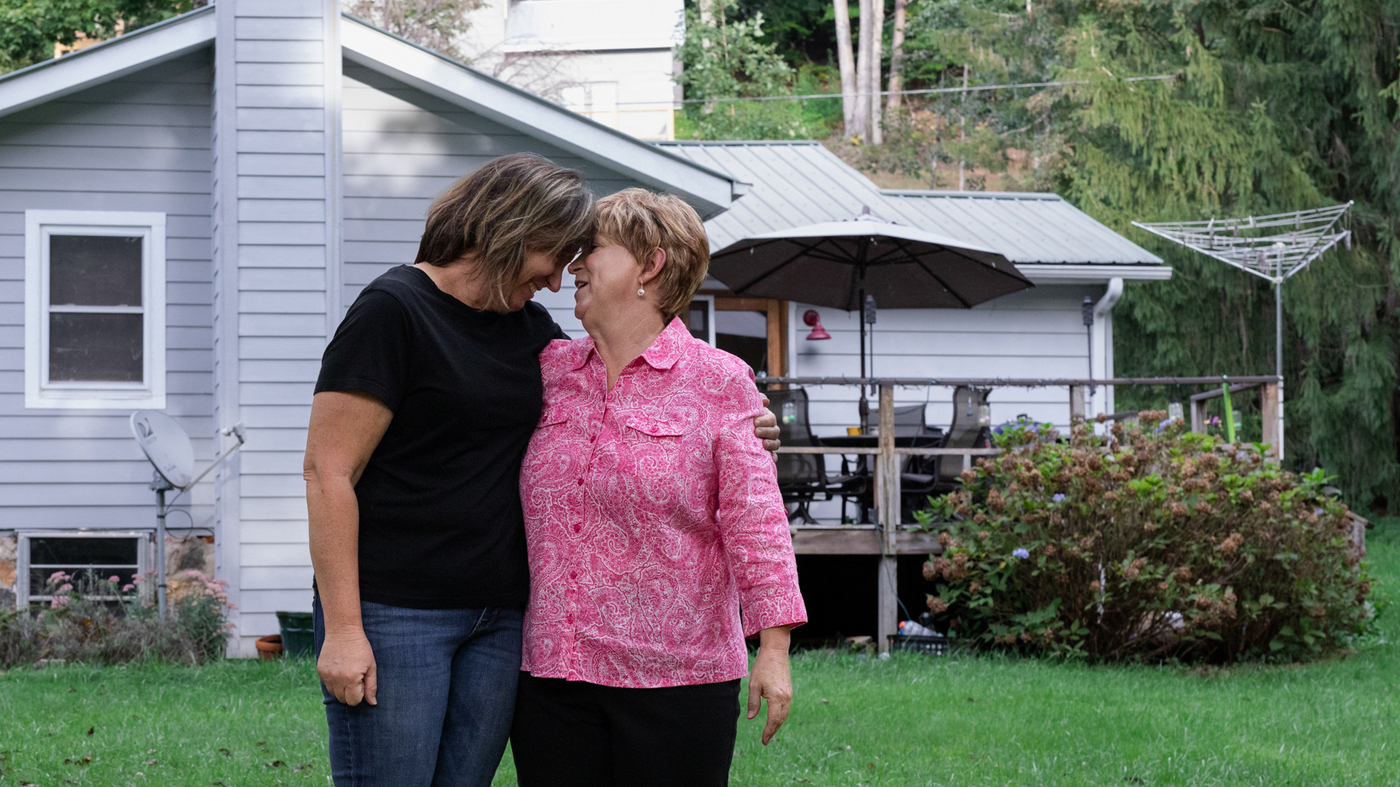
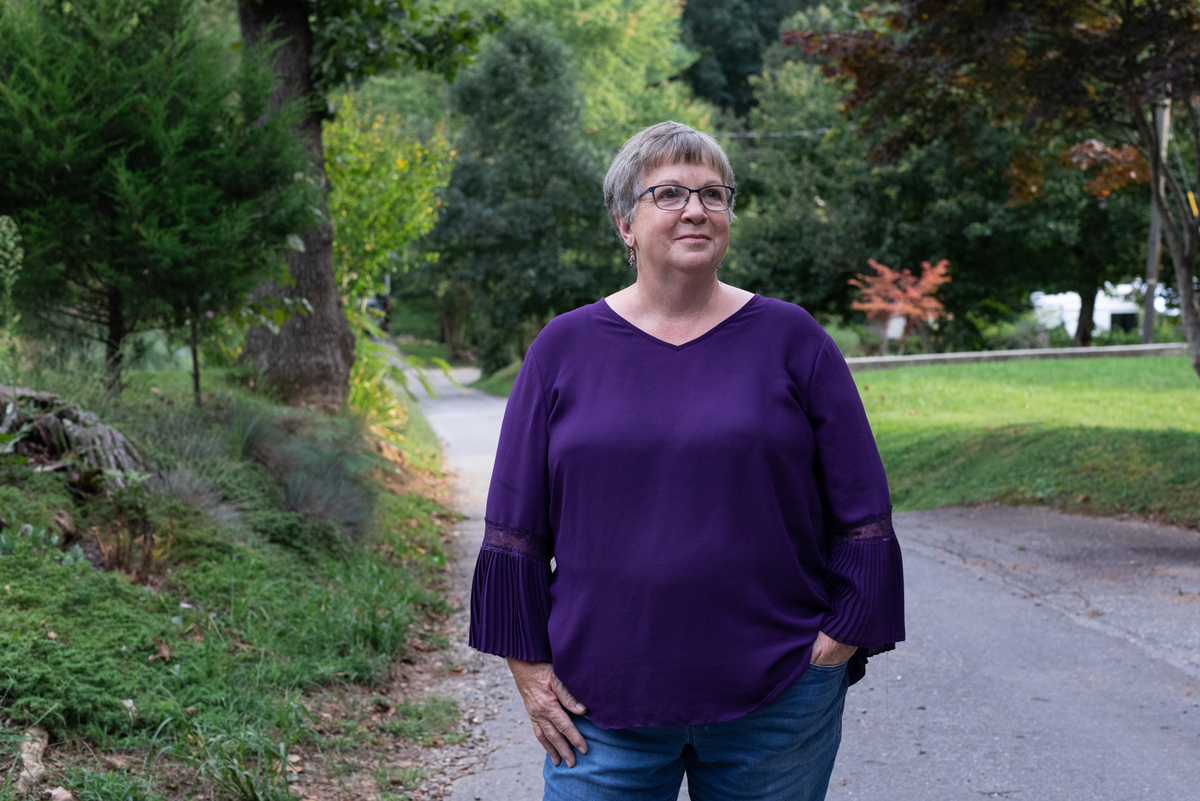
Karen Douthitt (left) and her two of her older sisters, Susie Gilliam (center), and June Ward (right) each took a test for the genetic mutation presenilin 1 after their mom got Alzheimer’s disease in her early 60s. Each child of a parent with this mutation has a 50% chance of inheriting it.

Juan Diego Reyes for NPR


hide caption

toggle caption

Juan Diego Reyes for NPR

Karen Douthitt (left) and her two of her older sisters, Susie Gilliam (center), and June Ward (right) each took a test for the genetic mutation presenilin 1 after their mom got Alzheimer’s disease in her early 60s. Each child of a parent with this mutation has a 50% chance of inheriting it.

Juan Diego Reyes for NPR

In some families, Alzheimer’s disease seems inevitable.

“Your grandmother has it, your mom has it, your uncle has it, your aunts have it, your cousin has it. I always assumed that I would have it,” says Karen Douthitt, 57.

“It was always in our peripheral vision,” says Karen’s sister June Ward, 61.

“Our own mother started having symptoms at age 62, so it has been a part of our life.”

Nearly a decade ago, Karen, June, and an older sister, Susie Gilliam, 64, set out to learn why Alzheimer’s was affecting so many family members.

Since then, each sister has found out whether she carries a rare gene mutation that makes Alzheimer’s inescapable. And all three have found ways to help scientists trying to develop treatments for the disease.

Bad news on the golf course

I met Karen and June in 2015, at the first-ever conference for families with a particular type of genetic mutation in which Alzheimer’s often appears in middle age.

The annual conference is sponsored by the Alzheimer’s Association and the Dominantly Inherited Alzheimer’s Network Trials Unit, a research program run by Washington University School of Medicine in St. Louis.

Karen and June had come to Washington, D.C., for the family conference because of something they had just learned about a cousin on their mother’s side.

The cousin had developed Alzheimer’s in her 50s. And genetic tests showed that she carried a rare, inherited gene mutation called presenilin 1. It’s one of three mutations that typically cause Alzheimer’s to appear in middle age.

The three gene mutations responsible for early Alzheimer’s are unlike a better known gene called APOE4, which merely increases the likelihood somewhat that a person will develop Alzheimer’s – and usually at age 65 or older. In contrast, the early-onset mutations, including presenilin 1, make it almost certain an individual will develop the disease, and usually before age 60.

Each child of a parent who has the presenilin 1 mutation has a 50% chance of inheriting it.

The genetic finding in Karen’s cousin seemed to explain why the sisters’ mother had developed Alzheimer’s in her early 60s. And it meant that any of the sisters, or all three of them, might also carry the mutation.

Karen got the news in March of 2015, during a round of golf.

Her takeaway: “We now have a coin flip of whether we’ll develop Alzheimer’s by the time we’re 62.” That was “kind of a heavy load on the golf course,” Karen told me at our first meeting..

Karen Douthitt learned that a cousin on her mother’s side had undergone genetic testing and was found to be a carrier of presenilin 1, a rare genetic mutation for early-onset Alzheimer’s dementia. The cousin had developed the disease in her 50s.

Juan Diego Reyes for NPR


hide caption

toggle caption

Juan Diego Reyes for NPR

Karen Douthitt learned that a cousin on her mother’s side had undergone genetic testing and was found to be a carrier of presenilin 1, a rare genetic mutation for early-onset Alzheimer’s dementia. The cousin had developed the disease in her 50s.

Juan Diego Reyes for NPR

June had a different reaction: “It was shocking news, but yet there was this element of, ‘oh, so now we finally know what’s been going on.'”

Karen and June talked it over with their older sister Susie.

The sisters had grown up with three other siblings in Swannanoa, a town in the Blue Ridge Mountains of North Carolina. But the three younger girls always had a special bond, “like a three-legged stool,” June says.

So they made a decision together in the spring of 2015.

“We’re doing what we can do,” June told me at the 2015 conference, “which is to participate in the drug trials and try to take what action we can toward a better future.”

They began raising money for the Alzheimer’s Association. And they volunteered for Alzheimer’s drug studies led by researchers at Washington University School of Medicine in St. Louis.

High stakes gene testing

All that happened seven years ago.

This summer, I sat down with Karen and June again. They were attending the annual family conference, this time in San Diego. Susie, the eldest of the three, was there too.

By this time, all three sisters had learned whether they carried the gene mutation.

Karen, the youngest, found out just after the 2015 conference.

“I decided to do gene testing relatively early after that meeting,” she says, “and I’m negative.”

The middle sister, June, waited until March of 2016.

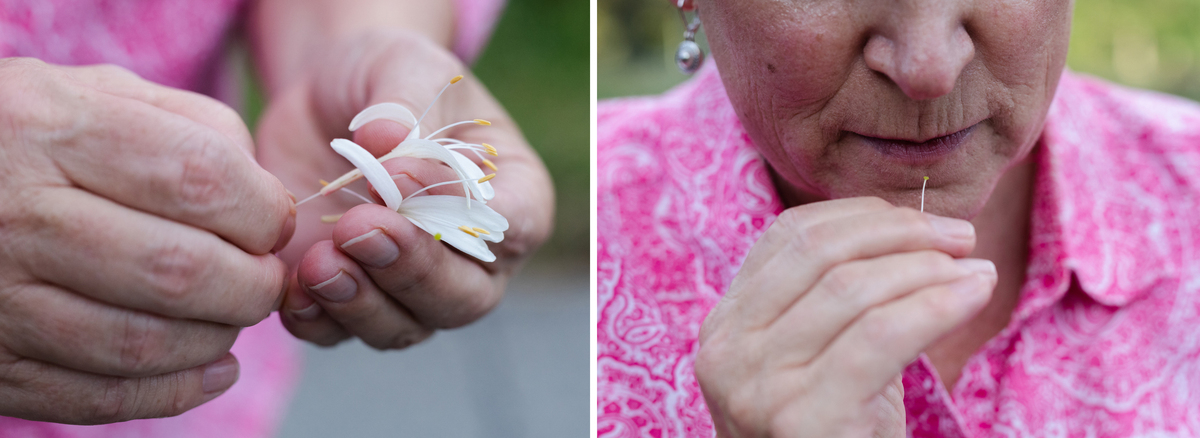
Ward (left) and Douthitt pick wildflowers down the road from their childhood home in Swannanoa, N.C.

Juan Diego Reyes for NPR


hide caption

toggle caption

Juan Diego Reyes for NPR

Ward (left) and Douthitt pick wildflowers down the road from their childhood home in Swannanoa, N.C.

Juan Diego Reyes for NPR

Ward says she and her sisters enjoyed picking honeysuckles on their walks home from school when they were kids.

Juan Diego Reyes for NPR


hide caption

toggle caption

Juan Diego Reyes for NPR

Ward says she and her sisters enjoyed picking honeysuckles on their walks home from school when they were kids.

Juan Diego Reyes for NPR

“I decided I was ready to do genetic testing, just cause I like to know things,” she says. “And I turned out to be genetically positive for Alzheimer’s disease, which means that if I live long enough I will get it, unless the [experimental] medicine works.”

For years, Susie had chosen not to find out whether she carried the gene.

“I asked my husband and my two children, and everybody said they’d just as soon not know,” she says.

Eventually, though, their views changed. And in March of this year, Susie discovered that she, like June, carries the gene mutation.

For years, partly at her kids’ and husband’s urging, Susie Gilliam chose not to get tested for the gene mutation for Alzheimer’s disease.

Juan Diego Reyes for NPR


hide caption

toggle caption

Juan Diego Reyes for NPR

For years, partly at her kids’ and husband’s urging, Susie Gilliam chose not to get tested for the gene mutation for Alzheimer’s disease.

Juan Diego Reyes for NPR

At first, she was devastated.

“The next morning I was wallowing in self pity, and what I’m going to miss,” Susie says. “I’m going to miss birthdays, and my grandchildren won’t know me as a healthy person.

“But then on the front porch, in the mountains of western North Carolina, I’m rocking and there’s this single cloud in a Carolina blue sky, and I was praying for Him to take my worries away. And I’m sitting there rocking and this single cloud thins and thins and thins, and then, poof, it’s gone – and with it my worries.”

Douthitt and her sisters grew up in the Blue Ridge Mountains in Swannanoa, N.C.

Juan Diego Reyes for NPR


hide caption

toggle caption

Juan Diego Reyes for NPR

Douthitt and her sisters grew up in the Blue Ridge Mountains in Swannanoa, N.C.

Juan Diego Reyes for NPR

The sisters affectionately call their childhood family compound “the holler.”

Juan Diego Reyes for NPR


hide caption

toggle caption

Juan Diego Reyes for NPR

The sisters affectionately call their childhood family compound “the holler.”

Juan Diego Reyes for NPR

A plan for the future

The situation still worries little sister Karen – even though she’s negative for the mutation.

Late last year, she got some alarming news about her own health. She had breast cancer. But Karen says cancer doesn’t make a person feel helpless the way Alzheimer’s does.

“You go see a surgeon. You go see an oncologist. And then you have surgery and then you have radiation or chemo. There’s a to-do list,” she says. “Susie had her diagnosis in March and her to-do list is: Go see an attorney, make a will.”

Karen knows that June and Susie could develop symptoms at any time. She says that will be devastating for her family, which dotes on them.

“We call ’em marshmallows, ’cause they’re so sweet,” she says.

June has found some measure of solace by participating in Alzheimer’s research studies.

She knows the experimental drugs she’s taking are unlikely to help her. But she hopes they’ll eventually lead to treatments that will make a difference to younger members of her family.

“If anything I do can have a positive effect for their lives and their future, I’m all in,” she says.

Even though the sisters hope a successful drug treatment for their family’s form of dementia will emerge, they’re now planning for a future without one. “There’s a kind of sorrow about Alzheimer’s disease that, as strange as it seems, there’s a comfort in being in the presence of people who understand it,” Ward says.

Juan Diego Reyes for NPR


hide caption

toggle caption

Juan Diego Reyes for NPR

Even though the sisters hope a successful drug treatment for their family’s form of dementia will emerge, they’re now planning for a future without one. “There’s a kind of sorrow about Alzheimer’s disease that, as strange as it seems, there’s a comfort in being in the presence of people who understand it,” Ward says.

Juan Diego Reyes for NPR

June also has become a regular at the annual conference for families affected by the early Alzheimer’s mutations. She says it’s a place to hear about scientific advances — and feel a sense of ease.

“There’s a kind of sorrow about Alzheimer’s disease that, as strange as it seems, there’s a comfort in being in the presence of people who understand it,” she says.

June says attending the conference also reminds her that some other families carry a more extreme version of the gene mutation.

“Sometimes I feel guilty because I’m a 61-year-old woman with the gene who can still have a conversation and not make too many faux-pas,” she says. “There are people in their 30s here that are struggling already.”

The three sisters are still hoping for a drug that can slow down Alzheimer’s. But they are also planning for a future without that drug.

Karen and her husband have moved back to her childhood home in the Blue Ridge mountains. They live in the same small house where she and her siblings were raised. It’s part of a family compound they call “the holler.”

“I say it’s like the Kennedy compound except redneck,” Karen says. “Some of the houses have wheels on them. But my dream is to have both of my sisters there.”

“The good thing is we would be surrounded by family and people that have known us since we were children,” June says. “So if we walked away, somebody would help us find our way back home.”

[ad_2]

Source link