Everyone loves a clean home — the smell of cleaning products and detergents is a key indicator of a germ-free, tidy space. However, most chemical household cleaners contain harmful toxins to humans and the environment.
For instance, one recent study found that scented commercial surface cleaners emit high traces of secondary organic aerosols (SOAs) indoors, also generated by cars. While cleaning, SOA concentrations can exceed outdoor levels of air pollutants. People also inhale 1 billion to 10 billion SOA nanoparticles per minute when mopping the floors.
Meanwhile, highly-toxic commercial cleaners severely damage ecosystems as they get flushed through drains and dumped into waterways.
Replacing harmful chemicals with green alternatives can better protect you and the environment while leaving your home sparkling clean.
6 Hazardous chemicals to replace with natural alternatives
1. All-Purpose Cleaner
Studies have found that 30% of commercial cleaning products contain endocrine-disrupting properties, such as galaxolide, which scientists have linked to thyroid dysfunction, decreased fertility, and genetic damage in marine species.
Although SC Johnson began phasing out galaxolide from its products — Shout, Glade, and OFF! — in 2018, you might still want to use a DIY all-purpose cleaner to be on the safe side.
Making your all-purpose cleaner is easy enough. All you need to do is add distilled water, vinegar, and a pleasant scent — such as fresh herbs, citrus, or essential oils — to a spray bottle.
However, avoiding spraying your granite and marble countertops with vinegar is critical, as its acidity can ruin the sealant.
2. Furniture Polish
You might think there’s nothing better than wiping away dust with lemon-scented Old English Furniture Polish.
Unfortunately, the Environmental Working Group (EWG) gives it an F rating due to its respiratory, allergen, and cancer risks. Its ingredients — petroleum gases, silicone fluid, and kerosene — have dire impacts on water resources and soil in the environment.
A much safer alternative is equal parts olive oil and vinegar in a jar — you can also add a few drops of essential oils for a fresh scent. Stir the ingredients and apply the mixture to the furniture with a dry, clean cloth.
3. Paint
Giving your home a fresh coat of paint or simply touching up scuffs and marks reinvigorates the space. However, paint is a highly flammable liquid waste that negatively impacts indoor air quality by emitting volatile organic compounds (VOCs), such as formaldehyde, toluene, and benzene.
According to the American Lung Association, nausea, breathing difficulties, eye irritation, and damage to the central nervous system are possible with VOC inhalation.
Even though many assume zero-VOC paints are less effective, they work just as well as oil-based paints if your project is prepped correctly. Major brands such as Benjamin Moore, Sherwin Williams, and Valspar carry paint products without VOCs.
Keep in mind that even zero-VOC paints might contain some amount of VOCs, but they are at low-enough levels to not cause any concern.
4. Glass Cleaner
Commercial glass and surface cleaners typically contain butyl cellosolve — a harmful solvent that can lead to eye irritation, vomiting, headache, and a metallic taste.
While it’s unknown what sort of reproductive disruptions butyl cellosolve has on humans, studies have shown that high concentrations can hinder fertility and cause animal birth defects.
Instead, use vinegar to clean windows and mirrors around the house. Vinegar is safe but highly acidic, with a lower ph level that gives it stain-fighting powers to break down minerals.
Alone, vinegar is an excellent natural cleaning solution for fragile surfaces — however, many people combine it with baking soda to lift difficult dirt and grime more easily. Avoid using vinegar on stone, computer or phone screens, or ceramics. You should also avoid mixing it with bleach, which can generate lethal fumes.
5. Bleach
Bleach is a common, corrosive cleaning agent that can become highly toxic, causing harm to those with respiratory conditions and able to burn skin. It’s also lethal to ecosystem health when it enters waterways.
Consider what you might clean with bleach around the house — clothes, sink drains, toilet bowls, and dirty grout come to mind. A much safer alternative is baking soda, which, along with vinegar, will become your new favorite householder cleaner.
Sprinkle baking soda and vinegar in the toilet and let it sit for 30 minutes, then wipe away and flush for a shiny, bright throne. Equal parts of baking soda and vinegar can make it easier to unclog sink drains.
Since you’re not supposed to use vinegar to clean countertops, you should combine baking soda with liquid castile soap, vegetable glycerin, and essential oils to create an effective cleaning solution.
6. Air Freshener
Plugging in an air freshener might seem a harmless way to wrap up house cleaning — or perhaps you prefer to light a scented candle to make the space smell homier.
Fragrance chemicals reduce indoor air quality by elevating VOC exposure, triggering ear, eyes, and throat irritation, migraines and nausea. A 2021 study also suggests that scented candles emit nitrogen dioxide concentrations that slightly exceed the safety standards of the World Health Organization (WHO).
Although proper ventilation can significantly improve the risks, an essential oil diffuser will ensure the same results without hazardous chemicals. Additionally, you can combine baking soda and coffee grounds in a small dish to help absorb bad smells from the air. Distilled water and essential oil drops can also make for a delightful room spray alternative.
Clean Your Home Safely with Natural Alternatives
Protect your household and the environment by replacing hazardous household cleaners with natural alternatives. Natural cleaning solutions will result in a clean house that you can rest assured is a healthy home.
Why does your teenage daughter avoid going to school?
Your teenage daughter is an essential member of your family. You want her to succeed academically. However, she doesn’t feel like going to school today or in the following days.
Something could be horribly wrong. So you want to figure out what the problem might be. This guide will go over the seven reasons why your teenage daughter may be avoiding school.
If you need additional information about your teen and their mental health, BasePoint Academy can help. Visit their website at basepointacademy.com to learn more. Now, let’s take a look at the following possible reasons.
Social anxiety issues
The first on the list is social anxiety. They may be afraid to talk to people or even be in a social situation. Feelings of being judged by others and embarrassment are among the two major fears surrounding this.
This anxiety issue may be enough to where their daily life is disrupted. You can also look for symptoms such as nausea, sweating, fear of talking to a person or in front of a group of people, and nervous shaking, among other symptoms.
It can be a daunting task for many. But encourage them that it’s OK to talk to people and make friends. Don’t force it on them, but be understanding and empathetic.
Bullying
Bullying can affect any teenager. It can also include your daughter as well. Nearly 22 percent of students from 12 to 18 have reported being bullied at school.
Of these instances, they include being insulted or spreading rumors about them. At least five percent were victims of bullying that involved physical activity. Peer pressure has also played a role in bullying as well.
Many teenagers would often avoid school due to ongoing bullying. Every day, at least 160000 students will skip school because of it.
Sexual harassment
Sexual harassment is as serious as bullying. Teenage girls are often experiencing sexual advances at school that are unwanted. In one survey, nearly one-half of middle and high school students were harassed sexually at least once.
At least a third of the students surveyed stated they didn’t want to return from school after it happened. Sexual harassment itself can begin as early as middle school. Even sexual assault may be possible by peers, but the incidents are not always reported out of fear of retaliation or similar results.
Anxiety or depression
Anxiety and depression are two of the most common mental disorders that affect teens. It may be difficult to diagnose depression because teenagers often deal with mood swings. So it may be a good idea to look for additional symptoms.
A mental health professional must diagnose a teenager with anxiety or depression. You will need to watch for signs such as refusing to go to school, withdrawing from social interactions, difficulty concentrating, and feeling hopeless or worthless.
Depression, if untreated, can lead to serious consequences. The most serious of them all is suicide. Within the last two years, more teenage girls have been hospitalized due to suicide attempts.
The increase was 50 percent between the years 2019 to 2021. While teenage girls are more likely to attempt suicide, teenage boys often die from it. It’s important to look out for any warnings pertaining to suicide.
These include but are not limited to messages or poetry they write about death. Talking about death may also be a subtle sign. They may also attempt to give away various items to friends or family.
If your teenage daughter is contemplating suicide, it may be a good time to get them the help they need. Know that they are not alone in their struggles. A mental health professional will help them through the crisis in the best way possible.
PTSD or Acute Stress Disorder
This can stem from a traumatic incident that happened at school. These disorders can develop within a month after it has occurred. These events may include but are not limited to witnessing the self-harm or death of a person.
School shootings may also be an incident where such a disorder can affect a student. They may have survived the attack unscathed or may have been injured. It’s understandable why your teenage daughter may avoid school after such an event.
Social rejection
Social rejection can be embarrassing for a teenager. Such rejection can get to a point where your teenage daughter may not end up in school. This can happen when a friendship between two people may end for whatever reason.
When this happens, social isolation may be something they’ll experience. They feel alone and don’t have anyone to talk to. Social rejection can be as painful as physical pain itself.
It’s one of the major things that teens normally fear the most. This is perhaps one of the reasons why social anxiety exists. If your teenage daughter has mentioned something about ending a friendship, it may be a good idea to talk about it with them.
Listen to them and be as understanding as possible. Know that you are there for them even if anyone else isn’t. As a parent, you want your daughter to feel loved and appreciated.
Let them know that they are better than the people who reject them.
Academic struggles
Academic struggles could play a role in why your teenage daughter may not be going to school. They may feel like they don’t have what it takes to succeed. They may feel like they are stupid.
If they are having struggles academically, make sure they get the help they need. This can be a tutor for a subject they may need to improve on. Remind them that academics are important and there is no shame in struggling.
Not everyone can be perfect when it comes to academics. It doesn’t have to be a competition between your teenage daughter and their peers. Tutoring will help them get better at academics and help rebuild that confidence they may have lacked before.
POMONA, Calif. — When you first meet 17-month-old Aaron Martinez, it’s not obvious that something is catastrophically wrong.
What you see is a beautiful little boy with smooth, lustrous skin, an abundance of glossy brown hair, and a disarming smile. What you hear are coos and cries that don’t immediately signal anything is horribly awry.
But his parents, Adriana Pinedo and Hector Martinez, know the truth painfully well.
Although Adriana’s doctors and midwife had described the pregnancy as “perfect” for all nine months, Aaron was born with most of his brain cells dead, the result of two strokes and a massive bleed he sustained while in utero.
Doctors aren’t sure what caused the anomalies that left Aaron with virtually no cognitive function or physical mobility. His voluminous hair hides a head whose circumference is too small for his age. He has epilepsy that triggers multiple seizures each day, and his smile is not always what it seems. “It could be a smile; it could be a seizure,” his mother said.
Shortly after Aaron was born, doctors told Adriana, 34, and Hector, 35, there was no hope and they should “let nature take its course.” They would learn months later that the doctors had not expected the boy to live more than five days. It was on Day 5 that his parents put him in home hospice care, an arrangement that has continued into his second year of life.
The family gets weekly visits from hospice nurses, therapists, social workers, and a chaplain in the cramped one-bedroom apartment they rent from the people who live in the main house on the same lot on a quiet residential street in this Inland Empire city.
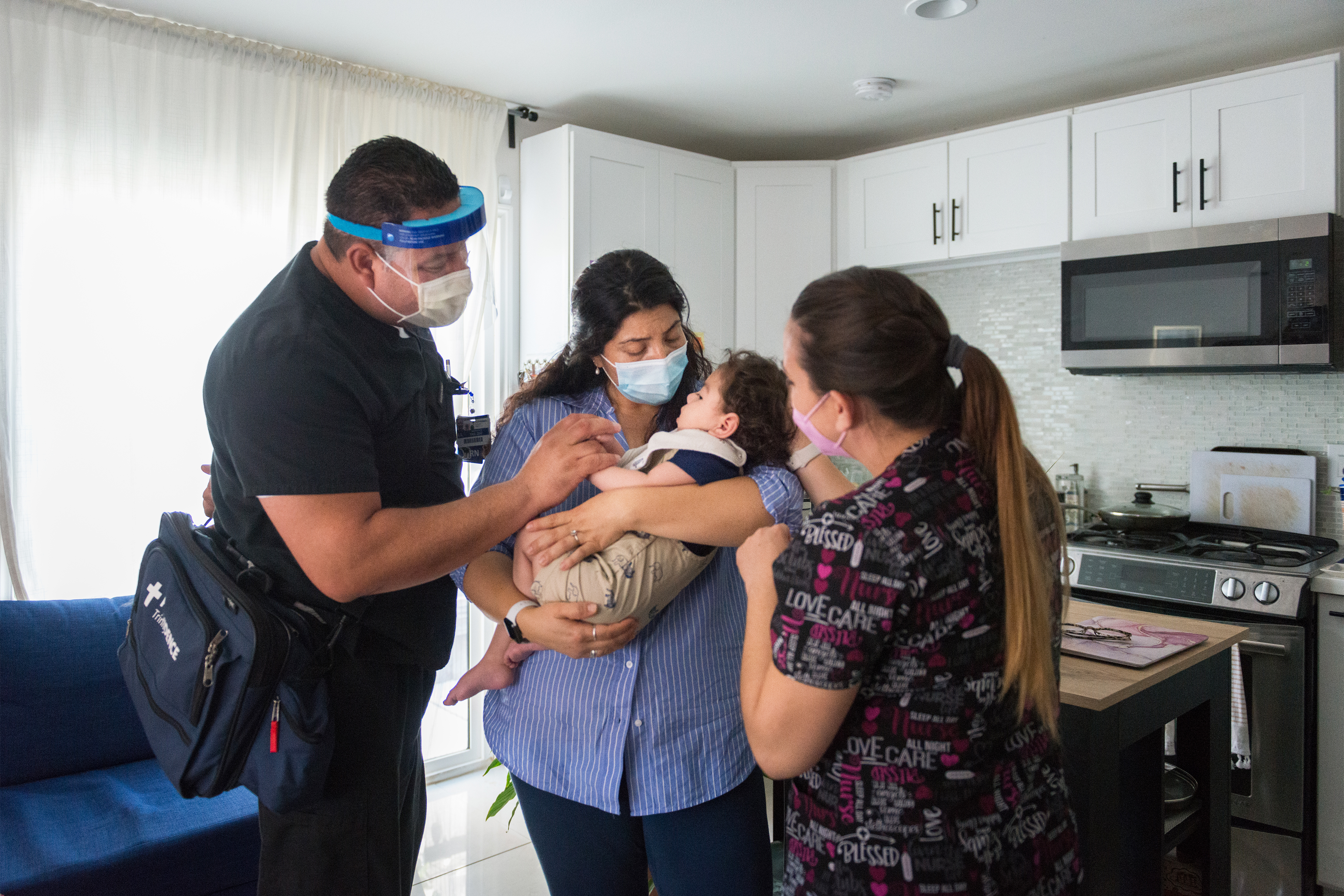
Adriana Pinedo holds her son, Aaron Martinez, during a visit with hospice nurses Raul Diaz (left) and Shannon Stiles. Pinedo describes the weekly hospice visits from nurses, therapists, social workers, and a chaplain as “our lifeline.”(Heidi de Marco / KHN)
One of the main criteria for hospice care, established by Medicare largely for seniors but also applied to children, is a diagnosis of six months or less to live. Yet over the course of 17 months, Aaron’s medical team has repeatedly recertified his hospice eligibility.
Under a provision of the 2010 Affordable Care Act, children enrolled in Medicaid or the Children’s Health Insurance Program are allowed, unlike adults, to be in hospice while continuing to receive curative or life-extending care. Commercial insurers are not required to cover this “concurrent care,” but many now do.
More than a decade since its inception, concurrent care is widely credited with improving the quality of life for many terminally ill children, easing stress on the family and, in some cases, sustaining hope for a cure. But the arrangement can contribute to a painful dilemma for parents like Adriana and Hector, who are torn between their fierce commitment to their son and the futility of knowing that his condition leaves him with no future worth hoping for.
“We could lose a life, but if he continues to live this way, we’ll lose three,” said Adriana. “There’s no quality of life for him or for us.”
Aaron’s doctors now say he could conceivably live for years. His body hasn’t stopped growing since he was born. He’s in the 96th percentile for height for his age, and his weight is about average.
His parents have talked about “graduating” him from hospice. But he is never stable for long, and they welcome the visits from their hospice team. The seizures, sometimes 30 a day, are a persistent assault on his brain and, as he grows, the medications intended to control them must be changed or the doses recalibrated. He is at continual risk of gastrointestinal problems and potentially deadly fluid buildup in his lungs.
Adriana, who works from home for a nonprofit public health organization, spends much of her time with Aaron, while Hector works as a landscaper. She has chosen to live in the moment, she said, because otherwise her mind wanders to a future in which either “he could die — or he won’t, and I’ll end up changing the diapers of a 40-year-old man.” Either of those, she said, “are going to suck.”
While cancer is one of the major illnesses afflicting children in hospice, many others, like Aaron, have rare congenital defects, severe neurological impairments, or uncommon metabolic deficiencies.
“We have diseases that families tell us are one of 10 cases in the world,” said Dr. Glen Komatsu, medical director of Torrance-based TrinityKids Care, which provides home hospice services to Aaron and more than 70 other kids in Los Angeles and Orange counties.
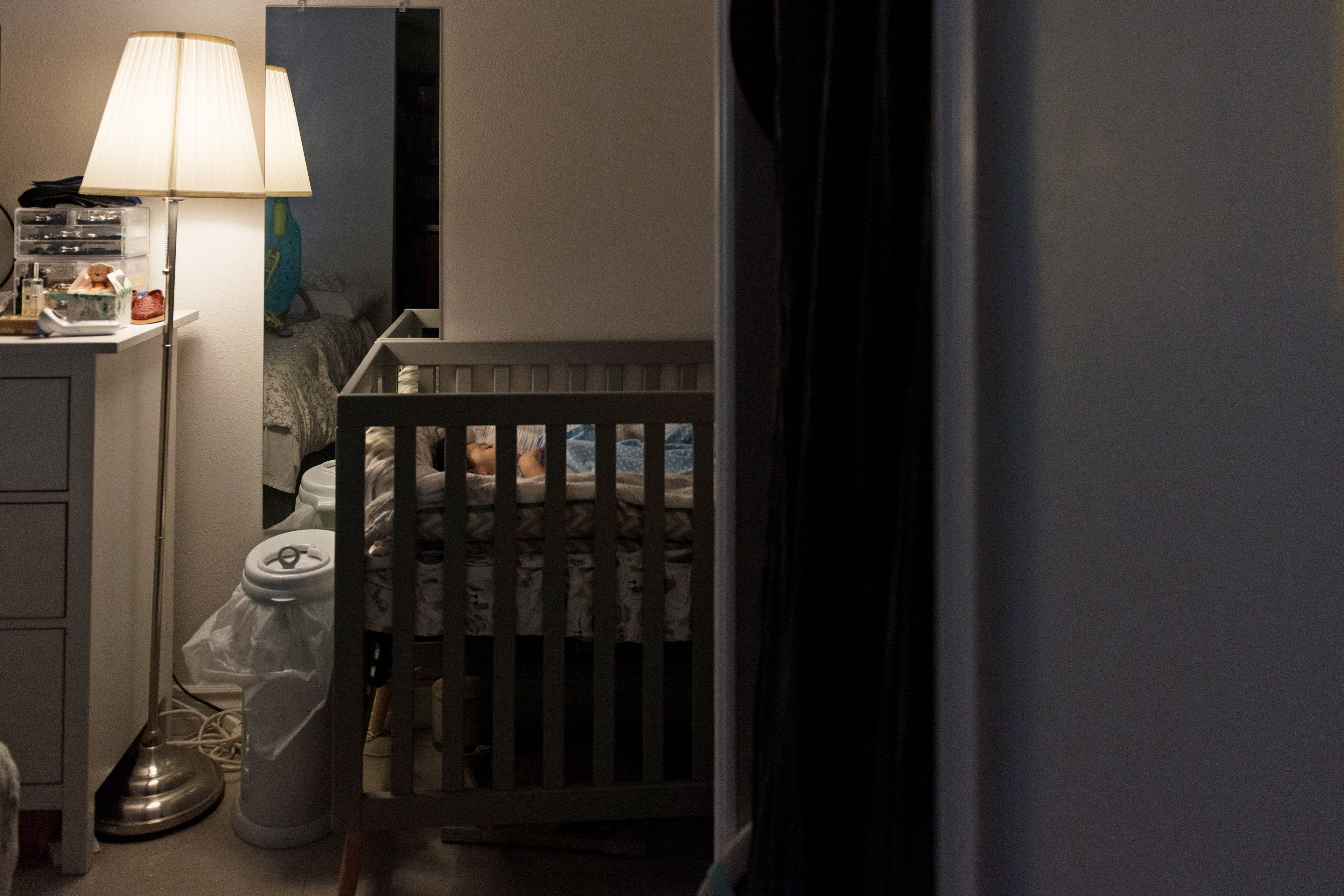
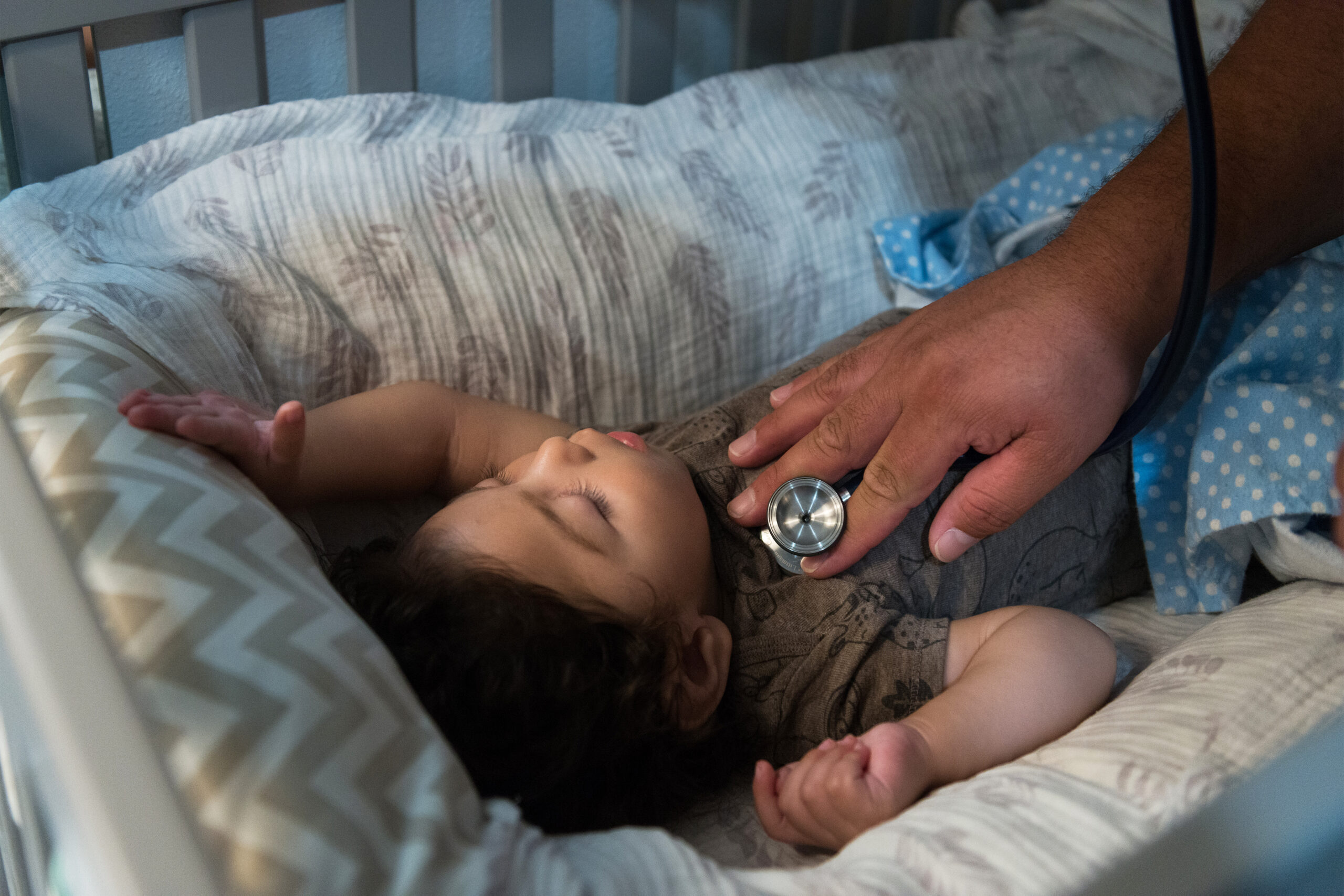
Aaron Martinez sleeps in the bedroom he shares with his mother and father in Pomona, California.(Heidi de Marco / KHN)
In the years leading up to the ACA’s implementation, pediatric health advocates lobbied hard for the concurrent care provision. Without the possibility of life-extending care or hope for a cure, many parents refused to put their terminally ill kids in hospice, thinking it was tantamount to giving up on them. That meant the whole family missed out on the support hospice can provide, not just pain relief and comfort for the dying child, but emotional and spiritual care for parents and siblings under extreme duress.
TrinityKids Care, run by the large national Catholic health system Providence, doesn’t just send nurses, social workers, and chaplains into homes. For patients able to participate, and their siblings, it also offers art and science projects, exercise classes, movies, and music. During the pandemic, these activities have been conducted via Zoom, and volunteers deliver needed supplies to the children’s homes.
The ability to get treatments that prolong their lives is a major reason children in concurrent care are more likely than adults to outlive the six-months-to-live diagnosis required for hospice.
“Concurrent care, by its very intention, very clearly is going to extend their lives, and by extending their lives they’re no longer going to be hospice-eligible if you use the six-month life expectancy criteria,” said Dr. David Steinhorn, a pediatric intensive care physician in Virginia, who has helped develop numerous children’s hospice programs across the U.S.
Another factor is that kids, even sick ones, are simply more robust than many older people.
“Sick kids are often otherwise healthy, except for one organ,” said Dr. Debra Lotstein, chief of the division of comfort and palliative care at Children’s Hospital Los Angeles. “They may have cancer in their body, but their hearts are good and their lungs are good, compared to a 90-year-old who at baseline is just not as resilient.”
All of Aaron Martinez’s vital organs, except for his brain, seem to be working. “There have been times when we’ve brought him in, and the nurse looks at the chart and looks at him, and she can’t believe it’s that child,” said his father, Hector.
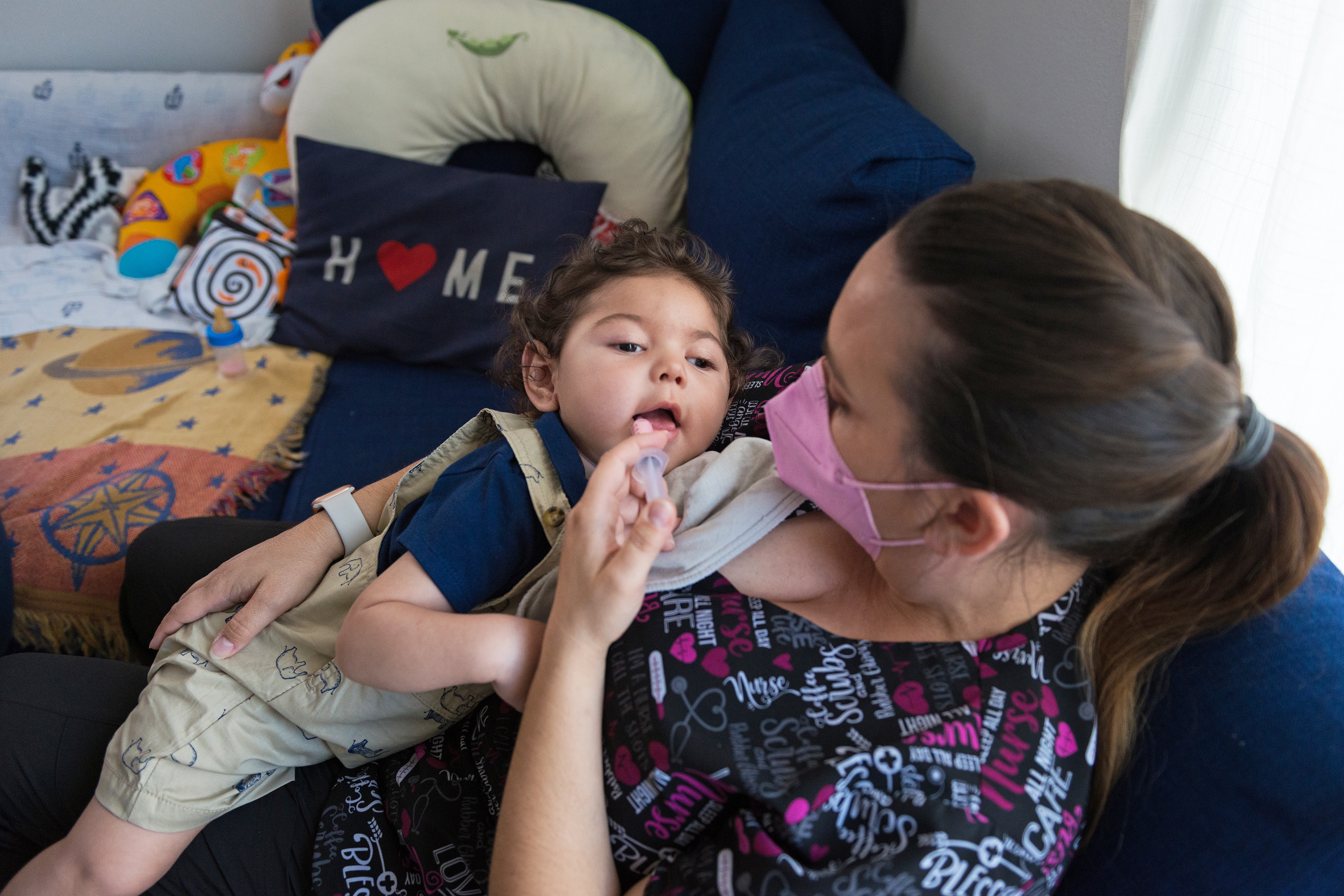
Hospice nurse Shannon Stiles gently administers Aaron Martinez an oral medication. Many hospice organizations are reluctant to take children, whose medical and emotional needs are often intense and complex.(Heidi de Marco / KHN)
When kids live past the six-month life expectancy, they must be recertified to stay in hospice. In many cases, Steinhorn said, he is willing to recertify his pediatric patients indefinitely.
Even with doctors advocating for them, it’s not always easy for children to get into hospice care. Most hospices care primarily for adults and are reluctant to take kids.
“The hospice will say, ‘We don’t have the capacity to treat children. Our nurses aren’t trained. It’s different. We just can’t do it,’” said Lori Butterworth, co-founder of the Children’s Hospice and Palliative Care Coalition of California in Watsonville. “The other reason is not wanting to, because it’s existentially devastating and sad and hard.”
Finances also play a role. Home hospice care is paid at a per diem rate set by Medicare — slightly over $200 a day for the first two months, about $161 a day after that — and it is typically the same for kids and adults. Children, particularly those with rare conditions, often require more intensive and innovative care, so the per diem doesn’t stretch as far.
The concurrent care provision has made taking pediatric patients more viable for hospice organizations, Steinhorn and others said. Under the ACA, many of the expenses for certain medications and medical services can be shifted to the patient’s primary insurance, leaving hospices responsible for pain relief and comfort care.
Even so, the relatively small number of kids who die each year from protracted ailments hardly makes pediatric hospice an appealing line of business in an industry craving growth, especially one in which private equity investors are active and seeking a big payday.
In California, only 21 of 1,336 hospices reported having a specialized pediatric hospice program, and 59 said they served at least one patient under age 21, according to an analysis of 2020 state data by Cordt Kassner, CEO of Hospice Analytics in Colorado Springs, Colorado.
Hospice providers that do cater to children often face a more basic challenge: Even with the possibility of concurrent care, many parents still equate hospice with acceptance of death. That was the case initially for Matt and Reese Sonnen, Los Angeles residents whose daughter, Layla, was born with a seizure disorder that had no name: Her brain had simply failed to develop in the womb, and an MRI showed “fluid taking up space where the brain wasn’t,” her mother said.
When Layla’s team first mentioned hospice, “I was in the car on my phone, and I almost crashed the car,” Reese recalled. “The first thought that came to mind was, ‘It is just the end,’ but we felt she was nowhere near it, because she was strong, she was mighty. She was my little girl. She was going to get through this.”
About three months later, as Layla’s nervous system deteriorated, causing her to writhe in pain, her parents agreed to enroll her in hospice with TrinityKids Care. She died weeks later, not long after her 2nd birthday. She was in her mother’s arms, with Matt close by.
“All of a sudden, Layla breathed out a big rush of air. The nurse looked at me and said, ‘That was her last breath.’ I was literally breathing in her last breath,” Reese recounted. “I never wanted to breathe again, because now I felt I had her in my lungs. Don’t make me laugh, don’t make me exhale.”
Layla’s parents have no regrets about their decision to put her in hospice. “It was the absolute right decision, and in hindsight we should have done it sooner,” Matt said. “She was suffering, and we had blinders on.”
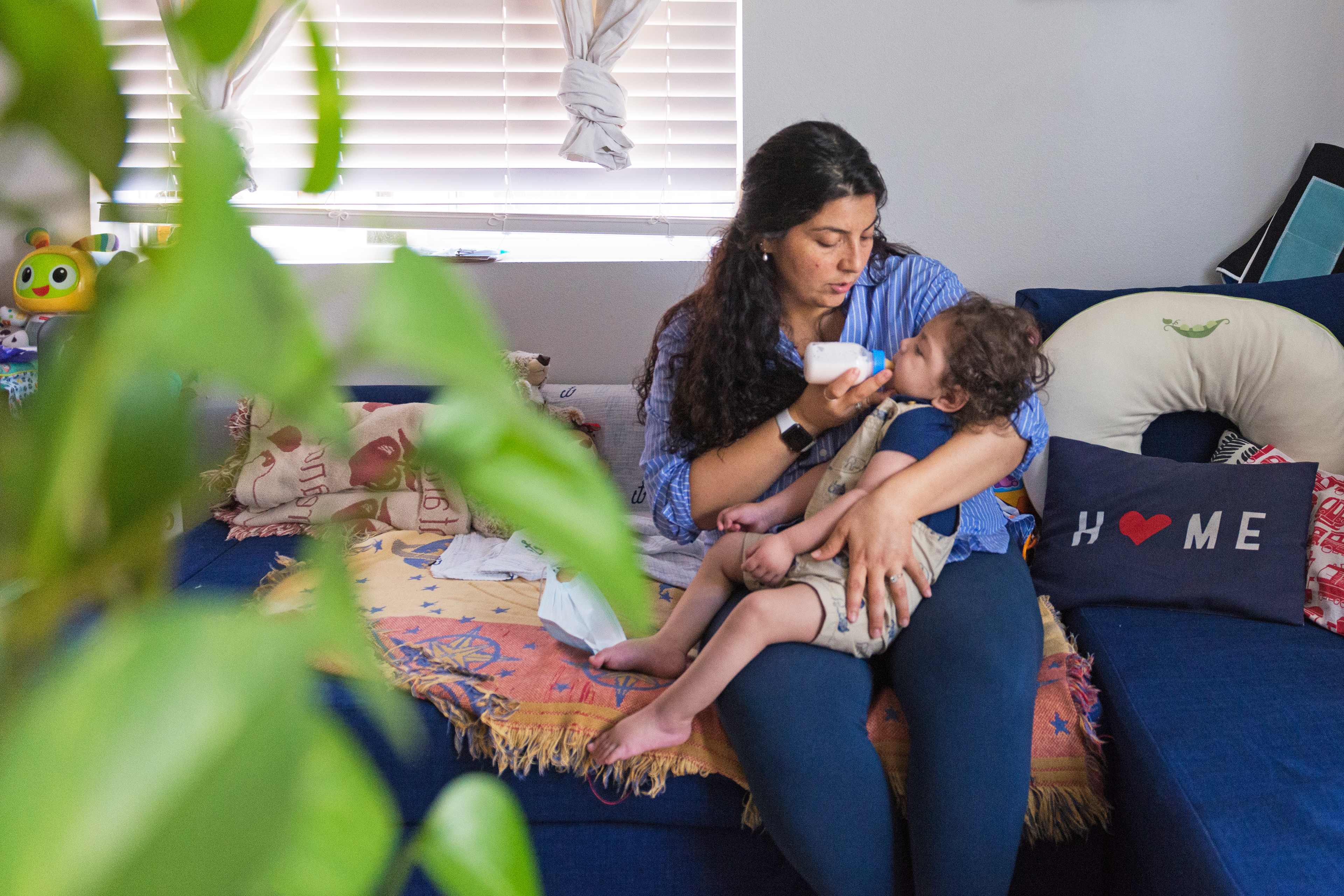
Adriana Pinedo spends much of her day alone with her son. She has chosen to live in the moment, she says, because otherwise her mind wanders to a future in which either “he could die — or he won’t, and I’ll end up changing the diapers of a 40-year-old man.”(Heidi de Marco / KHN)
Adriana Pinedo said she is “infinitely grateful” for hospice, despite the heartache of Aaron’s condition. Sometimes the social worker will stop by, she said, just to say hello and drop off a latte, a small gesture that can feel very uplifting. “They’ve been our lifeline,” she said.
Adriana talks about a friend of hers with a healthy baby, also named Aaron, who is pregnant with her second child. “All the stuff that was on our list, they’re living. And I love them dearly,” Adriana said. “But it’s almost hard to look, because it’s like looking at the stuff that you didn’t get. It’s like Christmas Day, staring through the window at the neighbor’s house, and you’re sitting there in the cold.”
Yet she seems palpably torn between that bleak remorse and the unconditional love parents feel toward their children. At one point, Adriana interrupted herself midsentence and turned to her son, who was in Hector’s arms: “Yes, Papi, you are so stinking cute, and you are still my dream come true.”
“With Proposition 1, the number of abortion seekers from other states will soar even higher, costing taxpayers millions more.”
California Together, No on Proposition 1, on its website, Aug. 16, 2022
California Together, a campaign led by religious and anti-abortion groups, is hoping to persuade voters to reject a ballot measure that would cement the right to abortion in the state’s constitution. The group is warning that taxpayers will be on the hook for an influx of abortion seekers from out of state.
Proposition 1 was placed on the ballot by the Democratic-controlled legislature in response to the U.S. Supreme Court’s decision to overturn Roe v. Wade. If passed, it would protect an individual’s “fundamental right to choose to have an abortion,” along with the right to birth control.
California Together’s website says: “With Proposition 1, the number of abortion seekers from other states will soar even higher, costing taxpayers millions more.”
The campaign raised similar cost concerns in a voter information guide that will be mailed out to every registered voter ahead of the Nov. 8 election. One prominent argument is that Proposition 1 will turn California into a “sanctuary state” for abortion seekers, including those in late-term pregnancy — and that would be a drain on tax dollars.
We decided to take a closer look at those eye-catching statements to see how well they hold up when broken down.
We reached out to California Together to find out the basis for its arguments against the measure. The campaign cited an analysis from the pro-abortion rights Guttmacher Institute, which estimated before Roe was overturned that the number of women ages 15 to 49 whose nearest abortion provider would be in California would increase 3,000% in response to state abortion bans. The Guttmacher analysis said most of California’s out-of-state patients would likely come from Arizona because it’s within driving distance.
California Together does not cite a specific cost to taxpayers for the measure. Rather, it points to millions of dollars the state has already allocated to support abortion and reproductive health services as an indication of how much more the state could spend if the proposed amendment passes.
Sources indicate that people are already coming to the state for abortion services.
Jessica Pinckney, executive director of Oakland-based Access Reproductive Justice, which provides financial and emotional support for people who have abortions in California, said the organization had experienced an increase in out-of-state calls even before the high court ruled in June. Pinckney anticipates handling more cases as more states restrict abortion — regardless of Proposition 1’s outcome.
Will It Cost Taxpayers Millions?
In its fiscal year 2022-23 budget, California committed more than $200 million to expanding reproductive health care services, including $20 million for a fund to cover the travel expenses of abortion seekers, regardless of what state they live in. Once it’s up and running in 2023, the fund will provide grants to nonprofit organizations that help women with transportation and lodging.
However, none of that spending is connected to Proposition 1, said Carolyn Chu, chief deputy legislative analyst at the nonpartisan Legislative Analyst’s Office. It’s already allocated in the budget and will be doled out next year regardless of what happens with the ballot measure.
In the end, the Legislative Analyst’s Office found “no direct fiscal effect” if Proposition 1 passes because Californians already have abortion protections. And people traveling from out of state don’t qualify for state-subsidized health programs, such as Medi-Cal, the state’s Medicaid program, Chu added in an interview. “If people were to travel to California for services, including abortion, that does not mean they’re eligible for Medi-Cal,” she said.
Still, Proposition 1 opponents see the cost argument playing out in a different way.
Richard Temple, a campaign strategist for California Together, said a “no” vote will send lawmakers a mandate to stop the support fund. “Defeat Prop. 1, and you send a loud signal to the legislature and to the governor that you don’t want to pay for those kinds of expenses for people coming in from out of state,” Temple said.
What About an Influx of Abortion Seekers?
A key element of California Together’s argument is pegged to the idea that California will become a sanctuary state for abortion seekers. Opponents assert that Proposition 1 opens the door to a new legal interpretation of the state’s Reproductive Privacy Act. Currently, that law allows abortion up to the point of viability, usually around the 24th week of pregnancy, or later to protect the life or health of the patient.
Because the proposition says the state can’t interfere with the right to abortion, opponents argue that current law restricting most abortions after viability will become unconstitutional. They contend that without restrictions, California will draw thousands, possibly millions, of women in late-term pregnancy.
Statistically, that’s unlikely. The state doesn’t report abortion figures, but nationwide only 1% of abortions happen at 21 weeks or later, according to the Centers for Disease Control and Prevention.
Whether there will be a new interpretation if Proposition 1 passes is up for debate.
UCLA law professor Cary Franklin, who specializes in reproductive rights, said that just because Proposition 1 establishes a general right to abortion doesn’t mean all abortion would become legal. Constitutional language is always broad, and laws and regulations can add restrictions to those rights. For example, she said, the Second Amendment to the U.S. Constitution grants the right to bear arms, but laws and regulations restrict children from purchasing guns.
“The amendment doesn’t displace any of that law,” Franklin said.
But current law was written and interpreted under California’s current constitution, which doesn’t have an explicit right to abortion, said Tom Campbell, a former legislator who teaches law at Chapman University. If Proposition 1 passes, courts might interpret things differently. “Any restriction imposed by the state on abortion would have to be reconsidered,” Campbell said.
The Legislative Analyst’s Office concluded that “whether a court might interpret the proposition to expand reproductive rights beyond existing law is unclear.”
California voters will soon have their say.
Polling has found widespread support for the constitutional amendment. An August survey by the Berkeley IGS Poll found 71% of voters would vote “yes” on Proposition 1. A September survey by the Public Policy Institute of California pegged support at 69%.
Our Ruling
California Together warns voters: “With Proposition 1, the number of abortion seekers from other states will soar even higher, costing taxpayers millions more.”
Proposition 1 would protect an individual’s “fundamental right to choose to have an abortion.”
While it could lead to more people coming to California for abortion services, that’s already happening, even before voters decide on the measure.
In addition, Proposition 1 doesn’t allocate any new spending. So the $20 million state fund to cover travel expenses for abortion seekers would exist regardless of whether the constitutional amendment is adopted. Bottom line: A nonpartisan analyst found there will be no direct fiscal impact to the state, and out-of-state residents don’t qualify for state-subsidized health programs.
It’s speculative that Proposition 1 would expand abortion rights beyond what’s currently allowed or that the state would allocate more money for out-of-state residents.
Because the statement contains some truth but ignores critical facts to give a different impression, we rate the statement Mostly False.
KHN (Kaiser Health News) is a national newsroom that produces in-depth journalism about health issues. Together with Policy Analysis and Polling, KHN is one of the three major operating programs at KFF (Kaiser Family Foundation). KFF is an endowed nonprofit organization providing information on health issues to the nation.
The news, under Noble Health letterhead, arrived at 5:05 p.m. on a Friday, with the subject line: “Urgent Notice.” Audrain Community Hospital, Paul Huemann’s workplace of 32 years, was letting workers go.
Word travels fast in a small town. Huemann’s wife, Kym, first heard the bad news in the car when a friend who’d gotten the letter, too, texted.
“Your termination was not foreseeable,” said the letter, dated Sept. 8 and signed Platinum Health Systems, adding that the firing was permanent “with no recourse” and that the “medical facility will be shuttered.”
“I don’t know what my next steps are,” said 52-year-old Huemann, who supervised the laboratory at the Audrain hospital.
The future for the Huemanns, hundreds of other workers, and thousands of patients in two small Missouri towns began to unravel long before that afternoon. The drama playing out in Paul Huemann’s hometown is familiar to many who live in rural America: Communities are so desperate to keep their hospital open that they’re willing to gamble on any buyer, including those backed by private equity.
Sometimes they lose.
Noble Health, a three-year-old private equity-backed startup, had acquired Audrain and nearby Callaway Community Hospital during the pandemic. In March, it suspended all hospital services and later furloughed 181 employees, state records show.
Noble — facing staggering debt, more than a dozen lawsuits, and at least two federal investigations — struck a deal to sell the hospitals in April to Platinum Neighbors, which is affiliated with Texas-based Platinum Team Management and Platinum Health Systems. In late June, Platinum asked Missouri officials to extend until Sept. 21 a deadline to reopen the hospitals. On Tuesday, Platinum officials told KHN that, “on behalf of Noble,” they asked Missouri regulators for an additional 30-day extension “in an attempt to explore all alternatives for reopening these facilities,” Ryann Gordon, Platinum’s director of marketing, said. “The backpay and health benefits of the employees is of utmost importance.”
Hours before the licensing deadline Wednesday, Platinum submitted a request for a 90-day variance. Missouri regulations do not allow another extension within a year, said Lisa Cox, a spokesperson for the Missouri Department of Health and Senior Services. So the state “worked with them” and granted the request, she said.
Platinum said the hospitals need time to complete construction projects. Audrain’s “emergency room area” has broken windows, and Callaway’s hospital needs “critical repair to the plumbing,” according to the state approval letter. The hospitals can change ownership during the 90 days, Cox said.
Cory Countryman, president of Platinum Health Systems, confirmed the termination of the remaining hospital staff. “We are working with multiple partners to reopen the hospitals,” he said.
That could involve a new owner. One prospect is Owen Shuler, a Georgia-based entrepreneur, who said he is thinking about buying them. Shuler, who was reached by phone after he’d visited the rural communities, said, “I love what I see.”
“It’s heartbreaking as to what has occurred,” said Shuler, whose companies include Bankers Realty Corp. and Shuler Capital Corp. If he bought the hospitals, he said, he would do so as managing director of his new venture, CareONE Global. “In terms of the due diligence, I do not like what I’m seeing and learning,” he said. What he concluded from his review is that “private equity and venture capital need to be kept the heck out of health care.”
Shuler, who confirmed the hospitals were saddled with substantial debt — “in the ballpark” of $45 million to $50 million — said, “I am not prepared to go on the record about business strategy quite yet.” He said his approach would be “holistic” and include telehealth. Many industry leaders have argued telehealth is a way to bring high-quality medicine to rural communities that can’t afford, and don’t need, a full platoon of specialists on-site.
“Our target is acquiring hospitals in rural and disadvantaged areas and introducing our capabilities to them,” Shuler said, adding that fixing the two “basically broken” Missouri hospitals from the bottom up would be “much easier than trying to go into a healthy system.”
Still, it’s unclear whether Shuler or another buyer will come through and what it would take to reopen them after years of ownership instability and financial trouble.
Venture capital and private equity firm Nueterra Capital launched Noble in December 2019 with executives who had never run a hospital, including Donald R. Peterson, a co-founder who prior to joining Noble had been accused of Medicare fraud. Peterson settled that case without admitting wrongdoing and in August 2019 agreed to be excluded for five years from Medicare, Medicaid, and all other federal health programs, according to the Health and Human Services Office of Inspector General.
Federal regulators did not block the acquisition in which Peterson was involved. “All ownership and managing control information is self-reported,” said Centers for Medicare & Medicaid Services spokesperson Kristen Clemens.
It didn’t take long for problems to surface under Noble Health’s stewardship. Noble has accepted nearly $20 million in federal covid-19 relief funds, including $4.8 million from paycheck protection programs, according to public records.
After employees filed complaints about surprise medical bills, the Department of Labor’s Employee Benefits Security Administration launched an investigation in early March, according to a letter sent to the company and obtained by KHN. The department confirmed a second investigation by another one of its divisions, Wage and Hour, into Noble’s management of its Audrain hospital and clinic.
In April, Noble struck a deal to sell both hospitals for $2 and a stock transfer to Platinum, which assumed all liabilities, according to the agreement. In a June 22 letter to state regulators about the hospitals’ operating licenses, Platinum said, “We are requesting this continuance as Noble Health stock has been transferred to Platinum Medical Management.”
While visiting the hospitals in April, Countryman told employees it was a “priority” to pay the back wages Noble owed them.
Neither Noble nor Platinum made good on that in the months since, employees contend. In addition to the federal investigations, nine wage claims — the largest for $355,000 — have been filed against Noble in Kansas, according to data provided through a Kansas Open Records Act request.
By early August, others were recognizing the employee complaints. Principal, which provided dental and vision care coverage, sent letters to workers saying it would not demand that any worker repay benefits the insurer covered after Noble stopped sending premiums for employee coverage. “This situation is not typical,” wrote Principal spokesperson Ashley Miller in an email.
Huemann, as laboratory supervisor, was among the workers who weren’t furloughed in the spring. They reported for work every day in the hopes that the Audrain hospital would reopen. Huemann checked reagents and kept machines operational even as money for supplies was tight.
“We couldn’t get anything,” Huemann said, “so we were living with what we had.”
Huemann, who provided pay stubs to KHN, said he received a paycheck from Noble in late March. He said he did not receive another paycheck until late May. He received regular paychecks in June and early July. But his second July check, under Platinum, was a week late. His final paycheck arrived Aug. 8 and was also late.
His last seven checks came from three companies. They were all on Platinum’s watch: Initially Platinum Neighbors issued the checks, then Callaway County Community Hospital, and finally Noble Health Audrain Inc.
“Everyone cashed their check as soon as they got it,” Huemann said. “There are so many red flags. But you know, we’re at their mercy, we have no control, and we’re still thankful they are saving us.”
The check stubs also show the hospital’s operators deducted $1,385 in total from Huemann’s pay for insurance. The medical insurance was supposed to be with Blue Cross and Blue Shield of Texas, but Huemann said he never received a card and could not confirm coverage.
“I called four or five times on different days,” he said. “They could never find me no matter how they looked me up, with Social Security or date of birth, or anything.”
Countryman referred all financial questions to Platinum’s corporate offices. Ryan Cole, chief executive of Platinum Team, did not directly respond to calls and emails seeking comment.
Some doctors left town as the upheaval swallowed the hospitals.
Others, such as family medicine doctor Diane Jacobi and her nurse practitioner, Regina Hill, joined MU Health Care, affiliated with the University of Missouri, in Mexico, Missouri, the 11,000-person town where Audrain Community Hospital is located.
Jacobi said her patients want local care. “I don’t know if you’re a mama, but if you’re in labor, the idea that you have to spend 45 minutes in a car on the way to the hospital is nerve-wracking,” she said. “It’s safer if you have care.”
Lou Leonatti, an attorney who lives in Mexico, said he feels so strongly that the community needs a hospital and emergency care that he provided loans last year to Noble so the company could meet payroll. Leonatti’s personal $60,000 loan, with an interest rate of about 3%, was due in January but, he said, remains unpaid.
Leonatti helped start Project Sunrise, a local economic development group. If a new agreement is not reached, he said, “we would like to have a Plan B available.”
Peterson, who helped launch Noble’s failed effort to turn around the two Missouri hospitals, seems to have found his Plan B in Dubai. “I’m sitting in the Emirates Air lounge in Dubai marveling at the experience being afforded me at the tender age of 68,” he wrote on LinkedIn. “I’ll be in Riyadh for the next week finishing up due diligence on launching a new business there.”
The post made Tonya Linthacum, a nurse practitioner who worked at Audrain’s cancer screening center for more than two decades, furious. She said that he “destroyed a lot of people’s lives and livelihoods,” adding that “to have someone dupe you like that” and “going on with no consequences. It’s just not the way the world is supposed to be.”
Peterson declined to comment.
KHN (Kaiser Health News) is a national newsroom that produces in-depth journalism about health issues. Together with Policy Analysis and Polling, KHN is one of the three major operating programs at KFF (Kaiser Family Foundation). KFF is an endowed nonprofit organization providing information on health issues to the nation.
Private equity firms are investing in health care from cradle to grave, and in that latter category quite literally. A small but growing percentage of the funeral home industry — and the broader death care market — is being gobbled up by private equity-backed firms attracted by high profit margins, predictable income, and the eventual deaths of tens of millions of baby boomers.
The funeral home industry is in many ways a prime target for private equity, which looks for markets that are highly fragmented and could benefit from consolidation. By cobbling together chains of funeral homes, these firms can leverage economies of scale in purchasing, improve marketing strategies, and share administrative functions.
According to industry officials, about 19,000 funeral homes make up the $23 billion industry in the U.S., at least 80% of which remain privately owned and operated — mostly mom and pop businesses, with a few regional chains thrown in. The remaining 20%, or about 3,800 homes, are owned by funeral home chains, and private equity-backed firms own about 1,000 of those.
Consumer advocates worry that private equity firms will follow the lead of publicly traded companies that have built large chains of funeral homes and raised prices for consumers. “The real master that’s being served is not the grieving family who’s paying the bill — it’s the shareholder,” said Joshua Slocum, executive director of the Funeral Consumers Alliance, a nonprofit that seeks to educate consumers about funeral costs and services.
Although funeral price data is not readily available to the public, surveys by the local affiliates of the alliance have found that when publicly traded or private equity-backed chains acquire individual funeral homes, price hikes tend to follow.
In Tucson, Arizona, for example, when a local owner sold Angel Valley Funeral Home in 2019 to private equity-backed Foundation Partners Group, prices increased from $425 to $760 for a cremation, from $1,840 to $2,485 for a burial with no viewing or visitation, and from $3,405 to $4,480 for a full, economical funeral.
In the Arizona city of Mesa, the sale of Lakeshore Mortuary to the publicly traded funeral home chain Service Corporation International led to price increases for a cremation from $1,565 in 2018 to $1,770 in 2021, for a burial from $2,795 to $3,680, and for an economical funeral from $4,385 to $5,090.
“We believe our pricing is competitive and reasonable in the markets in which we operate,” a Service Corporation International official said in an email.
Details of those price increases were provided by Martha Lundgren, a member of the Funeral Consumers Alliance of Arizona’s board. She said funeral home acquisitions have led to the cancellation of pricing agreements negotiated on behalf of consumers who are members of the alliance. In 2020, a cremation at Adair Dodge Chapel in Tucson cost members $395, nearly two-thirds off the $1,100 standard price. But after Foundation Partners Group acquired the funeral home, the member pricing agreement was canceled, and the price of a direct cremation rose to $1,370.
Foundation Partners Group officials said the price increases partly reflect the higher price of supplies, such as caskets, as well as increasing labor costs. But most of the increases, they said, represent a move to a more transparent pricing system that includes administrative and transportation fees that other funeral homes add on later.
“We don’t take advantage of people in there when they’re not thinking clearly,” said Kent Robertson, the company’s president and CEO. “That’s just not who we are.”
A big surge of consolidation happened in the U.S. funeral home industry in the late 1980s and early 1990s, and again around 2010, said Chris Cruger, a Phoenix-based consultant to the industry. And acquisitions have reached a feverish pace in the past two to three years. Many investors are banking on a significant uptick in demand for death care services in the coming years as 73 million baby boomers, the oldest of whom will be in their late 70s, continue to age.
“Sheer demographics are obviously in everybody’s favor here,” Cruger said. Funeral homes have attractive margins already, and combining them into chains to share administrative costs could boost profits even more.
Meanwhile, many funeral home owner-operators are reaching retirement age and have no one in the family willing to take over. A 2021 survey by the National Funeral Directors Association found that 27% of owners planned to sell their business or retire within five years.
The desire to sell, combined with the investment money pouring into the field, has driven prices for funeral homes to new heights. Before private equity turned its eye to funeral homes, they were selling for three to five times their annual revenue. “Now I’m hearing seven to nine,” said Barbara Kemmis, executive director of the Cremation Association of North America, a trade group for the cremation industry.
The value in funeral homes lies in more than their brick-and-mortar assets. Funeral home directors are often integral parts of their communities and have established significant goodwill with their neighbors. So when corporate chains acquire these homes, they rarely change the name and often keep the former owners around to smooth the transition.
Tony Kumming, president of the NewBridge Group in Tampa, Florida, helps broker funeral home sales. Many of his clients remain skeptical of the large firms and often will take less money to sell to someone they believe won’t stain their hard-earned reputations. Most former owners plan to live in the community and don’t want their friends and neighbors to be mistreated. “I’m not saying someone is going to take half of what another company is offering,” Kumming said. “But there’s two big pieces to a sale now: That’s money and the right fit.”
Five years ago, when Robert Olthof decided to sell his family’s funeral home in Elmira, New York, he contacted some of the large publicly traded funeral home chains. But as representatives from multiple companies visited him to make their offers, Olthof realized that none of the big chains had sent someone versed in the service side of the business. “They sent their accountants, and they sent their lawyers,” he recalled. “Everything was about the numbers, the numbers, the numbers. And I didn’t like that.”
Instead, Olthof sold to Greg Rollings, a former funeral director who had amassed a privately owned, 90-site chain of funeral homes throughout the Northeast. Rollings had offered less money than the big chains had, but he knew what it was like to be awoken at 2:30 a.m. and put on a suit to go help a grieving family. He knew what it was like to bury a child.
“I can’t put a dollar-amount value on how much it’s really worth selling to a person who is a funeral director themselves,” Olthof said. “Because moving forward, your name is still going to be on the front of that building.”
Victoria Haneman, a Creighton University School of Law professor who studies the funeral home industry, worries that new corporate ownership might be devastating for grieving families. “They are not behaving like normal, rational consumers,” she said. “They’re not bargain-shopping because death is viewed as an inappropriate time to bargain-shop.”
For most families, a funeral will be one of the largest expenses they ever incur. But they often enter the shopping process cognitively impaired by grief and unsure of what is customary or appropriate.
Only 1 in 5 consumers visit more than one funeral home to obtain a price list, according to a 2022 survey commissioned by the Consumer Federation of America. And online comparisons are virtually impossible — a study by the federation and the Funeral Consumers Alliance found that just 18% of the funeral homes they sampled listed their prices on their websites. As a result, families generally lean heavily on the expertise of a single funeral director, who has a motive to sell them the most expensive options. So consumers can be pushed into buying packages for open-casket funerals that include embalming and other services that drive up the cost and may be unnecessary.
“Is that sort of pickled, shellacked, cosmetized, preserved corpse where the future will be? I don’t know that the answer is ‘yes,’” Haneman said. “And I think there are investors who are betting that it’s not.”
Foundation Partners Group is a prime example. Backed by the private equity firm Access Holdings, the funeral home chain shifted five years ago to acquiring funeral homes with high cremation rates. Cremation rates nationally have been steadily climbing over the past two decades, with nearly 58% of families now choosing cremation over casket burials. Foundation Partners expects that rate to hit 70% by 2030.
The company has acquired more than 75 businesses in high-cremation states, including Arizona, California, Colorado, and Florida. Most of those funeral homes average a bit over 150 funerals per year.
Individual funeral homes “don’t have access to marketing budgets, they don’t have access to safety and health plans and benefits and these different things,” said Robertson, the Foundation Partners CEO. “And because we have the ability to drive marketing and do other things, we also take that 150-call firm to maybe 200 calls.”
Robertson said the funeral home industry is different from other sectors that private equity firms might consider investing in, describing it as a calling comparable to working in hospice care. Foundation Partners is fortunate their backers understand the service part of the industry, as well as the financials, he said. “Private equity firms aren’t necessarily known for having deep compassion for people. They’re more known for their financial returns,” he said. “To get both is really important.”
Foundation Partners owns Tulip Cremation, an online service that allows people to order a cremation with just a few clicks — and without having to set foot in a funeral home. Tulip currently operates in nine states where Foundation Partners has funeral homes. The company expects the service to eventually operate nationally.
Haneman said innovative approaches like Tulip’s are sorely needed in the funeral home industry, which has barely changed in 100 years. “It’s absurd to me that the average cost of a funeral is running $7,000 to $10,000,” she said. “People need less expensive options, and innovation is going to get us there.” Tulip charges less than $1,000 for a cremation; ashes are mailed back to the families.
“Private equity investment has the potential to go one of two directions: It’s either going to entrench status quo and drive price, or the purpose of the investment is going to be disruption,” Haneman said. “And disruption promises the possibility of bringing more affordable processes to market.”
KHN (Kaiser Health News) is a national newsroom that produces in-depth journalism about health issues. Together with Policy Analysis and Polling, KHN is one of the three major operating programs at KFF (Kaiser Family Foundation). KFF is an endowed nonprofit organization providing information on health issues to the nation.
Pomona, California.- Cuando conoces por primera vez a Aaron Martinez, de 17 meses, no es evidente que algo está catastróficamente mal.
Lo que ves es un hermoso niño pequeño con piel suave y brillante, abundante cabello castaño y una sonrisa cautivadora. Lo que escuchas son arrullos y gritos que no indican de inmediato que hay algo mal.
Pero sus padres, Adriana Pinedo y Héctor Martínez, saben bien la dolorosa verdad.
Aunque los médicos y la partera de Adriana habían descrito el embarazo como “perfecto” durante los nueve meses, Aaron nació con la mayoría de las células cerebrales muertas, como resultado de dos accidentes cerebrovasculares y una hemorragia masiva que sufrió mientras estaba en el útero.
Los médicos no están seguros de qué causó las anomalías que dejaron a Aaron prácticamente sin función cognitiva ni movilidad física. Su voluminosa cabellera esconde una cabeza cuya circunferencia es demasiado pequeña para su edad. Tiene epilepsia, lo que desencadena múltiples convulsiones al día, y su sonrisa no siempre es lo que parece. “Podría ser una sonrisa; podría ser una convulsión”, dijo su madre.
Poco después del nacimiento de Aaron, los doctores le dijeron a Adriana, de 34 años, y a Héctor, de 35, que no había esperanza y que debían “dejar que la naturaleza siguiera su curso”. Meses después se enterarían de que los médicos no esperaban que el niño viviera más de cinco días. El día 5, sus padres lo pusieron bajo cuidados paliativos en el hogar, lo que ha continuado hasta su segundo año de vida.
La familia recibe visitas semanales de enfermeras de cuidados paliativos, terapeutas, trabajadores sociales y un capellán en el pequeño apartamento de una habitación que alquilan en una casa de familia, en una tranquila calle residencial en esta ciudad del Inland Empire.
Adriana Pinedo sostiene a su hijo, Aaron Martínez, durante una visita de los enfermeros especializados Raúl Díaz (izq.) y Shannon Stiles. Pinedo describe las visitas semanales del cuidado de hospicio de enfermeras, terapeutas, trabajadores sociales y un capellán como “nuestro salvavidas”.(Heidi de Marco / KHN)
Uno de los criterios principales para el cuidado de hospicio, establecido por Medicare principalmente para personas mayores pero que también aplica a niños, es un diagnóstico de seis meses o menos de vida. Sin embargo, en el transcurso de 17 meses, el equipo médico de Aaron ha vuelto a certificar repetidamente su elegibilidad para cuidados paliativos.
Según una disposición de la Ley de Cuidado de Salud a Bajo Precio (ACA) de 2010, a los niños inscritos en Medicaid o en el Programa de Seguro Médico Infantil (CHIP) se les permite, a diferencia de los adultos, estar en cuidados paliativos mientras continúan recibiendo atención curativa, o para prolongar la vida. Las aseguradoras comerciales no están obligadas a cubrir esta “atención concurrente”, como se la denomina, pero ahora muchas la cubren.
A más de una década de su creación, se reconoce ampliamente que la atención concurrente ha mejorado la calidad de vida de muchos niños con enfermedades terminales, aliviado el estrés de la familia y, en algunos casos, mantenido la esperanza de una cura. Pero el acuerdo puede contribuir a un doloroso dilema para padres como Adriana y Héctor, quienes se debaten entre su feroz compromiso con su hijo y la futilidad de saber que su condición lo deja sin esperanza en un futuro.
“Podríamos perder una vida, pero si sigue viviendo así, perderemos tres”, dijo Adriana. “No hay calidad de vida para él ni para nosotros”
Los médicos de Aaron ahora dicen que posiblemente podría vivir por años. Su cuerpo no ha dejado de crecer desde que nació. Está en el percentil 96 de estatura para su edad y su peso está en el promedio.
La enfermera de cuidados paliativos Shannon Stiles administra suavemente a Aaron Martinez un medicamento oral. Muchas organizaciones de cuidados paliativos son reacias a aceptar niños, cuyas necesidades médicas y emocionales son a menudo intensas y complejas.(Heidi de Marco / KHN)
Sus padres han hablado sobre “graduarlo” del hospicio. Pero nunca está estable por mucho tiempo, y agradecen las visitas del equipo de cuidados paliativos. Las convulsiones, a veces 30 al día, son un asalto persistente a su cerebro y, a medida que crece, se deben cambiar los medicamentos para controlarlas o recalibrar las dosis. Está en riesgo continuo de problemas gastrointestinales y acumulación de líquido potencialmente mortal en sus pulmones.
Adriana, que trabaja desde casa para una organización de salud pública sin fines de lucro, pasa gran parte de su tiempo con Aaron, mientras Héctor trabaja como paisajista. Dijo que ha elegido vivir el momento, porque de lo contrario su mente divaga hacia un futuro en el que “él podría morir, o no, y terminaré cambiando los pañales de un hombre de 40 años”. Cualquiera de eso, dijo, “va a ser terrible”.
Si bien el cáncer es una de las principales enfermedades que afectan a los niños en cuidados paliativos, muchos otros, como Aaron, tienen defectos congénitos raros, deficiencias neurológicas graves o deficiencias metabólicas poco comunes.
“Tenemos enfermedades que las familias nos dicen que son uno de los 10 casos en el mundo”, dijo el doctor Glen Komatsu, director médico de TrinityKids Care, con sede en Torrance, que brinda servicios de hospicio en el hogar a Aaron y a más de 70 niños en los condados de Los Ángeles y Orange.
En los años previos a la implementación de ACA, defensores de la salud pediátrica presionaron mucho por la provisión de atención concurrente. Sin la posibilidad de cuidados para prolongar la vida o la esperanza de una cura, muchos padres se negaban a llevar a sus hijos con enfermedades terminales a un hospicio, pensando que equivalía a darse por vencidos.
Eso significaba que toda la familia perdía el apoyo que el hospicio puede brindar, no solo alivio del dolor y consuelo para el niño moribundo, sino atención emocional y espiritual para los padres y hermanos bajo presión extrema.
Aaron Martinez duerme en el dormitorio que comparte con sus padres en Pomona, California.(Heidi de Marco / KHN)
TrinityKids Care, administrado por Providence, el gran sistema nacional de salud católico, no solo envía enfermeras, trabajadores sociales y capellanes a los hogares. Para los pacientes participantes y sus hermanos, también ofrece proyectos de arte y ciencia, clases de ejercicios, películas y música. Durante la pandemia, estas actividades se llevaron a cabo a través de Zoom y voluntarios llevaban los suministros necesarios a los hogares de los niños.
La capacidad de obtener tratamientos que prolonguen sus vidas es una de las principales razones por las que los niños en cuidados concurrentes tienen más probabilidades que los adultos de sobrevivir al diagnóstico de seis meses de vida requerido para el hospicio.
“La atención concurrente, por su propia intención, muy claramente extenderá sus vidas, y al extender sus vidas ya no serán elegibles para cuidados paliativos si se utiliza el criterio de expectativa de vida de seis meses”, dijo el doctor David Steinhorn, médico de cuidados intensivos pediátricos en Virginia, que ha ayudado a desarrollar numerosos programas de cuidados paliativos infantiles en el país.
Otro factor es que los niños, incluso los enfermos, son simplemente más fuertes que muchas personas mayores.
“Los niños enfermos suelen estar sanos, excepto por un órgano”, dijo la doctora Debra Lotstein, jefa de la división de confort y cuidados paliativos del Children’s Hospital Los Angeles. “Pueden tener cáncer en el cuerpo, pero sus corazones y sus pulmones están bien, en comparación con una persona de 90 años que, de base, no es tan resistente”.
Todos los órganos vitales de Aaron Martinez, excepto su cerebro, parecen estar funcionando. “Ha habido momentos en los que lo traemos, y la enfermera mira el expediente y lo mira, y no puede creer que sea ese niño”, dijo Héctor, su padre.
Cuando los niños superan la expectativa de vida de seis meses, se les debe volver a certificar para permanecer en el hospicio. Steinhorn dijo que, en muchos casos, está dispuesto a volver a certificar a sus pacientes pediátricos indefinidamente.
Incluso con médicos que los defienden, no siempre es fácil para los niños recibir cuidados paliativos. La mayoría de los hospicios atienden principalmente a adultos y son reacios a aceptar niños.
“El hospicio dirá: ‘No tenemos la capacidad para tratar niños. Nuestras enfermeras no están capacitadas. Es diferente. Simplemente no podemos hacerlo’”, dijo Lori Butterworth, cofundadora de Children’s Hospice and Palliative Care Coalition of California en Watsonville. “La otra razón es no querer, porque es existencialmente devastador, triste y duro”.
Las finanzas también juegan un papel. El cuidado de hospicio en el hogar se paga a una tarifa diaria establecida por Medicare (un poco más de $200 por día durante los primeros dos meses, alrededor de $161 por día después) y generalmente es la misma para niños y adultos. Los niños, en particular aquellos con enfermedades raras, a menudo requieren cuidados más intensivos e innovadores, por lo que el pago no alcanza tanto.
La provisión de atención concurrente ha hecho que el cuidado de pacientes pediátricos sea más viable para las organizaciones de cuidados paliativos, dijeron Steinhorn y otros. Según ACA, muchos de los gastos de ciertos medicamentos y servicios médicos pueden trasladarse al seguro primario del paciente, dejando a los hospicios responsables por el alivio del dolor y la atención de confort.
Aún así, la cantidad relativamente pequeña de niños que mueren cada año por dolencias prolongadas difícilmente hace que el hospicio pediátrico sea una línea de negocios atractiva en una industria que anhela crecer, especialmente una en la que los inversores de capital privado están activos y buscan pagos grandes.
En California, solo 21 de 1,336 hospicios informaron tener un programa de cuidados paliativos pediátricos especializado, y 59 dijeron que atendían al menos a un paciente menor de 21 años, según un análisis de datos estatales de 2020 realizado por Cordt Kassner, director ejecutivo de Hospice Analytics en Colorado Springs, Colorado .
Los proveedores de cuidados paliativos que atienden a niños a menudo se enfrentan a un desafío más básico: incluso con la posibilidad de atención concurrente, muchos padres aún equiparan el cuidado de hospicio con la aceptación de la muerte.
Ese fue inicialmente el caso de Matt y Reese Sonnen, residentes de Los Ángeles cuya hija, Layla, nació con un trastorno convulsivo que no tenía nombre: su cerebro simplemente no se había desarrollado en el útero y una resonancia magnética mostró que “líquido había ocupado el espacio en donde no estaba el cerebro”, dijo su madre.
Adriana Pinedo pasa gran parte del día sola con su hijo. Ha decidido vivir en el momento, dice, porque de lo contrario, su mente divaga hacia un futuro en el que “Él podría no morir, o no, y terminaría cambiando los pañales de un hombre de 40 años”.(Heidi de Marco / KHN)
Cuando el equipo de Layla mencionó por primera vez el hospicio, “estaba en el auto hablando por teléfono y casi choco”, recordó Reese. “El primer pensamiento que me vino a la mente fue: ‘Es el final’, pero sentimos que ella no estaba cerca de eso, porque era fuerte, era poderosa. Era mi niña. Iba a superar esto”.
Aproximadamente tres meses después, cuando el sistema nervioso de Layla se deterioró y se retorcía de dolor, sus padres acordaron inscribirla en un hospicio con TrinityKids Care. Murió a las pocas semanas, poco después de su segundo cumpleaños. Estaba en los brazos de su madre, con Matt cerca.
“De repente, Layla exhaló una gran bocanada de aire. La enfermera me miró y dijo: ‘Ese fue su último aliento’. Literalmente estaba respirando su último aliento”, relató Reese. “Nunca quise volver a respirar, porque ahora sentía que la tenía en mis pulmones. No me hagas reír, no me hagas exhalar”.
Los padres de Layla no se arrepienten de su decisión de internarla en un hospicio. “Fue la decisión absolutamente correcta y, en retrospectiva, deberíamos haberlo hecho antes”, dijo Matt. “Estaba sufriendo y nosotros teníamos puestas anteojeras”.
Adriana Pinedo dijo que está “infinitamente agradecida” por el cuidado de hospicio, a pesar de la angustia por la condición de Aaron. A veces, la trabajadora social se detiene, dijo, solo para saludar y dejar un café con leche, un pequeño gesto que puede sentirse muy alentador. “Han sido nuestro salvavidas”, dijo.
Adriana habla de una amiga suya que tiene un bebé sano, también llamado Aaron, que está embarazada de su segundo hijo. “Están viviendo todas las cosas que estaban en nuestra lista. Y los quiero mucho”, dijo Adriana. “Pero es casi difícil de mirar, porque es como mirar las cosas que no obtuviste. Es como el día de Navidad, mirando a través de la ventana a la casa del vecino, y estás sentado allí en el frío”.
Sin embargo, parece palpablemente dividida entre ese remordimiento sombrío y el amor incondicional que los padres sienten por sus hijos. En un momento, Adriana se interrumpió a media frase y se volvió hacia su hijo, que estaba en los brazos de Héctor: “Sí, papi, eres tan lindo y sigues siendo mi sueño hecho realidad”.
President Joe Biden’s declaration in a national interview that the covid-19 pandemic is “over” has complicated his own administration’s efforts to get Congress to provide more funding for treatments and vaccines, and to get the public to go get yet another booster.
Meanwhile, concerns about a return of medical inflation for the first time in a decade is helping boost insurance premiums, and private companies are scrambling to claim their piece of the health care spending pie.
This week’s panelists are Julie Rovner of KHN, Anna Edney of Bloomberg News, Joanne Kenen of the Johns Hopkins Bloomberg School of Public Health and Politico, and Lauren Weber of KHN.
Among the takeaways from this week’s episode:
Biden’s comment to “60 Minutes” that the pandemic was over — even though covid is still an issue — highlights the difficulty in communicating to the public how to transition from a public health crisis to a public health problem.
Much of the country may agree with the president, as evidenced by fewer people using face masks regularly and a decreased number of commercial restrictions related to covid. But several hundred people are still dying each day, a high toll often overlooked.
Insurance premiums appear to be on the upswing this fall, even though medical costs have not been rising as quickly as other parts of the economy in recent months. The increase may reflect insurers’ concerns that, coming out of the covid crisis, consumers will be seeking more medical services.
One aspect of health business that is driving up costs is the increased investment by private equity companies, which are expanding their reach beyond emergency room doctors and a few other specialties to a wider range of medical services, including gastroenterology and ophthalmology.
Another concern for the future of health costs is the move toward consolidation in health care. Among recent developments on that front were Amazon’s announcement it is moving into primary care with the purchase of One Medical and CVS’ decision to buy home health care company Signify Health.
Abortion policies continue to make news in various states. West Virginia passed a law that restricts nearly all abortions; several Utah Republican legislators sent cease-and-desist letters to abortion providers in their state; and Puerto Rico has a new political party campaigning on the issue of trying to curb the commonwealth’s liberal abortion law.
While Democrats hope the issue of abortion will swing more voters their way in the midterm elections, it’s not clear whether overall support for abortion will be a deciding issue for voters in more conservative states and bring any changes.
Plus, for extra credit, the panelists recommend their favorite health policy stories of the week they think you should read, too:
The New England Journal of Medicine’s “Uncovered Medical Bills After Sexual Assault,” correspondence from Dr. Samuel L. Dickman, Dr. Gracie Himmelstein, Dr. David U. Himmelstein, Katherine Strandberg, Alecia McGregor, Dr. Danny McCormick, and Dr. Steffie Woolhandler
KHN (Kaiser Health News) is a national newsroom that produces in-depth journalism about health issues. Together with Policy Analysis and Polling, KHN is one of the three major operating programs at KFF (Kaiser Family Foundation). KFF is an endowed nonprofit organization providing information on health issues to the nation.
We encourage organizations to republish our content, free of charge. Here’s what we ask:
You must credit us as the original publisher, with a hyperlink to our khn.org site. If possible, please include the original author(s) and “Kaiser Health News” in the byline. Please preserve the hyperlinks in the story.
It’s important to note, not everything on khn.org is available for republishing. If a story is labeled “All Rights Reserved,” we cannot grant permission to republish that item.
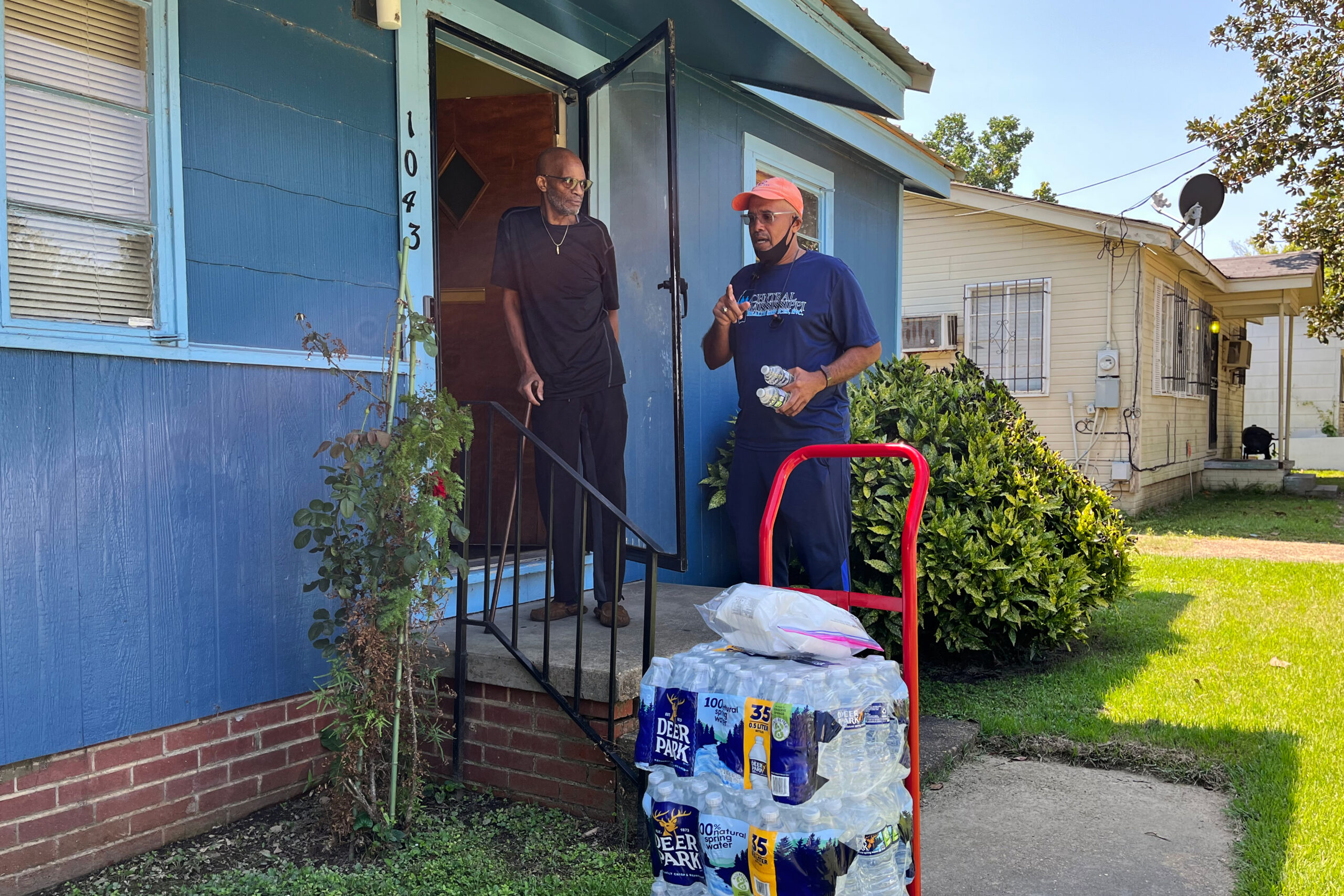
JACKSON, Miss. — In mid-September, Howard Sanders bumped down pothole-ridden streets in a white Cadillac weighed down with water bottles on his way to a home in Ward 3, a neglected neighborhood that he called “a war zone.”
Sanders, director of marketing and outreach for Central Mississippi Health Services, was then greeted at the door by Johnnie Jones. Since Jones’ hip surgery about a month ago, the 74-year-old had used a walker to get around and hadn’t been able to get to any of the city’s water distribution sites.
Jackson’s routine water woes became so dire in late August that President Joe Biden declared a state of emergency: Flooding and water treatment facility problems had shut down the majority-Black city’s water supply. Although water pressure returned and a boil-water advisory was lifted in mid-September, the problems aren’t over.
Bottled water is still a way of life. The city’s roughly 150,000 residents must stay alert — making sure they don’t rinse their toothbrushes with tap water, keeping their mouths closed while they shower, rethinking cooking plans, or budgeting for gas so they can drive around looking for water. Many residents purchase bottled water on top of paying water bills, meaning less money for everything else. For Jackson’s poorest and oldest residents, who can’t leave their homes or lift water cases, avoiding dubious water becomes just that much harder.
“We are shellshocked, we’re traumatized,” Sanders said.
“The water is a window into that neglect that many people have experienced for much of their lives,” said Richard Mizelle Jr., a historian of medicine at the University of Houston. “Using bottled water for the rest of your life is not sustainable.”
But in Jackson an alternative doesn’t exist, said Dr. Robert Smith. He founded Central Mississippi Health Services in 1963 as an outgrowth of his work on civil rights, and the organization now operates four free clinics in the Jackson area. He often sees patients with multiple health conditions such as diabetes, hypertension, or heart problems. And unsafe water could lead to death for people who do their dialysis at home, immunocompromised individuals, or babies who drink formula, said Smith.
Residents filed a lawsuit this month against the city and private engineering firms responsible for the city’s water system, claiming they had experienced a host of health problems — dehydration, malnutrition, lead poisoning, E. coli exposure, hair loss, skin rashes, and digestive issues — as a result of contaminated water. The lawsuit alleges that Jackson’s water has elevated lead levels, a finding confirmed by the Mississippi State Department of Health.
While Jackson’s current water situation is extreme, many communities of color, low-income communities, and those with a large share of non-native English speakers also have unsafe water, said Erik Olson, senior strategic director for health and food at the Natural Resources Defense Council. These communities are more frequently subjected to Safe Drinking Water Act violations, according to a study by the nonprofit advocacy group. And it takes longer for those communities to come back into compliance with the law, Olson said.
And communities often spend years with lingering illness and trauma. Five years after the start of the water crisis in Flint, Michigan, about 20% of the city’s adult residents had clinical depression, and nearly a quarter had post-traumatic stress disorder, according to a recent paper published in JAMA.
Jones, like many locals, hasn’t trusted Jackson’s water in decades. That distrust — and the constant vigilance, extra expenses, and hassle — add a layer of psychological strain.
“It is very stressful,” Jones said.
For the city’s poorest communities, the water crisis sits on top of existing stressors, including crime and unstable housing, said Dr. Obie McNair, chief operating officer of Central Mississippi Health Services. “It’s additive.”
Over time, that effort and adjustment take a toll, said Mauda Monger, chief operating officer at My Brother’s Keeper, a community health equity nonprofit in Jackson. Chronic stress and the inability to access care can exacerbate chronic illnesses and lead to preterm births, all of which are prevalent in Jackson. “Bad health outcomes don’t happen in a short period of time,” she said.
For Jackson’s health clinics, the water crisis has reshaped their role. To prevent health complications that can come from drinking or bathing in dirty water, they have been supplying the city’s most needy with clean water.
“We want to be a part of the solution,” McNair said.
Community health centers in the state have a long history of filling gaps in services for Mississippi’s poorest residents, said Terrence Shirley, CEO of the Community Health Center Association of Mississippi. “Back in the day, there were times when community health centers would actually go out and dig wells for their patients.”
Central Mississippi Health Services had been holding water giveaways for residents about two times a month since February 2021, when a winter storm left Jackson without water for weeks.
But in August, things got so bad again that Sanders implored listeners of a local radio show to call the center if they couldn’t get water. Many Jackson residents can’t make it to the city’s distribution sites because of work schedules, lack of transportation, or a physical impairment.
“Now, all of a sudden, I am the water man,” Sanders said.
Thelma Kinney Cornelius, 72, first heard about Sanders’ water deliveries from his radio appearances. She hasn’t been able to drive since her treatment for intestinal cancer in 2021. She rarely cooks these days. But she made an exception a few Sundays ago, going through a case of bottled water to make a pot of rice and peas.
“It’s a lot of adjustment trying to get into that routine,” said Cornelius. “It’s hard.”
The day that Jackson’s boil-water advisory was lifted, Sanders was diagnosed with a hernia, probably from lifting heavy water cases, he said. Still, the following day, Sanders drove around the Virden Addition neighborhood with other volunteers, knocking on people’s doors and asking whether they needed water.
He said he has no plans to stop water deliveries as Jackson residents continue to deal with the long-term fallout from the summer’s crisis. Residents are still worried about lead or other harmful contaminants lurking in the water.
“It’s like a little Third World country over here,” Sanders said. “In all honesty, we will probably be on this for the next year.”
KHN (Kaiser Health News) is a national newsroom that produces in-depth journalism about health issues. Together with Policy Analysis and Polling, KHN is one of the three major operating programs at KFF (Kaiser Family Foundation). KFF is an endowed nonprofit organization providing information on health issues to the nation.
Suzan Kennedy has smoked marijuana, and says her Wisconsin roots mean she can handle booze, so she was not concerned earlier this year when a bartender in St. Paul, Minnesota, described a cocktail with the cannabinoid delta-8 THC as “a little bit potent.”
Hours after enjoying the tasty drink and the silliness that reminded Kennedy of a high from weed, she said, she started to feel “really shaky and faint” before collapsing in her friend’s arms. Kennedy regained consciousness and recovered, but her distaste for delta-8 remains, even though the substance is legal at the federal level, unlike marijuana.
“I’m not one to really tell people what to do,” said Kennedy, 35, who lives in Milwaukee and works in software sales. But if a friend tried to order a delta-8 drink, “I would tell them, ‘Absolutely not. You’re not putting that in your body.’”
The FDA and some marijuana industry experts share Kennedy’s concerns. At least a dozen states have banned the hemp-derived drug, including Colorado, Montana, New York, and Oregon, which have legalized marijuana. But delta-8 manufacturers call the concerns unfounded and say they’re driven by marijuana businesses trying to protect their market share.
So what is the difference? The flower of the marijuana plant, oil derived from it, and edibles made from those contain delta-9 tetrahydrocannabinol, the substance that produces the drug’s high, and can be legally sold only at dispensaries in states that have legalized marijuana. Similar products that contain delta-8 THC are sold online and at bars and retailers across much of the U.S., including some places where pot remains illegal. That’s because a 2018 federal law legalized hemp, a variety of the cannabis plant. Hemp isn’t allowed to contain more than 0.3% of the psychotropic delta-9 THC found in marijuana.
The concerns about delta-8 are largely focused on how it’s made. Delta-8 is typically produced by dissolving CBD — a compound found in cannabis plants — in solvents, such as toluene that is often found in paint thinner. Some people in the marijuana industry say that process leaves potentially harmful residue. A study published in the journal Chemical Research in Toxicology last year found lead, mercury, and silicon in delta-8 electronic cigarettes.
The FDA has issued warnings about the “serious health risks” of delta-8, citing concerns about the conversion process, and has received more than 100 reports of people hallucinating, vomiting, and losing consciousness, among other issues, after consuming it. From January 2021 through this February, national poison control centers received more than 2,300 delta-8 cases, 70% of which required the users to be evaluated at health care facilities, according to the FDA.
Delta-8 is “just the obvious solution to people who want to have access to cannabis but live in a state where it’s illegal,” said Dr. Peter Grinspoon, a primary care physician at Massachusetts General Hospital and a longtime medical cannabis provider. “You can either get in a lot of trouble buying cannabis, or you can get delta-8.”
Grinspoon described delta-8 as about half as potent as marijuana. But because of the lack of research into delta-8’s possible benefits and the absence of regulation, he would not recommend his patients use it. If it were regulated like Massachusetts’ medical and recreational marijuana programs, he said, harmful contaminants could be flagged or removed.
Christopher Hudalla, chief scientific officer at ProVerde Laboratories, a Massachusetts marijuana and hemp testing company, said he has examined thousands of delta-8 products and all contained contaminants that could be harmful to consumers’ health.
Delta-8 has “incredible potential as a therapeutic” because it has many of the same benefits as marijuana, minus some of the intoxication, said Hudalla. “But delta-8, like unicorns, doesn’t exist. What does exist in the market is synthetic mixtures of unknown garbage.”
Justin Journay, owner of the delta-8 brand 3Chi, is skeptical of the concerns about the products. He started the company in 2018 after hemp oil provided relief for his shoulder pain. He soon started wondering what other cannabinoids in hemp could do. “‘There’s got to be some gold in those hills,’” Journay recalled thinking. He said his Indiana-based company now has more than 300 employees and sponsors a NASCAR team.
When asked about the FDA’s reports of bad reactions, Journay said: “There are risks with THC. There absolutely are. There are risks with cheeseburgers.”
He attributes the side effects to taking too much. “We say, ‘Start low.’ You can always take more,” Journay said.
Journay said that he understands concerns about contaminants in delta-8 products and that his company was conducting tests to identify the tiny portion of substances that remain unknown, which he asserts are cannabinoids from the plant.
An analysis of 3Chi delta-8 oil conducted by Hudalla’s firm last year and posted on 3Chi’s website found multiple unidentified compounds that “do not occur naturally” and thus “would not be recommended for human consumption.” Delta-8 oil is still sold on 3Chi’s site.
Journay said the analysis found that only 0.4% of the oil contained unknown compounds. “How can they then definitively say that compound isn’t natural when they don’t even know what it is?” he said in an email.
“The vast majority of negative information out there and the push to make delta-8 illegal is coming from the marijuana industries,” Journay said. “It’s cutting into their profit margins, which is funny that the marijuana guys would all of a sudden be for prohibition.”
Journay’s criticism of the marijuana industry holds some truth, said Chris Lindsey, government relations director for the Marijuana Policy Project, which advocates for legalization of marijuana for adults. “We see this happen in every single adult-use legalization state,” said Lindsey. “Their established medical cannabis industry will sometimes be your loudest opponents, and that’s a business thing. That’s not a marijuana thing.”
Still, the bans might not be working fully. In New York, which banned delta-8 in 2021, Lindsey said, it’s available at any bodega.
In July, Minnesota implemented a law that limits the amount of THC, including delta-8, allowed in hemp products outside of its medical marijuana program. News reports said the law would wipe out delta-8. But the state cannot “control what’s being sold over the internet outside of Minnesota and shipped in,” said Maren Schroeder, policy director for Sensible Change Minnesota, which aims to legalize recreational cannabis for adults.
Max Barber, a writer and editor in Minneapolis, remains interested in delta-8 despite his state’s restrictions. Even though he could likely obtain a medical marijuana prescription because he has an anxiety disorder and chronic sleep problems, he hasn’t pursued it because pot made his anxiety worse. He used CBD oil but found the effects inconsistent. In March 2021, he tried a 10-milligram delta-8 gummy.
“It got me pretty high, which I don’t enjoy,” he said.
Then he found what he considers the right dosage for him: one-third of a gummy, which he takes in the evening. He said he now gets between six and eight hours of sleep each night, has less anxiety, and is better able to focus. “I have become kind of an evangelist for delta-8 for everyone I know who has sleep problems,” said Barber, who bought enough gummies to last for months after the new law went into effect.
To address concerns about delta-8, the federal government should regulate it and make accessing cannabis easier for consumers, said Paul Armentano, deputy director of the National Organization for the Reform of Marijuana Laws.
He pointed to a recent study in the International Journal of Drug Policy showing that the number of Google searches for delta-8 in the U.S. soared in 2021 and that interest was especially high in states that restricted cannabis use. “In an environment where whole-plant cannabis is legally available, there would be little to no demand for these alternative products,” said Armentano.
Lindsey, of the Marijuana Policy Project, isn’t so sure that would matter. When he first learned of delta-8’s growing popularity in 2021, he thought it would go the way of drugs like K2 or Spice that he said fall between the regulatory rules long enough to get on shelves before eventually getting shut down.
“That didn’t materialize,” said Lindsey. “The more that we understand about that plant, the more of these different cannabinoids are going to come out.” And that, he said, will in turn spur interest from consumers and businesses.
KHN (Kaiser Health News) is a national newsroom that produces in-depth journalism about health issues. Together with Policy Analysis and Polling, KHN is one of the three major operating programs at KFF (Kaiser Family Foundation). KFF is an endowed nonprofit organization providing information on health issues to the nation.