Amazon is among bidders lining up to buy in-home health technology and services provider Signify Health, according to The Wall Street Journal and Bloomberg News.
Others interested include UnitedHealth Group and Option Care Health. Earlier this month, people familiar with the matter told the Journal that CVS Health was seeking to buy Signify Health to expand its in-home health services.
Signify is for sale by auction, with bids due around Labor Day, according to the reports. Signify is reportedly holding a board meeting Monday to discuss the bids. The deal is reportedly valued at $8 billion.
UnitedHealth has submitted the highest bid for Signify, in excess of $30 a share, while Amazon’s offer is close behind, Bloomberg reported.
Signify’s stocks soared on the news, going up by more than 32% by the closing bell on Monday.
WHY THIS MATTERS
Amazon’s interest is the latest sign of the tech giant’s ambition to take on healthcare.
“We think healthcare is high on the list of experiences that need reinvention, Neil Lindsay, SVP of Amazon Health Services, said in a statement about that deal.
“I see this one a lot differently than One Medical,” said Sebastian Seiguer, CEO and cofounder of emocha Health, a digital health platform implemented by Johns Hopkins and 400-plus U.S. health departments.
In the case of One Medical, Amazon purchased a primary care provider with 200 clients, he said.
“I didn’t find that a game changer,” he said.
The acquisition of Signify would be different because it would give all of the companies interested in the purchase access to patients’ homes.
“There is a trove of data there,” Seiguer said.
emocha, a spin-off of Johns Hopkins, is a medication-adherence company that has a window into patients’ homes to understand their medication regime and help them with chronic diseases, which are among healthcare’s most costly conditions.
“The data we’re getting is incredible,” Seiguer said. “Meeting the patient where they are is not only acceptable, it’s happening.”
Doing so makes Signify a very valuable company, Seiguer said. This is especially true for Amazon, which has a foot in the healthcare market, but that market is so far the total focus of a UnitedHealth and CVS.
“For Amazon, they’d have the clinic, the pharmacy and now have home health,” he said.
The home health market is only expected to grow, due to demand spurred by an aging population, growing Medicare Advantage numbers and the need for a less expensive alternative to hospital care. This demand has combined with the needed digital technology and waivers made possible during a public health emergency that showed that providing acute care at home was both possible and saved hospitals money.
THE LARGER TREND
On July 29, Signify Health said it expected to lay off 489 employees starting October 1, with 147 of them located at offices in Texas, New York, Connecticut and South Dakota, and another 342 not assigned to a specific office.
In July, the Dallas-based company said it wanted to focus on its home and community-services business.
Signify uses analytics and technology to offer a value-based healthcare platform that partners with insurers and health systems and offers in-home health evaluations for Medicare Advantage and other government-run managed care plans.
AI-enabled diagnostics company Digital Diagnostics announced Tuesday it had raised $75 million in a Series B funding round led by KKR.
Other participants in the raise include Cedar Pine, Kinderhook, 8VC, Optum Ventures, OSF Ventures, Gundersen Health System, Edward-Elmhurst Health Venture Capital and the University of Iowa.
The company, previously known as IDx, said the Series B brings its total funding pot to more than $130 million. Digital Diagnostics scooped up $33 million in Series A financing in 2018.
WHAT IT DOES
The company got its start in AI-backed eye care with its IDx-DR system used to detect diabetic retinopathy, which can cause vision loss and blindness in people with diabetes. The IDx-DR product received FDA De Novo clearance in 2018.
Two years later, Digital Diagnostics announced it had acquired 3Derm Systems, a company that specialized in providing telemedicine for dermatology. Digital Diagnostics now offers two dermatology-focused tools: DermTriage, which helps providers capture and send skin images to remote dermatologists, and DermSpot, which uses AI to detect some types of skin cancer. The second product is for investigational use only and has not yet been cleared by the FDA.
Digital Diagnostics will use the cash from the Series B to advance its product roadmap, expand distribution and invest in sales and marketing.
“Digital Diagnostics’ AI technology platform is paving the path as a standard of care in the healthcare industry. We’re focused on meeting patients where they want to experience healthcare – from primary care and value-based care groups to retail brick and mortar locations,” the company’s cofounder, president and COO Seth Rainford said in a statement.
“This new investment will help drive the company’s next stage of growth as we double down on our AI product pipeline, allowing for commercial scalability for designing and developing AI the right way.”
MARKET SNAPSHOT
Google has also been exploring using AI for diagnostics. The tech giant is developing its own product for detecting diabetic retinopathy called Automated Retinal Disease Assessment, or ARDA. During a March update on its healthcare tools, Google said it will continue research on ARDA, now focusing on whether photos of the outside of the eye could detect disorders.
Google is also working on an app called DermAssist aimed at helping users identify skin conditions.
Woebot Health, maker of a mental health chatbot, recently appointed Dr. Robbert Zusterzeel as vice president of regulatory science and strategy.
Zusterzeel comes to Woebot from IQVIA, where he served as senior director of U.S. regulatory science and strategy. He’d previously worked at the FDA for nearly 10 years.
“We believe in and have embraced regulation from the start and have expanded our science-based product organization, which makes it the perfect time to add deep expertise to accelerate the process toward clearance. Robbert’s unique mix of clinical, scientific and regulatory skills and passion for this emerging space will be instrumental in bringing our clinically-proven products to market,” Woebot founder and president Alison Darcy said in a statement.
In March, the startup added a $9.5 million investment from Leaps by Bayer, building on a $90 million Series B from July 2021. Woebot also received FDA Breakthrough Device Designation for its investigational postpartum depression digital therapeutic, WB001, last year. Additionally it’s working on a product for adolescent depression, dubbed WB002.
Decentralized clinical trial startup Curebase named Sean Lynch as vice president of clinical operations.
Lynch previously worked as senior director of clinical project management at tech-driven clinical trial company TrialSpark. He’d also served as senior director of global sales and senior project manager at clinical research organization Syntactz.
“Sean is an experienced clinical trial professional with a strong business development background, which makes him ideal to lead our clinical operations,” Curebase founder and CEO Tom Lemberg said in a statement. “His ability to organize and motivate clinical trial teams and his project management training will drive growth for the company while opening up opportunities for more people to participate in medical research.”
Ophelia, which offers virtual treatment for opioid use disorder, appointed Lon Binder as chief technology officer.
Binder most recently was CTO at Cityblock Health, a tech-enabled provider startup aimed at the Medicaid and low-income Medicare populations. He has also served as CTO at vision-care and glasses retailer Warby Parker.
“Lon is an experienced technology leader with a rare combination of vision, creativity, heart and drive,” Zack Gray, cofounder and CEO of Ophelia, said in a statement. “We couldn’t have found a better match for our mission, culture and team. We’re extremely proud to work with him and to build the core technology together that will power the future of addiction treatment.”
Suki, maker of an AI-backed healthcare documentation assistant, announced two new hires for its product team.
Belwadi Srikanth will serve as vice president of product and design. He worked at Google for more than 15 years, where he worked as director of product management.
Anmol Rastogi was named senior director of product management. He’d previously served as vice president of products at Indian online loan company Lendingkart and as India product lead with financial services firm Tala.
“At Suki, we recognize that winning products come from teams comprised of deep talent. We want to attract the best in the business as we aim to bring joy back to medicine by alleviating physician burnout,” Punit Soni, founder and CEO of Suki, said in a statement. “These two new product leads are key appointments who are more than prepared to provide the leadership that will make our product vision a reality in the coming years.”
Home and senior care platform Honor Technology named Andrew Steinberg as chief financial officer.
He previously worked at investment banking firm Evercore, where he was a managing director focused on M&A and capital markets advisory in software, AI and machine learning, medtech and travel tech.
“I am thrilled to welcome Andrew with his deep breadth of knowledge to our executive leadership team,” Honor CEO and cofounder Seth Sternberg said in a statement. “His alignment with Honor’s mission to expand the world’s capacity to care will position us to optimize the massive opportunities we are experiencing in the home care market and enhance our ability to deliver on this vision.”
In October, Honor announced it had raised $70 million in a Series E round and $300 million in debt financing, earning the company unicorn status with a valuation of more than $1.25 billion. The company also recently acquired home care provider Home Instead.
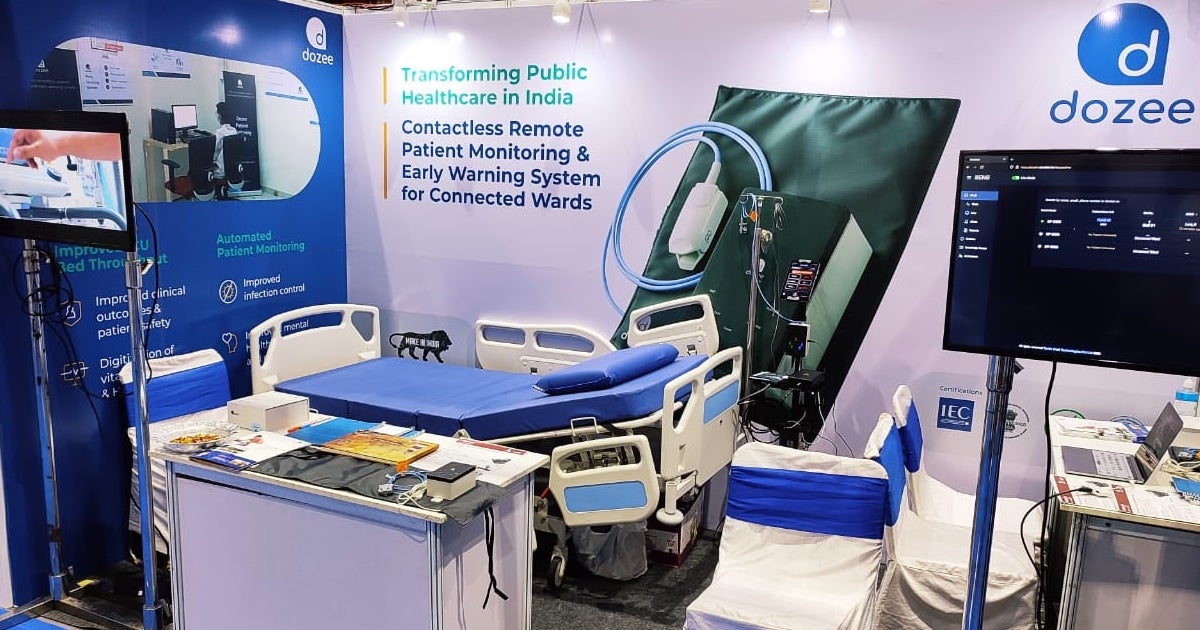
Indian connected health device maker Dozee has partnered with Midmark India, one of the biggest hospital bed manufacturers in South Asia, to launch a connected bed platform for non-ICU settings.
WHAT IT DOES
According to a press statement, their smart bed will enable hospitals to continuously monitor patients’ conditions in step-down ICUs and other non-ICU wards. The connected bed is integrated with Dozee’s AI-powered contactless sensor which is placed under a mattress to track a patient’s vital parameters, including heart and respiratory rates, temperature, oxygen saturation, and ECG, among others. It also has an early warning system that alerts care providers for timely intervention.
Additionally, the smart bed can be connected to a central command centre and a hospital’s HMIS.
Dozee claims its AI-powered RPM sensor has a clinical-grade accuracy of 98.4%.
WHY IT MATTERS
Today, India has around two million hospital beds and 125,000 ICU beds. According to Dozee, about 95% of these beds are being poorly monitored, leading to a reduced ability to detect a patient’s deteriorating conditions early.
As in-hospital patients spend most of their time on a hospital bed, designing a bed that is integrated with an AI-powered sensor is “the most efficient and effective method to automate and digitalise patient monitoring,” the company claimed.
A recent report found that introducing smart connected beds can help hospitals in India save up to $268.7 million each year while addressing shortages in ICU beds and staff.
THE LARGER TREND
At present, Dozee is carrying out its MillionICU programme which aims to convert one million hospital ward beds across India into connected beds.
It is also in the process of acquiring the US Food and Drug Administration’s 510(k) approval for its sensor-based monitor, as well as several patents for detecting and predicting respiratory, cardiac, and neurological patterns, and providing in-depth analysis of vital signals for early warning of health deterioration.
In the aftermath of the Federal Bureau of Investigation’s (FBI’s) unprecedented August 8, 2022, raid1 on former president Donald Trump’s Mar-a-Lago home in Florida, many are starting to question the FBI’s actions, not just in this case, but in a more general sense.
What’s become clear through this raid is that the FBI has been weaponized to hunt down and neutralize political opposition. On the surface, Republicans appear to be the target, but more specifically, the target is really anyone who disagrees with and wants to stop what we now know is a global coup by an unelected technocrat elite.
The raid on the former president shows that no one is safe from government overreach (or more precisely, the overreach of a government captured by the globalist cabal). This is made all the more disturbing by the fact that the FBI has been surveilling millions of American citizens — without warrants or proper cause.
Public assurances aside, the agency has repeatedly been caught acting lawlessly (the FBI-infiltrated kidnapping plot of Gov. Gretchen Whitmer being just one of the more recent examples2), and that lawless behavior is a piece of evidence that suggests it’s been captured by powers that do not have the welfare of American citizens at heart.
FBI Illegally Spies on Millions of Americans
According to the American Civil Liberties Union, the FBI is violating Americans’ privacy “on an enormous scale.” As reported by Bloomberg,3 the 2022 annual transparency report by the Office of the Director of National Intelligence (ODNI) reveals the FBI, between December 2020 and November 2021, scoured private emails, texts and other electronic communications of some 3.4 million U.S. residents, without obtaining a single warrant.
Between December 2019 and November 2020, just under 1.3 million Americans were surveilled in this manner. The report also notes there’s been a sharp uptick in the number of times government officials asked for the identity of individuals surveilled to be revealed, a practice known as “unmasking.”
Supposedly, FBI agents were looking for signs of potential terrorist activity and sought to prevent hacking attacks. But in so doing, they violated the constitutional privacy rights of millions, and considering the hacking attacks that have occurred anyway, this mass surveillance doesn’t seem to be achieving its stated aim.
Privacy Rights Help Prevent Tyrannical Overreaches
While some say you have nothing to worry about if you’re not doing anything wrong, that old adage has long since worn out because, again, we’re dealing with an agency whose job it is to take out political opponents. You don’t need to do anything illegal or criminal to be targeted for neutralization.
“Wrong-think” is now a “crime” in and of itself, so you better believe that privacy matters. You do not want the FBI to rifle through your personal correspondence. They will find something, some sentence, some idea, some opinion, with which to hang you, figuratively speaking.
Just look at Dr. Simone Gold. She’s now serving a prison sentence over what amounts to medical opinion. She didn’t do anything criminal or illegal. She’s a political prisoner.
But by “political prisoner,” I’m not exclusively referring to opponents of the Democrat Party. The true political opposition parties in this day and age are the technocratic Great Reset insiders (who have infiltrated all political parties) on one side, and the rest of us, who see the playbook and don’t want to submit to their planned slave system, on the other.
Congress Must Protect Americans’ Fourth Amendment Rights
In response to the ODNI’s report, Ashley Gorski, a senior attorney with the ACLU’s National Security Project stated:4
“Today’s report sheds light on the extent of these unconstitutional ‘backdoor searches,’ and underscores the urgency of the problem. It’s past time for Congress to step in to protect Americans’ Fourth Amendment rights.”
According to Bloomberg,5 the “authority” used to surveil Americans by the millions was Section 702 of the Foreign Intelligence Surveillance Act (FISA). It’s set to expire at the end of 2023, unless Congress renews it. Clearly, they shouldn’t, as it’s being grossly misused.
“Show me the man and I’ll show you the crime,” Lavrentiy Beria, Joseph Stalin’s secret police chief, once said.6 Beria oversaw the expansion of Stalin’s gulags for political dissidents, and bragged he could prove criminal conduct by anyone, anywhere. Framing innocent people is nothing new. It’s not even all that difficult, especially if you have access to everything a person has ever said, thought or done.
CIA Sued Over Fourth Amendment Rights Violations
The Central Intelligence Agency is also making headlines, and for the same disturbing reason. As reported by Newsweek,7 the CIA illegally surveilled and recorded Julian Assange’s conversations with American attorneys, journalists, doctors, celebrities and at least one U.S. Congressman while holed up in the Ecuadorian Embassy in London to avoid extradition.
The CIA also obtained copies of visitors’ passports, photographs of the IMEI and SIM card numbers in their cell phones (which allows devices to be identified on any network and are essential for surveillance targeting), as well as copies of the private data from their phones and other electronic devices brought into the embassy.
Passports and electronic devices had to be handed over to security guards and could not be brought inside. Unbeknownst to visitors, everything was then meticulously photographed and copied in their absence.
Four Americans who visited Assange are now suing then-CIA director Mike Pompeo in Spanish High Court, seeking damages for violation of their Fourth Amendment rights against unreasonable search and seizure. The agency as a whole is also listed as a defendant, for the purpose of forcing them to expunge all collected records.
Plaintiffs include two New York attorneys on Assange’s legal team, and two American journalists who interviewed him. Lead plaintiff, attorney Margaret Kunstler, told Newsweek:8
“As a criminal attorney, I don’t think that there’s anything worse than your opposition listening in on what your plans are, what you intend to do, on your conversations. It’s a terrible thing. It’s gross misconduct. I don’t understand how the CIA … could think that they could do this. It’s so outrageous that it’s beyond my comprehension.”
Attorneys aren’t the only ones bound by confidentiality. Doctors and journalists also rely on confidential relationships with patients and sources, so the arbitrary copying of everything on their private devices is a gross privacy violation against any number of individuals they may have had interactions with.
CIA Crossed Lines That Shouldn’t Be Crossed
The four plaintiffs are also seeking damages against UnderCover Global, a Spanish security firm that provided embassy protection. The lawsuit was launched after whistleblowers from the firm came forward, admitting they illegally spied on Assange’s visitors, copied their passports and electronic devices, and then passed everything on to the CIA.
UnderCover Global CEO David Morales allegedly was being paid “substantial sums of money to share surveillance data with the CIA.” According to Newsweek:9
“Legal experts, including a former senior intelligence official, told Newsweek that the allegations in the lawsuit, if proven, show the CIA crossed lines drawn to protect American citizens from surveillance by overzealous intelligence agencies.”
According to Tim Edgar, professor at Brown University and former deputy privacy and civil liberties officer for the ODNI, the copying of visitors’ cell phone data is particularly difficult to defend.
“That seems to me like a very excessive amount of collection,” he told Newsweek. “What’s the expected intelligence value from that? It’s a high bar to justify. If it’s just everyone who visited Assange, then it’s not like you have a specific reason to look at a particular phone.”
During one visit, actress Pamela Anderson wrote down her email and Apple ID passwords to get help with technical security from Assange. A photograph of the slip of paper with her passwords and PIN numbers was given to the CIA.
This hardly seems justifiable from a national security standpoint. It smacks of perversion, really, and one wonders how many CIA agents have sifted through Anderson’s private messages for no other reason than pure titillating entertainment.
Seizure of Privileged Material Makes Fair Trial Impossible
But getting back to more serious matters, the CIA’s blanket data collection “may make it impossible for Assange to get a fair trial,” attorney Richard Roth, another plaintiff in the lawsuit, told Newsweek. Making matters even worse, when Assange was arrested by British police in April 2019, the embassy turned over all of Assange’s legal papers and computers to the U.S. Department of Justice. As noted by Roth:10
“When a federal prosecutor comes after a lawyer with a search warrant and seizes their devices, there are multiple layers of review and protection for privileged lawyer-client communications. None of that happened here. They just grabbed everything.”
When done in accordance to law, a court will typically appoint a special master, someone who is independent from the prosecuting government, to make sure privileged communications, such as lawyer-client communication, are segregated from the communication handed over to the prosecution.
Alphabet-Soup Agencies and The Great Reset
Since the beginning of the COVID pandemic, we’ve seen ever more egregious overreaches by government. Intelligence agencies have gone so far as to slap a “domestic terrorist” label on anyone who expresses an opinion that counters the narrative directed by the globalist cabal. This is why privacy rights must be protected at all costs.
Global organizations such as the International Grand Committee on Disinformation (IGCD), which consists of “an international array of legislators, policy advisers, and other experts,” are working together to end free speech worldwide, and every click, comment and online search can and will be used against you.
The digital identity they want to roll out depends on the same kind of intrusive mass surveillance the FBI and CIA have been caught doing, but covering every person on the planet, and without any legal barriers impinging on the kind of information they can gather about you.
In the end, if the technocratic cabal gets their way, you won’t even be able to use a public toilet without a compliance passport giving you the green-light.11 That’s already the case in China, as you can see in the video below.
Tell Congress to Rein in Out-of-Control Surveillance Powers
Surveillance powers have always been sold to us as something that will protect us. It’s high time to realize we’ve been sold a lie. All the surveillance acts are, in fact, being used against us, and for all we know, that’s what they were intended for all along.
After all, The Great Reset didn’t emerge out of nothing, overnight. It’s a plan that’s been in the works for decades, and the digital surveillance network required for it to function as an “open-air prison” has been built up around us for just as long.
We were fooled into thinking it was for our own good, for our protection, but it’s not. It’s to ensure we won’t have the ability to rebel when the final pieces of the Great Reset plan are put into place.
As suggested by Gorski with the ACLU, we need to urge members of Congress to step in and revoke or severely restrict government surveillance powers, and reaffirm the absolute supremacy of the U.S. Bill of Rights. These are rights that cannot be taken from us, come hell or high water — or deep state billionaires with egos the size of Mount Everest.
The way things look, many government agencies — including the FBI and CIA — also need to be dismantled, and only put back together if absolutely necessary, and if so, in new, more limited forms with greater public oversight and more checks and balances.
Make no mistake, this is the highest-stakes game in human history. We’re facing nothing short of the enslavement of all of humankind, and our intelligence agencies are proving — through their questionable, biased and often lawless actions — which side they’re really on.
TUESDAY, Aug. 23, 2022 (HealthDay News) — Differences in lifestyles and other factors are linked to big gaps in life expectancy between residents of various U.S. states, 2020 data shows.
That could mean almost a decade more or less of life, a new report from the U.S. Centers for Disease Control and Prevention shows.
“Among the 50 states and D.C., Hawaii had the highest life expectancy at birth, 80.7 years in 2020, and Mississippi had the lowest, 71.9 years,” concluded a team led by Elizabeth Arias, of the CDC’s Division of Vital Statistics.
For the report, the researchers pored over data from each state on mortality rates, as well as 2010 census data and Medicare data, to tally up life expectancy at birth per state.
Much of the differences fell along regional lines, with Americans living in Hawaii, the Northwest, California and the Northeast living the longest. People living in the Southeast typically had the shortest expected lifespans.
The top 10 longest-lived states, by average life expectancy in years, are:
Hawaii — 80.7
Washington — 79.2
Minnesota — 79.1
California — 79
Massachusetts — 79
New Hampshire — 79
Vermont — 78.8
Oregon — 78.8
Utah — 78.6
Connecticut — 78.4
The states ranking in the bottom 10, by average life expectancy in years, are:
Mississippi — 71.9
West Virginia — 72.8
Louisiana — 73.1
Alabama — 73.2
Kentucky — 73.5
Tennessee — 73.8
Arkansas — 73.8
Oklahoma — 74.1
New Mexico — 74.5
South Carolina — 74.8
As seen in other tallies of national life expectancy data, the pandemic played a big role in shrinking American life spans.
“From 2019 to 2020, life expectancy at birth declined for all states and D.C,” the CDC team noted.
Some states were hit harder than others: For example, in New York life spans fell by three years during the pandemic, and in Louisiana life expectancy declined by 2.6 years.
On the other hand, Hawaii seemed relatively spared: In the Aloha State, life expectancy fell by just 0.2 years between 2019 and 2020. In New Hampshire, the decline was just 0.4 years, the report found.
Women still tend to outlive men, living an average of 5.7 years longer than their male peers in 2020, the researchers noted.
The study was published Aug. 23 in National Vital Statistics Reports.
More information
Hopkins Medicine has tips to help you lead a long, healthy life.
SOURCE: National Vital Statistics Reports, Aug 23, 2022
Michael Snyder, PhD, director, Stanford Center for Genomics and Personalized Medicine.
PLOS Biology: “Digital Health: Tracking Physiomes and Activity Using Wearable Biosensors Reveals Useful Health-Related Information.”
FastCompany: “These Vibrating Yoga Pants Will Correct Your Downward Dog.”
Business Insider India: “Xiaomi’s first smart glasses can take calls, capture photos, translate text and more.”
Hexoskin.
The New York Times: “Can Technology Help Us Eat Better?”
Veena Misra, PhD, director, Center for Advanced Self-Powered Systems of Integrated Sensors and Technologies (ASSIST), North Carolina State University.
International Data Corporation: “Wearables Market Sees First Decline at Beginning of 2022 as Demand Normalizes, According to IDC.”
Michael Daniele, PhD, associate professor of electrical and computer engineering, North Carolina State University.
JACC: Clinical Electrophysiology: “The WATCH AF Trial: SmartWATCHes for Detection of Atrial Fibrillation.”
Harvard Medical School: “Can a smart watch diagnose a heart attack?”
Alper Bozkurt, PhD, professor of electrical and computer engineering, North Carolina State University.
Stanford Healthcare Innovation Lab: “Infectious Disease and COVID-19 Wearables Study.”
Statista: “The Global Wearables Market Is All About the Wrist.”
Jesse Jur, PhD, director, ecosystem technology, Advanced Functional Fabrics of America; head of nano-extended textiles research, North Carolina State University Wilson College of Textiles.
Athos: “Building Better Athletes.”
Sensoria: “Smart Sock v2.0 & Sensoria Core.”
Biotricity: “Bioheart.”
Nanowear: “Smarter Care. Anywhere.”
National Institute of Diabetes and Digestive and Kidney Diseases: “Continuous Glucose Monitoring.”
Abbott.
John Rogers, PhD, professor of materials science and engineering, biomedical engineering, and neurological surgery, Northwestern University.
Sibel Health: “Better Health Data for All,” “Sibel Health Announces FDA Clearance for ANNE One – A Flexible, Wireless Vital Signs Monitoring Platform.”
William Macharia, MD, pediatrician, Aga Khan University, Nairobi, Kenya.
Zhenan Bao, PhD, professor of chemical engineering, Stanford University.
Jason Heikenfeld, PhD, professor of electrical engineering, University of Cincinnati.
This is the second in a two-part series on the future of wearable tech. Part one (read here) explores what future wearables will look like and what they will accomplish.
Aug. 23, 2022 – Pick up your smartphone. Yes, you’ve held it a thousand times, it’s like an extension of your hands. But let’s do an experiment: Grab it by both ends and stretch it out as far as it will go. Now twist it. Wrap it around your forearm. Cool, right? Now let it snap back.
Wait, what do you mean your phone won’t bend and stretch?
That little exercise in imagination illustrates what’s possible in the realm of wearables – electronic devices we wear close to or on our skin. Today, smartwatches and phones are still hard, inflexible blocks of plastic and metal. Tomorrow, all that will change.
“In wearables, flexibility, stretchability, and washability are all key requirements,” says Veena Misra, PhD, a professor of electrical engineering at North Carolina State University and director of the ASSIST Center, a federally funded research institute that develops wearables to aid health.
“We are seeing these kinds of developments across the board,” Misra says, “and you can track that in the number of [research] papers coming out in wearables. That number is just growing exponentially.”
We tend to think of wearables as fun consumer gadgets, but a growing school of thought says they will drastically improve health care – providing a vehicle for continuous, long-term monitoring to predict adverse events and closely track disease, improving treatments and health outcomes worldwide.
For that to happen, wearables must work seamlessly with our bodies. That means making conventionally hard, rigid devices and systems more like human skin – soft, bendable, and stretchable.
How does one manage that? By redesigning electronics at the molecular level, miniaturizing sensors, and creating unheard-of power sources to support what engineers call a skin-like “form factor.”
To coin a phrase, it ain’t science fiction. It’s happening as we speak, and the new products these advances will create – potentially starting in health care and crossing over to the consumer wellness market – could become as normal as that clunky, inflexible phone you can’t put down. Here’s how.
Why Does Form Factor Matter?
A wearable that conforms to your body is better in two crucial ways: It’s less obtrusive for the user, and it allows for a more reliable measurement.
“Sensors and sensor systems a lot of times suffer from mechanical mismatch,” says Alper Bozkurt, PhD, an electrical engineer, and Misra’s colleague, at NC State and ASSIST. “If you have soft tissue that’s moving around, but a rigid sensing device that’s not moving around, your measurement may not be reliable.”
That’s because all that extra banging around between the device and your body shows up as “noise” – meaningless information that can distort the measurement and may lead to false conclusions.
Then there’s the “human factor,” Bozkurt notes – the issue of compliance.
“One of the challenges is, we design things in the lab, test everything, and bring it to our medical operators, and they raise their eyebrows and say, ‘No, my patients are not going to wear this,’” Bozkurt says. “You cannot imagine a future for wearables without solving the compliance issue.”
People want a device that’s comfortable, doesn’t stick out, and requires little interaction, Bozkurt says. “We call it wear-and-forget.” You might compare this to wearing a Band-Aid – sure, you notice it occasionally, but mostly it fades into the background, without interfering with your daily tasks and without others even noticing it’s there.
A wristwatch may seem comfortable enough, but applications extend beyond what a wristwatch can enable, notes Michael Daniele, PhD, a fellow member of the NC State / ASSIST team, who studies soft nanomaterials to engineer devices that monitor, mimic, or supplement body functions.
Wearable devices are being developed to help patients and even treat them in ways “in which the patient’s comfort is a priority,” he says.
Take the use of electrodes and electronics in lower-limb prosthetic sockets as an example, he says. “Picture a few metal screws pressing into your limb that you are supporting all of your weight with, or picture filling your shoe with an array of rocks. That’s the state of wearables for such a user.”
OK, So How Do You Make Electronics Soft and Stretchy?
One way is to take hard things used to monitor health – like silicon chips – and make them so thin they become flexible. Among the first to demonstrate this kind of material technology in skin-like wearable devices was John Rogers, PhD, in 2011, in a landmark Science paper titled Epidermal Electronics.
“We’d been pretty active in that field for a number of years,” says Rogers, who at the time was at the University of Illinois and has since moved to Northwestern University. “But then we realized that even silicon – which most people think of as a very rigid, brittle rock-like material – can be made into forms and shapes, and at thicknesses that allow it to be bent and … even stretched.”
Rogers, whose team has several applications in development, uses an etching technique to shave off the surface of a semiconductor wafer.
“It turns out all the action in those integrated circuits is happening on that very-near-surface layer,” he says. “All of the silicon underneath is just serving as a mechanical support.”
That critical layer is then embedded into an elastic polymer matrix, Rogers explains, allowing them to design fully functioning systems that can bend, twist, and stretch.
Still others use a different approach, building electronic parts from scratch out of materials that are inherently soft and stretchy – polymers. This is the kind of work Stanford chemical engineer Zhenan Bao, PhD, does, using a range of polymers with conducting properties.
“In our work, we gain a fundamental understanding on how to design plastic molecules so that they have the functions and properties we want,” Bao says. For skin-like electronics, the plastics are designed – on a molecular level – to be conductive, elastic, and soft.
One of the newest creations out of Bao’s lab is a polymer that lights up, enabling skin-like visual displays. She imagines a skin patch with the display right on it, or going further, a telehealth appointment where the doctor could see and feel the texture of the patient’s skin via a three-dimensional, lifelike display. Example: One exam to check for severe water retention in heart failure patients is to press on the skin to see if it bounces back, Bao says. The patient would wrap an electronic sticker around their leg and press on it to generate a display for the off-site doctor. “The doctor would be able to feel on the display the texture of the skin that the patient would feel,” she says – from a remote location.
“Of course, this is still far away,” Bao notes. “But that’s what I think would be possible that can be enabled by skin-like displays and sensors.”
More Wild Advances: Liquid Metals, Plasma Bonding, Chemical Sensors
Still other developments are continuing. Advancements in liquid metals allow for stretchable conductive wires. Textile-based, moisture-resistant antennas can transmit data while worn close to the skin. Methods like water vapor plasma bonding attach thin metals to soft polymers without losing flexibility or using high temperature and pressure that can damage super-thin electronics.
Sensors are improving too – that’s the part that interacts with whatever you’re trying to measure. Most commercial wearable sensors are mechanical (used to track physical activity) or optical (heartbeat, pulse oximetry). But chemical sensors are in development to measure internal markers in the body as well. These are critical in revealing the full picture of your health, says Joseph Wang, a doctor of science and professor of nanoengineering at the University of California, San Diego, who has published research on biosensors and wearable devices.
For example, a rise in lactate and drop in blood pressure can mean you have septic shock. Measuring potassium levels can give information about heart rate changes. And combining blood pressure and glucose measurements may reveal more about metabolic health than either one alone. “If you combine them, you get better evidence,” Wang says.
This is where the new tech can get really geeky. Chemical sensors are made from some of the most exotic nano materials, including graphene, carbon nanotubes, and gold nanoparticles, Daniele says. Some (glucose sensors in particular) use enzymes that bind to target molecules. Others use aptamers, short single strands of DNA or RNA.
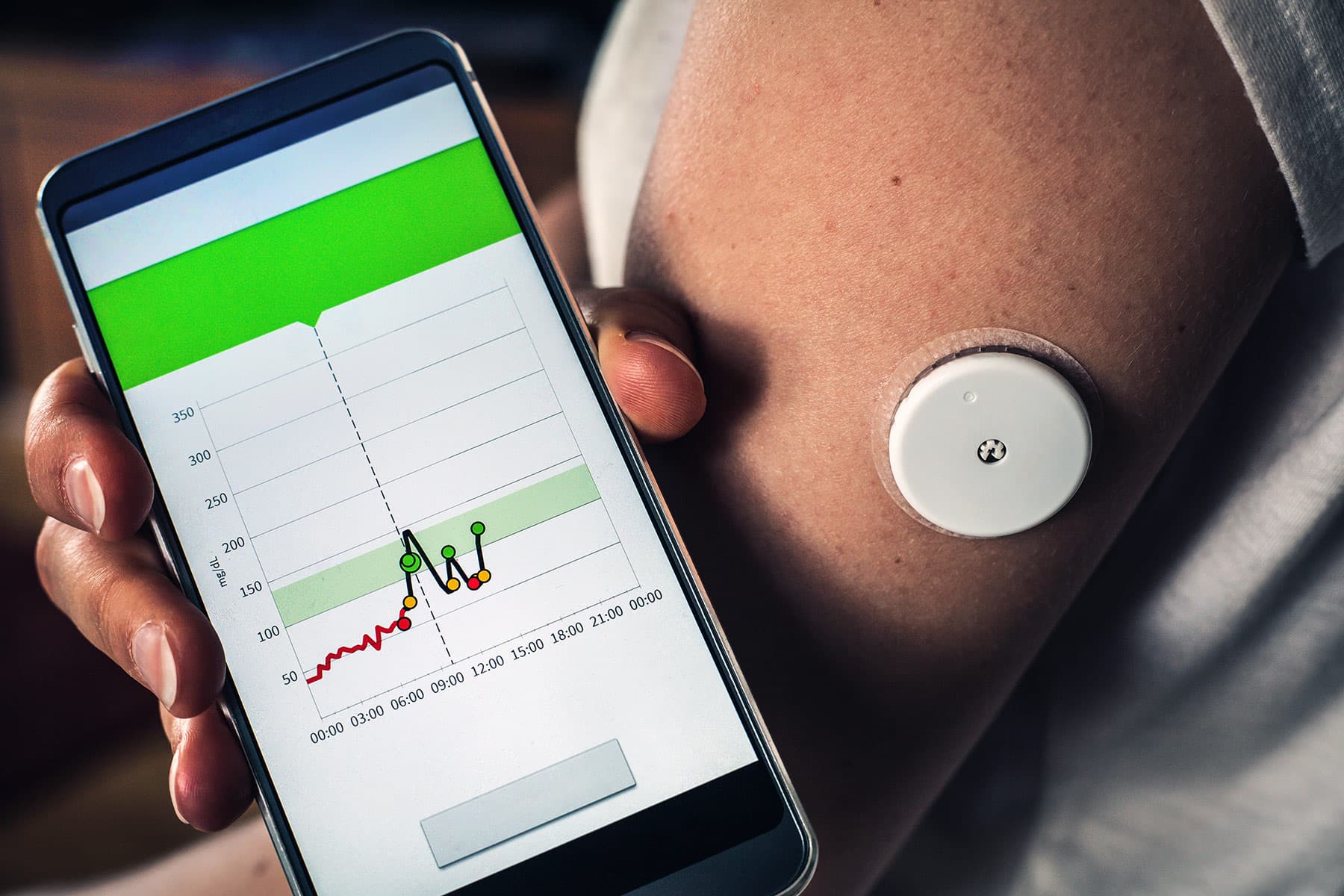
Chemical sensors typically work with body fluid such as sweat, saliva, tears, or – as is the case for continuous glucose monitors – interstitial fluid (the liquid between the cells in your body).
“Most of the things you want to measure in blood you’ll be able to do in interstitial fluid if you have the sensor technology,” says Jason Heikenfeld, PhD, a professor of electrical engineering at the University of Cincinnati. Just imagine having a full blood workup done by simply putting on a skin patch, no blood sample required.
Heikenfeld has also investigated sweat, which appears useful for measuring hormone levels (such as those that regulate stress, sex, and sleep) and prescription drug monitoring – that is, monitoring levels of a drug in the body and tracking how quickly it’s metabolized, he says.
Sweat sensors may also find a place in at-home tests, Heikenfeld says. “If there was a people’s choice award for bio fluids, sweat would win,” he says. “We don’t want to do blood, don’t want to drool in a cup, don’t want to mess with a urine stick. Tears, forget it. The test would be a simple patch you slap on your arm; collect some fluid, put it in an envelope, and mail it to a lab.”
Wearable Power Sources: Beyond AA Batteries
If you want to create a stretchable, flexible electronic device, you’ll need a stretchable, flexible, and even washable way to power it. Many of today’s wearables, like smartwatches, are powered by very small but still rigid batteries, Bao says. Hence the bulky form.
“There’s certainly a big demand for high-energy density, truly flexible batteries,” she says.
This demand has prompted researchers from across the globe to develop batteries that can stretch and flex. To name just a few recent examples, Canadian researchers developed a flexible, washable battery that can stretch to double its original length and still function. In Singapore, scientists created a paper-thin biodegradable zinc battery that you can bend and twist and even cut with scissors – like any piece of paper – and it will still work. Still others are engineering batteries into long strips that can be used in smart clothing.
Another option is wireless power, Bao says. The battery does not need to be in the device – it can be in your clothes or your pocket and still power the sensors. Bao’s lab at Stanford has developed a sticker-like wearable called BodyNet that can be charged using radio-frequency identification, the same technology used to control keyless entry to locked rooms.
Still others – like Misra and her colleagues at ASSIST – are exploring battery alternatives like energy harvesting, or converting body heat, solar energy, or movement into power.
Misra is working on an energy generator that can convert the temperature difference between your skin and the room into energy to power a device. “You have a skin temperature of, say, 98.6 degrees,” she says. “The temperature in your room is probably about 70 degrees Fahrenheit. And that temperature difference of 28 degrees can be dropped across a device called a thermoelectric generator, which can convert that energy difference into power.”
Just imagine: No more worrying about the battery dying, getting wet, or having to be recharged. “Your body is the battery,” Misra says.
What’s Next
For wearables to truly reach their full potential, all the parts must become more power-efficient and come together in a flexible, stretchable package, Misra says. They also must be designed in such a way that millions, if not billions, of people will want to wear them.
Just as important: Devices destined for the medical world must provide top-quality data. If the collected data isn’t gold standard, what good is it? And all that data needs to be turned into useful information. That’s where data analytics, machine learning, and artificial intelligence come in. “These are not unsolvable problems,” Misra says, “but they’re exciting problems that a lot of the community is working on.”
Bottom line: Our wearable future is well on its way.