The 10 Best Dumbbell Exercises to Hit Your Lats

The 10 Best Dumbbell Exercises to Hit Your Lats

[ad_1]

Even if you skipped Latin class or missed boarding school altogether, most lifters in the gym are familiar with their lats — the large, fan-shaped muscle that occupies most of your back. This makes sense because “latissimus dorsi” translates to “broadest muscle of the back side.”

Well-developed lats enhance the breadth of your physique by filling the space between your rib cage and arms. The lats support your low back and transmit energy between your hips and shoulders during athletic endeavors.

Finally, the lats are massive contributors to upper body pulling strength. Whether hoisting yourself over a wall at an obstacle course race or drawing in an opponent during a grappling sport, the lats are as useful as they are aesthetic.
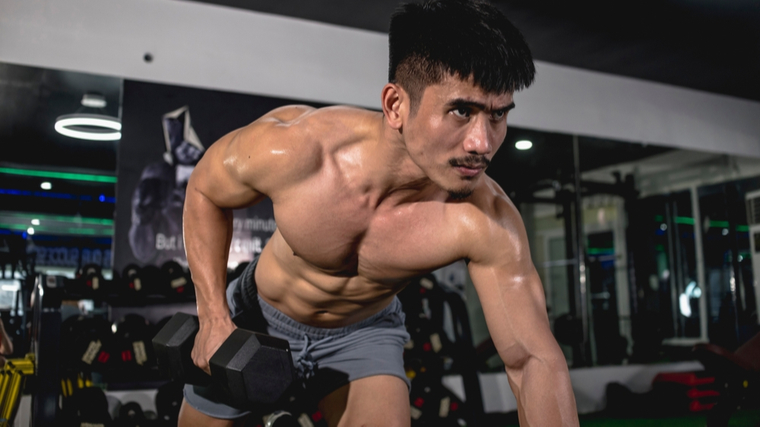
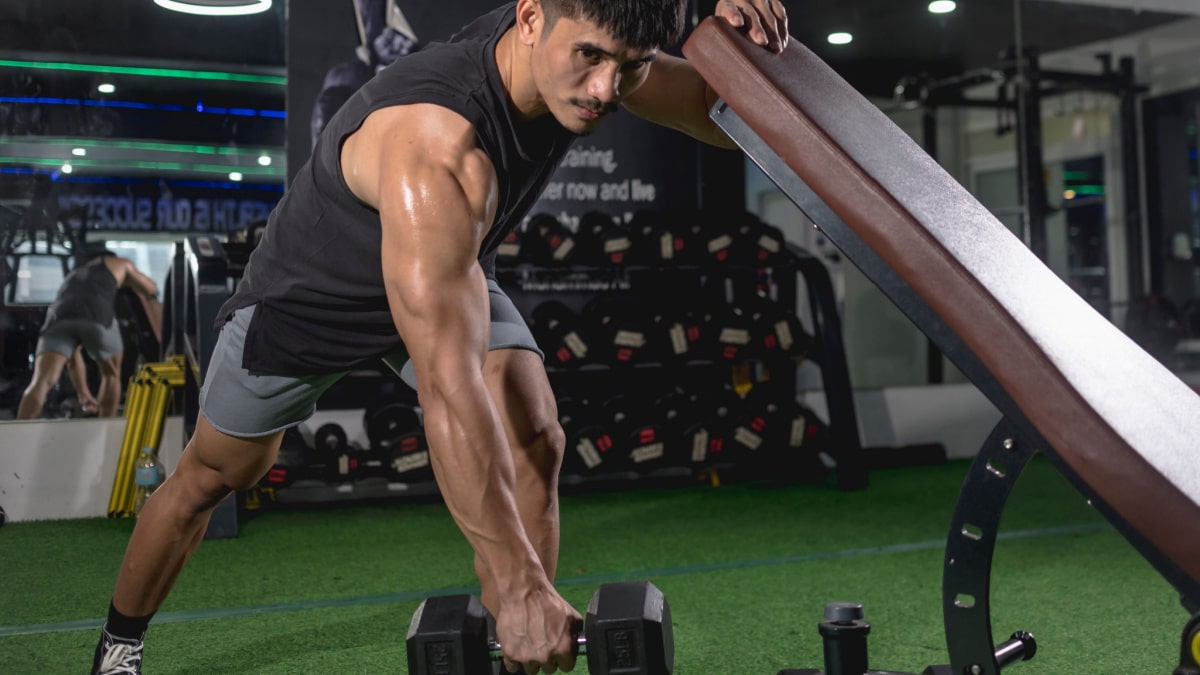
Muscular man performing dumbbell row exercise in gymMuscular man performing dumbbell row exercise in gym
Credit: MDV Edwards / Shutterstock

We all need a strong, substantial set of lats. You might already train them with pull-ups and pulldowns. Sure, those are great, but there’s an assortment of effective lat exercises that only require a few dumbbells. Here are the best dumbbell exercises to hit your lats.

10 Best Dumbbell Exercises for Lats

Bent-Over Dumbbell Row

Sometimes the simplest exercise is the most effective. The bent-over dumbbell row delivers a heavy training stimulus to the lats and other muscles of the back while reinforcing hip hinge mechanics. In fact, the bent-over row shows comparable low back extensor muscle activity to the Romanian deadlift (RDL). (1)

Unlike the barbell row, which is traditionally performed with an overhand grip on a straight bar, the dumbbell version allows an elbow-friendly neutral forearm rotation. To better target the lats, pull your elbows straight back out to the side. (2)

How to Do the Bent-Over Dumbbell Row

Stand upright while holding a dumbbell in each hand. Bend forward at the hips and keep a slight bend in your knees. Allow the dumbbells to hang from your straight arms, slight in front of your knees.

Row both dumbbells toward the bottom of your ribcage by pulling the elbows and shoulders back. Keep your trunk at a constant angle to the floor. Don’t jerk your upper body up and down to move the weight.

Benefits of the Bent-Over Dumbbell Row

  • Maintaining the hip hinge (bent forward) position trains your glutes and spinal erectors while you row. (1)(3)
  • Rowing from the bent-over position requires greater spinal stiffness, which may make the bent-over dumbbell row a great accessory exercise for those training to improve their deadlift. (3)
  • Depending on your flexibility, the bent-over dumbbell row may also provide the bonus effect of a mild hamstring stretch.

Single-Arm Dumbbell Row

Closely related to the bent-over dumbbell row, the single-arm dumbbell row allows you to adopt a large stance and brace your off-side arm on your leg.

Tasked with managing only one dumbbell at a time, you can focus attention on the target muscles including the lats, teres major, rhomboids, middle trapezius, and posterior deltoids (upper back muscles). Focusing on the mind-muscle connection has been shown to be helpful for engaging the lats. (4)

How to Do the Single-Arm Dumbbell Row

Begin with one dumbbell on the floor. Take a staggered stance with your front foot next to the dumbbell. Your working arm will be opposite your front foot — left foot forward with your right arm working, and vice versa.

Lean forward and brace your non-working forearm on your front thigh. Grab the dumbbell with your working arm and row the dumbbell toward your back hip. Maintain a neutral grip with your palm facing your front leg. Lower the weight to a full stretch, nearly reaching ankle-level.

Benefits of the Single-Arm Dumbbell Row

  • Rowing one arm at a time with your off-side forearm supported on your thigh helps lock in good form by discouraging hip extension.
  • Unilateral (single-arm) rowing with off-side support is easier on the low back. It reduces lumbar erector muscle activity and likely decreases extension forces and shear forces experienced by the low back. (5)

Dead-Stop Dumbbell Row

Think of the dead-stop dumbbell row as a relative of the barbell-based Pendlay row. Like its more popular sibling, each repetition is performed from the floor, which builds raw strength at long muscle lengths.

And like the Pendlay row and the bent-over dumbbell row, discussed above, the exercise requires deep hip flexion and adequate hamstring flexibility. But unlike the bent-over dumbbell row, which can tax the lumbar region, the dead-stop dumbbell row offloads the low back between each repetition while the weight is reset on the ground.

How to Do the Dead-Stop Dumbbell Row

Stand with two dumbbells slightly outside of your toes. Assume a deep hip hinge position, bent at the waist, with your back as straight as possible.

Grab the dumbbells and row them alongside your thighs toward your ribs. Lower both weights to the ground and allow a “dead-stop” on the floor between repetitions. Pause momentarily to unload the weights, without loosening your grip, before initiating the next rep.

Benefits of the Dead-Stop Dumbbell Row

  • Because the dead-stop dumbbell row begins and ends in a stationary position on the floor, it interrupts the stretch-shortening cycle (SSC) and eliminates the stretch reflex. This decreases momentum and increases muscle recruitment.
  • The dead-stop makes the movement more strict by dissuading the use of passive recoil from muscles and other connective tissues. This makes the exercise more challenging and will help you to build starting strength, or strength off the floor.
  • As a bonus, dead-stop exercises are often extremely joint- and tendon- friendly, likely due to more gradual loading rates and lower absolute loads required for a training effect.

Cross-Bench Dumbbell Pullover

A hallmark of the “Golden era” of bodybuilding, the pullover has seen cycles of popularity and disuse. Along with straight-arm cable pulldowns, the pullover is a rare “isolation exercise” targeting the latissimus dorsi.

The lats are capable of moving the shoulder through a very long range of movement. (6) While rows train the lats through a significant part of the extension range of motion, the cross-bench dumbbell pullover trains shoulder extension from end-range (overhead position).

Peak resistance in the pullover is encountered when your arms are fully overhead, parallel to the ground. That’s when the latissimus dorsi muscle fibers are at their longest length. Training the lats at long muscle lengths is beneficial for building muscle mass. (7)

How to Do the Cross-Bench Dumbbell Pullover

Support your shoulder blades on a flat bench and bridge your hips to keep a straight line from your knees to your shoulders. Begin with one dumbbell in both hands supported above your face. Lower the weight “overhead” behind you until you feel a strong stretch across your lats and chest.

Pull the weight back over your forehead. Stop before your arms are vertical to maintain tension, and repeat. Keep your elbows in a fixed, slightly bent position and turned slightly outward throughout the exercise.

Benefits of the Cross-Bench Dumbbell Pullover

  • By keeping your elbows slightly bent and flared outwards throughout, you’ve locked yourself into a position where the dumbbell applies resistance to shoulder extension and internal rotation. Both are actions of latissimus dorsi, leading to increased muscle recruitment.
  • The cross-bench dumbbell pullover requires isometric contraction of the gluteus maximus. Not only will you get bonus “glute work,” but contraction of the glutes may actually enhance tension on the lats. Force transmission occurs between the glutes and lats via the thoracodorsal fascia, a sheet of connective tissue in the small of the back to which both muscles attach. (8)(9)

Kroc Row

Some exercises are good for going heavy and others are great for high repetition sets. The Kroc row is designed for both. Dust off the biggest dumbbell you can find and consider using a lifting strap. Aim for no less than 15 reps per set.

Although the Kroc row encourages a small amount of body English to move the weight and get the reps, be disciplined here. Excessive trunk extension or rotation recruits more muscles that are not the target of the exercise. To keep the focus on the lats, the majority of work must be done by the shoulder.

How to Do the Kroc Row

Setup similar to a single-arm dumbbell row, in a split stance with a dumbbell near your front foot. Brace your off-hand on a sturdy bench or on the end of a dumbbell rack — don’t be the person blocking a row of dumbbells, set up to the side of the rack.

Strap in to the dumbbell, brace hard with your off-hand, and accelerate the dumbbell up toward the outside of your lower lower ribs. A small amount of leg drive is acceptable. Lower under control and repeat for high reps.

Benefits of the Kroc Row

  • Although the Kroc row is decidedly a lat-building exercise, it allows hearty contribution from the upper traps. The recruitment of this powerful muscle allows you to move more weight for higher reps.
  • The Kroc row provides a unique opportunity for heavy loading and “controlled aggression” during your training. It’s the kind of exercise that makes you want to crank up the volume on your favorite lifting music.

Three-Point Dumbbell Row

The lats act primarily on the shoulder with minor contributions to trunk extension and rotation. (10) Emphasis on the word “minor.” If you are struggling with keeping true form or experiencing low back fatigue during the bent-over dumbbell row or other standing variations, then it’s time for a different variation. The three-point dumbbell row may be ideal.

It’s sometimes considered the “default” method of performing a dumbbell row. It’s more supportive than either the single-arm dumbbell row or Kroc row because it requires a large, stable base for moving serious weight with clean form.

How to Do the Three-Point Dumbbell Row

Begin with a dumbbell on the floor next to a flat bench. Place your off-side knee, shin, and palm on the flat bench. Set your other foot a comfortable distance from your hips and keep the foot flat on the floor.

Maintain a neutral spine position as you grab the dumbbell. Keep a neutral grip (palm facing your body) as you row the dumbbell toward the outside of your hip. Lower to a full stretch without touching the floor, and repeat for reps.

Benefits of the Three-Point Dumbbell Row

  • Compared to standing variations, the three-point dumbbell row takes significant tension off the low back and hamstrings.
  • You’ve unofficially claimed the bench as your designated recovery zone between hard sets. Push your sets hard enough and you’ll need it.

Bird Dog Row

The bird dog exercise is a common rehab and performance exercise that trains “rotary stability,” or the ability to recover from challenges that would tend to rotate your shoulder girdle, spine, or hips. (11) It’s performed on the ground in an “all fours” position with support from only one hand and the opposite leg.

Take this challenging position, move it on top of a flat bench, and add a row. Now, you have a dynamite exercise that integrates the lats and core.

How to Do the Bird Dog Row

Start with a light dumbbell (roughly 20-30% of what you’d use for a single-arm row) placed on top of a flat bench.

Setup with your working-side knee and off-side hand on the bench, and your off-side leg extended behind you. Brace your midsection and stabilize your entire body. Row the dumbbell with a neutral-grip to the outside of your lower ribs. Focus on preventing any rotation of your hips, pelvis, or spine as the weight moves.

Benefits of the Bird Dog Row

  • Unilateral dumbbell rows have shown greater muscle activity in the obliques than bilateral rows, cable rows, and machine rows. (5) This variation will hit the obliques even harder than other single-arm rows due to the narrow base of support. (11)
  • The bird dog row requires the lowest weight dumbbell to be challenging and effective, making it an appealing exercise for “light” or recovery workouts or periods of injury rehabilitation.

Bench-Supported Dumbbell Row

Although standing dumbbell row variations may look simple, they are notoriously subject to sloppy form. The bench-supported dumbbell row, sometimes called the chest-supported row, restricts the work to only your shoulders to better target the lats. (2) (10)

Because your lower body is essentially removed from the equation and the bench provides rock-solid stability, this is one of the most strict and muscle-focused row variations.

How to Do the Bench-Supported Dumbbell Row

Set an adjustable bench to 45-degrees. If you have long arms, you may need to elevate the bench to maintain the same angle. Using a higher incline will shift focus off the lats and onto the traps and upper back musculature.

Hold two dumbbells and lie chest-down on the bench. The weights should not reach the floor when hanging down straight. Row both dumbbells by pulling your elbows up and alongside the bench. Keep a neutral forearm orientation throughout the exercise.

Benefits of the Bench-Supported Dumbbell Row

  • The bench-supported dumbbell row eliminates the use of “body English” in the hips or trunk to cheat the weights up.
  • Bench-supported rowing has been shown to result in reduced low back muscle activity, which may be beneficial for those looking to spare the low back in training— say, to prepare for an imminent deadlift session — or to offload the low back in the case of injury. (2)

Dumbbell Prone Bench Pull

Although it often takes a backseat to the bench press, the bench pull is a hallmark of athletic training and testing. The reason? It’s a pure expression of horizontal pulling strength.

The dumbbell version of the bench pull, sometimes called a seal row, alleviates some of the difficulties associated with the barbell version. Most notably, the potential for a shortened range of motion when the barbell hits the underside of the bench.

If you do not have a dedicated bench pull/seal row station, you can easily assemble one with a flat bench and several plates or aerobic steps. However, make sure your setup is secure and at an appropriate height. To ensure a full range of motion, the bench must be high enough to avoid reaching the floor in the stretched position.

How to Do the Dumbbell Prone Bench Pull

Lie on your belly on top of the bench with a folded towel under your forehead to maintain proper neck alignment. Retrieve the dumbbells from beneath the bench by carefully leaning to each side and grabbing them.

Row both weights toward your lower ribs with your palms facing each other. Keep your arms and the dumbbells close to the bench, not angled away.

Benefits of the Dumbbell Prone Bench Pull

  • The prone position dissuades compensatory actions such as “shrugging” during the row, which could otherwise rob tension from the lats.
  • The setup provides support to the entire spine and head, significantly reducing strain on the spine. You might even find the stretched position comfortable for a moment.

Dumbbell Pull-Up Drop Set

The pull-up is not technically a dumbbell exercise, but I am including it here under the pretense that it can be loaded with a dumbbell. A cop-out? Probably, but the pull-up is too effective as a lat-builder to neglect.

It’s likely the latissimus dorsi is best trained at long muscle lengths. (7) Aside from the dumbbell pullover, which has a very small effective range of motion, no exercise on this list compares to the pull-up for the purpose of training the lats at long muscle lengths.

If you’re strong and can perform several bodyweight pull-ups with good technique, you can load the pull-up heavier by locking a dumbbell between your legs. If you’re up for a serious challenge, perform your dumbbell pull-ups with the drop set technique.

How to Do the Dumbbell Pull-Up Drop Set

Hold a relatively light dumbbell between your ankles, begin performing pull-ups with a neutral or, if available, rotating grip.

When you approach muscular fatigue and cannot perform another full repetition with good form, release the dumbbell on the floor and immediately continue to perform pull-ups until you approach muscular failure again.

Benefits of the Dumbbell Pull-Up Drop Set

  • Compared to hanging weights from a dip belt for your pull-ups, using a dumbbell is easier to quickly jettison during a drop set.
  • Pull-ups can be used to train shoulder extension by using a shoulder-width grip or adduction when using a wide grip. Both are actions of the latissimus dorsi, leading to increased muscle recruitment and growth stimulus.

The Latissimus Dorsi Muscles

All ten exercises on the list are effective for training the lats because they load or provide resistance to one or more of the actions of latissimus dorsi. The latissimus dorsi primarily acts to extend the shoulder, drawing your arm back toward your body as during rowing. (10)
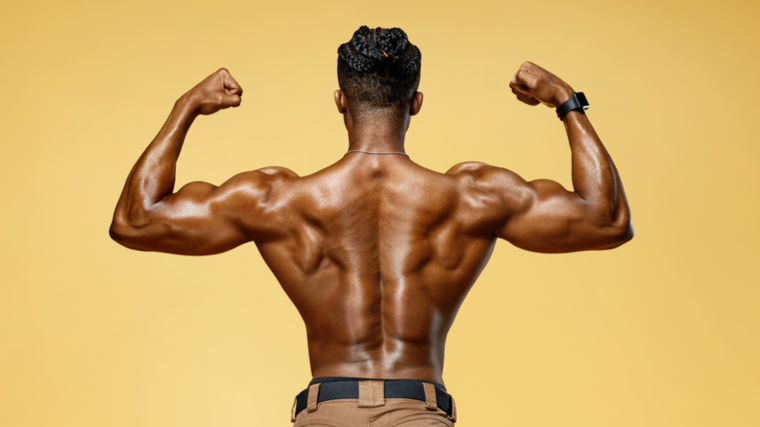
Muscular man flexing back, shoulders, and arms.Muscular man flexing back, shoulders, and arms.
Credit: RomarioIen / Shutterstock

The latissimus dorsi also adducts the shoulder, drawing your arm toward your midsection as during performance of a wide-grip pull-up or pullover. (10) Secondarily, the lats contribute to internal rotation of the shoulder. The lat muscles even contribute to low back extension and rotation, albeit, these contributions are small. (10)

Average gym-goers can simply plug one or more of the exercises into their training plan, perform their sets, then rest assured they’ve “hit their lats.” Bodybuilders and physique-minded lifters typically divide their back workouts upper body pulling into horizontal pulling and vertical pulling. Think of all the row variations on this list as horizontal pulls, while the pull-up and pullover are vertical pulling.

Due to the biomechanical differences between these movement patterns, it may be prudent to include at least one from each category during your weekly lifting routine.

How Often and How Much Should You Train Lats?

Start training your lats regularly and you’ll notice remarkable things. Clothes begin to fit better, your major compound lifts (like the squat, bench press, and deadlift) start feeling more secure, and you develop mind-muscle connection to the growing slabs of muscle on your flanks. But how often should you hit lats for optimal results? And how much attention should the lats receive?

While there is plenty of nuance to programming, a simple method to plan training frequency is to determine the target weekly total set volume for the muscle or muscle group. Then, work backwards by allocating those sets into your weekly workout split.

For already-fit individuals who want to build more muscle, experts recommend a minimum of 10 sets per muscle group per week is best. (12) More weekly sets (i.e. 20 or more) may offer additional benefits provided the lifter gradually builds to that volume over time. (12) If you are dead-set on improving your lats, a higher volume “specialization” program can be very effective, but again, that volume must be built gradually over time.
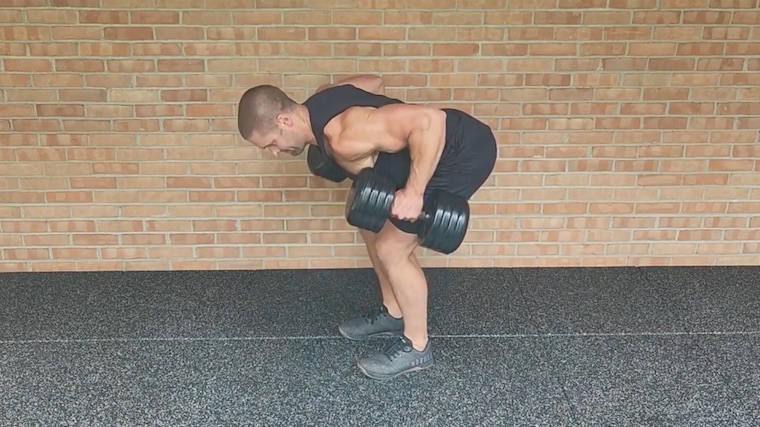
muscular person rowing two dumbbellsmuscular person rowing two dumbbells
Credit: Merrick Lincoln, DPT, CSCS / YouTube

Next, take your favorite lat exercises and allocate your target number of weekly sets to each exercise. For example, a moderately experienced lifter might aim for 14 sets per week targeting the lats. If this lifter prefers bent-over dumbbell rows, dumbbell prone bench pulls, and pull-ups, the allocation may be four sets of dumbbell rows, four sets on the prone bench, and six sets of pull-ups.

Now, if this lifter uses a push/pull/legs split and trains six days per week, those exercises can be distributed across the two separate pulling sessions. If the lifter trains with a whole body routine three days per week, the exercises can be distributed across all three workouts, one exercise per session.

Be thoughtful when you plan your lat training. For example, four sets of bent-over dumbbell rows might not be the best choice the day before or the day after a heavy deadlift session due to cumulative lower back strain.

How to Progress Your Lat Training

Intensity (weight) and volume (sets and reps) must be progressed for long-term gains. A simple strategy for progressing intensity is the “two- for two- rule.” Once you can hit two or more repetitions more than your repetition target in the final set for two consecutive workouts, it’s time to use a heavier dumbbell. (13) To progress volume, add one or two sets for each exercise each month.

[Related: How to Do the Chin-Up for Bigger Arms and a Stronger Back]

However, these progression methods will not remain effective forever. After two or three months, or when your progress stalls, take a deload. Come back stronger and to a new program with subtle variations. Change up some of the lat exercises and start with a slightly lower set volume and higher intensity than your previous baseline.

How to Warm-up Your Lats

Complete a warm-up to prime your body for the dumbbell lat workout. Organize the warm-up in two parts: the general warm-up and the specific warm-up. Five minutes of cardio will suffice for the general warm-up. This activity serves to increase body temperature and promote general movement.

Although any form of light aerobic exercise works, an exercise that involves the upper body is preferable. Ideas include the rowing ergometer, ski ergometer, air bike, elliptical, or jump rope.

person on exercise bikeperson on exercise bike
Credit: Dr. Merrick Lincoln

For the specific warm-up, start with the exercise that gives you the best connection with your lats — the movement that allows you to “feel” them most. This will vary from person to person based on your leverages, your experience, and your mind-muscle connection.

Complete two or three sets of eight to 12 repetitions using dumbbells lighter than your working weight. Incrementally increase the resistance as you work through your warm-up. Depending on your level of strength, the pull-up might not be the best exercise to start with unless you have access to a pull-up assist machine or resistance bands to counterbalance your bodyweight.

Dumbbells Give You Wings

By surface area, the latissimus dorsi is the largest muscle of the body. (6) It’s not surprising that well-developed lats give your back the appearance of more size. Train them regularly and progressively, ideally while eating a slight calorie surplus, and you’ll notice wings of muscle filling in beside your ribcage. These “wings” won’t allow you to fly, but I suspect walking around with them will make you feel almost as good.

References

  1. Lane, C. L., et al. (2019). Comparison of the firefighter candidate physical ability test to weight lifting exercises using electromyography. Work62(3), 459-467.
  2. García-Jaén, M., et al. (2021). Electromyographical responses of the lumbar, dorsal and shoulder musculature during the bent-over row exercise: a comparison between standing and bench postures (a preliminary study). Journal of Physical Education and Sport, 21(4), 1871-1877.
  3. Fenwick, C. M., et al. (2009). Comparison of different rowing exercises: trunk muscle activation and lumbar spine motion, load, and stiffness. The Journal of Strength & Conditioning Research, 23(5), 1408-1417.
  4. Snyder, B. J., & Leech, J. R. (2009). Voluntary increase in latissimus dorsi muscle activity during the lat pull-down following expert instruction. The Journal of Strength & Conditioning Research23(8), 2204-2209.
  5. Saeterbakken, A., et al. (2015). The effect of performing bi-and unilateral row exercises on core muscle activation. International Journal of Sports Medicine, 94(11), 900-905.
  6. Gerling, M. E., & Brown, S. H. (2013). Architectural analysis and predicted functional capability of the human latissimus dorsi muscle. Journal of Anatomy223(2), 112-122.
  7. Ottinger, C. R., et al. (2022). Muscle Hypertrophy Response to Range of Motion in Strength Training: A Novel Approach to Understanding the Findings. Strength & Conditioning Journal, Advance online publication. doi: 10.1519/SSC.0000000000000737
  8. Santana, J. C., et al. (2015). Anterior and posterior serape: The rotational core. Strength & Conditioning Journal37(5), 8-13.
  9. do Carmo Carvalhais, V. O., et al. (2013). Myofascial force transmission between the latissimus dorsi and gluteus maximus muscles: an in vivo experiment. Journal of Biomechanics46(5), 1003-1007.
  10. Bogduk, N., et al. (1998). The morphology and biomechanics of latissimus dorsi. Clinical Biomechanics13(6), 377-385.
  11. Clemente, P. C., et al. (2022). Perceived exertion, postural control, and muscle recruitment in three different quadruped exercises performed by healthy women. Frontiers in Physiology, 1630.
  12. Schoenfeld, B., et al. (2021). Resistance training recommendations to maximize muscle hypertrophy in an athletic population: Position stand of the IUSCA. International Journal of Strength and Conditioning1(1), 1-30.
  13. Sheppard, J.M., & Triplett, N. (2016). Program design for resistance training. In: Haff, G., & Triplett N., (Eds.), Essentials of Strength Training and Conditioning (4th ed., pp. 459). Champaign, IL: Human Kinetics.

Featured Image: MDV Edwards / Shutterstock

[ad_2]

Source link

Powerlifter Jamal Browner Deadlifts a Historic 500 Kilograms (1,102 Pounds) in Training

Powerlifter Jamal Browner Deadlifts a Historic 500 Kilograms (1,102 Pounds) in Training

[ad_1]

Only days after a record-breaking performance at the 2022 USPA Raw Pro, powerlifter Jamal Browner might have just outdone himself with a new remarkable feat of strength.

On Sept. 29, 2022, Browner captured a 500-kilogram (1,102-pound) raw traditional deadlift during a training session. He is the fourth known person to deadlift at least that much weight while on film. The 110-kilogram athlete used a sumo stance and overhand grip and wore a lifting belt and lifting straps to help with the historic pull.

[Related: How to Do the Goblet Squat for Lower Body Size and Mobility]

The historic nature of Browner’s deadlift naturally drew the attention of more than a few figures in strength sports. Browner received notable variations of praise from people like two-time International Powerlifting Federation (IPF) World Champion (2019, 2021) Russell Orhii, powerlifters Bobb Matthews and Ernie Lillibridge Jr., 2016 Europe’s Strongest Man (ESM) Laurence Shahlaei, and strongman Rob Kearney.

Browner’s deadlift also puts him in an exclusive club in strength sports. He joins three athletes who have pulled at least 500 kilograms on camera over the last several years.

The 2017 World’s Strongest Man (WSM) champion Eddie Hall was the first to deadlift at least that much weight when he set the mark as the strongman World Record at the 2016 World Deadlift Championships (WDC) in Leeds, England.

Roughly a year later, 2018 WSM winner Hafthor Björnsson extended the record when he deadlifted 501 kilograms (1,104.5 pounds) during the 2020 World’s Ultimate Strongman “Feats of Strength” series. However, because Hall accomplished his deadlift at a sanctioned neutral competition while Björnsson did his at his personal gym in Reykjavik, Iceland, members of the strongman world still believe Hall holds the official World Record.

A few years later, in late April 2022, Polish athlete Krzysztof Wierzbicki became the first powerlifter ever to deadlift at least 500 kilograms when he pulled 502.5 kilograms (1,108 pounds) during a recorded training session. At the time of this writing, Wierzbicki’s deadlift is the heaviest-filmed known pull in history. Unlike Hall and Björnsson, Wierzbicki notched his pull without a deadlift suit. Because Wierzbicki used straps, it wouldn’t have counted in a sanctioned contest.

[Related: The Best Landmine Workouts for More Muscle and Better Conditioning]

Browner follows Hall, Björnsson, and Wierzbicki as the fourth person to complete a traditional deadlift of at least 500 kilograms from the floor. He joins the Wierzbicki as the second person to do without the assistance of a suit. Likewise, Browner’s pull would not count in an official competition because of his use of straps.

Aside from breaking the World Record, the next significant deadlift achievement might be to see who can pull 500 kilograms without the use of straps. Browner, Wierzbicki, and their peer Danny Grigsby — the first powerlifter to capture a 1,000-plus pound raw deadlift in a full power meet — will undoubtedly all be huge factors in that race.

Featured image: @jamal_b15 on Instagram

[ad_2]

Source link

Bodybuilding Legend Lou Ferrigno Keeps His Abs Ripped at 70-Years-Old

Bodybuilding Legend Lou Ferrigno Keeps His Abs Ripped at 70-Years-Old

[ad_1]

At a certain point, it might not be easy to maintain one’s fitness past a certain age. That goal doesn’t appear to be so rigorous for bodybuilding legend and Hollywood and television icon Lou Ferrigno.

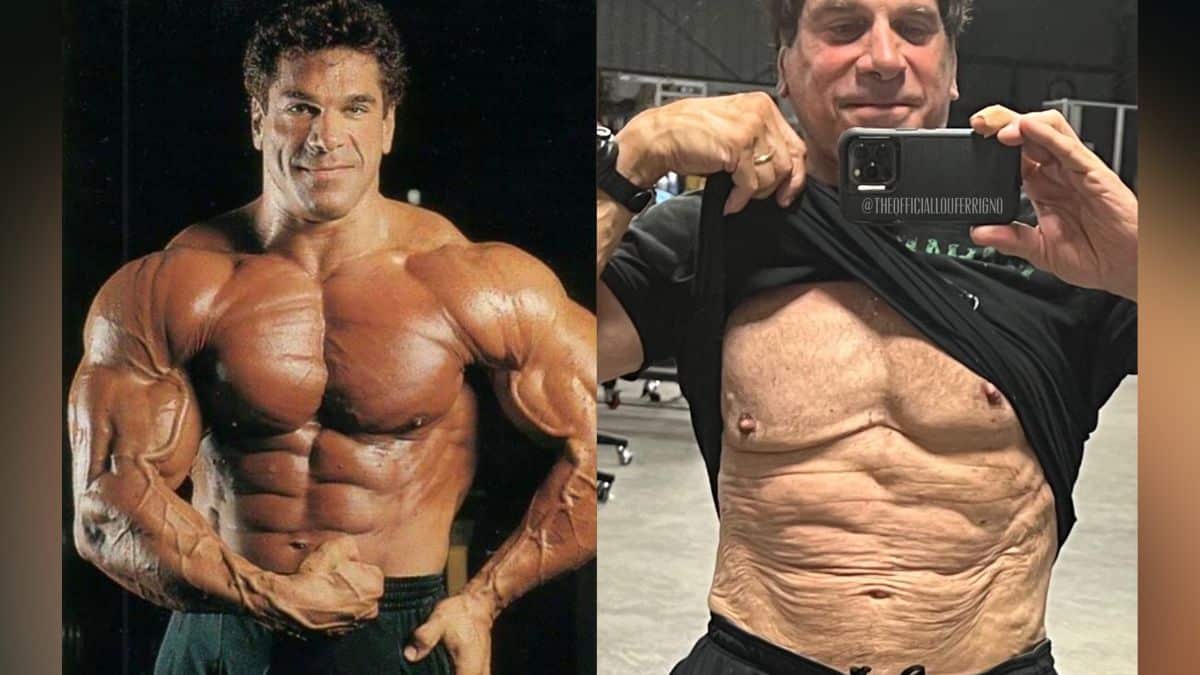
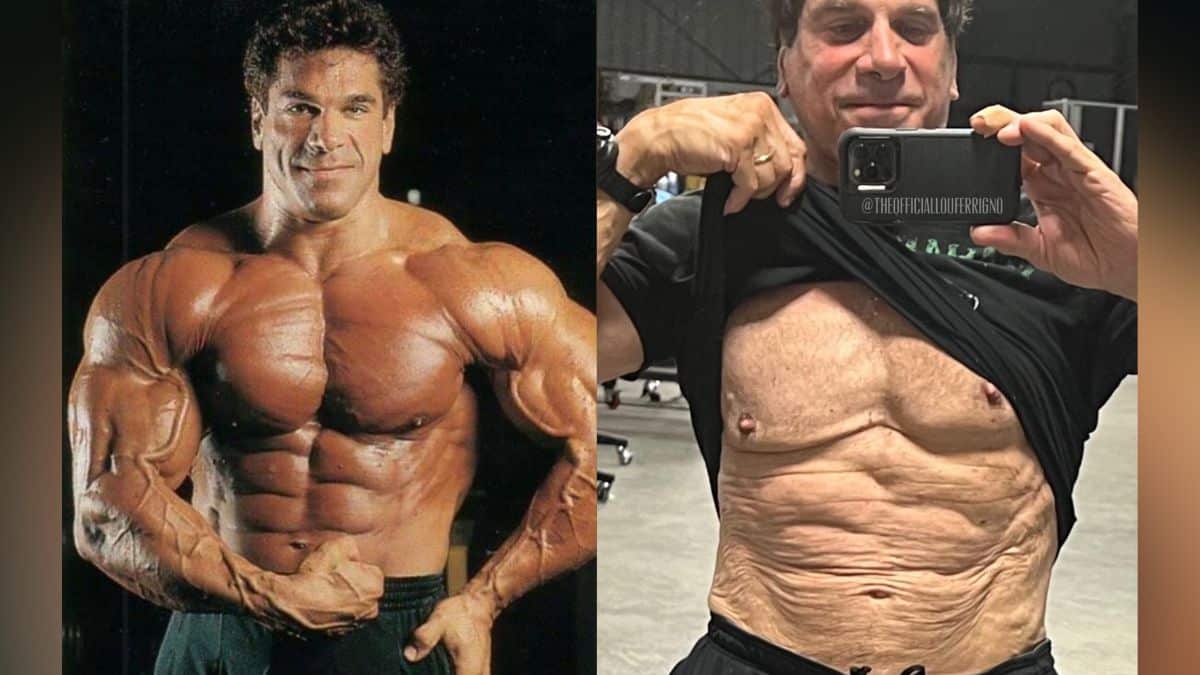
On Sept. 28, 2022, Ferrigno shared a post on his Instagram where he’s holding his shirt up in a selfie to showcase his tight abs at the age of 70. As he writes in the caption of his post, Ferrigno is “proud” to be able to stay “dedicated” and in shape after “58 years” of training and competition.

[Related: The Best Dumbbell Ab Workouts for a Stronger, Better-Looking Core]

As a bodybuilder, Ferrigno competed in some intermittent capacity over the course of two decades.

The first tentpole victory of his career was a breakout win in the 1973 International Federation of Bodybuilding and Fitness (IFBB) Mr. America. That same year would see Ferrigno win the first of two straight IFBB Mr. Universe titles (1973-1974). He would later capture the 1974 IFBB Mr. International contest. Ferrigno made his Olympia debut at the 1974 Mr. Olympia, where he would finish in second to Arnold Schwarzenegger.

The following year, 1975, saw Ferrigno take home a third-place result behind Serge Nubret and the defending champion Schwarzenegger, respectively. From there, Ferrigno would not pose on an official bodybuilding stage again until he was in his early 40s during a 12th-place result at the 1992 Mr. Olympia. He would cap his career with a second-place finish in the Master’s division at the 1994 Olympia. That would be Ferrigno’s final bodybuilding competition before a formal retirement at the age of 43.

[Related: Bodybuilding Legend Flex Wheeler Will Receive 2023 Arnold Classic Lifetime Achievement Award]

Outside of the bodybuilding and fitness sphere, some might recognize Ferrigno for his long-time famous role as Dr. Bruce Banner in CBS’s The Incredible Hulk from 1977-1982. The actor has since reprised his time as the Hulk in modern cameos in Marvel’s cinematic universe. In a further nod to his physique, Ferrigno also played the ripped Roman god Hercules in a 1983 live-action interpretation of the mythological figure. Ferrigno would play himself in a recurring part on the CBS sitcom The King of Queens and in the 2009 comedy I Love You Man alongside actors Jason Segel and Paul Rudd.

According to IMDB, Ferrigno is still staying active in Hollywood and has 70 acting credits to his name at the time of this writing. He is currently filming the movie Hermit, where he plays the eponymous character.

For a bodybuilding and Hollywood legend like Ferrigno, it seems life never stops moving at warp speed.

Featured image: @theofficiallouferrigno on Instagram

[ad_2]

Source link

How to Do the Hack Squat – Benefits, Variations, and More

How to Do the Hack Squat – Benefits, Variations, and More

[ad_1]

When leg day rolls around, many lifters prioritize barbell exercises like squats and Romanian deadlifts. That’s a generally reliable approach for building size and strength, but an aversion to machine exercises can make lower body workouts less effective and it can make gains harder to come by.

If lifters do incorporate machine-based movements, it’s often basic leg extensions or leg curls, and maybe a gratuitous set of calf raises. But one specific machine — a squat variation, in fact — can be the key to unlocking new muscle growth, increased strength, and improved joint health.

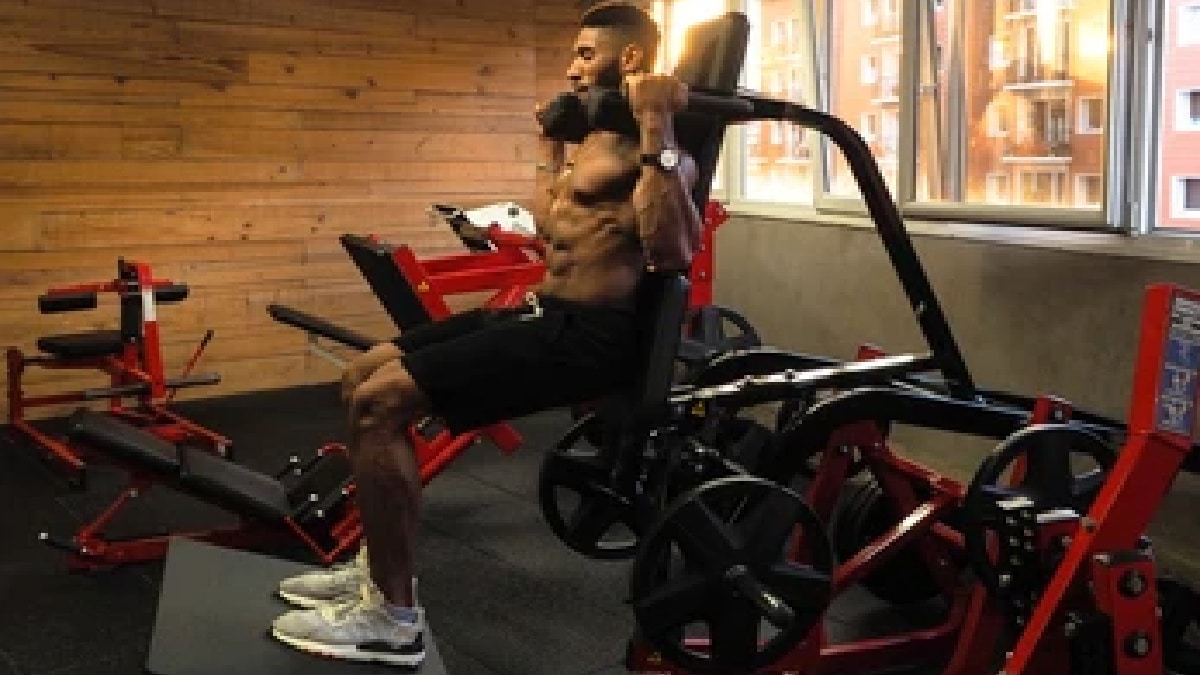
person in gym on squat machineperson in gym on squat machine
Credit: Vladimir Sukhachev / Shutterstock

The hack squat is very effective for building the legs and strengthening the knees and hips. It can be a staple in many routines, particularly for those looking to add muscle to their frame. It’s time to learn the ins and outs of this misunderstood machine.

How to Do the Hack Squat

The majority of commercial gyms have at least one hack squat machine, but different equipment manufacturers have slightly different designs. Some are almost completely horizontal, with the lifter lying flat on their back and moving along fixed tracks. Some machines are designed with a full support and shoulder pads on an angled track and foot platform.

Most commonly, however, a seated pad is set up on a 45-degree slant, sometimes called a “linear” or “hip sled” hack squat. An angled foot platform allows your entire lower body to run parallel to the weighted sled, with a seat designed to keep your upper body vertical. There is often a pad supporting the lower to mid-back, no upper back support, and a pair of handles on either side of the seat to hold onto.

Step 1 — Get Your Stance Right

person in gym on squat machineperson in gym on squat machine
Credit: Darryl Rose Fitness / YouTube

Take a seat and place your feet on the platform. Your lower body flexibility and mobility will influence exactly where you set your feet. The key is to be able to keep your heels flat on the platform as your knees bend fully throughout the entire range of motion.

It’s about finding the sweet spot, which is often around hip-width toward the middle of the platform. Don’t place your feet too high on the platform, too low, too narrow, or too wide — find your Goldilocks stance. What matters most is allowing your knee and ankle joints to achieve a long, pain-free range of motion.

Keep your legs slightly bent without disengaging the safety pins. Sit with your back supported on the pad. Keep your posture upright with your shoulders pulled back.

Form Tip: Try wearing a pair of shoes that add to your lower body support. Sometimes minimalist shoes can create an inadequate base and exacerbate foot issues people have with arch collapse. If it takes switching out of your bare feet or Chuck Taylors and wearing a sturdy pair of lifting shoes while performing a few sets, take the extra step to get the most out of the lift.

Step 2 — Lower Yourself into a Deep Squat

Person in gym on squat machinePerson in gym on squat machine
Credit: Darryl Rose Fitness / YouTube

Press through your entire foot and straighten your legs while releasing the safety. Grip the side handles tightly. Maintain good posture and don’t compromise a “proud” chest position.

Slowly lower your body by bending your knees until your upper thigh is roughly 90-degrees to your hip joint — as long as your knees can handle it without pain. Keep your feet flat on the platform and maintain contact between your hips and the pad. Pause briefly in the bottom position.

Form Tip: No matter the specific model of hack squat machine, squeeze the handles tightly throughout the exercise. Keeping a tight grip can improve upper body stability and reinforce a strong posture. (1)

Step 3 — Lift Strong to Lockout

Person in gym on squat machinePerson in gym on squat machine
Credit: Darryl Rose Fitness / YouTube

Without bouncing out of the bottom position, straighten your legs by applying strong and steady pressure through both feet. Don’t let your knees cave inward or bow outward.

Press hard into the platform, transferring a powerful leg drive through your hips and into the seat, as you straighten your legs and “stand” back into the top position.

Form Tip: The hack squat is ideal for accumulating mechanical tension, which is very effective for hypertrophy (muscle growth). (2) To keep the working muscles under tension, stop just shy of fully extending or straightening your legs, and keep your knee and hip joints slightly flexed (before lockout).

Hack Squat Mistakes to Avoid

Like most multi-joint movements, not paying attention to details can invite the use of sloppy form and dangerous technique. Troubleshooting this by pinpointing specific mistakes can help you stay ahead of the curve. Here’s how to prevent these follies from taking hold.

Insufficient Range of Motion

Partially bending your knees and performing shallow reps is often due to excessively heavy weight that cannot be lifted through a full range of motion. This reduces muscle activity and short-changes your results. (3)

person in gym on hack squat machineperson in gym on hack squat machine
Credit: Africa Studio / Shutterstock

A joint should be trained through its entire available active range of motion. It should also be made strong through that range. (4) There’s no reason why this shouldn’t be the case for basically every load-bearing joint in the body — that’s how you build general physical preparedness and drastically reduce injury risk.

Free weight movements like lunges or front squats involve plenty of total-body stabilizing and muscular coordination, but the hack squat machine lets you pursue a healthy, deep range of motion while loading all involved muscles and distributing stress evenly across joints.

The machine’s support pads drastically reduce the stabilizing and coordination elements, so you can and should focus solely on working through a complete range of motion.

Avoid it: Keep the weight on the lighter side to ensure a full range of motion. Aim to get your upper thigh at a 90-degree angle to your hips on every repetition. When you can do the desired set of reps with that range of motion, it’s time to progress to a heavier load.

Lifting Your Heels

Whether this comes from poor ankle mobility, general negligence, or an attempt to “target the quads” more than simple flat-footed squatting, it’s best to avoid rising onto your toes, especially when you’re learning the hack squat.

legs of person in gym squatting on machine legs of person in gym squatting on machine
Credit: djile / Shutterstock

Lifting your heels off of the platform places all of the weight and stress onto the balls of your feet, and will result in plenty of stress also being placed on your knee joints. While some lifters’ knees may be able to handle this extreme stress, it’s still not winning the risk:reward ratio.

Avoid it: Think about elevating the toes slightly off the platform during your descent. This will emphasize your heels staying down. Think about pressing “away” with your feet like you’re about to jump backward, rather than pressing “straight down”, as if you’re about to jump up. This will help keep your full foot involved, and encourage your heels to stay planted.

Slouching with a Weak Core

It may seem like a relatively insignificant detail since the hack squat is a lower body exercise, but your upper body posture plays a role in performance. It’s just like any exercise — the more muscles the entire body can involve in bracing and tightness, the better quality the lift will be as a whole.

muscular person using squat machinemuscular person using squat machine
Credit: kristian ezcurra / Shutterstock

With the hack squat, slouching forward and not keeping an engaged core can result in you “leaking strength” for the lift, which reduces your ability to apply maximum force.

Avoid it: Begin upper body bracing with your grip strength. Hold on to those handles tightly to and tense your upper back by squeezing your shoulder blades together. Maintain that tension throughout the whole set.

Benefits of the Hack Squat

The hack squat can be a key player in your leg workout whether you’re after muscular size or raw strength and power. Just because it’s a machine doesn’t make it less effective than a barbell.

Leg Size

The hack squat removes the need for total-body stabilizing and spatial awareness, and creates a fixed path movement. This allows greater “isolation” to the lower body. While it’s still a multi-joint exercise involving the hips, knees, and ankles, the muscles above the waist are not directly targeted like they would be during back squats, for example.

person with very long hair on squat machineperson with very long hair on squat machine
Credit: Vladimir Sukhachev / Shutterstock

This makes it easier to tap into the muscles of the lower body and stimulate them for hypertrophy (muscle growth). The unique angle of the machine also allows the muscles to be put under constant tension, which further stimulates growth.

Lower Body Strength

Because the hack squat involves the quadriceps, hamstrings, and glutes, it has the potential to be loaded with relatively heavy weights. Your legs can be targeted with decreased strain on the lower back, making the hack squat an effective way to build lower body strength without the lower back wear and tear from barbell squats or deadlifts.

Knee Strengthening

It’s no secret that the knee joint is put under a fair amount of pressure when performing the hack squat, and that’s actually the reason why many lifters avoid the movement altogether. However, for healthy individuals without pre-existing knee issues, this can create beneficial stress on the connective tissues of the knee, and joint health can potentially improve in the long-term.

To make any joint stronger, just like making any muscle stronger, a lifter will have to get comfortable with a bit of discomfort. Improving joint strength requires adding (reasonable) stress to that joint, and using sound technique, appropriate loading, and progressive volume is the most effective path.

Muscles Worked by the Hack Squat

As a squat variation, the hack squat certainly targets your legs. The machine’s path and angle of resistance offer a unique training variety and stimulate the muscles slightly differently than other variations, making it a highly effective movement.

Quadriceps

The quads are the main muscle group hit by the hack squat. This is a group of four muscles on the front of the thigh that attach through one common tendon at the top of the knee. Since they have one common point of attachment, it’s difficult to isolate the quad muscles individually, but the hack squat trains them very effectively as a group.

The quadriceps’ main role is to extend the knee joint (straighten the leg), so achieving a deep knee bend is important to work the muscles through a full range of motion.

Glutes and Hamstrings

The hamstrings and glutes, the entire back half of your upper legs, are relatively less involved during the hack squat. Both muscle groups play a role in hip extension (pulling your lower body backward in line with your torso), which isn’t a significant movement pattern during the hack squat.

The glutes and hamstrings both play a small role in controlling your descent and transitioning out of the bottom position.

Hip Flexors

Your hip flexor muscles, found above your quadriceps on either side of your pelvis, are also involved in the hack squat. They work to bring your thighs closer to your torso, so they are highly activated in the lower part of the range of motion.

Because your legs are set at a fixed angle relative to your torso, your hips flexors are under constant tension because the hack squat keeps your hip joint from fully extending (stretching) throughout the movement.

Who Should Do the Hack Squat

This exercise spans a broader audience than may meet the eye. While it is a relatively specialized machine, it can be used very effectively by lifters with a variety of training goals.

Muscle-Focused Lifters

The hack squat is an effective movement for any lifter who wants to make their legs grow. It’s a staple in many bodybuilders’ quad-focused workouts because it allows the quadriceps to take the majority of training stimulus with minimal strain on the lower back or other supporting muscles.

Lifters who have a hard time isolating their quads with other movements like barbell squats, due to having longer legs, poor leverages, or mobility restrictions, may particularly benefit from the hack squat. There’s no escape from plenty of quad activation with this movement.

Lifters with Back Injuries

The hack squat can be useful for lifters with prior back injuries who want to continue hard leg training. If your spine can no longer handle squatting with a barbell on your back, the hack squat can allow you to keep loading relatively heavy weights with a big compound (multi-joint) squat variation.

Beginners

Beginners can often benefit from the added stability and predictability of the hack squat machine. The movement pattern is pre-determined, so lifters are able to use proper technique more easily. Using the hack squat in conjunction with more challenging movements (like squats and lunges) can be a great way to find results faster and build crucial training confidence.

How to Program the Hack Squat

The hack squat is most often used as a secondary exercise, performed after another compound lift like squats, deadlifts, or even split squats. This allows the hack squat to more thoroughly work the target muscles without affecting the stability requirements of free weight exercises.

Moderate Weight, Moderate Repetition

For optimal muscle-building, the best course of action is to chase reps into the double-digits. Three to five sets of 10 or more reps. Aim to accumulate relatively high training volume on this exercise — plenty of sets and reps — to maximize the hypertrophy signal.(5)

Moderate to Heavy Weight, Lower Repetition

If you decide to make the hack squat your primary movement of the workout, you can increase the weight used and lower the reps, since your central nervous system will have a little bit more in the tank when you’re completely fresh. Four to five sets of five to eight reps will let you move heavier weights while still maintaining perfect form.

Hack Squat Variations

The hack squat machine is one specific exercise, but the hack squat movement is, itself, a more general squat variation. There are several options to get the strength-building and joint health benefits if you don’t have access to a genuine hack squat machine.

Landmine Hack Squat

The landmine hack gives your ankles a more open angle to move through because your feet are flat on the ground rather than angled. That means happier knees and even more range of motion. Having the weight set in a landmine unit also allows you to make minor lateral adjustments to find the perfect groove.

Turning around and having your back against the weight plates allows you to find the perfect degree of “body lean” and the right foot position, similar to squatting with a Smith machine, without the confines of a completely fixed path. This combines to deliver a great pump, since you’re constantly using your quads to push back against the weight and maintain your body’s angle.

Barbell Hack Squat

Technically speaking, this is the original hack squat. Named after George Hackenschmidt, a European strongman from the very early 20th century, this movement is done by placing a barbell just behind your heels, squatting down, grabbing the bar, and lifting it up.

Elevating your heels with a block or weight plate changes the angle of your ankles, similar to wearing weightlifting shoes, and encourages a deep squat position. The barbell also acts as a counterbalance and allows an upright torso, which reduces lower back strain.

Reverse Hack Squat

This is a simple variation of the hack squat done on machines with full back supports and shoulder pads. By facing into the machine, you can allow your hips to move backwards, similar to a barbell back squat, which can increase hamstring and glute activity.

However, you must maintain a neutral spine. Hinging excessively at the hips and creating a more horizontal torso angle can drastically increase stress on your lower back. Some lifters may also find that their knees move forward and hit the machine’s rails, forcing them to keep their knees and lower legs at an awkward or inefficient angle.

Hack Squat Alternatives

Without a hack squat machine or effective variations, there are several effective machine-based movement to build lower body size and strength with reduced joint strain.

Leg Press

This may be the most common hack squat alternative since the two movements share many similarities. Both exercises keep your feet on a platform, which places your knees as the prime moving joint rather than your hips, and affects muscle recruitment. Both movements also require your hips to remain flexed due to your lower body’s position relative to your upper body.

The leg press may be a suitable option for people who experience too much knee stress from hack squats, since the foot platform is now moving toward your body as opposed to your body moving toward the foot platform. This subtle change can make a big difference for managing knee stress. (6)

Smith Machine Squat

The Smith machine squat is another popular and effective alternative to the hack squat (and a relatively popular alternative to barbell squatting, too).

One key benefit to the Smith machine is the ability to set your feet well in front of the bar, ensuring a vertical shin angle. Because this position does not allow your knees to move forward, there’s extremely little stress on your knee joints (which also means little joint-strengthening benefit). However, the muscular stress on the quadriceps is significantly increased.

FAQs

Should I always squat deep?

Generally, you’ll stimulate better overall results — more muscle growth, more strength, and more mobility — by working in the maximum range of motion you can achieve in the working joints. If you’re physically unable to squat extremely deep, squat to your current best depth.

With consistency and effort, your range of motion will improve right along with your muscle gains and your weights. The only time to avoid squatting deep is when you make a conscious decision to adjust the range of motion to apply a specific training method.

For example, some lifters might deliberately perform short range of motion squats to use heavier weights as a short-term overload phase, before returning to full range of motion training. That’s a far cry from accidentally loading too much weight on the bar and shaving reps high to massage your ego.

Time to Hack It

The hack squat is a movement that is for everyone and not for everyone at the same time. Rather than vilifying certain exercises based on what the pro-barbell “gym bros” say or what the functional-based “research” may purport with insufficient context, it’s better to remember that everyone isn’t built the same. Your individual mileage may vary with any exercise, and it’s up to you to apply the power of trial and error.

Hack squats can provide significant benefits when it comes to quad strengthening and muscle-building. The movement caters to both the beginning lifter looking to find his groove and the advanced lifter who’s putting the finishing touches on their lower body physique. Give the lift a fair try and discover how it works for you.

References

  1. Gontijo, L. B., Pereira, P. D., Neves, C. D., Santos, A. P., Machado, D., & Bastos, V. H. (2012). Evaluation of strength and irradiated movement pattern resulting from trunk motions of the proprioceptive neuromuscular facilitation. Rehabilitation research and practice, 2012, 281937. https://doi.org/10.1155/2012/281937
  2. Schoenfeld B. J. (2010). The mechanisms of muscle hypertrophy and their application to resistance training. Journal of strength and conditioning research, 24(10), 2857–2872. https://doi.org/10.1519/JSC.0b013e3181e840f3
  3. Kubo, K., Ikebukuro, T., & Yata, H. (2019). Effects of squat training with different depths on lower limb muscle volumes. European journal of applied physiology, 119(9), 1933–1942. https://doi.org/10.1007/s00421-019-04181-y
  4. Pallarés, JG, Hernández-Belmonte, A, Martínez-Cava, A, Vetrovsky, T, Steffl, M, Courel-Ibáñez, J. Effects of range of motion on resistance training adaptations: A systematic review and meta-analysis. Scand J Med Sci Sports. 2021; 31: 1866– 1881. https://doi.org/10.1111/sms.14006
  5. Mangine, G. T., Hoffman, J. R., Gonzalez, A. M., Townsend, J. R., Wells, A. J., Jajtner, A. R., Beyer, K. S., Boone, C. H., Miramonti, A. A., Wang, R., LaMonica, M. B., Fukuda, D. H., Ratamess, N. A., & Stout, J. R. (2015). The effect of training volume and intensity on improvements in muscular strength and size in resistance-trained men. Physiological reports, 3(8), e12472. https://doi.org/10.14814/phy2.12472
  6. Escamilla, R. F., Fleisig, G. S., Zheng, N., Lander, J. E., Barrentine, S. W., Andrews, J. R., Bergemann, B. W., & Moorman, C. T., 3rd (2001). Effects of technique variations on knee biomechanics during the squat and leg press. Medicine and science in sports and exercise, 33(9), 1552–1566. https://doi.org/10.1097/00005768-200109000-00020

Featured Image: kristian ezcurra / Shutterstock

[ad_2]

Source link
How to Stop Stress Eating (3 Strategies)

How to Stop Stress Eating (3 Strategies)

[ad_1]

This LEGO looks worried, probably because he doesn't know what to eat.

This LEGO looks worried, probably because he doesn't know what to eat.

All of us have plenty of stress in our lives.

In the modern world, it’s almost a given.

If you find yourself responding by “stress eating,” know that you are not alone.

One of the top issues faced by clients in our 1-on-1 Online Coaching Program is emotional or stress eating. It actually seems to increase in occurrence year over year.


Today, we’re going to show you exactly how we address emotional eating with our clients, including when it’s – GASP – actually okay to stress eat. 

Here’s what we’ll cover in today’s guide:

Let’s jump right in.

What Is Stress Eating? (A Video from NF Kitchen)

The above video from Coach Justin comes from the Nerd Fitness Prime “Mindset” video series

Justin covers three important lessons I want to highlight, but before we do that, we should ask ourselves a question: 

“What exactly is stress eating?”

Stress eating is consuming food in response to negative emotions like fear, anger, or sadness.

When we stress eat, food is being used to solve a problem. Now, unless we’re actually hungry, it’s likely a problem that food itself isn’t meant to solve.

That’s stress or emotional eating.

Here’s what compounds the whole problem: stress eating itself can make us feel guilty. We often feel terrible once our spoon hits the bottom of the pint of ice cream.

This can drive more negative emotions, which can trigger even MORE stress eating.

And the pattern continues.

A gif of Tina saying "I'm out of control."

A gif of Tina saying "I'm out of control."

We’ll talk about ways to break this cycle in a moment, but before we do, we need to create some tools to identify it in the first place. 

What Causes Stress Eating? (Lesson #1: Playing Detective)

a picture of Detective Pikachu

a picture of Detective Pikachu

You may have been surprised in our video above when Coach Justin gives permission to stress eat.

Counterintuitive and seemingly counterproductive, I know. But this is going to be important for two reasons.

How to Approach Stress Eating:

Step #1: we need to curb the guilty feelings about stress or emotional eating. 

I started this guide off by highlighting the frequency of stress eating amongst our Online Coaching clients

You are not the only one struggling with this.

Most humans do.

And robots with human-like emotions and taste buds

A gif of Eva, who might be craving some food because of stress.

A gif of Eva, who might be craving some food because of stress.

We’ll come back to this idea again, because ending the shame of emotional eating will be critical for moving forward. 

Step #2: allowing ourselves to stress eat will help us learn why we do it.

We’re going to be playing detective here, to see if we can piece apart your actions and routines.

This man's book says "how to be a detective" so you know it's legit

This man's book says "how to be a detective" so you know it's legit

At the end of the day, our lives are a cumulation of habits. Stress eating is one such habit.

So let’s learn about it!

To do so, we’re gonna record some Emotional Eating Notes

During an episode of stress eating, it’s important to ask:

  • What am I doing?
  • What am I feeling? (Both physically and emotionally)
  • What am I thinking about?
  • What time is it?
  • Where am I?
  • Who am I with?

Also, gauging these at different times can be helpful too.

How is your stress looking:

  • An hour or two before the eating episode?
  • Right before it?
  • During it?
  • Right after it?

The purpose of these Emotional Eating Notes?

Look for patterns!

Detective Pikachu is holding up a magnifying glass in this gif.

Detective Pikachu is holding up a magnifying glass in this gif.

Perhaps you’ll notice some of the following:

  • “After my recent Tuesday morning conference call, when I got grilled by my company’s leadership, I grabbed some chocolate chip cookies. This happened the week before too.”
  • “Around 2pm, when I get the ‘afternoon slumps,’ I normally grab a Coca-Cola. This little boost gets me through the end of the day. This is almost a daily practice.”
  • “Last Sunday evening, when thinking about the start of the work week, I had a couple of glasses of wine. When looking back at my notes, this takes place at the end of most weekends.”

We’re looking for patterns to help us understand what drives our stress eating. 

The most important thing about this process: withholding judgment.

We’re looking at our notes for clues into our psyche. Whatever we captured is okay.

If you order pizza every Thursday after talking with your overbearing mom (of course, she means well), step one is to recognize it.

Oftentimes, this awareness step alone can help shift behavior. “Oh, I’m reaching for a beer like I normally do after ending my workday. Typical Me.”

After creating some notes on what spurs our emotional eating, it’s time to think about some alternatives for coping with stress.

How Do I Stop Mindless Eating? (Lesson #2: The Stress Response Menu)

This photo has two LEGO characters in it, with one holding their stress response menu.

This photo has two LEGO characters in it, with one holding their stress response menu.

After documenting what sets off our stress eating, we need to formulate a plan on what to do when our anxiety rises.

That means it’s time to build…a Stress Response Menu!

Our Stress Response Menu will be a list of actions or activities you can do to de-stress outside of eating.

Ideally, you’ll do them before an eating episode, but they can be done during or after the fact too.

In other words, if you only realized you were stress eating when your hand reaches the bottom of the Doritos bag, no problem, you can do your stress response activity right then. 

The purpose of the Stress Response Menu is to reward yourself with a small moment of self-love, whenever your anxiety levels are too much.

Examples for a Stress Response Menu:

A gif of Grandpa Simpson shouting at a cloud.

A gif of Grandpa Simpson shouting at a cloud.

The more the activity from your Stress Response Menu can match your personal goals, the better. 

In other words, if you’re trying to build muscle, some push-ups might be the perfect de-stressor. 

Just make sure it’s something you won’t dread doing. 

A combination of a “de-stressor” and a “reward.”

This is important, as Coach Justin mentions that many of his clients only reward themselves with food. The self-love they practice only takes place in the kitchen. 

Our menu above will help us develop some more options, not solely based on food.

To make the most of your Stress Response Menu:

#1) Make the activities short and easy. 

You should feel confident that you can do every item on your list. So avoid activities that will take longer than 10 minutes to complete. 

Also, set yourself up for success by hacking your Batcave:

  • If you’re going to journal when stressed, keep your diary open on your work desk.
  • If you’re going to drink water before any emotional eating, keep your full glass near you. 
  • If you’re going to take a short walk, keep your kicks near the door.

Don’t set yourself up for failure by picking overly complicated or burdensome activities.

#2) Place your Stress Response Menu somewhere visible. 

Once you make your list, print it out and place it in your kitchen or pantry (or wherever you typically stress eat). 

You could also write out a couple of your favorite activities and attach them to your refrigerator. 

If it’s right in front of you, it’ll be harder to ignore (however, it’s okay to ignore it from time to time, as we aren’t striving for perfection).

Just please don’t write it and then stick the list in the junk drawer that opens to another dimension.

Yeah, don't put your stress response menu in a portal like this.

Yeah, don't put your stress response menu in a portal like this.

You never can find anything in that drawer.

#3)Track your usage of the Stress Response Menu. 

This will help us in two ways:

  • First, by tracking your usage, you’ll start to feel better about using the SRM. You’ll see an accumulation of all the times you successfully deployed a stress response, helping you visualize the momentum you’re building. 
  • Second, the data will help you understand your patterns of emotional eating. Maybe five deep breaths steered you away from ice cream but the large glass of water did not. You can then use this information to update and revise your response plan.

For the first point, Coach Justin has his clients keep a “Jar of Awesome.”

Every time they have a small win in the day, like taking five deep breaths instead of chugging soda, they place a marble or small token in a jar. After a while, the jar will have a decent amount of marbles or “small wins” in it.

This will then stand as a visual reminder of all the progress being made, proof of their ongoing wins.


How Common Is Stress Eating? (Lesson #3: Learning Self-Compassion)

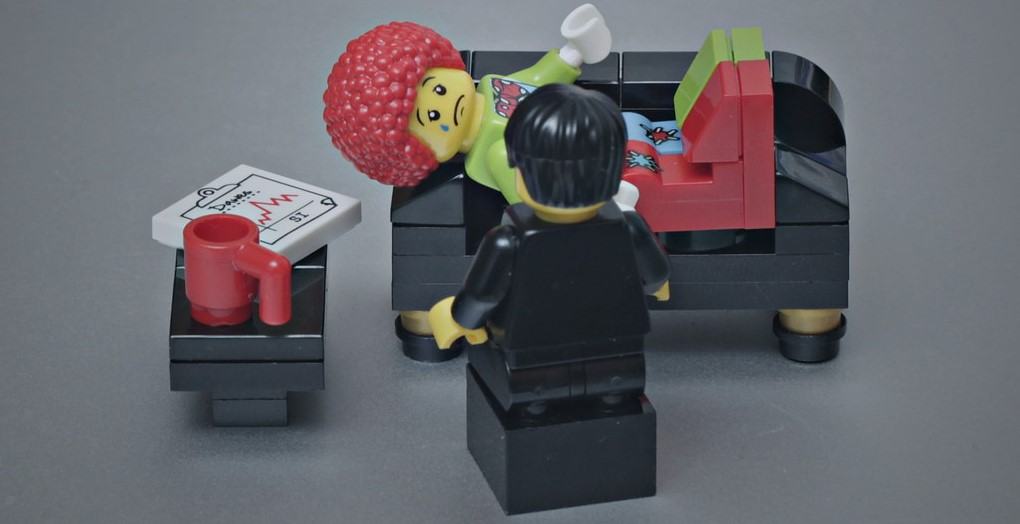
This photo shows a sad clown on a psychiatrist couch.

This photo shows a sad clown on a psychiatrist couch.

The American Psychological Association has found that about a third of Americans respond to stress with food.[1] 

This research was done BEFORE the global pandemic.

If you find yourself binging in response to stress, know that you are not alone here.

Heck, both clients and NF Coaches turn to food and alcohol for comfort every now and again.

Personally, somewhat recently I mindlessly devoured an entire tub of Animal Crackers after a stressful week. It was only when the bag was gone did I understand what just happened.

A gif of "the next day" from the film the Hangover

A gif of "the next day" from the film the Hangover

So yep, many of us (even fitness “experts”) are prone to stress eating.

Now, don’t take this as a free pass to stress eat. 

If the behavior goes against your goals, it’s something we want to work towards improving.

But there’s a reason they call it “comfort food.” Food can often be used to make us happier.

At the end of the day, we’re all emotional bags of meat on this floating hunk of space rock, and we’re doing the best we can. 

Give yourself a bit of a break, my friend.

You’re here, you’re reading, and you’re trying. That’s great!

This will bring me to my last point with our handy guide:

Is It Okay to Stress Eat? (Next Steps)

A LEGO pushing around a hot dog stand (with ice cream)

A LEGO pushing around a hot dog stand (with ice cream)

There are times when food is the perfect response to stress.

It’s something Coach Justin mentions in his video.

“Stress eating” might be appropriate if: 

  • After a long workday, a glass of wine with cheese helps you unwind.
  • To celebrate the coming of the weekend, you have an ice cream party on Friday night.
  • The week already seems long, and it just started, “Taco Tuesday” might help you survive until Friday.

The important thing here? 

“We are making a choice.” 

We are choosing to deal with stress or anxiety with food. By making it an intentional activity, we can remove the guilt around emotional eating.

Food can be fine as a reward, as long as it’s us controlling the behavior, and not the food itself.

In addition, if we can recognize the action (or plan for it), we can then adjust our calories before and after and not go off the rails. 

(You can calculate your recommended total daily calorie intake here, by the way!)

If it seems like you aren’t quite there yet, start with your Emotional Eating Notes and your Stress Response Menu.

Even just the process of taking notes on specific episodes of stress eating may be enough to slow down the behavior.

Remember, no matter what happens:

  • You are not a bad person if you stress eat.
  • You are not a bad person if you forget to take notes.
  • You are not a bad person if you ignore your Stress Response Menu.

You are not a bad person (unless you’re a Death Eater, but come on, you know what side you’re on). 

A gif of Voldermort looking mad and evil like

A gif of Voldermort looking mad and evil like

If you need any help along the way, we are here for you.

We have three specific paths to continue with Nerd Fitness:

#1) Our Online Coaching program: a coaching program for busy people to help them make better food choices, stay accountable, and get healthier, permanently.

As I said before, “stress eating” is the number one issue faced by our coaching clients, so we know exactly how to help recognize and address the habit.

You can schedule a free call with our team so we can get to know you and see if our coaching program is right for you:


#2) If you want an exact blueprint for leveling up your nutrition, check out Nerd Fitness Journey! Our fun habit-building app helps you exercise more frequently, eat healthier, and level up your life (literally).

If you follow our Mindset missions, you’ll learn to de-stress while earning XP! Sah-weeeet.

Try your free trial right here:

#3) Join the Rebellion! We need good people like you in our community, the Nerd Fitness Rebellion.

Sign up in the box below to enlist and get our Rebel Starter Kit, which includes all of our “work out at home” guides, the Nerd Fitness Diet Cheat Sheet, and much more!

Alright, I want to hear from you:

Have you been stress eating more over the last year?

Do you have any tips or tricks to interrupt the pattern?

What’s your favorite way to de-stress?

Let me know in the comments!

-Steve

P.S. Make sure you check out A Nerd’s Introduction to Mental Health for more.

###

Photo Source: Plant LEGO, beer5020 © 123RF.com, Programmer, On the couch, LEGO hot dog stand

[ad_2]

Source link

Bodybuilding Legend Lou Ferrigno Keeps His Abs Ripped at 70-Years-Old

Bodybuilding Legend Lou Ferrigno Keeps His Abs Ripped at 70-Years-Old

[ad_1]

At a certain point, it might not be easy to maintain one’s fitness past a certain age. That goal doesn’t appear to be so rigorous for bodybuilding legend and Hollywood and television icon Lou Ferrigno.

On Sept. 28, 2022, Ferrigno shared a post on his Instagram where he’s holding his shirt up in a selfie to showcase his tight abs at the age of 70. As he writes in the caption of his post, Ferrigno is “proud” to be able to stay “dedicated” and in shape after “58 years” of training and competition.

[Related: The Best Dumbbell Ab Workouts for a Stronger, Better-Looking Core]

As a bodybuilder, Ferrigno competed in some intermittent capacity over the course of two decades.

The first tentpole victory of his career was a breakout win in the 1973 International Federation of Bodybuilding and Fitness (IFBB) Mr. America. That same year would see Ferrigno win the first of two straight IFBB Mr. Universe titles (1973-1974). He would later capture the 1974 IFBB Mr. International contest. Ferrigno made his Olympia debut at the 1974 Mr. Olympia, where he would finish in second to Arnold Schwarzenegger.

The following year, 1975, saw Ferrigno take home a third-place result behind Serge Nubret and the defending champion Schwarzenegger, respectively. From there, Ferrigno would not pose on an official bodybuilding stage again until he was in his early 40s during a 12th-place result at the 1992 Mr. Olympia. He would cap his career with a second-place finish in the Master’s division at the 1994 Olympia. That would be Ferrigno’s final bodybuilding competition before a formal retirement at the age of 43.

[Related: Bodybuilding Legend Flex Wheeler Will Receive 2023 Arnold Classic Lifetime Achievement Award]

Outside of the bodybuilding and fitness sphere, some might recognize Ferrigno for his long-time famous role as Dr. Bruce Banner in CBS’s The Incredible Hulk from 1977-1982. The actor has since reprised his time as the Hulk in modern cameos in Marvel’s cinematic universe. In a further nod to his physique, Ferrigno also played the ripped Roman god Hercules in a 1983 live-action interpretation of the mythological figure. Ferrigno would play himself in a recurring part on the CBS sitcom The King of Queens and in the 2009 comedy I Love You Man alongside actors Jason Segel and Paul Rudd.

According to IMDB, Ferrigno is still staying active in Hollywood and has 70 acting credits to his name at the time of this writing. He is currently filming the movie Hermit, where he plays the eponymous character.

For a bodybuilding and Hollywood legend like Ferrigno, it seems life never stops moving at warp speed.

Featured image: @theofficiallouferrigno on Instagram

[ad_2]

Source link

Bodybuilding Legend Flex Wheeler Will Receive 2023 Arnold Classic Lifetime Achievement Award

Bodybuilding Legend Flex Wheeler Will Receive 2023 Arnold Classic Lifetime Achievement Award

[ad_1]

In the late 20th century, Ken “Flex” Wheeler was a bodybuilding icon. Years after the end of his competitive career, he’s about to receive another honor marking his place in the strength and fitness sport’s history. 

On Sept. 25, 2022, during the final day of the Arnold Sports Festival UK, promoters announced that Wheeler will be the recipient of the 2023 Arnold Classic Lifetime Achievement Award. The reveal of his honor was made during the finals of the 2022 Arnold Classic (AC) UK bodybuilding competition with the living legend present. The icon will officially get the esteemed award in a ceremony that will take place around the time of the 2023 Arnold Classic in Columbus, OH, held in March. 

[Related: Everything You Need to Know About How to Burn Fat]

First awarded in 2000 to Joe Weider, the Arnold Classic Lifetime Achievement Award is a recognition of an individual’s significant contribution to the sport of bodybuilding and the general fitness world. Winners have ranged from bodybuilding legends like Frank Zane (2003) and Bill Pearl (2004) to Hollywood fixtures like Sylvester Stallone (2010) and World Wrestling Entertainment’s (WWE) “Triple H,” Paul Levesque.

Wheeler’s honor undoubtedly comes partly from a result of an impressive output as a bodybuilding titan. The highlights of Wheeler’s competitive carer are his four Arnold Classic titles (1993, 1997-1998, 2000). Notably, Wheeler was a Mr. Olympia runner-up on three occasions (1993, 1998-1999), but he never stood atop the podium. 

After nearly 15 years away from competing, a 51-year-old Wheeler made his last contest appearance in the Classic Physique division at the 2017 Mr. Olympia. He would finish in 15th place, where eventual two-time Classic Physique champion Breon Ansley captured the first of his major titles. 

Wheeler has dealt with various health problems over the years. In 2003, he received a kidney transplant. Later, in 2020, he would endure a right-leg amputation due to life-threatening circulation issues. Wheeler would receive the inaugural Olympia and Inspiration Courage Award in 2020, given to a person who exemplifies courage when facing adversity. The legend now spends much of his time coaching, often working directly with 2022 AC UK winner and rising star Andrew Jacked

[Related: Try These 3 Air Bike Workouts for Conditioning, Fat Loss, and More]

At the time of this writing, Wheeler has not publicly commented on the news of his receiving the 2023 Arnold Classic Achievement Award. Instead, his social media appears to be rife with various pictures and clips about personal fitness responsibility and succinct celebrations of athletes he works with. There might not be a better testament to why Wheeler was chosen for this bodybuilding and fitness honor. 

Featured image: @arnoldsportsuk on Instagram

[ad_2]

Source link

Bodybuilding Legend Ronnie Coleman Thinks “Big Ramy” WilI Continue Reign as Mr. Olympia

Bodybuilding Legend Ronnie Coleman Thinks “Big Ramy” WilI Continue Reign as Mr. Olympia

[ad_1]

Ronnie Coleman is one of the greatest bodybuilders of all time. As the former winner of eight consecutive Mr. Olympia titles, the living legend knows something about being an inspiration and what it means to stand on top of the sport. That’s why his recent praise of two-time defending Mr. Olympia Mamdouh “Big Ramy” Elssbiay might hold more merit than most. 

On Sept. 26, 2022, Coleman posted a video to his YouTube channel where he offered his thoughts on where Elssbiay stands in the current bodybuilding pantheon. Amongst his “honest” opinions from a quick “Ask Me Anything,” Coleman believes the 38-year-old Elssbiay will continue his reign as the Mr. Olympia for the foreseeable future. 

[Related: Try These 3 Air Bike Workouts for Conditioning, Fat Loss, and More]

While various high-level competitors are vying for the 2022 Olympia title, Coleman maintains he holds Elssbiay in great regard in particular. It appears to be at the point where Coleman thinks it’s Elssbiay and the field in terms of Olympia contention both this year and in coming iterations. 

“I got a lot of respect for Big Ramy [Elssbiay] because he is a big guy who trains hard, works hard, is truly dedicated to his craft,” Coleman said. “And I think he’s probably going to be the Mr. Olympia for the next three to four years, at least, because nobody out there is going to catch him on size. He is just too far ahead of everybody right now. So, Big Ramy is the man.”

Coleman’s assertion about Elssbiay’s mass and size is conveniently timed. In a mid-September 2022 reveal, Elssbiay shared his final off-season weight for 2022 was a jaw-dropping 337 pounds. 

[Related: The Best Sled Workouts for Muscle, Strength, Fat Loss, and Recovery]

Coleman’s admiration for Elssbiay’s work could be a follow-up to his overall thoughts on the 2022 Mr. Olympia competitive landscape. That contest will take place on Dec. 16-18, 2022, in Las Vegas, NV.

In a Sept. 25, 2022, video on Muscle and Fitness’s YouTube channel, Coleman said he doesn’t see “much changing” between the respective top-three finishers from the 2021 Mr. Olympia — Elssbiay, Brandon Curry, and Hadi Choopan. While Coleman thinks an upstart contender like Nick Walker, Andrew Jacked, or Derek Lunsford might qualify for the top five, he doesn’t “see them making the top three.”

Coleman’s complimentary words toward Elssbiay and his peers seem to telegraph that he thinks the Egyptian competitor will make it a third consecutive Olympia title in Las Vegas this December. 

[Related: The Best Landmine Workouts for More Muscle and Better Conditioning]

Should Elssbiay win the Mr. Olympia again, he will become one of the only competitors to win it on at least three straight occasions. The others are Sergio Oliva (1967-1969), Arnold Schwarzenegger (1970-1975), Frank Zane (1977-1979), Lee Haney (1984-1991), Dorian Yates (1992-1997), Coleman (1998-2005), and Phil Heath (2011-2017).

Eventually, if Elssbiay stays in line with Coleman’s praise, he might even start challenging some of those legends as a bodybuilding great when the dust settles on his career. 

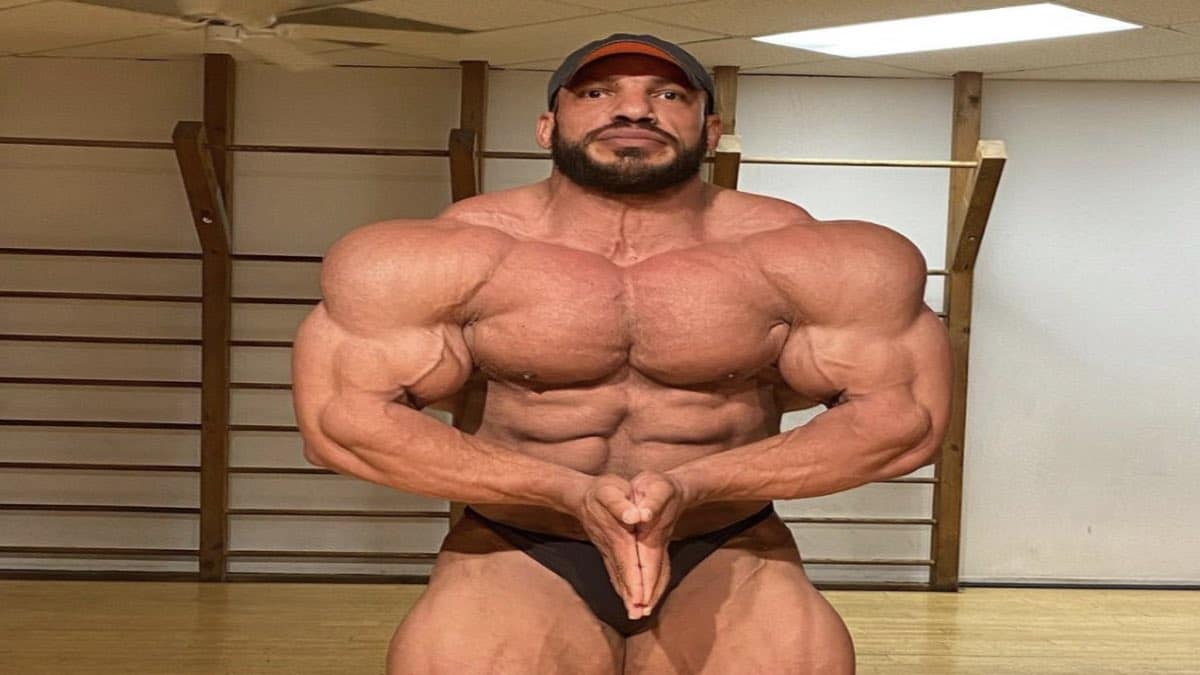
Featured image: @big_ramy on Instagram

[ad_2]

Source link

Running for Weight Loss ᐅ How Christian Made it Happen

Running for Weight Loss ᐅ How Christian Made it Happen

[ad_1]

Seven years ago Christian never could have imagined that he would soon run a marathon or be seen by those around him as a motivated athlete. The road to becoming a fit, healthier version of himself was not always easy – but Christian succeeded and tells us here how he reinvented himself. 

“I feel much better in my body now.” 

I was a chubby kid, and over the years, I just kept putting on weight. In 2015 I got on the scale and had hit 180 kg. My son was four years old at the time. He was actually the one who inspired me. I didn’t want him to be ashamed of me. Plus, I wanted to be a good role model. 

“I was out of breath after climbing just three stairs.” 

When I decided to lose weight, I started with walks that gradually got longer and faster. That’s how I eventually started running. I liked this kind of exercise and the positive effect on my health so much that I focused more and more on jogging and regularly set my goals higher: 

“Getting in shape is not a goal – it’s an attitude.” 

When I decided to lose weight, I started with walks that gradually got longer and faster. That’s how I eventually started running. I liked this kind of exercise so much and the positive effect on my health that I focused more and more on jogging and regularly set my goals higher: 

  • In 2016 I finally managed to run 10 km at once.
  • One year later I was celebrating my first half marathon. 
  • With an ambitious training plan I made another dream come true in September 2019: I ran the BMW Berlin-Marathon.

Christian before & after

Christian before & after

“Nothing changes until you change yourself. Then suddenly everything changes.” 

A lot depends on your environment when you decide to lose weight. I was lucky that my lifestyle change was welcomed with enthusiasm. Some people may have secretly thought that I couldn’t really change. But I am proving to these people that change is possible and worth the effort. Exercise is not a necessary evil anymore – I love to work out and it is contagious. Many of my friends and colleagues started running too and come to me for advice. 

“Anyone can achieve great things if they believe in themselves and don’t give up!” 

Running changed my life. Today – after losing 80 kg around my middle – I work out every day and alternate between strength and endurance training. Instructions and tips from blog posts combined with workouts and training plans in the adidas Training app and adidas Running app helped me stick with it and stay motivated. 

Seeing and feeling the progress in my daily life is an incredible feeling that I wouldn’t want to give up. In this process, I also learned that you can’t only listen to your ambition. You also have to pay attention to your body. All of my motivation and enthusiasm led me to an overuse injury, which forced me to skip a planned marathon in 2018. It was a small setback that taught me to always listen to my body and never give up.  

I lost the first 75 kg between the spring of 2015 and the summer of 2016. After that, I plateaued until the spring of 2020. That was followed by a phase of weight gain to 125 kilograms until just before Christmas of 2020. I had fallen victim to the famous yo-yo effect, triggered by a stress-related burnout. I had gained another 20 kilos. I was able to climb out of this hole by spring 2021, shedding not just the 20 kgs from 2020 but an additional 5 kilos. I had lost a total of 80 kilos, bringing me down to my magic number: 100 kilograms. 

Now I weigh 100 kg and feel much healthier and more confident. I would never have managed it if I hadn’t been persistent and disciplined. 

If you are at the beginning of changing your life like I did, start slowly, and don’t get discouraged! “The miracle isn’t that I finished. The miracle is that I had the courage to start.” The first step is always the hardest, but it’s also the most important. Only those who dare to take this first step will reach the finish line.

***

if(!isRussia){
//check Cookie Opt out and User consent
if(!run_getCookie(“tp-opt-out”)){
!function(f,b,e,v,n,t,s){if(f.fbq)return;n=f.fbq=function(){n.callMethod?
n.callMethod.apply(n,arguments):n.queue.push(arguments)};if(!f._fbq)f._fbq=n;
n.push=n;n.loaded=!0;n.version=’2.0′;n.queue=[];t=b.createElement(e);t.async=!0;
t.src=v;s=b.getElementsByTagName(e)[0];s.parentNode.insertBefore(t,s)}(window,
document,’script’,’https://connect.facebook.net/en_US/fbevents.js’);
fbq(‘init’, ‘1594940627485550’); // Insert your pixel ID here.
fbq(‘track’, ‘ViewContent’);
}
}

[ad_2]

Source link

Strongman Evan Singleton’s 2022 Season is Over After Successful Bicep Surgery

Strongman Evan Singleton’s 2022 Season is Over After Successful Bicep Surgery

[ad_1]

On Sept. 24, 2022, in a video on his Instagram, strongman Evan Singleton announced that he recently tore his right distal biceps tendon during a training session. He withdrew from the upcoming 2022 Giants Live World Tour Finals on Oct. 8, 2022, in Glasgow, Scotland, and the 2022 Rogue Invitational on Oct. 28-30, 2022, in Austin, TX. (Note: At the time of this writing, a replacement for Singleton in both contests hasn’t been revealed.)

In a Sept. 28, 2022, Instagram update, Singleton announced that he underwent successful surgery to reattach his biceps tendon. The athlete did not offer a concrete timetable for a full recovery from his injury but alluded to plans to try and compete in the 2023 World’s Strongest Man (WSM). 

[Related: The Best Landmine Workouts for More Muscle and Better Conditioning]

Before his surgery, in one of his apparent last heavy lifting sessions for a while, Singleton shared a Sept. 25 Instagram clip of himself powering through some heavy box squats. The athlete completed a 340-kilogram (751-pound) set for three reps.

“The last time I’ll be lifting heavy for a while, so might as well make it good,” Singleton wrote of his box squat workout. “Definitely ran on pure anger and hate today. I didn’t really realize how upset I was until the weights got heavier and heavier. The more weight there was, it was almost like it was just pulling the emotion to the surface. I’m going to be getting real friendly with squats again after surgery.”


Singleton would subsequently upload a Sept. 28, 2022, video to his YouTube channel focusing on his deadlift. Because he couldn’t apply any pressure to his right arm, the strongman wore a protective body strap. He would capture a 385.6-kilogram (850-pound) pull for his best one-rep. After finishing deadlifting, Singleton trained his left arm with lateral raises, dumbbell biceps curls, and cable curls.

To outline his future plans in the YouTube video, Singleton maintained that the 2023 WSM will be his “first stop.” Following that, he will intend to get back onto the Giants Live circuit and the 2023 Rogue Invitational. In 2021, he notably won the 2021 Giants Live World Open and the 2021 Arnold Strongman Classic UK — the inaugural edition of the contest.

Depending on Singleton’s recovery and training, he may well return to that high standard of performance come next year. 

Featured image: @evan_trex_strongman on Instagram

[ad_2]

Source link