Skip to content

Author: books

COVID-19 testing startup Curative to lay off 109 employees while pivoting focus

COVID-19 testing startup Curative to lay off 109 employees while pivoting focus

[ad_1]

Calif.-based startup Curative offers COVID-19 testing and vaccination services throughout the U.S., but as testing needs have lessened, the company is shifting its focus to launching a new health plan.

Due to the course change, the company is laying off 109 employees in early November. 

The company filed a Worker Adjustment and Retraining Notification Act notice with the state of California. WARN is a U.S. labor law requiring employers with 100 or more employees to provide advanced notification of mass layoffs and plant closures 60 calendar days in advance.

“As the company transitions from COVID-19 testing to launching a new health plan out of Austin, Texas, we are reducing the workforce in some areas of the company and expanding in others,” a spokesperson from Curative told MobiHealthNews

Curative will launch its employer-based health plan first in Travis and Williamson counties in Texas, then throughout the state of Texas in the coming year. Subsequently, it plans to offer its plan in additional states.

The plan will offer $0 copays and $0 deductibles for in-network care. To qualify, members must complete a preventative health Baseline Visit within 120 days to continue receiving $0 deductibles, $0 copays and $0 out-of-pocket costs for in-network care. 

THE LARGER TREND

Numerous digital health and health tech companies have announced layoffs since the beginning of 2022.

In June, Carbon Health, a chain of healthcare provider clinics that provides telemedicine, laid off 250 employees, about 8% of the company’s workforce. Carbon gained significant revenue from its COVID-19 services, but the company closed many of those services as the pandemic shifted. 

July saw virtual care company Included Health reduce its employee count by less than 6%, and prescription digital therapeutics maker Pear Therapeutics laid off 9% of its full-time workforce.

Calm, a company that flourished during the pandemic by offering an app to help with meditation, stress, and sleep, let go of 20% of its staff due to what its CEO David Ko said was the company “not [being] immune to the impacts of the current economic environment.” 

Cue Health, which offers an at-home molecular COVID-19 test, laid off 170 manufacturing workers earlier this summer.

Most recently, GoodRx, a company known for its prescription price transparency tools, laid off approximately 140 of its workforce, or about 16% of its employees. The reduction primarily impacted its technology-focused and marketing segments.

Other companies that faced mass layoffs include 23andMe, one of the largest genomic platforms in the U.S., payment company Cedar, healthcare automation company Olive, and AI-back genomic and clinical data company Sema4.

[ad_2]

Source link

Roundup: Indian insurtech Zopper scores $75M in Series C funding and more briefs

Roundup: Indian insurtech Zopper scores $75M in Series C funding and more briefs
Roundup: Indian insurtech Zopper scores M in Series C funding and more briefs

[ad_1]

Indian insurtech startup Zopper snaps up $75M in Series C funding

Zopper, an insurance tech startup in New Delhi, has raised $75 million in a Series C funding round led by Creaegis. The round was also participated by ICICI Venture, Bessemer Venture Partners, and its existing investor Blume Ventures. 

The company operates an API platform for insurance infrastructure and delivers small, personalised insurance products from partner insurers to distribution partners. 

Since launching in 2011, Zopper has partnered with over 150 companies from various industries and is now present in over 1,200 cities in India with a goal to democratise access to insurance distribution. 

Its new funds, according to a report by Tech Crunch, will be used to increase its headcount and look into opportunities to acquire other startups.


RaphaCure launches mobile corporate health app

Health technology firm RaphaCure has gone live with its mobile health and wellness app for corporate employees.

Launched on Android and iOS devices, the new RaphaCure app hosts the company’s corporate wellness offerings. 

“Corporate customers can now search, connect, and book RaphaCure’s multiple corporate health and wellness packages from their mobile devices,” said CEO and founder Jeyakumar.

Based on a press release, RaphaCure seeks to capture the growing corporate health and wellness market in India, which is estimated to be worth $6.7 billion. 

The app launch comes two months after it released RaphaNeu, its online mental healthcare service package for the education sector.


HealthEM.AI supports dentists’ decision-making with data analytics

Health data analytics company HealthEM.AI has partnered with US-based dental service  organisation Marquee Dental Partners.

The partnership aims to equip dentists with insights from patient data, ultimately improving clinical outcomes.

“Our goal is to efficiently arm doctors with a set of insights regarding each patient’s current overall and oral health. Insights that are predictive in nature allow doctors to take preventative steps today to avoid future health problems,” explained Marquee CEO Fred Ward.

“HealthEM.AI helps Marquee unlock value from patient and operations data and provides meaningful insights for decision-making that benefit patients and improve clinical outcomes,” added Pradeep Kumar Jain, chief product officer of the Bengaluru-based company.

[ad_2]

Source link

Pattern Health scores $3.3M for no-code digital health creation platform

Pattern Health scores $3.3M for no-code digital health creation platform
Pattern Health scores .3M for no-code digital health creation platform

[ad_1]

Pattern Health, which offers a platform for building digital health tools, announced it had raised $3.3 million in Series A funding.

The round was led by the Dr. William H. Joyce Family Office, with participation from existing investors Cofounders Capital, the Launch Place and Triangle Tweener Fund. The startup last announced a $1.5 million raise in February 2021. 

WHAT IT DOES

Pattern provides a no-code platform to help clinicians and researchers create digital health programs like apps, clinical decision support tools and surveys.

The startup also has a distribution service that can assist with licensing, and an exchange where users can find other programs that were built using Pattern’s platform. For example, one tool on the exchange is a home-based cardiac rehabilitation program designed by a specialist at Duke University.

“We talk a lot about being a no-code platform, and that’s really how we’re able to get care programs, clinical decision support tools and surveys up and running very quickly. We provide the service through a program management team to help configure these plans, test them and get them into patients’ hands through clinicians and researchers,” CEO and cofounder Ed Barber told MobiHealthNews.  

“And then, of course, we’ve got the researcher and clinician console to help view data, understand the success of the programs from a statistics perspective, but also manage workflows and patient-level data.”

Barber said academic medical centers are one of Pattern’s core customer groups. The company plans to use the Series A capital to improve the platform to appeal to larger organizations, including adding new EHR integrations and spending on marketing.

“One of the next steps for us is to continue to make it easier and more cost-effective to build a diverse set of programs, but also take that same value to the enterprise level,” he said. “How do we work with larger research groups, with larger academic medical centers, with larger health systems to take advantage of these tools at scale?”

MARKET SNAPSHOT

Digital health funding has fallen so far this year, following the booming investment seen in the wake of the COVID-19 pandemic in 2021, according to a report by Rock Health. However, a recent survey by the American Medical Association found more physicians are adopting digital health tools and see them as an advantage for patient care. 

Overall, 93% of physicians surveyed felt there was some advantage or a definite advantage to leveraging digital health tools in 2022, compared with 85% in 2016. And the average number of digital tools in use by physicians grew to 3.8 in 2022 compared with 2.2 in 2016.

Another company focused on growing the number of digital health tools on the market is Redesign Health, which helps build, launch and find funding for startups. It recently announced $65 million Series C round led by General Catalyst.

Synthace, which raised $35 million in Series C funding last year, offers a no-code tool that helps scientists design experiments. They can run those experiments in their labs, then gather and analyze data within Synthace’s platform.

[ad_2]

Source link

Blue Cross Blue Shield of Massachusetts to launch virtual primary care with Carbon Health, Firefly Health

Blue Cross Blue Shield of Massachusetts to launch virtual primary care with Carbon Health, Firefly Health

[ad_1]

Blue Cross Blue Shield of Massachusetts will offer a new virtual primary care option next year through partnerships with Carbon Health and Firefly Health

The insurer said the offering, available starting Jan. 1, will be included in the “majority” of its commercial health plans. Members will choose a primary care provider through Carbon or Firefly, and they’ll be able to access primary care, mental healthcare and referrals to in-person providers in their network when necessary.

Blue Cross said members can expect a $0 cost share for primary and mental health visits with their virtual care team clinicians, provided they meet requirements from their plans. For instance, Saver/HSA-eligible plan members must first meet their deductible.

“More consumers are using virtual care and experiencing its benefits, including greater convenience and affordability,” Blue Cross chief commercial officer Patrick Gilligan said in a statement.

“We’re excited to offer members access to two primary care practices offering the most comprehensive virtual primary care models we’ve seen. They go beyond traditional primary care to help members take control of their health in a way that’s convenient and fits their lifestyle.”

THE LARGER TREND

A number of digital health companies have launched virtual primary care services, arguing it could be more cost-effective and easier for patients to access. Telehealth giant Teladoc Health first made its primary care program, called Primary360, available to payers last year.

It has since expanded the offering with medication delivery and at-home sample collection for lab tests. The company also partnered with Trustmark Health Benefits to launch a virtual-first health plan.

This spring, CVS Health announced its own virtual primary care service. Amazon could also become a larger player in the space with its planned $3.9 billion acquisition of hybrid primary care provider One Medical. However, not long after it announced the deal, Amazon revealed plans to shut down its telehealth service, Amazon Care, at the end of the year. 

Meanwhile, Firefly Health launched its own virtual-first health plan marketed toward small to midsize employers last year, not long after a $40 Series B raise

Carbon Health raised a massive $350 million in 2021. It then acquired remote patient monitoring company Alertive Healthcare, a chain of New Jersey urgent care clinics, two clinic chains in Arizona and California, and a group of clinics in Southern California.

The company hit a bit of a rough patch earlier this summer, like a number of other digital health and health tech companies. It announced it was laying off 250 employees, about 8% of the hybrid care provider’s global workforce.

[ad_2]

Source link

Derek Lunsford, Hany Rambod Break Down His Transition to Men’s Open at 2022 Mr. Olympia

Derek Lunsford, Hany Rambod Break Down His Transition to Men’s Open at 2022 Mr. Olympia

[ad_1]

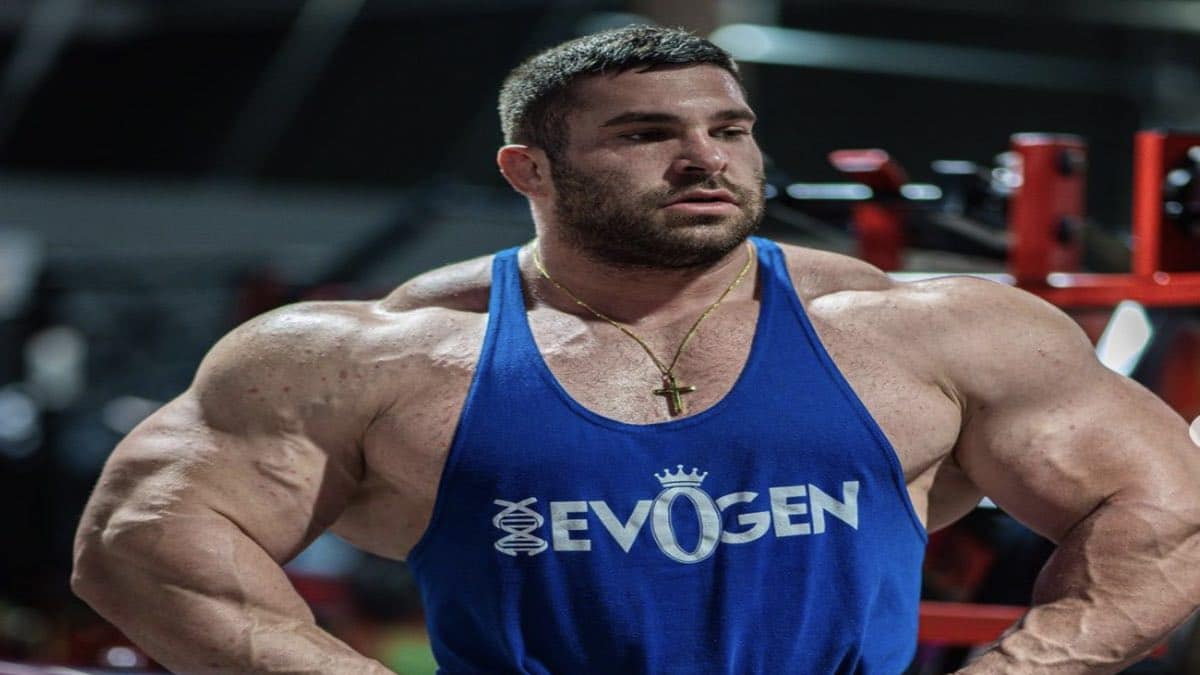
Derek Lunsford is the reigning 212 Olympia champion but won’t be defending that title at the 2022 Mr. Olympia after recently getting a special invitation to the Men’s Open division. The International Federation of Bodybuilding and Fitness (IFFB) Pro League member and his coach Hany Rambod recently had a candid conversation about what went into the division transition. Plus, they quickly diagrammed how the athlete will approach his upcoming training for the contest.

On Sept. 19, 2022, a video of their discussion was posted to Rambod’s YouTube channel. 

[Related: How to Do the Cable Crossover for Chest Size]

According to Lunsford and Rambod, the pair initially thought of shifting the bodybuilder to the Men’s Open division in May 2022. After the athlete had guest-posed — and held his own — at the 2022 Pittsburgh Pro alongside names like two-time reigning Mr. Olympia Mamdouh “Big Ramy” Elssbiay, Nick Walker, Brandon Curry, and Hunter Labrada, Lunsford and Rambod began to consider the possibility. 

Notably, Rambod had concerns that Lunsford wouldn’t be able to make weight for the 212 category again. When Chief Olympia Officer Dan Solomon suggested that Lunsford was “nowhere near 212 pounds” in a July episode of Olympia TV on YouTube, the writing might have been on the wall for Lunsford’s eventual special invitation.  

[Related: How to Do the Triceps Kickback for Arm Size]

To explain his rationale behind moving to the Men’s Open, Lunsford maintains that he had a desire to keep building mass.

“I could just feel my body wanting to grow,” said Lunsford. “After earning the 212 Mr. Olympia title last year (2021), I took a break for a little bit, but I just wanted to keep getting better every single day. For me, it was like we achieved something, and now I want to see how much better I can be. So, I just didn’t want to stop.”

In the aftermath of his 212 Olympia victory, Lunsford noted that he kept training hard and gaining weight no matter what he did to mitigate the growth.

“After the Olympia, I kept training, eating clean, doing cardio, and feeling good, but I started to gain weight,” Lunsford said. “I tried to keep my weight under 240 pounds, and if we could max out at 240, we’d be good.”

[Related: Workout Splits Explained — How They Work and Why You Need Them]

Lunsford and Rambod know they’ll face tough sledding in a competitive division with Elssbiay, Walker, Labrada, and Curry. To prepare for the slate of elite peers, Rambod clarified the bodybuilder’s next steps, which will focus a lot on preparing his upper body. 

“For him [Lunsford], it’s going to be about his back, his chest, his shoulders, his arms, and continuing to grow his outer sweep,” Rambod said. “His legs are going to look stronger now.”

As for why Lunsford ultimately wanted to move up to the Men’s Open, weight fluctuation wasn’t the only reason per Rambod. The answer is simple — Lunsford wants to be in the company of all-time greats.

“Derek [Lunsford] wanted to win the Sandow Trophy [in the Open division] and be like Arnold Schwarzenegger, Lee Haney, Jay Cutler, Phil Heath — all of them,” Rambod said. “It’s about what your end goal is and what your dream of winning is.”

If Lunsford were to win the Mr. Olympia, he’d be the first man to win two Sandows in two Olympia divisions. The 2022 Mr. Olympia is set to occur in Las Vegas, NV, from December 16-18, 2022. 

Featured image: @dereklunsford on Instagram

[ad_2]

Source link

Ceribell raises $50M for seizure monitoring and detection technology

Ceribell raises $50M for seizure monitoring and detection technology
Ceribell raises M for seizure monitoring and detection technology

[ad_1]

Led by Ally Bridge Group and with the help of its existing shareholders, venture-backed Ceribell, Inc. has raised $50 million.

The funding was structured as an extension of its $53 million Series C raise, which was announced in April 2021. 

WHAT IT DOES

Ceribell developed a rapid response electroencephalography (EEG) system to make diagnosing neurological patients more efficient. It says that its technology platform addresses the need to diagnose patients suspected of having a seizure more quickly by using its brain monitor for point-of-care seizure triage. 

The company will use the funding to support its ongoing commercial expansion in emergency departments and intensive care units. 

Additionally, the allocation will allow Ceribell to continue leveraging machine learning and improve EEG accessibility for other neurological conditions beyond seizures.

“Based on our progress to date, it is clear that the Ceribell Rapid EEG system is improving the quality of care seizure patients receive in the hospital. We look forward to continuing to bring this novel technology to more ICUs and emergency departments, as well as developing diagnostic and monitoring solutions for additional neurological indications impacting the lives of critically ill patients,” Ceribell’s cofounder and CEO Jane Chao said in a statement.

MARKET SNAPSHOT

Earlier this month, Ceribell announced it has received FDA Breakthrough Device Designation to use machine learning to analyze EEG waveform data to detect evidence of delirium.

The Breakthrough Device Designation isn’t a marketing approval from the FDA, but it aims to accelerate the review of products that could help treat debilitating or life-threatening conditions. The program aims to promptly provide patients and providers with access to medical devices and preserve the statutory standards for the 510(k) clearance. Ceribell’s EEG system has received four 510(k) clearances, with the first coming in 2017.

Another company in the seizure-detection and care space is Epitel, which raised $12.5 million in Series A funding earlier this year to commercialize its wearable EEG system. Zeit is developing a stroke and seizure-detection headband, and picked up $2 million in late 2021.

[ad_2]

Source link

Larry Wheels Squats 495 Pounds For 15 Reps

Larry Wheels Squats 495 Pounds For 15 Reps

[ad_1]

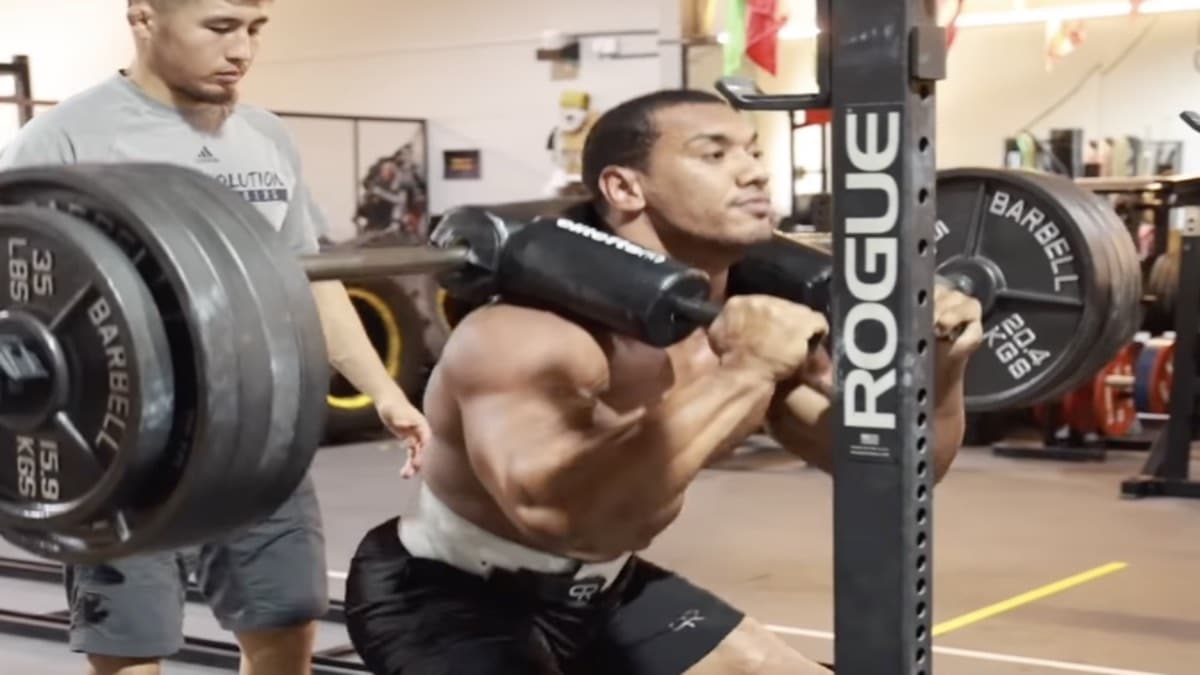
On Sept. 19, 2022, Larry “Wheels” Williams shared an Instagram video where he successfully locked out 15 reps of a 224.5-kilogram (495-pound) back squat raw with wraps. The athlete wore a lifting belt and knee wraps and used a safety squat bar — which can limit shoulder rotation and eases potential stress on them.

Wheels says he used the safety squat bar because of shoulder inflammation from some arm wrestling and traditional back squats with a straight barbell. Wheels set out for an AMRAP (As Many Reps As Possible) squat set but apparently “left a few reps in the tank” as an added precaution because he hadn’t squatted in a while. 

[Related: Back Squat Vs. Front Squat: Which, When, and Why]

Wheels’ leg endurance and power feat is related to his preparation for a “mock” powerlifting meet while on Testosterone Replacement Therapy (TRT). While he hasn’t disclosed a concrete date for the mock, Wheels plans to test out his strength on the powerlifting staples of the squat, bench press, and deadlift. 

Wheels’ Switch to TRT

In a late August 2022 video on his YouTube channel, Wheels revealed that he would stop using steroids “indefinitely.” He maintained that he had been on some degree of performance-enhancing drugs for the last decade and wanted to see what he could accomplish without their assistance. As a substitute, because the athlete’s body no longer produces testosterone naturally, he started using TRT.

With a goal of using 175 milligrams of TRT per week, Wheels would continue pushing forward with his general fitness. If a future blood work appointment with a doctor makes clear that Wheels needs less TRT, he will then decrease the size of his doses accordingly. 

Some early results from Wheels’ transition to TRT include the athlete showing off a noticeably leaner physique in September 2022 after apparently using the therapy for about a month. A week later, the athlete would simultaneously test his raw bench press and squat strength. He would cap his bench press routine by finishing a five-rep set of 224 kilograms (494 pounds). In the first instance that Wheels had squatted since injuring his back and withdrawing from the 2022 Middle East’s Strongest Man, his last set was 269.9 kilograms (595.1 pounds) for another five reps. 

For context, according to Wheels’ social media, the most he’s ever bench-pressed raw was a successful 307-kilogram (675-pound) rep from May 2022. Meanwhile, Wheels once squatted 430.9 kilograms (950 pounds) during a September 2021 training session. 

[Related: How to Do the Bulgarian Split Squat for Leg Size, Strength, and Mobility]

Editor’s Note: Breaking Muscle is not making a moral or ethical statement about the athlete’s actions. This article reports on what the athlete notes about themselves. Breaking Muscle is not a certified medical resource and does not endorse the use of performance-enhancing drugs.

In late July 2022, after revealing his back injury, Wheels noted that his long-term training goal was still to attain a 456.3-kilograms (1,000-pound) deadlift eventually. This might have been around when he started using TRT. At the time of this writing, without steroids in the picture, the athlete has not clarified whether he would still push for that hallowed mark in the immediate future.

For now, it seems Wheels wants to focus on what his body is capable of on its own. 

Featured image: @larrywheels on Instagram

[ad_2]

Source link

Ask a Health Coach: Social Media Triggers

Ask a Health Coach: Social Media Triggers

[ad_1]

Hey folks, Board-Certified Health Coach Erin Power is here to talk about social media triggers and tidying up your feed. If you find social media hurting your well-being, we’ve got strategies, tips, and backup! Have a question you’d like to ask our health coaches? Leave it below in the comments or over in the Mark’s Daily Apple Facebook group.

Annie asked:
“I switched to Primal a few months ago, and it’s going pretty well. Before that, I had a long history of on-and-off-again dieting and calorie counting. FINALLY, I’m starting to feel like I can just eat real food and let the weight watching go (without gaining weight in the process). The problem: Part of what helped me go Primal was following hashtags on Instagram like #paleo #primal #keto, etc. This actually helped me stick with it and feel part of a community of people eating this way and loving life. BUT lately I’ve noticed myself getting super triggered by certain posts. Usually these are women who are super thin (maybe anorexic) using paleo and keto hashtags. While I’ve come a long way, I don’t look anything like that. It triggers old habits around food and body image. How do I deal with this but keep the good parts of social media inspiration? Sorry for the long question lol.”

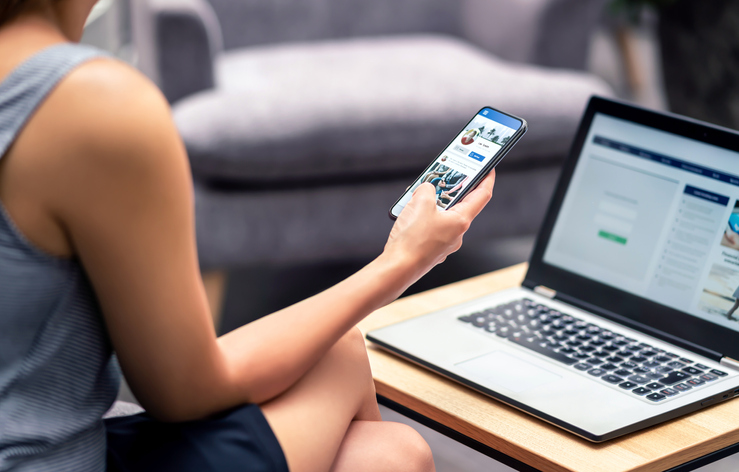
Person checking social media on their phone and laptopFirst, welcome to the Primal eating crew, and congratulations on your conscious efforts to surround yourself with supportive messaging and community. Creating a supportive environment is HUGE when it comes to implementing and sticking with habit shifts and healthy change efforts.

I’d like to acknowledge you, as well, for noticing what’s NOT working when it comes to social media and your well-being. That awareness is an overlooked first step of self-care. In the end, we are our number 1 caretakers. By recognizing what is helpful and what is not, you can take steps to choose what truly nourishes you.

Tidy your feed, tidy your mind.

As you mentioned, social media can be a tremendous support for Primal eating and living. In a world where so much messaging (online and IRL) is NOT health conscious, it’s nice knowing you can go online and see or even connect with the many people embracing healthy lifestyles and having fun along the way. Good for you for seeking out community as you make supportive shifts.

That said, social media is a mixed blessing. You never know who or what might enter your feed. This is the case whether you follow certain hashtags or if the platform feeds you “recommended” or “suggested” posts and ads based on your previous activity.

As a Primal Health Coach, I work with many clients who have a history of eating disorders or other unhelpful patterns related to food, eating, and weight loss culture. One of the first things I do is recommend that they take a close look at what content and messaging they’re consuming on a daily basis—including on social media. Is it helpful? Or not so much?

I notice this myself on Instagram from time to time and take immediate, proactive steps to edit out what’s triggering or not serving my best interest. I even have a saying: Tidy up your Instagram feed. Tidy up your mind.

If Instagram is recommending posts that you find triggering and unhelpful, make sure to flag them as “Not Interested.” You do this on the post itself, by clicking the three dots in the upper-right corner to see your options. Of course, if you follow the triggering account, unfollow! You can do so on the person’s profile page or by simply clicking those dots up top for the “Unfollow” option. If a particular hashtag seems to bring lots of triggering posts your way, unfollow that too. If the post is “sponsored,” you’ll see an option to stop seeing the ad.

Put simply: Anytime anything or anyone makes you feel badly about yourself or is derailing your healthy change efforts, take the power back and simply make it disappear. We’re focusing on Instagram, but this applies to all social media as well as other content you’re consuming online or in person. Unfortunately, you will have to do it again and again because this stuff always seems to creep back in. But there is something intentional and empowering about this exercise! If you do this often enough your feed DOES change.

Say no thanks, with care.

Current beauty ideals have come far but still have a long way to go. A lot of social media content tries to convince us to be as lean and light as possible (whether through overt messaging or through what’s implied in images and captions).

Since you’re already embracing a Primal lifestyle, you know that achieving a particular size or shape is not what we’re about. Yes, many folks reach their ideal body composition by eating a nutrient-dense diet comprised of real, whole, minimally processed foods; high-quality protein; healthy fats; fruits and veggies; and high-fat dairy. But the bigger picture is enhanced health, longevity, and vitality inside, regardless of how we look on the outside.

This is true, AND, so long as there are not underlying health conditions and so long as the 10 Primal Blueprint Rules are generally applied with at least 80% consistency, desired changes in body composition tend to happen naturally—without calorie counting or struggle.

As a Primal Health Coach, I see this as the norm with my clients, rather than the exception. I also see it as something that helps many step out of old, unhelpful patterns around food: At long last, they can eat delicious, healthy food in abundance and not worry about unwanted weight gain or trying to fight their body and biology. For most, this is the definition of food freedom.

I want to mention this, in part, because we can never know what people posting on social media are actually going through. I suspect many who post “triggering” content around weight and dieting are actually caught in their own places of suffering and struggle. They have not found the sort of “accidental food freedom” that comes along with the Primal approach to eating, moving, and living.

Rather than blame or shame them (or leave unkind comments), I try to send compassionate thoughts, remove them from my feed, and move on. I’m NOT saying this is easy or that I don’t stay triggered or even angry at times. Truthfully, it can be so, so hard to let a triggering image, caption, or comment go.

But the more we manage to remember that these are humans too, with their own vulnerabilities and places of struggle reinforced by widespread diet and beauty ideals, the more we are actively contributing to changing the current culture.

But back to you, Annie: You’re your number 1 caretaker and need to first and foremost take care of you. I just find considering the wider context helpful in softening the power of triggers, taking empowered action, and moving on.

Social Media Strategy & Support

To sum up:

  • DO follow accounts and hashtags that are supportive of your health, lifestyle, and food choices. They are a great source of inspiration, motivation, and community!
  • Consider following trusted sources. Mark’s Daily Apple, for instance; or the Primal Health Coach Institute!
  • DON’T follow accounts or hashtags that make you feel bad about yourself or otherwise undermine the empowering, healthy changes you’re making.
  • Edit your social media feeds regularly, keeping what’s helpful and removing the rest.
  • Remember our shared humanness and proceed from a place of compassion and kindness whenever possible. We have no idea what others are going through behind the filtered lens of Instagram and other social media channels.

For anyone needing extra backup amidst the diet culture and unhelpful messaging, consider working with a health coach one-on-one. Imagine if you could take all the tips in a post like this and allllll the information that you’ve been gathering over the decades…and reliably and consistently implement them. That’s where coaches help!

External accountability truly is a game changer, and we can help you stay the course with your goals and navigate tricky social situations online and off. Visit myprimalcoach.com to learn more and get started!

Do you find social media helpful or harmful in your wellness journey? Have any tips to share? Let us know and drop your favorite, most supportive Instagram accounts in the comments!

myPrimalCoach

Primal_Fuel_640x80

About the Author

Erin Power

If you’d like to add an avatar to all of your comments click here!

[ad_2]

Source link

Tia-Clair Toomey and Brooke Wells Get After It in Team Training for 2022 Down Under Championship

Tia-Clair Toomey and Brooke Wells Get After It in Team Training for 2022 Down Under Championship

[ad_1]

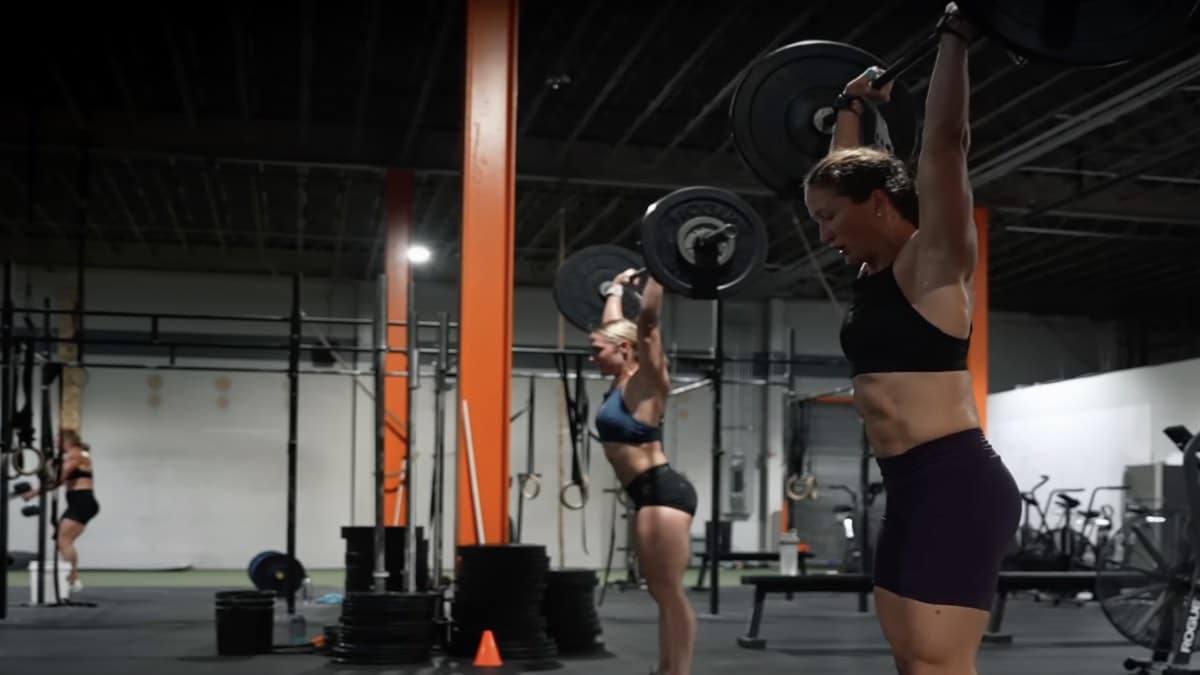
On Sept. 20, 2022, six-time Individual CrossFit Games Champion Tia-Clair Toomey shared a video of her first Team training session with Brooke Wells on her YouTube channel. The pair will compete together in the Teams division at the upcoming 2022 Down Under Championship on Nov. 18-20, 2022, in Wollongong, Australia. Ellie Turner is the duo’s third teammate. 

It’s an in-depth look at the first steps for Toomey and Wells before the Australian contest. 

[Related: How to Do the Kettlebell Swing for Explosive Power, Strength, and Conditioning]

Toomey and Wells’ training session followed a pyramid rep scheme — where the first set has the lowest number of reps and highest weight, and the reps increase while the weight decreases as the routine moves forward. 

Here’s a rundown of their complete workout, which took place over three rounds:

  • 9 bar muscle-ups
  • 18 calories on the ski erg
  • 36 GHD sit-ups
  • 18 calories on the ski erg
  • 9 bar muscle-ups
  • Rest one-for-one — meaning an equal work-to-rest ratio

Notably, when Wells diagrammed the workout on a whiteboard, Toomey admitted to not having performed any muscle-ups since her historic performance at the 2022 CrossFit Games. While not explicitly stated, the pair also worked through some walking barbell lunges and closed their routine on a stationary Assault bike. The purpose of the cardio is to help Toomey acclimate to her target heart rate as she tries to get back into top-notch shape following some time off after the Games. 

Post-workout, Toomey noted she felt a degree of fatigue. That might have been related to both her time off and recovery from a back injury.

According to a recent September video testimonial, Toomey’s appearance at the 2022 Down Under Championship will be her first in a Team competition in over five years. Most of Toomey’s recent focus has been on winning the Individual CrossFit Games for a record six consecutive times, surpassing five-time Fittest Man On Earth® Mat Fraser. For the 25-year-old Wells, who finished in fifth place at the 2022 CrossFit Games, it will be her first Team appearance since a fifth-place Regional result with Team 540 Beefy in 2014. 

[Related: How to Do the Goblet Squat for Lower Body Size and Mobility]

Toomey is the defending Rogue Invitational Champion, and the 2022 edition of that competition is scheduled for Oct. 28-30, 2022, in Austin, TX. However, at the time of this writing, the athlete has not confirmed she would defend her title in Texas. 

Whatever the near future holds in store for Toomey as a Team competitor, her past Individual precedent says she and her teammates could put on a show in Australia. 

Featured image: Tia-Clair Toomey & Shane Orr on YouTube

[ad_2]

Source link