By Cara Murez HealthDay Reporter HealthDay Reporter
TUESDAY, Aug. 30, 2022 (HealthDay News) — Customers who bought a bestselling mattress sold on Amazon and at retailers nationwide are suing the manufacturer amid claims that fiberglass fibers in the product have damaged their health.
Zinus, Inc., is fielding multiple lawsuits over its “Green Tea Mattress.” Among the claims is a proposed class-action lawsuit led by a California woman who is representing several thousand people.
“It’s not hyperbole to say that this has ravaged thousands of individuals’ lives from across the United States,” James Radcliffe, a personal injury lawyer with Cueto Law, told the Los Angeles Times.
Radcliffe’s firm started a 2020 lawsuit on behalf of Amanda Chandler and Robert Durham of Illinois, who said they spent months in a hotel and paid more than $20,000 in professional mediation services after a Zinus memory foam mattress purchased at Walmart for their child contaminated their home with fiberglass in 2019.
Another woman, Vanessa Gutierrez of Los Angeles, told the Times that the mattress she bought for her 4-year-old daughter had cost her nearly $20,000 in damages and left scars from the fiberglass on the girl’s chest and calves.
One reviewer on Amazon warned that they unzipped the outer cover of the mattress and “unleashed [an] invisible fiberglass storm into our house,” CBS News reported.
A representative from Zinus told CBS News that the fiberglass is “standard in the mattress industry” and isn’t considered hazardous by the U.S. Consumer Product Safety Commission (CPSC).
“Most consumer complaints about fiberglass being released from mattresses that have been reviewed by staff involved the outer cover being removed or damaged. If the outer cover remains intact, then the exposure to fiberglass particles is expected to be minimal,” the CSPC told CBS News.
California’s Department of Public Health conducted a study published in the International Journal of Environmental Research and Public Health in February finding that fiberglass fibers had “a potential risk of consumer exposure if the zipper on the outer cover is opened.”
Fiberglass is a less costly fire-retardant material. The queen-sized Green Tea memory foam mattress sells for about $310 on Amazon. It includes instructions warning customers not to remove the outer mattress cover, to protect the fire barrier inside, Zinus told CBS News.
Amazon did not respond to CBS News’ requests for comment. Walmart did and noted that it and other retailers have been dropped from the initial lawsuit.
More information
The U.S. Consumer Product Safety Commission has more on mattresses.
Aug. 30, 2022 – Wordle is a fun game that brings me pleasure and satisfaction every day.
Except when it’s a stupid waste of time. Like the day my streak ended, six games short of 100. I just didn’t see the point of a silly word puzzle that contributes nothing to the common good.
I mean, really. I have better things to do. But I still play it, every day.
It’s not just me. Ask Jackie Silverman, an assistant professor of marketing at the University of Delaware who studies “the judgments and consequences of repeated behaviors.”
She’s a streak expert. And that’s a hot field right now – the proof is on your phone. “Streaks are just so prevalent in people’s lives,” she says.
A streak is among the most obvious and addictive ways for a company to lure us back to its website. Apps like Snapchat and Duolingo (the language-learning company) use streak maintenance like a boss, and Wordle is no slouch.
But streaks can be helpful and healthful, too, for instance for people trying to get in shape or lose weight. “Streaks can serve as a tangible cue of progress,” says Kaitlin Woolley, PhD, a marketing professor at Cornell University who studies goal pursuit and motivation.
Naturally there are apps just for building and tracking streaks: Habitify, Streakster, Streaks, Loop, Productive, on and on. Their apparent purpose is to encourage healthy habits. “Streaks offer a sense of momentum, which is motivating,” says Woolley. “People feel they’re on a roll, and psychologically that makes it easier to continue.”
Silverman says streaks can help throughout life – in education (attendance, test scores, books read) and the workplace (arriving on time, say, or making every meeting). Factories, she notes, proudly post signs about how many days they’ve gone without an accident.
Indeed, the lure of a perfect streak is embedded deep within the human psyche. How can we leverage that to help us, without being totally derailed when a streak, inevitably, ends?
The Rush of Reward
“People find streaks inherently valuable and motivating,” says Silverman, who has the receipts. She co-authored with Alixandra Barasch, PhD, of the University of Colorado, a study titled On or Off Track: How (Broken) Streaks Affect Consumer Decisions, published in June in the Journal of Consumer Research.
What they found was that telling people – and reminding them – that they have a streak makes them far more likely to keep the streak going. Logging and tracking add fuel to this obsessive fire, she says: “Highlighting those streaks via logs and technology has a huge impact.” (Even old-school checkmarks on your wall calendar can work, she says, though feedback from others generally carries more weight.)
In their experiments – word games, number games, exercise programs – they found that people were so devoted to keeping a streak alive that they’d prefer to keep playing instead of switching to something that gave them more pleasure.
If their streak ended, they’d agree to watch an advertisement when told it would “repair” their streak.
Duolingo knows this. It will allow a customer to preserve their streak by using its virtual currency (“gems” and “lingots” earned by completing lessons) to purchase a “streak freeze” if they know they’re going to miss a day.
Snapchat has countless teens hooked on Snapstreaks, which means you’ve exchanged Snaps with someone on consecutive days. A “fire” icon appears, with a number indicating days the Snapstreak has been going.
You can feel the sadness of a young user in the “I lost my Snapstreak” page in Snapchat support: “If you lost your Snapstreak and you know you’ve sent a Snap (not Chat) back and forth within the 24 hour window, please let us know.”
The Power of Symbols
Fire, checkmarks, coins, lingots – they’re all part of the psychological play, Silverman says. “People really value symbols and feedback about what they’ve done,” she says. Sometimes the urge to acquire symbols becomes more important than whatever motivated them to start the streak in the first place, she says.
Jordan Etkin, PhD, a marketing professor at Duke University, says icons “act almost like money does, in terms of being an external reinforcer. It feels like a currency, like you’re accumulating some credit, some value.”
For me, it was the numbers on my Wordle stats page, which were all headed to 100: games played, winning percentage, current streak, max streak. It was going to look glorious. The stats and the “Guess Distribution” bar graph loomed in my mind like a judgey assessment of my language skills.
That’s way too emotional a reaction to a bunch of pixels, right? But the whole thing is emotional, including that sinking feeling when my streak ended. I was deflated, dejected, despondent.
There’s one more “de,” Silverman told me – demotivated. It was true: I had no interest in playing the next day (though I did), and the next time I lost a game, I cared a lot less. Even skipped a day, absent-mindedly, and shrugged it off.
When a streak breaks, Silverman says, “that is especially demotivating because people interpret that as a goal failure.”
I did feel like a failure, especially since I’d been pre-bragging to friends how close I was to a 100-game streak.
That’s another reason we like streaks: It’s a way of showing off. Etkin says sharing results is a form of status signaling: “You feel like you look good to others.”
Busted! (For the record, I only shared my accomplishments and failure with those close to me. My wife was amused.)
But while a broken streak feels like your progress “has been reset to zero,” it helps to remember that isn’t the case, Woolley says. “Just the tangible aspect people are tracking has been reset.” If your daily-walk streak breaks, your fitness will still carry over.
“That bummed-out aspect is what inspired our project,” says Silverman. She and her husband, a craft beer aficionado, were at a brewery with friends, including Barasch, an associate professor of marketing. Her husband noticed he hadn’t logged a beer he’d tried the previous weekend, as was his usual practice. His logging streak was broken, so he had less interest in logging that day’s beer. “That’s weird,” Silverman and Barasch told each other, and their paper was the result, years later.
How Streaks Can Help
Speaking of drinking, Silverman notes that one of the best-known and most valuable uses of streak mentality is among members of Alcoholics Anonymous and Narcotics Anonymous. They earn medallions marking sobriety milestones.
If they relapse, “it’s quite daunting for them to get back to where they were,” she says. The organizations’ supportive mentality is impressive, she points out: “They support each other and say, ‘No, you earned that chip. You accomplished that streak. You did it once and you can do it again. But just because you relapsed doesn’t mean it’s all over.’”
Silverman says that encouraging approach can help lessen the demotivation of a broken streak, “which would be really nice for marketers to try to incorporate, too.”
Don’t hold your breath. Silverman says that some friends who know of her research are more streak savvy now. “They feel manipulated.” But, she quickly adds, streaks are “mostly there to help you. I don’t think it’s a problem, and I still indulge in streaks.” COVID-19 broke her 150-week streak of working out, and sure enough, she’s been less motivated since then. “I need to get a new streak going.”
Streaks are appealing as a measure of progress, and thus powerful, says Adam Alter, PhD, a marketing professor at New York University and author of Irresistible: The Rise of Addictive Technology and the Business of Keeping Us Hooked. As a streak gets longer, “keeping it alive is more meaningful. Add these elements together, and you have a strong recipe for reinforcement and reward.”
For her part, Silverman remains hopeful that her research may “help generate new ideas about how to keep people engaged and happy.”
One thing is consistent: Streaks mean money. The New York Times bought Wordle for more than $1 million last fall from its developer, Josh Wardle. In its first-quarter 2022 earnings statement, the company said, “Wordle brought an unprecedented tens of millions of new users to the Times.” The company enjoyed its best quarter ever for new subscribers to its Games section. Digital subscription revenue was up 26%.
When Josh Wardle sold the game to the Times, he told fans, “I am working with them to make sure your wins and streaks will be preserved.”
Aug. 30 , 2022 – Most everyone has played the “separated-at-birth” game, joking that look-alike friends and even celebrities who aren’t related might have a secret shared parentage.
But new research shows it’s no joke that, with some doppelgangers, there is in fact more to the idea than meets the eye. A team of Spanish scientists studied pairs of unrelated look-alikes and found that they not only bear a striking resemblance to each other, but also share significant parts of their DNA.
The findings, published in the journal Cell Reports, suggest those genetic similarities might extend beyond just facial appearance. DNA analysis based on the new work could one day help doctors identify a person’s hidden risks for certain diseases and even help law enforcement officials target criminals through biometric forensics, the researchers say.
But perhaps the most fascinating takeaway is the likelihood that most people on the planet have an unrelated “twin” out there somewhere, says Manel Esteller, PhD, a researcher at the Josep Carreras Leukemia Research Institute in Barcelona, who led the study.
“It’s not unreasonable to assume that you, too, might have a look-alike out there,” he says.
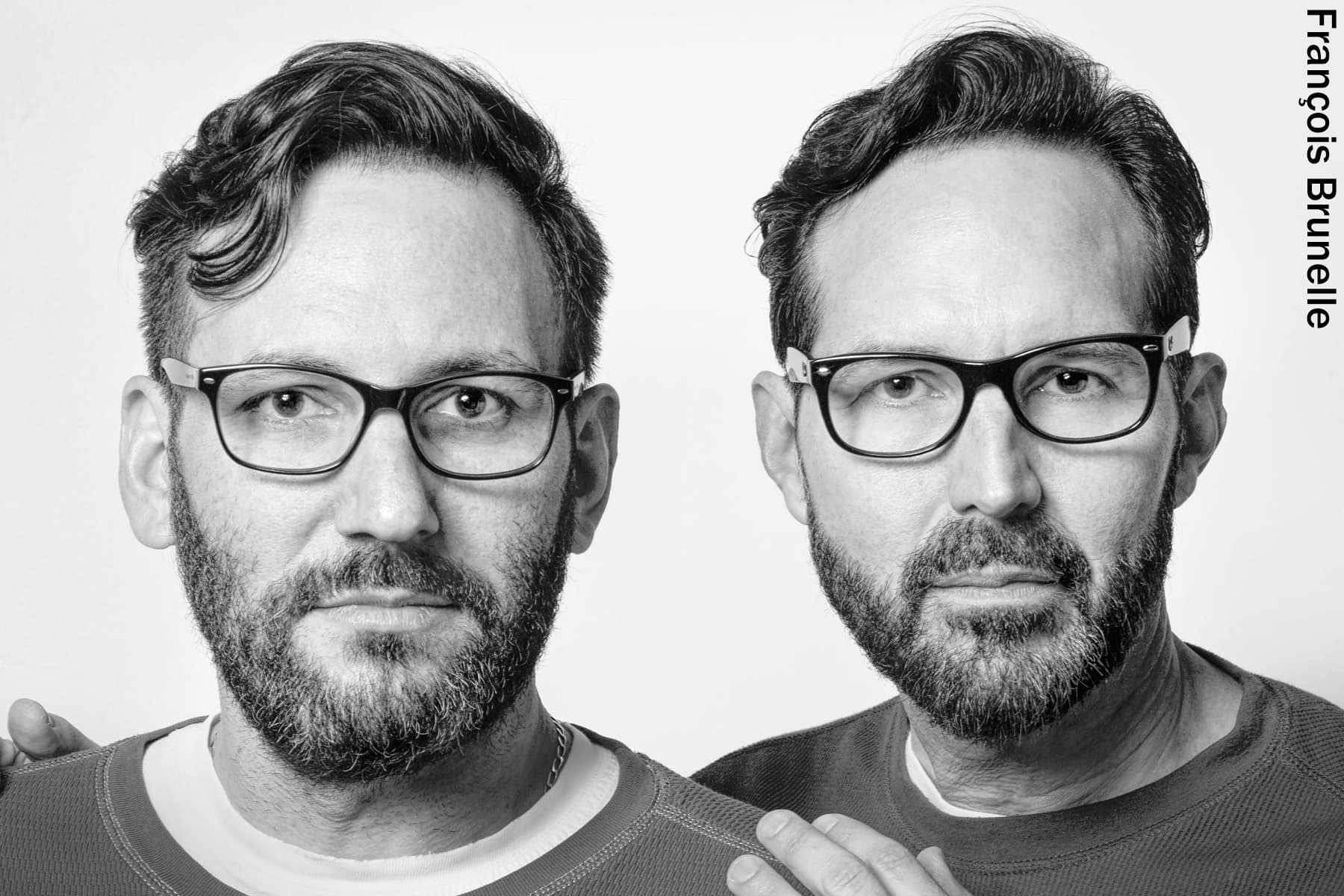
Esteller’s new study grew out of his research into the similarities and differences among identical twins. He was inspired by a photography project by French-Canadian artist François Brunelle, who has been taking pictures of unrelated look-alikes worldwide since 1999. His remarkable photographs prompted Esteller to ask: Could DNA explain these look-alike “twins”?
“In 2005 we discovered that brother twins that have the same DNA [also called monozygotic twins] presented epigenetic differences [chemical changes in DNA that regulate how genes are expressed] that explained why there were not perfectly identical,” he explains.
“In the current study, we have explored the other side if the coin: people that have the same face, but they are not family related. These individuals helped answer the longstanding question of how our aspect is determined by nature and/or nurture.”
To answer that question, Esteller’s team recruited 32 pairs of people from Brunelle’s photo sessions to take DNA tests and complete lifestyle questionnaires. The researchers also used facial recognition software to assess their facial similarities from headshots.
They found that 16 of the look-alike pairs had scores on par with those of true identical twins, who were also analyzed by the team’s facial recognition software. Of the look-alike pairs, 13 were of European ancestry, one Hispanic, one East Asian, and one Central-South Asian.
The researchers then examined the DNA of those 16 pairs of look-alikes and found they shared significantly more of their genetic material than the other 16 pairs that the software deemed less similar in appearance – a finding the researchers said was “striking.”
Esteller notes that it would seem to be “common sense” that people who look alike should share “important parts of the genome, or the DNA sequence,” but that had never been scientifically shown – until now, that is.
“We found that the genetic sites shared by the look-alike corresponded to four categories,” he says. “Genes previously reported to be associated with the shape and form of the eyes, lips, mouth, nostril, and other face parts using general population studies; genes involved in bone formation that can relate to the skull shape; genes involved in distinct skin textures; [and] genes involved in liquid retention that can give different volumes to our face.”
While the doppelgangers’ DNA was closely matched, Esteller was surprised to find that the lifestyle surveys – assessing 68 variables – revealed major differences in the 16 pairs of people. These differences were almost certainly due to the environment and other parts of their lives and upbringing (think: “nurture vs. nature”) that didn’t have anything to do with their genetic makeup.
Those differences, he explains, are another sign the similarities in the pairs’ appearances almost certainly have more to do with their shared DNA than other things.
Even so, he found some look-alikes were alike in ways that could be linked to their DNA – such as height and weight, personality traits (such as nicotine addiction), and even educational status (suggesting intelligence might be linked to genes).
“It is said that our face reflects our soul,” Esteller says. “Being less poetic, our look-alike answered a large questionnaire to grasp their physical and behavioral profiles. We observed that those look-alikes with high concordance in the facial algorithms and genetic commonalties not only shared the face, but also other features. …”
So, what explains those genetic similarities? Esteller says it’s likely that it’s chance and coincidence, spurred by population growth, and not a result of some prior, unknown ancestral or familial link. There are, he explains, only so many things that make up human facial features, so it stands to reason that some people – by luck of the draw – will resemble others.
“Because the human population is now 7.9 billion, these look-alike repetitions are increasingly likely to occur,” he says. “Analysing a larger cohort will provide more of the genetic variants shared by these special individual pairs, and could also be useful in elucidating the contribution of other layers of biological data in determining our faces.”
Beyond the weird-science appeal of the study, Esteller believes his findings could help diagnose diseases, using DNA analysis. They might even help police hunt down criminals one day in the future – giving forensic scientists, for instance, the ability to come up with sketches of suspects’ faces based only on DNA samples found at a crime scene.
“Two areas are now very exciting for further development,” he says. “First: Can we infer from the face features the presence of genetic mutations associated with a high risk of developing a disease such as diabetes or Alzheimer’s? Second: Can we now from the genome be able to reconstruct a face that would be extremely useful in forensic medicine? Both avenues of research can now be pursued.”
Hear It From the Doppelgangers
For Marissa Munzing and Christina Lee, who took part in the look-alike study, the social implications of Esteller’s research are at least as important as the scientific findings.
Munzing, who has known Lee since they met freshman year at the University of California, Los Angeles 14 years ago, did not expect to find that their DNA was such a close match.
“I was definitely surprised that [we] might have similar DNA, as close to being twins, with my friend,” she said in an email. “How crazy!! And cool! I do call her my ‘twin’ from time to time so I guess it’s really fitting now!”
But knowing we all might have a secret twin out there could help bring people together at a time when Americans and others throughout the world are so deeply divided along class, social, and political lines, she says.
Lee agrees, noting that having a friend with a closely matched genetic profile “and even a similar face” adds to a sense of connection with others we might consider strangers.
“It can be nice to feel like you aren’t alone, even if is just in your looks,” she says.
“We really are more similar and connected to each other than we think,” Munzing says.
Feel like you have to hustle your butt off to get more clients?
These days, it can seem like being “just” a great coach isn’t enough of a sell.
Not only do you need to know your stuff and be a natural “people person,” but to market yourself properly, you’re also supposed to figure out a unique coaching niche, define your brand, keep up with research, and regularly post polished, compelling content—on whatever platform is trending at the moment.
Um… what?
No wonder so many coaches feel overwhelmed and confused about the whole marketing thing.
(Not to mention icky. You don’t want to have to promise abs in eight days just to get some eyes on your business!)
Fortunately, there IS a way to market yourself effectively—using YOUR strengths, YOUR message, and on YOUR schedule.
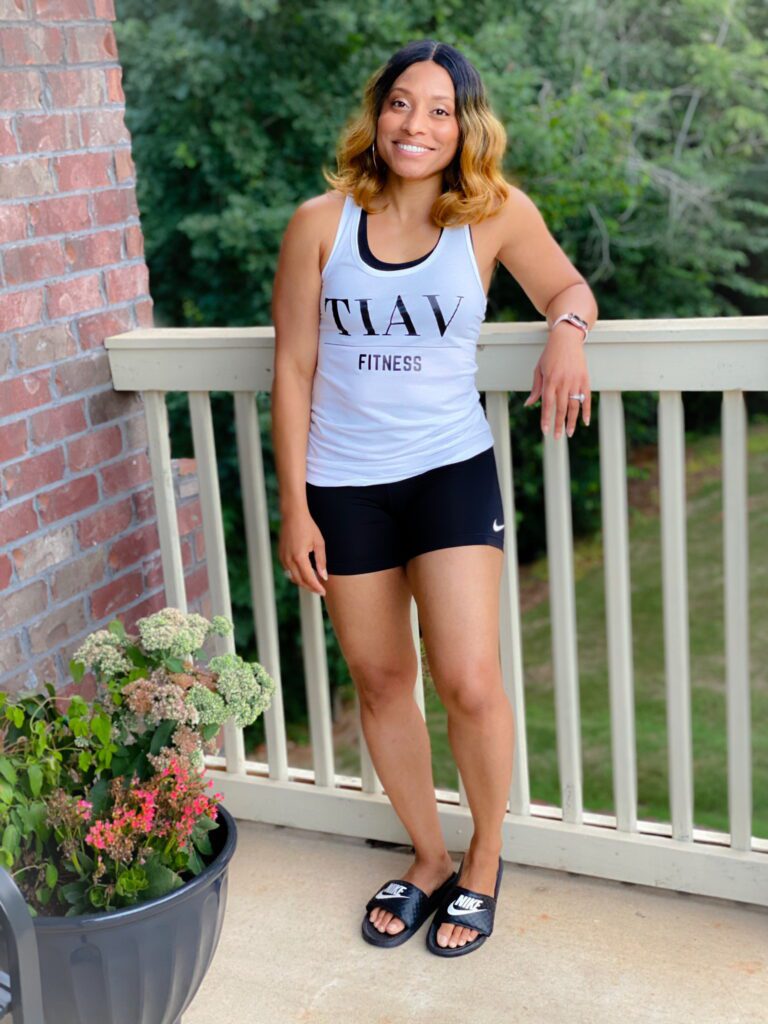
Take fitness and nutrition coach Tia Smith.
Tia’s a 38 year-old coach living in metropolitan Atlanta. By most standards, she’s extremely successful.
She’s got:
✅ A full roster of loyal clients. In fact, her biggest challenge is scaling her business so she can make room for even more people.
✅ A highly engaged community. Her email newsletter has an open rate three times higher than industry standard.
✅ A clearly defined brand, voice, and niche clientele. She knows who she is, and more importantly, how to connect authentically with her clients. (No surprises: Her clients love her.)
✅ Zero stress about marketing. She works at a pace that’s do-able for her (with three kids, the 24/7 hustle culture was a hard no). She also doesn’t compare herself to other coaches or get distracted by all the stuff people say you “should” do.
Tia doesn’t consider herself an expert at marketing.
She doesn’t coach celebrities or have a million followers on Instagram. And she definitely doesn’t pretend to be perfect.
According to Tia, “I’m just doing my best.”
And yet, her marketing “strategy” is working.
In this article, we share five (non-slimy) marketing lessons from Tia that can also work for YOUR coaching business.
If you feel overwhelmed or uneasy about marketing, this advice is for you.
Over 150,000 health & fitness professionals certified
Save up to 30% on the industry’s top nutrition education program
Get a deeper understanding of nutrition, the authority to coach it, and the ability to turn that knowledge into a thriving coaching practice.
Marketing Lesson #1: Design your product or service based on what people actually want.
Prior to launching her coaching business, Tia taught fitness classes for women.
Before and after class, the studio buzzed with conversation. The women loved to chat with Tia, sometimes even following her out to the parking lot to tell her about their lives.
“They told me about everything,” says Tia. “Not just about their workouts and nutrition, but also about their kids, pets, husbands, jobs, and most of all, how hard it was to come to class because of everything they had going on.”
Over time, Tia noticed a pattern.
“These women all struggle to make time for themselves, or to get to the gym. They have other obligations on their mind. That’s when it clicked: They’re just like me!”
In the pandemic, the studio where Tia taught closed. A painful experience, but also an opportunity:
Tia realized that her clients still relied on her. More than anything else, they needed someone to be in their corner.
As Tia says, “My clients need someone to say, ‘Girl you’ve got to make time for yourself, because if you don’t, the day will not make time for you.’”
And that’s how Tia’s coaching business was born. Her specialty? Helping women make time for themselves and live a healthier lifestyle.
Many people (and businesses) come up with an idea for a product or service, then try to convince people they should buy it.
A more effective strategy is to work the other way around: Identify a need in the marketplace, and provide a solution.
(Even if you’re an established coach, you can use this strategy to refine your offerings to better meet your clients’ needs.)
For example, since starting her coaching practice, Tia learned her clientele wanted more specific nutrition guidance than she was equipped to provide. So, she’s taking the Precision Nutrition Level 1 Nutrition Coaching Certification, and creating some new services around this demand.
(Interested in becoming a nutrition coach—or adding nutrition to your existing coaching? Here’s everything you need to know: How to become a nutrition coach)
Try it: Ask these questions during your next client consult.
To gain intel about what your clients need from you, Tia’s suggestion is simple:
Ask.
Some of her go-to questions:
What’s a typical day like for you?
What are some competing commitments you have going on in your life?
How do you feel when you wake up in the morning?
How do you want to feel when you wake up?
Try to understand how your client currently feels, how they want to feel, and what’s standing in their way.
Then, use that insight to develop services that people actually need—and want to buy.
Marketing lesson #2: Your “Don’t Do” list is just as important as your “To Do” list.
People love giving marketing advice:
“You’ve got to master the IG algorithm.”
“Actually, TikTok is where to focus.”
“Post workout videos on YouTube! People love that stuff!”
But for Tia, none of that advice felt quite right.
“I tried to do video,” she recalls. “But it was too much. I have three kids. One of them has unique needs. And I run a business. I don’t do hair and makeup every day. So recording a daily video? That just isn’t for me.”
Tia decided to get clear on what she would do—and what she wouldn’t.
So, she listed all her options on paper.
“I crossed off anything I didn’t want to do. Then I looked at what was left and picked the ones that spoke to me the most.”
For Tia, that was an email newsletter, and a podcast.
With a background in journalism and her facility for good conversation, these formats allow her to express her personality in a way that feels natural.
Plus, by focusing on just these two marketing mediums, she’s able to stay creative—and productive.
The key takeaway
There’s lots of noise out there. You’re bound to encounter all kinds of (often conflicting, not to mention unsolicited) marketing advice.
To make progress and avoid overwhelm, choose projects you’re totally committed to—and skip the ones you aren’t.
Try it: Write your “not gonna do” list
Grab a piece of paper.
Write down all the things you could do to market yourself.
Now, review the list. Cross off anything that gives you an ick-factor, plus anything you don’t have time or interest in.
What’s left? Circle the top 1-3 things that you want to commit to—for now.
(You can revisit this list at any time, but the immediate goal is to get focused and get started.)
Marketing Lesson #3: Commit to a realistic schedule—for YOU.
Pop quiz. How often should you post on social media?
Once a week
Once a day
Several times a day
Surprise! It’s secret option D: Post at the pace works for you—whether it’s regularly, or not at all.
It’s easy to look at peers in the industry and think you’re not producing enough. But unless you’re trying to become a mega-influencer, you probably don’t need to post daily to engage or build your audience.
Tia focuses on content that works with her skills and her schedule.
Her rationale: “I figured if I took away the pressure of blogging daily or weekly, the creativity would naturally flow. I could take my love for writing and focus on making my newsletter better and better.”
Tia’s strategy worked. She has an engaged following, and the metrics to prove it: Her typical open rate is 60 percent. (For reference, the industry standard is about 20 percent.)
The key takeaway
Resist the pressure to “keep up” with whatever other people are doing.
Simple and manageable IS an option.
Says Tia, “Choose your pace. Create in a way that works for you, that won’t add to your stress.”
Try it: The weekly action list
If you want to make progress with your marketing projects, one option is to schedule the crap out of your day. Book time with yourself as you would an appointment, and don’t you dare break it.
That approach might work for some people. But what if you need more flexibility in your day?
Enter Tia’s strategy: The weekly to-do list.
At the beginning of every week, she makes a list of all the marketing tasks she wants to accomplish.
Because it’s weekly, it’s less rigid and more agile. Says Tia, “I don’t hold myself to a certain day and time; I just chip away at projects throughout the week.”
Tia also suggests approaching your list with realism, and compassion (i.e. expect that you’ll often have more to do than you were able to get done).
Also, be sure to include self-care on your list. Include things you want to do for yourself on the list, whether that’s working out, or going for tacos with friends. That ensures some degree of work-life balance, and prevents burnout.
Marketing Lesson #4: Your imperfections are an asset, not a weakness.
Remember how Tia’s clients would follow her out to the parking lot just so they could continue the feel-good convos?
They didn’t follow her because they thought she was perfect or had all the answers to life’s mysteries.
They followed her because she is warm, caring, funny, down to earth, and (in Tia’s words) a little “rough around the edges.”
In other words, she’s Tia.
As humans, we relate to other humans: imperfect and messy, just like us.
“Truly, no one has it figured out, which means I don’t have to come off like some all-knowing fitness and food guru-goddess,” says Tia.
“I can say to people, ‘Oh, I tried that recipe and girl, it burnt, it was a total fail.’ People relate to that. It also leaves me room for error, to be human.”
This might come as a relief if you’ve ever felt you’re somehow not perfect enough—or not fit enough—to be a coach.
But it can also be scary to be yourself. What if you get rejected?
That’s when Tia reminds herself:
“Some people will relate to me, some people will relate to somebody else. There’s a coach out there for everybody.”
The key takeaway
Coaches often feel that to be taken seriously or seen as professional, they have to project a nearly flawless image. This feeling of pressure can lead to mega imposter syndrome.
But many clients actually feel more comfortable working with a coach who’s relatable rather than aspirational.
Says Tia, “I’ve learned that when you present your most authentic version of yourself with just a little professional polish on it, people gravitate to you.”
Try it: Find the commonalities
If you feel a bout of imposter syndrome coming on, try this exercise Tia uses before creating a podcast or newsletter or meeting with a new client:
Imagine your typical audience member, client, or person you have in mind.
Then, list out all the things you might have in common.
“I imagine the person I’m talking to. Then I say to myself:
Girl, you’ve got a significant other in your life, so do I. You have children, so do I. You have a job, so do I. Your parents get on your nerves cause they’re getting older and they don’t know how to work anything, so do I. You hate overpriced groceries at the grocery store, so do I.
I’m not that different from you.”
This exercise absolves Tia from feeling like she has to present herself as “better than.”
“I don’t try to pretend that I’ve unlocked some magic that gives me all of this fitness and food knowledge. I like eating Chipotle and Chinese takeout too. Not hiding that allows me to engage with people in a very human way.”
Marketing Lesson #5: Take a shot; it doesn’t have to be a slam dunk.
Starting any new endeavor can be intimidating.
But at a certain point, you have to take a shot.
“When I first started the podcast, I was like, ‘What if no one listens? What if this isn’t the right move? What if it’s not well received? What if no one cares?’”
And yet (eventually), Tia took the leap. How did she do it?
“I tell myself, everything doesn’t have to be a slam dunk. Not everyone is Steph Curry, right?”
You don’t have to be the MVP to serve your audience as best you can.
Also, keep your expectations in check:
It takes time to build an audience, whether it’s an online community, a podcast audience, or a steady roster of clients.
Just like in nutrition and fitness, results likely won’t be instantaneous. But steady progress pays off.
In a world dominated by social media, we’re taught to think that success should be instant, that if we aren’t going viral we’re doing something wrong.
In reality, good things usually take time (and lots of iterating).
Allow yourself the grace to make mistakes, and keep at it.
Try it: Choose your metrics
How do you know if you’re making progress?
Track a few metrics that are important to YOU.
Here are a few things Tia looks for:
Direct feedback. “When people tell me they like the newsletter and look forward to getting it, I know it’s working. I can tell they’re engaged from what they say.”
Email open rates. “To me, that is the cherry on top of the sundae. If I know people are opening it, that’s a good sign I’m providing something of value to them.”
No matter what metrics you measure, a few tips:
Don’t worry about tracking things that don’t matter to your business. For example, Tia doesn’t sweat how many followers she has on social media, because she’s not trying to be a viral sensation. Like Tia, you might not need a giant following or a mailing list, just a dozen or two steady clients.
Focus on improvement rather than reaching specific numbers. Just like your client can’t control the number on the scale, but they can control their habits, you can’t control how many people subscribe to your content, but you can work on doing things a little bit better each day.
Be realistic. Communities and relationships take time to build. If you keep the long game in view and your expectations in check, you can build something meaningful and substantial over time.
“Once you remove the expectation that things are going to be instant” says Tia, “you open yourself up to all kinds of possibilities. That attitude not only feels better, it works better too.”
If you’re a coach, or you want to be…
You can help people build nutrition and lifestyle habits that improve their physical and mental health, bolster their immunity, help them better manage stress, and get sustainable results. We’ll show you how.
Bullies’ top tactic is social exclusion, also known as “relational aggression.” It involves shutting out peers from group activities and spreading false rumors about them.
While green tea has a long-standing reputation for health benefits, research has been much more mixed on black tea. One problem, says Maki Inoue-Choi, an epidemiologist at the National Cancer Institute, is that large observational studies on tea and mortality have focused on countries like Japan or China—places where green tea is more popular.
To fill this gap, Inoue-Choi and her colleagues analyzed data in the United Kingdom, where black tea drinking is common. After surveying about 500,000 people and following them for a median of 11 years, the results, published Aug. 29 in the journal Annals of Internal Medicine, gave black tea a boost. Among the population of tea drinkers—89% of whom drank black tea, compared to 7% who drank green—drinking tea was associated with a modestly lower mortality risk for those who had two or more cups a day compared to non-drinkers. People who added milk or sugar also experienced the benefit, and the results remained consistent regardless of the tea’s temperature. The findings also indicate that tea drinkers had a lower risk of dying from cardiovascular disease, ischemic heart disease, and stroke than those who didn’t drink tea.
While it’s difficult to say why people who drink tea may live longer, it’s not entirely a surprise. According to Inoue-Choi, tea is “very rich in bioactive compounds” that reduce stress and inflammation, including polyphenols and flavonoids.
A 2020 study that used the same British database as the new research found that there’s an association between higher consumption of both black and green tea and biomarkers that predict cardiometabolic health, including lower cholesterol levels. Research has also suggested that tea can help lower blood pressure.
Going forward, researchers should take a closer look at the connection between tea and cardiovascular disease, says Rob M. van Dam, professor of exercise and nutrition sciences at George Washington University’s Milken Institute School of Public Health, who did not participate in the study. One striking thing about the new research, he notes, is that there isn’t an association between increasing the dose of tea—the amount a person consumes—and decreased mortality after the person had consumed two or three cups. The exception, he said, is if you eliminate coffee drinkers, who may have made it harder to spot an association between increasing the amount of tea you drink and mortality because they had lower mortality during the study. Without the coffee drinkers, it became clearer that drinking tea was associated with a lower risk of dying of heart disease. “The association between tea consumption and cardiovascular mortality may be driving the association between tea consumption and all-cause mortality,” van Dam says.
None of this is to say, however, that you should run to your kettle. The new research is based on an observational study—meaning that the evidence wasn’t gathered from an experiment, and the results were inferred by the researchers. The findings shouldn’t be used to make health decisions, and must be replicated in randomized clinical trials, experts say. Plus, the magnitude of the association between tea drinking and mortality was modest, which means it’s likely that another characteristic of people who drink tea could have led to this effect, says van Dam. For instance, people who drink tea might hypothetically have been less likely to consume soft drinks.
As Inoue-Choi put it, the new findings should be reassuring to people who drink tea regularly. But “people shouldn’t change how many cups of tea to drink every day because of these results,” she says.
Theranica, an Israeli prescription digital therapeutics developer focused on migraine care, announced today that it has scored $45 million in Series C funding.
The round was led by New Rhein Healthcare Investors with participation from aMoon, Lightspeed Venture Partners, LionBird, Takoa Invest and Corundum Open Innovation.
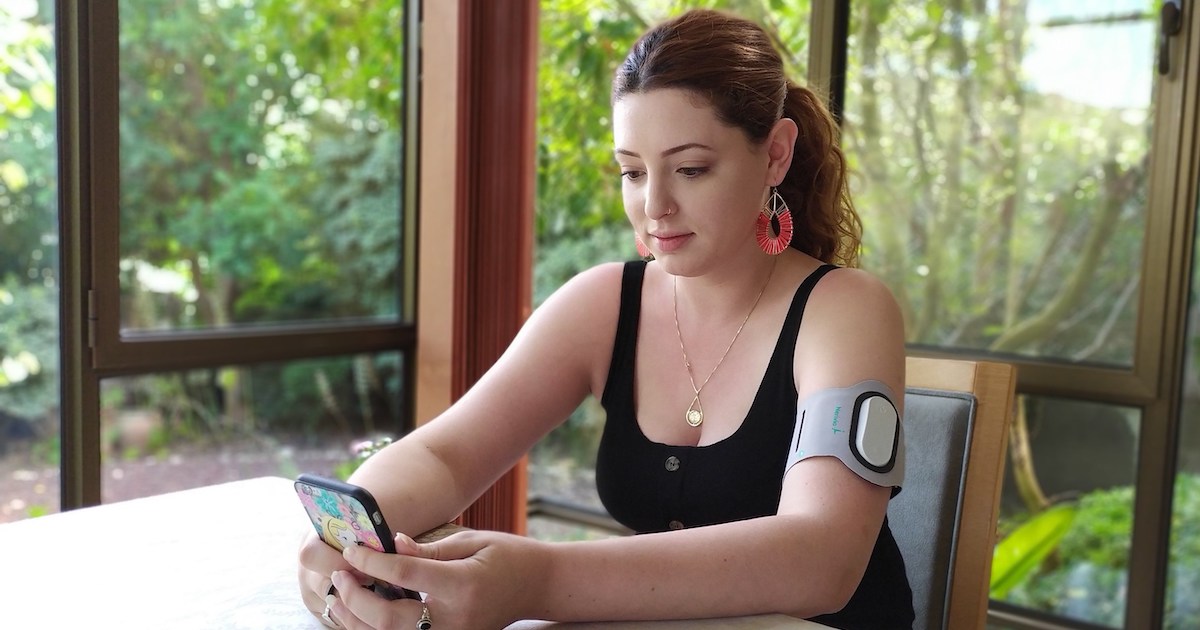
The company offers Nerivio, a device worn on the arm that delivers low energy electrical pulses and pairs with a smartphone app. The wearable is worn for 45 minutes at the onset of a migraine and aims to trigger a conditioned pain modulation response to alleviate symptoms. The app can control the device’s intensity, monitor treatment duration, and pause or stop the device. It also serves as a “migraine diary” that can be shared with healthcare providers.
Theranica plans to use the capital from the Series C to expand its presence in the U.S.
“Over the last couple of years, we have verified the three fundamental conditions of a successful new prescribed therapy in the U.S.: healthcare providers have confidence in prescribing our Nerivio for treating migraine, patients get significant clinical benefit from using it and payers realize the importance of providing their insured members with access to this therapy. With this triad demonstrated, we needed the appropriate funding to unleash the huge potential of Nerivio in the U.S.,” Alon Ironi, CEO of Theranica, said in a statement.
Another digital health company in the migraine space is German startup Perfood, which focuses on personalized nutrition recommendations to prevent migraines. The company raised €5 million in Series A funding in 2020.
Singapore-based Healint also makes an app, called Migraine Buddy, to track triggers as well as which treatments are helpful. Specialty telehealth company Thirty Madison offers a migraine-focused product called Cove, where users can consult with providers and receive prescriptions.
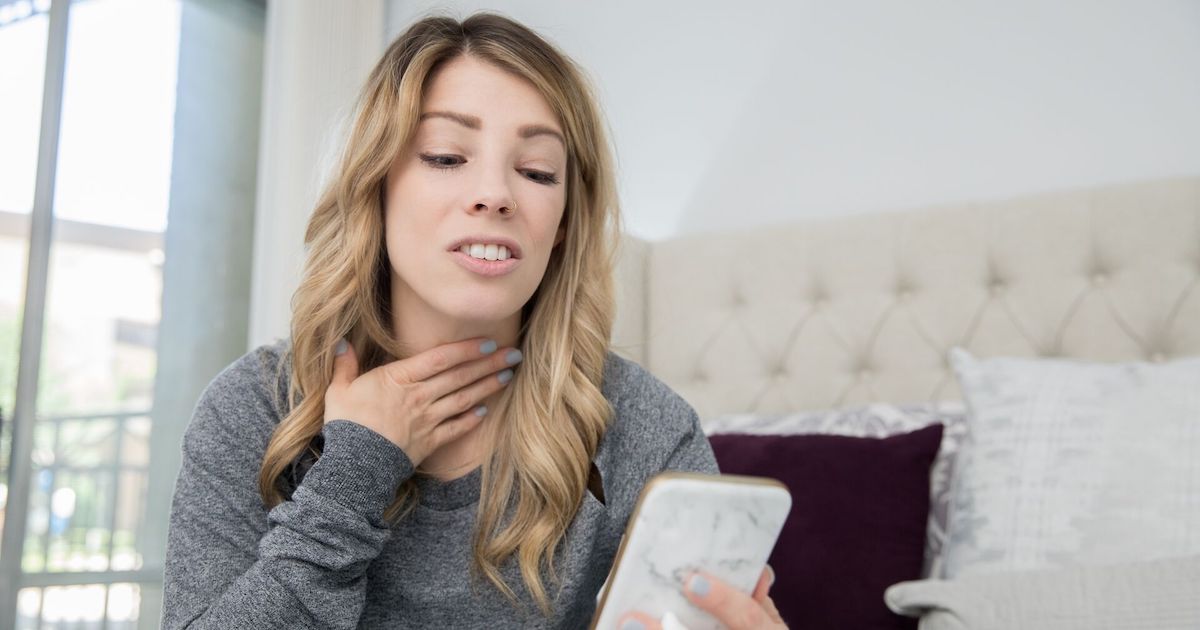
The accuracy of digital symptom checkers for both triage and diagnosis is generally low, which could pose a risk to patient safety, according to a review of studies published in npj Digital Medicine.
Researchers compiled 10 studies that evaluated a total of 48 online symptom checkers. Half of the studies used real patients, while the other half studied simulated cases. The review found primacy diagnostic accuracy, or listing the correct diagnosis first, ranged from 19% to 38%. Top three diagnostic accuracy, which was evaluated in seven studies, ranged from 33% to 58%.
Triage accuracy, or sending users to the right level of care, was higher, ranging from 49% to 90%. Three studies examined cases by emergency status as well and two found symptom checkers were more accurate at triaging emergent cases. However, one study found triage accuracy for ophthalmic emergencies was lower than non-urgent cases, at 39% compared with 88%.
“Our review highlighted that both diagnostic and triage accuracies were generally low. Moreover, there is considerable variation across symptom checkers despite being presented with uniform symptom parameters. We also note that the diagnostic and triage accuracies of symptom checkers, as well as the variation in performance, were greatly dependent on the acuity of the condition assessed,” the review’s authors wrote.
“As a whole, these issues raise multiple concerns about the use of symptom checkers as patient-facing tools, especially given their increasingly endorsed role within health systems as triage services that direct patients towards appropriate treatment pathways.”
WHY IT MATTERS
Researchers noted some limitations to the review, including the use of simulated patient cases and the studies’ focus on high-income countries like the U.S. and the UK. They also said bias could be introduced in retrospective studies where information is collected after the event, variation in performance could be attributed to the difference between studies, and AI-enabled symptom checkers may improve over time.
However, the results raise concerns about using symptom checkers, particularly when they’re promoted by health systems to send patients to the correct care site. The study’s authors said there are also issues with transparency surrounding how symptom checkers are built and what context, patient demographics and clinical information are used.
“Given the increasing push towards adopting this class of technologies across numerous health systems, this study demonstrates that reliance upon symptom checkers could pose significant patient safety hazards,” they wrote. “Large-scale primary studies, based upon real-world data, are warranted to demonstrate the adequate performance of these technologies in a manner that is non-inferior to current best practices. Moreover, an urgent assessment of how these systems are regulated and implemented is required.”