Provider search firm Kyruus buys patient engagement company Epion Health

Provider search firm Kyruus buys patient engagement company Epion Health

[ad_1]

Kyruus announced this week it will purchase patient engagement company Epion Health for an undisclosed sum, marking the provider search and scheduling firm’s second acquisition.

Kyruus offers tools for patients to help them find providers and schedule appointments, as well as a platform for health systems to match and maintain information about their providers. Epion’s services include online check-in, a telehealth platform and tools for connecting with patients, such as reminders to schedule preventive care or explaining pre-surgery instructions.

The companies said the combined entity will work with more than 500 health systems and medical groups. 

“Epion Health is a trusted partner to hundreds of health systems and medical practices,” Kyruus CEO and founder Dr. Graham Gardner said in a statement. “By bringing our solutions together, we are uniquely positioned to deliver an end-to-end offering that makes it easy for patients to find and schedule care, complete pre-visit tasks, and meaningfully engage with their providers regardless of where they begin their search.”

THE LARGER TREND

In late 2020, Kyruus announced plans to acquire patient navigation and price transparency company HealthSparq from Cambia Health Solutions. That deal closed in spring 2021

Kyruus announced it had raised $30 million in funding in June 2020, not long after a $42 million Series D round of funding. According to Crunchbase, Epion has a total funding pot of more than $10 million. 

There are a number of competitors in the patient engagement and communication space. UpFront recently announced a $10.5 million Series C round of funding, not long after the company announced it had acquired fellow engagement company PatientBond

Luma Health, which offers scheduling, messaging and provider referral tools, announced a $130 million Series C round in November last year, boosting its total raise to $160 million. 

ON THE RECORD

“This is a win for our customers who will now have a broader offering of solutions for their patients, including scheduling, while receiving the same high level of care and service Epion has provided over the years,” Joe Blewitt, Epion’s CEO, said in a statement. “The powerful combination of our platforms will make connecting with patients easier for providers and healthcare organizations of all sizes, in all markets, driving engagement in high-quality care that is convenient, accessible and efficient.”

[ad_2]

Source link

Monkeypox Outbreak Slows as Feds Promise Action, Outreach

Monkeypox Outbreak Slows as Feds Promise Action, Outreach

[ad_1]

Sept. 15, 2022 – The number of Americans newly diagnosed with monkeypox has decreased by about 50% since early August, White House and other federal health officials announced Thursday.

Although the overall picture is improving, there are still some areas in the U.S. seeing increasing infection numbers. For this and other reasons, the CDC plans to keep “the pedal to the metal” and continue educating, vaccinating, and treating communities at highest risk, said CDC Director Rochelle Walensky, MD.

“Over the last several weeks, we’ve been pleased to see a decline in the growth of new cases here and abroad,” Walensky said Thursday at a press briefing by the White House Monkeypox Response Team and public health officials.

What’s exciting is that the administration strategy here is working,” Walensky said.

“It’s really important to say we’re not the only ones who have our foot on the gas pedal,” said Demetre Daskalakis, White House Monkeypox Response deputy coordinator. He said communities of gay, bisexual, and other men who have sex with men, including men of color, have “their foot on the gas pedal too.” This population is helping officials understand how best to use the treatment drug TPOXX and the Jynneos vaccine, for example, and will be essential to ongoing research.

Monkeypox has also been identified in a small number of women, but in each of these cases no further transmission has occurred, officials noted.

TPOXX and Concerns About Resistance

Some experts have questioned whether tecovirimat, or TPOXX, an antiviral drug authorized by the FDA to treat the related smallpox virus, might someday become less effective against the virus.

“Whenever you have a viral illness that spreads with replication largely in the community and you have a single drug that you’re using, there is always the theoretical possibility of resistance,” said Anthony Fauci, MD, director of the National Institute of Allergy and Infectious Diseases.

“That’s the reason why we’re uncomfortable when you only have a single drug that has been shown to have efficacy, or you’re proving that it has efficacy, which is part of the clinical trial,” Fauci said.

Fauci’s team is sponsoring a clinical trial that launched Sept. 8 and plans to enroll 500 adults and children. Researchers plan to evaluate the drug’s safety and whether tecovirimat works better than placebo on healing time, pain scores, preventing people from progressing to severe monkeypox, and more. The risk of resistance will also be addressed in this trial, Fauci said.

Future research will investigate other antiviral medications so there is more than one option, especially if resistance to tecovirimat does emerge.

Vaccination: Successes, Equity Efforts, and Research

More 540,000 doses of the Jynneos vaccine have been administered across 39 jurisdictions reporting data to the CDC, Walensky said.

CDC data shows 47% of people getting a first dose are white, 21% are Hispanic, and 12% are Black.

Officials also report an increase in people receiving their second dose of Jynneos over the past few weeks. The recommended time between the first and second vaccine dose is 28 days.

“As a reminder, Jynneos is a two-dose vaccine and it is important to receive the second dose in the series to have the best protection against monkeypox,” Walensky said. She added that current data suggests peak protection occurs 14 days after the second dose.

It’s the early adopters, or as Walensky describes them, “the people who roll up their sleeves before they’ve reached the pharmacy,” that account for most vaccinations so far.

Officials recognize we’re entering a more challenging phase in terms of getting more reluctant people vaccinated as well.

In an effort to “hunker down and go deeper” into communities at risk, the White House plans to build on their previous success with outreach at large pride events and expand the pilot program to smaller community events, said Bob Fenton, White House Monkeypox Response Coordinator.

Effective interventions hinge on targeting men of color as well, which is part of the CDC Monkeypox Vaccine Equity Pilot Project.

“We have also seen the racial and ethnic makeup of this outbreak evolve,” Walensky said. At first, monkeypox cases were reported in primarily non-Hispanic white men. In the past few weeks, however, the demographics have shifted. Now non-Hispanic white men account for 26% of cases, non-Hispanic black men for 38%, and Hispanic or Latino men for 25% of cases.

“As we’ve said, equity must remain the cornerstone of our response,” Daskalakis said.

In terms of vaccine research, the NIAID is sponsoring a study to evaluate the effectiveness of administering the Jynneos vaccine between layers of skin instead of under the skin for protection against monkeypox. As of Aug. 10, the FDA allowed the splitting of a single dose of Jynneos typically given under the skin, or subcutaneously, into five doses given between layers of the skin, or intradermally. Now researchers are looking at the practice’s safety and efficacy further in the trial.

Monkeypox‘Does Not Travel Alone’

Data shows monkeypox does not travel alone, so using existing services that focus on HIV and sexually transmitted infections in affected communities is another strategy to educate and reduce monkeypox, Daskalakis said.

For example, 38% of 1,969 people diagnosed with monkeypox had HIV and 41% had an STI in the prior year, according to a study published in the CDC’s Morbidity and Mortality Weekly Report on Sept. 9.

“We quickly use this data to change how monkeypox services can be supported by public health departments, clinics, and community-based organizations,” Daskalakis said. “The same people we need to test for HIV and sexually transmitted infections and lead to prevention and care are the same people who need monkeypox-related services, like testing, education and vaccines.”

“This important change in guidance … allows our frontline health departments and community-based organizations to use their HIV and STI resources to accelerate us all to the end of the monkeypox outbreak.”

[ad_2]

Source link

Fruit Leathers Have Detectable Pesticides: Report

Fruit Leathers Have Detectable Pesticides: Report

[ad_1]

Sept. 15, 2022 – Many brands of fruit leathers, a popular children’s snack, have detectable levels of pesticides, according to a new report from the Environmental Working Group, a nonprofit organization aiming to improve human health and the environment. Many dried fruit snacks also have detectable pesticide levels.

It released the results today in a report, “Fruit leather: A snack sometimes chock full of pesticides and sugar.”

The Environmental Working Group’s bottom line: “Fresh fruit is always going to be better,” says Sydney Evans, a science analyst for the group and a report co-author. To minimize pesticide exposure, dried fruit snacks are better than fruit leathers, she says, and organic is better than non-organic or conventional products.

But others blasted the report. “This fear mongering needs to stop,” says Teresa Thorne, executive director of the Alliance for Food and Farming, a nonprofit organization representing organic and conventional farmers growing fruits and vegetables. The levels found, she says, are well below the standards set as acceptable.

Report Details

The Environmental Working Group asked an independent lab to test 37 samples of organic and non-organic fruit leathers from 10 brands, as well as 30 samples of dried fruits, another popular take-along snack, from 16 brands. (Fruit leathers are made by dehydrating fruit puree into a sheet that’s shiny with a leather-like texture.)

None of the samples tested were above federally set tolerance levels for pesticides, Evans says. But the group believes those tolerance levels are too high.

Detectable levels of pesticides were found in all 26 samples of the non-organic (conventional) fruit leathers tested and in half of the non-organic samples of dried fruit, according to the Environmental Working Group, whose funding sources include organic food companies.

But some of the organic products evaluated also had pesticide levels similar to or higher than those found in conventional products. For instance, Trader Joe’s Organic Apple Strawberry Fruit Wrap had 247 parts per billion (ppb) of pesticide concentration, while Bob Snail Apple-Strawberry Stripe, a conventional product, had 106 ppb.

One sample of Stretch Island Raspberry Fruit Leather contained 17 pesticides, the most of all the leathers tested. When the researchers looked at the total amount of pesticides, also known as total pesticide concentration, samples from That’s It, Stretch Island, and Trader Joe’s had the highest total concentration, on average.

The most commonly found pesticides were fungicides pyrimethanil, fludioxonil, and thiabendazole, and the insecticide acetamiprid. Exposure to pesticides has been linked to cancer, hormone disruption, reproductive and nervous system effects, and birth defects, among other problems.

“For me, the takeaway is [that] fresh fruit is always going to be better” if given a choice between that, the fruit leathers, and dried fruit, Evans says. If that’s not an option, she recommends choosing dried fruit snacks over the fruit leathers. The Environmental Working Group evaluation of 30 dried fruit products found conventionally grown dried cranberries, dates, figs, mangoes, and prunes had non-detectable levels of pesticides, while the highest levels were found on raisins and dried strawberries, cherries, and apples.

Fruit strips with the highest levels of pesticides often had apples as the first ingredient, Evans says. Apples are No. 5 on the 2022 “Dirty Dozen” list, the annual ranking of fruits and vegetables with the most pesticides produced by the group.

The process of dehydrating fruit to make the fruit leathers also “drastically increases the concentration of natural sugar the snack contains,” the group says, resulting in far more sugar than a similar-size serving of fresh fruit would have. It also recommends avoiding fruit leathers and dried fruit with added sugar and additives such as flavor enhancers, food coloring, and corn syrup.

Federal Regulations

The Environmental Protection Agency sets tolerance levels for pesticide residues on foods. The U.S. Department of Agriculture’s Pesticide Data Program is a national pesticide residue monitoring program.

Other Perspectives

“Nothing they found is surprising,” says Kaci Buhl, an associate professor and director of the Pesticide Safety Education Program at Oregon State University Extension, Corvallis, who reviewed the report for WebMD.

The findings also don’t support advice to avoid the fruit leathers altogether, she says.

“Parents should not be concerned as long as fruit leathers are consumed in moderation as part of a varied and balanced diet,” Buhl says. (Organic produce is also grown with pesticides, she notes.)

Others pointed out what they saw as discrepancies in the calculations. For instance, a That’s It Blueberry Fruit Bar, which is 35 grams (1.2 ounces), was found to have a total pesticide concentration of 3,541 ppb, while its Mini Blueberry Fruit Bar, at 20 grams (0.7 ounces), with the same ingredients, had a total pesticide concentration of 89.

The fruit leather and dried fruit snacks are especially handy when those who live a distance from a food market run out of fresh fruit, Buhl says.

“We need to stop scaring people away from the foods they enjoy, especially when they are healthy foods like fruits and vegetables,” Thorne says.

On the alliance’s consumer information site, its pesticide calculator estimates that a child could eat 340 servings a day of apple with no ill effects of pesticides “even if the apple has the highest pesticide residue recorded for apple by the USDA.”

WebMD reached out to companies for comment. Stretch Island did not respond, and That’s It declined to comment on the findings.

[ad_2]

Source link

In Small Study, CAR-T Therapy Pushes Lupus Into Remission

In Small Study, CAR-T Therapy Pushes Lupus Into Remission

[ad_1]

By Denise Mann
HealthDay Reporter

THURSDAY, Sept. 15, 2022 (HealthDay News) — While there’s no cure for lupus and treatments don’t work for many of the 1.5 million people who live with the disease in the United States, a new study shows a cancer therapy may kick hard-to-treat lupus into remission.

Lupus is an autoimmune disease that occurs when the body’s immune system engages in friendly fire against its own skin, joints, bones, kidneys and heart, triggering a host of symptoms.

Enter CAR-T therapy.

Used to treat certain types of cancer, the therapy takes your body’s own T-cells, trains them in the lab to recognize very specific cells, and then infuses them back into the body to do their job. In lupus, the therapy targets CD19, a protein on B cells.

The small study included five people with severe lupus involving multiple organs — such as the kidneys, heart, lungs and joints — who hadn’t responded to standard therapy.

After about three months after one treatment, patients showed improvements in symptoms, including a remission of organ involvement and the disappearance of disease-related autoantibodies. What’s more, they didn’t need any additional treatments. Similar results in one person with lupus were published in the New England Journal of Medicine in 2021.

“Severe [lupus] is very sensitive to CAR-T cell treatment, and [people] can go into longstanding drug-free remission,” said study author Dr. Georg Schett. He is vice president of research and chair of the department of internal medicine at the Friedrich-Alexander University Erlangen-Nürnberg in Germany.

Side effects in the new study were mild, he said. In cancer studies, this type of therapy has caused high fever and chills, trouble breathing, and cytokine release syndrome, which can happen as CAR-T cells multiply and release large amounts of inflammatory cytokines into the bloodstream.

Now, researchers plan to find out if the immune system has really undergone a deep reset and behaves normally going forward.

“Longer monitoring of patients will be important to test whether they enjoy long-term disease-free remission and are eventually cured from [lupus],” Schett said.

This treatment may be available sooner rather than later, he said. “CAR-T cell therapy is already established in cancer medicine, particularly to treat lymphoma and leukemia,” Schett noted.

The study was published Sept. 15 in the journal Nature Medicine .

Lupus experts said they were excited about the new findings.

“This is a very, very big deal,” said Hoang Nguyen, senior scientific program manager at the Lupus Research Alliance. Her organization supported the initial studies looking at CAR-T therapy in a mouse model of lupus.

“There is no real cure for lupus, and the effectiveness of current therapies is limited,” said Nguyen. “This is the first time that a treatment eliminated lupus symptoms in all treated subjects in a 100-day study.”

Still, she cautioned, there were only five people in the trial and there’s not enough information on the long-term effects yet.

Dr. Jill Buyon is director of the Lupus Center at NYU Langone in New York City. “Patients got better with regard to multiple symptoms and didn’t require other therapies, including steroids. More studies in larger numbers of people with lupus who are followed for longer are needed, but this is very exciting,” she said.

And according to Dr. Ruth Fernandez Ruiz, a rheumatologist at the Hospital for Special Surgery in New York City, “[Lupus] patients had striking clinical improvement after CAR-T cell therapy and experienced clinical remission while off… [the] drugs for the duration of follow-up after CAR-T cell therapy. Despite the limited sample size, it is likely that there will be a role in implementing CAR-T cell therapy in [lupus], particularly for patients with severe disease that is refractory [resistant] to standard-of-care treatments.”

More information

The Lupus Foundation of America has more on lupus treatments.

SOURCES: Georg Schett, MD, vice president, research, chair, department of internal medicine, Friedrich-Alexander University Erlangen-Nürnberg, Nürnberg, Germany; Jill Buyon, MD, rheumatologist, director, Lupus Center, NYU Langone, New York City; Hoang Nguyen, PhD, senior scientific program manager, Lupus Research Alliance, New York City; Ruth Fernandez Ruiz, MD, rheumatologist, Hospital for Special Surgery, New York City; Nature Medicine, Sept. 15, 2022

[ad_2]

Source link

Long COVID Was a Preventable Tragedy. Some of Us Saw It Coming

Long COVID Was a Preventable Tragedy. Some of Us Saw It Coming

[ad_1]

Sept. 15, 2022 – It should have been the start of new insight into a debilitating illness. In May 2017, I was patient No. 4 in a group of 20 taking part in a deep and intense study at the National Institutes of Health aimed at getting to the root causes of myalgic encephalomyelitis/chronic fatigue syndrome, a disease that causes extreme exhaustion, sleep issues, and pain, among other symptoms.

What the researchers found as they took our blood, harvested our stem cells, ran tests to check our brain function, put us through magnetic resonance imaging (MRI), strapped us to tilt tables, ran tests on our heart and lungs, and more could have helped prepare doctors everywhere for the avalanche of long COVID cases that’s come alongside the pandemic.

Instead, we are all still waiting for answers.

In 2012, I was hit by a sudden fever and dizziness. The fever got better, but over the next 6 months, my health declined, and by December I was almost completely bedbound. The many symptoms were overwhelming: muscle weakness, almost paralyzing fatigue, and brain dysfunction so severe, I had trouble remembering a four-digit PIN for 10 seconds. Electric shock-like sensations ran up and down my legs. At one point, as I tried to work, letters on my computer monitor began swirling around, a terrifying experience that only years later I learned was called oscillopsia. My heart rate soared when I stood, making it difficult to remain upright.

I learned I had post-infectious myalgic encephalomyelitis, also given the unfortunate name chronic fatigue syndrome by the CDC (now commonly known as ME/CFS). The illness ended my career as a newspaper science and medical reporter and left me 95% bedbound for more than 2 years. As I read about ME/CFS, I discovered a history of an illness not only neglected, but also denied. It left me in despair.

In 2015, I wrote to then-NIH director Francis Collins, MD, and asked him to reverse decades of inattention from the National Institutes of Health. To his credit, he did. He moved responsibility for ME/CFS from the small Office of Women’s Health to the National Institute of Neurological Disorders and Stroke, and asked that institute’s head of clinical neurology, neurovirologist Avindra Nath, MD, to design a study exploring the biology of the disorder.

But the coronavirus pandemic interrupted the study, and Nath gave his energy to autopsies and other investigations of COVID-19. While he is devoted and empathetic, the reality is that the NIH’s investment in ME/CFS is tiny. Nath divides his time among many projects. In August, he said he hoped to submit the study’s main paper for publication “within a few months.”

In the spring of 2020, I and other patient advocates warned that a wave of disability would follow the novel coronavirus. The National Academy of Medicine estimates that between 800,000 and 2.5 million Americans had ME/CFS before the pandemic. Now, with billions of people worldwide having been infected by SARS-CoV-2, the virus that causes COVD-19, the ranks of people whose lives have been upended by post-viral illness has swelled into nearly uncountable millions.

Back in July 2020, National Institute of Allergy and Infectious Diseases Director Anthony Fauci, MD, said that long COVID is “strikingly similar” to ME/CFS.

It was, and is, a preventable tragedy.

Along with many other patient advocates, I’ve watched in despair as friend after friend, person after person on social media, describe the symptoms of ME/CFS after COVID-19: “I got mildly sick”; “I thought I was fine – then came overwhelming bouts of fatigue and muscle pain”; “my extremities tingle”; “my vision is blurry”; ”I feel like a have a never-ending hangover”; “my brain stopped working”; “I can’t make decisions or complete daily tasks”; “I had to stop exercising after short sessions flattened me.”

What’s more, many doctors deny long COVID exists, just as many have denied ME/CFS exists.

And it is true that some, or maybe even many, people with brain fog and fatigue after a mild case of COVID will recover. This happens after many infections; it’s called post-viral fatigue syndrome. But patients and a growing number of doctors now understand that many long COVID patients could and should be diagnosed with ME/CFS, which is lifelong and incurable. Growing evidence shows their immune systems are haywire; their nervous systems dysfunctional. They fit all of the published criteria for ME, which require 6 months of nonstop symptoms, most notably post-exertional malaise (PEM), the name for getting sicker after doing something, almost anything. Exercise is not advised for people with PEM, and increasingly, research shows many people who have long COVID also cannot tolerate exercise.

Several studies show that around half of all long COVID patients qualify for a diagnosis of ME/CFS. Half of a large number is a large number.

A researcher at the Brookings Institution estimated in a report published in August that 2 million to 4 million Americans can no longer work due to long COVID. That’s up to 2% of the nation’s workforce, a tsunami of disability. Many others work reduced hours. By letting a pandemic virus run free, we’ve created a sicker, less able society. We need better data, but the numbers that we have show that ME/CFS after COVID-19 is a large, and growing, problem. Each infection and re-infection represent a dice roll that a person may become terribly sick and disabled for months, years, a lifetime. Vaccines reduce the risk of long COVID, but it’s not entirely clear how well they do so.

We’ll never know if the NIH study I took part in could have helped prevent this pandemic-within-a-pandemic. And until they publish, we won’t know if the NIH has identified promising leads for treatments. Nath’s team is now using a protocol very similar to the ME/CFS study I took part in to investigate long COVID; they’ve already brought in seven patients.

There are no FDA-approved medicines for the core features of ME/CFS. And because ME/CFS is rarely taught to medical students, few frontline doctors understand that the best advice to give suspected patients is to stop, rest, and pace – meaning to slow down when symptoms get worse, to aggressively rest, and to do less than you feel you can.

And so, millions of long COVID patients stumble along, lives diminished, in a nightmare of being horribly sick with little help – a dire theme repeating itself over and over.

Over and over, we hear that long COVID is mysterious. But much of it isn’t. It’s a continuation of a long history of virally triggered illnesses. Properly identifying conditions related to long COVID removes a lot of the mystery. While patients will be taken aback to be diagnosed with a lifelong disorder, proper diagnosis can also be empowering, connecting patients to a large, active community. It also removes uncertainty and helps them understand what to expect.

One thing that’s given me and other ME/CFS patients hope is watching how long COVID patients have organized and become vocal advocates for better research and care. More and more researchers are finally listening, understanding that not only is there so much human suffering to tackle, but the opportunity to unravel a thorny but fascinating biological and scientific problem. Their findings in long COVID are replicating earlier findings in ME/CFS.

Research on post-viral illness, as a category, is moving faster. And we must hope answers and treatments will soon follow.

[ad_2]

Source link

Why Infectious Disease Outbreaks Are Becoming So Common

Why Infectious Disease Outbreaks Are Becoming So Common

[ad_1]

SARS-CoV-2. Monkeypox. Polio. Marburg. These viruses are no longer familiar just to public-health experts, but household names around the world, thanks to their recent incursions into human populations. People have always confronted pathogens of all sorts, but the attacks are becoming more commonplace, and more intense, than they ever have before.

“We are going through an era of epidemics and pandemics, and they are going to be more complex and more frequent,” says Jeremy Farrar, director of Wellcome, a global health charitable foundation that addresses health challenges. “We tend to see each [outbreak] in its own right, as an individual episode. But the truth is that they are almost all a symptom of underlying drivers, all of which are part of 21st-century life.”

The world has seen polio outbreaks before, for instance, as well as monkeypox clusters and cases of Marburg, a cousin of the deadly Ebola virus. We’ve even seen earlier versions of SARS-CoV-2 in the coronavirus outbreaks of 2002 and 2012. So why are these outbreaks piling up, seemingly all of sudden, and at the same time?

The explanation lies in a gathering perfect storm of factors that taps into nearly every way we live our contemporary lives—from the ubiquity of worldwide travel to humans’ deeper encroachment into previously untouched natural habitats and the modernization that has led to climate change, urbanization, and overcrowding. Even the instantaneous and unfiltered way we communicate on social media is contributing, since misinformation is often shared, believed, and elevated to the same degree as trustworthy messages. Then there is the mercurial and increasingly unstable balance of geopolitics driving millions from their homes and into refugee camps and migrant housing, which are fertile grounds for infectious diseases to spread.

Simply put, the multitude of infectious diseases facing the world today is “just the evolution of microbes and humans coming to a collision course,” says Michael Osterholm, director of the Center for Infectious Disease Research and Policy at the University of Minnesota.

Read More: A Hotter World Means More Disease Outbreaks in Our Future

That interface is occurring more frequently as people creep closer to nature. Coronaviruses, for example, live in bats, while influenza viruses inhabit bird populations; both viruses spread wherever the animals roam, which increasingly involves regions where they come into contact with people.

Deforestation, climate change, and urbanization make such interactions more likely. In the case of Ebola, say experts, the largest outbreak of the disease in West Africa in 2014 was likely amplified by the fact that urbanization had concentrated more people into densely packed cities than had been the case when the virus was first reported in people in the 1970s. “In the 1990s and 2000s, Ebola hadn’t changed; what changed was that Ebola had been a rural-village disease that had affected isolated villages, but hadn’t reached big urban centers,” says Osterholm. Urbanization and overcrowding in large cities where sanitation and social distancing aren’t always practiced mean that viruses and bacteria find it easier to seek new hosts.

Improvements in travel have also come with urbanization. And air travel doesn’t just transport people; it also brings whatever viruses and bacteria they may be harboring to other parts of the world in a matter of hours. The recent monkeypox outbreak, which spread to 94 countries in three months, is one example. The virus, which is endemic in Central and Western Africa, hitched rides on people from that region to festivals around the world, and then landed in countries where cases are rarely reported. “If monkeypox had happened 100 years ago, the world would hardly have seen any real global challenge, because transportation was so slow and incomplete that it wouldn’t have spread the way modern air travel can make happen,” says Osterholm.


There may be another powerful force at work making such confrontations between people and pathogens more significant and even more deadly. Viruses and other microbes aren’t individual agents of disease, but exist as a dynamic and ever-evolving community. Every encounter with a human is a chance for pathogens like viruses to become fitter and more adept at infecting and causing disease in people. That’s likely the case with coronaviruses; SARS and MERS, for example, caused infections with high fatality rates but were not transmitted very effectively from person to person. The next-generation virus SARS-CoV-2, however, finally found a way to spread easily from one human host to another.

Something similar may be occurring with monkeypox. U.S. scientists, working with their counterparts in Nigeria, where the virus is endemic, began seeing changes in the virus several years ago. “They were seeing that the virus was more efficient at transmitting disease from human to human,” says Dr. Raj Panjabi, senior director for global security and biodefense at the White House National Security Council. “That’s an alarm bell. It signals that maybe the transmission changed because the virus adapted better to [live] among us.” Farrar notes that with each previous monkeypox outbreak in Africa, the chain of contagion—one person infecting another—has gradually gotten longer, “and the infections last longer,” he says. “Instead of one or two people infected, it’s now five to six people, then 10 to 12 people.”

Osterholm says all of these converging factors puts the world in a perilous place. “Any one of these on their own is a problem for public health,” he says. “Add them all together, and you get a crisis.”

Do humans have a chance? “I think we are at the most vulnerable we have ever been in my professional career,” says Farrar. He sees the biggest threat to people’s ability to stave off major pandemics coming from our inability to cooperate, share public-health information, and mount an effective defense against infectious diseases. “Putting aside biodiversity, land use, protection of habitats, and social media, the biggest challenge is geopolitics,” he says, citing the aggressions in Eastern Europe, East-West tensions and the inequity of health resources and health infrastructure between developed and developing countries. “Unless we resolve geopolitical issues, then I’m afraid that we won’t have sight of what is emerging from China, Europe, Africa, the Americas, and Southeast Asia. We’ve got to get back to understanding that the world is very small, and we are interconnected.”

Read More: The Virus Hunters Trying to Prepare For the Next Pandemic

He is optimistic that COVID-19 and the other ongoing outbreaks may have finally awakened a global awareness of this need for collaboration. The World Bank recently mobilized a $10 billion annual fund dedicated to helping countries in the developing world improve their surveillance methods for detecting and—most importantly—sharing information about unusual cases of infectious diseases that could represent new public-health threats. The funds will bolster these countries’ networks of community health workers and lab-testing capabilities, as well as their access to tests, vaccines, and treatments. Farrar notes that global contributions to the fund, including from China, are hopeful signs that “maybe this is one way to bring the world back together again” around the challenge of pandemic preparedness.

But developed countries need to lead by example. The U.S. is making some strides; President Biden revived the Directorate for Global Health Security and Biodefense, which Panjabi heads, after it was dissolved during the Trump Administration. Biden has proposed a record $88-billion investment in preparing the country against the next pandemic threat, spread over five years, that would prioritize investment in testing, vaccine, and treatment research, as well as in monitoring for new diseases and building up supplies of personal protective equipment and trained health care workers who could be deployed during a public-health emergency. “There has never been that much money requested for pandemic preparedness and global health security ever,” says Panjabi.

Securing that money will be an enormous challenge. But such investment is ultimately the most cost-effective way to combat public-health threats, before cases of a new disease turn into clusters—then outbreaks, epidemics, and pandemics. “The more we do to strengthen national public-health institutes—not just in the U.S. but around the world—the more prepared we will be,” says Panjabi. “These investments build towards the ambitious goals, such as developing effective vaccines and therapeutics within 100 days of identifying a threat, producing sufficient quantities to vaccinate the United States population within 130 days, and supporting surge production to rapidly meet global needs.”

Responding quickly and effectively will have to become routine if we are to weather the onslaught of outbreaks sure to head our way. “Microbial evolution is alive and well,” says Osterholm. “We are fighting an enemy that is growing and changing every day to accommodate as the world changes.”

More Must-Read Stories From TIME


Contact us at [email protected].

[ad_2]

Source link

How to Make It Happen

How to Make It Happen

[ad_1]

In “A Date with Your Family,” a 10-minute instructional film made in 1950, Mother knits while dinner cooks. She and Daughter change from their daytime wear to something more formal. Brother and Junior comb their hair and wash their hands in preparation. Father returns from the office and hangs his hat on a rack.

“The dinner date has begun and they’re all happy about it,” the narrator says. “Napkins on the lap, the family awaits service. They converse pleasantly while Dad serves — I said ‘pleasantly,’ for that is the keynote at dinnertime. It is not only good manners but good sense. Pleasant, unemotional conversation helps good digestion.”

As he continues to explain dinnertime dos and don’ts, the narrator advises complimenting Mother on the food and avoiding speaking unkindly about your siblings.

“The dinner table is no place for discontent,” the narrator says. “This does not mean you should be stiff or formal – with your own family you can relax. Be yourself. Just be sure it’s your best self.”

This version of family dinner, if it ever really existed outside of TV shows, is long gone. But connecting over a shared meal is still a concept many families aspire to today. But how to make that happen? It’s a mix of loosening things up and not scrapping the whole idea.

Family Dinners: What Changed?

Just about everything has changed – starting with the family itself.

“The notion of having a mom at home cooking? That ship has sailed,” says Anne Fishel, PhD, executive director and co-founder of The Family Dinner Project.


“Around 50% of American families are either single-parent families or a blended family,” Fishel says. She also notes that if two parents are present, both might be moms or dads. And sometimes there’s a grandparent in the mix, too. Some people have expanded their definition of family to include their chosen family – the people in their inner circle who make them feel at home, even if they’re not relatives.

Dinner itself has also changed. For many people, it rarely means cooking from scratch. They may prefer other options, like subscription meal kits, frozen food, delivery, take-out fare, and restaurant dining.

“Family dinner doesn’t have to be dinner and it doesn’t have to be family,” Fishel says.

“I think it’s any two people,” she says. “It may be beyond the pale to get everybody together night after night. Some families I know have a rule that no one eats alone. In some families, kids have veggies with hummus at 5 p.m. because they’re really hungry and eat more of a meal with a parent later on.”

Family Dinners: The COVID-19 Effect

One of the few upsides of the early part of the pandemic, when many people stayed home as much as possible, was that hectic family commitments that involved going out were literally off the table. Eating dinner at home was more likely, whether you cooked or baked more than usual (sourdough bread, anyone?) or ordered in.

A little over a year into the pandemic, Fishel teamed up with Making Caring Common, a Harvard Graduate School of Education project, to survey more than 500 parents about family dinners.

“Over 60% said they were having family dinner more often,” Fishel says. And most of those parents – 80% – said they wanted to keep that up. “Parents even reported an improvement in the quality of their family dinners,” Fishel says. “They talked more about their days, laughed more, connected more, and talked about the news.”

As we’re settling into the “new normal,” what will it take to keep family dinners in the mix?

Family Dinners: It Becomes Tradition

If family dinner is important to you, it’s likely because they were part of your childhood.

If you grew up in the strict family dinner era, you might not have liked being told to eat everything on your plate or getting a nightly table manners lesson. But even so, you’re more likely to prioritize family dinners as an adult.

“Family meal traditions may encourage more frequent family meals across generations,” says Dianne Neumark-Sztainer, PhD, head of the Division of Epidemiology and Community Health at the University of Minnesota School of Public Health. “Parents who ate six to seven family meals a week while growing up reported significantly more frequent family meals with their current family.”

Some even make a career of it.

“Family dinner is at the core of what we do,” says Caroline Galzin, who, with her husband, Tony, owns Nicky’s Coal Fired restaurant in Nashville, where Mondays are family night. “Everything’s inspired by Tony’s big Italian family and the atmosphere around mealtimes when he grew up,” Galzin says. “Everyone brought something different and lots of people gathered to share a meal.”

Family Dinner: The Benefits

Children who eat regular family dinners experience less depression, anxiety, and eating disorders, have bigger vocabularies, get better grades, have higher self-esteem, and eat more fruits and vegetables, says dietitian Maryann Jacobsen, author of The Family Dinner Solution.


“But we don’t need studies to know that gathering as a family in a positive atmosphere is good for us,” Jacobsen says. “It brings us together, promotes closeness, and shows kids that food matters.”

It also sets up eating patterns that can last a long time.

“Even when kids don’t eat everything we serve, we know from research that the food kids are exposed to most during childhood are the same foods they prefer in adulthood,” Jacobsen says.

The Challenges

The table can be a tricky place to navigate family dynamics. That is, if you can get there at all.

“When I talk to families across the country, being busy is the No. 1 obstacle of having a family meal together,” Fishel says. “Parents work different shifts or kids have extracurricular activities around the dinner hour.”

Other common issues include picky eating, conflict at the table, and tight budgets.

The key is to be flexible – and not give up, Jacobsen says. Make it something that works for your family – however you define it. Prize connection, not perfect attendance or a showstopping menu.

“I’m not going to lie: It takes commitment to plan and have family meals every week,” Jacobsen says. “But now that my kids are older, I can see that it’s worth it.”

[ad_2]

Source link

Medicare’s new powers to control drug prices to face lobbying and legal fights : Shots

Medicare’s new powers to control drug prices to face lobbying and legal fights : Shots

[ad_1]

U.S President Joe Biden speaks during an event celebrating the passage of the Inflation Reduction Act on the South Lawn of the White House on September 13, in Washington, DC. The new law gives Medicare the power to negotiate drug prices.

Anna Moneymaker/Getty Images


hide caption

toggle caption

Anna Moneymaker/Getty Images

U.S President Joe Biden speaks during an event celebrating the passage of the Inflation Reduction Act on the South Lawn of the White House on September 13, in Washington, DC. The new law gives Medicare the power to negotiate drug prices.

Anna Moneymaker/Getty Images

On Tuesday, the White House celebrated the passage of the the Inflation Reduction Act, a sweeping climate, tax and health care package passed in August. Among other measures, it grants Medicare historic new powers to control prescription drug prices.

Democratic leaders like U.S. Senator Chuck Schumer, D-N.Y., celebrated what they see as one of the law’s historic achievements. “For years, the naysayers said we could never take on the big drug companies and lower prescription drug costs but we did, and we won,” Schumer said.

But for the people faced with putting this law into practice, the work is just beginning. Now, federal government employees and pharmaceutical companies begin a new round in the fight over how much the massive Medicare program pays for prescription drugs.

This round is shaping up to be a bureaucratic brawl over the new law’s fine print, its loopholes and its legality. Here’s what’s at stake and what stands in the way of Medicare benefiting from the new measures.

Medicare’s new powers to cut and cap prescription drug prices

Two of the biggest battlegrounds will be a pair of new powers that lawmakers gave Medicare, the federal insurance program that covers 64 million seniors and people with disabilities. Medicare’s roughly $180 billion annual drug budget accounts for more than a third of the country’s total drug spending.

One of the new powers lets the federal government negotiate deep discounts directly with drugmakers for some of the drugs that cost Medicare the most. This provision is unprecedented – and one that the pharmaceutical industry fought for decades.

To be eligible for negotiation, drugs must be among the 100 products costing Medicare the most money, have been on the market at least several years, lack generic competition, and be unaffected by several other exemptions in the law.

Despite those caveats, Medicare can still target some of the industry’s biggest moneymakers, like Eliquis and Xarelto, a pair of blood thinning medications that Medicare spent $10 billion on in 2020 and Januvia, a diabetes drug that racked up nearly $4 billion in Medicare sales that same year.

Medicare will announce its first 10 targets next September and the prices negotiated for those drugs will take effect in 2026. The law allows Medicare to target additional drugs each year thereafter, adding up to as many as 60 by the end of this decade.

The other new power lawmakers gave Medicare is known as the inflation rebate. It does have precedent. Medicaid, which covers 82 million low-income Americans, has used its inflation rebate power for 30 years. It allows Medicaid to claw back any price increases that exceed the rate of inflation, and has significantly lowered Medicaid’s spending.

This provision, which applies to most drugs, now allows Medicare to do the same. It takes full effect in 2023, with Medicare planning to collect rebate payments for some drugs as soon as April.

Drugmakers often hike product prices in January, so executives will be facing some important pricing decisions very soon, said Sean Dickson, health policy director for the West Health Policy Center, a nonpartisan organization focused on lowering health care costs.

Numbers released last week by the Congressional Budget Office estimate that together this pair of provisions would save Medicare about $170 billion over the next decade. But those savings are far from guaranteed.

More lobbying and lawsuits likely

Although the Inflation Reduction Act is now law, many of its crucial details still need to be filled out. That process, known as rulemaking and guidance, is where experts expect the pharmaceutical industry to shift its lobbying effort.

Many seemingly technical details could have major implications on this law’s impact. For example, the text of the Act does not clearly outline how a negotiated price will be calculated if bargaining between a drugmaker and Medicare ends in a stalemate.

Mark Newsom, a policy consultant who worked at the Centers for Medicare and Medicaid Services for several years, including in 2004 when Medicare underwent major reforms, expects the drug industry to apply heavy political and legal pressure on this rulemaking process.

Numerous experts say they expect to see lawsuits challenging provisions of the law. One legal target could be a massive tax penalty for companies who refuse to cut Medicare a deal.

“They’re going to go to the Hill and ask for legislative change, or they’re going to go to the courts and they’re going to litigate,” Newsom said.

Taking advantage of the law’s vulnerabilities

At the same time, the drug industry is also laying plans for a world in which Medicare’s new powers do survive. “They are absolutely preparing for implementation,” said Alice Valder Curran, who advises drug companies on pricing strategy at the law firm Hogan Lovells.

There’s plenty of evidence from Medicaid’s 30 years of implementing inflation rebates showing how drugmakers work around the system.

“There’s a long track record of manufacturers taking creative strategies to avoid paying these rebates,” said Dickson of West Health Policy Center who previously advised drugmakers on compliance with government pricing rules.

Occasionally, companies blatantly break the rules, as evidenced in a recent $233 million settlement between the Department of Justice and drugmaker Mallinckrodt. Far more often, though, said Dickson, companies take advantage of the rules, exploiting vague definitions, flawed formulas and other loopholes in the rebate law.

One area ripe for gaming is the formula known as average manufacturer price that Medicaid uses to determine whether companies owe money for hiking prices faster than inflation. The law gives companies ample discretion in how they calculate that average, and firms have used that discretion to include or exclude certain sales to avoid triggering rebate payments. Just one loophole in that formula, which Congress closed in 2019, had cost Medicaid at least $595 million per year in lost rebates, according to a report by the Office of Inspector General for the U.S. Department of Health and Human Services.

The Inflation Reduction Act essentially duplicates the language of Medicaid’s inflation rebate law, making Medicare now vulnerable to the same loopholes. And drugmakers have much more incentive to exploit them, said Dickson. Companies make three times the revenue from Medicare than they make from Medicaid.

“It’s a constant effort to keep churning through and finding where those vulnerabilities lie,” said Amber Jessup, the chief health care economist at the Office of Inspector General for the Department of Health and Human Services, which monitors federal health programs for fraud, waste and abuse. Jessup added that it is too soon to know whether similar vulnerabilities might lie within the negotiation provision of this new law.

She said that her team of auditors, analysts, evaluators and lawyers feel the weight of this new challenge. “There are a lot of health care dollars at stake.”

Preparing for the unprecedented

Whatever conflicts lie ahead, the Inflation Reduction Act will usher in sweeping change in how Medicare pays for prescription drugs. “It transcends any of the other pricing reforms I’ve ever seen, because it is so expansive,” said industry advisor Alice Valder Curran.

That expansiveness has made the law’s longer term implications difficult to ascertain, especially for large pharmaceutical companies with hundreds of products on the market, each priced and paid for in different ways. “We’re really still in the discovery phase,” Curran said.

Other industry experts expect companies to consider a variety of responses to the law to make up for losses in their bottom line, including charging private insurers more or hiking the launch prices of future drugs — an area not regulated by this law.

About the only thing certain this early in the implementation of the new law is that drugmakers and the government officials who regulate them are both hurtling toward a new frontier. The race to map it, navigate it and thrive in it has just begun.

This story was produced by Tradeoffs, a podcast exploring our confusing, costly and often counterintuitive health care system.

[ad_2]

Source link

How to Remove Tartar from Teeth? – Credihealth Blog

How to Remove Tartar from Teeth? – Credihealth Blog

[ad_1]

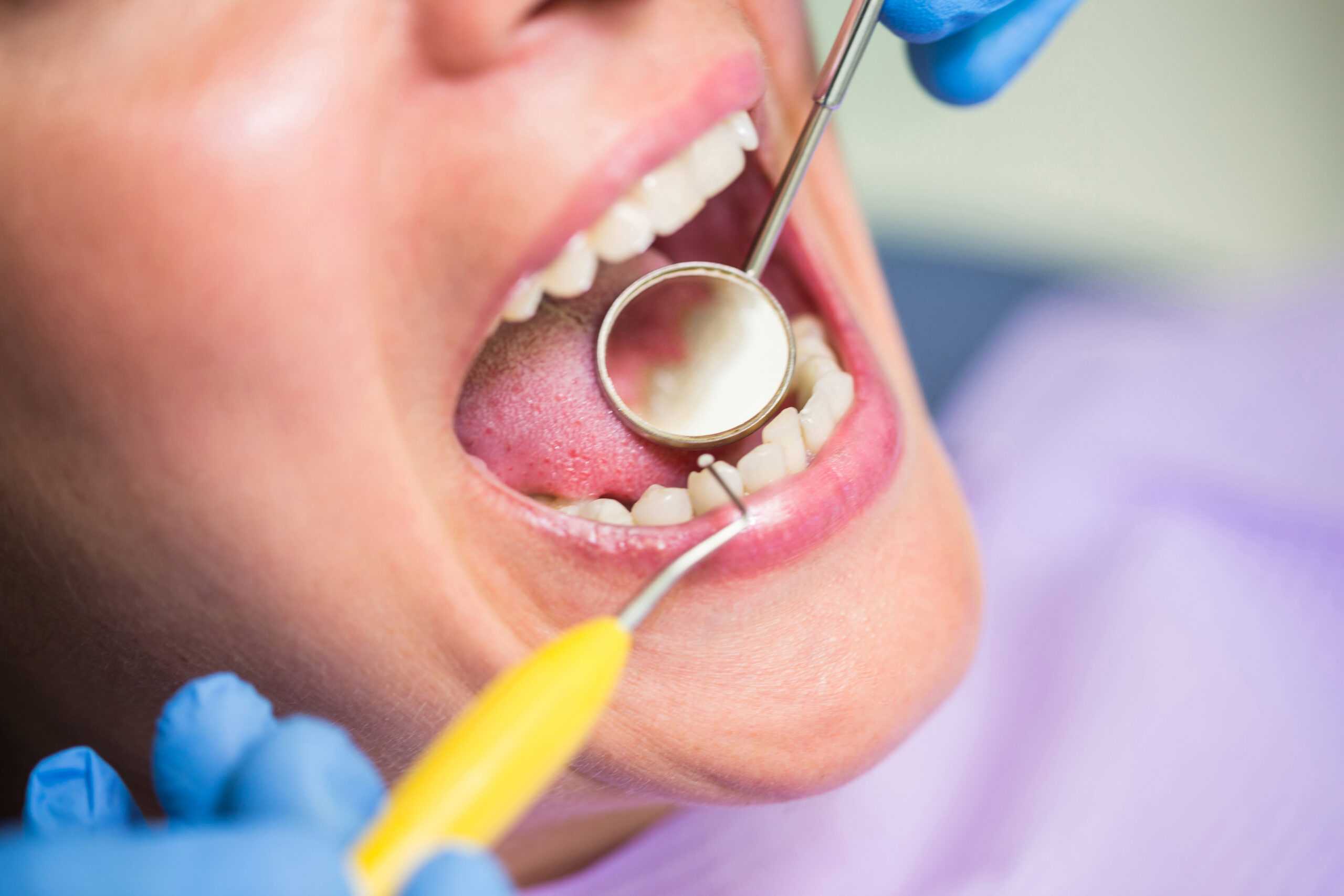
Nobody likes yellow teeth. But did you know that accumulation of tartar on your teeth causes yellowing? Oral health and hygiene are as essential as taking care of any other body part. Bacteria in your mouth convert carbohydrates from food into acid. Plaque is formed when this combines with residual food particles and saliva. Plaque adheres to your teeth and hardens to form tartar. It’s common practice to brush and floss to prevent tartar formation. Nevertheless, tartar will require more frequent visits to the dental office to have a professional dental cleaning done. Poor oral hygiene is also a risk factor for bad breath. This article will focus on some easy ways” how to remove tartar from teeth.”

What is Plague? 

Dental Plaque is formed due to a chemical reaction between bacteria in the mouth and residual food particles. A plague is a yellowish-brown sticky film that coats your teeth.

What is Tartar?

When plaque is not addressed, it calcifies and discolors, eventually turning into tartar. Tartar or calculus is extremely damaging to the teeth and gums. Tartar is home to germs that erode the lining of teeth (enamel) and contribute to tooth decay. Below you will know some tips to remove Tartar from Teeth. 

How to Detect Tartar?

You will most likely detect tartar buildup by feeling your teeth. Tartar feels like a hard substance that brushing cannot eliminate. Tartar buildup above the gum line appears yellow or tan. Brown or black tartar forms below the gum line, which can cause swelling and lead to bleeding.  

Also, Read How to cure mouth ulcers fast and naturally?

How does Tartar Affect Teeth and Gums?

Tartar can lead to tooth decay and cavities, making brushing and flossing your teeth difficult. 

Tartar that accumulates above your gum line irritates and damages your gums. This could eventually lead to degenerative gum disease like Gingivitis

Brushing, flossing, using antimicrobial mouthwash, and visiting your dentist regularly may typically stop and reverse it. Otherwise, it might lead to periodontitis, where pockets form between the gums and teeth and become infected with bacteria. Furthermore, several studies have linked the bacteria in gum disease to heart disease and other health issues.

Also, Read What to eat after wisdom teeth removal?

How to Remove Tartar from Teeth?

It is essential to floss regularly and remove plaque and tartar from your teeth. While regular oral hygiene can aid in preventing plaque, tartar may be more difficult to eliminate at home due to its hard nature. So, continue reading below to get the answer for  “how to remove tartar from teeth”.

Here are some easy tips to remove tartar from teeth.

Using Baking Soda Toothpaste: The mouth has a complex ecosystem of bacteria, some of which are useful and others of which can be dangerous. Plaque can be effectively removed by brushing teeth with baking soda toothpaste. Baking soda is abrasive but is not as hard as tooth enamel. It easily eliminates plaque without causing damage to the enamel. Streptococcus Mutans is a bacteria that causes tooth decay. Baking soda also contains antibacterial capabilities, which help to prevent tooth decay. Baking soda also protects tooth enamel from demineralization, thereby protecting the calcium of the tooth enamel. Demineralization results from an acidic environment formed due to the action of bacteria on carbohydrates from food. Baking soda assists in balancing the pH level inside the mouth and preventing enamel loss.

Using Orange Peels: You can safely remove plaque and tartar from your teeth using orange peels. Orange peel possesses vitamin C and antibacterial properties, which terminate microbial growth and breakthrough tartar and plaque. Rub the inside of an orange peel along the teeth and gum surfaces. Another way is to make a paste out of mashed portions inside the orange peel and mix it with water. Using a toothbrush, apply this paste to your teeth. 

Using White Vinegar: Another approach for effectively removing tartar is to use white vinegar. Because of the acid nature of white vinegar, it is particularly successful in killing germs and preventing infection. Begin by mixing two tablespoons of white vinegar in a glass of warm saltwater. Gargle with this solution once daily to remove tartar accumulated between the teeth and gums. 

Coconut Oil Pulling: Oil pulling is a traditional therapy for removing microorganisms from the mouth and improving oral health. It entails pulling edible oils like olive oil, almond oil, coconut oil, and sesame oil around the mouth and between the teeth. Particularly, coconut oil is used in oil pulling. This is because coconut oil possesses antimicrobial, antioxidant, and anti-inflammatory properties. In 2015, a study was conducted on 60 teenagers suffering from gingivitis. Researchers discovered that oil pulling with coconut oil reduced tooth plaque by 50%. Gingivitis symptoms were also significantly reduced in research participants. 

It is important to follow these instructions for oil pulling:

  • In your mouth, place one tablespoon of warm coconut oil.
  • For 5-10 minutes, swish the coconut oil around your mouth.
  • Using a paper towel, spit out the coconut oil. You can directly spit in the garbage can. Do not spit it into the sink, as it may clog the pipes.

Using a Water Flosser: In addition to oil pulling, water pressure removes food and plaque where string floss may not reach. A water flosser is more effective in removing plaque than string floss. Water floss also massages the gums.

Also, Read Best Teeth Whitening for Sensitive Teeth in 2022.

How to Prevent Tartar Build-up?

Prevention is better than cure. Rather than having to remove tartar professionally by a dentist, you can take actions to prevent it from forming in the first place. You can remove plaque with a great dental hygiene practice like:

  • Brush your teeth twice a day.
  • As interdental cleaning is very important, remember to floss.
  • To remove any traces of bacteria, rinse your mouth with a fluoride mouthwash after brushing.
  • Visit your dentist for regular check-ups. They will not only remove any plaque you missed but also guide you about your oral health.

Conclusion –

 Plaque and tartar buildup is a sign of poor oral hygiene. It not only causes gum disease, enamel loss, and tooth decay but may also contribute to the development of several other health problems. To prevent this, brush your teeth with a soft toothbrush at least twice daily. You can use fluoride toothpaste or baking soda toothpaste to remove plaque and tartar. It is equally important to regularly floss your teeth to prevent tartar from forming. You can either use string floss or water floss. At the same time, another important step in maintaining proper dental hygiene is regularly visiting a dentist for check-ups and cleanings. Your dentist may use prescription-strength mouthwash or change their oral care routine. I hope after reading this blog, you probably have got all your answers for the question “how to remove tartar from teeth.”

[ad_2]

Source link

Low federal disability payments can leave recipients homeless : Shots

Low federal disability payments can leave recipients homeless : Shots

[ad_1]

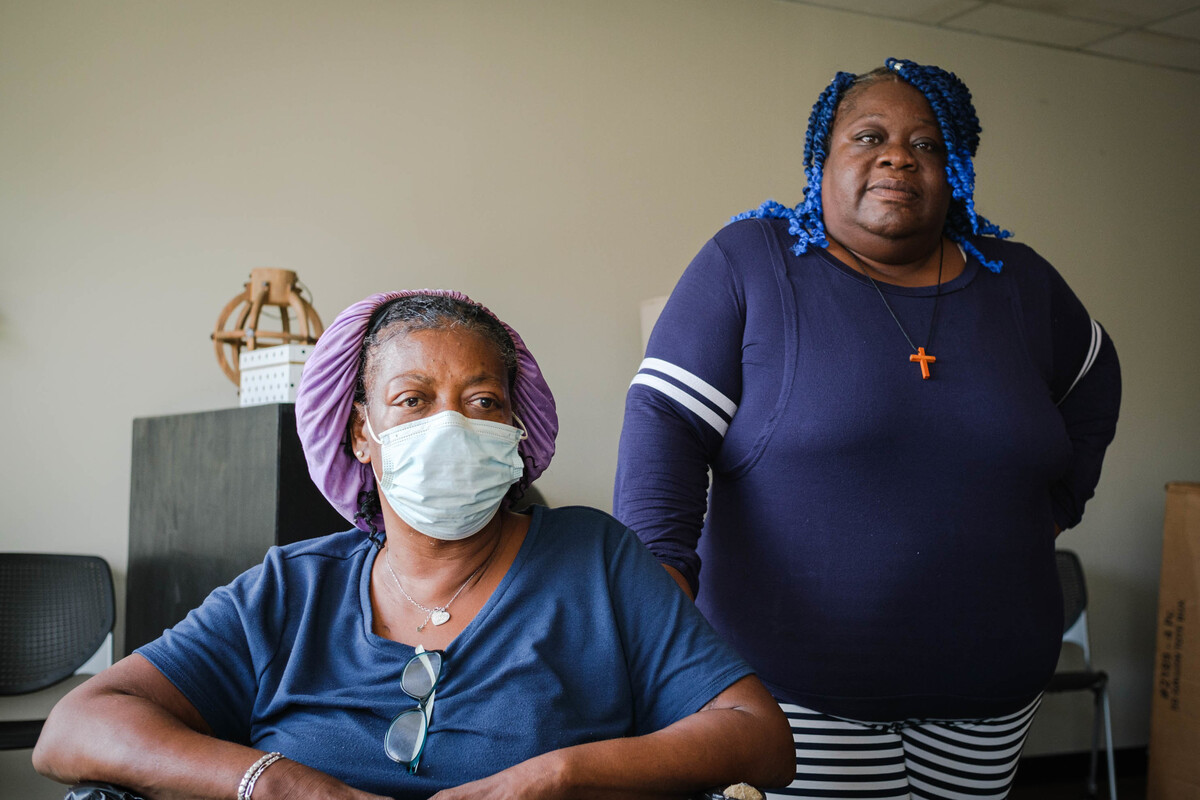
Margaret Davis (left) and Delisa Williams (right) became acquainted when they moved into the Salvation Army Center of Hope shelter, just outside Charlotte, N.C. Both women receive federal benefits, but the monthly amounts aren’t high enough for them to be able to rent an apartment.

Logan Cyrus for KHN


hide caption

toggle caption

Logan Cyrus for KHN

Margaret Davis (left) and Delisa Williams (right) became acquainted when they moved into the Salvation Army Center of Hope shelter, just outside Charlotte, N.C. Both women receive federal benefits, but the monthly amounts aren’t high enough for them to be able to rent an apartment.

Logan Cyrus for KHN

After two months of sleeping in the Salvation Army Center of Hope homeless shelter in Charlotte, N.C., Margaret Davis has had no luck finding an apartment she can afford.

The 55-year-old grandmother receives about $750 a month from the federal government. She’s trying to live on just $50 cash and $150 in food stamps each month so she can save enough for a place to call home.

Davis is homeless even though she receives funds from the Supplemental Security Income program, a hard-to-get federal benefit that was created nearly 50 years ago to lift Americans who are older, blind or disabled out of poverty — whether or not they have a work history that qualifies them for the Social Security Disability Insurance program, which may pay more.

Davis’ job options are limited because she gets dialysis treatment three times a week for kidney failure. As she prepares to spend another night in the crowded shelter, she checks her phone to see whether a doctor wants her to have her left leg amputated.

“My therapist is trying to help me stay positive, but sometimes I just want to end this life and start over,” Davis says.

Davis relies on disability payments to survive; she needs dialysis three times a week and may need to have a leg amputated. She says the amount of money she gets each month from SSI is only about $60 more than the maximum offered 10 years ago. Meanwhile, the rent for an average apartment in her city has risen by about 70%.

Logan Cyrus for KHN


hide caption

toggle caption

Logan Cyrus for KHN

Davis relies on disability payments to survive; she needs dialysis three times a week and may need to have a leg amputated. She says the amount of money she gets each month from SSI is only about $60 more than the maximum offered 10 years ago. Meanwhile, the rent for an average apartment in her city has risen by about 70%.

Logan Cyrus for KHN

Falling into homelessness is not a new issue for people dependent on supplemental income from the Social Security Administration. But moving recipients out of shelters, crime-ridden motels and tent encampments and into stable housing has been getting harder, according to academic researchers, nonprofit attorneys and advocates for people with disabilities.

Rapidly rising rents and inflation deserve a share of the blame.

But SSI recipients, activists and others say the issue also underscores for them how the program itself locks millions of people into housing instability and deep poverty even as President Biden promises to fix it.

SSI has not kept pace with rising rents

“We are trapping people in a place where dignity is out of reach,” says Rebecca Vallas, a senior fellow at the Century Foundation, a progressive think tank that conducts research on economic equity. “The program started with good intentions,” she says. “It is hard for me to see this as anything but willful neglect.”

In a country where roughly 1 in 4 residents live with some type of disability, supplemental income is meant to ensure that even the most vulnerable in that group can get housing and fill other basic needs. Most SSI recipients automatically qualify for Medicaid, a joint federal and state program that covers medical costs for people with low incomes.

In addition to people who are blind or who are 65 or older, those individuals who qualify and prove they have a medical condition that prevents them from working for at least one year are eligible for a payment from SSI, which maxes out at $841 a month. But there’s a catch that makes seeing a better financial future difficult for people like Davis. The monetary benefit decreases if the person earns more than $85 a month in additional income. And the benefit can be revoked if the person has more than $2,000 in savings, which critics say discourages people from saving.

The amount that recipients receive from SSI has not kept pace with rising rent prices, advocacy groups say.

The amount of money Davis says she gets each month from the program is about $60 more than the maximum amount offered 10 years ago, when she first started receiving the benefit. Yet the average apartment in Charlotte, where Davis lives, now rents for $1,500 a month — about 70% more than it did nearly a decade ago, according to Zumper, which has been tracking rental prices since 2014.

There’s no chance she can afford her dream: an apartment or house in a safe neighborhood where she can spend afternoons crocheting. “I don’t like to talk like this,” Davis says, “but I am not sure what’s going to happen to me.”

When Congress created SSI in 1972, the legislation promised that recipients “would no longer have to subsist on below-poverty-level incomes.”

Today, nearly 8 million people rely on the federal program for income.

Over the past five decades, Congress under both Republican and Democratic leadership has declined to make major changes to the program. The $85 outside-income limit, for instance, has never been adjusted to account for inflation.

The Social Security Administration, which oversees the program, did not respond to multiple requests for comment about how the rates are set.

Biden committed to reforming SSI during his 2020 presidential campaign, saying that he would “protect and strengthen economic security for people with disabilities.”

But for seven months, Delisa Williams has been stuck in the same homeless shelter as Davis. Diabetes, hypertension and osteoporosis have left her body weakened, she says, and the stress of living in the Salvation Army Center of Hope is taking a toll on her mental health.

Williams’ only real chance to get out had been the combined $881 she gets each month from SSI and the Social Security Disability Insurance program. She quickly realized that would not be enough to afford the rent for most places.

“God will see me through,” she says. “He didn’t bring me this far for nothing.”

Williams copes with multiple medical issues and says the stress of having to deal with those in a homeless shelter has taken a toll on her mental health, too.

Logan Cyrus for KHN


hide caption

toggle caption

Logan Cyrus for KHN

Williams copes with multiple medical issues and says the stress of having to deal with those in a homeless shelter has taken a toll on her mental health, too.

Logan Cyrus for KHN

Among developed nations, the United States is one of the hardest places for people to meet the criteria for federal disability payments, according to the Organization for Economic Cooperation and Development, a global intergovernmental group the U.S. helped create to advance social well-being.

How neglect, red tape and the pandemic made the SSI program’s problems worse

If a person applies for federal disability income, they can wait months or even years to get benefits. Thousands go broke or die while waiting for help. A data analysis by the U.S. Government Accountability Office found that from 2014 to 2019, about 48,000 people filed for bankruptcy while trying to get a final decision on a disability appeal. The same report said that from 2008 to 2019 more than 100,000 people died waiting.

The situation was made worse during the COVID-19 pandemic because the Social Security Administration closed more than 1,200 field offices across the nation and kept them shuttered for roughly two years.

That decision left hundreds of thousands of needy people unable to seek benefits, since phone lines were jammed with calls and the agency provides no way to submit applications online, says David Weaver, a former associate commissioner for research, demonstration, and employment support at the Social Security Administration.

“The number of SSI awards just collapsed,” Weaver says.

Homeless shelters and other nonprofits often help clients apply for the supplemental income in hopes that the money will help get them a place to live. Rachael Mason, a social worker at the Triune Mercy Center in Greenville, S.C., has learned to temper people’s expectations.

“Any time someone shows up and says ‘I want to pursue housing,’ my heart drops a little bit,” Mason says. “I have to be honest and tell them it could be a year to three years. Even if someone wants to just rent a room in a house, it could take up their entire check.”

As the 50th anniversary of SSI approaches this fall, Congress is deciding whether to make changes to the program.

In an April 2021 letter to Biden and Vice President Harris, more than 40 lawmakers lobbied them to raise cash benefits above the poverty level, increase the amount of money recipients can save, and eliminate reductions for taking help from loved ones, among other changes. “People with disabilities and older adults receiving SSI represent some of the most marginalized members of our society,” the letter said. “History will not forgive us if we fail to address their needs in the recovery effort.”

A group of Republican and Democratic legislators have now proposed the SSI Savings Penalty Elimination Act, which would raise the asset limit for recipients from $2,000 to $10,000 for individuals and from $3,000 to $20,000 for couples.

Davis, the woman whose leg might be amputated, is trying to remain hopeful. She started seeing a therapist to cope with depression. She stopped smoking to save money for an apartment.

Asked when she might be able to move out of the shelter, she says, “I don’t know.”

KHN (Kaiser Health News) is a national, editorially independent program of KFF, the Kaiser Family Foundation.


[ad_2]

Source link