Oct. 11, 2022 – During the early days of the pandemic, Alivia Gustman, then just 8 years old, was in a class tasked with the goal of starting a business.
For Gustman, this wasn’t the time to pitch a bake sale. Instead, having recently watched her mom go through breast cancer treatment, an idea immediately popped into her mind: Why not sell teddy bears to raise money to help kids with cancer — or to anyone whose loved ones are in treatment?
After doing a virtual pitch to her Boca Raton, FL, teacher and classmates, the idea broadened when her dad jumped on board and helped build a website and secure a trademark.
The result: A family-run project and the launch of Cancer Bears, a nonprofit that has already sold more than 1,000 bears in over 30 states and abroad.
Best of all: Thanks to all of these bears being sent across the country (and globe), Cancer Bears has raised $30,000 to date and donated those funds to cancer centers across the country. In fact, since they started the organization, they’ve set up donation partnerships with Boca Raton Regional Hospital, Joe DiMaggio Children’s Hospital, and NYU Langone Perlmutter Cancer Center – all locations that played a role in helping Alivia’s mom – and formed an alliance with Keaton’s Child Care Alliance, a nonprofit that provides support services to families facing a pediatric cancer diagnosis.
So how did a then-third grader make all of this happen?
“Knowing that my mom would be OK motivated me,” says Gustman, now a very busy fifth grader who turns 10 on Oct. 16. “I wanted anybody going through treatment to be able to hold onto something. I thought a bear would be the perfect thing to cuddle with.”
For Tara Gustman, Alivia’s mom, helping others is in the family DNA.
“This was such a simple act of kindness that happened during virtual school and right when I was getting back on my feet again,” says Tara, who was diagnosed with stage II breast cancer in December 2018 and went through a double mastectomy, the removal of 12 lymph nodes, 16 rounds of chemo, and 7 weeks of radiation. She’s now been in remission for 4 years.
“The feedback that we get from everybody is remarkable. We can’t wait to continue to make a difference to those in need.”
And, while Alivia admits that she’s busy with schoolwork– it’s all about time management, she says – there’s nothing better than seeing all of the bears lined up and ready to be shipped out of her (and her grandparents’) garage.
Recently, Alivia and her sister, Savannah, 8, have gotten very busy attaching ribbons to each bear before it’s shipped.
“You can request the ribbon for the person’s cancer – so teal for ovarian, yellow for childhood cancer, and pink for breast cancer,” she says. “My sister is really good at organizing the ribbons.”
Ultimately, this is one family that’s laser-focused on helping others.
“Every 2 minutes, someone is diagnosed with breast cancer in the U.S. and, while that is unfortunate, what we’re doing keeps our entire family motivated,” says Tara. “We’ve become a resource of encouragement in the form of bears and conversation with people in our community. Happily, Alivia’s story keeps getting shared, and the more people know about us, the more we can help others.”
Ask Alivia and she’ll tell you that being a kid should never be a barrier to rolling up your sleeves.
“Personally, I’d tell other kids to follow their dreams,” she says. “If something motivates you to help others – do it.”
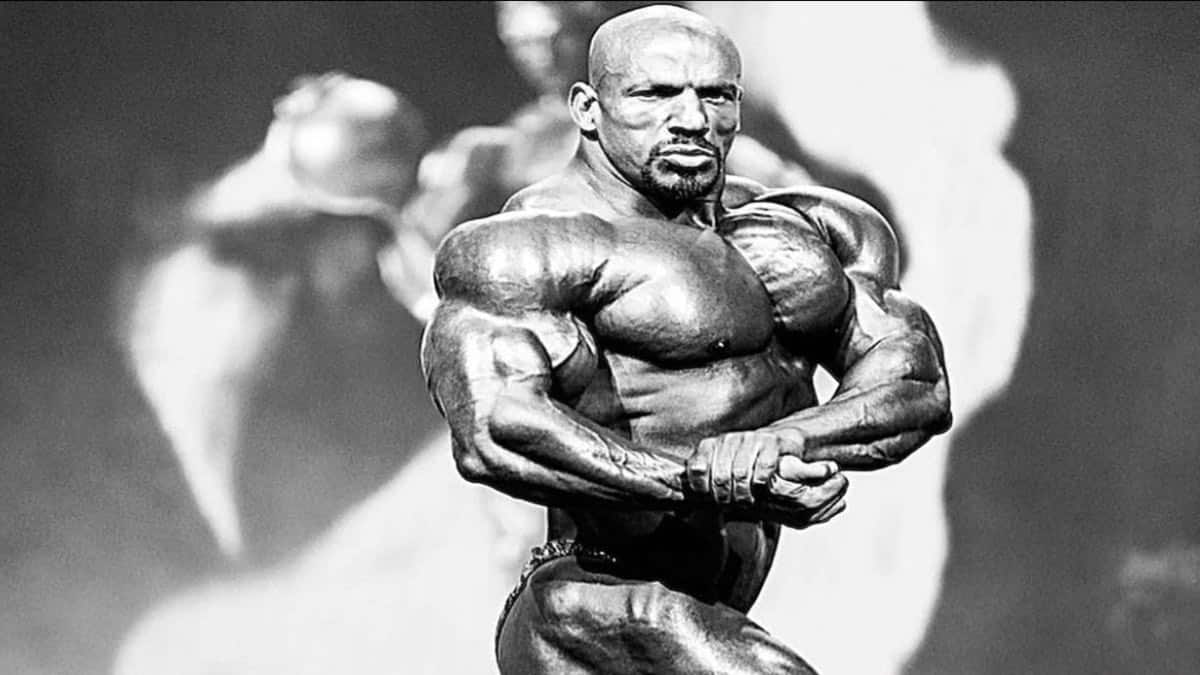
Ronnie Coleman might be retired from competitive bodybuilding, but that doesn’t mean he doesn’t keep a close eye on the current state of the sport. With the 2022 Mr. Olympia on the horizon, the eight-time winner of the prestigious contest (1998-2005) maximized an opportunity to dispense his expertise.
On Oct. 10, 2022, Coleman uploaded a video to his YouTube channel where he breaks down who he feels are the top contenders for this year’s Olympia title. In a stacked field, Coleman centers on two-time reigning champ Mamdouh “Big Ramy” Elssbiay as his overall winner. Still, he offers thoughtful insights on everyone trying to topple the massive Egyptian athlete.
“He’s [Walker] got great shoulders and great arms,” Coleman said. “As far as his chest, he’s got a decent-sized chest, it just needs to be a little bit wider. For the most part, he needs to work on his conditioning, and he’s going to do pretty good against these current competitors.”
Hunter Labrada
Coleman appreciates Labrada’s overall build but thinks his current v-taper and back muscles need work for the athlete to be a serious contender.
“I think once he [Labrada] gets his separation going, once he works on his hamstrings, he’ll have some nice hamstrings,” Coleman said. “But for the most part, he got a pretty good wide back, but he probably needs to be just a little bit wider because his v-taper isn’t all that good right now.”
Blessing Awodibu
For Coleman, Awodibu has the necessary aesthetic to stand out, but he needs more polish on his arms and legs.
“He’s [Awodibu] got great ab shots and a great side serratus shot,” Coleman clarified. “He probably needs more separation in his legs from the front there. A lot of trap work. His traps aren’t too good right here, but I think if he can get his traps up, get some roundness on his arms, and a little bit more separation on his legs, then he’d be pretty good.”
Križánek might have recently earned his International Federation of Bodybuilding and Fitness (IFBB) Pro Card, but Coleman still thinks the ascending athlete has a lot of ground to make up.
“Križánek’s got some freaky arms,” Coleman said. “A nice and big chest, but he needs some width on it, I’d say. I don’t see a lot of width on his back. That’s not a good backshot. He doesn’t have a v-taper going. Now, I see, he has great arms, though. But they are kind of throwing off his physique.”
Hadi Choopan
After years of finishing near the top, Coleman thinks Choopan is potentially on the brink of Olympia greatness.
“Hadi [Choopan], I see great things ahead for him,” Coleman maintained. “This guy can probably win the Olympia once he puts it all together. He’s not that far off at all. Hadi .. keep it up, my man.”
“With all this size, and the great v-taper he’s [Elssbiay] got, and the biggest shoulders you’ve ever wanted to see, I don’t see nobody taking him out, nobody at all,” Coleman noted. “So, Big Ramy, congrats on your third Olympia, my friend. I think you’re going to take it again.”
To Coleman, Bonac is one of the true dark horses at the 2022 Mr. Olympia. He believes that with a little polish here and there, Bonac could make noise on stage.
“This guy [Bonac] could be unstoppable,” Coleman said. “He’s got nice peaks from the backs on his arms, he’s got a good Christmas tree, and he’s got a nice wide back. Yeah, I think he can do some real damage.”
Chinedu Andrew Obieaka, aka “Andrew Jacked”
While Coleman thinks Jacked can be a force in bodybuilding, the legend made it seem as if the young phenom needs a little more time before he’s at the top of the Olympia mountain.
“Andrew [Jacked] has a nice physique going,” Coleman said. “He’s got nice arms on him. The only thing I can tell he needs to work on is his back. That comes in time. As you can see, he’s got a nice backshot. You get that bad boy separated and a little bit thicker in his upper back, and he will be hard to beat. He’d probably kill these guys in these Open shows they got.”
To close the video, Coleman made his official prediction for the top 10 at the Mr. Olympia, with Elssbiay sitting on top:
Ronnie Coleman | 2022 Mr. Olympia Top 10 Prediction
*Note: Clarida, winner of the 212 Olympia in 2020 and consistent top-placing competitor in the 212 division, has not confirmed if he would compete in the Open division at the time of this writing.
Whether anyone can beat Elssbiay and prevent his potential three-peat remains to be seen. Even if Coleman doesn’t see it happening, the Mr. Olympia should be a fascinating competition this late fall.
The 2022 Mr. Olympia will take place on Dec. 16-18, 2022, in Las Vegas, NV.
Sandalwood, turmeric, saffron, coconuts … in India, skin care has traditionally come straight from farms and forests, foraged by women to create pastes, powders, and oils for everything from lustrous hair to glowing skin.
It was not an easy process: Gathering the ingredients, then laboring over a hot fire or a heavy mortar and pestle to make the concoctions, and finally the messiness of strands coated in greasy coconut oil or skin slathered with gloopy turmeric paste.
Fast-forward to today, where you can’t get through a beauty aisle without finding at least 20 best-selling products based on this subcontinent’s 5,000-year-old heritage.
What happened?
It’s simple: The Western world discovered ayurveda. And both adapted to each other.
Ahead of the Curve
Today, we don’t need to go looking in forests; instead, we can walk into the nearest department store or even order online, making Indian beauty more accessible than ever before.
And given new extraction and formulation techniques, textures are more lightweight and less messy. Ghee (clarified butter) comes pressed into beautiful face balms, while coconut and almond extracts are poured into lightweight oils.
Western science has caught up – and backs up these principles. Turmeric has antioxidant, antiseptic, antiviral, antibacterial, and anti-inflammatory properties. Coconut oil nourishes the hair shaft. And almond oil is also a natural moisturizer.
Today, Indian beauty syncs the ancient teachings of ayurveda with Western scientific research for the best of both worlds.
Despite all the changes, one thing remains constant: The reliance on natural ingredients. So, this is what you want to look for while taking a dip (or a deep dive) into Indian beauty.
Ghee
Ayurveda considers ghee(clarified butter) as the perfect skin salve. And science shows why: Ghee is rich in fatty acids that nourish and moisturize the skin, and its antioxidants may also help fight skin damage. It also assists in wound healing, improving the appearance of scars and hyperpigmentation.
Just a tiny bit, whether applied straight from the jar or as part of a moisturizer, is enough to restore softness and suppleness to even the driest complexions.
Almonds
There are many legends about the beauty benefits of almonds. And they have endured because these nuts are a skin care treasure trove – a fact that is backed by modern science.
Almonds are exceptionally rich in fatty acids, calcium, and minerals, which make them extremely nourishing. They are also packed with antioxidants that stop environmental damage and help keep skin healthy. Almond oil and paste nourish skin without leaving a greasy residue.
Original Indian skin care recipes call for the nuts to be soaked overnight, then made into a paste by rubbing them against a terra cotta pot. A quicker solution for the present day? Buying a bottle of pure almond oil and using it instead of your regular night cream.
Saffron
Saffron is the unicorn of the beauty world: Rare, potent, and pricey. What makes this spice so special for skin care? To begin with, it has two powerful antioxidants: crocin and crocetin. They help guard against the stress and environmental damage that would otherwise lead to fine lines, wrinkles, and loss of radiance.
The tiny red strands are also packed with minerals, vitamins, and have anti-inflammatory and antibacterial properties. When used topically, saffron not only brightens the skin but also reduces pesky hyperpigmentation.
You’ll find saffron in many products, from masks to moisturizers. But it’s a case of buyer beware. With international prices of Indian saffron (which rates as having the highest quality worldwide) averaging $1,500 a pound, if a moisturizer seems too inexpensive, it may be misleading in its claims.
Here, you may be better off with one of the country’s time-tested skin care recipes: Simmer six tablespoons of freshly grated coconut with a pinch each of saffron and turmeric powder. You will get a beautiful oil that can be used as a moisturizer. All you need are five to six strands, so the tiniest tin will last a long time.
Turmeric
There’s a reason why turmeric has transcended its Indian origins and become a cult ingredient worldwide. This yellow-colored spice is a potent anti-inflammatory, antifungal, antibacterial, antioxidant, and detoxifier. Result? It keeps skin soft, smooth, and glowing; tackles acne; and helps fade dark spots.
But many of us balk at putting turmeric on our skin for fear of looking like a character out of The Simpsons. And in contemporary times, we don’t need to go this route. Instead, look for turmeric-based moisturizers and masks that contain this potent spice, sans the yellow aftertones.
Coconut Oil
Coconut oil is garnering praise – and igniting debates – all over the world, with opinions divided over its beauty benefits.
On one hand, its rich concentration of omega-6 fatty acids means coconut oil is a powerful skin soother. It also contains vitamin E, a potent antioxidant; and lauric acid, which is antimicrobial.
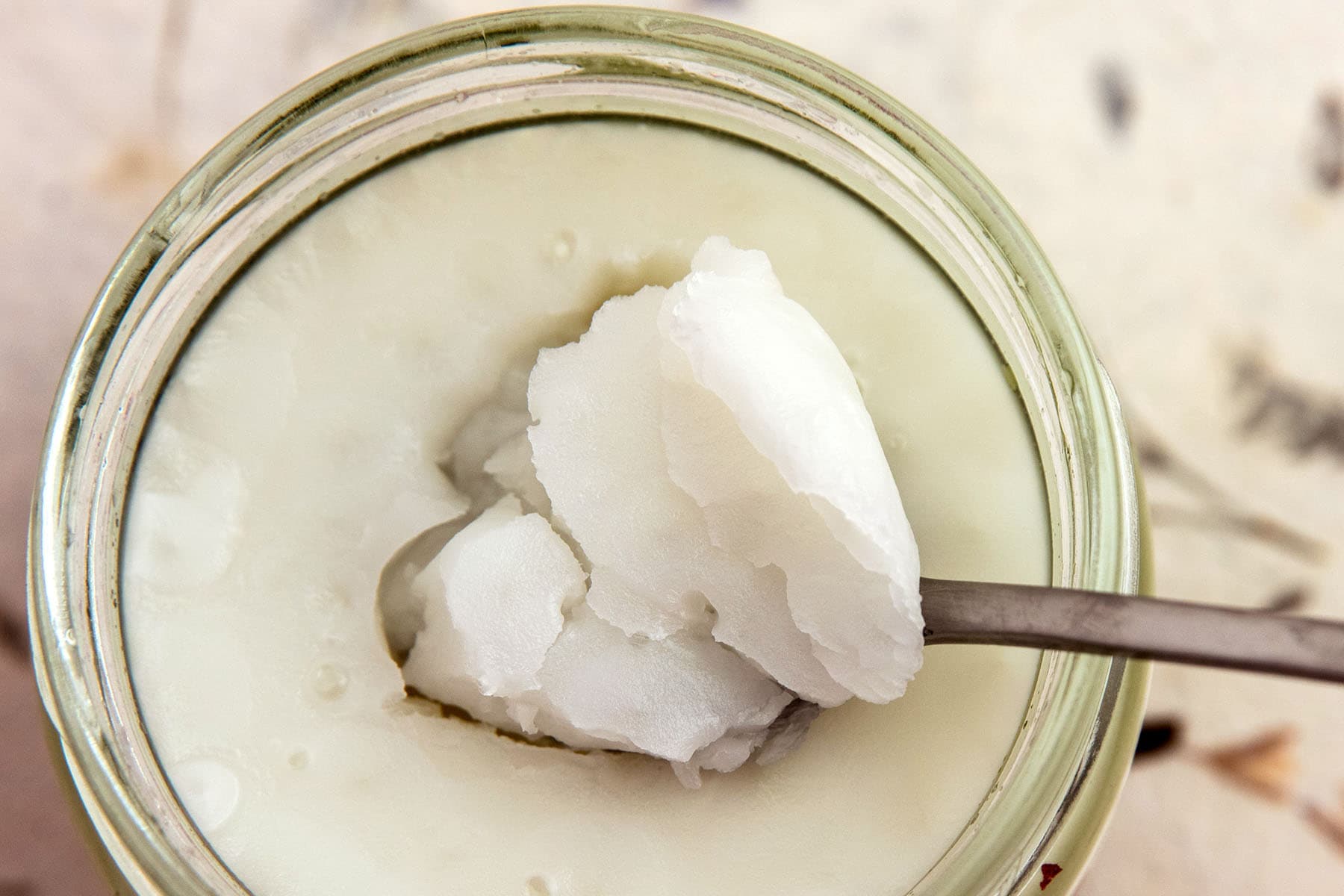
This makes coconut oil an excellent skin salve. It can reduce acne-causing bacteria, keep skin soft and supple, and help lock in hydration. Indians have been known to scoop a dollop straight from the jar and apply it all over their face and limbs.
But contemporary research also shows that coconut oil is occlusive and comedogenic, which means that it works by sitting on top of the skin to trap the moisture underneath. While this makes it a great balm for drier complexions, it’s not what you want if your skin is prone to congestion and blackheads!
Then there is the hair factor: Coconut oil makes a great hair moisturizer. It helps reduce hair breakage by keeping the scalp well-balanced and strengthening the hair shaft.
The original Indian way of applying coconut oil, which was to slather liberally and let it sit until the next wash, is no longer a feasible look. Instead, try massaging a few tablespoons of the oil into dry hair, leaving overnight, and washing it away the next morning. This way, you can reap the benefits, sans the greasy locks.
Sandalwood
Indian sandalwood oil is rated as having the highest quality worldwide. It has antibacterial, antiseptic, and anti-inflammatory properties that may help acne-prone skin. The golden oil also works brilliantly at lightening scars and hyper-pigmentation.
As for premature aging? Sandalwood is an excellent antioxidant, protecting against damage at the cellular level. By boosting the skin’s natural collagen, it also guards against wrinkles, fine lines, and sagging.
Finally, this precious oil is a powerful hydrator that helps keep skin soft, supple, and plump, without the greasiness found with many other natural moisturisers.
Hence, sandalwood oil is nowadays used as a base in several moisturizers – or you can go the original route and purchase a tiny bottle of pure oil to smooth into your skin.
We believe proper sleep is so critical for health, we discuss it with each one of our coaching clients. Today, we’ll share our tips for sleeping like a log with you too.
Here’s what we’ll cover in our Ultimate Guide to Getting Better Sleep:
Let’s get right to it so you can go hit the hay.
Why Do I Need to Sleep? (Why Sleep is Awesome)
Sleep is freaking important, and you should get more of it!
Article over, I’m going on break!
Kidding.
Before we cover why sleep is important, let’s talk about what happens when you don’t get enough.
For example: If you manage to only get four hours of sleep, a sleep-deprived body can actually act similarly to an intoxicated body. [1]
Getting less sleep than average regularly? This is correlated with increased body fat percentage, more issues with insulin sensitivity, and even a disproportionate decrease in lean muscle mass when eating a caloric deficit.[2]
We all know missing sleep can make us grouchy, miserable, unfocused, and unproductive.
I know I’m going to have a crappy day in the gym when I don’t get enough sleep the night before. I know not sleeping enough AFTER a workout day can further hinder the muscle-building process. So, what else happens when you don’t get enough sleep?
Here are some potential consequences of forgoing sleep:
Brain shrinkage. Studies have found a correlation between sleep deprivation and brain atrophy.[3] While correlation doesn’t prove causation, it’s believed that disrupting sleep impacts our ability to restore and heal our organs, including our brains.
Raised blood pressure.Insufficient sleep might increase your blood pressure.[4] A lack of sleep can impact your central nervous system and your body’s ability to regulate blood pressure.
Increased risk of obesity and diabetes. Certain metabolic diseases, like diabetes, are associated with sleep deprivation. This study found that disrupted sleep might influence our hormones, perhaps increasing our chance of insulin resistance.[5]
Shortened lifespan. When you add up the increased risk of disease from too little sleep, it’s no wonder that a meta-analysis found a lack of sleep is associated with an increase in all-cause mortality.[6]
Not good.
Conversely, let’s talk about the awesomeness that is sleep. Here are the benefits associated with getting enough shut-eye:
Sleep will enhance your memory performance and creative problem-solving skills. You know, those things that make you smart.[7]
Sleep can boost your athletic performance. And we all know appearance is a consequence of fitness.[8]
Sleep triggers the release of human growth hormone (HGH), which plays a huge role in muscle and cellular regeneration.[9]
Sleep cuts your risk for the common cold and other basic illnesses. Less sick days at work = more productivity, more awesome, more leveling up.[10]
Sleep makes you more resilient to daily stress..aka more willpower!
Moral of the story: Sleep is awesome.
This is going to lead to a natural question…
How Much Sleep Do I Need?
There’s some debate on exactly how much sleep a person needs.[11]
But there are some best practices.
7 to 9 hours is widely accepted as the ideal target for a good night’s rest. The National Sleep Foundation promotes this range, and researchers in the UK did a study that corroborated the recommendation.[12]
We’ll roll with 7 to 9 hours as an ideal target for a good night’s sleep.
I should note, that there is a small percentage of people who have a “rare” gene that allows them to get by on 6 hours of sleep or less.
“Steve, I’m sure I’m one of those mutants who only needs 6 hours of sleep. Sounds like I’m good to go, right?”
As much as we all want to be part of the X-Men…
I used the word rare there intentionally because only about 4 in 100,000 people have this specific mutation.[13]
Realistically, you probably don’t have the special gene that makes you need less sleep. Sorry.
This is why the American Academy of Sleep Medicine and the Sleep Research Society both recommend “healthy adults” get at least 7 hours of sleep.[14]
Knowing you need to get 7 hours of sleep is one thing. But knowing is only half the battle…
So let’s get to the root of the problem for most:
“I know I need to sleep more, but my day is too busy and I just can’t get to bed sooner or wake up earlier.”
First and foremost, you’re not alone. According to a recent report from the Centers for Disease Control and Prevention, nearly a third of all working Americans get six hours or fewer of sleep a night.[15]
Does any of this sound like you?
I am always freaking tired, and I need five cups of coffee to get through the day.
Even on days when I get enough sleep, I wake up groggy.
I get to ‘bed’ but I toss and turn and it takes me forever to fall asleep.
I hit snooze half a dozen times before miserably crawling out of bed.
Let’s see if we can fix these issues.
What Does Good Sleep Look Like? (The Perfect Night)
Let’s imagine a perfect night:
You go to bed at a time that you’re happy with. You’re not stressed out because you didn’t just watch The Walking Dead, you’re reading a good fiction book in bed that’s putting you closer to sleep rather than checking your smartphone or screwing around on the internet (damn you Twitch.tv).
You sleep uninterrupted through the night. You have kickass dreams.
When you wake up, whether naturally or with an alarm…you immediately get out of bed, without a single snooze, and you feel damn good. You then crush your morning routine and dominate your day.
If you’re looking at your screen and laughing right now, you’re not alone. I’d guess this is a pipe dream for a huge majority of our society because they’re not sure how sleep actually works, and thus have NOT made sleep a priority.
It’s time to start looking at sleep as one of your most important tasks. Like I said,we value it so much here, that we bring up sleep duration and quality with every single member of our 1-on-1 Online Coaching Program.
What Are the Stages of Sleep?
Like the Indiana Jones movies, sleep can vary in quality.
Let’s take a quick look at the different stages of sleep first.
We have Rapid Eye Movement (REM) Sleep, and Non-Rapid Eye Movement Sleep:[16]
Non-REM Sleep Stage 1: Where you’re kind of asleep…but not really…but working on it. This lasts about 5-10 minutes.
Non-REM Sleep Stage 2: Your heart rate slows, your body temperature decreases, and you start to drop further into slumber…this can last about 20 minutes or so.
Non-REM Sleep Stage 3 and 4: also called “slow-wave sleep,” and each can last up to 30 minutes. These stages are where you get “deep sleep.”
REM Sleep:This is the point of the night where your eyeballs flail around your eye socket. It’s also when dreaming occurs, and one of the most important stages for mental functioning the next day.
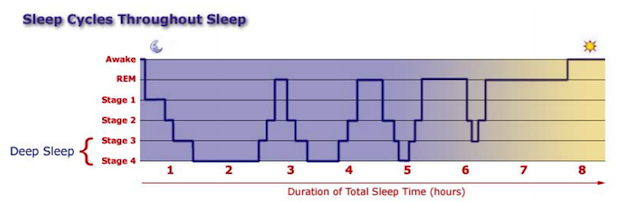
Your body goes through these stages in order, but as you repeat sleep cycles (which are 90 minutes), the duration can shift dramatically.
Sleep Junkies provides a pretty good graph of different sleep cycles (in their article on sleep and alcohol), which we’ll borrow below:
In this example of “Cycle 5” the sleeper barely spends any time in “deep sleep,” but much more time in REM sleep.
Our bodies are cray like that.
What’s with the different stages of sleep?
During the deep stages of NREM sleep (3 and 4), our bodies build bone and muscle (like after you strength train), repairs tissue, and boosts our immune system.[17]
When your body kicks into REM sleep, this is when your brain has increased activity and leads to dreaming, while your body is the most ‘paralyzed’ and knocked out. Some studies say that REM is most important for restoring brain functions. [18]
What’s crazy is that your entire morning can be dictated by what stage of sleep you were in before waking up. If you’ve ever only slept a few hours and woke up feeling great, or conversely slept plenty of hours but woke up groggy, this could explain it!
How to Get Better Sleep (The Single Best Advice on Better Shuteye)
We have a circadian rhythm (a daily biological clock) that ebbs and flows throughout the day.
Our body uses outside stimuli and our own activity to produce certain hormones at certain times to make our body more prepared for the required functions at that time (alertness vs restfulness).
Look at it from an evolutionary perspective – way back in the day (which was a Wednesday):
When the sun rose, our bodies are signaled “the day has begun! get cracking!” We reduce the hormones that make us sleepy, and produce more hormones that allow us to do the things that need to get done.
As the sun went down, our body starts to produce more melatonin, which produces that sleepy feeling and encourages us to rest/recover. Our only option for light back then was a candle or campfire. If that went out, we’d have moonlight and nothing else.
While sleeping, our bodies knew to cut back on urine production, decrease body temperature, decrease heart rate, and muscle activity. Our brains are still highly active during our sleeping.
Unfortunately, these days, our bodies aren’t tied to the rise and fall of that giant ball of gas above us.
Instead, we can use electricity, alarm clocks, computer screens, smartphone screens, and all other sorts of outside stimuli to adjust our natural sleeping schedule.
This means that our bodies often have no effin’ clue what time it is!
Outside of our circadian rhythm, we have another biological system that tells us when to go to bed: the chemical adenosine.[19]
Think of it as “sleep pressure.” As soon as you wake up, your body starts to produce adenosine. When it hits a certain threshold, you get tired and start thinking about your pillow.
You really want your circadian rhythm and adenosine buildup in sync. When they’re not, it’s terrible.
You may have experienced it: jetlag comes about when you’re in a different part of the world than your home, so the change in daylight throws off your circadian rhythm.
For example, let’s say it was daylight when I left London and it’s daylight when I arrive in New York 10 hours later.
But your sleep pressure system doesn’t know this, so it’s trying to send you to bed, despite it being high noon.
Here’s when things can really go haywire: you finally get to bed in New York, but your circadian rhythm is still linked to London (which is now morning), so it starts making you more alert despite being nighttime in Manhattan.
And insomnia ensures…
This brings us to the single best advice on getting better sleep: do what you can to go to bed and wake up at the same time every day.[20]
Even on weekends whenever possible.
This helps your circadian rhythm and adenosine buildup stay in line with each other. Things get awful when these two systems are out of whack.
This isn’t our only piece of advice on getting better sleep!
Here are 10 more tips on engineering a perfect night’s rest:
#1) Avoid screens as you get closer to bedtime. Why avoid screen time? A couple of things to consider:
There is some evidence that the light emitted from electronic devices interferes with our circadian rhythm.[21] Artificial light, specifically blue light, is thought to confuse our body’s internal block. To capitalize on this concern, companies are now selling blue light-blocking glasses, which are advertised as sleep aids. Studies done on the effectiveness of these blue light blockers are mixed.[22]
What else can be going on? Our devices are designed to monopolize our attention, which means we spend more time on our phones instead of sleeping. We’ve all been there. This is why there’s an association between social media use and sleep deprivation.[23]
#2) Consider purchasing red lightbulbs to use in your bedroom lamps, so your bedroom is a place of soft light rather than bright/harsh light.[24]
#3) Keep your bedroom cool (but not too cold). Outside of light, our bodies use temperature as a signal to go to bed.[25] It gets colder at night, so this shift in temperature tells our body it’s time to go to sleep. Personally, I’ve found that keeping my bedroom cool helps me fall asleep. It’s been a real game-changer. What’s the sweet spot? Experiment a little here, but shoot for somewhere between 60-67 degrees Fahrenheit (15-19 Celsius). Just don’t go too cold, which can also disrupt your rest.
#4) Consider getting black-out curtains for your bedroom windows, especially if you live in a city. Living in a city, there’s always something bright and shiny happening outside my window – it wasn’t until I purchased super dark curtains to cover up my windows that I noticed an improvement in my ‘fall-asleep time.’
#5) Earplugs or a white noise machine might be a good idea. Sounds and other forms of ear pollution can be a distraction when you’re trying to sleep. White noise machines might drown some of this out, and studies show they do help, but some good ole fashioned earplugs could do the trick too.[26]
#6) No TV in bed. This might be incredibly difficult for you if you’ve been falling asleep to TV for years. Instead of falling asleep with the blue glow of a TV at the foot of your bed, read a book – trust me, it will put you right to sleep.[27]
#7) Get in the habit of reading fiction. Reading puts me to sleep within a few minutes most night, though only if I’m reading fiction. When reading non-fiction, my mind starts to race with all of the new ideas and things I could be working on. Either read real books or read on a Kindle, no iPads!
#8) Buy the right TYPE of Mattress for you: I slept on a soft mattress with two mattress pads for a few months years ago and wondered why I woke up with lower back pain every day. Turns out, my back was jacked up, and the soft mattress made things even worse. Since switching to a firm mattress, I wake up without back pain. Lesson learned here: I’m not smart.
#9) A lot of this can depend on HOW you sleep! Are you a side sleeper? Back sleeper? Stomach sleeper? Turns out there are some evolutionary reasons why some styles work better than others! Personally, I use the “half-military crawl position” outlined by Tim Ferriss (scroll down to tip 11 for the position).
#10) Have allergies? Try a hypoallergenic pillowcase! Your allergies could be affecting you while you sleep, and having the proper pillowcase can make a world of a difference.
How to Get More Sleep
So we’ve covered how to get BETTER sleep, what if you also need to get more of it?
In order to start getting more sleep, sleep must become more of a priority. If you constantly stay up too late because things need to get done, evaluate how your time is spent after work. Seriously, think about it!
Are you doing the important tasks first? Or are you messing around on the internet and not starting your tasks until late in the evening.
Are you watching late-night shows long after they’ve become enjoyable, simply because your DVR records them?
Are you checking your smartphone while in bed, watching Twitch, or using your laptop to watch more shows you don’t really care about on Netflix?
Yes, I understand we have parents who read Nerd Fitness and have to stay awake and function on minimal sleep (I commend you, and wish you luck!).
However, for many of us, less sleep is often a result of disorganized priorities and poor use of our time.
Here are the best practical tips for giving you the greatest chance at getting into bed earlier:
Don’t drink caffeine after lunch if possible. Caffeine can have an effect up to 6 hours after consumption. We love caffeine for many reasons (in moderation); however, you want to make sure it’s not consumed too late or your body will revolt.
Turn off the electronics sooner. I have to enforce a “laptops closed by 8PM” or a “TV off after 10PM” rule on many nights or I never get to bed. I get lost in Internetland far too easily. Putting in actual barriers really helps. If you find yourself checking Facebook and Twitter and other sites incessantly, BLOCK YOURSELF from those sites after a certain time.
Stop watching crap TV shows!Just because it exists doesn’t mean you need to watch it. Pick a FEW shows you watch on Netflix, but be wary of the “auto-play” next episode! Netflix is counting on you to be lazy to watch another episode accidentally instead of getting sleep.
Shift things by 15 minutes every week. If you want to get to bed sooner, don’t just try to get to bed an hour earlier than normal. You’ll probably lie in bed for that whole hour wondering why you can’t fall asleep, stressing yourself out and making things worse (remember our lesson on circadian rhythm). I shifted my pattern by waking up 15 minutes earlier and getting to bed 15 minutes sooner. Then I repeated that process over a series of weeks. Eventually, you can shift your bedtime by an hour or two, but do it gradually!
How to Wake Up (The NF Sleep Calculator)
Is there any more annoying sound in the world than the “beep beep beep” of an alarm clock?
Well, maybe this.
But you get the point.
So here you are, dreaming about riding a dragon, doing improv with Liam Neeson, and playing poker with Iron Man and Spock…and that damn alarm clock wakes you up. You are now incredibly groggy and miserable.
Here’s what’s happening: Remember earlier how we talked about different sleep cycles? Depending on which cycle you were woken up during, your body can struggle to move from “asleep” to “wide awake.”
Wake up in the right phase and you can feel energized and ready to go.
Wake up in the wrong phase and you will feel lethargic and sleepy.
Because we’re often waking up at times when we’re not ready to wake up, timing can be everything when it comes to getting out of bed.
Have no fear! Let’s give you a timetable to base your sleep schedule on, so your alarm clock isn’t so jarring.
Here are some assumptions we’ll use:
You need about 15 minutes to fall asleep.
A sleep cycle is 90 minutes.
You want 5 or 6 sleep cycles (our 7-9 hours range).
THE NERD FITNESS SLEEP CALCULATOR
Wake up: 5am
Bedtime for 5 Sleep Cycles (7.5 hr): 9:15pm
Bedtime for 6 Sleep Cycles (9 hr): 7:45pm
Wake up: 6:30am
Bedtime for 5 Sleep Cycles (7.5 hr): 10:45pm
Bedtime for 6 Sleep Cycles (9 hr): 9:15pm
Wake up: 8am
Bedtime for 5 Sleep Cycles (7.5 hr): 12:15am
Bedtime for 6 Sleep Cycles (9 hr): 10:45pm
You get the gist. Try to time your alarm clock to a natural break between sleep cycles.
Technology might help here too!
Set a “go to bed” alarm, rather than a wake-up alarm! Remind yourself WHEN you should go to sleep. Bonus points if you can rig it to also shut off your wifi so that you actually have nothing exciting left to do in your house except read a book and go to sleep!
Try a dawn-simulator alarm clock. Rather than waking yourself up in pitch black with a disgusting beeping noise, why not gradually rise as if there was a natural sunrise in your room?
Feel free to sing the first line of “Circle of Life” at this point. I just did.
Also, DON’T SNOOZE!
Instead of snoozing, set your alarm for 30 minutes later and SKIP snoozing entirely. If this is an issue for you, put your alarm across the room so you need to physically get out of bed to turn it off!
Here are a couple more tips to help your alertness in the morning:
Still feeling groggy? Go for a walk first thing.A mile every morning, if you can. Heck, do it while walking to Mordor! Walking outside and seeing that blue sky can trigger your body to release the hormones that encourage you to feel more awake and alive.
Consider blue light therapy during the day. Productivity guruTim Ferriss swears by it, and the reviews are overwhelmingly positive, so I’ll be testing one out during the winter months to see if my mornings are marked by increased energy. If you’ve used one and had positive/negative experiences, I’d love to hear about it in the comments.
Am I a Night Owl or a Lark? (Why Am I Not a Morning Person?)
According to studies, about 1 in 10 people are true morning people (“larks”), while 2 in 10 are considered “night owls.” The rest fit somewhere in the middle as “hummingbirds.”
What this means: Some of us are more alert at certain times of the day and naturally want to rise earlier or stay up later. [28]
Now, the difference between the two extremes isn’t as DRASTIC as we’ve made it out to be. Humans can never be truly naturally nocturnal – we don’t have night vision (yet…).
We’re not programmed to operate during the middle of the night. But, we CAN use our natural tendencies to help us be more efficient and productive during certain parts of the day.
We can change and adapt. Just like those who successfully work a night shift job (tips on that here), many who consider themselves a night owl may find they can become a morning person if they set themselves up for success.
I used the excuse for years of being a “night owl” to screw around all day and work from midnight to 4 AM each night, when it really just required a shifting of my priorities and productivity hacks.
What this all means: Identify your biological clock and try to adjust around it if possible. However, if your job requires you to get up early or stay up later, most of us can make an adjustment. Don’t let your poor habits blame “being a night owl” like I used to.
Should I Take Naps? (How to Nap During the Day)
Although generally not part of a day here in the States, we’re actually programmed to desire a quick nap in the early afternoon.[29]
In other countries, naps are more socially acceptable (Siesta? Si, por favor!). If you feel bad that you get tired in the early afternoon, it’s not because you’re lazy. It’s because you’re naturally wired for naptime. Now, you might still be lazy, but it’s not related to your nap schedule.
So, behold the power of the power nap:
Didn’t get enough sleep last night? Only have 20-30 minutes for a quick break? Try the caffeine-fueled power nap.
Fun fact: If you’ve slept less than normal, taking a 90-minute nap the following day could lead to an increased amount of REM sleep in that nap.[30]
What Is Sleep Apnea? (What’s the Best Treatment for Sleep Apnea?)
Sleep apnea is a condition where someone periodically stops breathing while sleeping.
While there are a few different versions of sleep apnea, the most common is “Obstructive Sleep Apnea,” which occurs when throat muscles become overly relaxed.
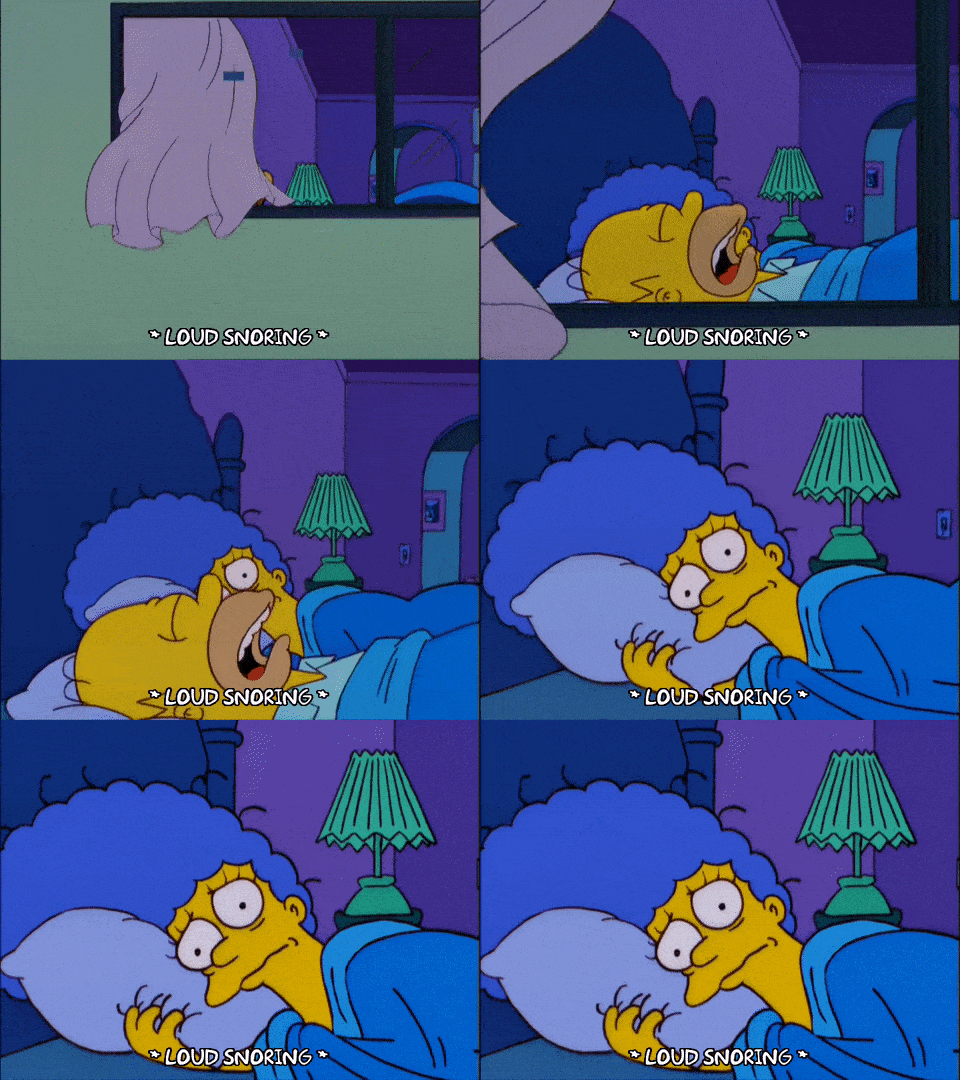
A telltale sign of obstructive sleep apnea is loud snoring, although not everyone who snores has sleep apnea.
Sleep apnea can potentially be pretty serious, what with the whole not breathing thing going on. It depends on the severity of the condition.
If it’s serve, not breathing correctly could majorly disrupt sleep, to the point of increasing the risk of certain diseases.[32]
How do you know if your sleep apnea is mild or severe?
Unfortunately, the only way to really be sure is to head to the doctor. If you go to your primary care physician, they will likely refer you to a sleep specialist to find out.
If you feel tired in the morning despite getting plenty of sleep, and a partner or loved one complains that you snore, it might be worth looking into a sleep apnea diagnosis.
I will mention that being overweight can contribute to obstructive sleep apnea, so weight loss could be a possible treatment.
I’ve got a couple of resources to help you start your journey:
How to Lose Weight (Without Dieting): check out our guide on the 5 rules for sustainable weight loss. If you’re not sure where to start, start there.
Our 1-on-1 Online Coaching Program: if you want a trained professional to tell you exactly what to do, check out our coaching program. Many clients jumpstart their weight loss journey with the help of a NF Coach, and the results they’ve achieved can be incredible.
In the meantime, try a different sleeping position (like the aforementioned half-military crawl position to keep your passages open).
What Is Second Sleep? (Waking up in the Middle of the Night)
Biphasic Sleep is sleeping in two distinct periods.
We’re gonna go back in the day again: during winter months, nighttime could last 12-14 hours.
With our bodies’ production of melatonin (the “sleepy time” hormone) kicking into high gear when that sun drops, people had nothing else to do (no TV, PS4, or iPads) and would fall asleep early. Then they would wake up for an hour or two in the middle of the night to read, pray, or think, and then fall back asleep for another 4-5 hours before waking up for the day.
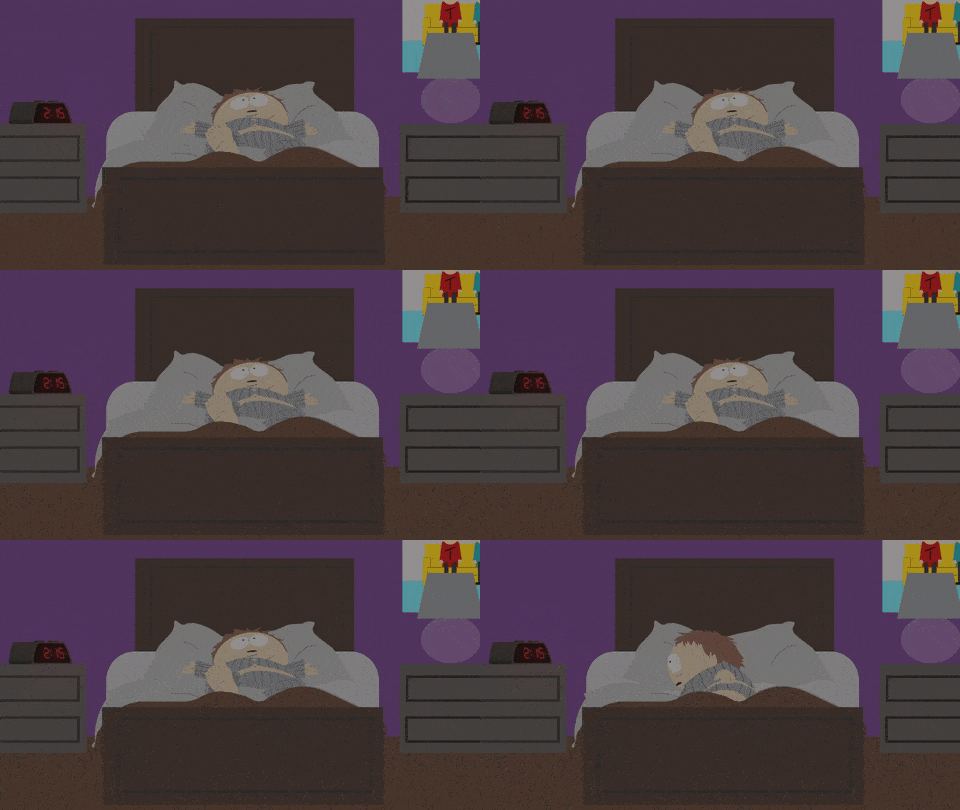
If you’ve ever gone to bed at a normal hour, and then woke up in the middle of the night without being able to fall back asleep for an hour or so, you know what I’m talking about.
Here’s the thing: this is actually quite natural![33]
Rather than freaking the heck out and lying in bed wondering why you can’t fall asleep…consider it something that is more common than our current sleep schedule.[34] Don’t be afraid to turn on the light (red light!) and read a book or use the time for meditation until you can fall back asleep.
This one ‘mental shift’ alone can keep your stress levels down and let you get back to sleep faster and provide you with BETTER sleep.
4 Tips and Tricks to Hack Sleep
#1) Macrodozing:
I stumbled across the BEST biohack for optimal human performance.
It’s tricky, but here’s what to do:
Lie in bed with your eyes closed, for like, 7-9 hours.
If you can actually pull this off, productivity for the next 16 hours will be INSANE.
I often spend my nights in bed thinking and worrying about all of the things I need to do the next day. Instead of stressing out about it, take a minute and write down the things you need to do the next day. Then set it aside.
A notebook, a post-it note, an Evernote file, whatever.
Do a brain-dump and clear your head so you can focus on reading A Game of Thrones without thinking about the next day’s tasks.
#3) Want to control your dreams? It’s called “Lucid Dreaming,” it’s possible, but requires work. I’ve only been able to do it once, but haven’t given up hope that it can become a more common occurrence! Ultimately, this allows you to live out a real-life version of Inception.
#4) Have way too much time on your hands and not constricted by societal norms? Try Polyphasic sleep and then tell me how it goes 🙂 It didn’t work for Kramer, but it might work for you!
(But it probably won’t).
Start Sleeping Better Tonight (Next Steps)
Like, anything, that which gets measured gets improved.
Now, if you’re somebody that isn’t really detail-oriented, just start by picking ONE or two changes above, and focus on building that Hard Hat Habit. However, if you like to nerd out about certain details, why not nerd out about your sleep?
Starting tomorrow morning, when you wake up, recap the previous day with a journal entry:
What time did you wake up, and what time did you actually get out of bed?
How many times did you hit snooze?
After work, how much television did you watch? After you finished watching, did you go right to bed? Did you fall asleep with the TV on?
How long did you lie in bed before actually falling asleep (obviously this will be tough to tell, but you can estimate).
A quick recap on what to do:
Change one or two things about your current strategy.
Turn off the computer 15 minutes earlier.
Stop watching TV in bed.
Read fiction.
Limit the amount of blue light and screen activities that amp you up at night.
No more snoozing.
Set the alarm clock across the room.
Go for a walk in the morning outside.
If you want to use technology:F.Lux for your computer, red bulbs in the bedroom, Sunrise alarm clock for waking up without disturbing deep sleep.
That should just about do it for today’s article.
If you’re looking for where to go from here, I’ve got some options for you. But I’m only gonna tell you, because you’ve been a good sport this whole article.
NEXT STEPS IF YOU WANT TO GO FARTHER!
#1) Our 1-on-1 Online Coaching Program: a coaching program for busy people to help them lose weight, get strong, and level up their lives!
We take sleep so seriously, we discuss it with each and every client.
#2) If you want an exact blueprint for getting in shape, check out Nerd Fitness Journey! Our fun habit-building app helps you exercise more frequently, eat healthier, and level up your life (literally).
If you follow our Sleep missions, you’ll learn to improve your night rituals while earning XP! Sah-weeeet.
Try your free trial right here:
#3) Join our amazing free community, the Nerd Fitness Rebellion! Not only is it free to join, but we’ll provide you with loads of free goodies when you sign-up:
Get your Nerd Fitness Starter Kit
The 15 mistakes you don’t want to make.
Full guide to the most effective diet and why it works.
Complete and track your first workout today, no gym required.
Now, I’d love to hear from you:
What questions do you have about sleeping?
How have you learned to be better at it?
What are you still struggling with?
Have you tried sunrise alarm clocks or blue-light devices?
Oct. 11, 2022 – Weeks after Jeannie Volpe caught COVID-19 in November 2020, she could no longer do her job running sexual assault support groups in Anniston, AL, because she kept forgetting the details that survivors had shared with her. “People were telling me they were having to revisit their traumatic memories, which isn’t fair to anybody,” the 47-year-old says.
Volpe has been diagnosed with long-COVID autonomic dysfunction, which includes severe muscle pain, depression, anxiety, and a loss of thinking skills. Some of her symptoms are more commonly known as brain fog, and they’re among the most frequent problems reported by people who have long-term issues after a bout of COVID-19.
Many experts and medical professionals say they haven’t even begun to scratch the surface of what impact this will have in years to come.
“I’m very worried that we have an epidemic of neurologic dysfunction coming down the pike,” says Pamela Davis, MD, PhD, a research professor at Case Western Reserve University’s School of Medicine in Cleveland.
In the 2 years Volpe has been living with long COVID, her executive function – the mental processes that enable people to focus attention, retain information, and multitask – has been so diminished that she had to relearn to drive. One of the various doctors assessing her has suggested speech therapy to help Volpe relearn how to form words. “I can see the words I want to say in my mind, but I can’t make them come out of my mouth,” she says in a sluggish voice that gives away her condition.
All of those symptoms make it difficult for her to care for herself. Without a job and health insurance, Volpe says she’s researched assisted suicide in the states that allow it but has ultimately decided she wants to live.
“People tell you things like you should be grateful you survived it, and you should; but you shouldn’t expect somebody to not grieve after losing their autonomy, their career, their finances.”
The findings of researchers studying the brain effects of COVID-19 reinforce what people with long COVID have been dealing with from the start. Their experiences aren’t imaginary; they’re consistent with neurological disorders – including myalgic encephalomyelitis, also known as chronic fatigue syndrome, or ME/CFS – which carry much more weight in the public imagination than the term brain fog, which can often be used dismissively.
Studies have found that COVID-19 is linked to conditions such as strokes; seizures; and mood, memory, and movement disorders.
While there are still a lot of unanswered questions about exactly how COVID-19 impacts the brain and what the long-term effects are, there’s enough reason to suggest people should be trying to avoid both infection and reinfection until researchers get more answers.
Worldwide, it’s estimated that COVID-19 has contributed to more than 40 million new cases of neurological disorders, says Ziyad Al-Aly, MD, a clinical epidemiologist and long COVID researcher at Washington University in St. Louis. In his latest study of 14 million medical records of the U.S. Department of Veterans Affairs, the country’s largest integrated health care system, researchers found that regardless of age, gender, race, and lifestyle, people who have had COVID-19 are at a higher risk of getting a wide array of 44 neurological conditions after the first year of infection.
He noted that some of the conditions, such as headaches and mild decline in memory and sharpness, may improve and go away over time. But others that showed up, such as stroke, encephalitis (inflammation of the brain), and Guillain-Barre syndrome (a rare disorder in which the body’s immune system attacks the nerves), often lead to lasting damage. Al-Aly’s team found that neurological conditions were 7% more likely in those who had COVID-19 than in those who had never been infected.
What’s more, researchers noticed that compared with control groups, the risk of post-COVID thinking problems was more pronounced in people in their 30s, 40s, and 50s – a group that usually would be very unlikely to have these problems. For those over the age of 60, the risks stood out less because at that stage of life, such thinking problems aren’t as rare.
Another of study of the veterans’ system last year showed that COVID-19 survivors were at a 46% higher risk of considering suicide after 1 year.
“We need to be paying attention to this,” says Al-Aly. “What we’ve seen is really the tip of the iceberg.” He worries that millions of people, including youths, will lose out on employment and education while dealing with long-term disabilities – and the economic and societal implications of such a fallout. “What we will all be left with is the aftermath of sheer devastation in some people’s lives,” he says.
Igor Koralnik, MD, chief of neuro-infectious disease and global neurology at Northwestern University in Chicago, has been running a specialized long COVID clinic. His team published a paper in March 2021 detailing what they saw in their first 100 patients. “About half the population in the study missed at least 10 days of work. This is going to have persistent impact on the workforce,” Koralnik said in a podcast posted on the Northwestern website. “We have seen that not only patients have symptoms, but they have decreased quality of life.”
For older people and their caregivers, the risk of potential neurodegenerative diseases that the virus has shown to accelerate, such as dementia, are also a big concern. Alzheimer’s is already the fifth leading cause of death for people 65 and older.
In a recent study of more than 6 million people over the age of 65, Davis and her team at Case Western found the risk of Alzheimer’s in the year after COVID-19 increased by 50% to 80%. The chances were especially high for women older than 85.
To date, there are no good treatments for Alzheimer’s, yet total health care costs for long-term care and hospice services for people with dementia topped $300 billion in 2020. That doesn’t even include the related costs to families.
“The downstream effect of having someone with Alzheimer’s being taken care of by a family member can be devastating on everyone,” she says. “Sometimes the caregivers don’t weather that very well.”
When Davis’s own father got Alzheimer’s at age 86, her mother took care of him until she had a stroke one morning while making breakfast. Davis attributes the stroke to the stress of caregiving. That left Davis no choice but to seek housing where both her parents could get care.
Looking at the broader picture, Davis believes widespread isolation, loneliness, and grief during the pandemic, and the disease of COVID-19 itself, will continue to have a profound impact on psychiatric diagnoses. This in turn could trigger a wave of new substance abuse as a result of unchecked mental health problems.
Still, not all brain experts are jumping to worst-case scenarios, with a lot yet to be understood before sounding the alarm. Joanna Hellmuth, MD, a neurologist and researcher at the University of California, San Francisco, cautions against reading too much into early data, including any assumptions that COVID-19 causes neurodegeneration or irreversible damage in the brain.
Even with before-and-after brain scans by University of Oxford researchers that show structural changes to the brain after infection, she points out that they didn’t actually study the clinical symptoms of the people in the study, so it’s too soon to reach conclusions about associated cognitive problems.
“It’s an important piece of the puzzle, but we don’t know how that fits together with everything else,” says Hellmuth. “Some of my patients get better. … I haven’t seen a single person get worse since the pandemic started, and so I’m hopeful.”
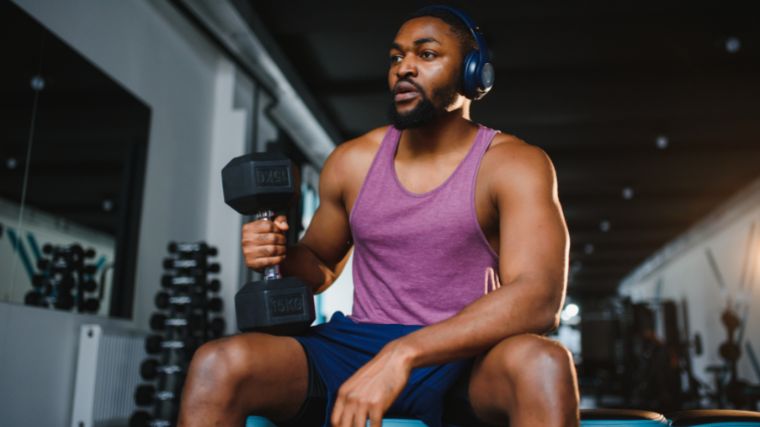
You’ve heard about being “down to your last dime,” but how about being “down to your last dumbbell?”
Maybe a hard economy forced the fire sale of your once epic home gym. Maybe you’re making do at a poorly equipped hotel gym. Or maybe you’re on a road trip with limited space for strength equipment.
Hryshchyshen Serhii / Shutterstock
No matter the scenario, these single-dumbbell workouts will help you turn strife into strength, lean times into lean mass, and hardship into a hard body. But don’t expect charity gains. You’re going to have to work for it.
Best Single-Dumbbell Workouts
Best Single-Dumbbell Workout for Muscle Gain
Training to put on muscle without the niceties of a fully equipped gym? Fortunately, muscle gain occurs across a wide range of repetitions and using weights ranging from light to heavy (e.g. 30% to more than 80% of maximum). (1)(2)(3)(4)
As such, a single dumbbell of moderate weight may be the most utilitarian tool for whole-body hypertrophy training. With thoughtful exercise selection and a time-saving strategy like agonist-antagonist supersets, you’ve got a no-frills recipe for growth.
For this single-dumbbell hypertrophy workout, a moderate weight works best (e.g. 15 to 50 pounds). Training to failure is not “required” for noteworthy gains. (5)(6) For best results with limited equipment, however, you will need to take these sets to a high level of effort. (4) That is, each set should approach failure. Select a number of repetitions that leaves between one and four repetitions “in the tank.”
Build Size with One Weight
This full-body workout uses paired exercises and an emphasis on single-arm or single-leg movements to get the most from minimal equipment. Begin targeting the back and chest. Like a standard row, the wide dumbbell row hits the mid-back (middle trapezius and rhomboids) but may better train the rear deltoids. (7)(8) Elevating one hand during the push-up will increase the difficulty of the exercise by achieving a greater stretch across pectoralis major (chest) in the bottom position.
Next you’ll tackle legs. During the single-leg Romanian deadlift, you can use a sturdy object, such as a chair or bench, for balance assistance and to keep the focus on your hamstrings rather than stabilizing muscles. But be disciplined. Do not push with your support hand.
You’ll end the session with some direct arm work. You’re welcome. By bracing your upper arm against your thigh during the concentration curl, you eliminate “cheating” from body sway and shoulder flexion. The long head of triceps is lengthened across the shoulder during the overhead triceps extension, making this exercise superior for muscle growth. (9)
Wide Dumbbell Row
How to Do it: Brace your free arm on a flat bench with your feet in a stable stance. Grab the dumbbell with your working arm and pull it “up and out.” In the top position, your elbow should be nearly in line with your shoulder and away from your ribs. Keep your torso level and avoid rotating as you pull and lower the weight.
Sets and Reps: 3 sets to muscular fatigue, per arm. Depending on the weight of your dumbbell, repetitions may range from six to 30 or more.
Rest time: No rest between arms. No rest before moving to the next exercise.
Single-Arm Emphasis Push-Up
How to Do it: Lie on the ground with one hand on the dumbbell and the other hand flat on the floor. Keep your spine and legs straight as you lower into a deep push-up. The chest of the elevated hand will be put into a significant stretch. Press up until the non-elevated hand is locked out. Perform an even number of repetitions with each hand elevated.
Sets and Reps: 3 sets to muscular fatigue.
Rest time: No rest between arms. Rest 90 seconds before repeating the previous exercise.
Single-Leg Romanian Deadlift
How to Do it: Stand near a chair or the back of an incline bench while holding a dumbbell in one hand. Use the bench, as needed, for stability. Lift the leg of the working side slightly off the ground and softly bend the opposite knee. Bend at your hips as you “reach” the dumbbell toward your foot on the ground. Allow your working-side leg to rise into the air behind you. Keep your torso straight and don’t bend at the spine. Pull your torso back to stand upright.
Sets and Reps: 3 sets to muscular fatigue, per leg. Depending on the weight of your dumbbell, repetitions may range from six to 30 or more.
Rest time: No rest between legs. No rest before moving to the next exercise.
How to Do it: Face away from a flat bench while holding a dumbbell in one hand. Place the same-side leg behind you, resting your shoelaces on the bench. Squat down with your front leg and allow your back knee to drop to the floor. Keep your shoulders pulled back and your torso upright during the movement. Drive through your front foot to stand upright.
Sets and Reps: 3 sets to muscular fatigue, per leg. Depending on the weight of your dumbbell, repetitions may range from six to 30 or more.
Rest time: No rest between legs. Rest 90 seconds before repeating the previous exercise.
Concentration Curl
How to Do it: Sit on a bench with your feet wider than shoulder-width. Grab a dumbbell with a palms-up grip in one hand and rest the triceps of that arm near the same-side knee. Curl the weight toward your face. Don’t allow your legs or torso to swing the weight up. Lower the weight to full straight-arm extension.
Sets and Reps: 3 sets to muscular fatigue, per arm. Depending on the weight of your dumbbell, repetitions may range from six to 30 or more.
Rest time: No rest between arms. No rest before moving to the next exercise.
Single-Arm Overhead Extension
How to Do it: Sit upright on a flat bench. Press a dumbbell overhead with one arm. Keep your torso tight and upright. Lower the weight behind your head until your hand is roughly in line with the top of your head. Keep your elbow pointed generally toward the ceiling, don’t allow it to move significantly. Only your hand should move with the weight.
Sets and Reps: 3 sets to muscular fatigue, per leg. Depending on the weight of your dumbbell, repetitions may range from six to 30 or more.
Rest time: No rest between arms. Rest 90 seconds before repeating the previous exercise.
Best Single-Dumbbell Workout for Fat Loss
Circuit training, a method of exercise that links multiple exercises together with minimal rest between each, is effective for improving body composition. In addition to decreasing body fat percentage and increasing muscularity, circuits may also promote modest improvements in aerobic fitness and strength. (10)(11)
Single-dumbbell exercises are ideal for circuit training because they require minimal setup. Machine-based circuit training obviously requires plenty of equipment, but it also requires monopolizing more than one’s fair of the gym. Single-dumbbell circuit training can just as easily be done in a small corner of a busy gym or a lonely motel room.
One-Dumbbell Fat-Burning Circuit
A light dumbbell works well for this whole-body resistance training circuit — 10 to 30 pounds should work for most lifters, depending on your strength and fitness level. It uses a descending repetition scheme, with each exercise performed for progressively fewer reps, to accommodate fatigue as you continue to work.
Perform the exercises in order, rest briefly, and then repeat the entire sequence for a total of three rounds.
Single-Arm Dumbbell Row
How to Do it: Take a staggered stance with your front foot next to the dumbbell. Your working arm will be opposite your front foot — left foot forward with your right arm working, and vice versa. Brace your non-working forearm on your front thigh. Grab the dumbbell with your working arm and row toward your back hip. Maintain a neutral grip with your palm facing your leg. Lower the weight to a full stretch, nearly reaching ankle-level.
Sets and Reps: 3 x 30 per arm.
Rest time: No rest between arms. No rest before moving to the next exercise.
Single-Arm Floor Press
How to Do it: Lie down with the dumbbell in one hand and your elbow resting on the ground. Bend your legs with your feet flat. Press the weight above your chest to full lockout. Lower under control. Do not bounce your arm off the ground between repetitions.
Sets and Reps: 3 x 25 per arm.
Rest time: No rest between arms. No rest before moving to the next exercise.
Goblet Squat
How to Do it: Stand up while holding the dumbbell in the “goblet position,” supporting the dumbbell with both hands in front of your chin or neck. Keep your elbows close to your torso. Squat down as low as possible while keeping your upper body vertical. Keep your feet flat on the floor throughout each repetition.
Sets and Reps: 3 x 20
Rest time: No rest before moving to the next exercise.
Dumbbell Good Morning
How to Do it: Hold the dumbbell to your upper chest using both hands. Slightly bend your knees while pushing your hips back and bending at the waist. When your upper body is nearly parallel to the ground, “pull” with your glutes and hamstrings to return upright. Keep a neutral spine during the movement. Don’t allow your back to round forward.
Sets and Reps: 3 x 15
Rest time: No rest before moving to the next exercise.
Single-Arm Arnold Z Press
How to Do it: Get on the ground in a “long-sitting position” with your legs extended in front of you and your upper body straight. Hold the dumbbell in front of your working-side shoulder with your palm facing your body. As you press overhead, rotate the dumbbell so your palm faces forward in the top position. Reverse the movement as you lower the weight.
Sets and Reps: 3 x 10 per arm.
Rest time: No rest between arms. Rest 60 seconds before repeating the first exercise.
Best Single Dumbbell Workout for Conditioning
A complex is a series of lifts performed in immediate succession with the same piece of equipment. Barbell and kettlebell complexes are extremely popular, and for good reasons. They train all major energy systems, build multi-joint strength, and fortify your grip. But the humble dumbbell does not get the notoriety it deserves for complexes.
As a unilateral (single–arm) implement, it hammers the core while its balanced center of mass may be more user-friendly than a kettlebell for certain Olympic lift-inspired exercises, such as the dumbbell snatch.
One-Dumbbell Conditioning Complex
The exercises in this conditioning complex are power- and strength-based, which would tend to tax the quick-energy phosphagen system when performed in isolation. However, as the repetitions and rounds of the complex add up, you will lean hard into the anaerobic glycolysis and aerobic systems. Meaning this single-dumbbell complex is a multi-functional conditioning workout.
Perform all repetitions with the dumbbell in your left hand, followed by all repetitions with the dumbbell in your right hand, before immediately moving on to the next exercise.
Dumbbell Snatch
How to Do it: Start with the dumbbell in the “hang position” between your knees — your feet should be slightly wider than shoulder-width and your palm facing your body. Drive through your hips and knees toward the ceiling. Carry that momentum through the dumbbell as you “zip” the weight in front of your midline and “flick” it into the overhead position. Lockout with a straight arm. Lower the weight with control to the starting position and repeat.
Sets and Reps: 3 to 5 x 4 per arm.
Rest time: No rest between arms. No rest before moving to the next exercise.
Front-Loaded Reverse Lunge
How to Do it: Hold the dumbbell at shoulder-level with your thumb near your shoulder. Step backward into a deep lunge position with your leg on the same side as the weight. Keep your torso upright and resist the weight pulling your upper body to the side. When your rear knee is close to the ground, drive through your front leg to return to a standing position. Perform all reps with one leg, then switch hands and repeat with the opposite leg.
Sets and Reps: 3 to 5 x 4 per leg.
Rest time: No rest between legs. No rest before moving to the next exercise.
Dumbbell Push Press
How to Do it: Combine a mini-squat and ballistic overhead press to drive the weight overhead. Begin with the dumbbell near your shoulder and your palm facing your head. Squat down several inches before exploding upward as you press overhead to full lockout. Lower the weight under control.
Sets and Reps: 3 to 5 x 4 per arm.
Rest time: No rest between arms. No rest before moving to the next exercise.
Single-Arm Overhead Squat
How to Do it: Challenge your trunk stability and shoulder complex mobility with this full-body squat. Press the weight to lockout overhead and widen your stance. Squat as low as possible without moving your locked out arm overhead. Keep your torso as upright as possible and resist any rotation or twisting.
Sets and Reps: 3 to 5 x 4 per arm.
Rest time: No rest between arms. Rest 90 seconds before repeating the first exercise.
Best Single Dumbbell Workout for Strength
Heavy bilateral (double-limb) movements with barbells and machines tend to be the go-to exercises for strength in traditional gyms. But if all you’ve got is a single dumbbell, you’re going to have to make it work.
An effective strategy for enhancing strength is “accentuated eccentric training.” Accentuated eccentrics apply greater loads during the negative or lowering phase of the exercise than those applied during the concentric phase. (12) Weight releasers are commonly used for accentuated eccentric training, but this specialized device only works for one repetition, as the extra weight is jettisoned at the bottom of the first repetition. More importantly, it’s not compatible with dumbbell training.
Fortunately, accentuated eccentric loading can be accomplished by performing a unilateral, or single-sided, exercise with the assistance of the other limb during the concentric (lifting) phase. In plain English, you will use your off-side arm or leg to “help” during the upward phase of the lift and lower the weight with only your working side.
Build Strength with Just One Weight
Just as training to failure is not essential for muscle hypertrophy, it is not a requirement for strength. (6) You can and will build strength with not-to-failure sets of these exercises as long as your dumbbell is moderately heavy (e.g. 30 to 70 pounds, depending on your strength).
Half-Kneeling Single-Arm Overhead Press
How to Do it: Kneel on the ground with the weight on the same side as the down knee. Use your off-side arm to assist in lifting the dumbbell from the bottom of the movement to lockout. Lower the weight using only your working-side arm. For each repetition, use the non-working arm to help lift the weight.
Sets and Reps: 2 to 6 x 4 to 6 per arm.
Rest time: Rest two minutes between sets.
Skater Squat
How to Do it: Stand on your working leg while holding the dumbbell in the front rack position, hugged to your upper chest with both hands. Squat down until your off-side knee gently contacts the floor. Dig your off-side foot into the floor to assist back to a standing position. If you are unable to perform skater squats with control, place a pillow or stack of textbooks under your off-side knee to limit the range of motion.
Sets and Reps: 2 to 6 x 4 to 6 per leg.
Rest time: Rest two minutes between sets.
Single-Leg Good Morning
How to Do it: Begin standing on one leg with the dumbbell in the front rack position, hugged to your upper chest with both hands. Hinge forward at the hips with minimal knee bend. Allow your back leg to rise into the air until your torso is nearly parallel to the ground. In the bottom position, bring your off-side foot to the floor to assist your return to a standing position. Perform all reps with one leg before switching sides.
Sets and Reps: 2 to 6 x 4 to 6 per leg.
Rest time: Rest two minutes between sets.
How to Warm-Up for Single-Dumbbell Workouts
A typical warm-up consists of five to ten minutes of general aerobic exercise followed by several lighter sets of the exercises that will be included in the workout. Since you’ve only got one dumbbell, cardio equipment and lighter “work-up sets” are out of reach.
Credit: Dusan Petkovic / Shutterstock
However, even in these desperate times, a warm-up is important to get the most out of your workout. Consider jogging or ropeless jump rope (“pogo hops”) to elevate your body temperature.
For squats, lunges, Romanian deadlifts, and good mornings, a bodyweight warm-up of three sets of 10 to 12 reps should suffice. For non-bodyweight exercises, perform non-challenging, low-repetition sets of the primary movements you will train in the workout.
One Weight is All it Takes
Performed with intent and intensity, single-dumbbell workouts can build muscle size, promote fat loss, improve conditioning, and develop strength. These workouts can be useful when you find yourself in less-than-ideal scenarios where equipment is limited or you can deliberately program a single-dumbbell workout as an exercise in minimalism. Benefits of single-dumbbell training include versatility, the potential for unilateral loading for a challenging stimulus to the core, and the ability to efficiently perform accentuated eccentric exercises. Next time you are “down to your last dumbbell,” a single-dumbbell workout might change your outlook from grim to grateful.
References
Lasevicius, T., et al. (2018). Effects of different intensities of resistance training with equated volume load on muscle strength and hypertrophy. European Journal of Sport Science, 18(6), 772-780.
Jenkins, N. D., et al. (2017). Greater neural adaptations following high-vs. low-load resistance training. Frontiers in Physiology, 8, 331.
Schoenfeld, B. J., et al. (2021). Loading recommendations for muscle strength, hypertrophy, and local endurance: a re-examination of the repetition continuum. Sports, 9(2), 32.
Pareja‐Blanco, F., et al. (2017). Effects of velocity loss during resistance training on athletic performance, strength gains and muscle adaptations. Scandinavian Journal of Medicine & Science in Sports, 27(7), 724-735.
Vieira, A. F., et al. (2021). Effects of resistance training performed to failure or not to failure on muscle strength, hypertrophy, and power output: a systematic review with meta-analysis. The Journal of Strength & Conditioning Research, 35(4), 1165-1175.
Grgic, J., et al. (2021). Effects of resistance training performed to repetition failure or non-failure on muscular strength and hypertrophy: a systematic review and meta-analysis. Journal of Sport and Health Science.
Hedrick, A., & Herl, M. (2021). Technique of the Unilateral Dumbbell Wide Row. Strength & Conditioning Journal, 43(4), 121-123.
García-Jaén, M., et al. (2021). Electromyographical responses of the lumbar, dorsal and shoulder musculature during the bent-over row exercise: a comparison between standing and bench postures (a preliminary study). Journal of Physical Education and Sport, 21(4), 1871-1877.
Maeo, S., et al. (2022). Triceps brachii hypertrophy is substantially greater after elbow extension training performed in the overhead versus neutral arm position. European Journal of Sport Science, 1-11.
Ramos-Campo, D. J., et al. (2021). Effects of resistance circuit-based training on body composition, strength and cardiorespiratory fitness: a systematic review and meta-analysis. Biology, 10(5), 377.
Schmidt, D., Anderson, K., Graff, M., & Strutz, V. (2015). The effect of high-intensity circuit training on physical fitness. The Journal of sports medicine and physical fitness, 56(5), 534-540.
Wagle, J. P., et al. (2017). Accentuated eccentric loading for training and performance: A review. Sports Medicine, 47(12), 2473-2495.
It’s safe to say fall has officially descended, ushering in cooler temps and pumpkin spice everything. When it comes to this season, I can never get enough. Bring on the cozy cardigans, the changing leaves reminiscent of When Harry Met Sally scenes, and the reemergence of boots.
How is your autumn so far? My life these days has been a cycle of write-run-repeat. I’ve been working on various books and a newsletter, and I’m training for the New York City marathon, which means I’ve been VERY particular about footwear. A blister could derail everything, so only the most comfortable shoes will do.
When I heard about Nisolo’s new everyday ankle booties, I was equal parts excited and skeptical. I had no doubts about their cuteness and versatility — those are plain to see — but could new leather shoes be comfortable from day one?
From the moment I put them on, I felt like I’d been wearing them for months. The insoles are made with memory foam, akin to walking on little clouds that gently mold to your feet. It’s the best of both worlds — the look of boots on the outside and the comfort of sneakers on the inside.
And I love how you can just pull them on, making them as easy to slip into as sandals or flats. Plus, they come in five colors. (I love the black ones so much I’ve been considering getting the grey.)
They also make beautiful bags, like this handwoven tote, which comes in two colors and is the perfect size for a laptop and everyday essentials. (If you’re like me and carry a book everywhere, that will easily fit, too.)
Last but not least, they’re a company who cares. As a top-rated Certified B Corporation, Nisolo is committed to its social and environmental impact. Every purchase provides a living wage to producers across the supply chain and helps protect trees from deforestation in the Amazon basin. They’re also a Climate Neutral Certified Brand — measuring, reducing, and offsetting their carbon emissions by 100%.
Bonus for all readers: Today, Nisolo is offering Cup of Jo readers 20% off (excludes cleaning kits, masks, Ethical Marketplace) with code CUPOFJO20. Good through October 21st.
What are you most looking forward to this fall?
(Photos by Christine Han for Cup of Jo. This post is sponsored by Nisolo, a company we’ve worn and loved for years. Thank you for supporting the brands that help keep Cup of Jo running.)
TUESDAY, Oct. 11, 2022 (HealthDay News) — Do the majority of Americans want government to make sure the products they buy are free of harmful chemicals?
Yes, a new survey shows, and they are even willing to pay more to get that assurance of safety.
“At a time when most issues are politically polarized, the issue of keeping people safe from harmful chemicals finds widespread agreement among Democrats, Republicans and Independent voters,” said Celinda Lake, president of Lake Research Partners, which conducted the poll. The Program on Reproductive Health and the Environment (PRHE) at the University of California, San Francisco (UCSF), commissioned the survey.
More than 90% of those polled wanted the U.S. government to require products to be screened for harmful chemicals and proven safe before market approval. The survey, conducted between May 25 and June 5, gathered 1,200 responses from registered American voters.
The survey found:
92% of voters agreed, and 63% of voters strongly agreed, that the U.S. government should make companies prove that their products are safe before selling them.
93% of voters agreed, and 62% strongly agreed, that companies should do a better job of getting rid of harmful chemicals from consumer products.
88% of voters agreed that companies should do a better job of taking plastics out of consumer products and reducing their use of plastic packaging.
76% of the Americans who took the survey said they were worried about how chemicals and plastics contribute to climate change.
54% of those polled said that chemical regulations are not strong enough, while 21% said they are about right and 10% said they are too strong.
The Toxic Substances Control Act makes it easier to limit or ban harmful chemicals to better protect vulnerable people like pregnant women, children and people who live near factories that are polluting the surrounding area: 89% of voters supported the act, and 56% of them strongly supported it.
93% of voters agreed, and 57% strongly agreed, that it is important to get rid of harmful chemicals where people live, work and go to school, even if it makes some products more expensive. A similar number agreed that it is important for companies to keep harmful chemicals out of everyday products, even if it increases the cost of the products.
Voters were worried about all of the chemicals asked about in the survey, but they were most concerned about chemicals that they ate, drank or breathed in. Still, they did not know how the system for regulating chemicals works.
About half of people (49%) said that the chemicals in food and consumer goods have been tested to make sure they are safe, which is not true.
“People assume that what they buy is safe, and that almost always isn’t the case,” said Tracey Woodruff, a professor of obstetrics, gynecology and reproductive sciences who directs the PRHE at UCSF. “The good news is this survey reveals overwhelming support for the government to do a better job of protecting people from harmful chemicals.”
More information
The Environmental Working Group has more about chemicals in consumer products.
SOURCE: University of California, San Francisco, news release, Oct. 11, 2022
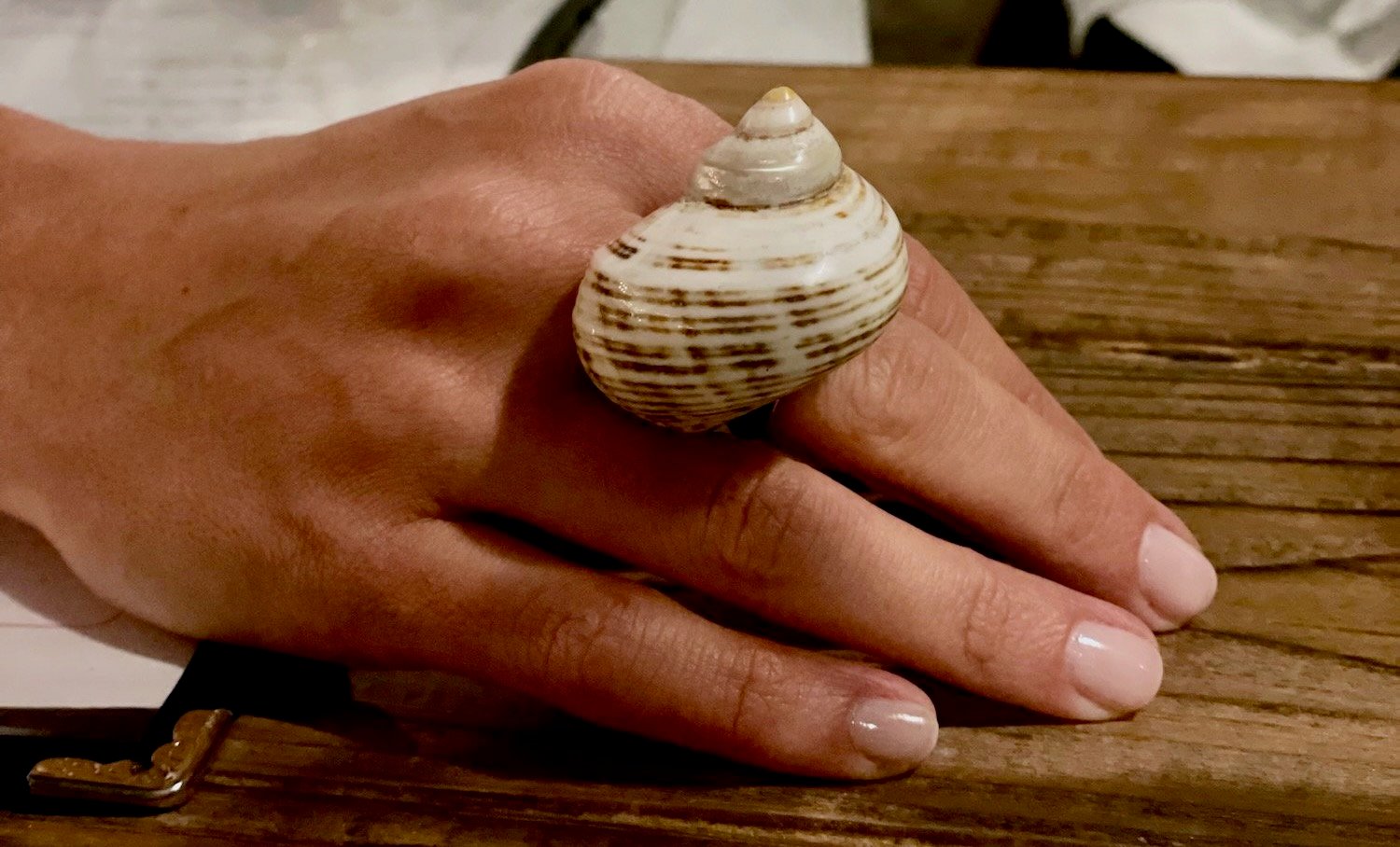
The other day, a few ladies and I went to a neighborhood restaurant, and the first thing I noticed when we sat down was my friend Gisela’s nail polish. How gorgeous is that shiny-yet-matte color? It looks like the inside of a shell.
I was diagnosed with ankylosing spondylitis (AS) in 2016 at the age of 33, but I’d been managing its excruciating pain for years. Yet even at my worst, most people who knew me didn’t realize what was going on. AS isn’t like other forms of arthritis, like osteoarthritis and rheumatoid arthritis, where you can usually see swelling of the joints. With AS, there are often no physical signs. You can’t see a person’s immune cells attacking their body. The damage that occurs — like the new bone that forms in your spine, or the nerves that are constricted by inflammation — is on the inside. As a result, you can be in agony and battle other symptoms like fatigue, but still go about living your day-to-day life. That’s one of the reasons it can be such a devastating disease. You suffer silently, and alone.
Putting On a False Front
In 2011, if you’d looked at me, you wouldn’t have suspected anything was wrong. My life was a flurry of activity. I was a high school English teacher in Arlington, MA, who also coached cross-country. I ran with the team daily and then came home at night to grade papers and create lesson plans. But I had begun to experience shooting pains down both legs. I dismissed it, thinking it was due to overactivity, although stretching and over-the-counter painkillers didn’t help.
Eventually, limping became normal for me. I became skilled at hiding it. Sometimes the pain would subside for weeks,but other times it was a daily issue. I learned to live with it. It gradually worsened, and by the time I was diagnosed with AS, I could barely walk. I would take a step and then my leg would buckle underneath me. I couldn’t sit for very long because the pain in my lower back was so severe. I stood during events like my students’ graduation ceremony. My colleagues didn’t understand why I didn’t sit. If I was strong enough to stand, how could I be in so much pain?
My symptoms were always worse at night. I had sciatica, pain that radiated from my lower back down my legs. When I lay down to try to sleep, my back would stiffen so much, it felt like a board. Any movement would cause stabbing pain that left me feeling like I might die. I slept very little, and when I did wake up, I was paralyzed with stiffness. I would roll out of bed like a feeble 90-year-old woman and shuffle to the bathroom. I couldn’t lift my legs to put on underwear or jeans. I couldn’t bend over to put on my shoes. I had to swivel my body in and out of the car.
Yet my students and co-workers never suspected anything. I didn’t want my kids to feel worried and concerned, so I never let on that I was in pain. I became a master at hiding my emotions. My students never asked me why I didn’t sit at my desk. The truth was I didn’t dare. Once I was in the classroom by myself getting ready, and I took one step after getting up from the chair and fell to the floor sobbing in pain. There was no way I was going to let them see that happen.
Dealing With the Diagnosis
When I was finally diagnosed in 2016, I was devastated. The rheumatologist showed me an image of my deteriorating pubic bone and told me that I had ankylosing spondylitis, a disease that could never be cured. I drove
home feeling that my life was over. My boss and a handful of my co-workers knew but didn’t quite get it. There was no visible marker of disability like a walker or a cane, other than a slight limp. They were understanding that I was often out for doctor appointments, but I’d become so good at hiding when I was hurting, they didn’t realize how persistent my pain was.
Thankfully, my husband, Josh, was very supportive. I learned I had AS right before our wedding, and he told me that he’d carry me down the aisle if he had to. He instinctively got that I was suffering more than I let on. I’m lucky, because since then, I’ve met other AS patients whose partners aren’t as supportive or become resentful. He also encouraged me to stay active, which really helped. A lot of people just give up on movement because it’s painful, but it can really help you manage symptoms. At one point, I joined a Facebook support group, but I found it too depressing.
Opening Up About AS
I consider myself one of the lucky ones when it comes to this condition. When I was diagnosed, I was told I would need to take medicine every day for the rest of my life. Thankfully, my disease went into remission during my first pregnancy in 2017, and for the most part has stayed that way, other than some occasional mild sciatica. I’ve been able to keep symptoms under control with an anti-inflammatory diet and managing my stress. I always noticed that my AS flared up during stressful events, such as exam time at school or when I was going through a divorce several years ago.
But that’s another thing that’s often “invisible” when it comes to AS: We can never take periods of pain-free life for granted. I’m so thankful for each day that goes by that I can sleep through the night without pain, pick up my 3-month-old baby, Wesley, or chase my 2-year old toddler, Miles, around the yard. I’m grateful for seemingly simple things like walking through the grocery store and lifting heavy bags from my car to the kitchen. Most people take these things for granted, not realizing that many people during their flares of AS cannot even do basic tasks due to pain. That’s the randomness of AS: One day you can appear totally fine, and the next day your body can be so wracked with agony, you can’t leave your bed. I’m grateful for every pain-free day I can spend with my family. It’s a true gift that you can’t recognize unless you have the disease.