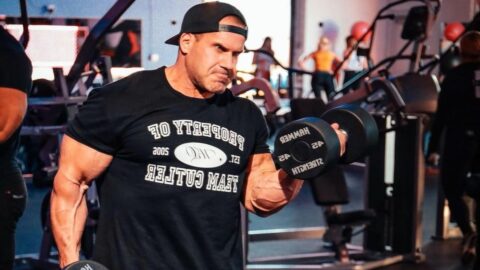
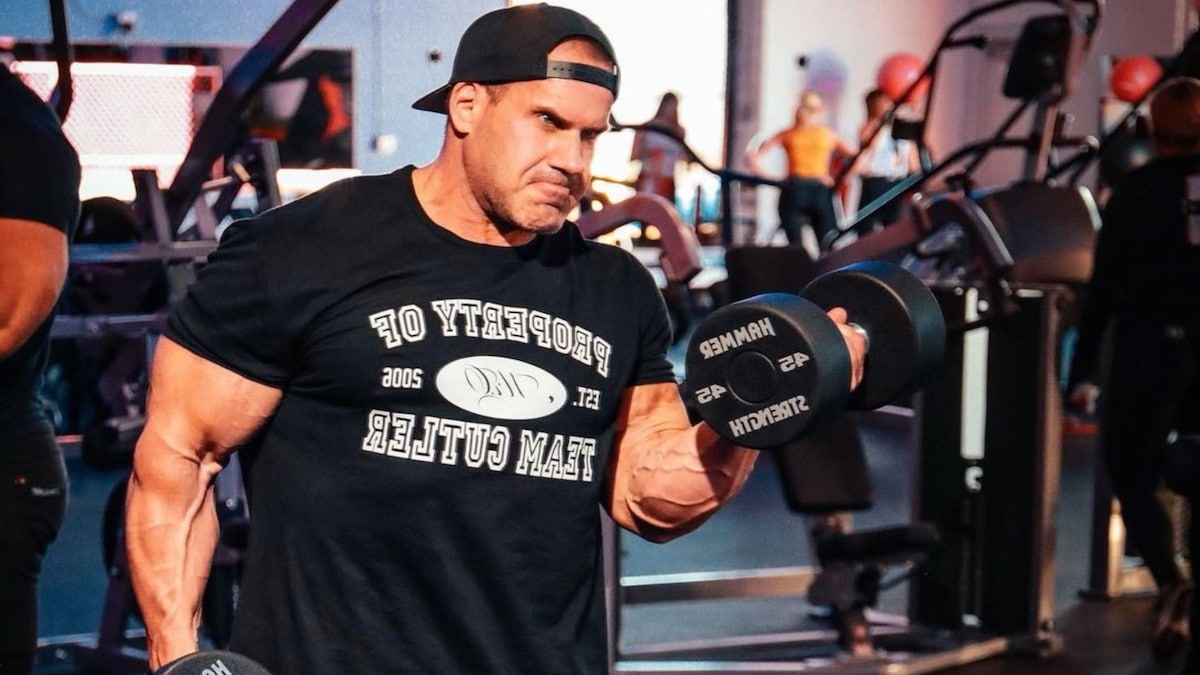
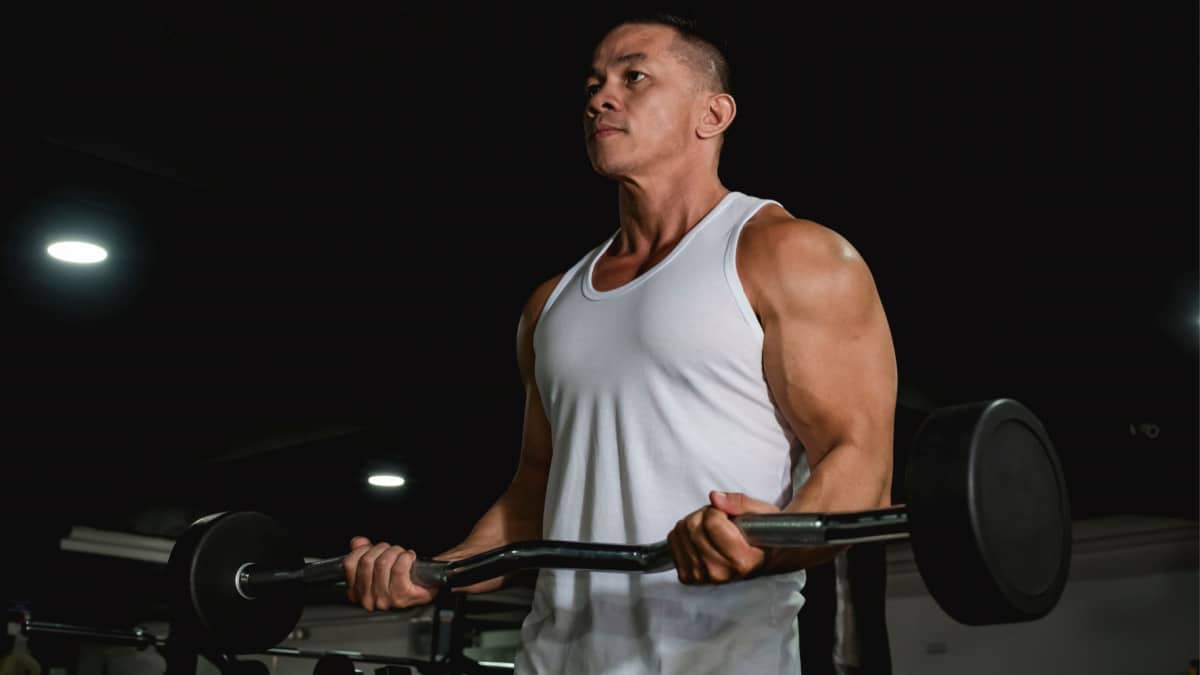
At age 49, with four Mr. Olympia titles (2006-2007, 2009-2010) to his name, Jay Cutler has nothing to prove. He’s one of the greatest bodybuilders of all time, bar none. Yet, after an Oct. 14, 2022, Instagram post from fitness apparel company Schiek Sports Inc. — where Cutler posed and looked ripped next to fitness influencer Lexx Little — speculation arose that the retired athlete was planning a return to the stage.
On Oct. 17, 2022, Cutler addressed the rumors of his potential competitive return as a Masters bodybuilder (ages 45-plus). Amidst his clarification and thoughts for the future, the icon clarified that he has no intention of competing soon. According to Cutler, his new lean physique that lit up the strength sports sphere was about him taking better care of himself.
Cutler wastes no time shooting down any thought of his competitive return in his video testimonial.
“Well, those pictures are floating on the internet right now from when I was in Venice [CA], and they’re starting to say, ‘Oh, Jay is coming back for the Masters,’” said Cutler. “We need to squash it.”
On Feb. 12, 2022, during an episode of his podcast, Olympia President Jake Wood signaled that, after an absence, the Masters Olympia would potentially return sometime in the year 2023. (Note: At the time of this article’s publication, there has not been an official update on this front.) With that door open, some in the bodybuilding community thought Cutler would intend to walk through it.
Cutler shot down that specific assertion, as well, by saying too much was read into his brush with Little.
“Jake [Wood] is having it [the Masters Olympia], right? … It sounds about right. Jake would do something like that,” Cutler mused. “Drop the picture of me posing with Lexx Little, who’s a pretty popular influencer. So we did a video together. He conned me into going to the posing room.”
Per Cutler, he thought his posing stunt with Little would be of little consequence and appeared to have fun with it more than anything. It seems to have just been an unfortunate oversight.
“You know me; I don’t pose,” Cutler said. “I don’t want to say ‘conned,’ but he [Little] asked me, and I said, ‘You know what, I’ll go in there.’ I didn’t realize it would go so viral. Now it’s floating everywhere.”
“I’m doing this body transformation challenge just to try to look my best,” Cutler explained. “That means being leaner, and I don’t know what my physique is going to look like, to be honest. Like right now, I’m really lean, but I could tighten up a few areas. I want to get a little fuller. I don’t know if that necessarily means bigger on a scale, but that’s kind of the goal.”
Despite that plan, even if he won’t formally compete, Cutler didn’t rule out potential guest-posing cameos.
“I’m not going on a competition stage, but you know what I would like if I felt confident enough; if my body actually came around enough, I would actually consider posing,” Cutler said. ” … I’m still getting a ton of requests to come out and pop into events. So, it could be a possibility.”
Even if Cutler won’t be competing on any Olympia stage in the near future, it’s clear he’s committed to taking care of his health. For this bodybuilding legend, the grind never stopped — it just shifted in focus.
This season, my two goals are: a) enjoy the unbearable cuteness of toddlers in Halloween costumes and b) consume the top-shelf movies, books, clothes, etc. that always come out in the fall. If you feel the same, here’s a juicy list of fun stuff to read, watch, cook and wear (and I’d love to hear your recs!)…
Movies: In Aftersun (October 21st), universal heartthrob Paul Mescal plays Calum, a young father vacationing in Turkey with his 11-year-old, Lucy (Frankie Corio). Calum and Lucy goof around at the pool and laugh during dinner, but she senses that he’s going through something he’s not sharing with her. The movie is narrated by Lucy as an adult, watching home videos and trying to piece together who her father really was. Reviews are going bananas for Corrio’s performance, saying that she anchors the most emotionally intense scenes. I’m nervous to watch the film — I have an inkling what happens — but it looks beautifully, powerfully done.
And have you seen the trailer for Decision to Leave (October 14th)? South Korean director Park Chan-wook has cooked up a murder mystery love story with all the right ingredients — a dead husband, a mysterious wife, pitch-black humor and a jumpy score. The Atlantic reviewer even claims that the film has the sexiest scene they’ve watched all year. Can’t wait.
TV: When did TV thrillers become soooooo good? The first season of White Lotus was wildly compelling, and the second season — featuring a star-studded cast getting into misadventures in Sicily — premieres October 30th, the day before Halloween. I have high hopes; the full trailer looks fantastic.
And did you watch Bad Sisters? The Irish black comedy follows four sisters trying multiple ways to murder their fifth sister’s horrible husband. Since August 19th, an episode dropped every Friday, building huge suspense; and as the Guardian said, Bad Sisters gave us “the most satisfying TV finale of the year.” Loved the sisters and wanted to beam myself to Ireland to hang out in their cozy houses.
Books: My most recent read was It Won’t Always Be Like This (September 20th), a graphic memoir by Malaka Gharib. She tells her story of growing up in America but spending summers in Egypt with her father’s new wife and kids. It’s hard enough to figure out who you are when you’re a teenager — let alone in an unfamiliar country with a new family — and Malaka’s journey feels honest and real.
Lately, I also loved Our Missing Hearts by Celeste Ng (October 4th). I’m also curious about Matthew Perry’s memoir (November 1st) about battling addiction while acting on Friends — I hope he really opens up. And Maggie O’Farrell’s lyrical previous novel, Hamnet, made me weep, so I can’t wait to sink my teeth into Marriage Portrait (September 6th). The premise, inspired by a true story: 15-year-old Lucrezia de Medici is forced to marry an older Italian duke, after her big sister dies on the eve of her own wedding.
Food: Says associate editor Jannelle: “Fall is the season when Trader Joe’s brings it. Their Apple Cider Donuts are a cult favorite, and their Harvest Blend Herbal Tea tastes like fall in a cup. The other day, we made french toast with TJ’s Pumpkin Brioche Twist, and the whole house smelled incredible.”
Fashion: You know what feels surprisingly sexy right now? Hear me out… cardigans. I keep spotting women wearing them with nothing underneath (exhibit A, exhibit B), and it feels so cozy and bedhead-y. I also see them styled over tissue-thin turtlenecks, and I love that vibe, too. The other trend I’m loving is the dark green bag. Here’s a splurge and another splurge and a steal.
Beauty: “This warm oxblood lipstick is my go-to for dates because it’s so moody and sensual,” our associate editor Jannelle told me. “It could also come in handy for Halloween costumes: Elegant vampire? Check. Witches of Eastwick? Check. Selena Quintanilla? Check!” For me, I’m loving this lip mask melt — it leaves my lips softer than they’ve been in decades (or maybe ever?). Highly recommend. Also I’ve been spotting this hair clipeverywhere. Isn’t it so pretty? It would make a fun birthday gift for a friend.
What would you add? Please share what you’re loving these days! xoxo
Note: If you buy something through our links, we may earn an affiliate commission, at no cost to you. We recommend only products we genuinely like. Thank you so much.
Oct. 18, 2022 – Move over, BA.5. There are some new kids in town and no one is sure yet if we should be worried.
But there is concern that COVID-19 virus subvariants BQ.1 and BQ1.1 will become a major threat in the U.S. and that XBB could alter the COVID picture globally.
At this point, infectious disease experts have only predictions.
A worst-case scenario would be a surge of one or more strains that evade our immune protections just as a predicted fall and winter surge hits the United States.
At the same time, we know a lot more about SARS-CoV-2 than we did when COVID first became a household name. And despite some widespread pandemic fatigue, people know the basics of protection at this point should it be necessary – gulp — to go back to masking, obsessive handwashing, and keeping a safe distance from our neighbors.
The most recent CDC data shows BQ.1 and BQ.1.1 subvariants have grown to about 12% of circulating virus strains in the U.S., doubling in the past week, compared to only 1% a month ago.
“I don’t think we should panic, but I am little concerned,” says Hannah Newman, MPH. “I would not be surprised to see a surge of infections as we enter respiratory season and in light of the emergence of new subvariants.”
“We are already seeing COVID on the rise in some European countries, in part due to these circulating subvariants,” adds Newman, director of infection prevention at Lenox Hill Hospital in New York City.
The emergence of BQ.1 and BQ1.1 in the U.S. and XBB globally is not completely unexpected, says Amesh Adalja, MD. “This is a virus that’s going to continue to evolve to become more able to infect us, and so these variants should not be surprising.”
Better Protection From Bivalent Boosters?
One unanswered question is how well the new bivalent mRNA vaccine boosters could work against these specific subvariants.
“The new booster is a better match to what is circulating than the old booster, but we don’t know what that means in real life,” says Adalja, senior scholar at the Johns Hopkins Center for Health Security in Baltimore. It’s difficult to answer that question because no one is planning to compare the two booster types in a clinical trial.
Newman is more optimistic. “A bit of good news is that the bivalent COVID booster will provide some protection against these strains, and we really just need people to roll up their sleeves and receive it,” she says.
The XBB subvariant, currently surging in Singapore, could be a cautionary tale for the U.S., says Eric Topol, MD, founder and director of the Scripps Research Translational Institute in La Jolla, CA, and executive editor of Medscape, WebMD’s sister site for medical professionals.
For example, prior to XBB emerging, the COVID reinfection rate in Singapore was 5%. Now it is 17%. “So that means a lot of people who had an infection are going to get hit again,” Topol says. Furthermore, Singapore reports 92% of their population is vaccinated and their uptake of boosters is twice the U.S. rate.
“And despite that, they have a very significant wave, which is going to be bigger than anything except the original Omicron,” he says.
Fewer Treatment Options
The drug Paxlovid will continue to play an important role in preventing more severe COVID outcomes, Adalja says. This is because “Paxlovid works on a whole different area of the virus, different from these mutations that get around immunity.”
In contrast, evidence so far suggests that monoclonal antibody therapies will not be effective against these new subvariants. “The ability to evade monoclonal antibody treatments is a concern for me, because it could leave our most vulnerable open to more severe outcomes,” Newman says.
“If strains are able to escape antibody immunity and monoclonal antibodies aren’t effective, we can expect to see more severe symptoms in high-risk individuals who would otherwise benefit from these treatments,” she says.
In particular, the monoclonal antibody bebtelovimab and the monoclonal combination Evusheld may be less effective against the new subvariants, Adalja says.
Does Recently Infected Mean Protected?
Most people who had COVID-19 within the past 3 to 6 months will likely have antibody levels to protect them, at least against severe disease, Adalja says. That’s one reason U.S. officials suggest people wait 3 months to get a booster after infection and Canadian officials recommend 6 months.
“You’re certainly going to be protected against severe disease,” Adalja adds. “How long you’re going to be protected, how immune-evasive these variants are, and the degree to which their immune-evasiveness reaches, that’s going to determine if you’re susceptible to infection.”
After natural immunity wanes, these immune-evasive variants could infect someone again, but they are more likely to experience a mild case, Adalja says.
Newman agrees. “There is a level of natural immunity that is gained with recent infection. However, it wanes over time. Staying up to date with vaccinations and boosters is the most proven and effective way to achieve uniform protection.”
What is known is that COVID is likely to be with us for a while, Adalja says. “I was someone who was very forthright about this, that this was never going away. I wasn’t thinking this is like a hurricane that is going to leave one day. I thought this is a new normal,” he says.
He adds we’re making progress on COVID being managed as an outpatient illness.
The Future Is Uncertain
It’s difficult to predict exactly what will happen this fall and winter based on current evidence, says Gregory Poland, MD, an internal medicine doctor at Mayo Clinic in Rochester, MN.
Throughout the pandemic, however, what happens in the U.K. and India has consistently signaled what happens in the U.S. And these other countries are experiencing “significant upticks in the subvariants,” he says.
“Unfortunately, there is no crystal ball that will predict for sure what a future wave might look like at this moment,” Newman says. “It will really depend on whether a variant will outcompete other strains and the prevention measures taken.”
She is also concerned about a convergence of COVID and flu over the winter.
“Prevention fatigue paired with upcoming holiday gatherings could be a potential for more superspreading events,” Newman says.
One concern is the relatively low uptake of the bivalent boosters among Americans, Topol says. “This is going to be really bad because a few weeks from now, we will face a very significant wave.”
The relaxation of pandemic protection measures and the waning of immunity as more and more Americans go more than 6 months from their last immunization also are concerning, Topol says. “Our immunity wall is just developing more and more holes in it.”
“We’ll see a wave even before the BQ1.1 really takes effect,” Topol predicts. “And then the two together could make for a very bad December or January.”
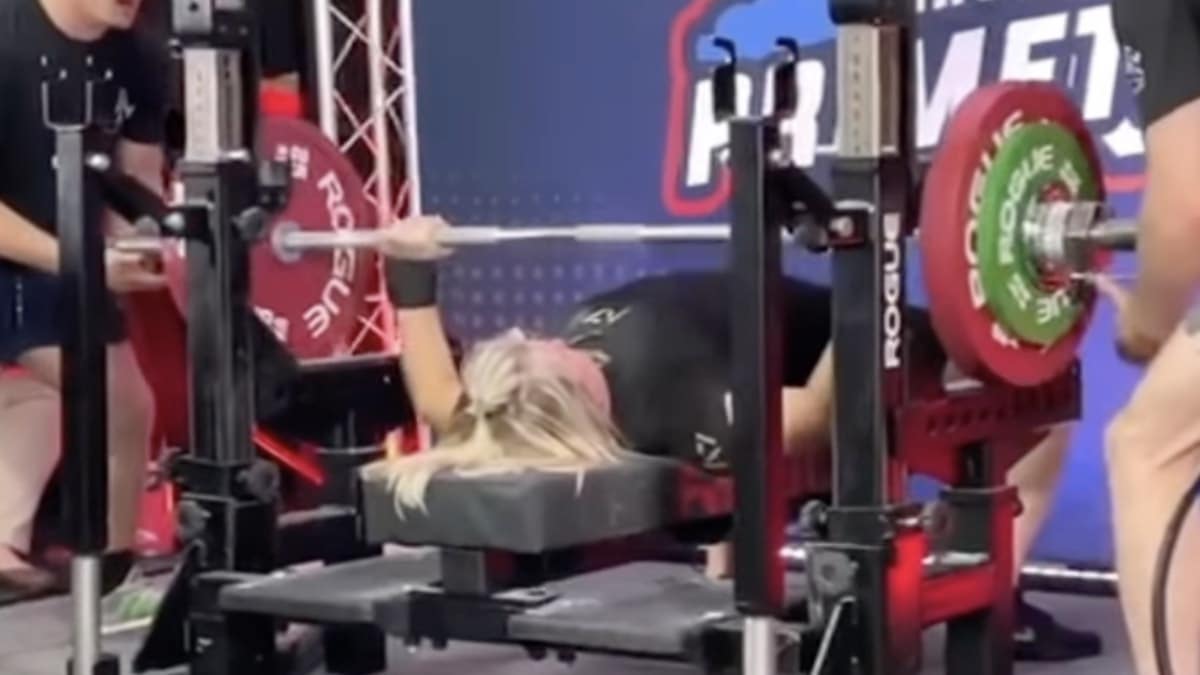
On Oct. 15, 2022, during the 2022 USA Powerlifting (USAPL) Carolina Primetime contest, powerlifter Jen Thompson set an American Record in the 67.5-kilogram weight class when she scored a 148.5-kilogram (327.5-pound) raw bench press. The competition took place in Greenville, SC.
Notably, if Thompson had featured in an international competition with this press, it would’ve exceeded the current International Powerlifting Federation (IPF) World Record of 144 kilograms (317.4 pounds) in the IPF’s 69-kilogram weight class. Thompson also owns that mark, which she achieved during a second-place performance at the 2017 IPF Reykjavík International Games. The athlete performed the press without a lifting belt and wore just wrist wraps to help her notch the feat.
With her latest official record, Thompson can now boast the top American bench press mark in USAPL’s 60-kilogram, 67.5-kilogram, and 76-kilogram weight classes. Plus, according to Open Powerlifting, while her latest bench press isn’t an official World Record, it surpasses Thompson’s all-time competition best of 145.4 kilograms (320.7 pounds) from the 2022 USAPL Arnold A7 Pro Bench Bash. Thompson competed in the Masters 45-49 division at that contest, which was a bench press-only meet and a part of the overall 2022 Arnold Classic.
Her press aside, Thompson also fared quite well with her other staple numbers, logging respective PRs on her squat, deadlift, and her total. (Note: Based on her recent contest history, Thompson often exclusively focuses on her bench press, frequently competing in bench press-only meets of late.)
Here’s an overview of the top stats from the athlete’s performance at the 2022 USAPL Carolina Primetime competition:
Jen Thompson (67.5KG) | 2022 USAPL Carolina Primetime Top Stats
Squat — 160 kilograms (352 pounds) | Personal Competition Best
Bench Press — 148.5 kilograms (327.5 pounds) | American Record | Personal Competition Best
Deadlift — 202.5 kilograms (446.5 pounds)
Total — 511 kilograms (1,126.5 pounds) | Personal Competition Best
Thompson might have left more on the table with her latest record. In the caption of her Instagram post, the athlete wrote that her bench press was “smooth like butter” and that she was “kicking” herself for not attempting a 149.7-kilogram (330-pound) press. That said, Thompson apparently trained differently and “tweaked her programming” in advance of this contest. The eventual results seemed to pay off in spades.
For many athletes, this sort of accomplishment would be a benchmark for their resume. For Thompson, one of the arguable greatest powerlifters of all time — with a plethora of victories to her name over a two-plus decade career — it’s just the latest example of her unique prowess.
Colorado-based remote patient monitoring company BioIntelliSense on Tuesday announced the acquisition of AlertWatch, a patient monitoring platform.
AlertWatch aggregates data and provides clinicians with a composite view of patient vital sign trends.
The company received four FDA 510(k) clearances for its product offerings for the operating room, labor and delivery unit, and intensive care unit. AlertWatch is also used in general care wards and with at-home care.
BioIntelliSense will add AlertWatch to its HealthCast portfolio and integrate the platform with its BioButton wearable, a product used for continuous vital sign monitoring for 60 days that captures temperature, respiratory rate and heart rate at rest.
“The addition of AlertWatch offers healthcare providers comprehensive continuous monitoring solutions, and an accelerated path from adoption to full scale utilization. The patented AlertWatch multi-parameter interface displays and analyzes data from inpatient vitals, the electronic medical record (EMR), laboratory systems and BioIntelliSense medical-grade wearables, to provide clinical intelligence across care settings and acuity levels,” Dr. James Mault, founder and CEO of BioIntelliSense, said in an email.
THE LARGER TREND
AlertWatch is a new addition to BioIntelliSense’s patient monitoring portfolio, which includes wearable products that allow clinicians to collect patient data outside the hospital.
BioIntelliSense’s tools include BioSticker, a body sticker that captures medical data and analytics with early detection capabilities, and BioButton, a product used for continuous vital sign monitoring. The company announced a $45 million Series B raise last year.
In August, it announced a strategic partnership with Medtronic for the U.S. hospital and 30-day post-acute home distribution rights for BioButton. AlertWatch will now be integrated with the BioButton wearable, and be available through Medtronic as well.
Oct. 18, 2022 – This just in: College students drink, use drugs, and break the law.
OK, so that’s not exactly news. But this is: A “fear of missing out” – playfully termed FOMO in the social media era – can predict these bad behaviors with surprising accuracy. That’s what researchers from Southern Connecticut State University found in a new study published in PLOS One.
After surveying 472 undergrads (ages 18 to 24), researchers found that students with higher levels of FOMO were more likely to engage in academic misconduct, drug and alcohol use, and breaking the law.
FOMO is the “chronic apprehension that one is missing rewarding/fun experiences peers are experiencing,” the paper says. It’s most common between ages 18 and 34, but anyone can feel it – and most people (nearly 90%) have.
“Almost all of us experience FOMO with most hopefully not engaging in any serious maladaptive, dangerous, or illegal behavior,” says Paul McKee, a PhD student in the Cognitive Neuroscience Admitting Program at Duke University and the study’s lead author. “That being said, there is evidence, in this study and others, that those with higher levels of FOMO may be more likely to experience negative mental health consequences like increased anxiety or depression, or engage in less-than-desired behaviors.”
Students in the study completed a 10-question quiz designed to assess FOMO levels. They were asked to rate on a 1-to-5 scale how true each of the following statements were:
1. I fear others have more rewarding experiences than me.
2. I fear my friends have more rewarding experiences than me.
3. I get worried when I find out my friends are having fun without me.
4. I get anxious when I don’t know what my friends are up to.
5. It is important that I understand my friends’ “in jokes.”
6. Sometimes, I wonder if I spend too much time keeping up with what is going on.
7. It bothers me when I miss an opportunity to meet up with friends.
8. When I have a good time, it is important for me to share the details online (e.g. updating status).
9. When I miss out on a planned get-together, it bothers me.
10. When I go on vacation, I continue to keep tabs on what my friends are doing.
The higher a student’s average FOMO score, the more likely they were to have engaged in bad behaviors.
“Maladaptive behaviors were more likely for someone with a 3 than a 2, but even more so likely for a 4 compared to the 3,” says McKee.
Those behaviors included classroom incivility (like using your cellphone during class), plagiarism, alcohol and drug use, stealing, and giving out illegal and prescription drugs. And the associations remained even after controlling for gender, living situation, and social and economic status.
In the end, the researchers were able to use FOMO to predict whether a student would engage in academic misconduct with up to 87% accuracy, drug use with up to 78% accuracy, illegal behavior with up to 75% accuracy, and alcohol use with up to 73% accuracy.
That’s impressive, especially when you consider that a short, simple screening – including the 10 questions above — could be all it takes to predict these behaviors, McKee notes.
The new study fits with previous research that has linked FOMO with negative outcomes like anxiety disorders, sleep problems, and higher alcohol use.
Research also links FOMO with social media use.
“There is enough literature out there today that shows strong evidence of a bi-directional relationship between FOMO and social media use,” McKee says. In other words, “FOMO may lead to more social media use, but more social media use may also lead to FOMO.”
More research is needed to better understand the link between FOMO and behavior, the researchers say. That could help us reduce its potential harms.
It’s estimated that more than a third of people who have had COVID-19 experience neurological complications such as brain fog that persist or develop 3 months after infection. And two thirds of so-called long haulers still have neurological symptoms after 6 months.
Brooklyn is crushing the Halloween decorations this year. On evening walks, I delight in witch hats and spooky brownstones, and how cute are these outgoing skeletons, above?
My friend Oliver’s mom travels with her own pillow. I thought it was funny/extreme at first, but since trying the the Marlow, I get it. Most of my life, I didn’t have a major pillow preference, but the Marlow is next-level comfortable — with cooling infused memory foam (it always feels like the cold side of the pillow) and you can personalize the firmness with zippers (so your neck and body feel great). Now I sleep better and longer, and everyone in my family loves them, too. What are your secrets for restful sleep? Heads up: Marlow is currently offering 25% off when you buy two pillows, and 40% off when you buy four; just click here.
The other day, I was came across New York Magazine’s Paul Rudd quiz — can you tell which of his photos are older or younger? I failed miserably. (It also makes me want to rewatch I Love You, Man.)
How cool is this milk bread lamp, which is made out of real bread?! “It’s at the top of my wishlist,” says Jannelle, our associate editor. “I plan on aggressively dropping it into all my conversations between now and the holidays.”
Oct. 18, 2022 — Women who use chemical hair straightening products may be at an increased risk for uterine cancer, according to new research from the National Institutes of Health.
Women who use straightening products more than four times per year have the highest risk for developing uterine cancer, according to the study. More specifically, the researchers found that women who used straightening or relaxing products more than four times per year were more than twice as likely to develop uterine cancer compared to those who don’t use these products.
Lead study author Alexandra White, PhD, said that about 1.64% of women who don’t use chemical hair straightening products develop uterine cancer by age 70. But for frequent users of these products, that risk goes up to 4.05%.
“This double rate is concerning,” she said. But “it’s important to put this information into context,” she noted, as “uterine cancer is a relatively rare type of cancer.”
Previous research has linked hair product use, such as hair dye, to increased risks of other hormone-sensitive cancers such as breast cancer. But researchers believe this is the first analysis that examined the use of hair straighteners in relation to uterine cancer.
The study examined hair product usage and uterine cancer incidence during an 11-year period among 33 ,947 women whose ages ranged from 35 to 70. The analysis controlled for variables such as age, race, and risk factors.
Uterine cancer is the ninth most common type of cancer in the United States, according to the National Cancer Institute, with more than 65,000 new cases diagnosed annually. More than 12,000 deaths are caused by uterine cancer each year.
Hair straightening product usage was more common among women with low physical activity and among African American women, the study found.
“Because Black women use hair straightening or relaxer products more frequently and tend to initiate use at earlier ages than other races and ethnicities, these findings may be even more relevant for them,” said Che-Jung Chang, PhD, one of the study authors, in a statement.
The study was funded by the Intramural Research Program of the National Institute of Health and the National Institute of Environmental Health Sciences and was published in the Journal of the National Cancer Institute on Monday.
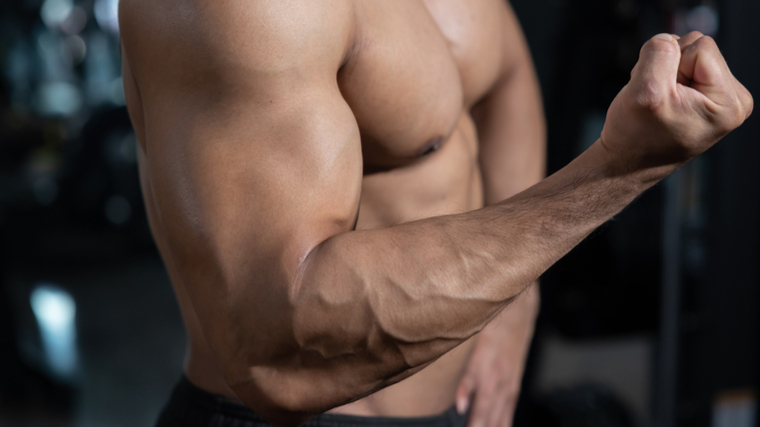
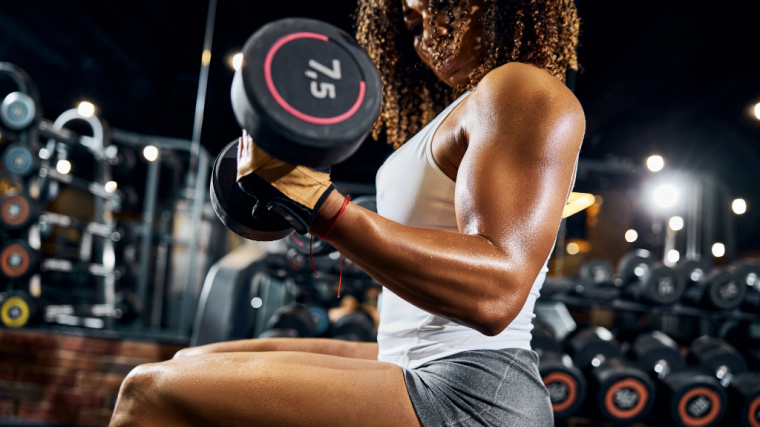
Big biceps. For some lifters, that’s the ultimate weightlifting goal. Not winning gold medals in competition or hoisting hundreds of pounds overhead. Just building some eye-catching sleeve-stretchers. And, frankly, there’s not a thing wrong with that.
Credit: charnsitr / Shutterstock
Changing your physique to suit your own goals, and building muscle for muscle’s sake, is still perfectly acceptable, despite the recent prevalence of functional training, obstacle racing, or performance-driven workouts. Nevermind the fact that directly training your biceps can contribute to joint health and may actually boost performance in many lifts. So, in the spirit of getting big ol’ arms, here are some of the best ways to grow your biceps.
12 Best Biceps Exercises
Cheat Curl
Performing the cheat curl is doing the wrong thing for the right reason. Instead of a strict barbell curl, which can be effective on its own, you’re deliberately using some body English to drive a heavy weight to the top position and then controlling the eccentric (negative or lowering phase).
By using your hips and legs purposefully to lift the weights, rather than accidentally loosening technique due to fatigue, you remain in control of the exercise and reduce the risk of injury while benefiting from heavier weights and increased muscle tension.
How to Do the Cheat Curl
Stand with an underhand, shoulder-width grip on a barbell. Slightly bend your knees and push your hips toward the wall behind you. Keep your back straight and slide the bar down along your thighs. Forcefully straighten your body while curling the weight toward chin-level. Brace your abs in the top position and slowly lower the weight. Keep your elbows pinned to your sides while straightening your arms.
Repeat the entire process for each repetition. Be sure to use your legs and hips to drive the weight up, not simply your hips and lower back. Take roughly three seconds, or longer, to lower the weight on each repetition.
Benefits of the Cheat Curl
The hip drive and increased muscle recruitment allows relatively heavier weights to be used, which can contribute to building size and strength.
Lowering the weight slowly can help to build more muscle than lowering at a faster speed. (1)
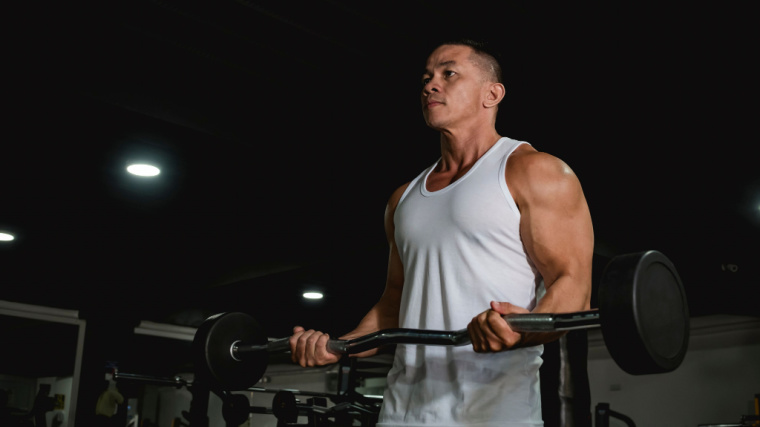
EZ-Bar Curl
The EZ-bar allows a semi-supinated (angled) grip, which reduces the wrist strain many lifters from using a fully supinated (palms up) grip on a straight barbell. The shift in hand position also affects muscle recruitment by activating more forearm musculature than a straight bar.
The multiple sections of an EZ-bar also allows you to easily change your grip width from “wide,” to “moderate,” to “close.” Grip width will affect your effective range of motion, which will influence muscle activation.
How to Do the EZ-Bar Curl
Stand with a shoulder-width, underhand grip on the bar. Pull your shoulders back and keep your torso upright. Slightly bend your knees and set your stance to a comfortable width. Keep your elbows stationary as you curl the weight toward the front of your shoulders. Pause briefly before lowering the weight to full extension.
Benefits of the EZ-Bar Curl
The EZ-bar increases brachioradialis activation compared to many other biceps exercises. (2)
The angled hand position reduces stress on the wrist joint, making the exercise more comfortable for lifters with mobility problems or joint issues.
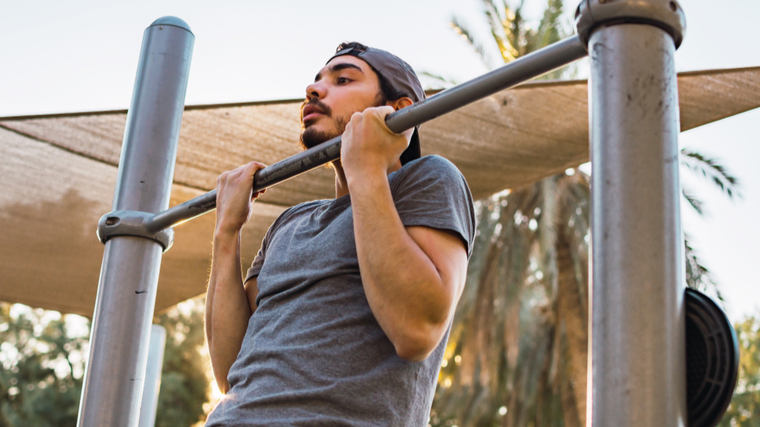
Chin-Up
Many lifters consider the chin-up to be primarily a back exercise, but the supinated (palms up) grip drastically increases biceps recruitment during the exercise. This makes it ideal for a biceps-focused workout, especially if it’s preceded or followed with additional direct biceps training to increase cumulative fatigue on the muscle.
By flipping your grip, you increase the leverage for your biceps to contribute during the movement, which places more stress directly on them and relatively less stress on the larger back muscles.
How to Do the Chin-Up
Grab an overhead pull-up bar with a shoulder-width, palm-up grip. Allow your body to be supported by your straight arms. Pinch your shoulder blades together as you pull your body toward the bar. Keep your neck in a neutral position and avoid extending your chin to the bar. When your mouth is roughly level with the bar, pause briefly before lowering your body to full extension.
Benefits of the Chin-Up
The chin-up is one of relatively few compound (multi-joint) exercises which primarily work the biceps. Compound movements are highly effective at building strength and size (3)
This movement allows for using potentially heavy weights compared to other biceps exercises, which is beneficial for size and strength.
Alternating Supinating Curl
This exercise puts a twist — pun completely intended — on the classic dumbbell curl to deliver increased muscle recruitment. Supinating, or rotating, your hand as you curl the weight up allows you to activate additional arm muscles and it works the biceps to their fullest capacity.
Each repetition takes your arm through a significant range of motion and complete muscle contraction by turning the wrist from a neutral position to a fully supinated (palm up) position, which maximally recruits the muscles of the biceps and forearm.
How to Do the Alternating Supinating Curl
Stand holding a pair of dumbbells by your sides with your palms facing your hips. Curl one arm upwards, keeping your thumb up in a neutral position. As your hand passes your ab-level, begin rotating to a palm-up position as you continue curling. In the top position, your pinky should be slightly higher than your index finger. Reverse the motion to lower the weight, and then perform a repetition with the opposite arm.
Benefits of the Alternating Supinating Curl
The biceps muscle plays a significant role in supinating the forearm as well as flexing (bending) your arm. (4) This is one of the very few exercises to specifically incorporate the supinating function, which increases overall activation of the biceps.
Using a neutral grip in the initial portion of the exercise recruits the brachialis and brachioradialis, making the alternating supinating curl an efficient way to train the biceps and forearms.
Alternating arms and performing the movement unilaterally (curling one arm at a time) allows you to use a slightly heavier weight than curling both dumbbells together. (5)
Barbell Spider Curl
The barbell spider curl works the biceps from a unique angle for a variation in training stimulus. This is essentially a “reverse incline curl,” because it requires lying chest-down on an incline bench and allowing your arms to hang vertically down.
By positioning your upper arm in front of your torso, the short head of the biceps is more strongly recruited than the long head. Some lifters may not notice a significant difference in the development of either head, but for physique-conscious lifters, emphasizing either biceps head can play a significant role in building an aesthetic physique.
How to Do the Barbell Spider Curl
Set an incline bench to a low-to-moderate angle, roughly 30 or 45-degrees. Lie your chest on the bench while holding a barbell with a supinated (palm up) grip at roughly shoulder-width. Let your arms hang straight toward the ground. Curl the weight without moving at the shoulder. Your upper arms and elbows should remain pointed at the ground as the weight moves. Pause briefly in the top position to maximize the peak contraction. Lower slowly with control and avoid swinging the weight.
Benefits of the Barbell Spider Curl
The short head of the biceps is recruited relatively more than the long head due to the position of the upper arm relative to the torso. The long head is involved in working the shoulder joint, which is essentially “immobilized” due to hanging straight down.
The barbell spider curl creates an extremely strong peak contraction due to the angle of the bench and the leverage of the weight against gravity. This can help many lifters improve the mind-muscle connection with their biceps, which can ultimately benefit muscle growth. (6)(7)
Incline Dumbbell Curl
The incline dumbbell curl is a classic bodybuilding exercise, known for its unique angle which puts the biceps and shoulder into a stretched position and increases recruitment of the long head of the biceps.
While the stretched position is essential for the incline curl, it may be stressful on your shoulder joint. You can adjust the incline as needed, higher or lower, to accommodate your own mobility and flexibility. The key is to maintain bench-contact with your head, shoulder blades, and lower back to ensure an inclined position.
How to Do the Incline Dumbbell Curl
Lie back on an incline bench set to roughly 45-degrees with a dumbbell in each hand. Keep your head, shoulders, and tailbone against the bench throughout the entire movement. Straighten your arms and rotate your palms forward. Keep your palms facing up as you curl both weights toward your biceps. Your elbows should remain pointed to the floor and should not move forward. Slowly lower the weights to a full stretch.
Benefits of the Incline Dumbbell Curl
Training the biceps with a unique angle, in an inclined position, contributes to more muscle growth than performing exercises which are too similar to one another. (8)
The incline dumbbell curl puts the shoulder into a stretched position. Because the long head of the biceps crosses over the shoulder joint and is involved in shoulder flexion, this curl variation emphasizes the long head more than the short head. (9)
The stretched position of the arm can contribute to improved shoulder mobility and biceps tendon strength. (10)
Single-Arm Preacher Curl
The barbell or EZ-bar preacher curl is a time-tested muscle-builder, but performing the exercise with one arm at a time can allow even greater focus on the muscle. Unilateral (single-side) training will improve muscle recruitment and emphasize on each arm more than a barbell exercise.
The upper arm support and stationary shoulder position de-emphasize the long head of the biceps and increase recruitment of the short head.
How to Do the Single-Arm Preacher Curl
Start with a dumbbell curled to your shoulder, with your palm facing your body. Press your chest against the flat side of a preacher curl bench and rest both underarms snugly on top of the pad. Lay your elbow and triceps on the angled side of the bench, keeping the dumbbell in the top position. Maintain a palms-up grip as you slowly lower the weight. When your arm is nearly straight, curl the weight back to the starting position.
Benefits of the Single-Arm Preacher Curl
The preacher curl bench supports the upper arm which reinforces strict technique and limits cheating or momentum.
The single-arm preacher curl emphasizes the short head of the biceps.
The unilateral movement allows lifters to address common muscle asymmetries between arms by focusing on each arm individually.
Single-Arm Low Cable Curl
The low cable pulley puts the biceps under constant tension, compared to barbells or dumbbells which rely on gravity and leverage to provide resistance. This results in cables offering greater time under tension and a stronger muscle-building stimulus. (11)
The single-arm low cable curl can be done either facing the cable stack or facing away from it. Facing away will put a greater stretch on the biceps, similar to an incline curl, and is the more effective option.
How to Do the Single-Arm Low Cable Curl
Attack a single handle to a low cable pulley. Grab the handle, turn your back to the weight stack, and take one or two small steps forward. With a palms-up grip and your hand by your side, your straight arm should be very slightly “pulled” behind your torso by the weight. Keep your elbow stationary while curling the handle toward your shoulder. From the top position, fully straighten your arm before repeating the next repetition.
Benefits of the Single-Arm Low Cable Curl
This cable curl variation puts the muscle under constant muscular tension which can increase muscle growth.
The long time under tension and long range of motion make the exercise highly effective with relatively light weight, making it ideal for lifters whose joints cannot tolerate heavy loads.
Concentration Curl
The concentration curl is a classic biceps exercise, often performed by beginning lifters instinctively without formal direction. It can be an extremely effective way to target the biceps with minimal recruitment of other muscles.
The setup of the concentration curl allows you to, rightfully, concentrate on the working arm during each set. Not only is the movement strictly performed by one arm at a time, but you’re looking directly at your muscle as it contracts and stretches for each repetition.
How to Do the Concentration Curl
With a dumbbell in one hand, sit on a bench or chair with your feet set well-beyond shoulder-width. Brace the triceps of the working arm near the same-side knee. Curl the weight toward your face while maintaining a palm-up grip. Don’t allow your legs or torso to swing the weight up. Slowly lower the weight to complete extension.
Benefits of the Concentration Curl
This exercise is ideal for using the “touch training” technique — using your non-working hand to touch the working muscle during each repetition. This can improve the mind-muscle connection and may increase muscle growth. (12)
This movement allows for strict exercise performance with little to no momentum due to the braced stance and arm support.
The concentration curl allows variety from standard dumbbell curls without needing additional equipment like a preacher curl bench or cable pulley.
Zottman Curl
The Zottman curl, named for American strongman George Zottman, working the biceps and forearms through a variety of motions for maximum muscle recruitment. It combines a standard dumbbell curl and a reverse curl, while testing and building wrist mobility.
If you can manage the necessary coordination (which is less complicated than patting your head while rubbing your stomach), then you can build bigger, stronger arms with this efficient movement.
How to Do the Zottman Curl
Stand holding a dumbbell in each hand by your sides. Curl one arm palm-up toward your shoulder. In the top position, rotate your hand palm-down and lower the weight to full extension. Next, curl the opposite hand palm-up toward your shoulder before rotating it palm-down for the lowering phase. When you’re comfortable with the basic movement, aim to move your arms at the same time — raising one hand palm-up while simultaneously lowering the other palm-down.
Benefits of the Zottman Curl
The Zottman curl recruits multiple muscles of the arm — including the biceps, brachialis, and brachioradialis — during the multiple phases of the exercise.
The varied hand positions and use of supination and pronation (turning the palm up and down, respectively) will help to build overall wrist mobility and may improve wrist and elbow health.
Hammer Curl
This simple adjustment to the standard dumbbell curl increases recruitment of the forearm muscles, allows you to move relatively heavier weights, and builds grip strength.
The thumbs-up position emphasizes the brachialis and brachioradialis, along with the biceps, making it an efficient way to train the forearm as well as the upper arm.
How to Do the Hammer Curl
Stand holding a pair of dumbbells at your sides with your hands facing your hips. Curl both weights up toward your shoulder while keeping your thumbs up. Allow your elbows to move slightly forward as you bring the weight into the top position — this can increase overall muscle recruitment. Pause briefly before lowering to full extension.
Benefits of the Hammer Curl
The hammer curl allows you to lift heavier weights than any palms-up curl, which can benefit size and strength gains.
The neutral-grip hand position emphasizes the brachialis and brachioradialis, which are not significantly recruited during other biceps curl variations.
EZ-Bar Reverse Curl
The EZ-bar reverse curl shares many of the benefits of the standard EZ-bar curl — reduced wrist strain and a consistent gauge for adjusting grip width — and it offers even greater recruitment of forearm muscles due to the angled palms-down grip.
The semi-pronated (partially palms-down) grip increases activation of the brachialis, brachioradialis, and wrist extensors, along with some recruitment of the biceps. This makes the movement a very efficient way to train the lower arms.
How to Do the EZ-Bar Reverse Curl
Stand with a shoulder-width, palms-down grip on the bar. Pull your shoulders back and keep your torso upright. Slightly bend your knees and set your stance to a comfortable width. Keep your elbows stationary as you curl the weight toward the front of your shoulders. Pause briefly before lowering the weight to full extension.
You may find the exercise more comfortable using a thumbless or “false” grip, placing your thumb next to your index finger instead of wrapping it around the bar. This technique will require greater grip strength as you squeeze the bar harder throughout the movement.
Benefits of the EZ-Bar Reverse Curl
The combination of using an EZ-bar and a predominantly pronated (overhand or palms-down) grip significantly increases brachialis, brachioradialis, and forearm activation compared to supinated (palms-up) biceps exercises.
The angled hand position reduces stress on the wrist joint, making the exercise more comfortable for lifters with mobility problems or joint issues.
The Biceps Muscles
It sounds counterintuitive, but “the biceps” are actually just made of your biceps. Several closely related muscles in the upper and lower arm need to be developed for a great looking set of biceps.
Biceps Brachii
The primary biceps muscle on the front of the upper arm is composed of two heads working together. The short head of the biceps, sometimes called the “inner head,” runs from near the elbow to the top of the upper arm. The long head, sometimes called the “outer head,” runs from the elbow over the shoulder joint and attaches to the shoulder blade.
Credit: YAKOBCHUK VIACHESLAV / Shutterstock
The biceps are well-known for working to flex (bend) your elbow, but they also function to pronate and supinate your wrist and forearm — turning your palm up and down. This is one reason why exercises like the alternating supinating curl result in stronger muscle contractions and greater overall growth.
Brachioradialis
The brachioradialis runs along the thumb-side of the forearm from the wrist area to the lower part of the biceps. It is heavily activated when curling, particularly when the hand is in a neutral (thumbs up) position. The brachioradialis also plays a role in stabilizing the forearm muscle during and after supination or pronation.
Brachialis
This often under-appreciated muscle is actually located “beneath” the biceps, near the elbow joint. When the brachialis increases in size, it has the effect of “lifting” the biceps to make it appear larger. The brachialis becomes the primary arm flexor when using a neutral grip, which is why movements like the hammer curl target it efficiently.
Forearms
The wrist flexors and wrist extensors, on the lower and upper part of the forearm respectively, are largely responsible for lifting the hand at the wrist joint. These muscles are often statically trained during most biceps curl variations, to stabilize the hand and wrist.
However, exercises like the Zottman curl or the cheat curl may recruit the flexors or extensors more significantly due to the involvement of more dynamic lifting technique.
How Often Should You Train the Biceps
Direct biceps training will be a factor of your specific goal and your overall training split. Two effective approaches are to either perform a moderate amount of biceps work immediately after training a larger body part or to perform a low amount of biceps training more frequently.
Because your biceps are recruited during almost all back exercises, ending your back workout with two or three biceps exercises (each for two to four sets of eight to 12 reps) is an efficient way to fully exhaust the biceps.
With this approach, the exercises should be as varied as possible. For example, performing the cheat curl, EZ-bar curl, and single-arm cable curl would all train the biceps with a similar stimulus. Performing the EZ-bar curl, incline curl, and Zottman curl would deliver greater variety, increased muscle recruitment, and stronger stimulus for growth.
Credit: MDV Edwards / Shutterstock
An effective alternative is to perform one biceps exercise for two to three sets of six to 15 reps at the end of your workout three to five days per week. With this high-frequency approach, your biceps are trained often, but the low volume allows for optimal recovery and growth. (13)
The lower volume per workout also prevents biceps fatigue from interfering with your other training for other body parts. For this method to be most efficient, use different exercises and/or a different set/rep scheme in each workout. For example, perform cheat curls for four sets of six in the first workout, single-arm preacher curls for three sets of 12 in the next workout, hammer curls for three sets of eight in the next session, etc.
How to Progress Your Biceps Training
One essential element for maximizing your biceps growth is training with a variety of hand positions and arm angles, either in a single workout or throughout the week. This will optimize overall muscle recruitment and balance activation of the major arm flexors — biceps long head, biceps short head, brachialis, and brachioradialis. (14)
Be sure to incorporate “classic” palm-up curls like the barbell spider curl, palms-down curls such as the EZ-bar reverse curl, movements with your upper arm in front of your torso like the chin-up, and movements with your upper arm angled behind your torso including the incline curl.
Credit: RutySoft / Shutterstock
One particularly effective technique to increase training intensity and volume is the mechanical advantage drop set. This is a specific type of superset which pairs similar movements with simple adjustments to improve leverage in order to perform more total repetitions.
For example, when you might begin with alternating supinating curls. When you approach muscular fatigue, transition immediately (without setting the dumbbells down) and begin performing hammer curls. Because hammer curls put the brachialis in a stronger position to contract, you will be able to complete additional repetitions before again reaching muscular fatigue.
Many people accidentally stumble onto this technique when performing strict barbell curls, as they inadvertently transition to cheat curls to complete a challenging set.
How to Warm-Up Your Biceps
While the elbow joint is most commonly overstressed or aggravated by certain triceps exercises, biceps training can also play a critical role in determining joint health. Because the elbow is held in position during most biceps exercises, the joint can be put under significant strain. A thorough warm-up can go a long way toward preventing any excessive stress.
Before any biceps training, get blood flowing throughout your upper body. Alternating low-rep push-ups with high-rep band pull-aparts for two or three sets is a good start. Following that with (perhaps counterintuitively), a light weight, high rep triceps exercise alternated with a light weight, high rep biceps exercise for two sets. With those four movements, you’ve got an efficient way to approach your biceps warm-up. Continue the training with a relatively light first set on each biceps exercise, and get to work.
Don’t Be Scared to Train for Big Arms
Direct biceps training has developed an unfortunate reputation in recent years, with some lifters thinking it’s purely for “vanity.” First of all, no it isn’t. Setting a goal of lean, muscular 17-inch arms isn’t “vanity” any more than setting a goal to squat five plates per side. Secondly, biceps training can play a performance-boosting role in upper body strength, stability when handling heavy weight, and shoulder, elbow, and wrist joint health. So, you want to build your biceps? Excellent. You’re now armed with the most effective ways to get there.
References
Wilk, M., Zajac, A. & Tufano, J.J. The Influence of Movement Tempo During Resistance Training on Muscular Strength and Hypertrophy Responses: A Review. Sports Med 51, 1629–1650 (2021). https://doi.org/10.1007/s40279-021-01465-2
Marcolin, G., Panizzolo, F. A., Petrone, N., Moro, T., Grigoletto, D., Piccolo, D., & Paoli, A. (2018). Differences in electromyographic activity of biceps brachii and brachioradialis while performing three variants of curl. PeerJ, 6, e5165. https://doi.org/10.7717/peerj.5165
Paoli, A., Gentil, P., Moro, T., Marcolin, G., & Bianco, A. (2017). Resistance Training with Single vs. Multi-joint Exercises at Equal Total Load Volume: Effects on Body Composition, Cardiorespiratory Fitness, and Muscle Strength. Frontiers in physiology, 8, 1105. https://doi.org/10.3389/fphys.2017.01105
Tiwana MS, Charlick M, Varacallo M. Anatomy, Shoulder and Upper Limb, Biceps Muscle. [Updated 2021 Aug 11]. In: StatPearls [Internet]. Treasure Island (FL): StatPearls Publishing; 2022 Jan-. Available from: https://www.ncbi.nlm.nih.gov/books/NBK519538/
Costa E, Moreira A, Cavalcanti B, Krinski K, Aoki M. Effect of unilateral and bilateral resistance exercise on maximal voluntary strength, total volume of load lifted, and perceptual and metabolic responses. Biol Sport. 2015;32(1):35-40. doi:10.5604/20831862.1126326
Calatayud, J., Vinstrup, J., Jakobsen, M. D., Sundstrup, E., Brandt, M., Jay, K., Colado, J. C., & Andersen, L. L. (2016). Importance of mind-muscle connection during progressive resistance training. European journal of applied physiology, 116(3), 527–533. https://doi.org/10.1007/s00421-015-3305-7
Schoenfeld, B. J., Vigotsky, A., Contreras, B., Golden, S., Alto, A., Larson, R., … & Paoli, A. (2018). Differential effects of attentional focus strategies during long-term resistance training. European Journal of Sport Science, 18(5), 705-712.
Costa B.V.D., Kassiano, W., Nunes, J. P., Kunevaliki, G., Castro-E-Souza, P., Rodacki, A., … & de Sousa Fortes, L. (2021). Does Performing Different Resistance Exercises for the Same Muscle Group Induce Non-homogeneous Hypertrophy?. International Journal of Sports Medicine, 42(09), 803-811.
Schoenfeld, Brad CSCS. Accentuating Muscular Development Through Active Insufficiency and Passive Tension. Strength and Conditioning Journal: August 2002 – Volume 24 – Issue 4 – p 20-22
Wiesinger, H. P., Kösters, A., Müller, E., & Seynnes, O. R. (2015). Effects of Increased Loading on In Vivo Tendon Properties: A Systematic Review. Medicine and science in sports and exercise, 47(9), 1885–1895. https://doi.org/10.1249/MSS.0000000000000603
Burd, N. A., Andrews, R. J., West, D. W., Little, J. P., Cochran, A. J., Hector, A. J., Cashaback, J. G., Gibala, M. J., Potvin, J. R., Baker, S. K., & Phillips, S. M. (2012). Muscle time under tension during resistance exercise stimulates differential muscle protein sub-fractional synthetic responses in men. The Journal of physiology, 590(2), 351–362. https://doi.org/10.1113/jphysiol.2011.221200
Oshita, Kazushige. (2021). Effect of internal focus of attention with touching cue on the agonist muscle activity during exercise. 10.14198/jhse.2021.16.Proc2.04.
Schoenfeld, B. J., Grgic, J., & Krieger, J. (2019). How many times per week should a muscle be trained to maximize muscle hypertrophy? A systematic review and meta-analysis of studies examining the effects of resistance training frequency. Journal of sports sciences, 37(11), 1286–1295. https://doi.org/10.1080/02640414.2018.1555906
Kleiber, T., Kunz, L., & Disselhorst-Klug, C. (2015). Muscular coordination of biceps brachii and brachioradialis in elbow flexion with respect to hand position. Frontiers in physiology, 6, 215. https://doi.org/10.3389/fphys.2015.00215