THURSDAY, Oct. 20, 2022 (HealthDay News) – Just a few years ago, “Friends” actor Matthew Perry almost died from opioid overuse that nearly destroyed his colon and almost killed him.
Now, he’s sober and wants to tell his story.
Perry has written a memoir, “Friends, Lovers and the Big Terrible Thing,” which will be published Nov. 1.
“I wanted to share when I was safe from going into the dark side of everything again,” Perry told the magazine PEOPLE. “I had to wait until I was pretty safely sober — and away from the active disease of alcoholism and addiction — to write it all down. And the main thing was, I was pretty certain that it would help people.”
Perry shares that he has gone to rehab 15 times, but he doesn’t say how long he’s been sober.
“It’s important, but if you lose your sobriety, it doesn’t mean you lose all that time and education,” he says. “Your sober date changes, but that’s all that changes. You know everything you knew before, as long as you were able to fight your way back without dying, you learn a lot.”
Perry talks about how his alcohol addiction was just beginning when he was 24 and cast on the TV show “Friends.” Perry, now 53, played Chandler Bing on the show.
“I could handle it, kind of. But by the time I was 34, I was really entrenched in a lot of trouble,” he admits. “But there were years that I was sober during that time. Season 9 was the year that I was sober the whole way through. And guess which season I got nominated for best actor? I was like, ‘That should tell me something.'”
Among his lows during the “Friends” years were when he was taking 55 Vicodin a day and weighed only 128 pounds.
“I didn’t know how to stop,” Perry says. “If the police came over to my house and said, ‘If you drink tonight, we’re going to take you to jail,’ I’d start packing. I couldn’t stop because the disease and the addiction is progressive. So it gets worse and worse as you grow older.”
His cast mates were aware of his conditions and patiently propped him up.
“It’s like penguins. Penguins, in nature, when one is sick, or when one is very injured, the other penguins surround it and prop it up. They walk around it until that penguin can walk on its own. That’s kind of what the cast did for me.”
A few years ago, at age 49, Perry nearly died because of his addiction. His colon burst from opioid overuse, causing him to spend two weeks in a coma, five months hospitalized and to use a colostomy bag for nine months.
“The doctors told my family that I had a 2% chance to live,” Perry told PEOPLE. “I was put on a thing called an ECMO machine, which does all the breathing for your heart and your lungs. And that’s called a Hail Mary. No one survives that.”
Perry said he’s now healthy and that scars on his stomach remind him of his journey to sobriety.
“I’m pretty healthy now,” Perry said, before joking, “I’ve got to not go to the gym much more, because I don’t want to only be able to play superheroes. But no, I’m a pretty healthy guy right now.”
Perry said his therapist suggested that when he thinks about taking Oxycontin, he think about the possibility of having a colostomy bag for the rest of his life.
“And a little window opened and I crawled through it and I no longer want Oxycontin anymore,” Perry said.
Perry, the only survivor among five people put on an ECMO machine at his hospital the night his lengthy stay began, is determined to help others who struggle with addiction.
“I say in the book that if I did die, it would shock people, but it wouldn’t surprise anybody. And that’s a very scary thing to be living with. So my hope is that people will relate to it, and know that this disease attacks everybody. It doesn’t matter if you’re successful or not successful, the disease doesn’t care,” Perry said.
He has learned “everything starts with sobriety. Because if you don’t have sobriety, you’re going to lose everything that you put in front of it, so my sobriety is right up there,” he says. “I’m an extremely grateful guy. I’m grateful to be alive, that’s for sure. And that gives me the possibility to do anything.”
More information
The U.S. Substance Abuse and Mental Health Services Administration can help people struggling with addiction.
By a relative timeline, Zen McCollum is only at the start of his powerlifting career. However, with the way the 22-year-old has pushed full steam ahead to this point, it might be hard not to view the 120-kilogram-plus athlete as an accomplished veteran.
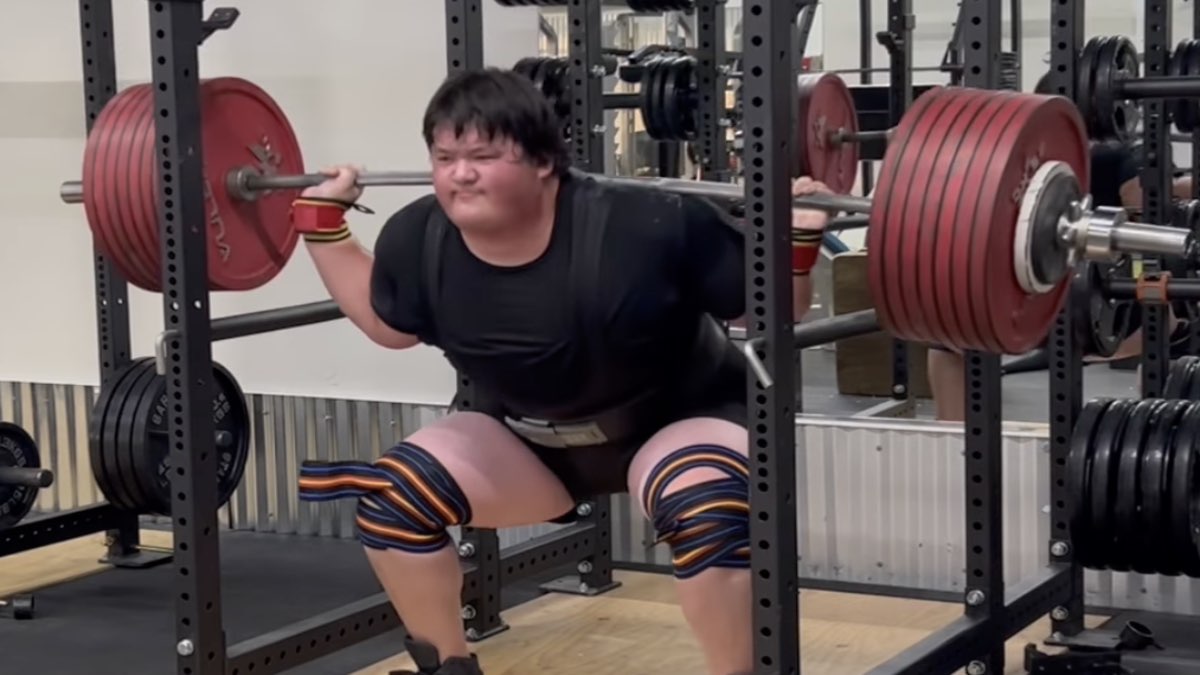
On Oct. 19, 2022, McCollum shared a video to his Instagram profile where he notched a 390-kilogram (860-pound) single-ply squat double during a training session. Per the caption of his post, the feat is a personal record (PR). In addition to wrist and knee wraps, McCollum wore a lifting suit and lifting belt to help with the figure.
McCollum’s squat double PR is connected to his ongoing preparation for the 2022 International Powerlifting Federation (IPF) World Equipped Open Powerlifting Championships. That contest will take place on Nov. 14-20, 2022, in Viborg, Denmark. It will be just the second appearance for McCollum in an international competition after a second-place Juniors finish during the 2022 IPF World Junior Equipped Powerlifting Championships.
As the reigning equipped Powerlifting America (AMP) National Champion in the 120-kilogram-plus weight class, McCollum has amassed quite the individual resume at a young age. After starting his career largely as a raw competitor, McCollum appears to have transitioned to a single-ply, equipped focus. That shift in attention has seemingly paid off as the athlete can count six out of seven victories where he competed single-ply.
According to Open Powerlifting, here’s an overview of some of the more notable results of McCollum’s career to date:
Zen McCollum (+120KG) | Notable Career Results
2017 USA Powerlifting (USAPL) Rocky Mountain State Games (Teen/Raw) — First place | First career victory
2017 USAPL Raw National Championships (Teen/Raw) — Second place
2018 USAPL Gorilla Warfare II Pandora’s Box (Teen/Raw) — First place
2018 USAPL Raw Nationals (Teen/Raw) — Second place
2019 USAPL Colorado State Championships (Teen/Raw) — First place
2019 USAPL Southwest Regionals (Open/Single-ply) — First place
2021 USAPL Revenge of the Kilo Monster (Open/Raw) — First place
2022 AMP Nationals (Junior/Open/Raw/Single-ply) — First place
2022 IPF World Junior Equipped Powerlifting Championships (Juniors-Single-ply) — Second place
McCollum will likely have to bring his A-game to capture his first-ever international victory in Denmark. That probably won’t be an issue for an athlete who has started his competitive career on a rocket-like ascent.
“This study is not enough to cause me to say I’ll stay away from this because [the researchers] don’t prove that using relaxers causes cancer,” Ghazi says.
Indeed, primary care doctors are unlikely to address the increased risk of uterine cancer in women who frequently use hair straighteners that the study reported.
Among frequent users of hair straighteners — meaning those who used them more than four times a year — the researchers found that women were 2.55 times more likely to be diagnosed with uterine cancer than those who never used these products.
In the recently published paper on this research, the authors say that they found an 80% higher adjusted risk of uterine cancer among women who had ever “straightened,” “relaxed,” or used “hair pressing products” in the 12 months before enrolling in their study.
This finding is “real, but small,” says internist Douglas S. Paauw, MD, professor of medicine at the University of Washington in Seattle.
Paauwis among several primary care doctors interviewed for this story who expressed little concern about the implications of this research for their patients.
“Since we have hundreds of things we are supposed to discuss at our 20-minute clinic visits, this would not make the cut,” Paauw says.
While it’s good to be able to answer questions a patient might ask about this new research, the study does not prove anything, he says.
Internist Alan Nelson, MD, an internist-endocrinologist and former special advisor to the CEO of the American College of Physicians, says while the study is well done, the number of actual cases of uterine cancer found were small.
One of the reasons he would not recommend discussing the study with patients is that the brands of hair products used to straighten hair in the study were not identified.
Alexandra White, PhD, lead author of the study, said participants were simply asked, “In the past 12 months, how frequently have you or someone else straightened or relaxed your hair, or used hair pressing products?”
The terms “straightened,” “relaxed,” and “hair pressing products” were not defined, and “some women may have interpreted the term ‘pressing products’ to mean non-chemical products” such as flat irons, says White, who is also head of the National Institute of Environmental Health Sciences’ Environment and Cancer Epidemiology group, in an email.
Dermatologist Crystal Aguh, MD, associate professor of dermatology at Johns Hopkins School of Medicine, tweeted the following advice in light of the new findings: “The overall risk of uterine cancer is quite low so it’s important to remember that. For now, if you want to change your routine, there’s no downside to decreasing your frequency of hair straightening to every 12 weeks or more, as that may lessen your risk.”
She also noted that “styles like relaxer, silk pressing and keratin treatments should only be done by a professional, as this will decrease the likelihood of hair damage and scalp irritation.”
“I also encourage women to look for hair products free of parabens and phthalates (which are generically listed as “fragrance”) on products to minimize exposure to hormone disrupting chemicals.”
Not Ready to Go Curly
Ghazi says she decided to stop using keratin straighteners years ago after she learned they are made with several added ingredients. That includes the chemical formaldehyde, a known carcinogen, according to the American Cancer Society.
“People have been relaxing their hair for a very long time, and I feel more comfortable using [a relaxer] to straighten my hair than any of the others out there,” Ghazi says.
Janaki Ram, who has had her hair chemically straightened several times, says the findings have not made her worried that straightening will cause her to get uterine cancer specifically, but that they are a reminder that the chemicals in these products could harm her in some other way.
She says the new study findings, her knowledge of the damage straightening causes to hair, and the lengthy amount of time receiving a keratin treatment takes will lead her to reduce the frequency with which she gets her straightened.
“Going forward, I will have this done once a year instead of twice a year,” she says.
White, the author of the study, says in an interview that the takeaway for consumers is that women who reported frequent use of hair straighteners/relaxers and pressing products were over twice as likely to go on to develop uterine cancer compared to women who reported no use of these products in the previous year.
“However, uterine cancer is relatively rare, so these increases in risks are small,” she says. “Less frequent use of these products was not as strongly associated with risk, suggesting that decreasing use may be an option to reduce harmful exposure. Black women were the most frequent users of these products and therefore these findings are more relevant for Black women.”
“We estimated that 1.64% of women who never used hair straighteners would go on to develop uterine cancer by the age of 70; but for frequent users, that risk goes up to 4.05%,” White says in a statement.
“One of the original aims of the study was to better understand the environmental and genetic causes of breast cancer, but we are also interested in studying ovarian cancer, uterine cancer, and many other cancers and chronic diseases,” White says in an interview.
MONDAY, Sept. 26, 2022 (HealthDay News) — Biking while stoned leads to thousands of serious crashes each year, a new study suggests.
Between 2019 and 2020 alone, more than 11,000 people were treated in U.S. emergency rooms for injuries that happened as they rode a bicycle while high on methamphetamine, marijuana or opioids, researchers found.
“The people affected by these injuries likely have substance use disorder, may be more likely to be homeless and may not have access to other types of transportation,” explained lead researcher Bart Hammig, a professor of public health at the University of Arkansas in Fayetteville. “This is an often overlooked and ignored population when addressing serious injuries related to bicycle crashes.”
One way to curb these crashes is to get these drugged individuals off their bikes, he said.
“Better and easier access to transportation for persons who may use bicycles as their main mode of transportation is needed in order to aid in the prevention of injuries among this population,” he said. “In addition to treatment of injuries, drug referral systems need to be readily accessible in emergency departments.”
Hammig and his University of Arkansas colleague Robert Davis, an assistant professor of public health, found that bicyclists who crashed while high often had more serious injuries than those who weren’t using drugs.
Most of those injured were men (86%), according to the study. Of those, 22% had broken bones; 19% injured internal organs; and almost 33% had to be hospitalized. In all, 1% suffered a concussion.
Some likely resulted in deaths, but because the data came from emergency room records, researchers couldn’t report on fatalities.
The most common drugs found were methamphetamine (36%); marijuana (32%); and opioids (19%). Nearly a quarter of injured bikers had also been drinking alcohol, the study found.
For the study, researchers used data from the National Electronic Injury Surveillance System. Of more than 480,000 injuries reported between 2019 and 2020, about 3% involved drugs.
Dr. Eugene Vortsman, an emergency room physician at Long Island Jewish Medical Center in New Hyde Park, N.Y., said that riding a bike stoned can greatly increase the risk for crashes and serious injury.
He suspects that the number of crashes identified in the study is only the tip of the iceberg.
“Due to the limitations in data, this study is underestimating the true severity of the incidence, as well as the severity of injury associated with any intoxicant,” Vortsman said. “Even with the data available, it is clear that the risk of injury is elevated.”
More study is needed to learn about bikes for primary transportation and to find ways to lower the risk, Vortsman said.
Some examples include evaluating social factors affecting health to better earmark resources. Improving access to public transportation, better roadside safety measures, and education about the dangers of operating any mode of transportation while under the influence are key, he said.
“Proper education allows patients to better understand their risk of injury and can provide a safer road for them as well as other bicyclists,” Vortsman said.
SOURCES: Bart Hammig, PhD, MPH, professor, health, human performance and recreation, University of Arkansas, Fayetteville; Eugene Vortsman, DO, emergency room physician, Long Island Jewish Medical Center, New Hyde Park, N.Y.; Journal of Studies on Alcohol and Drugs, Aug. 1, 2022
Pull-ups are often called the king of upper body lifts — but do you know what is even more worthy of the crown? Adding resistance and doing more pull-ups. There will come a point when bodyweight pull-ups won’t provide you the gains they used to. When that happens, simply doing more reps will be less efficient for building muscle and strength.
Credit: Andrey_Popov / Shutterstock
The weighted pull-up will offer you the same benefits as the basic bodyweight exercise, but you can better suit your strength level. This leads to more strength and size in your back, arms, and abs. If you have mastered the unweighted pull-up, check out what the weighted version has to offer and the best way to do it.
How to Do the Weighted Pull-Up
The weighted pull-up is not really different from the bodyweight version, technique-wise, but you still have to accommodate the weight depending on what implement you use. Here’s how to do them.
Step 1 — Pick a Weight
Credit: BarBend / YouTube
Depending on what’s available to you and your preferences, there are several options to add external resistance to the exercise. Here’s how to do it:
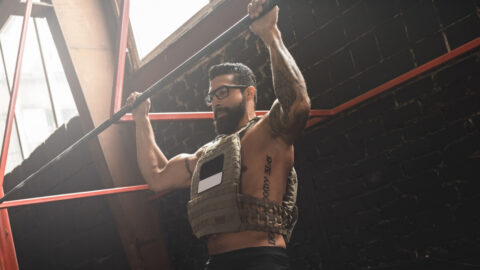
Weighted Vest: This load will have the most natural feeling because the weight is distributed evenly around your torso. The general technique will be the closest to the bodyweight pull-up using this resistance. The only drawback is that you can’t go too heavy, as many vests are limited to 22 or 45 pounds.
Backpack: This inexpensive, homemade alternative is very close to using a weighted vest. Simply add some weight in a sturdy bag and put it on. The biggest drawback is the unknown variable for weight capacity, as going too heavy is asking for the fabric or straps to tear down, which could be dangerous.
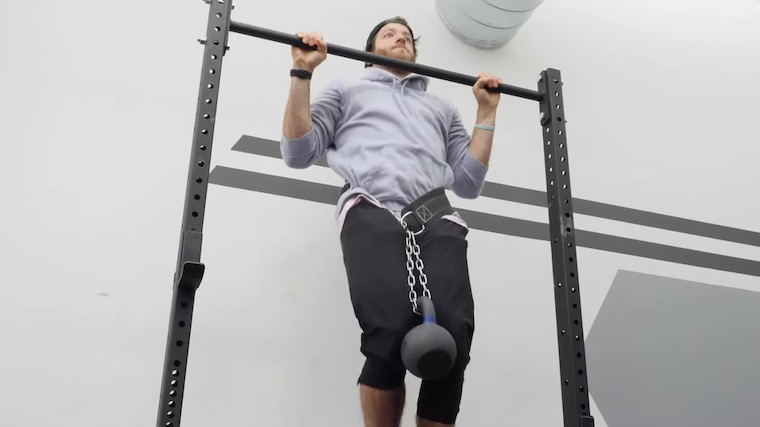
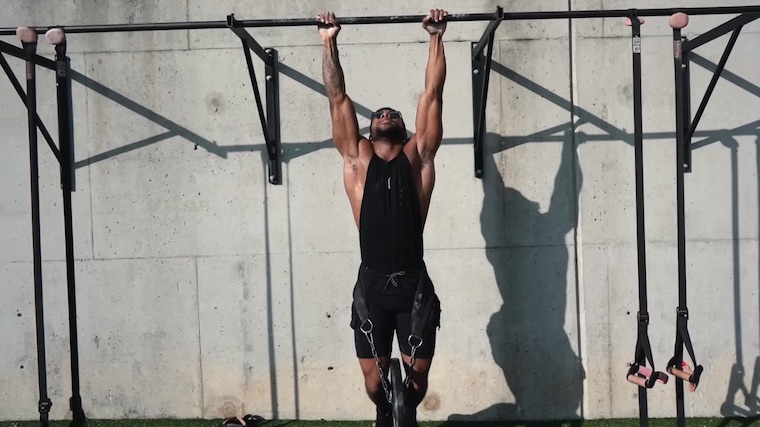
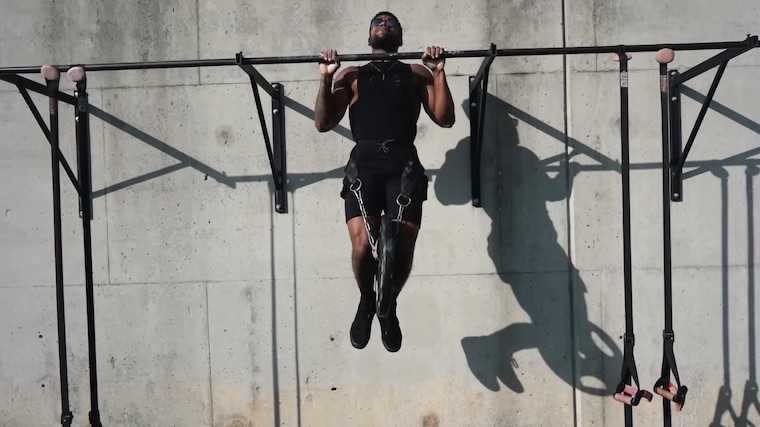
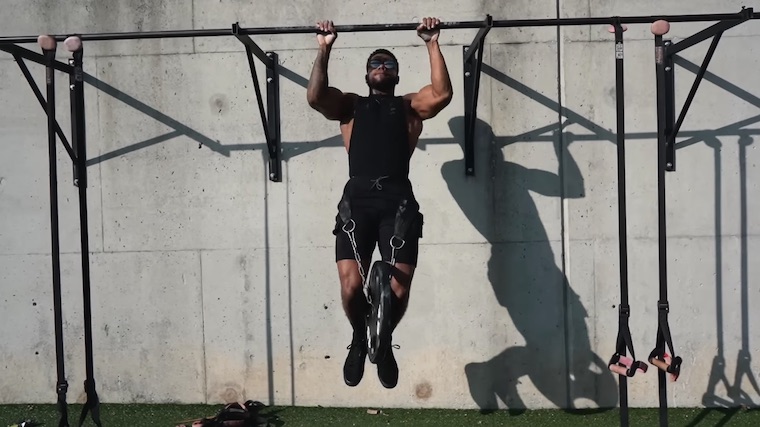
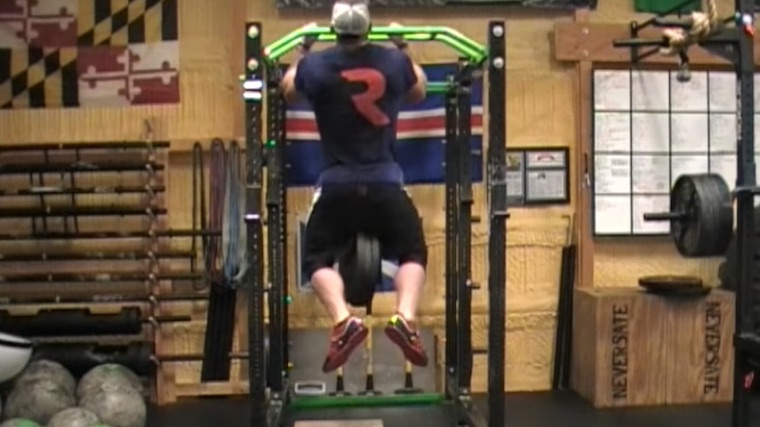
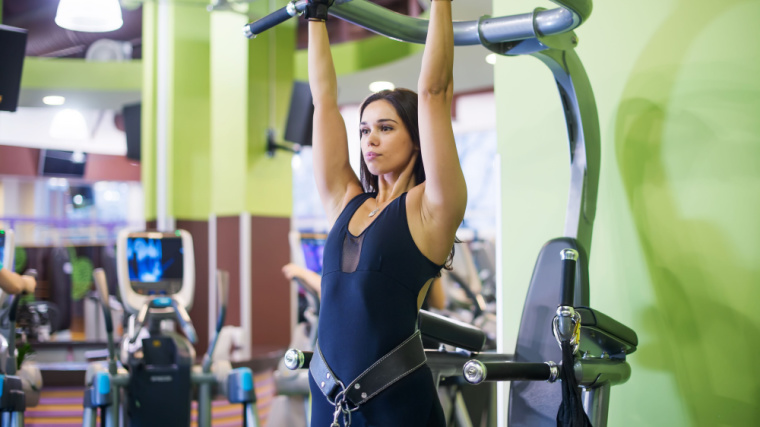
Weighted Belt: Likely the most common way to add weight. It is a specialized belt with a chain on which you can add plates to load yourself. You put it around your waist, then let the weight hang between your legs. This resistance might feel a little harder because it will demand superior abdominal involvement because it’s pulling on your hips. The weights might dangle and move on the chain, but the sky is the limit weight-wise. For moving the heaviest loads possible, this is the best option.
Dumbbell: If you have none of these options available, you can always grab a dumbbell and hold it between your thighs with your legs bent. This option is the least comfortable and will involve your abs and legs, but will work just fine to make pull-ups more challenging.
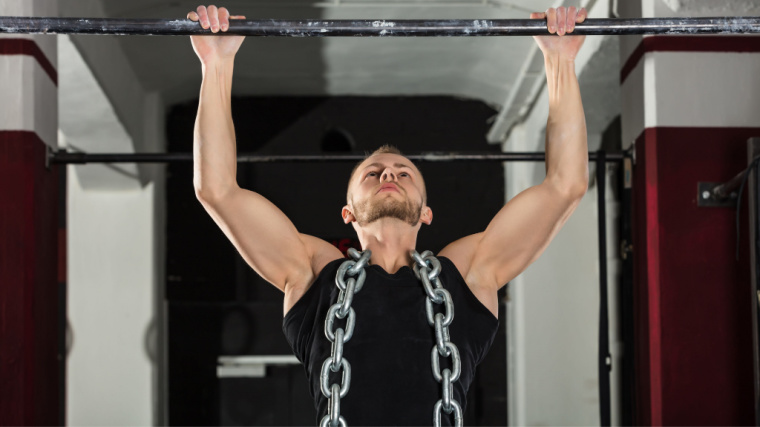
Chains: Drape some chains around your neck and shoulders. It’s very easy to do and you’ll look great on the ‘Gram. Once again, you’ll most likely be limited by the amount of weight you can use and it can be uncomfortable.
Step 2 — Find Your Grip
Credit: Austin Dunham / YouTube
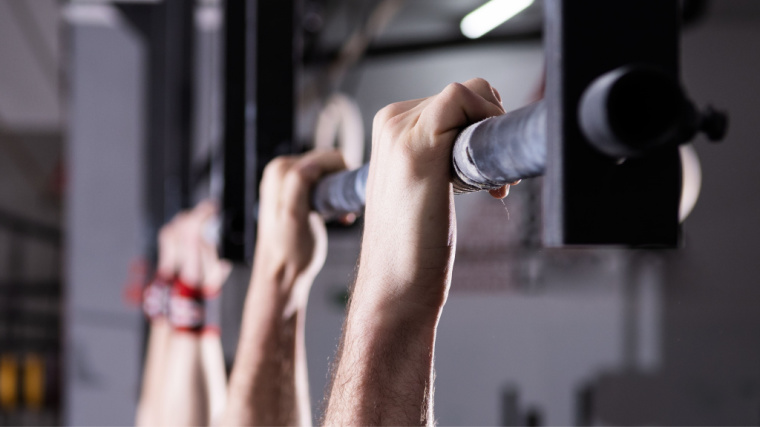
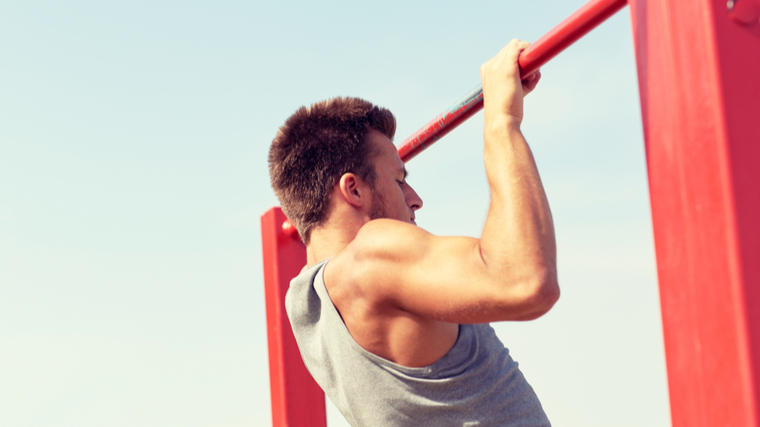
Climb on the steps under the pull-up bar, or place a box under it. Grab the bar firmly with a slightly wider than shoulder-width grip, with your palms facing away from you (pronated).
Your grip-width will depend on your own limb length and mobility, but generally aim for a “medium” grip — not too wide or too close — for maximal strength and balanced muscular engagement.
Let yourself hang from the bar under control in a dead-hang, with your arms completely extended. Pull your shoulder blades back, keep your chest high, and engage your abs so that you prevent your legs or (the weight if you’re using a belt or dumbbell) from swaying. If your lower body does start moving, wait for it to settle. This is your starting position.
Form tip: Depending on the width of your grip, you can shift focus onto different body parts. A closer grip will induce more arm recruitment, and a wider grip will emphasize your back. Because your back is a relatively larger and stronger muscle, err on using a slightly wider grip unless you’re specifically looking to build your arms and grip strength.
Step 3 — Pull Yourself to the Bar
Credit: Austin Dunham / YouTube
Take a deep breath and flex your abs. Pull yourself toward the bar as hard as you can. Keep your elbows aimed down to ensure maximal lat engagement.
Pull until your chin goes over the bar, exhale, and hold the contraction for a second. Keep your chest high and your back very slightly arched to engage as many back muscles as you can.
Form tip: Depending upon your morphology (limb length) and your goals, pulling all the way up is not mandatory. If you’re a tall lifter or have relatively long arms, your muscles’ maximal contraction point might be reached before your chin is over the bar. If you’re one of these unique lifters or if you’re only interested in building muscle, aim for a range of motion where you only reach peak contraction. However, if your goal is overall strength, it’s wiser to adopt the same form on each rep and get your chin over the bar.
Step 4 — Lower With Control
Credit: Austin Dunham / YouTube
Keep your body tense and slowly lower yourself until your arms are extended and your lats are fully stretched. Avoid any lower body swaying by flexing your abs as much as you can and squeezing the bar hard. When you’re at a dead-hang with straight arms, begin the next repetition.
Form tip: Your legs should remain in the same position for the duration of the lift. It will actually help you be stronger by increasing total-body stability. Whether you have them stretched or bent, keep them that way and flex them. This will help your core recruitment, and improve your lower lats strength through fascia connections.
Weighted Pull-Up Mistakes to Avoid
If you want to reap the most benefits of an exercise, proper execution is key. It’s especially true when you start adding weight to a bodyweight exercise because it can slightly alters the technique. Learn about the main weighted pull-up mistakes so you don’t reproduce them.
Gripping the Bar Too Loose
A common mistake is to hold the bar only with your fingers instead of a deep, full grip using your whole hand. Your forearms and grip are a main component of your pull-up performance — once you lose your grip, your set’s over.
Credit: Robert Avgustin / Shutterstock
More importantly, your hands are your only point of contact with the bar. Put yourself in, literally, the strongest position possible by maximizing your pulling ability.
Avoid it: You have to grip the bar firmly to transfer as much energy as possible through your body. As an added bonus, with the bar being lower in your hand instead of closer to your fingertips, you slightly reduce the range of motion by an extra inch or to help pass your chin over the bar.
Cutting the Range of Motion Short
Sure, you’re eager to add some weight and get stronger. But if you can only add weight by reducing the range of motion, you’re not ready for it yet. You shouldn’t change the mechanics of the exercise just for the sake of ego, because you might not end up with the results you want. Shortening the range of motion will diminish the time under tension, resulting in less muscle growth. (1)
Credit: Syda Productions / Shutterstock
The main offense with pull-ups is staying in the upper range of motion — only going down halfway. This will result in less hypertrophy because working in a longer muscle length is skipped and stretch-mediated hypertrophy is actually more efficient than only focusing on the shortened muscle length range. (2)
Avoid it: Remember that adding more weight won’t result in more strength or muscle if you succumb to half-reps. Think about quality, not quantity, and keep a full range of motion whether you’re using weight or not.
Swinging Around
Excessively swinging your body is a no-go. This is especially true if you have weight dangling between your legs. You shouldn’t be trying to complete as many repetitions as possible, no matter the cost. If you want maximal muscle and strength gains, use perfect form at all times.
Creating momentum with your abs and lower body will diminish back muscular tension as well as reduce the effective range of motion, leading to sub-par gains. It’s also risking more tension on your shoulder joints which can lead to injuries.
Credit: baranq / Shutterstock
Avoid it: Engage your core and tighten your legs to improve your stability. Practice with a one-second pause at the top and the bottom of each repetition to ensure strict, controlled movement. If needed, wait for an extra second or two in the bottom position of each rep to let the weight settle and reset yourself.
How to Progress the Weighted Pull-Up
Pull-up performance is determined by your relative strength, which is how strong you are compared to your bodyweight. You have two ways of making the pull-ups more challenging — either increase your body weight or add external load.
When you become “too strong” relative to your body weight, it’s wise to make the exercise harder if you want maximum gains. Here are the standards:
If you want to become stronger at the pull-up, add weight once you can master sets of five or six bodyweight pull-ups.
If you are focused on building muscle, add weight once you can bang out sets of 10-12 pull-ups without trouble.
But before any of that, you first need to be able to perform the basic pull-up, and here are some ways to get there.
Lat Pulldown
The bread and butter of many back sessions, the lat pulldown mimics everything a weighted pull-up can offer you, with less core activation and an more progressive way to determine your resistance.
What is great about this exercise is that beginners and veterans can use it alike. If you’re too heavy or just lack the strength for weighted pull-ups, this is a perfect alternative. You don’t have to worry about balance and coordination here, so you can focus more on the muscles.
Weighted Inverted Row
What’s better to replace a bodyweight back exercise than another bodyweight back exercise? The inverted row is the pull-up’s cousin and offers the same benefits and functional strength, though using an horizontal motion which slightly changes the muscle recruitment.
As with the weighted pull-up, you can progress to weighted inverted rows. Find a weighted vest, place a backpack “backwards” onto your chest and abs, or toss some chains around your torso, and start pulling.
Pull-Up
Of course, the most essential step in achieving a weighted pull-up is to perform bodyweight-only pull-ups. If you can’t lift your own body weight, good luck lifting your own body weight plus an extra five to 30 pounds.
Work to master the fundamental technique. By the time you’re approaching double-digits with good form, you’ll be ready to start thinking about adding weight.
Benefits of the Weighted Pull-Up
The weighted pull-up is a staple in many programs for a reason. This exercise can elevate your upper-body strength and size to unprecedented levels. If you can bang out ten or more, your fitness is certainly something to be recognized and you’ll get some appreciative stares in the gym. Here are a few more perks.
Maximal Strength
Maximal strength is mostly built using a weight of at least 85% of your one-repetition maximum. If you only stick with training bodyweight pull-ups, there will come a point where you won’t be able to train in the maximal strength zone, because your own weight won’t be challenging enough. This is why strength athletes use weighted exercises in general.
Credit: Brian Alsruhe / YouTube
Adding weight to your pull-ups is one of the best ways to improve pulling strength in your upper body and arms. The back directly supports the spine, and many muscles and bones in the body. It’s akin to a tree trunk. Having a stronger back will help your performance by not only being stronger in pulling motions, but by providing a more stable base for your other muscles, for instance stabilizing the arms and scapulae (shoulder blades) in pressing motions.
The weighted pull-up will also directly improve spinal strength (because the lats are attached to the spine from the middle to the sacrum) as well as core resilience, both directly linked to better sports performance. (3)(4)
More Muscle Growth
The weighted pull-up is one of the best exercises to promote back hypertrophy. Period. (6) If you want to improve your posterior chain, adding it to your training regimen will do wonders. It will also build size in your arms and forearms, and most people would be pretty happy with that “side effect.”
If you’re a more seasoned lifter, chances are you can knock out many bodyweight pull-ups. Perhaps you even max out the lat pulldown machine. In both cases, the weighted-pull will most likely be your best bet to further improve your muscle development.
There are several ways to increase the demand on the muscle, but adding weight is one of the most straightforward. The beauty is that you can increase very gradually, by using small plates and making little adjustments. By doing so, you will ensure that you keep building muscle in your back and arms. (5)
Better Grip Strength
Grip is essential for pull-up performance, but also for exercises like the deadlift, or outdoor activities and sports. The weighted pull-up will be a tremendous grip builder, which has the benefits of causing less overall fatigue to the body and nervous system, and not taxing muscles like the lower back or legs. This can be very beneficial for athletes which monitor total volume for body parts or need to recover sufficiently for contest performance.
Moreover, having a weak grip can not only affect performance, but your health. Forearm and grip strength has been linked to wrist, elbow, and shoulder health. (5) If you suffer from tendinopathy or nagging pains in these areas, having a better grip can help. Grip strength is also an indicator of general health as it is linked to longevity, improved brain health, and reduced risk of depression. (6)
Muscles Worked by the Weighted Pull-Up
The weighted pull-up engages many muscles in your upper body and your arms. Here are the main muscle groups trained by the exercise.
Latissimus Dorsi
The lats are the biggest and strongest back muscle. They go from your hip bone and lower spine to your humerus (arm bone) and are heavily involved in lowering, pulling, extending and internally rotating your arms. The lats also contribute to spinal and trunk movements and core stability. They are the main muscle recruited by weighted pull-ups and they take most of the workload.
Upper Back
The upper back is composed of several muscles sharing similar functions, including the trapezius, rhomboids, and posterior deltoids. They all move the shoulder blades in several ways, assist in pulling motions, and contribute to stabilizing the scapulae during pressing movement as well. As the pull-up requires scapular motion, the muscles of the upper back will heavily contribute to the movement.
Upper Arms
The biceps brachii are composed of two heads — the long portion on the outside of the arm, and the short portion on the inner side. They both go from your radius to your scapula, and flex and supinate the arm (rotate it internally). The biceps contributes to the weighted pull-up through arm flexion. You can’t bend your arms without your biceps.
Credit: Undrey / Shutterstock
The pull-up’s pronated (palms down) grip actually puts an emphasis on the brachialis muscle, the strongest arm flexor located just under the biceps, originating from the humerus and ending at the ulna (forearm bone). Having a big brachialis can help your biceps pop because they will push it higher.
Forearms
Because weighted pull-ups require tremendous grip strength, your forearms will be recruited extensively. Many muscles are present in the forearm but the forearm flexors, which are responsible for your grip, will be taxed the most. The brachioradialis, the biggest forearm muscle, will also assist the upper arm in flexing.
Core
To maintain proper posture and be more efficient during this exercise, you’ll have to engage your whole core. The added weight makes your core (abs, lower back, and some hip muscles) work even harder to stabilize your body, especially when the weight is suspended between your legs because it’s further from your center of gravity.
These core muscles do not actively move during the lift, but are contracted isometrically to maintain a stable body position for an efficient pull.
How to Program the Weighted Pull-Up
The weighted pull-up is a polyarticular (multi-joint) exercise that can be programmed a variety of ways, depending on your goals and strength levels. Perform the exercise towards the beginning of your session, when you’re still fresh, to ensure proper technique and maximal strength. Here are several efficient repetition schemes.
Heavy Weight, Low Repetition
Performing three to five sets of one to five repetitions is the best way to improve your strength level. Keep one or two reps in the tank to ensure proper form at all times, because technique is crucial in strength development. To be able to repeat this effort with quality technique for all sets, aim for long rest periods of three to five minutes.
Moderate Weight, Moderate Repetitions
If you want to build size, three to four sets of six to 12 repetitions is an excellent scheme. You should be near or reach muscular failure on each set, but never at the expense of form. Rest periods of two to three minutes will be your best bet for maximum muscle gains. (7)
Strength-Skill Sets
Because the weighted pull-up is a skill that necessitates perfect form and long rest periods to recover, you should be wary of reaching muscular failure if we want to improve strength. As such, another strength method is to use a lot of very low-rep sets with short rest periods. You ensure your body stays fresh while providing high-quality, heavy weight repetitions.
For instance, one could use an EMOM format (every minute on the minute) and do one heavy repetition at the start of each minute for a total of ten minutes. You could also set a time limit, approximately 15 minutes, in which you perform as many high-quality sets of three repetitions as you can. These methods let you accumulate technique practice while also stimulating strength gains.
Weighted Pull-Up Variations
Using a pronated grip with pull-ups is the standard technique, but you can very easily change muscular recruitment and instill variety in your training by varying your grip angle.
Weighted Chin-Up
This variation uses a supinated (palms facing you) grip. This doesn’t look like much of a change, but the exercise involves more biceps and can put you in a stronger pulling position.
It is a great variation if you struggle with pronated pull-ups or if you want more arm size. If you want even more biceps involvement, use a closer than shoulder-width grip.
Neutral-Grip Pull-Up
A neutral grip (palms facing each other) puts less pressure on your elbow and shoulder joints. Adding weight to the pull-up can often cause pain to achy joints, and this version allows you to do it with less strain.
Additionally, it will emphasize the brachialis (the muscle under the biceps) and forearms recruitment. This will also be one of the strongest pulling grips.
Ring Weighted Pull-Up
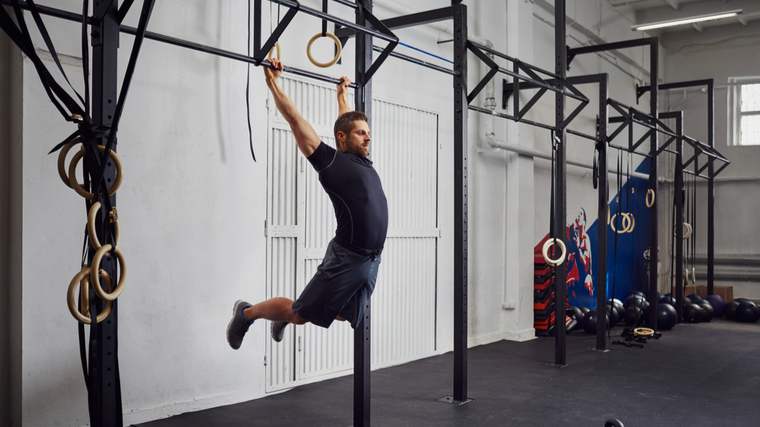
This is one of the most challenging variations you can perform. The rings are not fixed like a bar, so they sway and increase the need for total-body stability. As such, your forearms, upper back, and core will have to work extra to halt any unnecessary swinging movement.
This variation will also be the smoothest on your joints. The rings allow you to rotate your hands freely, creating better joint positions and a more natural motion. If you suffer from achy elbows or shoulders, try this movement.
FAQs
I only have a pull-up bar and no way to add weight. Is my back progress doomed?
Adding weight to an exercise is the most straightforward way of improving progressive overload, but if you cannot perform weighted pull-ups, do not worry. First of all, keep in mind that for pure muscle growth, sets of 20 can be as beneficial as sets of 10. So unless you can consistently bang more than 20 pull-ups, you still have some room to grow. (8)
Alternatively, if you’re already strong as possible, or if you just want to try a different technique, there are other effective methods. You can increase the time under tension by adding pauses or playing with tempo (rep speed). For instance, taking a three-second pause at the top of each repetition or using a four-second eccentric (lowering phase).
You can also do the same basic sets, but with reduced rest periods. Go from sets of ten with two minutes of rest to sets of ten with just 90 seconds of rest. If you can do it, you’ve progressed. Finally, you can also pre-fatigue your pulling muscles to make bodyweight pull-ups more difficult. Doing a 15-second pause at the top of the motion before doing normal repetitions will stress your muscles differently. Try to increase this duration over several weeks.
What is the difference between a pull-up and a chin-up?
For some mistaken people, these both designate the same exercises, but they’re different. The chin-up uses a supinated grip, with your palms facing you, and the pull-up involves a pronated grip, with your palms facing away. As such, the chin-up involves the biceps more and the pull-up emphasizes the back musculature in general.
Get Your Pull-Up to the Next Level
Why stick to bodyweight when you can add weight and further improve your fitness? If you want to keep progressing, the weighted pull-up should be part of your arsenal for long-term success. Once you can do sets of ten consistently, you really will be in the company of kings.
References
Burd NA, Andrews RJ, West DW, Little JP, Cochran AJ, Hector AJ, Cashaback JG, Gibala MJ, Potvin JR, Baker SK, Phillips SM. Muscle time under tension during resistance exercise stimulates differential muscle protein sub-fractional synthetic responses in men. J Physiol. 2012 Jan 15;590(2):351-62. doi: 10.1113/jphysiol.2011.221200. Epub 2011 Nov 21. PMID: 22106173; PMCID: PMC3285070.
Oranchuk DJ, Storey AG, Nelson AR, Cronin JB. Isometric training and long-term adaptations: Effects of muscle length, intensity, and intent: A systematic review. Scand J Med Sci Sports. 2019 Apr;29(4):484-503. doi: 10.1111/sms.13375. Epub 2019 Jan 13. PMID: 30580468.
Moreno Catalá María, Schroll Arno, Laube Gunnar, Arampatzis Adamantios. Muscle Strength and Neuromuscular Control in Low-Back Pain: Elite Athletes Versus General Population. Frontiers in Neuroscience 12. DOI=10.3389/fnins.2018.00436
Hibbs, Angela & Thompson, Kevin & French, Duncan & Wrigley, Allan & Spears, Iain. (2008). Optimizing Performance by Improving Core Stability and Core Strength. Sports medicine (Auckland, N.Z.). 38. 995-1008. 10.2165/00007256-200838120-00004.
Coombes BK, Bisset L, Vicenzino B. Management of Lateral Elbow Tendinopathy: One Size Does Not Fit All. J Orthop Sports Phys Ther. 2015 Nov;45(11):938-49. doi: 10.2519/jospt.2015.5841. Epub 2015 Sep 17. PMID: 26381484.
Bohannon RW. Grip Strength: An Indispensable Biomarker For Older Adults. Clin Interv Aging. 2019;14:1681-1691 https://doi.org/10.2147/CIA.S194543
Schoenfeld BJ, Pope ZK, Benik FM, Hester GM, Sellers J, Nooner JL, Schnaiter JA, Bond-Williams KE, Carter AS, Ross CL, Just BL, Henselmans M, Krieger JW. Longer Interset Rest Periods Enhance Muscle Strength and Hypertrophy in Resistance-Trained Men. J Strength Cond Res. 2016 Jul;30(7):1805-12. doi: 10.1519/JSC.0000000000001272. PMID: 26605807.
Thiago Lasevicius, Carlos Ugrinowitsch, Brad Jon Schoenfeld, Hamilton Roschel, Lucas Duarte Tavares, Eduardo Oliveira De Souza, Gilberto Laurentino & Valmor Tricoli (2018) Effects of different intensities of resistance training with equated volume load on muscle strength and hypertrophy, European Journal of Sport Science, 18:6, 772-780, DOI: 10.1080/17461391.2018.1450898
The other day, my friends and I were texting about turn ons — like visible forearms, romance novels and sexy shows. We also encourage each other to ask for what we want — or try new things — because women deserve to feel good! But my #1 piece of advice? Use a vibrator.
Dame was founded by two women — a sexologist and an engineer — who wanted to revolutionize sex toys. Through smart design, tons of research and a thoughtful approach, Dame creates toys that are meant to close the pleasure gap, Plus, vibrators are just really fun! Dame’s products are beautiful and full of touches that help you feel relaxed and taken care of.
If you’re interested in trying a vibrator for the first time, I’d recommend the newest member of the Dame family: Dip. The vibrator, which can be used internally and externally, is whisper quiet and padded in an ultra-soft silicone. One button controls five intensity levels, so you won’t have to fumble around — you can just focus on staying present, exploring your body, and discovering what truly feels good.
Another favorite is the Eva, which you can use hands-free, solo or with a partner. And we swear by Dame’s silky-not-sticky lube.
And if you’re looking for something extra special, we love love love the Aer, which uses pulses of air and suction to mimic oral sex. (It has a cult following for a reason.)
Today, Dame is offering one lucky reader a $300 gift card and a Dip. To enter, please visit Dame and tell us in the comments what goodies you’d want to treat yourself with. The winner will be chosen at random tomorrow. Good luck!
Bonus for all readers: Dame is offering 15% off any order with code CUPOFJO15. (This $30 cutie is incredible.)
(This post is sponsored by Dame, a women-owned company we love and trust. Thank you for supporting the brands that support Cup of Jo.)
THURSDAY, Oct. 20, 2022 (HealthDay News) – Americans will now have another choice if they want a COVID booster shot.
On Wednesday, the U.S. Food and Drug Administration approved Novavax Inc.’s protein-based vaccine as a first booster dose. Until now, it had only been approved as a two-dose primary series.
“The U.S. now has access to the Novavax COVID-19 Vaccine, adjuvanted, the first protein-based option, as a booster,” Novavax President and CEO Stanley Erck said in a news release. “According to CDC data, almost 50 percent of adults who received their primary series have yet to receive their first booster dose. Offering another vaccine choice may help increase COVID-19 booster vaccination rates for these adults.”
The Novavax booster could be used by adults who can’t find or are not able to use an mRNA boosters from Pfizer or Moderna. It’s also available to people who prefer this vaccine for a booster over the mRNA options. The Novavax booster can be given at least six months after the primary series.
The Novavax vaccine uses a more traditional approach to fighting the virus, teaching the immune system to recognize modified fragments of the coronavirus spike protein.
Scientists created the vaccine from a genetic sequence of the original strain of the virus. Vaccines that fight hepatitis B and pertussis are also made in this way.
Public health officials are encouraging people to get their boosters. About 68% of U.S. residents have had an initial COVID vaccine series, but only 33.5% have received boosters, CDC data shows. Novavax’s vaccine is one of four options available in the United States now.
More information
The U.S. Centers for Disease Control and Prevention has more on COVID-19 vaccines.
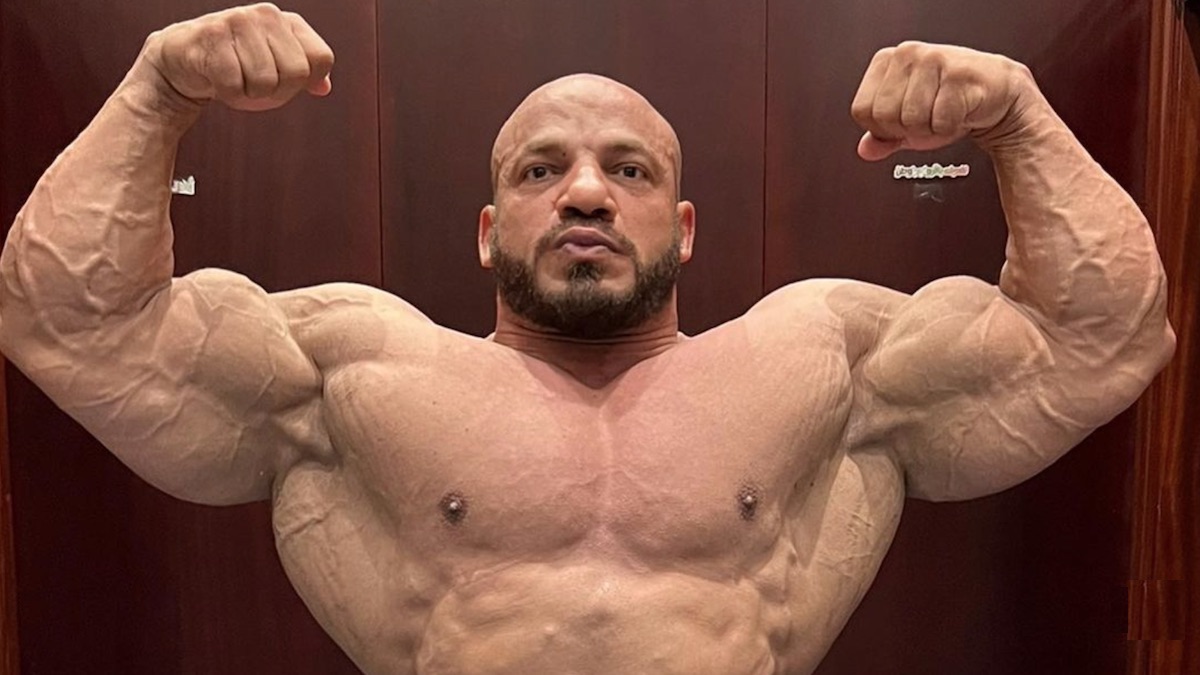
Two-time reigning Mr. Olympia Mamdouh “Big Ramy” Elssbiay isn’t light on praise these days. With all eyes on the Egyptian athlete seeking a three-peat of titles at the 2022 Mr. Olympia, he’s rapidly becoming the clear center of attention in the bodybuilding world once again. After former titan of the sport Ronnie Coleman recently showered Elssbiay with compliments, another all-time great sees the same in the competitor.
In an Oct. 19, 2022, episode of “The Ronline Report” with Muscular Development, eight-time Mr. Olympia (1984-1991) Lee Haney discussed the upcoming Olympia contest, being held on Dec. 16-18, 2022, in Las Vegas, NV. One the more notable tidbits concerned how Haney sees Elssbiay as a massive (no pun intended) favorite for the prestigious event.
One of the main reasons that Haney sees Elssbiay performing better than ever on the 2022 Olympia stage is his training. Haney thinks Elssbiay is accumulating mass at a higher level and credits a dedicated coaching staff for pushing the champion. Among that staff is 1989 Mr. Universe Miloš Šarčev, who notably takes a lot of his time coaching many rising bodybuilders.
“I’ve been checking him [Elssbiay] out on Instagram,” Haney said. “And man, he’s got Dennis James working with him now. Listen, when it comes to training and know-how, it’s hard to get better than Dennis. You got Dennis, [Chris] Cormier, Miloš [Šarčev], and of course, Charles Glass. It’s hard to get beyond them.”
For Haney, Elssbiay’s team of proficient experts is a major potential boon to continued success, even with his past standard of excellence.
“When you got somebody like that working in your corner that’s been there done that, you can’t get around that,” Haney explained. “These are not just coaches. These are seasoned legendary Olympians. When they put a routine to you, put a meal plan to you, it’s right on spot. So, I think Ramy [Elssbiay] will come in better than he was last year.”
To Haney, Elssbiay’s prospects for another Olympia title appear to be a cut above the rest of his peers. When the legendary bodybuilder discussed other athletes who could potentially dethrone Elssbiay — like 2019 Olympia winner Brandon Curry, for example — he made a lofty comparison to the past exploits of Coleman.
“Well, the one that I see that’s got the shape and mass combination, but he’s got to come in there sliced and diced is Brandon Curry. You gotta be sliced and diced,” Haney clarified. “Nobody out there that is like that. Ramy [Elssbiay] is cut from a different cloth, just like Ronnie [Coleman] was. What you gotta do is out-pretty Ramy.”
For Haney to compare Elssbiay to Coleman, who won eight consecutive Mr. Olympia titles from 1998-2005, is significant. Though, with two Olympia titles and (potentially) counting, Elssbiay very well might live up to such a high standard. If two bodybuilding all-timers like Haney and Coleman think that Elssbiay is at that rare level of performance, then it might only be a matter of time before he’s reaffirming their keen experience on stage.
THURSDAY, Oct. 20, 2022 (HealthDay News) — Using marijuana increases the risk of developing the heart rhythm disorder atrial fibrillation (a-fib), a new study suggests.
It’s been known that drugs such as methamphetamine, cocaine and opiates can directly affect the heart and cause abnormal rhythms like a-fib, but weed can increase the risk by 35%, researchers found.
“There is a common perception that cannabis may be healthy because it’s ‘natural,'” said lead researcher Dr. Gregory Marcus, a professor of medicine at the University of California, San Francisco. “But as laws become more lenient in allowing use of these substances, it’s important to recognize adverse consequences that may substantially impact the lives of users.”
This study doesn’t prove drug use causes a-fib, only that users seem to be at greater risk.
“These data are sufficiently compelling to suggest that cannabis users suffering from atrial fibrillation should at least experiment with cessation to see if it indeed has a meaningful effect on their particular arrhythmia,” Marcus said. “Once one has had an episode of atrial fibrillation, I find that patients are often especially eager to identify anything they can do to avoid subsequent episodes.”
A-fib reduces quality of life and increases the risk of stroke, heart failure, kidney disease, heart attack and dementia, he said.
“We used to think that a diagnosis of atrial fibrillation was just bad luck, but we now recognize this common and sometimes devastating disease can actually be prevented, largely with lifestyle interventions such as reducing alcohol consumption or enhancing physical fitness,” Marcus said. “Although various treatments are available, avoiding the disease in the first place is always better.”
Methamphetamine, cocaine, opioids and cannabis use were each associated with a heightened risk for a-fib in the study, even after adjusting for multiple established risk factors for the disease.
Methamphetamine increased a-fib risk by 86%, researchers found. For cocaine, the risk rose 61%, and for opiates, 74%.
For the study, Marcus and his colleagues collected data on more than 23 million people treated in California emergency rooms from 2005 through 2015.
Of 1 million patients who had no preexisting a-fib but developed it later, nearly 133,000 had used marijuana. Nearly 99,000 had used methamphetamines; nearly 49,000 had used cocaine, and 10,000 had used opiates.
How marijuana increases a-fib risk is unknown, Marcus said.
“There are several candidates, and they may act in concert,” he said.
Inhalation of combustible products is known to trigger an inflammatory response, and acute inflammation heightens a-fib risk, Marcus said. In addition, blood from the lungs flows directly to where a-fib begins — the pulmonary veins and left atrium of the heart. As such, lung irritants such as pot smoke could aggravate areas of the heart that are particularly vulnerable to arrhythmia.
All of the drugs studied can have dramatic effects on the link between the nervous system and the heart, Marcus noted. “Rapid fluctuations occur with the use of these substances and can also trigger atrial fibrillation,” he said.
A-fib is an abnormal pumping rhythm caused by electrical disturbances in the heart’s upper chambers, the atria. In severe cases, clots can form in the atria and then break off into the bloodstream, causing strokes. Strokes related to a-fib claim more than 150,000 Americans a year.
In addition, cocaine and meth can lead to sudden cardiac death from disruptions in the electrical signaling and pumping in the ventricles, the heart’s lower chambers. Researchers said there is no way, however, that pot causes these life-threatening arrhythmias.
Dr. Laurence Epstein, system director of electrophysiology at Sandra Atlas Bass Heart Hospital in Manhasset, N.Y., said many factors can trigger a-fib. Therefore, it’s not easy to predict which will trigger an episode.
“I don’t think it’s like, oh my God, nobody should ever smoke weed because they’re going to develop a-fib,” said Epstein, who wasn’t part of the study. “Everybody’s different. I have patients I treat for atrial fibrillation, and we talk about triggers, and everybody’s different.”
For some patients, coffee or chocolate may trigger an episode, and for some, the trigger may be marijuana, Epstein said. Patients who are sensitive to it should avoid it, he advised.
“My recommendation to patients is know thyself,” Epstein said. “Moderation is the key. If you find every time you get high, you start having palpitations, maybe that’s not for you. If you’re not having issues with it, then I’m not sure that puts you at increased risk.”
With the other drugs discussed in the study, the risk is known, Epstein said.
“It’s not only the risk of a-fib, but the risk of other bad things, which can give you an acute heart attack or cardiac arrest,” he concluded.
The findings were published Oct. 18 in the European Heart Journal.
More information
Learn more about atrial fibrillation from the American Heart Association.
SOURCES: Gregory Marcus, MD, professor, medicine, University of California, San Francisco; Laurence Epstein, MD, system director, electrophysiology, Sandra Atlas Bass Heart Hospital, Manhasset, N.Y.; European Heart Journal, Oct. 18, 2022
“Sza is on that list, that’s insane!” Natasha Pickowicz laughed when I asked her how she felt about being featured in the Time100 Next. The Brooklyn-based pastry chef has developed a cult following for creating Never Ending Taste, a series of pastry pop-ups featuring NYC chefs to raise money for non-profits fighting food insecurity. “Baking communities can bring visibility to social justice work,” she says, “And that’s amazing.” Here, Natasha (of tater tot fame) shares her five go-to looks and her adorable cat….
“Red is such a powerful color for me. In Chinese culture, it represents love, celebration and the new year. I thrifted the jumpsuit for $20 and have worn it for the past 10 years. The shoes are from Loft. Their shoes are well priced and SO comfortable. After I gave them a test run, I ended up buying two more pairs. When I find a piece I love, I’ll buy multiples — I picked up that habit from my mom.”
“I grew up in San Diego playing sports and wearing a school uniform. To this day, I love a uniform. When I started cooking in restaurants, I felt huge relief being able to relax into the identity of the restaurant clothes. I find a lot of comfort in putting on the same thing over and over.”
“At 37, I’m becoming more aware of how clothes can serve you. I love utilitarian kitchen pants you can move around in and shoes that don’t make your feet hurt when standing all day. Now that I’m not working in restaurants, my everyday uniform is pants with a loose top. And I like patterns that feel feminine, like gingham and florals.”
“I’m a total cat person. After Covid started, a friend moved and offered me their apartment. It had a big backyard, so I moved in, and that same week I adopted Tini from a local rescue called Whiskers-A-GoGo. I named her Martini because the rescue employees told me she has some Russian Blue features. And she looks like a slippery cold vodka martini, which is my drink when I go out. I’m obsessed with her.”
“Three of the major bake sales I did were for Planned Parenthood. In 2019, as a nod to their colors, I wore this flouncy, Barbie pink silk dress. I remember worrying, Are people going to think I’m trying too hard? Is this too frivolous? After working back-of-house in restaurants, I wasn’t used to being out in the center interacting with people. But it was one of the most incredible days of my life. It felt good to be seen, and I was really excited to be doing what I was doing. That experience helped me realized that these bake sales are a time where I deserve to dress up.”
“If I think honestly about my style, I’m still reconciling with how I’ve felt about my body. Growing up, I absorbed a lot of cultural and generational expectations around dressing — my mom always said I should wear clothes that were ‘flattering.’ And flattering is code for looking thinner. So, I was always dressing to fix my ‘flaws.’”
“I grew uncomfortable wearing sleeveless tops or clingy fabrics. I remember feeling self-conscious about the size of my breasts and always wanting to hide in shapeless clothes. But I love color and patterns, and now I try to approach fashion in a comfortable way. I still won’t wear a tube top or anything — maybe that enlightenment will come for me later — but I try to wear the things I feel good in.”
“In New York, I see so many cool silhouettes, especially on younger people. I can’t believe high schoolers will walk around without a bra or with their belly out. It is incredible. Gen Z gives me so much hope. They’re so confident, so savvy, and they take no b*llshit. It gives me chills. I’m obsessed with all the bodycon shapes they wear that are almost intentionally not ‘flattering.’ All the cut-outs, the key-holes, and ruching. The poise that it takes to pull off those outfits, it’s badass.”
“For the past two years, I’ve been working on my cookbook, More than Cake. It’s the hardest thing I’ve ever done. I studied English lit and always had this fantasy that I’d write a book, and I found my way back to writing through pastry. It feels very personal and vulnerable. We shot some photos in my parents’ house in San Diego, it features some of mother’s illustrations, and there are multiple photos of Tini. I want people to feel like they hear my voice, so I’m just going for it.”
Note: If you buy something through our links, we may earn an affiliate commission, at no cost to you. We recommend only products we genuinely like. Thank you so much.